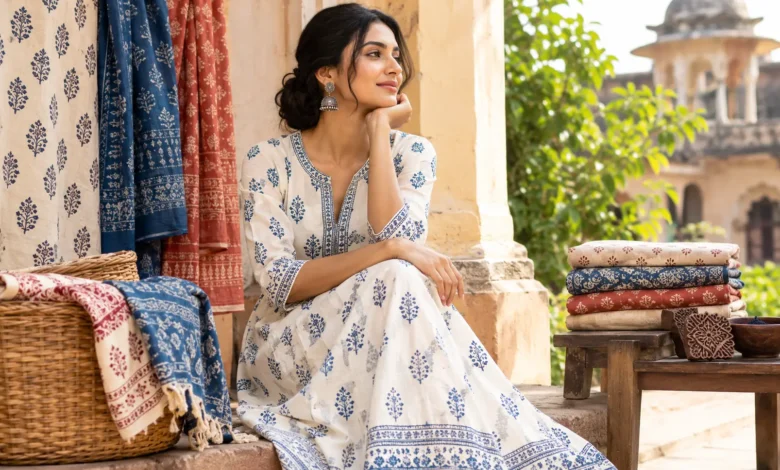
There’s a reason Indian cotton has been prized for thousands of years, long before it became a wardrobe staple for anyone chasing effortless, breathable style. From the earliest handspun threads of the Indus Valley to the block-printed and handloom fabrics still crafted by artisans today, Indian cotton dresses carry a depth of craft and history that few other everyday garments can claim — and they happen to be some of the most comfortable, versatile pieces a wardrobe can include.
This guide covers everything from what actually makes Indian cotton fabric so distinctive to 9 Indian cotton dresses that radiate understated elegance, along with the craft traditions, care tips, and styling guidance that make these pieces such a rewarding addition to any closet. Whether you’re drawn to a hand block-printed maxi dress or a simple khadi shirt dress, this breakdown will help you shop and style with a genuine appreciation for the fabric’s roots.
What Makes Indian Cotton Dresses Unique?
Indian cotton dresses stand apart largely because of the craft traditions woven into the fabric itself, quite literally in many cases. Techniques like handloom weaving, block printing, and khadi spinning have been refined over centuries, giving Indian cotton textiles a texture, character, and cultural depth that mass-manufactured cotton simply doesn’t replicate. Beyond craft, India’s long history of cotton cultivation and processing has produced an extraordinary range of regional styles, dyeing techniques, and weaving traditions, meaning “Indian cotton dress” can refer to anything from a rustic, hand-spun khadi piece to a finely woven, intricately block-printed maxi dress.
What Is Khadi Cotton Fabric?
Khadi is a hand-spun, handwoven cotton fabric made using a traditional spinning wheel called a charkha to twist raw cotton fibers into yarn, which is then woven into cloth on a handloom. The resulting fabric has a distinctive slightly coarse, irregular texture and a naturally breathable, porous quality that keeps the wearer cool in warm weather while offering surprising warmth in cooler conditions. Khadi carries significant cultural weight in India as well, having become a powerful symbol of self-reliance and resistance during the country’s independence movement in the early 20th century, when hand-spun cloth was promoted as a direct alternative to imported, mill-made British textiles.
What Is Block Printing?
Block printing is a traditional textile technique that involves stamping colored designs onto fabric using specially carved wooden blocks, each carved by hand to create a specific pattern or motif. The technique is believed to have originated in China before spreading and being adapted extensively across India, where regional variations developed distinct local characteristics. One of the most well-known Indian block printing traditions, Bagru print, originates from the town of Bagru near Jaipur in Rajasthan, where it has been practiced by the Chhipa community using natural dyes for over four centuries, making it one of the most enduring craft traditions still actively practiced today.
What Is Handloom Cotton?
Handloom cotton refers to fabric woven by hand on a traditional loom, rather than produced through mechanized power looms or industrial manufacturing. This manual weaving process, while considerably slower than machine production, allows for greater texture variation, craftsmanship, and often a more breathable, naturally textured finish than mass-produced cotton. India’s handloom sector remains the largest in the world today, supported by millions of handloom households and certified through initiatives like the Handloom Mark, which helps verify genuine handloom production for consumers.
A Brief History of Cotton Textiles in India
India’s relationship with cotton stretches back roughly five thousand years, with some of the earliest evidence of cotton cultivation and processing found at Mehrgarh and other Indus Valley Civilization sites dating to around 3000 BCE. Over the following millennia, Indian cotton textiles like fine muslin and calico became prized across ancient trade routes, reaching Rome through maritime trade and later flowing through Arabian merchant networks connecting Gujarat and India’s eastern coast to ports across the Middle East.
The colonial period brought severe disruption to this centuries-old industry, as the British actively worked to suppress India’s domestic handloom and cotton processing sector in order to create a market for mill-made cloth imported from Britain, devastating traditional weaving communities in the process. This decline continued into the early 20th century, setting the stage for khadi’s emergence as both an economic and political movement, championed by Mahatma Gandhi as a means of promoting self-sufficiency and rejecting colonial economic control.
Evolution of Indian Cotton Dress Styles
Following India’s independence, significant institutional effort went into reviving the country’s textile heritage, including the establishment of the Khadi and Village Industries Commission in 1957 and various state-level organizations dedicated to supporting traditional textile production. Large Indian fashion brands have since played a significant role in bringing khadi and other traditional cotton textiles back into mainstream fashion over recent decades, helping techniques like hand block printing, bandhani, and ikat weaving remain not just preserved but genuinely revitalized within contemporary Indian dress styles.
Today, this evolution continues through the growing global slow fashion movement, which has renewed international interest in India’s handmade textile traditions, positioning traditional cotton craft techniques as a genuinely sustainable, ethically-minded alternative to fast fashion rather than merely a historical curiosity.
How Handloom Weaving Works
The handloom weaving process begins with harvested cotton being cleaned to remove seeds and debris through ginning and carding, preparing the raw fiber for spinning. The cleaned cotton is then spun into yarn, traditionally using a hand-operated spinning wheel, before the spun yarn is wound onto bobbins and set up on the handloom itself for weaving. This entire process remains highly labor-intensive even today, requiring significant skill and time compared to mechanized power loom production, which is part of why genuine handloom textiles carry both a higher price point and a distinctly artisanal character compared to mass-produced alternatives.
Why Cotton Dresses Are Ideal for Summer
Cotton’s natural fiber structure makes it exceptionally breathable, allowing air to circulate freely against the skin and helping regulate body temperature during hot weather far more effectively than many synthetic fabrics. This breathability, combined with cotton’s ability to absorb moisture without feeling clammy, makes it one of the most practical fabric choices available for genuinely hot, humid climates, which is exactly the kind of weather much of India experiences for large parts of the year.
Benefits of Wearing Handloom Cotton Clothing
Beyond genuine comfort, handloom cotton clothing offers several distinct advantages. The naturally textured, slightly irregular weave characteristic of handloom fabric tends to age and soften beautifully over time, developing character with wear rather than looking worn out. Choosing handloom pieces also directly supports traditional artisan communities and weaving families, many of whom have practiced these specific techniques for generations, helping sustain craft traditions that might otherwise decline in the face of industrial manufacturing.
Why Indian Cotton Fabric Is Popular Globally
Indian cotton’s global reputation is built on centuries of genuine craftsmanship and quality, from the fine muslin once prized across ancient trade networks to today’s block-printed and handloom textiles sought after by international designers and consumers alike. This long-standing reputation, combined with the growing global appetite for ethically produced, artisan-made textiles as part of the broader slow fashion movement, has helped Indian cotton fabric maintain and even grow its international appeal well beyond India’s own borders.
Also Read: Short Kurti With Jeans: 6 Stylish Outfit Ideas You’ll Love
Why Sustainable Cotton Dresses Matter
Sustainable cotton dressing matters for reasons that extend beyond environmental impact alone. Choosing organic or handloom cotton, produced without the heavy pesticide use and resource-intensive processing associated with some conventional cotton farming, reduces the broader environmental footprint of a garment. Equally important is the social dimension — supporting handloom and hand block-printed production directly sustains the livelihoods of artisan communities whose traditional skills have been passed down through generations, making sustainable cotton dressing a way of preserving cultural heritage alongside reducing environmental impact.
9 Indian Cotton Dresses That Radiate Understated Elegance
Handloom Cotton A-Line Dress
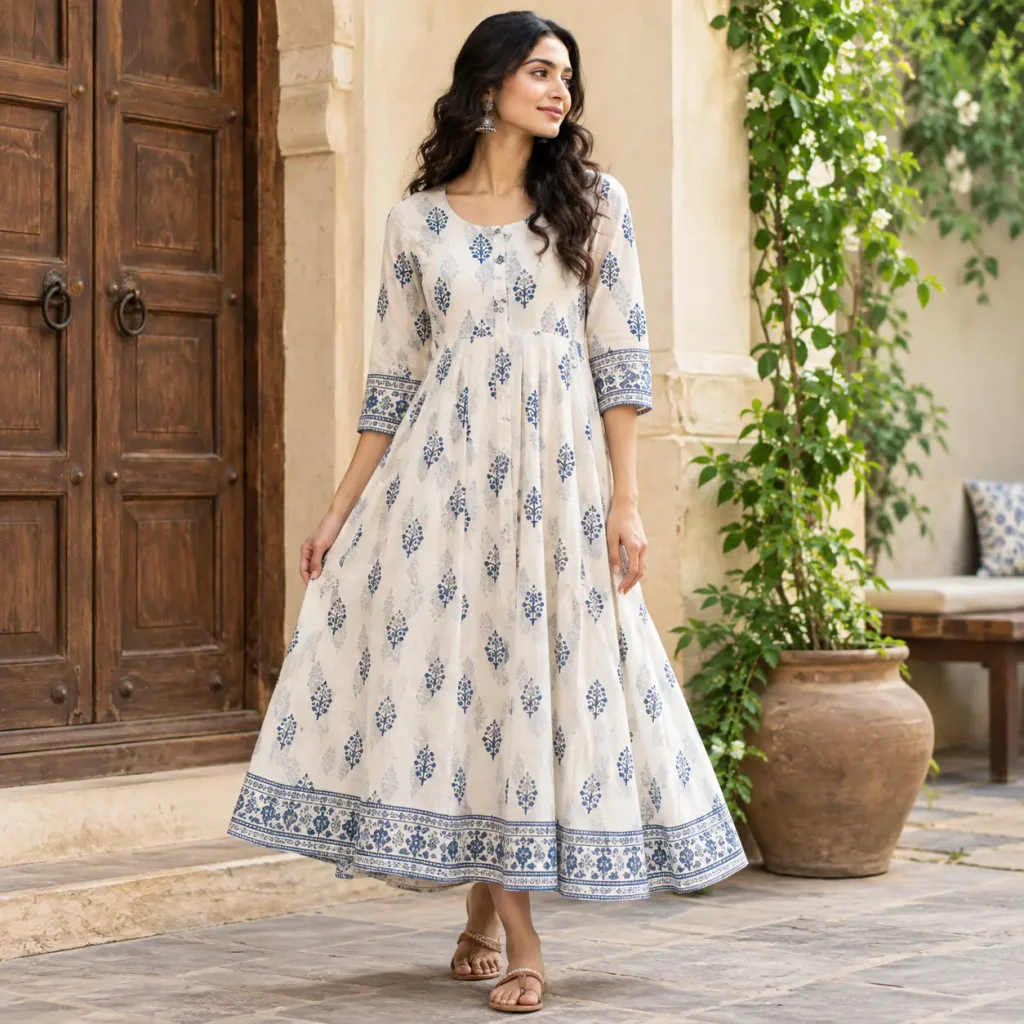
A handloom cotton A-line dress combines the naturally breathable, slightly textured character of hand-woven fabric with one of the most universally flattering silhouettes available. The gentle flare from the waist skims the body without clinging, making this style an excellent everyday choice that still carries the distinctive character genuine handloom cotton offers over mass-produced fabric.
Block Print Cotton Maxi Dress
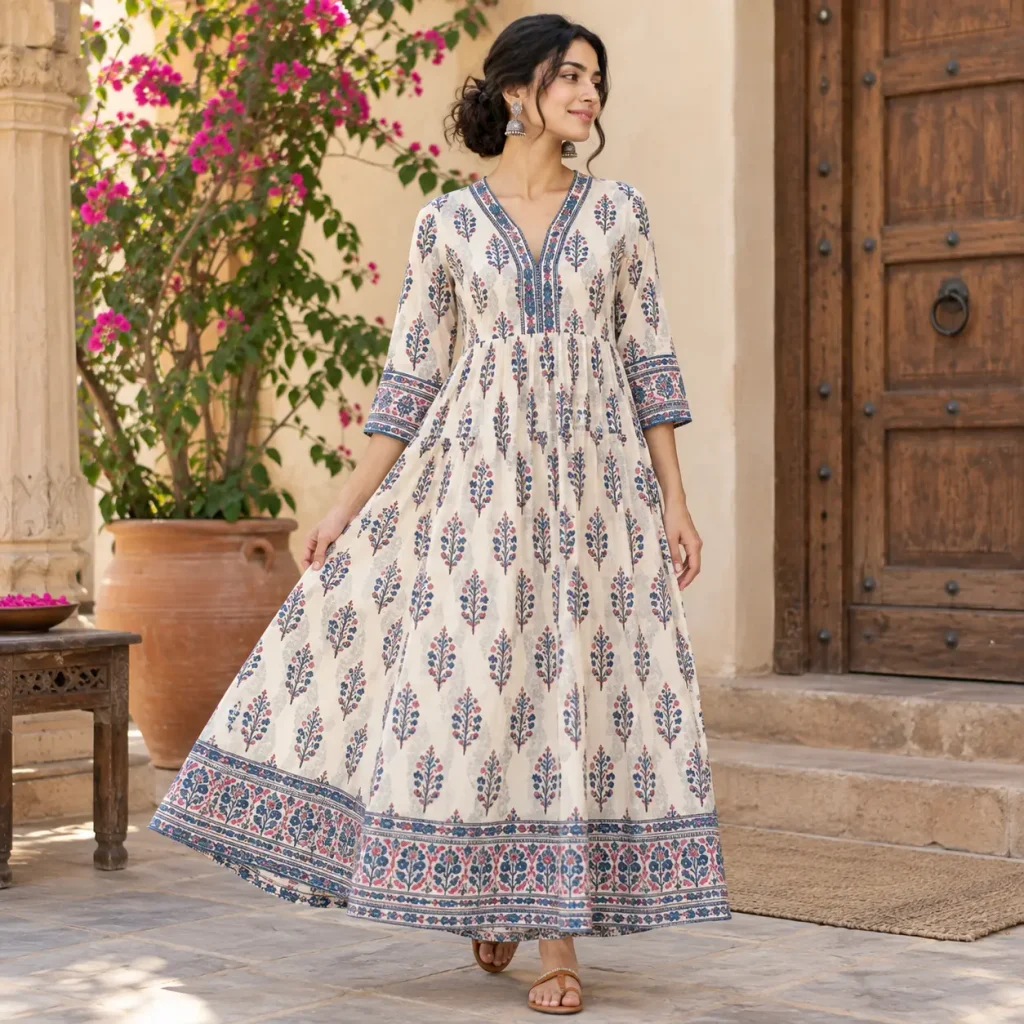
A block print cotton maxi dress showcases India’s centuries-old hand block printing tradition across a flowing, floor-length silhouette. Whether in a classic indigo floral motif or a more intricate Bagru-style pattern, this style offers a genuinely artisanal statement piece well suited to warm-weather occasions, travel, or simply an elevated everyday look.
Khadi Cotton Shirt Dress
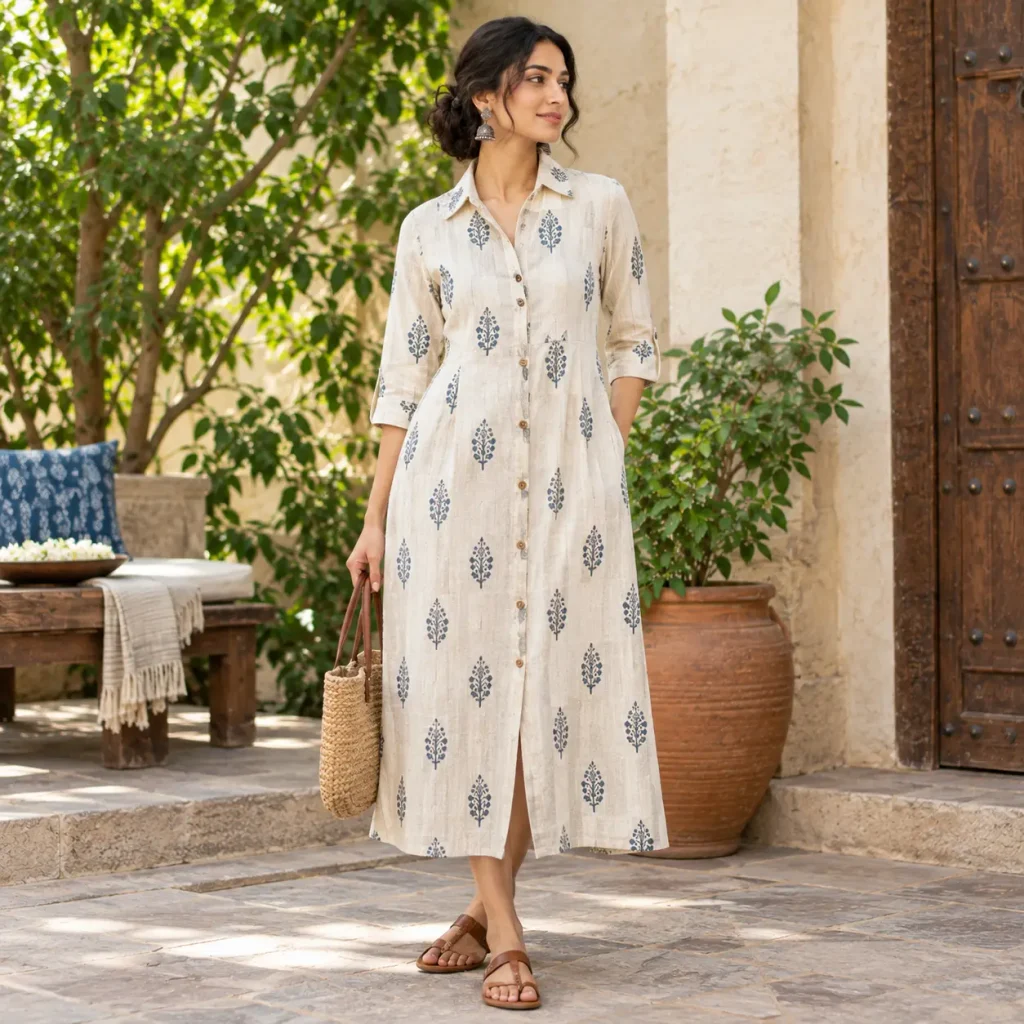
A khadi cotton shirt dress pairs the fabric’s distinctive, slightly rustic texture with a clean, structured silhouette borrowed from classic menswear tailoring. This style offers a genuinely versatile option that works equally well buttoned up for daytime wear or belted for a more defined silhouette, all while carrying khadi’s naturally breathable, temperature-regulating qualities.
Ikat Cotton Wrap Dress
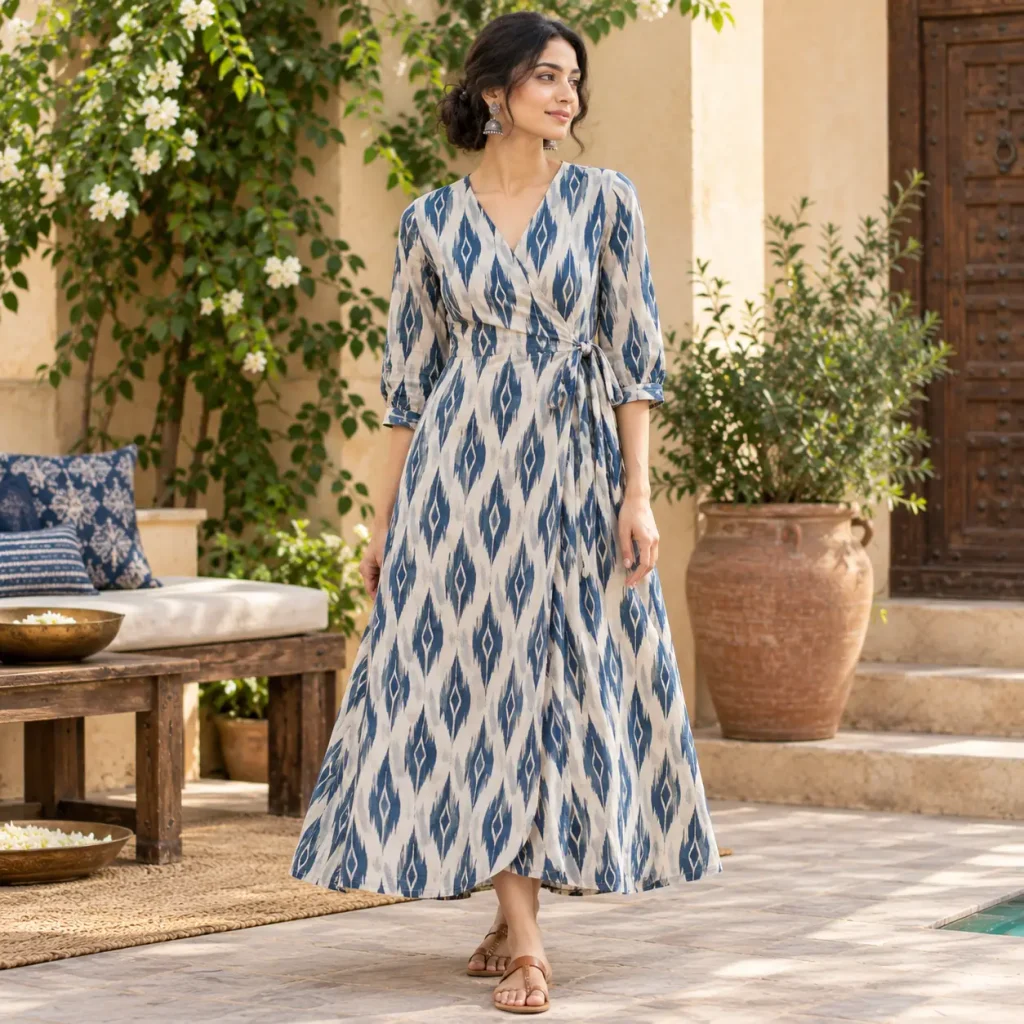
An ikat cotton wrap dress showcases the distinctive blurred, geometric patterning characteristic of ikat weaving, where yarns are dyed before weaving to create the technique’s signature soft-edged designs. The wrap silhouette adds a flattering, adjustable fit, making this style a strong choice for anyone who wants a distinctive traditional textile technique presented in a genuinely modern, wearable shape.
Indigo-Dyed Cotton Kaftan
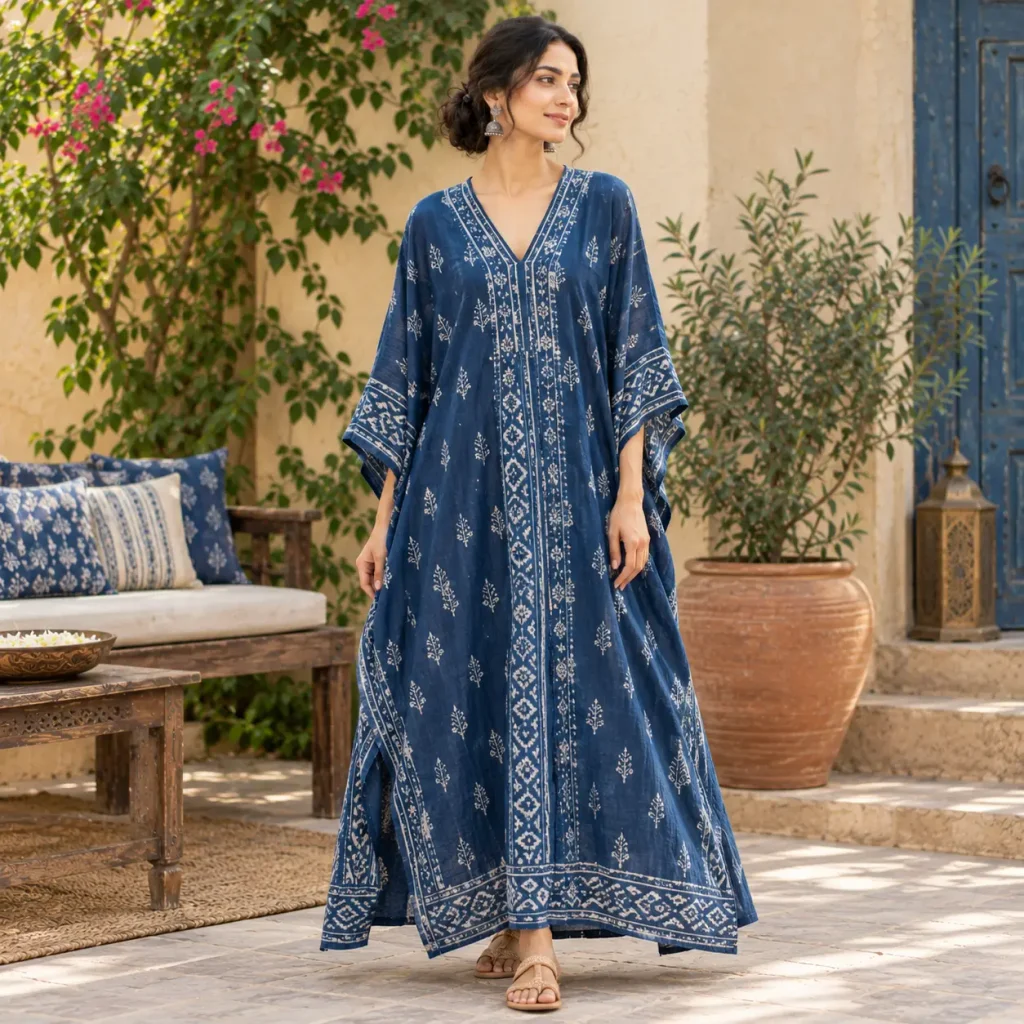
An indigo-dyed cotton kaftan offers maximum ease and breathability, making it one of the most relaxed, comfortable options in this entire category. India’s long tradition of natural indigo dyeing lends this style a rich, deep blue tone that develops beautiful character over time and repeated wear, making it a popular choice for both loungewear and casual outings alike.
Embroidered Cotton Anarkali Dress
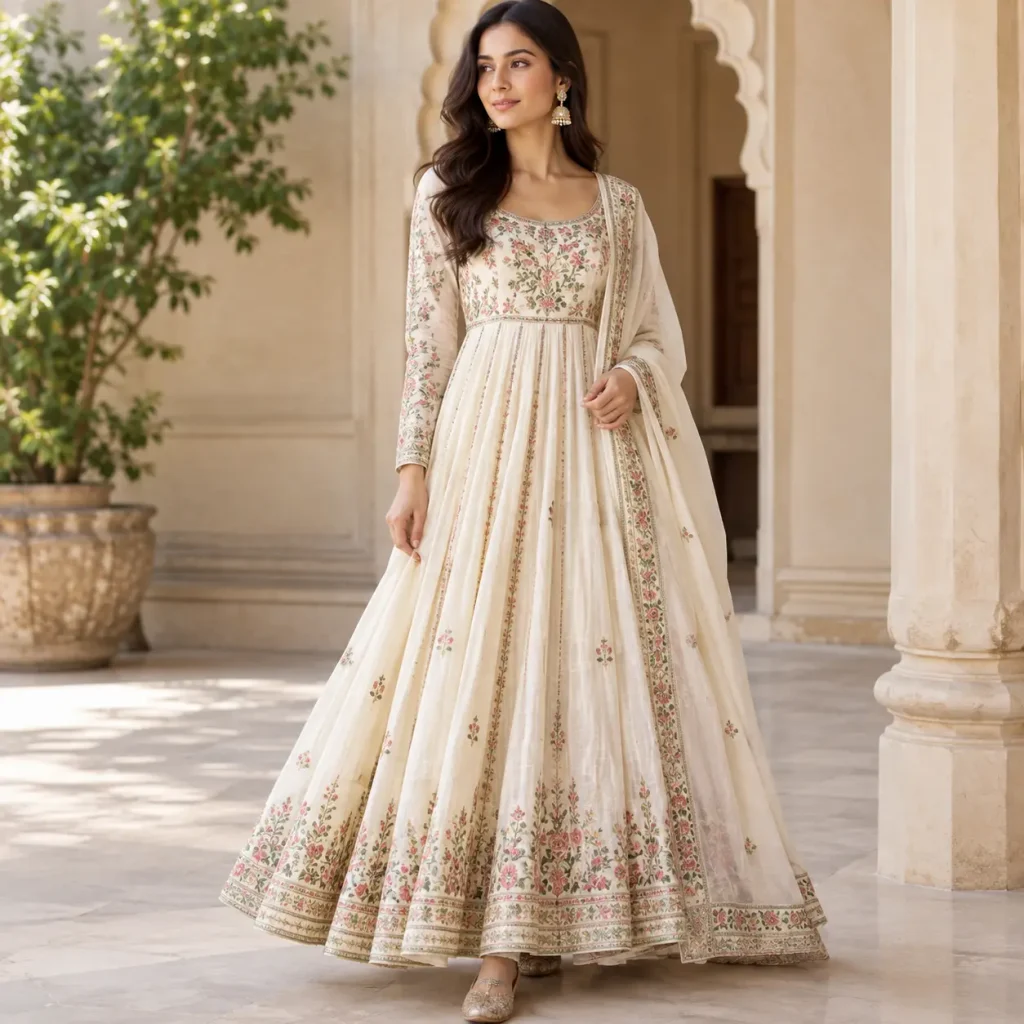
A cotton Anarkali dress, finished with traditional hand embroidery, brings a touch of ethnic occasionwear elegance while still maintaining cotton’s characteristic breathability and ease. This style works beautifully for festive daytime events or family celebrations where a fuller, more traditional silhouette feels appropriate without the heaviness of richer occasion fabrics like silk.
Solid Color Cotton Midi Dress
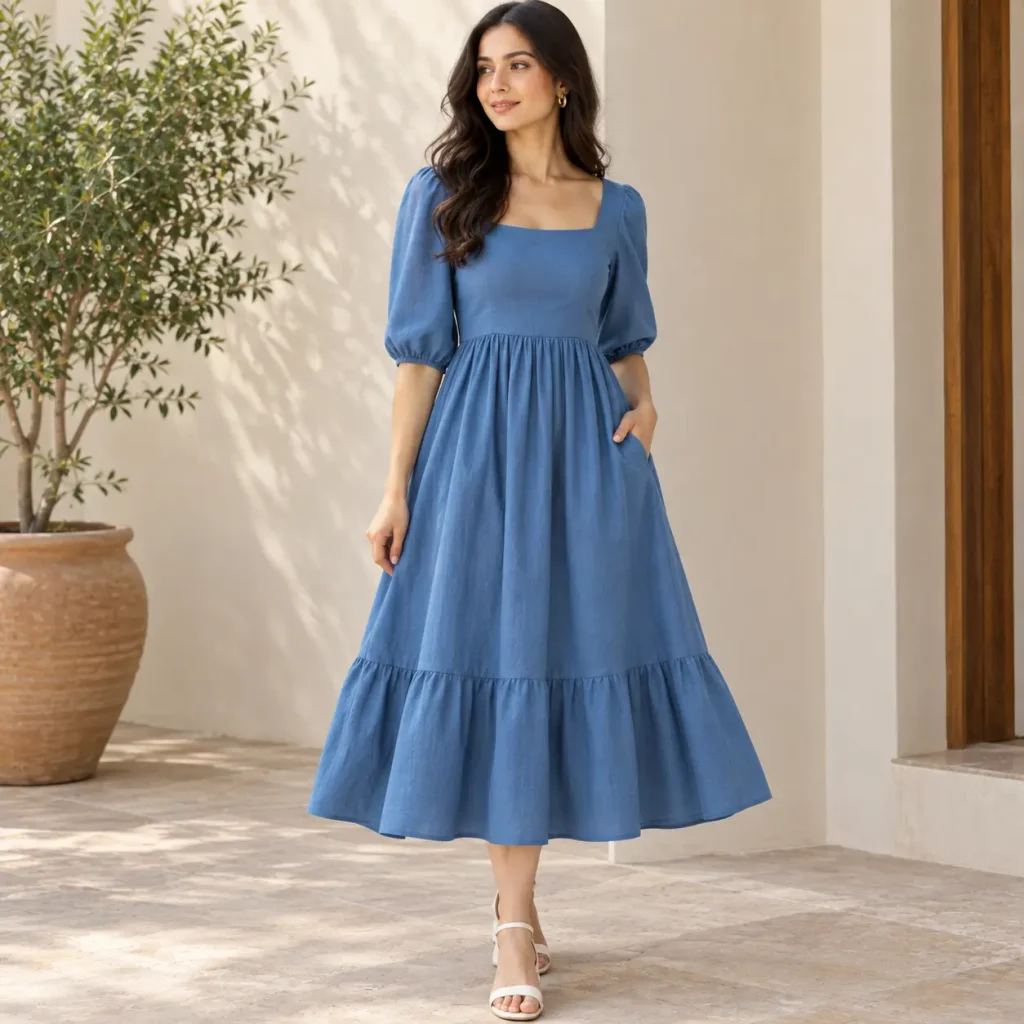
For a more minimalist take on Indian cotton dressing, a solid color cotton midi dress in a rich, saturated shade lets the fabric’s natural texture and quality speak for itself without relying on print or embellishment. This style is particularly versatile for office wear or everyday elegance, pairing easily with simple accessories for a polished, understated look.
Organic Cotton Sundress
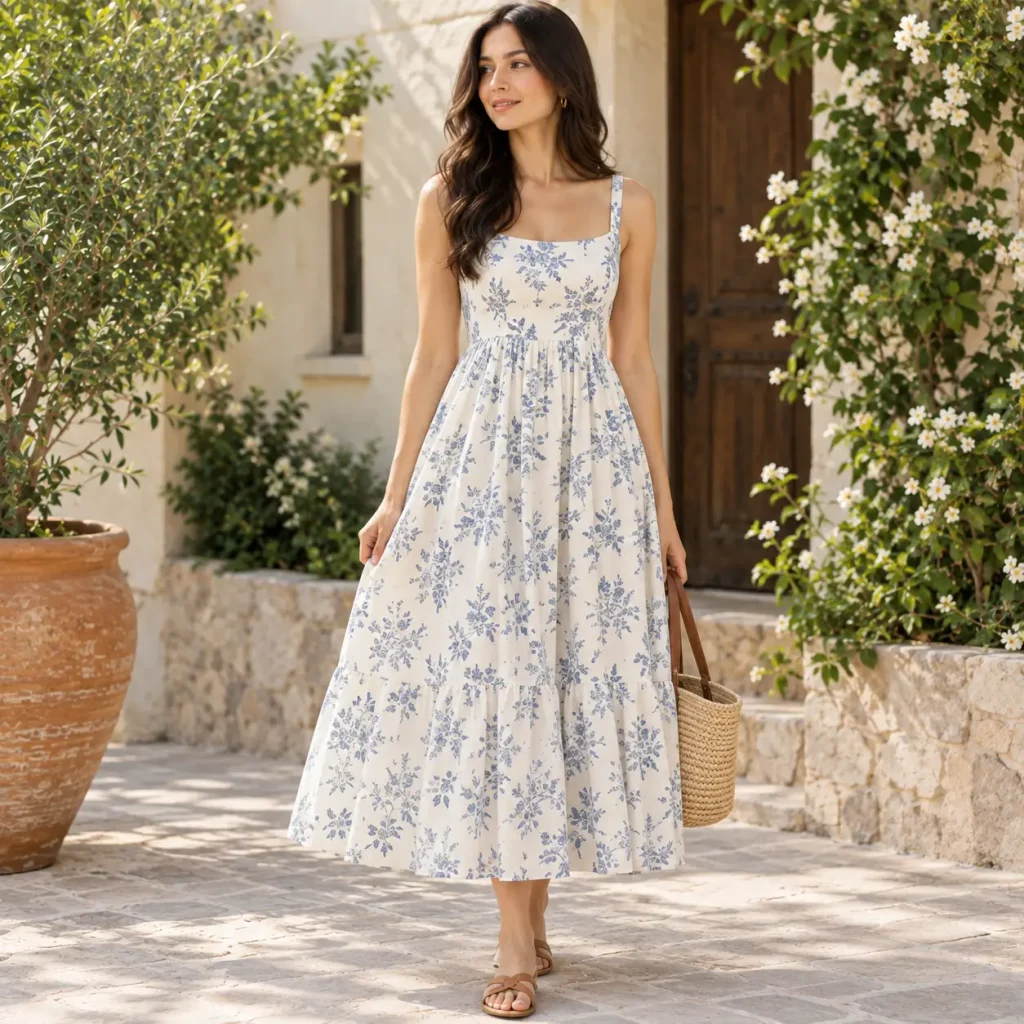
An organic cotton sundress combines sustainable, responsibly farmed cotton with a simple, breezy silhouette ideal for the hottest days of summer. Choosing organic cotton specifically appeals to shoppers prioritizing environmentally responsible fashion choices, without sacrificing the comfort and breathability that makes cotton such a reliable warm-weather fabric.
Floral Printed Cotton Kurti Dress
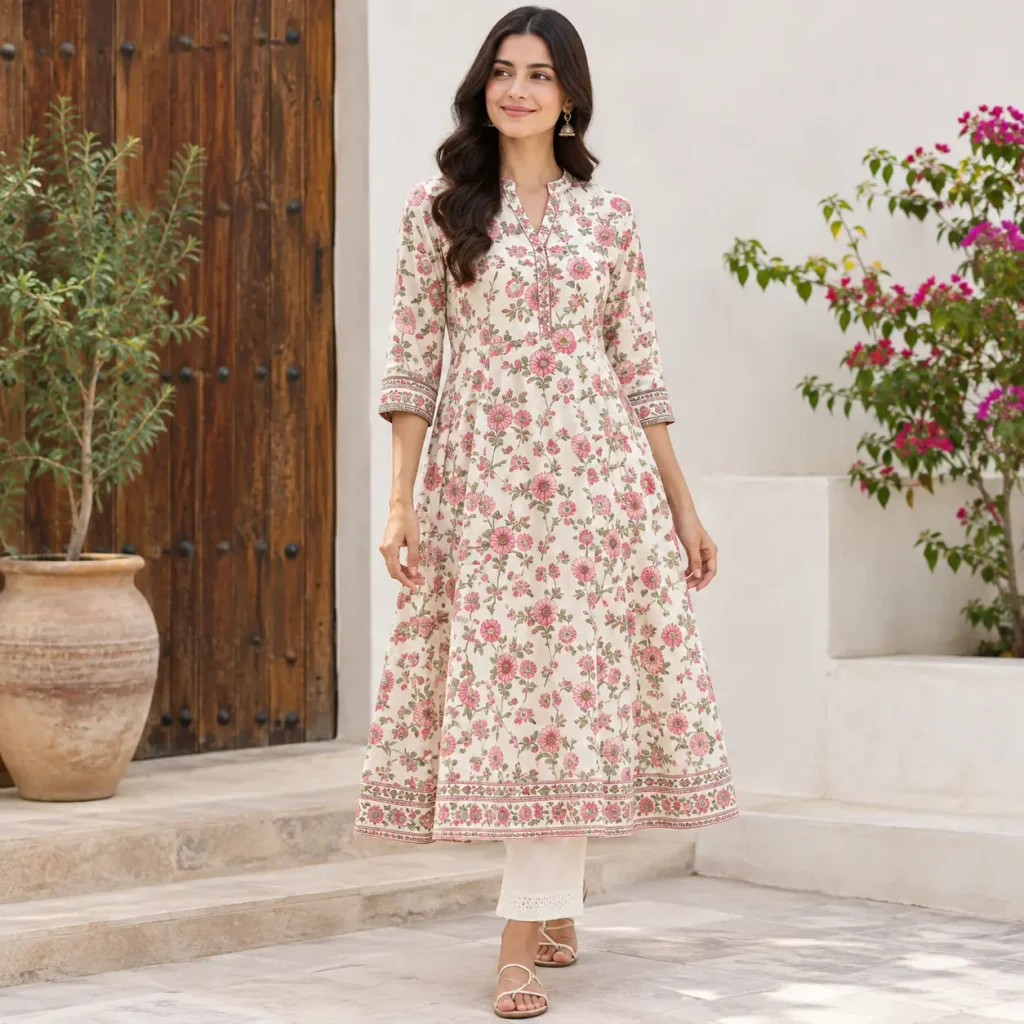
A floral printed cotton kurti-style dress bridges traditional Indian silhouettes with an easy, everyday wearability that suits both casual outings and relaxed workwear settings. The kurti’s typically straight or slightly flared cut, combined with a cheerful floral print, makes this one of the most approachable, versatile styles for anyone new to exploring Indian cotton dressing.
How to Style Indian Cotton Dresses
Styling Indian cotton dresses works particularly well when the accessories complement, rather than compete with, the fabric’s natural texture or print detail. For heavily patterned pieces like a block print maxi dress, keeping jewelry simple — a pair of small gold or silver earrings, for instance — allows the print to remain the outfit’s clear focal point. For more minimalist solid-color pieces, statement jewelry or a bold dupatta can add visual interest without overwhelming the outfit.
Layering also works beautifully with cotton dresses across seasons — a lightweight cotton or khadi jacket over a sundress extends the piece into cooler months, while a simple cardigan offers similar versatility for transitional weather.
How to Care for Cotton Dresses
Proper care helps Indian cotton dresses, particularly hand block-printed and naturally dyed pieces, maintain their color and texture over time. Washing in cold water, rather than hot, helps prevent both shrinking and premature fading, particularly important for naturally dyed fabrics like indigo, which can bleed more than synthetic dyes if washed carelessly. Hand-washing or using a gentle machine cycle, along with air drying rather than high-heat tumble drying, generally extends the life of both the fabric’s color and its natural texture considerably.
How to Choose the Right Cotton Dress Fabric
Choosing between khadi, handloom, and standard cotton largely comes down to personal priorities around texture, breathability, and craft authenticity. Khadi offers the most distinctly textured, rustic feel along with genuine cultural and historical significance, making it a strong choice for anyone drawn to traditional craft. Handloom cotton more broadly offers similar breathability and artisanal character with a somewhat wider range of finishes, from rustic to finely woven. Standard mill-produced cotton, while lacking the same craft story, still offers cotton’s core comfort benefits at a generally more accessible price point.
How to Identify Pure Cotton Fabric
A few simple checks can help confirm whether a garment is genuinely pure cotton. The fabric should feel soft yet slightly textured rather than artificially smooth or slippery, and it should crease relatively easily when scrunched in the hand, unlike many synthetic blends that resist wrinkling. Checking the garment’s care label for fiber content is the most reliable method, though a simple burn test on a small fabric swatch — pure cotton burns rather than melts, leaving an ash residue rather than a hardened bead — can offer additional confirmation for anyone sourcing fabric directly rather than a finished garment.
Indian Cotton Dresses by Occasion
Cotton dresses for summer benefit most from lightweight, breathable silhouettes like a sundress or kaftan, prioritizing airflow and comfort during the hottest months.
Cotton dresses for daily wear work well in simple, easy-care styles like an A-line or kurti dress, offering comfort and durability for regular, everyday use.
Cotton dresses for office wear lean toward more structured, minimalist styles like a solid color midi dress or a tailored shirt dress, maintaining a polished, professional appearance.
Cotton dresses for casual outings offer the most room for experimentation with bold prints and traditional techniques like block printing or ikat, since the setting allows for a more expressive, statement-making look.
Cotton dresses for travel benefit from wrinkle-resistant, easy-care fabrics that pack down small, making a well-made cotton piece a genuinely practical travel wardrobe staple.
Best Indian Cotton Dress Brands and Where to Shop
Several established Indian fashion brands have played a significant role in bringing traditional cotton textiles like khadi and hand block-printed fabric into mainstream, accessible fashion. FabIndia, in particular, is widely recognized for its extensive range of handloom and khadi clothing, helping popularize these traditional textile techniques across a broad consumer base over recent decades. Beyond larger retailers, numerous smaller artisan-focused labels and cooperatives specialize specifically in handloom and block-printed cotton, often working directly with weaving communities to bring authentic, traditionally crafted pieces to a wider market.
Also read: Modern Saree Outfit Ideas: 15 Stylish Looks to Try in 2026
Frequently Asked Questions
Are cotton dresses good for hot weather?
Yes, cotton is one of the most breathable natural fibers available, making cotton dresses an excellent choice for hot, humid weather since the fabric allows air circulation and absorbs moisture without feeling clammy against the skin.
How do you prevent cotton dresses from shrinking?
Washing cotton dresses in cold water rather than hot, and air drying or using a low-heat dryer setting, are the most effective ways to minimize shrinkage over repeated washes.
Are handloom cotton dresses expensive?
Handloom cotton dresses generally carry a higher price point than mass-produced cotton clothing, reflecting the significantly more labor-intensive, skilled process of hand-spinning and hand-weaving the fabric compared to mechanized production.
What is the difference between cotton and khadi?
Standard cotton fabric can be produced through either mechanized power looms or handloom weaving using commercially processed yarn, while khadi specifically refers to fabric that is both hand-spun and handwoven, giving it a more distinctly textured, rustic character and deeper cultural significance.
Are Indian cotton dresses sustainable?
Many Indian cotton dresses, particularly those made from handloom or khadi fabric and organic cotton, are considered more sustainable than mass-produced alternatives, both due to lower environmental impact from traditional production methods and because purchasing them supports artisan communities and traditional craft livelihoods.
Final Thoughts
Indian cotton dresses offer something genuinely rare in modern fashion: a direct connection to centuries of craft tradition, wrapped in a fabric that happens to be exceptionally comfortable and versatile for everyday wear. From a hand block-printed maxi dress to a simple, elegant khadi shirt dress, the nine styles covered here each showcase a different facet of India’s extraordinary textile heritage, proving that understated elegance and genuine craftsmanship have always gone hand in hand. Whether you’re drawn to the cultural history behind khadi or simply the breathable comfort cotton offers, these dresses prove that some of the most beautiful fashion choices are also among the most timeless.
Also Read: 14 Blouse Designs for Women That Feel Effortlessly Elegant