Packing for Italy comes with a specific kind of pressure that other trips don’t quite have. It’s not just about staying comfortable through hours of walking on cobblestones or being prepared for a sudden spring shower — it’s about showing up looking like you put some thought into it, because in Italy, people genuinely notice when you didn’t. That doesn’t mean overpacking or stressing over every outfit. It means understanding a few core principles that make Italian style so effortlessly recognizable, and knowing exactly what to wear in Italy each month of the year.
This guide breaks down what to wear in Italy month by month, from the coldest days of January to the festive chill of December, along with the style and cultural context that shapes Italian dress year-round. Whether you’re planning a summer honeymoon, a spring city-hopping trip, or a December visit to the Christmas markets, this month-by-month breakdown will help you pack lighter and dress smarter for exactly when you’re traveling.
Rather than relying on a single generic “Italy packing list” that tries to cover every possible weather scenario at once, treating each month on its own terms makes packing considerably more precise — and your suitcase considerably lighter. A trip in January calls for an entirely different foundation than one in July, and understanding those differences up front means you’ll spend less time second-guessing your suitcase and more time actually enjoying the trip.
What Is Considered Appropriate to Wear in Italy?
Italy doesn’t have an official national dress code outside of religious sites, but there are unwritten style rules that locals notice immediately. Generally, Italians dress in what’s often described as smart-casual at minimum — clean, well-fitted clothing that looks intentional, even for something as simple as grabbing a coffee. Gym wear, oversized athletic clothing, and obviously beachwear worn away from the coast tend to stand out as distinctly tourist behavior.
This doesn’t mean formal wear is required everywhere. It simply means Italians generally avoid looking sloppy or overly casual in public, favoring well-tailored basics over anything baggy or purely functional-looking.
What Makes Italian Style Unique?
Italian fashion sense is often summed up by the concept of “bella figura” — loosely translated as making a good impression, or the idea of always looking put-together, even when the outfit itself is simple. Rather than following fast-moving trends, Italian style tends to favor quality fabrics, a well-fitted silhouette, and a handful of versatile, well-chosen pieces worn with confidence.
This cultural emphasis on presentation explains why simple pairings — dark, well-fitted jeans with a crisp shirt, or a plain linen dress with the right accessories — read as distinctly stylish in Italy, while the same pieces might feel unremarkable elsewhere. It’s less about the individual items and more about fit, fabric quality, and how deliberately the whole outfit comes together.
What Fabrics Work Best for Italy’s Climate?
Fabric choice matters enormously for both comfort and style across an Italian trip. Linen is one of the most useful fabrics for warmer months, since it’s breathable, packs down small, and photographs beautifully despite wrinkling easily. Lightweight cotton is a close second, offering similar breathability with slightly less wrinkling.
For cooler months, merino wool is an excellent choice, since it provides real warmth without much bulk and also packs down compactly. A quality cotton-poly blend can be useful for spring, when unpredictable rain and humidity make quick-drying fabric more practical than pure cotton alone. Across every month, avoiding heavy synthetic fabrics is generally a good rule, since they tend to trap heat and don’t hold up as well to Italy’s seasonal swings.
Why Layering Works So Well for Italy Travel
Regardless of which month you’re visiting, layering remains one of the most useful packing strategies for an Italian trip. Italy’s climate can shift noticeably between morning and afternoon, especially in shoulder-season months like March, April, October, and November, when a chilly start can give way to a genuinely warm midday before cooling again by evening. Rather than packing separate outfits for every possible temperature swing, a base layer, a mid layer like a cardigan or light sweater, and a versatile outer layer let you adjust throughout the day without needing to return to your hotel.
This approach also solves a practical problem specific to sightseeing: churches, museums, and older buildings are often cooler indoors than the street outside, particularly in summer when air conditioning is common in larger institutions, while historic buildings without climate control can feel surprisingly chilly even on a hot day. Being able to add or remove a layer quickly keeps you comfortable without sacrificing how put-together your outfit looks.
Also Read: Weekend & Travel Outfit Ideas for Effortless Style On the Go
How to Dress Like an Italian Local
Dressing like a local in Italy has less to do with buying specific items and more to do with a handful of consistent habits. Italians generally choose fewer, better-made pieces over a large rotation of trend-driven clothing, favoring quality fabric and a precise fit over logos or flashy branding. Dark, well-fitted denim is a genuine year-round staple rather than something reserved for casual days only, and even simple outfits are usually finished with one considered detail — a well-chosen scarf, a structured bag, or polished shoes.
Perhaps most importantly, locals rarely wear obviously athletic or loungewear-style clothing outside of actual exercise, which is often the single biggest visual difference between an outfit that blends in and one that immediately reads as a tourist’s. Keeping this principle in mind while packing for any month of the year will do more for your overall look than any single trending item.
Dress Code in Italian Churches (Applies Year-Round)
Nearly every church in Italy, including major basilicas, enforces a dress code requiring both shoulders and knees to be covered for entry, regardless of the month or how hot it is outside. This rule is strictly enforced at some of the country’s most visited religious sites, where guards will turn away visitors dressed inappropriately, even during peak summer heat.
The easiest way to prepare for this is to carry a lightweight scarf or shawl in your day bag at all times while sightseeing, since it can double as a shoulder cover or a makeshift wrap over shorter hemlines. This one packing habit matters just as much in July as it does in January.
Why Comfortable Shoes Matter So Much, Every Month of the Year
Italy’s historic city centers are famously hard on footwear, thanks to uneven cobblestones, ancient stone streets, and long distances between major sights that are often best covered on foot. Comfortable leather or leather-look flats, well-broken-in sneakers in a clean, neutral colorway, and low-heeled ankle boots for cooler months all perform far better than heels, flip-flops, or brand-new shoes that haven’t been worn before the trip. Breaking in any new walking shoes well before departure is one of the most commonly repeated pieces of advice from experienced Italy travelers, since cobblestones are unforgiving toward stiff, unworn soles.
Also Read: 8 Famous Footwear Brands That Redefine Everyday Style
What to Wear in Italy: 12 Months, 12 Outfits
What to Wear in Italy in January
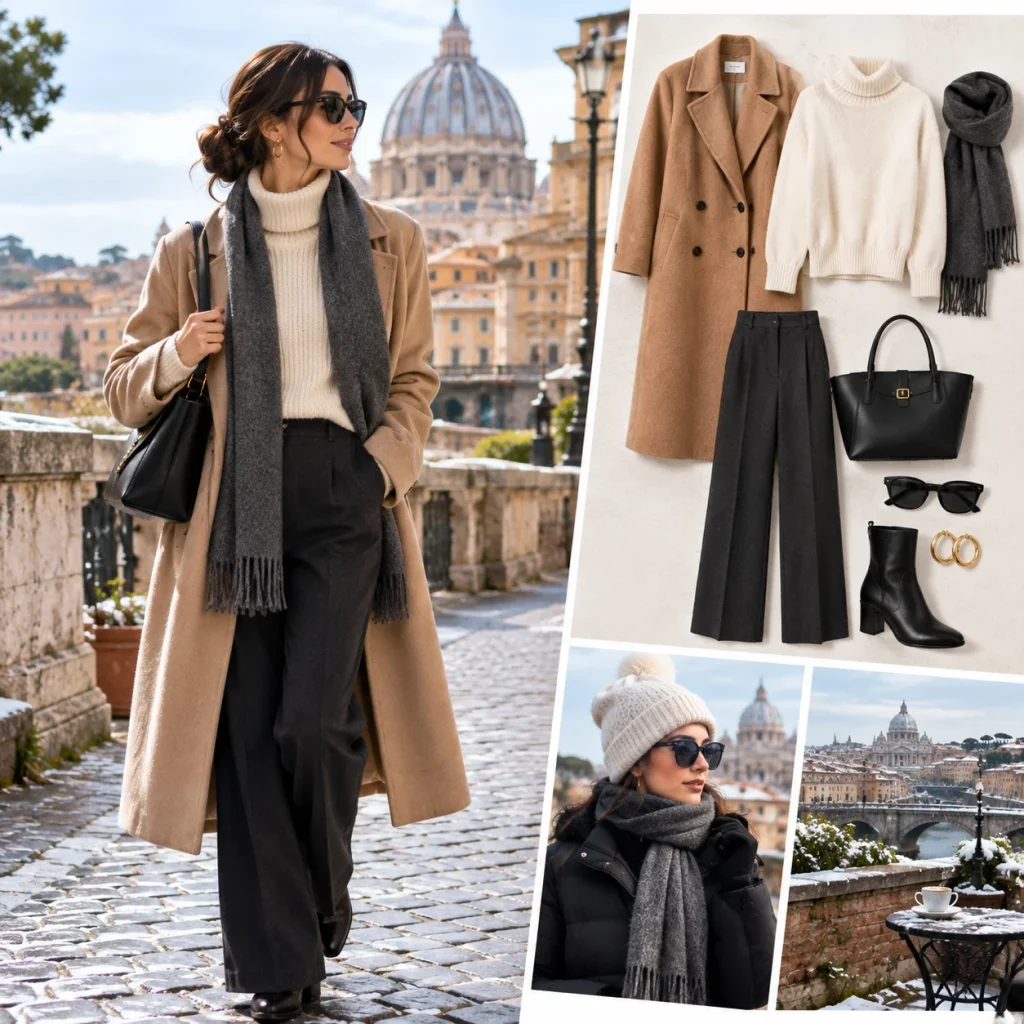
January is one of the coldest months across most of the country, with northern cities like Milan feeling genuinely wintry and even southern regions like Sicily cooling down noticeably compared to summer. The right outfit here is a wool coat over a chunky sweater and thermal-lined trousers, finished with lined leather boots and a warm scarf. Layering matters enormously in January, since indoor spaces like restaurants and museums are often well-heated, making it useful to have pieces you can remove easily rather than a single bulky layer.
What to Wear in Italy in February
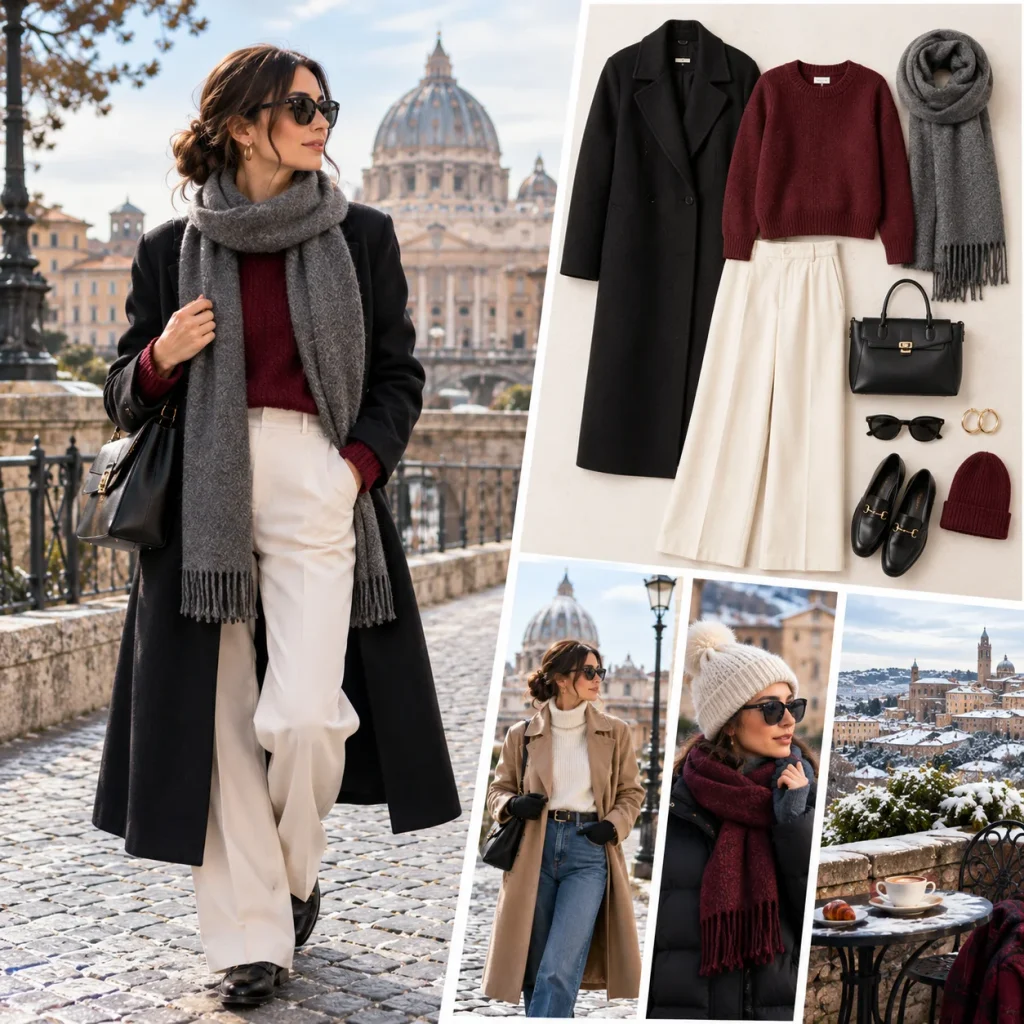
February tends to stay close to January’s chill, though days are beginning to lengthen slightly by month’s end. A similar winter formula works well: a tailored wool coat, a fine-knit sweater, dark denim or wool trousers, and ankle boots. February is also a good month to pack a slightly dressier evening option, such as a cashmere sweater with tailored trousers, since it’s a popular month for weekend city breaks and romantic getaways around Valentine’s Day.
What to Wear in Italy in March
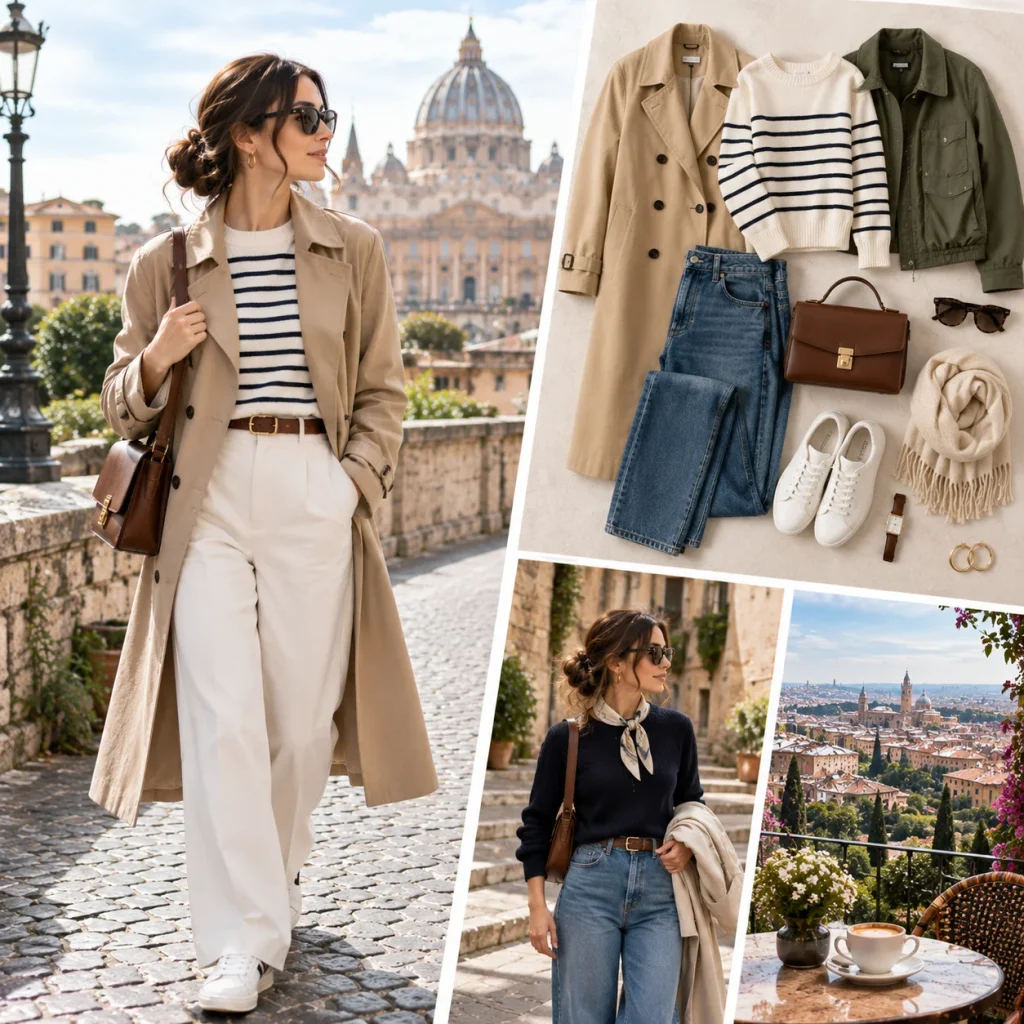
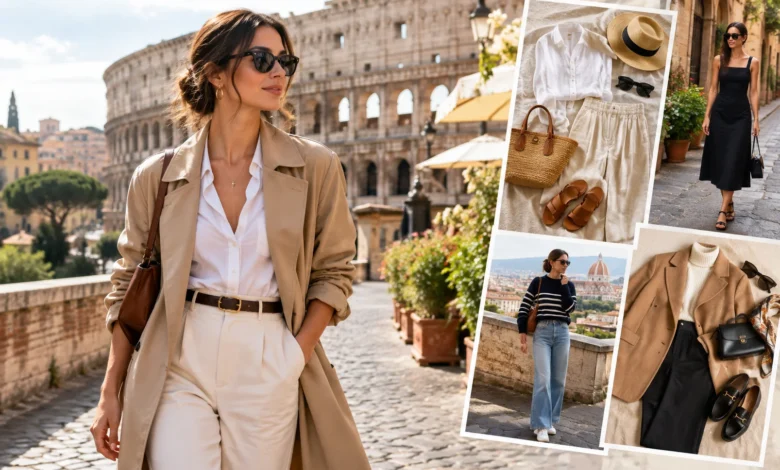
March marks the start of Italy’s notoriously unpredictable spring, with Rome averaging noticeably milder temperatures than Milan, which can still feel quite cold this early in the season. Layering is the key strategy: a mid-weight jacket or trench coat over a light sweater or blouse, paired with jeans or trousers and comfortable walking shoes. A packable rain layer is worth including, since March showers are common, particularly in northern regions.
What to Wear in Italy in April
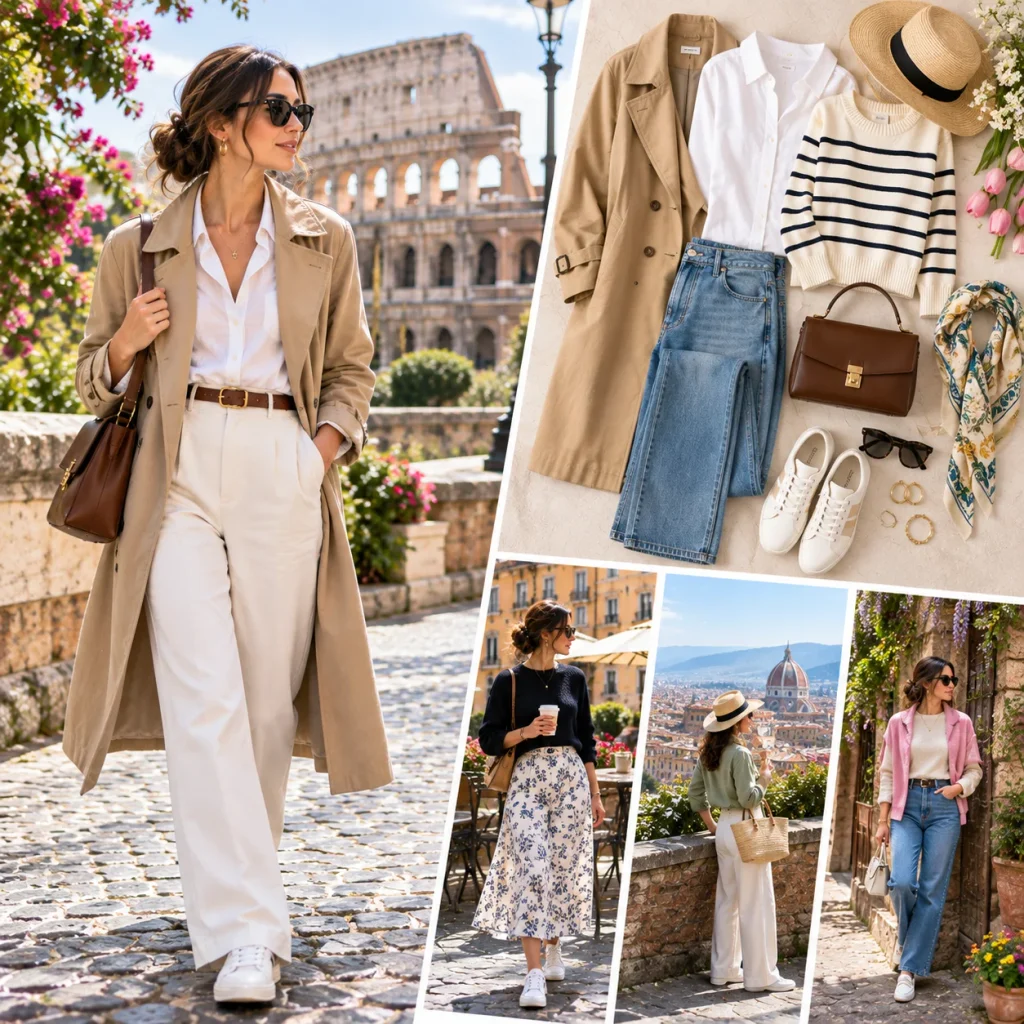
April brings noticeably warmer afternoons but still-cool mornings and evenings, along with Italy’s spring rainy season in full swing. A lightweight trench coat paired with a breathable top and comfortable trousers handles both the rain and the day’s warming temperatures well. This is also one of the best months to visit churches and cathedrals comfortably, since a light jacket easily doubles as shoulder coverage without needing a separate scarf.
What to Wear in Italy in May
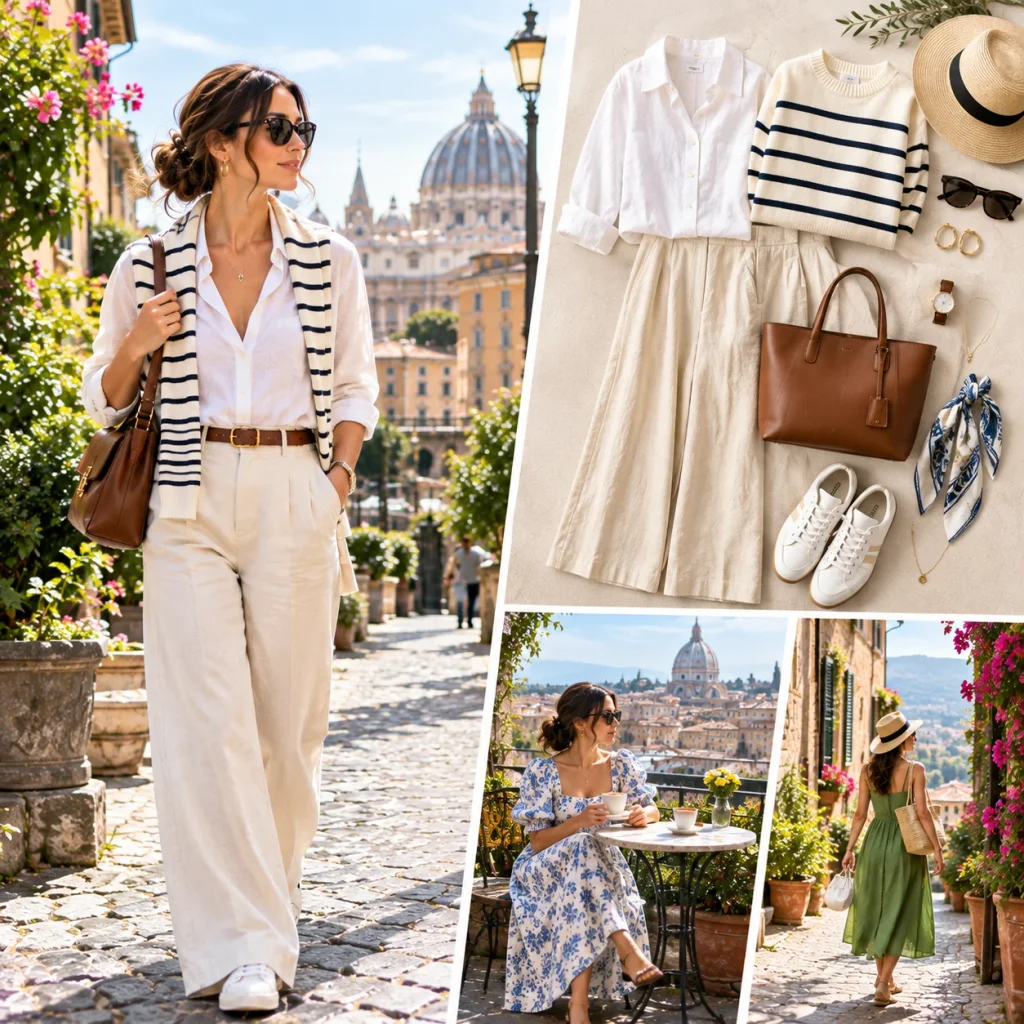
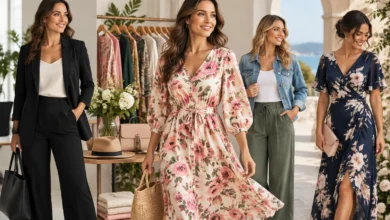
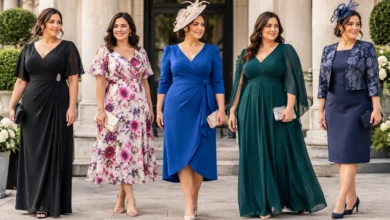
By May, most of Italy has shifted into genuinely warm, pleasant weather, though evenings can still call for a light layer. A flowy midi dress or linen separates work beautifully for daytime sightseeing, paired with comfortable sandals, while a light cardigan or denim jacket covers cooler evening temperatures. May is also a popular month for spring weddings, making a slightly dressier outfit — a tailored dress or a blazer with trousers — worth packing alongside your everyday sightseeing pieces.
What to Wear in Italy in June
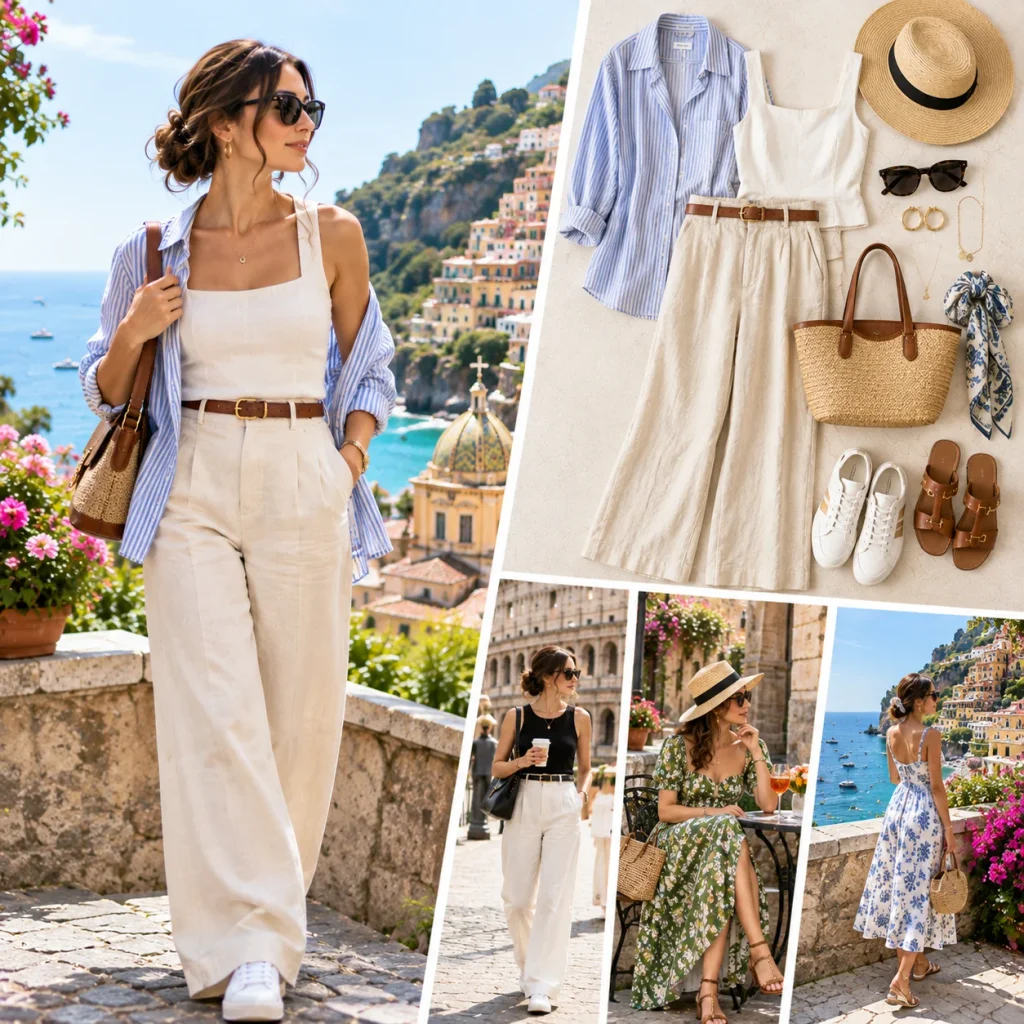
June marks the true start of Italian summer, with heat building steadily across the country, particularly inland. Lightweight linen or cotton dresses, breathable button-down shirts, and tailored shorts all work well for daytime activities, while evenings still allow for slightly cooler, more comfortable temperatures than the peak of summer. June is also a popular month for summer weddings in Italy, so packing one elevated outfit — a linen suit for men or a flowing dress for women — is worth considering alongside your casual daytime pieces.
What to Wear in Italy in July
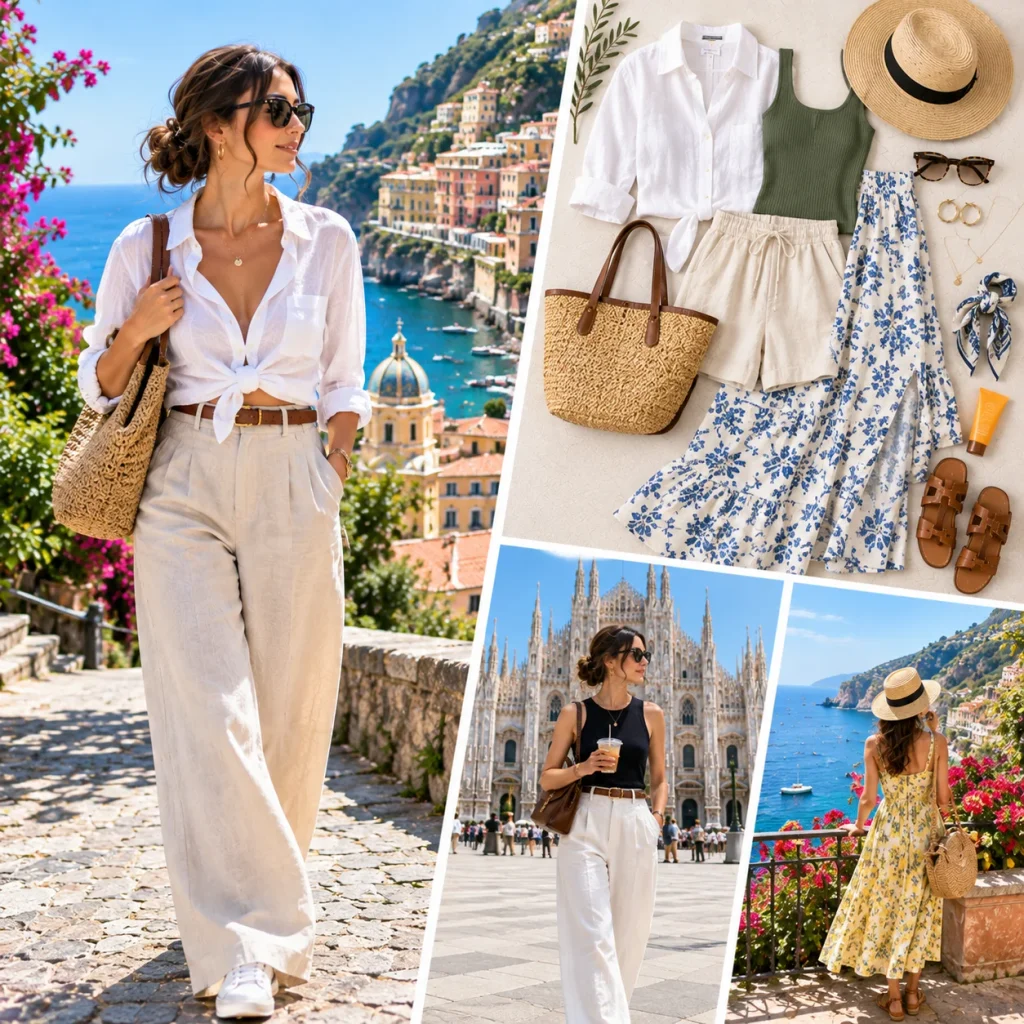
July brings intense heat across most of the country, with cities like Rome and Florence regularly reaching some of their hottest temperatures of the year. The lightest, most breathable clothing in your wardrobe belongs in a July suitcase: loose linen dresses, breathable cotton shirts, and tailored shorts for men, paired with sandals or breathable sneakers. Evenings still call for slightly more polished pieces than daytime shorts, reflecting the elevated dress standard Italians maintain even for casual summer dinners.
What to Wear in Italy in August
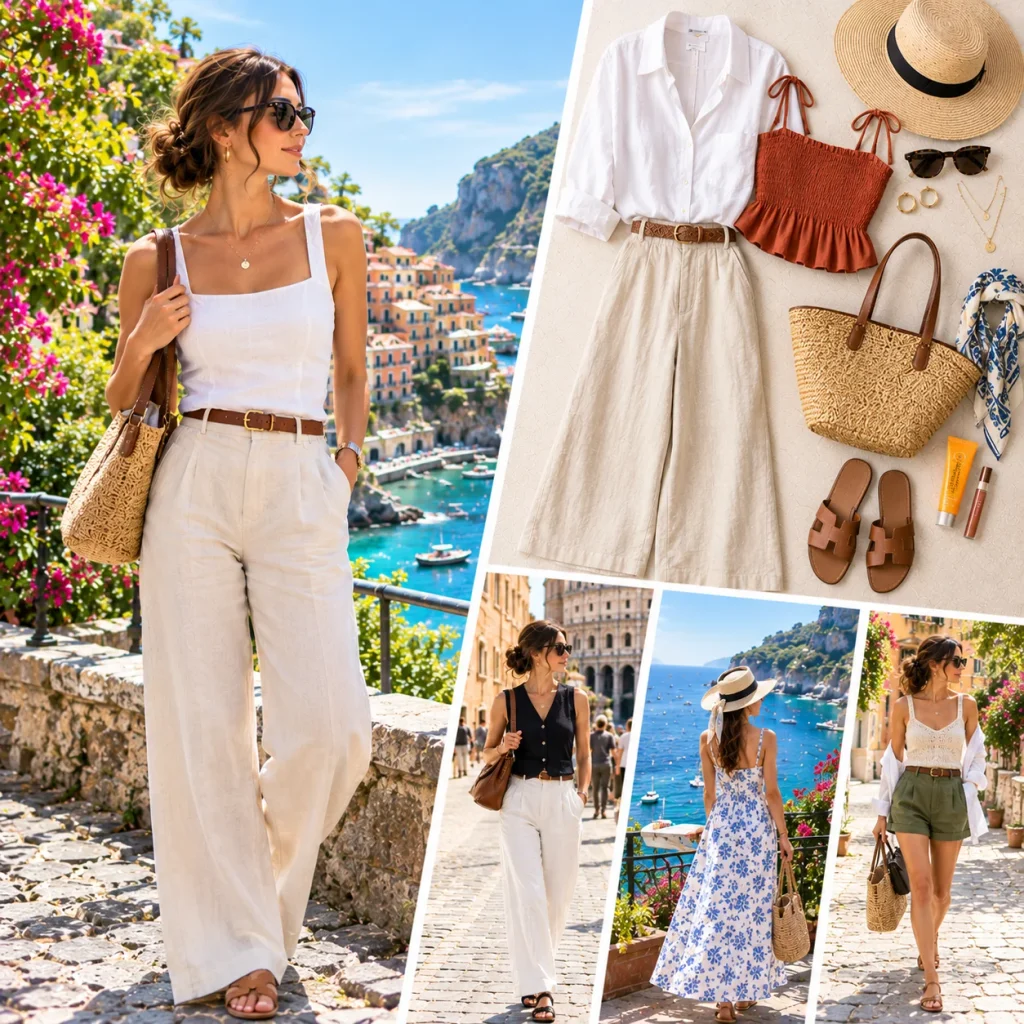
August generally continues July’s intense heat, and it’s also the month when many Italians themselves take their own summer holidays, meaning cities can feel quieter while coastal areas get busier. The same lightweight linen and cotton strategy from July applies here, with an emphasis on sun protection — a wide-brimmed hat and light, breathable long sleeves for anyone spending extended time outdoors during the hottest part of the day.
What to Wear in Italy in September
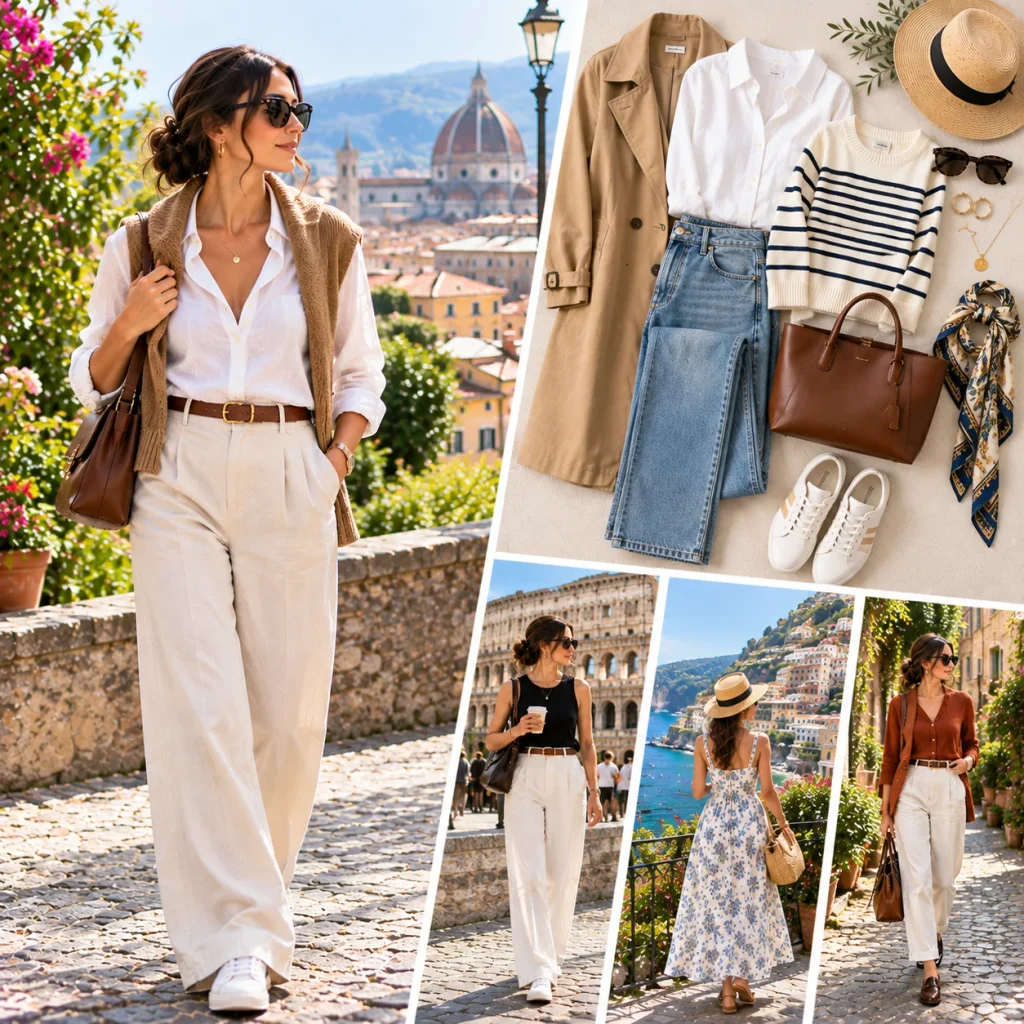
September brings a welcome, gradual cooldown, making it one of the most comfortable months for extensive sightseeing. Lighter layers still work well during the day, but evenings increasingly call for a proper light jacket. A linen shirt or dress during the day, paired with a leather jacket or light cardigan for cooler evenings, captures the transitional feel of this month particularly well. September is also a popular month for honeymoons, making it worth packing at least one elevated evening outfit alongside your daytime basics.
What to Wear in Italy in October
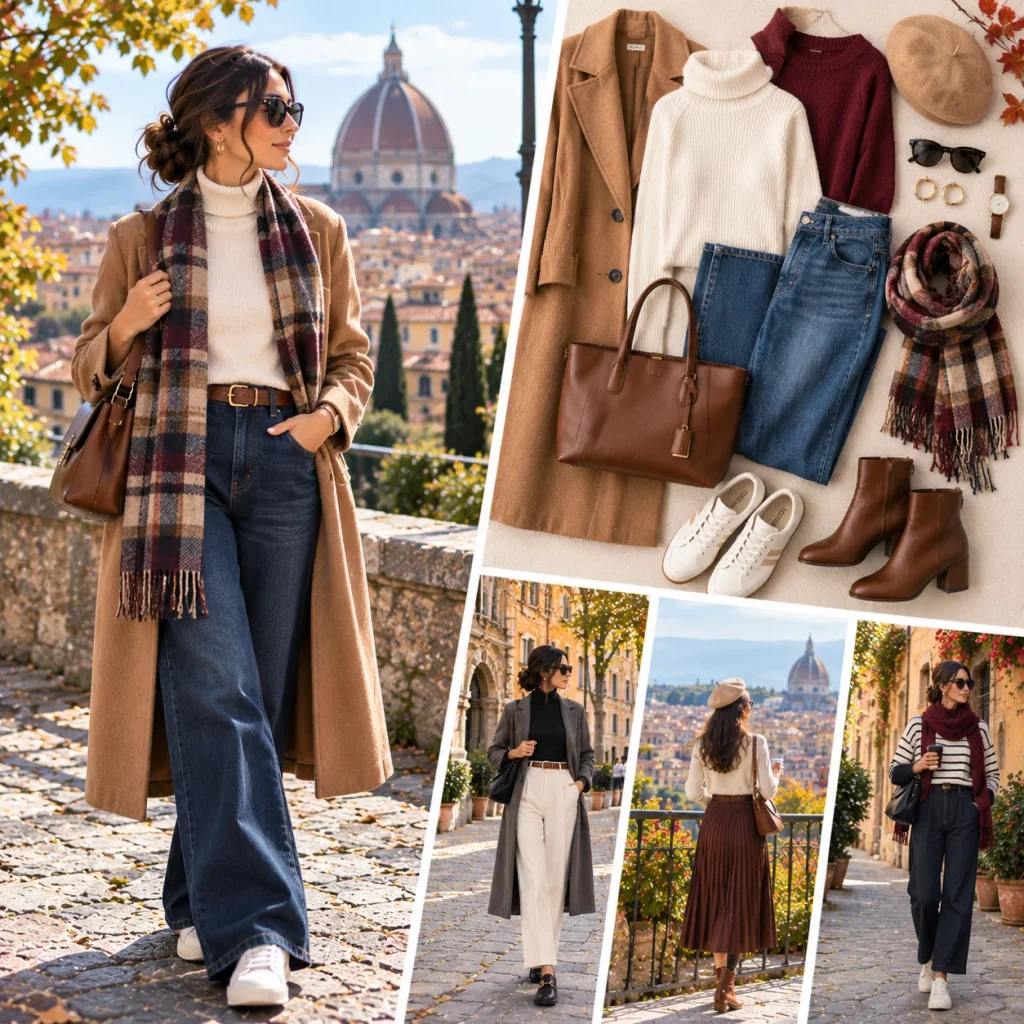
October continues cooling steadily, and by this point, a proper jacket becomes a daily necessity rather than an evening-only layer. A leather jacket or mid-weight coat paired with a scarf, jeans or trousers, and ankle boots forms a reliable daily uniform. October showers are fairly common as well, making a compact umbrella or light rain jacket worth keeping in your bag regardless of how the forecast looks that morning.
What to Wear in Italy in November
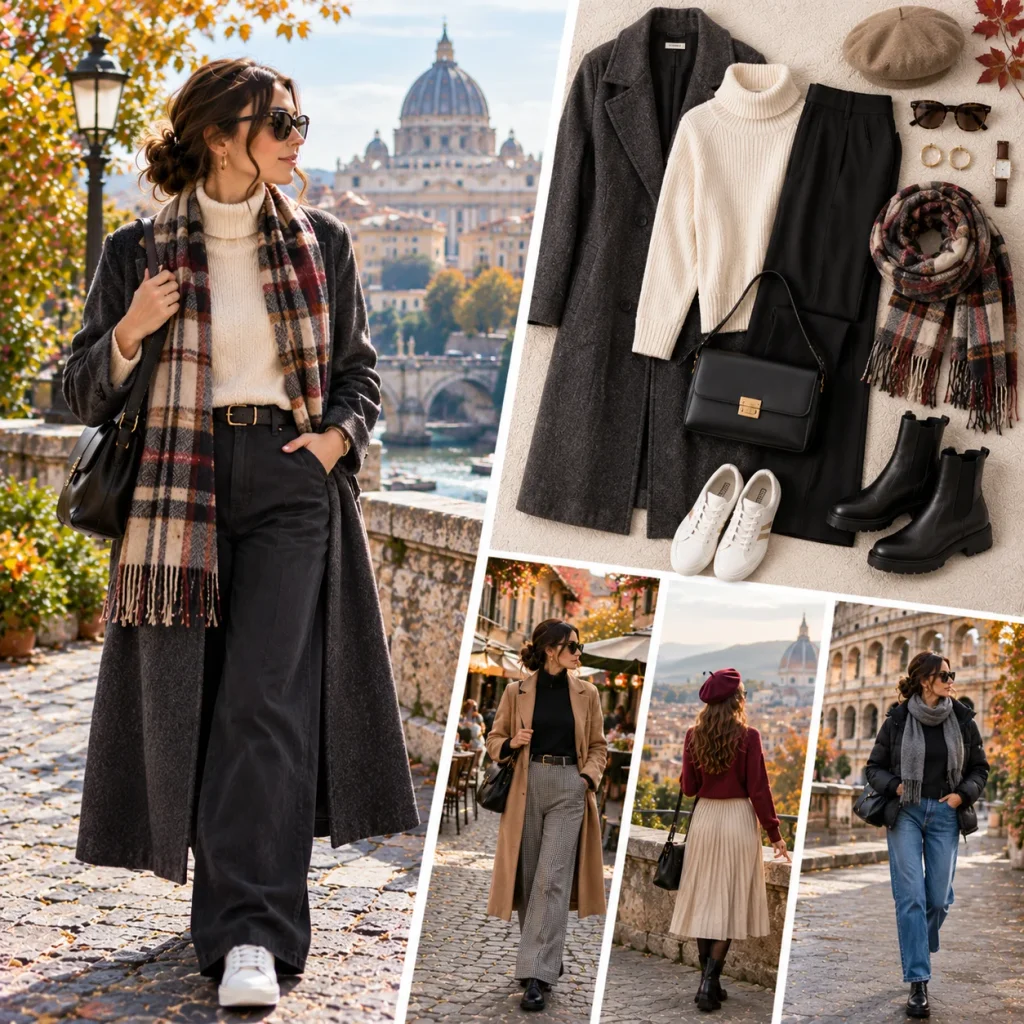
November is one of the wetter, cooler months of the year, falling squarely into Italy’s fall rainy season alongside a noticeable drop in temperature. A warm coat, a waterproof or water-resistant outer layer, and sturdy, comfortable boots become essential here, paired with sweaters and thermal layers underneath as needed. This is a month where prioritizing genuinely functional rain protection matters just as much as style, particularly if your itinerary includes northern cities.
What to Wear in Italy in December
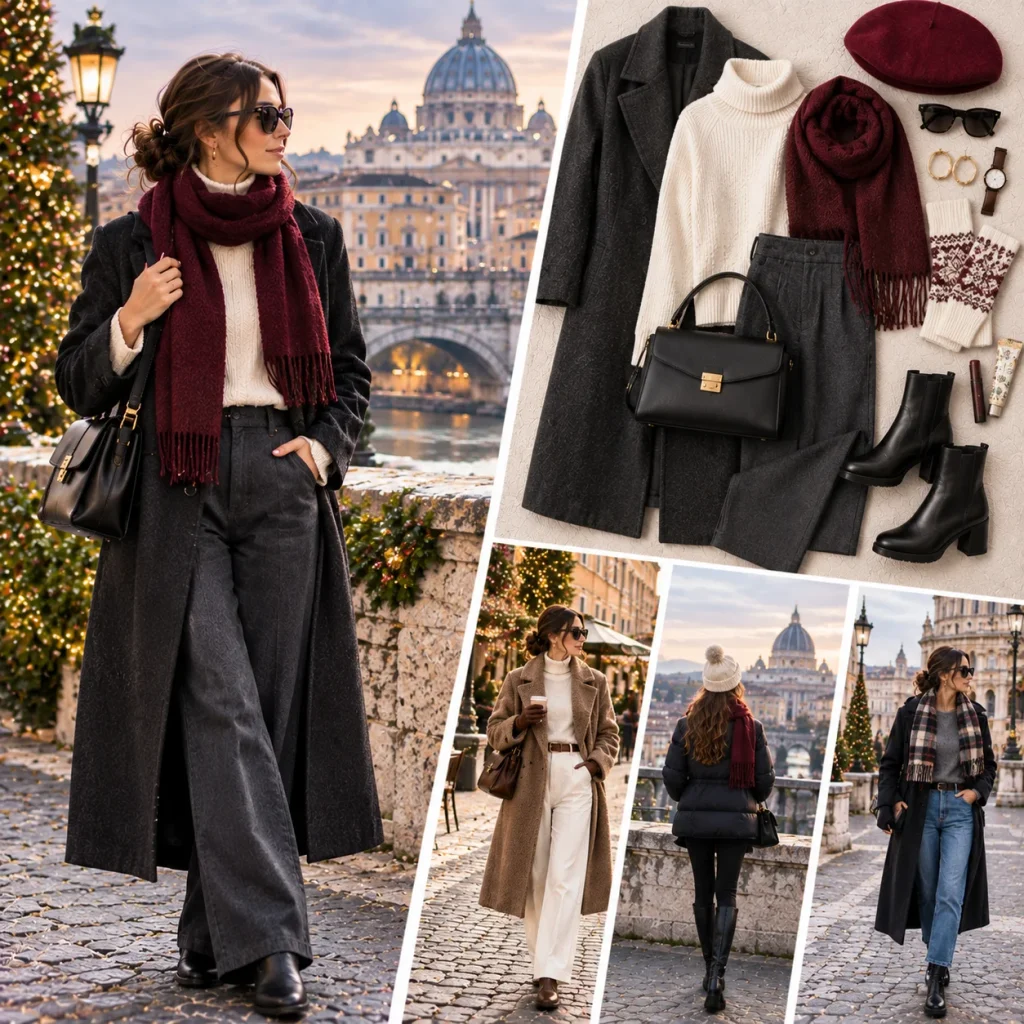
December often overlaps with holiday travel and Christmas markets, calling for warm layers that can still look polished for festive evening outings. A wool coat, a chunky knit sweater, and lined boots handle the cold effectively, while a cashmere sweater or a slightly dressier top works well layered underneath for evening events or holiday dinners. December weather varies considerably by region, so checking conditions for your specific destination — the Dolomites versus Sicily, for instance — matters more this month than almost any other.
Italian Fashion Culture Explained
Italy’s reputation as a global fashion capital didn’t happen by accident. The country is home to some of the world’s most influential fashion houses, and that concentration of design talent and craftsmanship has shaped everyday dressing habits far beyond the runway. Generations of Italians have grown up around a culture that treats clothing as a form of everyday craftsmanship rather than disposable fast fashion, which is part of why quality fabric and precise tailoring matter so much more broadly across the country than in many other places.
This history also explains why Italian fashion differs meaningfully by region. Northern cities like Milan lean into a sleeker, more fashion-forward aesthetic shaped by the city’s role as a design capital, while southern regions and coastal areas tend toward a more relaxed, sun-friendly interpretation of the same underlying principles — quality fabric, a considered fit, and a general reluctance to look underdressed in public.
Benefits of Packing Versatile, Season-Appropriate Outfits
Packing with your specific travel month in mind, rather than a generic one-size-fits-all list, pays off in a few concrete ways. It keeps your luggage lighter, since you’re not hedging against weather that won’t actually occur during your trip. It also means every piece you bring gets genuine use, rather than sitting unworn because it was packed for the wrong season.
Versatile, well-chosen pieces also make it far easier to move between daytime sightseeing and evening plans without a full outfit change, which matters given how much ground most Italy itineraries cover in a single day. A few thoughtfully chosen layers, suited specifically to the month you’re traveling, will consistently serve you better than a large suitcase packed for every possible scenario at once.
What to Wear in Italy by City
What to wear in Rome generally follows the broader smart-casual Italian standard, with comfortable, sturdy walking shoes being especially important given the city’s uneven ancient cobblestones, and a modest layer on hand for its many churches and basilicas.
What to wear in Milan tends to lean slightly more polished and fashion-forward than other Italian cities, reflecting its status as a major fashion capital. Tailored basics and a well-put-together silhouette go a long way here, even for casual daytime activities.
What to wear in Florence calls for the same seasonal layering principles as the broader Tuscany region, with comfortable shoes being essential for the city’s stone-paved historic center and a scarf on hand for its strictly enforced church dress codes.
What to wear in Venice should account for the city’s unique network of narrow stone lanes and frequent water taxis, making flat, grippy shoes far more practical than heels or slick-soled footwear.
What to wear on the Amalfi Coast leans more relaxed and resort-appropriate compared to inland cities, with flowy dresses, linen separates, and comfortable sandals suiting the coastal, scenic setting.
What to wear in Tuscany, including its countryside towns, generally follows the same seasonal principles as Florence, though more relaxed dressing is generally acceptable in smaller rural towns compared to major city centers.
What Not to Wear in Italy
A handful of specific items consistently read as distinctly tourist-coded and are worth leaving at home regardless of which month you’re visiting. Athletic wear like leggings, sweatpants, and gym shorts is generally reserved for actual exercise rather than everyday sightseeing. Flip-flops are typically fine at the beach but stand out noticeably in cities. Very short shorts or mini-skirts, along with bare shoulders, will get you turned away from church entrances year-round.
Brand-new, unbroken-in shoes are also worth avoiding, not for style reasons but purely practical ones — cobblestones are punishing on stiff soles, and blisters can derail an entire day of sightseeing in any month.
How to Build a Capsule Wardrobe for Italy
A well-planned Italy travel capsule wardrobe generally works best around two to three bottoms, four to five tops, one versatile dress, one layering piece like a cardigan or light sweater, one jacket or coat appropriate to the month you’re traveling, and no more than two pairs of shoes. Choosing pieces in a coordinated, neutral color palette makes it far easier to mix and match across a full trip without needing to overpack.
For a typical week-long trip, this kind of capsule approach usually allows for a carry-on-only packing strategy, particularly when fabrics are chosen specifically for their ability to resist wrinkling and dry quickly if hand-washed mid-trip.
It’s also worth building your capsule around one accent color or accessory rather than several competing ones, since this makes it far easier to mix pieces across multiple days without any single outfit looking repetitive in photos. A single versatile scarf, for instance, can update the same base outfit for daytime sightseeing, an evening dinner, and a quick church visit, all within the same day, without requiring a separate piece for each occasion.
Italy Outfit Ideas by Traveler Type
What to wear in Italy as a woman generally follows the month-specific guidance already covered, with dresses, midi skirts, and tailored separates offering the most versatile foundation across occasions. What to wear in Italy as a man tends to center around well-fitted jeans or chinos, breathable button-downs or polos, and a versatile jacket appropriate to whichever month you’re traveling.
For solo travelers, prioritizing a crossbody bag and comfortable, secure footwear matters slightly more, given the additional awareness required when navigating busier tourist areas alone. Italy outfit ideas for couples often work well when both travelers coordinate loosely around a similar color palette, particularly for dinner outfits or photos, without needing to match outfits exactly.
Frequently Asked Questions
Do Italians dress more formally than tourists?
Not necessarily more formally, but generally more intentionally. Italians tend to favor well-fitted, put-together basics over purely casual or athletic clothing, even for simple daytime errands, which is often the main visible difference between local style and typical tourist dress.
Is it okay to wear shorts in Italy?
Yes, particularly from June through August, though tailored, knee-length shorts are generally more in keeping with local style than very short athletic styles. Shorts of any length are not appropriate for entering churches, regardless of month.
What shoes are best for walking in Italy?
Comfortable, well-broken-in leather or leather-look flats, sneakers in a clean neutral color, or low-heeled ankle boots for cooler months are generally the best choices, given how demanding Italy’s cobblestone streets are on footwear year-round.
What should you avoid wearing in Italy?
Athletic wear like leggings and gym shorts outside of actual exercise, flip-flops in cities, very short shorts or mini-skirts, and bare shoulders when visiting churches are among the most commonly cited items to avoid in any month.
How many outfits should you pack for a week in Italy?
Rather than one full outfit per day, most travelers pack a smaller core wardrobe of mixable pieces designed to create roughly 7 to 10 different outfit combinations across a week-long trip, adjusted for whichever month they’re traveling in.
Final Thoughts
Dressing well for Italy ultimately comes down to understanding a few consistent principles — smart-casual as the baseline, comfortable shoes as a non-negotiable, a modest layer on hand for church visits, and clothing chosen specifically for the month and region you’re visiting. From a wool coat in January to a linen dress in July, the twelve monthly breakdowns covered here each apply these same principles differently, proving that dressing chic in Italy has far more to do with thoughtful, season-specific packing than an elaborate wardrobe. With a well-planned capsule suited to your exact travel month, you’ll be ready to look effortlessly put-together in any Italian city, any time of year.
Also Read: 7 Basic Tees You’ll Wear on Repeat