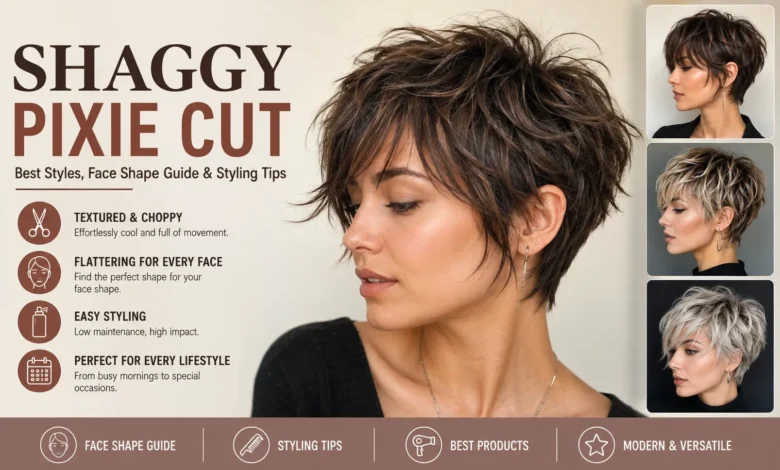
If you’ve been scrolling through your Pinterest board or salon inspiration folder lately, chances are you’ve seen the shaggy pixie cut everywhere. It’s choppy, it’s textured, it’s effortlessly undone — and it’s quickly becoming one of the most requested haircuts of the season. Unlike the sleek, structured pixie cuts of the past, the shaggy version brings movement, personality, and a lived-in feel that works with your hair instead of against it.
But before you sit down in that salon chair, there’s a lot to think about. Will it suit your face shape? Does it work with fine hair or thick hair? How much maintenance does it actually need? In this guide, we’re breaking down everything you need to know about the shaggy pixie cut — from styling and face shape compatibility to the exact words to use with your stylist so you walk out with the cut you actually wanted.
What Is a Shaggy Pixie Cut?
A shaggy pixie cut is a short haircut built on choppy, layered texture rather than smooth, uniform lines. Where a classic pixie is tight, polished, and close to the head, a shaggy pixie is deliberately imperfect — think feathered layers, textured ends, and a slightly tousled crown that looks great whether you style it or let it air-dry.
The “shag” element comes from heavy layering throughout the top and crown, combined with point-cutting or razor-cutting techniques that create soft, wispy tips instead of blunt edges. The result is a cut that has volume without looking overly structured, and movement without needing a full styling routine every morning.
This is part of why the style has taken off: it photographs beautifully, but it’s also genuinely wearable for everyday life — school runs, office days, weekend brunches, all of it.
Why the Shaggy Pixie Cut Is Trending Right Now
A few reasons this cut keeps showing up in salons and on social feeds:
- It’s low-effort but high-impact. The choppy layers are designed to look intentional even when you haven’t styled them.
- It works across hair types. Whether you have fine hair, thick hair, straight hair, or waves, the layering technique can be adjusted to flatter your texture.
- It’s a confidence cut. Short hair with texture tends to read as bold and modern, and a lot of women are gravitating toward styles that feel expressive rather than “safe.”
- It ages beautifully. Because it’s built on movement rather than precision, it doesn’t require constant touch-ups to look sharp — it just keeps evolving as it grows out.
Feminine Shaggy Pixie Cut: Soft, Romantic, Effortless
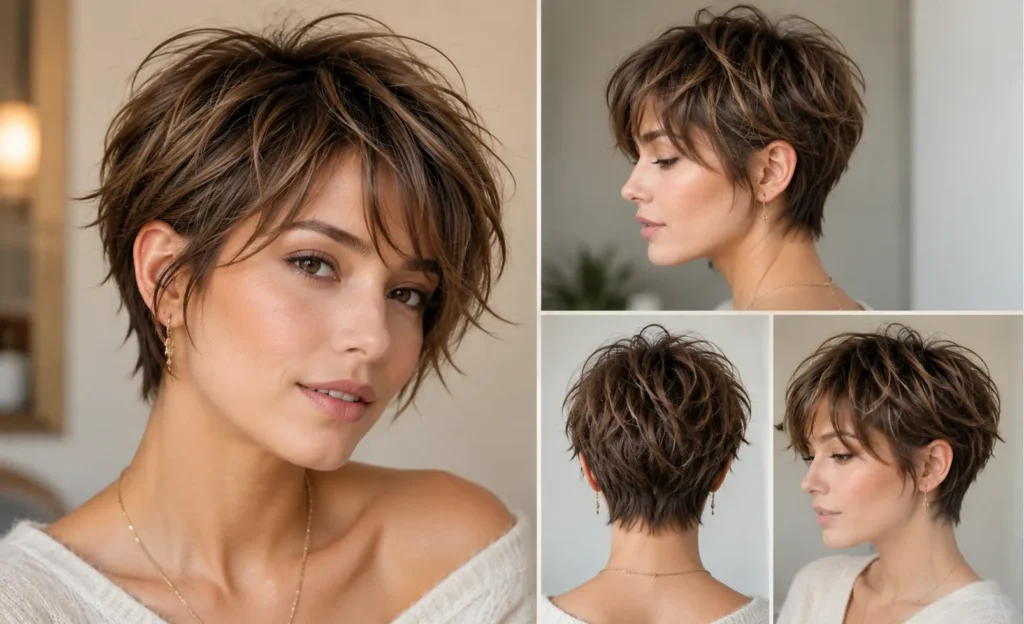
Not every shaggy pixie has to look edgy or severe. A feminine shaggy pixie cut softens the choppy layers with rounder shaping around the face, longer face-framing pieces, and subtle waves or curls added through styling.
To get this look:
- Ask your stylist to keep length around the front and sides slightly longer than the crown, so you have soft pieces to frame your face.
- Use a lightweight curling wand on the longest sections to add gentle waves rather than tight curls.
- Finish with a soft-hold texturizing spray instead of a heavy pomade — this keeps the shape airy rather than sculpted.
- Consider keeping the color natural or adding soft balayage pieces around the face for extra dimension.
This version tends to suit people who want the boldness of short hair without losing a soft, approachable look. It’s especially popular for those transitioning from long hair for the first time, since it eases into short hair rather than jumping straight into something razor-sharp.
Also Read: Hair Care Routine 101: How to Build Healthy Hair Habits for Your Hair Type
Low Maintenance Shaggy Pixie Cut: For Busy Schedules
One of the biggest selling points of this haircut is how genuinely low-maintenance it can be — if it’s cut correctly for your lifestyle. A low maintenance shaggy pixie cut is designed to look good with minimal daily styling, which makes it ideal for anyone short on time in the morning.
Tips for keeping it truly low-maintenance:
- Get the cut layered evenly, so it falls into place naturally rather than needing a diffuser and round brush every day.
- Use a texturizing cream, not a heavy gel, right after towel-drying — a small amount worked through damp hair lets it dry into shape on its own.
- Skip daily heat styling. A well-cut shag doesn’t need a flat iron or curling wand for everyday wear; save heat tools for special occasions.
- Book regular trims every 4-6 weeks. This is the one non-negotiable step — the layered shape depends on regular upkeep to keep its texture from growing out unevenly.
If your goal is a wash-and-go routine, tell your stylist exactly that during your consultation. They can adjust the layering and weight of the cut so it naturally falls into place without much effort from you.
Edgy Messy Shaggy Pixie Cut: Bold and Undone
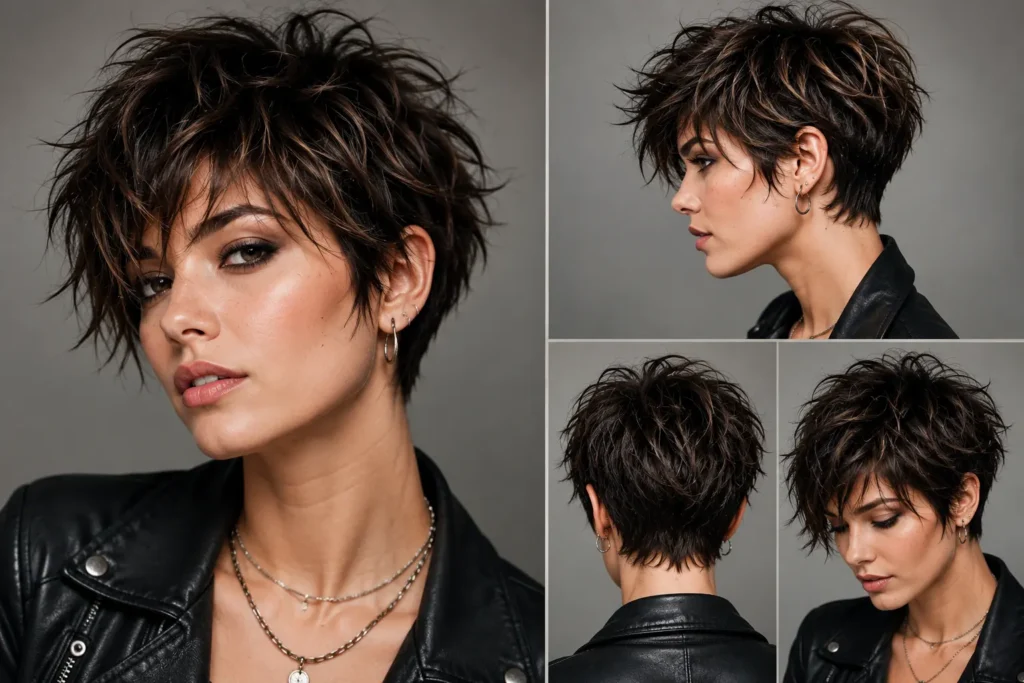
On the opposite end of the spectrum is the edgy messy shaggy pixie cut — a version that leans fully into texture, asymmetry, and a deliberately undone finish. This is the style you’ll see on fashion-forward influencers and in editorial shoots, where the goal isn’t polish but personality.
What sets this version apart:
- Heavier point-cutting throughout, creating spikier, more fragmented pieces rather than soft feathering.
- Longer, choppier fringe that can be pushed to one side or worn loose across the forehead.
- Matte styling products like clay or fiber paste, which add texture and separation without shine.
- Asymmetrical elements, such as one side cut shorter than the other, or an undercut detail at the nape for extra edge.
To style it, work a small amount of matte paste between your fingers and scrunch it through damp or dry hair, focusing on the ends. Tousle with your fingers rather than a brush — this cut is meant to look a little undone, and over-brushing will flatten the texture you’re going for.
This version tends to suit people who already gravitate toward bold fashion choices and want their hair to match that same energy.
Fine Hair Shaggy Pixie Cut: Creating the Illusion of Volume
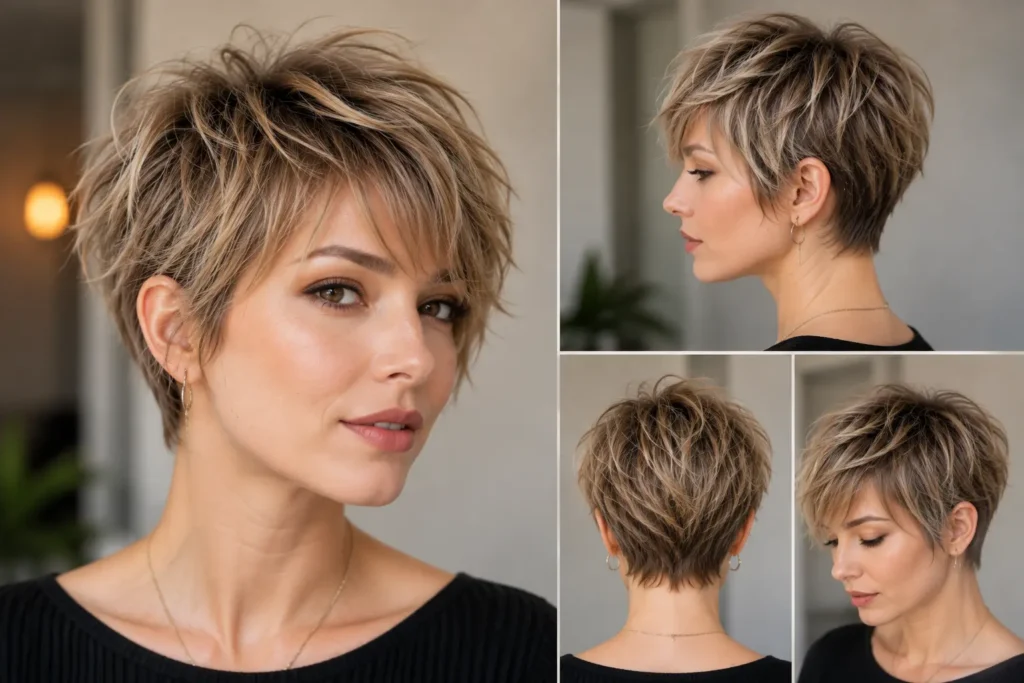
If you have thin or fine strands, you might worry that short layers will make your hair look even more sparse. In reality, a well-executed fine hair shaggy pixie cut can be one of the best options for fine hair, because shorter layers reduce the weight that drags hair flat.
Key adjustments for fine hair:
- Fewer, more strategic layers. Too many thin layers on fine hair can actually make it look thinner — your stylist should focus texture mainly at the ends and crown.
- Root-lifting products. A volumizing mousse applied at the roots before blow-drying upside down adds noticeable lift.
- Avoid heavy oils or creams, which can weigh fine hair down. Lightweight, water-based texturizing sprays work better.
- Consider a slightly shorter length overall. Fine hair tends to look fuller the shorter it is, since there’s less length for it to fall flat under.
Choppy Fine Hair Shaggy Pixie Cut
A choppy fine hair shaggy pixie cut takes this a step further by adding sharper, more fragmented ends rather than soft, blended layers. The choppiness creates the visual illusion of texture and density, tricking the eye into perceiving more volume than the hair actually has. This is a favorite technique among stylists specifically for clients with fine or thinning hair who still want a textured, modern look.
Thick Hair Shaggy Pixie Cut: Managing Volume and Weight
Thick hair brings a different set of considerations. While there’s no shortage of volume to work with, the challenge is usually managing bulk so the cut doesn’t look heavy or triangular.
For a thick hair shaggy pixie cut:
- Heavy layering and thinning shears are your stylist’s best tools — removing bulk from the interior of the haircut while keeping the outer shape intact.
- Point-cutting the ends breaks up thickness and creates the soft, feathered look that defines a proper shag rather than a blunt, helmet-like short cut.
- Curl-friendly. If you have natural texture or waves, thick hair often holds a shaggy pixie shape exceptionally well, since there’s enough hair for the layers to move and separate naturally.
- Product-wise, a lightweight sea salt spray can enhance texture without adding extra bulk, which is usually more useful than volumizing products (you already have plenty of volume to work with).
Thick-haired clients often find this cut liberating, since it removes weight and makes daily styling significantly faster than longer thick hairstyles that require more time to dry and detangle.
Long Shaggy Pixie Cut & Messy Long Shaggy Pixie Cut
If you’re not ready to go extremely short, there’s a middle ground. A long shaggy pixie cut keeps more length throughout — often falling between a pixie and a bob — while still incorporating the choppy, layered texture that defines the shag.
This version typically features:
- Longer layers on top, sometimes long enough to tuck behind the ears.
- A fuller fringe area that can be styled forward, swept to the side, or grown out into face-framing pieces.
- More versatility for updos or half-up styles, since there’s slightly more length to work with than a traditional short pixie.
A messy long shaggy pixie cut takes this longer version and styles it with intentional texture and undone movement — think slightly damp-look waves, a bit of fringe pushed off to one side, and a general “just got out of bed but somehow still look put together” vibe. It’s a popular choice for people who want the edge of a pixie with a bit more length to play with.
This style is also a smart transitional cut if you’re growing your hair out from a shorter pixie but aren’t ready to commit to something significantly longer.
Shaggy Pixie Cut With Bangs: Framing the Face
Adding bangs to a shaggy pixie is one of the easiest ways to change the entire feel of the haircut. A shaggy pixie cut with bangs can soften a strong jawline, balance a longer face shape, or simply add another styling option to an already versatile cut.
Popular bang variations to discuss with your stylist:
- Curtain bangs: Parted in the middle and swept to either side, these soften angular features and work well with most face shapes.
- Choppy, textured bangs: Cut with a razor for a fragmented, undone finish that matches the shagginess of the rest of the cut.
- Micro bangs: A bolder, shorter option that sits well above the brow — best suited for those with proportionate foreheads and a willingness to embrace a statement look.
- Side-swept fringe: A softer, more subtle way to add bangs without a dramatic change, easily grown out or pinned back when needed.
Bangs also give you an easy way to refresh the cut between salon visits — trimming your own fringe slightly (carefully, and only if you’re comfortable doing so) can extend the time between professional appointments.
Shaggy Pixie Cut vs. Classic Pixie Cut: What’s the Difference?
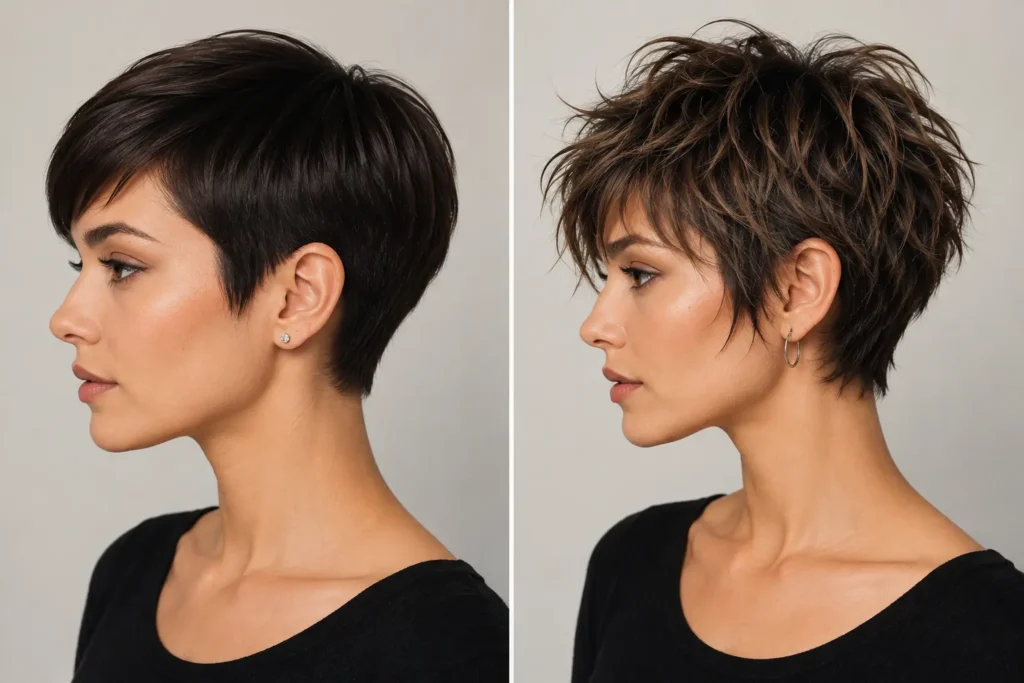
It’s easy to lump all short pixie cuts together, but the shaggy version is a distinct style with its own techniques and finished look. Understanding the difference can help you communicate more clearly with your stylist.
| Feature | Classic Pixie Cut | Shaggy Pixie Cut |
|---|---|---|
| Layers | Minimal, blended for a smooth finish | Heavy, choppy layers throughout the crown and ends |
| Cutting technique | Mostly scissor-cut with clean lines | Point-cutting and razor-cutting for texture |
| Styling time | Often needs precise daily styling to stay sharp | Designed to look good with minimal effort |
| Overall finish | Polished, structured, sleek | Textured, undone, lived-in |
| Growing-out phase | Can look awkward as it grows past shape | Tends to grow out more gracefully thanks to layering |
| Best for | Those who like a defined, tailored look | Those who want movement, texture, and versatility |
Neither style is objectively “better” — it really comes down to personal taste and how much time you want to spend styling. If you love the idea of short hair but don’t want a rigid, high-maintenance shape, the shaggy version is usually the more forgiving choice.
Best Hair Colors to Pair With a Shaggy Pixie Cut
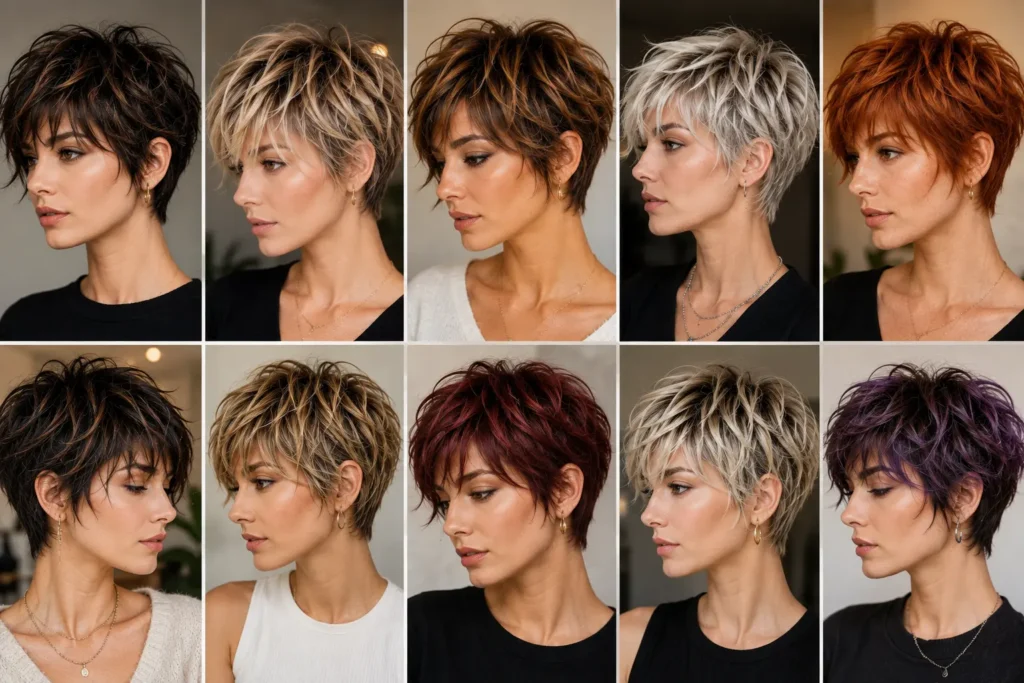
Color can enhance the texture of a shaggy pixie cut significantly, since dimension in color naturally draws attention to the layers and movement in the haircut. A few popular pairings:
- Balayage or babylights: Soft, hand-painted highlights add depth to the choppy layers without looking overly maintained, which suits the relaxed nature of the cut.
- Root smudge with lighter ends: This creates natural-looking dimension and softens the regrowth line, meaning less frequent color touch-ups.
- Solid, rich tones (chocolate brown, deep auburn): For those who prefer single-process color, richer tones tend to show off the choppy texture better than very flat, uniform colors.
- Platinum or icy blonde: A bold choice that pairs especially well with the edgy, messy version of the cut, since the brightness draws attention to the fragmented ends.
- Copper and warm red tones: These tend to photograph beautifully against textured, layered short hair and add extra vibrancy to the overall look.
If you’re unsure, ask your colorist for a low-maintenance option that grows out softly — this pairs well with the general low-effort philosophy behind the shaggy pixie cut itself.
Who This Haircut Works Best For
While the shaggy pixie cut is genuinely versatile, it tends to resonate most with certain lifestyles and preferences:
- Busy professionals and parents who want a stylish cut that doesn’t demand a long morning routine.
- Anyone transitioning from long hair who wants a cut with enough texture and movement to feel like a natural change rather than a drastic one.
- People with fine or thinning hair looking for a cut that visually adds density and fullness.
- Those who travel often or live in humid climates, since textured, layered short hair tends to handle humidity better than sleek, smooth styles.
- Anyone wanting a low-commitment way to try short hair, since the layered growing-out process is far more forgiving than a blunt, structured pixie.
If several of these describe you, there’s a good chance this cut will fit seamlessly into your routine rather than requiring you to build a new one around it.
Shaggy Pixie Cut and Face Shape: Finding Your Best Fit
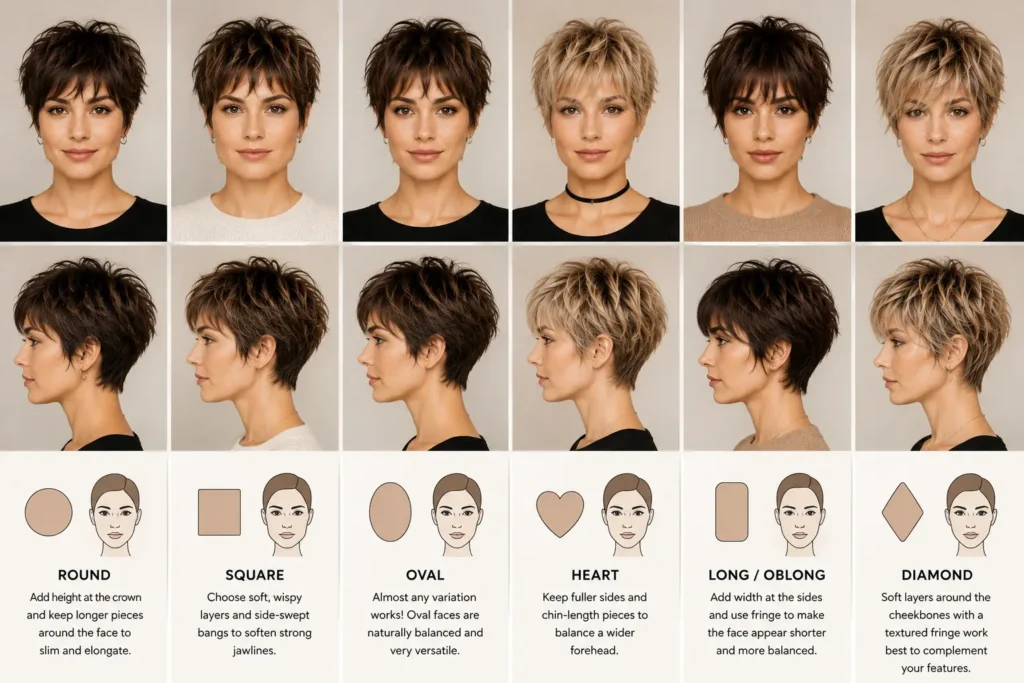
Not every version of the shaggy pixie works the same way for every face shape. Here’s a general breakdown to guide your consultation:
| Face Shape | What to Look For | What to Avoid |
|---|---|---|
| Round | Height at the crown, longer face-framing pieces, asymmetrical fringe | Too much volume at the sides, which can widen the face |
| Square | Soft, wispy layers around the jaw, side-swept bangs to soften angles | Blunt, geometric shapes that emphasize the jawline |
| Oval | Almost any variation works well — this is considered the most versatile face shape for pixie cuts | Very little to avoid; oval faces have the most flexibility |
| Heart | Fuller sides and chin-length pieces to balance a narrower jaw | Cuts that add too much volume at the crown, exaggerating forehead width |
| Long/Oblong | Fringe (especially curtain bangs) to shorten visual face length, width added at the sides | Height at the crown, which can elongate the face further |
| Diamond | Soft layers around the cheekbones, textured fringe | Cuts that are too tight or close to the head at the temples |
A good stylist will look at your bone structure in person and adjust these general guidelines to your specific features, so treat this as a starting point for conversation rather than a strict rulebook.
How to Style a Shaggy Pixie Cut: Step-by-Step
Whether you’re working with fine, thick, short, or long shaggy pixie hair, the general styling approach is similar. Here’s a simple routine to follow:
- Start with damp hair. Towel-dry until it’s about 70% dry — too wet, and product won’t distribute evenly.
- Apply a texturizing product. A dime-sized amount of texturizing cream or mousse, worked evenly from roots to ends.
- Blow-dry with your fingers. Instead of a brush, use your fingers to lift at the roots and scrunch through the ends. This preserves the choppy, undone texture that defines the cut.
- Add texture with a light-hold spray. Once dry, a sea salt or texturizing spray adds grip and separation, especially helpful for fine hair.
- Finish with a small amount of paste or wax. Rub between your palms and lightly tap through the ends and crown for definition — a little goes a long way.
For special occasions, you can add curls or waves with a small-barrel curling wand, then break them up with your fingers once cooled for a softer, more textured finish rather than uniform curls.
Maintenance: Keeping Your Shaggy Pixie Looking Sharp
Short haircuts grow out faster than longer styles simply because the ratio of new growth to existing length is higher. To keep a shaggy pixie looking intentional rather than overgrown:
- Trim every 4-6 weeks. This is the standard recommendation for most short, layered cuts.
- Use a purple or color-depositing shampoo occasionally if you have lightened or gray hair, to prevent brassiness between salon visits.
- Invest in a good dry shampoo. Short hair shows oil buildup at the roots faster, and dry shampoo can extend the time between washes while adding texture.
- Sleep on a silk or satin pillowcase. This reduces friction and helps preserve styled texture overnight, especially useful for the choppy, piece-y sections.
How to Talk to Your Stylist About a Shaggy Pixie Cut
Miscommunication at the salon is one of the most common reasons people end up unhappy with a haircut. To avoid that, bring reference photos and be specific about:
- Hair type: Mention whether your hair is fine, thick, straight, wavy, or curly, since this changes how the layering should be approached.
- Maintenance level: Be upfront if you want a low-maintenance, wash-and-go style versus something you’re happy to style daily.
- Length preference: Clarify whether you’re looking for a shorter classic pixie or a longer shaggy pixie cut with more length to work with.
- Fringe or no fringe: Decide in advance whether you want bangs, and if so, which style (curtain, choppy, micro, side-swept).
- Face-framing needs: If you have concerns about a specific feature (a strong jaw, a longer forehead), mention it so your stylist can adjust the shape accordingly.
A useful phrase to use in your consultation: “I want a shaggy pixie with choppy, textured layers — not too polished, with movement rather than a sleek finish.” This immediately signals to your stylist that you’re looking for the shag technique rather than a classic, smooth pixie.
Common Mistakes to Avoid
- Skipping the consultation. Jumping straight into the cut without discussing face shape, hair type, and maintenance level often leads to disappointment.
- Using the wrong products. Heavy creams on fine hair, or volumizing mousse on already-thick hair, can work against the texture you’re going for.
- Over-brushing. Brushing a shaggy pixie smooths out the very texture that makes it work — use your fingers instead.
- Waiting too long between trims. Letting the cut grow out past 6-8 weeks often causes it to lose its shape and start looking more like an awkward stage than an intentional style.
- Choosing a style based on trends alone. What looks great on a celebrity or influencer may not translate the same way to your hair type or face shape — always personalize the reference photo to your own features.
Frequently Asked Questions
Is a shaggy pixie cut hard to maintain?
Not typically. Most versions are designed to be lower-maintenance than longer hairstyles, though regular trims every 4-6 weeks are important to keep the shape from growing out unevenly.
Does a shaggy pixie cut suit fine hair?
Yes — in fact, it’s often recommended specifically for fine hair, since shorter layers reduce weight and create the appearance of more volume and texture.
Can I get a shaggy pixie cut with thick hair?
Absolutely. Thick hair often holds the choppy, layered texture very well once bulk is removed through thinning and point-cutting techniques.
How often do I need to trim a shaggy pixie cut?
Every 4-6 weeks is the general guideline, though this can vary slightly depending on how fast your hair grows and how precise you want the shape to stay.
What products work best for styling a shaggy pixie cut?
Lightweight texturizing creams, sea salt sprays, and matte pastes tend to work best. Heavier oils or gels can weigh the layers down and reduce the texture that defines the cut.
Can I add bangs to a shaggy pixie cut later if I don’t get them now?
Yes. Bangs can usually be added at a later appointment by cutting into the front section of your existing layers, so it’s easy to try the cut without bangs first and add them if you want to change things up.
Final Thoughts
The shaggy pixie cut has earned its popularity for good reason — it’s flexible enough to suit fine hair, thick hair, soft and feminine styling, or bold and edgy energy, all while staying genuinely easy to live with day to day. Whether you’re drawn to a low-maintenance version for busy mornings, a longer shaggy pixie to ease into short hair, or a fully undone, edgy finish, the key is communicating clearly with your stylist about your hair type, face shape, and lifestyle.
Bring your reference photos, be specific about maintenance expectations, and don’t be afraid to ask questions during your consultation. A great shaggy pixie cut isn’t just about the haircut itself — it’s about finding the version that actually fits your hair and your daily routine.
Also Read: Makeup Tips for Everyday Beauty: A Beginner’s Guide to Natural, Effortless Looks