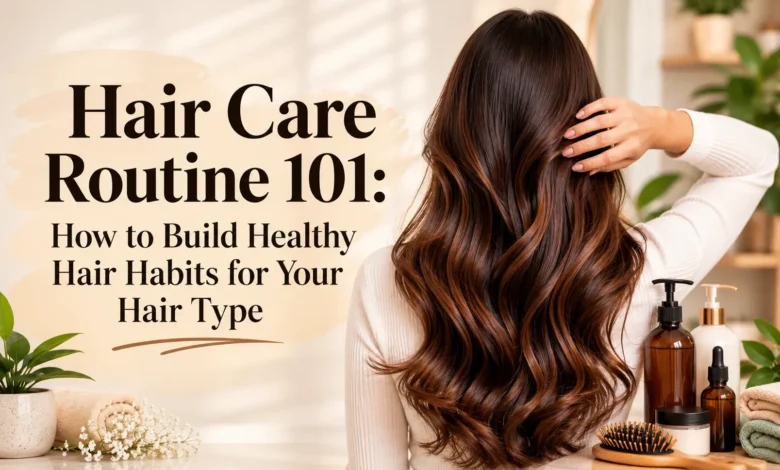
Most hair care advice online is written for one specific hair type and presented as if it applies to everyone. A wash schedule that keeps thick, coily hair looking healthy can leave fine, straight hair looking flat and greasy within a day. A routine built for color-treated hair can be overkill — or the wrong kind of care entirely — for natural, undyed hair.
This guide starts from the fundamentals that apply across nearly every hair type, then breaks down exactly how to adjust each one based on your specific hair — texture, porosity, and density — so you’re not copying a routine that was never built for your hair in the first place.
This article is part of our complete guide to Beauty Tips and Routines — read it for the full picture of skincare, makeup, hair care, and self-care working together.
The Three Things That Actually Determine Your Hair Routine
Before choosing products, it helps to understand three characteristics of your hair, since almost every recommendation in this guide depends on them.
Texture — how straight, wavy, curly, or coily your hair is. This affects how much natural oil travels down the hair shaft and how much moisture your hair typically needs.
Porosity — how easily your hair absorbs and holds moisture. Low-porosity hair has a tighter cuticle and tends to repel product, while high-porosity hair has a more open cuticle and absorbs product quickly but can also lose moisture just as fast.
Density — how many individual strands you have per square inch of scalp, not to be confused with how thick each individual strand is. Fine, dense hair behaves differently from coarse, sparse hair, even if they look similar in a ponytail.
A simple porosity test: drop a clean strand of hair into a glass of water. If it sinks quickly, you likely have high porosity. If it floats for a while before slowly sinking, you’re likely in the medium range. If it floats and barely sinks at all, you likely have low porosity.
Step 1: Get Your Wash Frequency Right
This is the single most common source of hair care frustration — copying someone else’s wash schedule instead of matching it to your own scalp.
- Fine or straight hair: Scalp oil travels down the hair shaft quickly, so daily or near-daily washing often looks and feels best.
- Wavy hair: Every 2–3 days is a common starting point, adjusted based on how quickly your roots feel oily.
- Curly hair: Every 3–5 days, since curl patterns make it harder for natural oils to travel down the length of the hair, and over-washing can strip needed moisture.
- Coily hair: Once a week or even less frequently, often relying on co-washing (conditioner-only washing) or scalp-focused cleansing between full washes.
There’s no universally “correct” frequency — the right one is whatever keeps your scalp comfortable and your hair looking its best, and it can shift with seasons, activity level, and even hormonal changes.
Step 2: Choose Products for Your Actual Hair Type
Shampoo
- Oily scalp or fine hair: A clarifying or lightweight shampoo that won’t weigh hair down.
- Dry or curly/coily hair: A sulfate-free, moisturizing shampoo that cleans without stripping natural oils.
- Color-treated hair: A color-safe, sulfate-free formula to help preserve color vibrancy and prevent premature fading.
- Sensitive scalp: A fragrance-free, gentle formula, ideally free of common irritants.
Conditioner
Conditioner’s job is fundamentally different from shampoo’s — it’s about replenishing moisture, not cleaning — which is why it should almost always be applied from mid-length to ends, not the scalp (except for very dry or coily hair types, which sometimes benefit from light conditioner at the roots too).
- Fine hair: A lightweight conditioner to avoid weighing hair down or causing limpness at the roots.
- Thick or curly hair: A richer, more hydrating conditioner, sometimes left on for longer than the bottle suggests.
- Damaged or color-treated hair: A conditioner with proteins or bond-repairing ingredients to help rebuild strength.
Also Read: Skincare Routine for Beginners: The Complete Step-by-Step Guide
The Complete Wash-Day Routine
| Step | Action | Notes |
|---|---|---|
| 1 | Brush hair before wetting | Reduces tangling and breakage in the shower |
| 2 | Wet hair thoroughly | Warm (not hot) water opens the cuticle for better cleansing |
| 3 | Shampoo the scalp | Let lather rinse naturally through the lengths |
| 4 | Apply conditioner mid-length to ends | Leave on for at least 2–3 minutes |
| 5 | Rinse with cooler water | Helps the cuticle lie flat for more shine |
| 6 | Squeeze out excess water gently | Avoid vigorous towel-drying, which causes friction damage |
| 7 | Apply leave-in products while damp | Detangler, heat protectant, or curl cream, depending on hair type |
Weekly and Monthly Hair Care Extras
Beyond the basic wash-day routine, a few extras — used weekly or monthly rather than daily — go a long way toward long-term hair health:
- Deep conditioning mask (weekly or biweekly): Especially valuable for dry, curly, coily, or chemically treated hair that needs more intensive moisture than a regular conditioner provides.
- Scalp treatment or exfoliation (weekly): Helps remove product buildup and dead skin cells that can slow hair growth and cause itchiness.
- Protein treatment (every few weeks, as needed): Useful for hair that feels overly stretchy or limp, which can indicate a protein-moisture imbalance — but overuse can make hair feel stiff or brittle, so this isn’t a daily or weekly step for most people.
- Trim (every 8–12 weeks): Removes split ends before they travel further up the hair shaft, keeping length looking healthier even while you’re growing hair out.
Also Read: Natural Beauty and Self-Care Tips: Simple Habits for a Healthier Glow
Heat Styling Without the Damage
Heat styling isn’t inherently bad for hair — using it without protection is what causes long-term damage. A few non-negotiables:
- Always apply heat protectant before using any hot tool, every single time, even for a “quick” style.
- Use the lowest effective temperature for your hair type — fine hair generally needs less heat than thick or coarse hair to achieve the same result.
- Avoid going over the same section of hair repeatedly with a hot tool, which concentrates heat damage in one spot.
- Give hair heat-free days when possible — air-drying or heatless styling methods a few times a week significantly reduces cumulative damage over time.
Hair Care by Concern
Hair loss or thinning: Focus on scalp health first — gentle cleansing, scalp massages to support circulation, and avoiding tight hairstyles that pull on the hairline. Persistent or sudden hair loss is worth discussing with a doctor or dermatologist, since it can have underlying causes beyond routine hair care.
Frizz: Usually a sign of a lifted hair cuticle and low moisture. Cooler-water rinses, leave-in conditioner, and reducing sulfate use often help more than anti-frizz serums alone.
Dullness or lack of shine: Often related to product buildup or an uneven cuticle. A clarifying shampoo once every few weeks, followed by a nourishing conditioner, can restore shine without daily maintenance.
Breakage: Usually mechanical (from brushing wet hair too aggressively, tight styles, or heat damage) rather than a product problem. A wide-tooth comb for wet hair and satin/silk pillowcases or hair wraps reduce friction-based breakage significantly.
Oily scalp but dry ends: Common in longer hair — focus shampoo at the scalp only and conditioner only on the ends, rather than treating hair as uniformly oily or uniformly dry.
Common Hair Care Mistakes
- Copying a routine built for a different hair type. What works beautifully for coily hair can leave fine hair looking weighed down, and vice versa.
- Skipping heat protectant “just this once.” Damage from unprotected heat styling accumulates even from occasional use.
- Washing too often or not often enough for your actual scalp. Both extremes cause problems — over-washing strips natural oils, under-washing lets buildup accumulate.
- Brushing wet hair aggressively. Hair is at its weakest when wet; a wide-tooth comb, used gently from the ends upward, causes far less breakage.
- Skipping trims to “grow hair out faster.” Length and growth rate aren’t related to trimming — regular trims just prevent split ends from causing more visible breakage further up the strand.
- Applying conditioner at the scalp for most hair types. This can leave roots looking greasy and flat within hours.
- Using very hot water to rinse. It feels nice but lifts the hair cuticle, leading to more frizz and less shine over time.
Hair Care on Any Budget
| Budget Level | Shampoo/Conditioner | Weekly Extras | Heat Protection | Monthly Estimate |
|---|---|---|---|---|
| Starter | Basic drugstore sulfate-free set | DIY oil treatment (coconut, olive) | Basic drugstore heat protectant spray | Low |
| Mid-Range | Targeted formula for hair type/concern | Store-bought deep conditioning mask | Mid-range protectant with added styling benefits | Moderate |
| Premium | Salon-brand or dermatologist-recommended line | Professional-grade mask or in-salon treatment | Premium protectant serum or leave-in cream | Higher |
As with skincare and makeup, matching the product to your actual hair type matters more than the price tag. A well-chosen starter-tier routine, used consistently, will outperform a mismatched premium routine every time.
Adjusting Hair Care for the Seasons
- Summer: Sun, chlorine, and salt water all increase dryness and color fading — a clarifying wash after swimming and added UV-protecting leave-in products help offset the damage.
- Winter: Indoor heating and cold, dry air outside both pull moisture from hair — richer conditioners and reduced wash frequency (if your scalp allows it) help combat winter dryness.
- Humid climates: Anti-frizz, humidity-resistant products and protective styles (braids, buns) help hair hold its shape through the day.
- Dry climates: Leave-in conditioners and hair oils become more important year-round, not just seasonally, to compensate for low ambient humidity.
Protective Styling Basics
Protective styles — braids, buns, twists, and similar styles that tuck away the ends of your hair — reduce daily manipulation and friction, which is one of the most common causes of breakage over time. A few basics that apply across hair types:
- Avoid styles pulled so tight they cause tension at the hairline, which can contribute to hair loss along the edges over time.
- Give hair occasional breaks from the same repeated style to avoid consistent stress on the same section of hair.
- Moisturize the scalp even while wearing a protective style — “protective” doesn’t mean “no maintenance.”
Also Read: Beauty Tips and Routines: The Complete Guide to Skincare, Makeup, and Self-Care
A Simple Weekly Hair Care Schedule
| Day | Routine |
|---|---|
| Wash day 1 | Full wash-day routine (shampoo, condition, leave-in) |
| Days between | Dry styling, protective styles, or light refresh as needed |
| Once weekly | Deep conditioning mask or scalp treatment |
| As needed | Heat styling with protectant, always |
| Every 8–12 weeks | Trim to remove split ends |
This schedule is a starting template — your actual wash frequency and extras should flex based on your hair type, activity level, and how your scalp responds week to week.
Frequently Asked Questions About Hair Care Routines
How often should I really wash my hair?
It depends on your scalp’s oil production and hair type — anywhere from daily to once a week can be correct. Fine, straight hair usually needs more frequent washing than thick, curly, or coily hair.
Is it bad to condition every day?
Not usually, as long as conditioner is applied to mid-lengths and ends rather than the scalp. Daily conditioning can actually help maintain moisture balance for drier hair types.
Do I need a separate deep conditioner if I already use regular conditioner?
Yes, for most hair types beyond very fine or oily hair. Deep conditioners are formulated to penetrate the hair shaft more intensively and are meant to be used weekly or biweekly rather than daily.
How can I tell if a product is actually working for my hair?
Give any new product at least 3–4 full wash cycles before judging it — hair care results build over time, not from a single use, and switching too quickly makes it hard to tell what’s actually helping.
Does trimming my hair make it grow faster?
No. Hair grows from the scalp, and trimming has no effect on growth rate. What trimming does is prevent split ends from traveling further up the strand, which keeps hair looking healthier and reduces the appearance of thinning ends.
What’s the biggest cause of hair damage most people overlook?
Heat styling without protectant and aggressive towel-drying or brushing of wet hair are two of the most common, entirely avoidable sources of long-term damage.
Can diet and hydration actually affect hair health?
Yes. Hair is made largely of protein, and adequate protein intake, hydration, and key nutrients like iron and biotin all support healthy hair growth from the inside, alongside — not instead of — a good external routine.
Also Read: Makeup Tips for Everyday Beauty: A Beginner’s Guide to Natural, Effortless Looks