Choosing a nail shape feels like it should be simple, and yet it’s one of those small beauty decisions that genuinely changes how your entire hand looks. The right shape can make fingers appear longer, a nail bed look more proportionate, or simply make a manicure feel effortlessly put-together rather than slightly off. The wrong shape, on the other hand, can fight against your natural hand proportions no matter how flawless the polish job is.
This guide breaks down what actually defines each major nail shape, how to figure out which one genuinely suits your hands, and 9 picks that feel perfectly you — almond, coffin, square, oval, stiletto, round, ballerina, squoval, and lipstick. Along the way, we’ll cover the surprisingly long history behind today’s most popular shapes, how to determine your ideal shape based on finger type, and practical guidance for filing and maintaining whichever shape you choose.
What Is the Most Popular Nail Shape?
Almond and squoval consistently rank among the most requested nail shapes at salons, largely because both offer a flattering, elongating effect while remaining relatively practical for everyday hand use. Almond nails, with their tapered, rounded tip, have become especially popular for their ability to make fingers appear longer and more slender, while squoval offers a softer, more forgiving alternative to a fully squared tip that many find easier to maintain day-to-day.
That said, “most popular” shifts somewhat by season, region, and current trend cycles, with coffin and stiletto shapes seeing significant surges in popularity alongside almond and squoval in recent years, particularly among people who wear their nails at a longer length.
What Defines Each Nail Shape?
Every nail shape is ultimately defined by the combination of two things: the shape of the free edge (the tip of the nail) and the overall silhouette created from the cuticle to that tip. A round nail follows the natural curve of the fingertip closely, while a square nail is filed with a completely flat, straight edge and sharp corners. Shapes like almond, coffin, and stiletto all extend the nail into a more elongated silhouette, differing mainly in how tapered or squared the tip ends up being.
Understanding this basic structure — free edge shape plus overall silhouette — makes it much easier to communicate exactly what you want to a nail technician, or to file your own nails accurately at home.
What Is the Difference Between Coffin and Stiletto Nails?
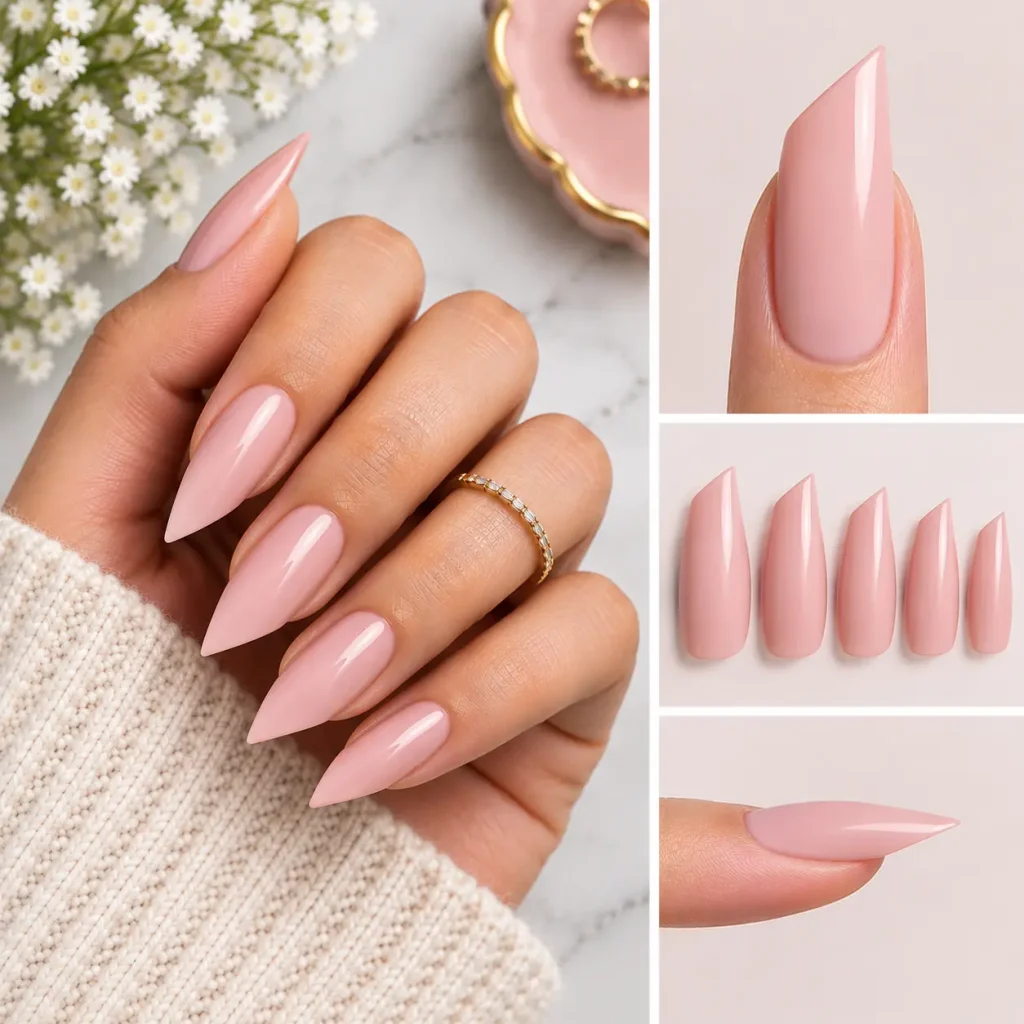
Coffin nails (also called ballerina nails) taper inward from the sides before ending in a flat, squared-off tip, creating a shape that resembles a casket or ballet slipper, depending on which comparison you prefer. Stiletto nails take that same tapered silhouette but bring it to a sharp, pointed tip rather than a flat one, creating a considerably more dramatic, edgier look.
Both shapes require a longer nail length to execute properly and are typically achieved using nail extensions rather than natural nail growth alone, since the tapering and tip shaping both require enough length to work with.
A Brief History of Nail Shape Trends
Nail shape and nail care have a genuinely ancient history. In ancient Egypt, around 3000 BC, elaborate nail care was already a marker of status among the elite, with gold and ivory used to create some of the earliest known artificial nail enhancements. Ancient China followed a similar pattern, where long, elaborately protected nails signaled nobility, sometimes shielded with gold and silver nail guards to preserve their length.
Nail shape trends as we’d recognize them today really took hold in the 20th century. The 1920s popularized oval nails alongside the striking “moon manicure,” where the crescent-shaped base of the nail was left bare while the rest was polished. By the 1940s and 1950s, long, almond-shaped nails painted in bold red became the defining glamour statement of the era, popularized heavily by Hollywood stars like Rita Hayworth and Elizabeth Taylor, whose on-screen presence made the shape a symbol of sophistication far beyond the film industry itself.
Evolution of Popular Nail Shapes Over the Years
The story of the square nail trend offers a particularly clear example of how a single celebrity moment can shift an entire era’s preferences: in 1960, Cher is widely credited with kicking off the square nail trend after specifically requesting something different from her manicurist, a request that mainstream manicure culture quickly followed. This pattern — a distinctive celebrity choice cascading into a broader trend — has repeated throughout nail shape history ever since.
Practical, everyday considerations have shaped nail trends too. As more women entered the workforce throughout the mid-20th century, shorter, more practical nail shapes gained popularity alongside the longer, more glamorous styles associated with evening and formal occasions, reflecting how nail shape choices have long balanced aesthetic preference against everyday functionality.
How Nail Shapes Became a Fashion Statement
Nail shape’s evolution from simple grooming into genuine fashion statement runs alongside the broader development of the professional nail industry itself. The first commercial nail salons emerged in the 1870s, with Mary Cobb opening one of the earliest manicure parlors in Manhattan in 1878; Cobb and her then-husband are also credited with inventing the emery board, a nail-filing tool still in everyday use today. As professional manicure services became more widely available throughout the 20th century, nail shape shifted from something people simply maintained at home into a deliberate style choice made in consultation with a trained technician.
Technical innovation played a role too — 1937 saw the introduction of the first adhesive nail appliqué, expanding what was creatively possible with nail shape and decoration well beyond what natural nail filing alone could achieve, setting the stage for the elaborate extensions and sculpted shapes available today.
Celebrity Influence on Nail Shape Trends
Celebrity influence on nail shape trends has remained remarkably consistent across nearly a century, from Rita Hayworth’s long almond nails in the 1940s to more recent influence from contemporary artists like Cardi B, whose elaborate, boundary-pushing nail art and shape choices have significantly shaped mainstream nail trends and helped establish professional nail artistry as a genuine, highly visible fashion category in its own right. This pattern reflects how visible, camera-ready beauty choices — nails included — tend to spread from a single influential figure into much broader adoption remarkably quickly.
Why Nail Shape Matters for Hand Appearance
Nail shape has a genuinely significant visual effect on how hands appear overall, largely through the way different shapes interact with light, proportion, and the eye’s natural tendency to follow lines. Elongated shapes like almond, coffin, and stiletto all create a strong vertical line that draws the eye upward along the finger, generally making hands appear longer and more slender. Rounder shapes like round and oval, by contrast, tend to soften and widen the overall visual impression of the nail bed and fingertip.
This is exactly why nail shape recommendations so often reference finger length and nail bed width specifically — the goal is choosing a shape whose visual effect complements, rather than works against, your hand’s natural proportions.
Benefits of Choosing the Right Nail Shape
Choosing a nail shape that genuinely suits your hands offers benefits well beyond simple aesthetics. The right shape tends to look more proportionate and intentional in photos and everyday life, since it works with your natural hand shape rather than against it. Practically, matching shape to lifestyle also matters considerably — a shape suited to your daily activities and nail bed strength is less likely to chip, crack, or need frequent repair compared to a shape chosen purely for trend value without considering fit.
Why Some Nail Shapes Suit Certain Hands Better
Nail shapes interact directly with existing hand proportions, which is why the same shape can look dramatically different on two different hands. A shape that elongates works particularly well on hands with shorter fingers or a naturally wide nail bed, since the added visual length helps balance those proportions. On hands with already long, slender fingers, a more rounded shape like oval or round can prevent an elongating shape from making fingers look disproportionately long, offering better overall balance instead.
Why Nail Shape Affects Nail Health and Strength
Nail shape isn’t purely a cosmetic decision — it genuinely affects how durable and healthy a manicure remains over time. Sharper corners, like those on a square shape, are more prone to snagging on clothing or catching on surfaces, which can lead to breaks or splits starting at that vulnerable corner point. Rounder shapes, including oval and round, generally distribute everyday pressure more evenly across the nail, making them somewhat more resistant to chipping and breakage, which is part of why these shapes are so often recommended for people whose nails tend to be naturally weak or brittle.
How to Determine Your Nail Shape
Figuring out your ideal nail shape starts with looking honestly at your existing finger length, nail bed width, and hand shape overall.
For short fingers, elongating shapes like almond, oval, or coffin tend to create the most flattering visual effect, since the added vertical line helps fingers appear longer.
For long fingers, rounder shapes like round or oval can help balance already-elongated proportions, preventing an overly extreme, elongated look.
For wide nail beds, almond and coffin shapes, which narrow slightly toward the tip, can help create a more tapered, proportionate appearance.
For narrow nail beds, square or squoval shapes tend to add visual width at the tip, helping balance a naturally narrow nail bed.
For small hands, shorter length paired with a soft, rounded shape like oval generally looks more proportionate than a long, dramatic extension.
For fuller or “chubby” fingers, almond and oval shapes are frequently recommended for their elongating, slimming visual effect, similar to their benefit for shorter fingers specifically.
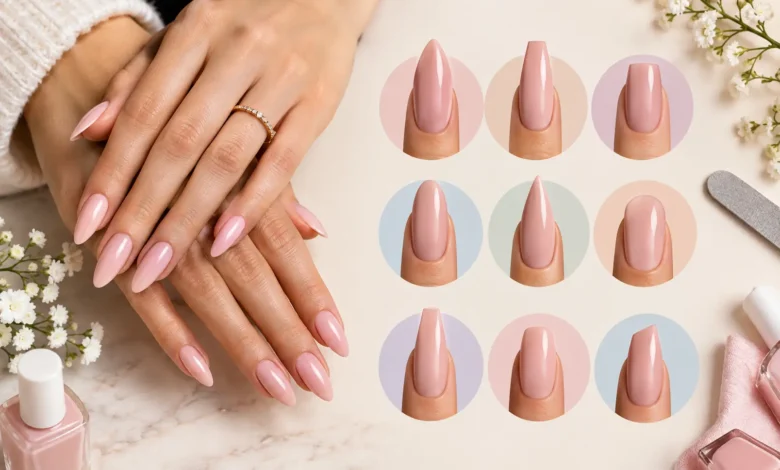
9 Nail Shapes That Feel Perfectly You
Almond Nail Shape
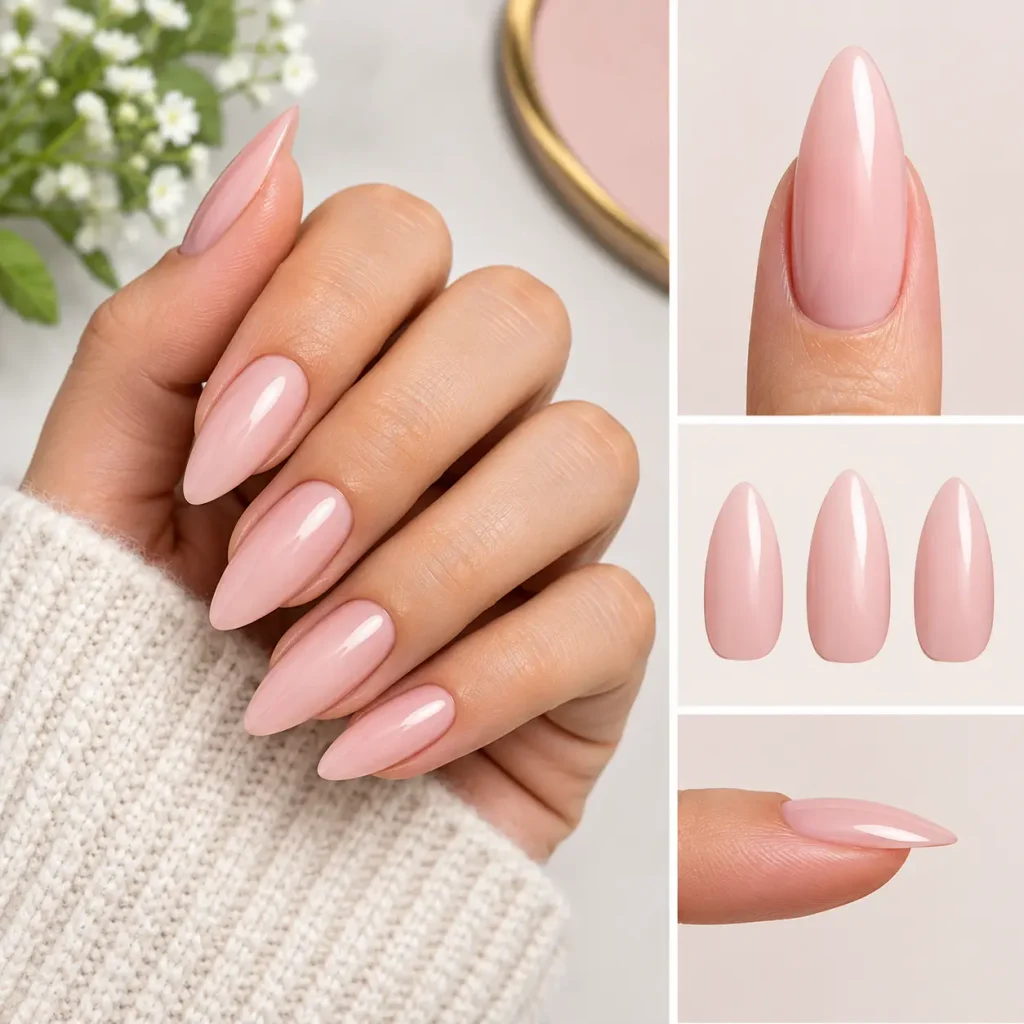
Tapering gently from a wider base to a rounded point at the tip, almond nails are one of the most universally flattering shapes available, offering genuine elongation without the sharpness of a stiletto tip. This shape works particularly well for anyone with shorter fingers or a wider nail bed, and it remains one of the most consistently requested shapes across salons for its balance of drama and everyday wearability.
Coffin Nail Shape
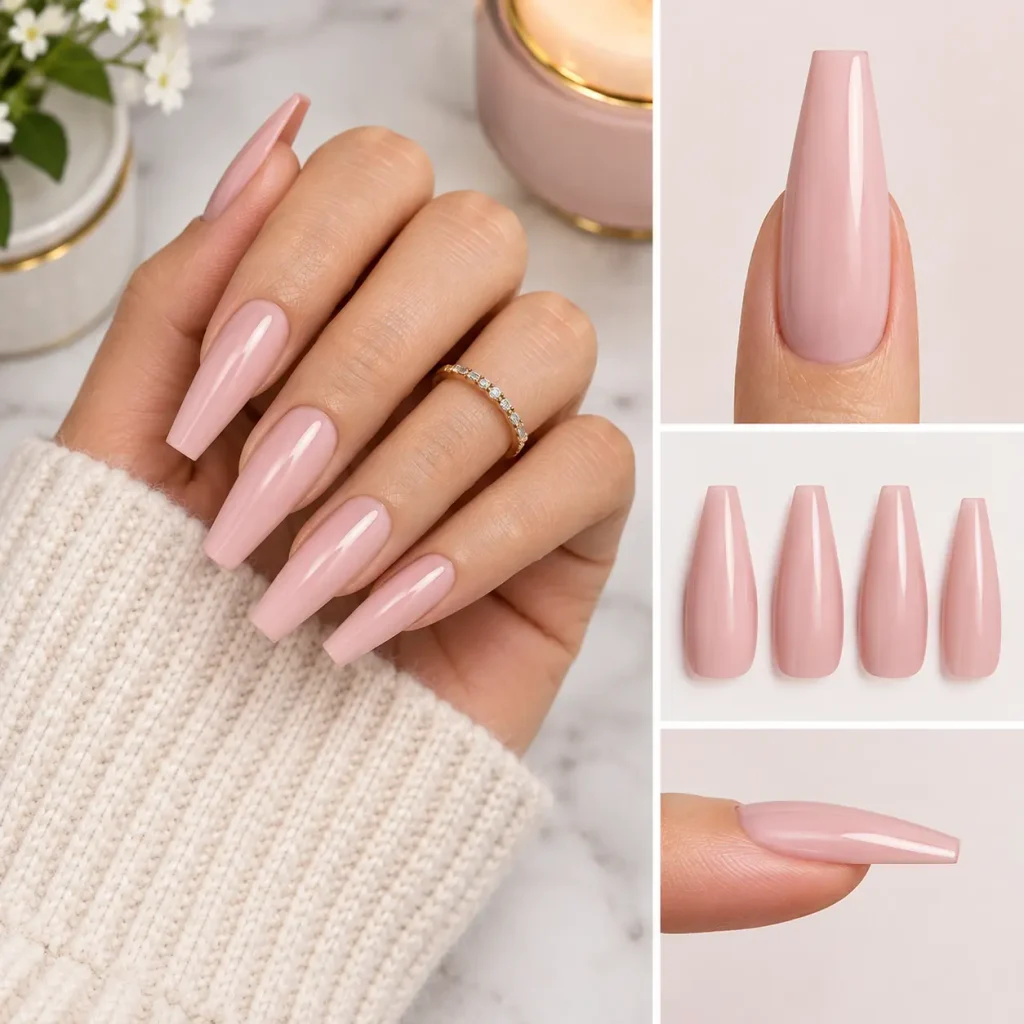
Also called ballerina nails, the coffin shape tapers inward from the sides before ending in a flat, squared-off tip, creating a longer, more dramatic silhouette than almond while still remaining relatively practical for daily wear. This shape has become especially popular for elaborate nail art, since its broader flat tip offers considerably more surface area to work with than a pointed shape.
Square Nail Shape
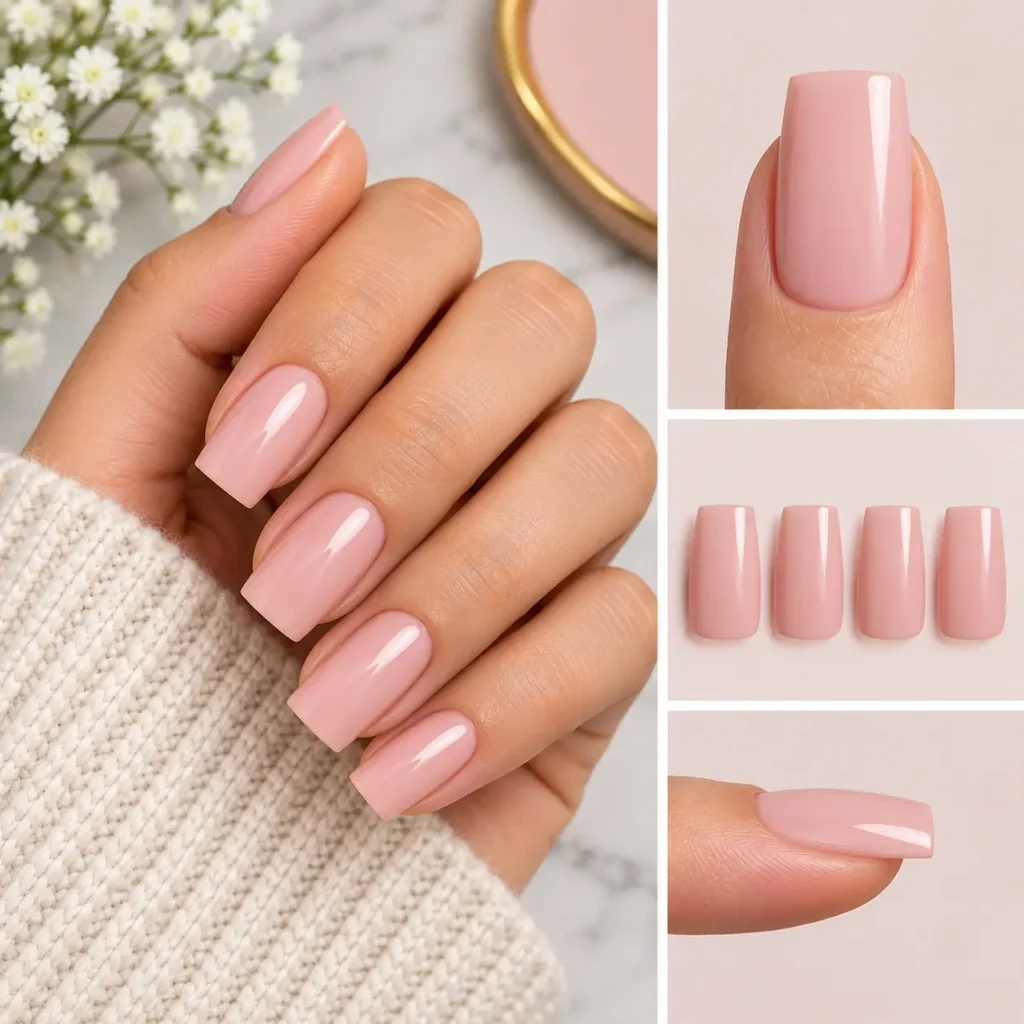
Filed with a completely straight, flat edge and defined, sharp corners, the square shape offers a clean, structured look that pairs particularly well with shorter to medium nail lengths. This shape tends to add visual width, making it a strong choice for anyone with narrow nail beds looking to create a bit more visual balance.
Oval Nail Shape
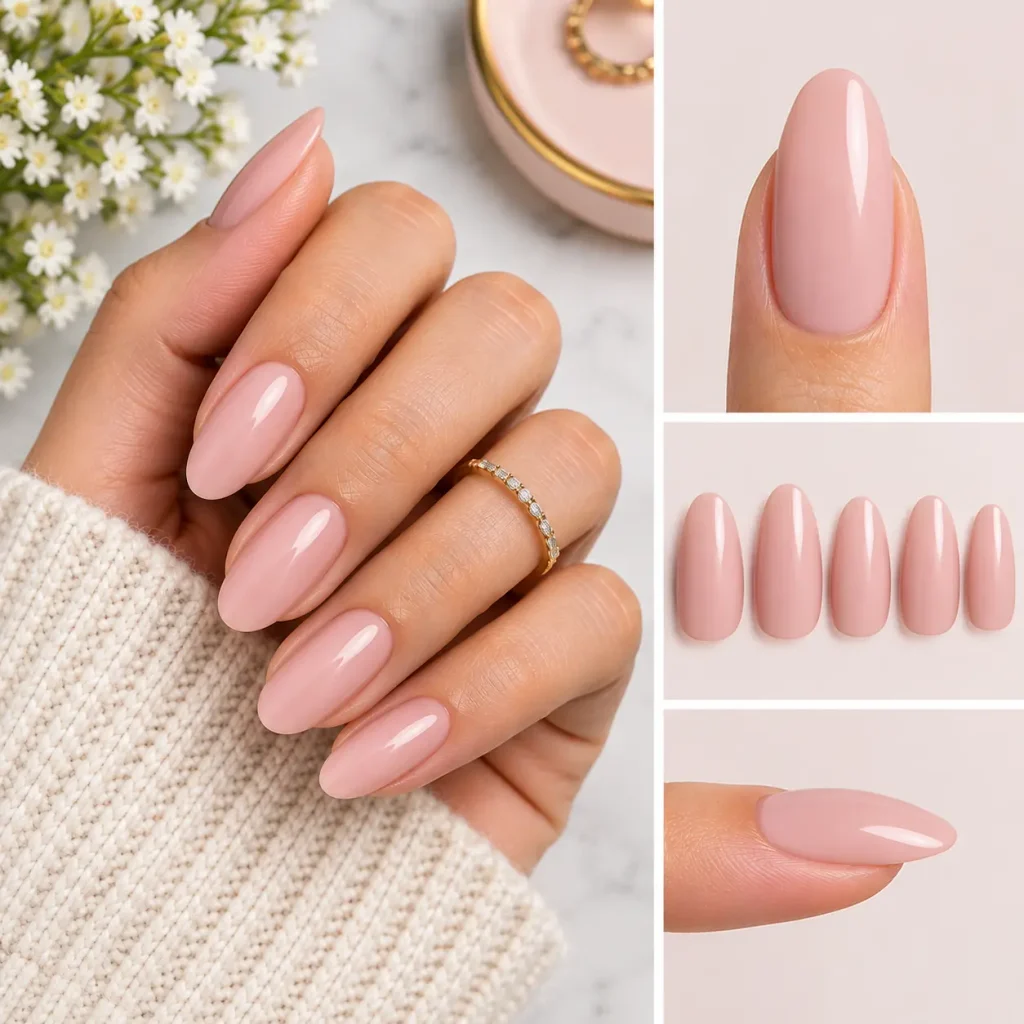
Following a rounded, elongated silhouette similar to almond but with a softer, more rounded tip rather than a distinct point, oval nails offer a gentle, universally flattering shape that works well across nearly every finger type. This shape’s rounder profile also makes it somewhat more resistant to chipping than sharper-cornered alternatives.
Stiletto Nail Shape
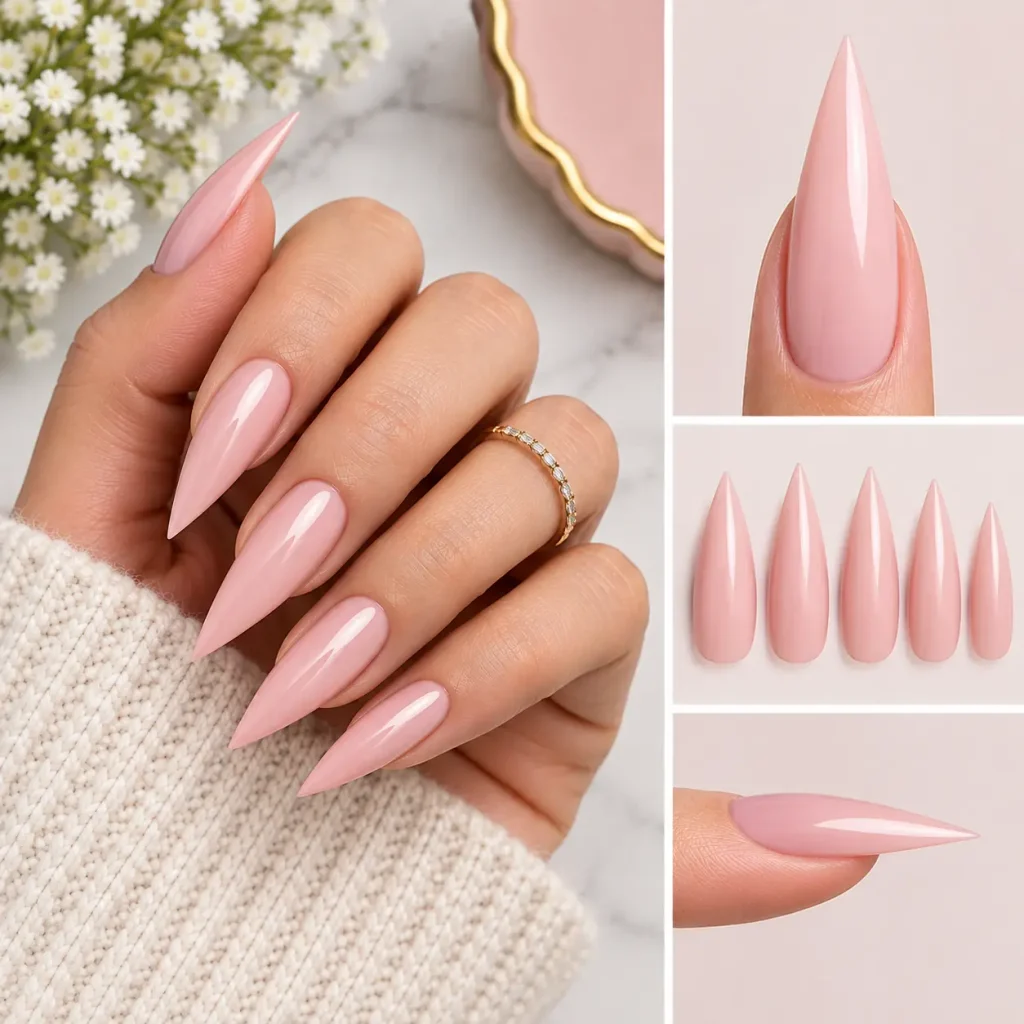
The most dramatic shape on this list, stiletto nails taper to a sharp, pointed tip, creating a bold, statement-making silhouette. This shape requires a longer nail length and typically relies on extensions to achieve properly, and while striking, it demands more careful handling in everyday tasks than rounder, less pointed alternatives.
Round Nail Shape
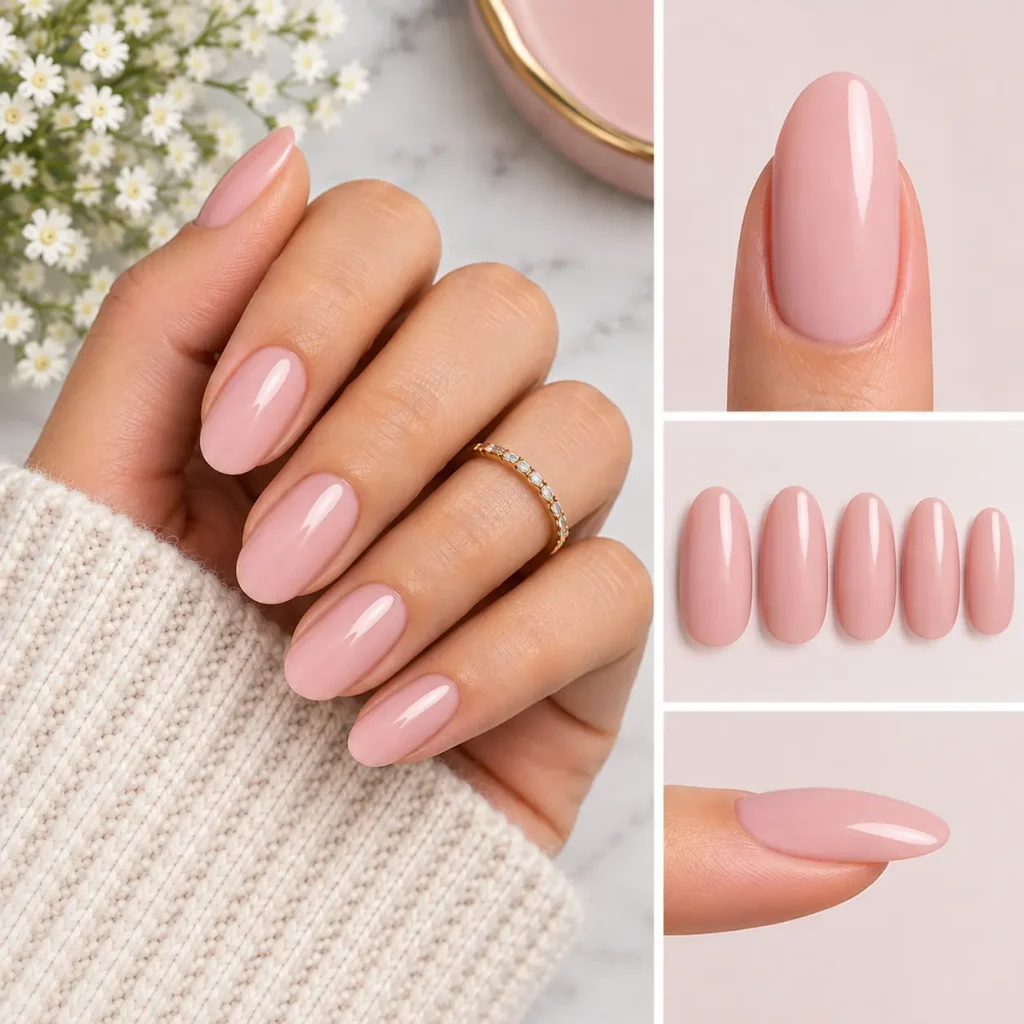
Closely following the natural curve of the fingertip, round nails offer one of the most low-maintenance, practical shapes available, since the gentle curve resists chipping and snagging particularly well. This shape works beautifully at shorter lengths and remains a popular choice for anyone prioritizing durability and ease of upkeep over dramatic length.
Ballerina Nail Shape
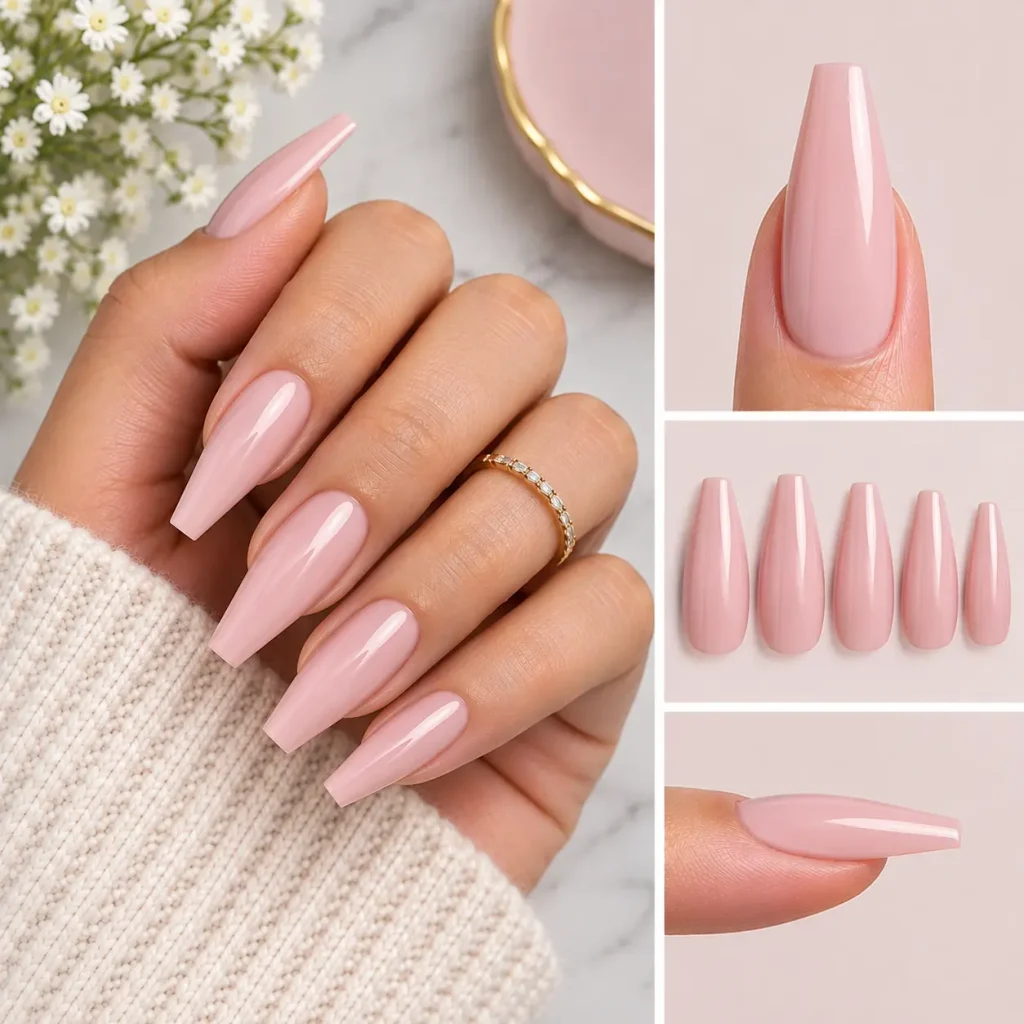
Essentially a close variant of the coffin shape, ballerina nails share the same tapered sides and flat tip, though the name is often used to describe a slightly more refined, elegantly contoured version of the same silhouette. Many salons use “coffin” and “ballerina” interchangeably, though some technicians draw a subtle distinction in exactly how sharply the sides taper.
Squoval Nail Shape
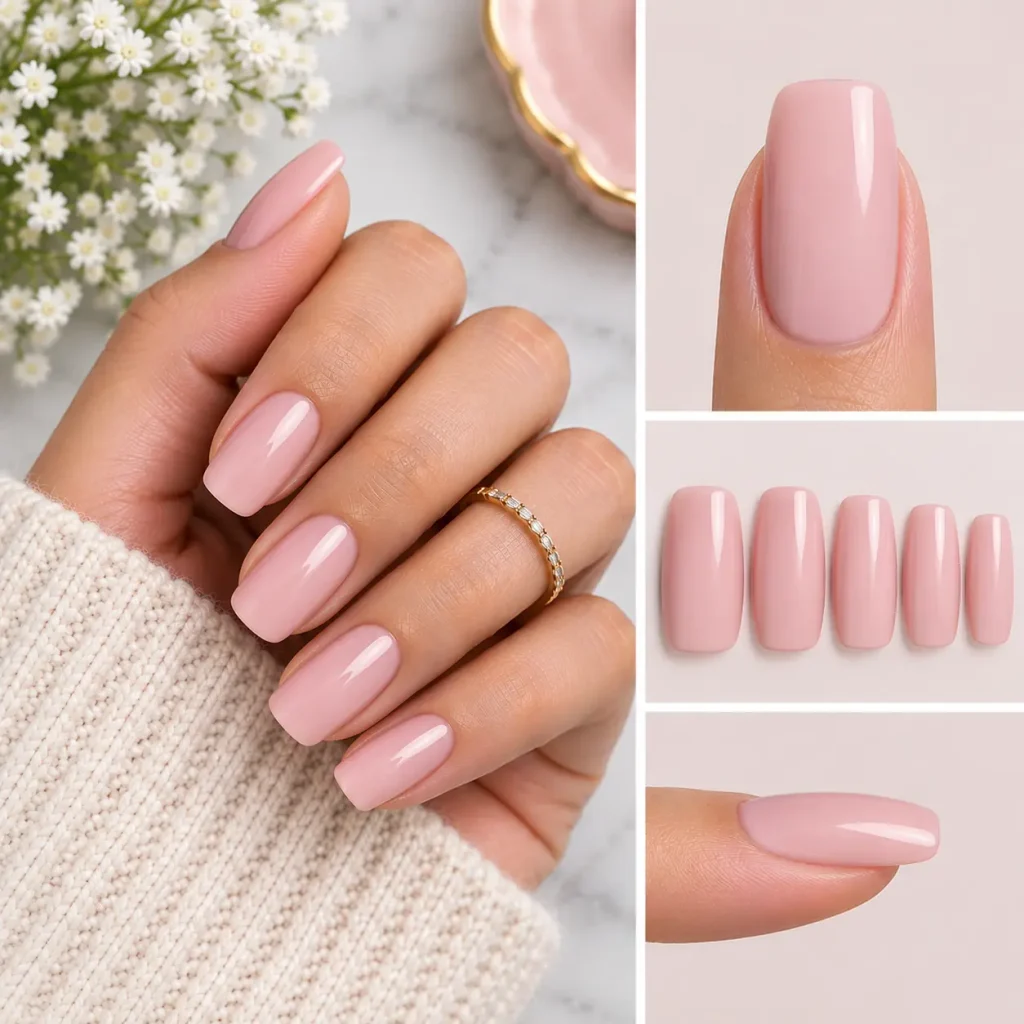
Combining the structure of square with the softness of oval, squoval nails feature a mostly straight tip with gently rounded corners rather than sharp square edges. This shape has become one of the most popular everyday choices precisely because it offers a clean, polished look without the snag-prone corners of a fully square shape.
Lipstick Nail Shape
Named for its resemblance to the angled tip of a lipstick bullet, this shape features a diagonal, slanted edge rather than a straight or pointed tip. It’s a genuinely eye-catching, less common choice that works particularly well for anyone wanting a distinctive, fashion-forward shape without going as dramatically pointed as stiletto.
Nail Shapes by Length
Nail shapes for short nails work best with round, square, or squoval shapes, all of which remain proportionate and wearable without needing significant added length to look intentional.
Nail shapes for medium length nails open up more options, including almond and oval, both of which start to show their full elongating effect at this length.
Nail shapes for long nails are where more dramatic shapes like coffin, stiletto, and ballerina truly come into their own, since these shapes rely on extended length to achieve their signature tapered or pointed silhouettes.
Low-maintenance nail shapes generally favor round and squoval, both of which resist chipping well and require less frequent shape maintenance between salon visits compared to sharply angled alternatives.
Nail Shapes for Acrylic vs. Gel Nails
Nail shapes for acrylic nails tend to accommodate more dramatic, structurally demanding silhouettes like stiletto and coffin particularly well, since acrylic’s rigid structure holds these shapes securely even at longer lengths. Nail shapes for gel nails work well across nearly the full range of shapes too, though gel’s slightly more flexible finish is often favored for softer, rounder shapes like oval and almond, where a bit of natural give can feel more comfortable for everyday wear.
Also Read: 12 Blooming Gel Designs That Feel Like Wearable Art
Almond vs. Coffin: Which Should You Choose?
Almond nails offer a softer, more rounded point at the tip and tend to feel more versatile for everyday wear, while coffin nails provide a longer, flatter, more dramatic tip that requires slightly more length to execute well. Choosing between the two often comes down to how bold a statement you want — almond leans classic and wearable, while coffin leans more fashion-forward and works especially well as a canvas for detailed nail art.
Square vs. Squoval: Which Should You Choose?
Square nails offer sharp, defined corners and a completely flat tip, delivering a clean, structured look, while squoval softens those same corners for a shape that’s generally considered easier to maintain and less prone to snagging. For anyone newer to a more structured nail shape, squoval often serves as a gentler, more forgiving starting point before committing to full square corners.
Round vs. Oval: Which Should You Choose?
Round nails follow the fingertip’s natural curve closely and tend to sit shorter, while oval nails extend that same rounded silhouette to a longer length with a more elongated tip. Round suits anyone prioritizing maximum durability and minimal upkeep, while oval offers a bit more visual elongation while retaining much of round’s chip-resistant practicality.
Stiletto vs. Almond: Which Should You Choose?
Stiletto nails taper to a sharp, dramatic point, while almond nails taper to a softer, rounded tip. Stiletto delivers considerably more visual drama and works well for special occasions or anyone confident in maintaining a bolder shape day-to-day, while almond offers similar elongating benefits in a shape that’s generally easier to live with for daily tasks.
How to File Nails Into a Specific Shape
Filing nails accurately starts with growing them slightly past your desired finished length, since some length is typically lost in the shaping process. Using a fine-grit file, work in one direction rather than a back-and-forth sawing motion, which can weaken and fray the nail’s edge. Establish the basic overall length first, then gradually shape the sides and tip toward your chosen silhouette, checking both nails periodically to keep the shape symmetrical across each hand.
For more structured shapes like square or coffin, use a firmer, more deliberate angle when filing the tip flat, while rounder shapes like oval or round benefit from a lighter touch, gently rounding the corners in smooth, consistent strokes.
How to Maintain a Nail Shape at Home
Maintaining a chosen nail shape between salon visits mostly comes down to regular, gentle filing to correct any unevenness from daily wear before it becomes significant. Keeping a quality nail file on hand for quick touch-ups, particularly after noticing a snag or slight asymmetry, helps preserve the shape’s overall silhouette far longer than waiting for a full reshaping session. Moisturizing cuticles regularly also supports overall nail health, which indirectly helps any shape hold up better against breakage over time.
Trendy Nail Shapes in 2026
Almond, squoval, and coffin shapes remain consistently popular heading into 2026, reflecting a broader preference for shapes that balance visual impact with everyday practicality. Softer, rounder takes on more dramatic shapes — a shorter stiletto or a gently tapered coffin rather than an extreme version of either — have also gained traction, suggesting a broader trend toward wearable versions of bold silhouettes rather than the most extreme expression of any single shape.
Frequently Asked Questions
Which nail shape is easiest to maintain?
Round and squoval are generally considered the easiest nail shapes to maintain, since their rounded profiles resist chipping and snagging better than sharply angled shapes, and they require less frequent touch-up filing between salon visits.
Which nail shape is best for short nails?
Round, square, and squoval all work particularly well for short nails, since these shapes remain proportionate and intentional-looking without relying on significant length to achieve their signature silhouette.
Which nail shape is most durable?
Round nails are generally considered the most durable shape, since their curve distributes everyday pressure evenly across the nail and eliminates the sharp corners that are most prone to catching and breaking.
Can nail shape change how fingers look?
Yes, nail shape can meaningfully affect how fingers appear. Elongated shapes like almond, coffin, and stiletto tend to make fingers look longer and slimmer, while rounder shapes like round and oval create a softer, sometimes shorter-looking visual effect.
Which nail shape is trending in 2026?
Almond, squoval, and coffin remain among the most popular and trending nail shapes heading into 2026, alongside a broader shift toward more wearable, less extreme versions of dramatic shapes like stiletto.
Final Thoughts
Finding the nail shape that genuinely feels like you comes down to understanding how each silhouette interacts with your own finger length, nail bed width, and daily lifestyle — not simply following whatever’s currently trending. From the universally flattering almond to the durable, low-maintenance round shape, the nine picks covered here each offer a genuinely different way to express personal style through something as small and personal as your fingertips. Whether you gravitate toward a dramatic stiletto point or a soft, practical oval, the best nail shape is ultimately the one that makes your hands feel unmistakably, perfectly your own.
Also Read: Makeup Tips for Hooded Eyes: A Beginner’s Complete Guide