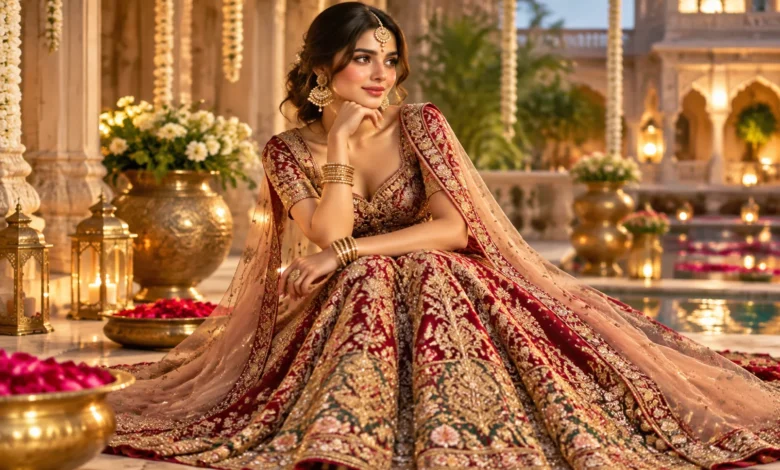
Few garments in Indian fashion carry quite the same sense of occasion as a lehenga. The moment the pleats of that voluminous skirt catch the light, or the embroidery on a choli glints under wedding-hall lighting, there’s an unmistakable feeling of stepping into something genuinely regal. It’s a garment that has survived centuries of changing fashion precisely because it keeps finding new ways to feel both timeless and completely current.
This guide covers everything from what actually defines a lehenga outfit to the genuinely rich history behind how it evolved, along with 11 lehenga outfits that feel regally elegant for every occasion on the calendar. Whether you’re shopping for your own bridal lehenga, a wedding guest outfit, or something festive for Navratri, this breakdown covers fabric, silhouette, styling, and the practical details that make choosing the right lehenga so much easier.
What Is a Lehenga Outfit?
A lehenga outfit, often called a lehenga choli, is a traditional Indian ensemble consisting of three core pieces: the lehenga itself, a long, often heavily embellished skirt; a choli, the fitted blouse worn on top; and a dupatta, a length of fabric draped over the shoulder or head to complete the look. Together, these three pieces form one of the most recognizable and versatile outfits in Indian fashion, worn everywhere from weddings and festivals to more casual celebratory occasions, depending on the fabric and embellishment level chosen.
What Is the Difference Between Lehenga and Ghagra Choli?
While the terms are frequently used interchangeably, lehenga and ghagra choli technically refer to somewhat different regional traditions. Lehenga is more closely associated with northern Indian bridal and festive wear, typically featuring heavier embroidery using techniques like zari, resham, and sequin work, often constructed with multiple fabric layers for maximum flare and drama. Ghagra, by contrast, is traditionally associated with the folk wear of Rajasthan and Gujarat, generally featuring simpler construction with printed patterns, tie-dye, or mirror work rather than the elaborate embellishment typical of a formal lehenga. In everyday conversation, though, most people use the two terms to describe essentially the same category of outfit.
What Makes a Lehenga Bridal vs. Festive?
The distinction between a bridal and festive lehenga generally comes down to fabric weight, embellishment level, and overall formality. Bridal lehengas typically use richer, heavier fabrics like silk or velvet, paired with extensive hand embroidery, zari work, and often multiple dupattas, reflecting the outfit’s role as the centerpiece of the entire wedding. Festive lehengas, worn for occasions like Navratri, Diwali, or a friend’s sangeet, generally use lighter fabrics like georgette or chiffon with less extensive embellishment, prioritizing ease of movement and comfort over maximum visual drama.
What Fabric Is Best for Lehenga Outfits?
Fabric choice significantly affects how a lehenga looks, moves, and feels throughout a long event.
Silk remains one of the most popular choices for bridal lehenga outfits, prized for its rich sheen, structured drape, and ability to hold intricate embroidery beautifully.
Velvet has become especially popular for winter wedding lehengas, offering a luxurious, heavier texture well suited to cooler months and formal evening events.
Georgette offers a lightweight, flowing alternative, making it a popular choice for mehndi and sangeet functions where ease of movement matters, particularly for dancing.
Net is frequently used for dupattas and layered lehenga skirts, adding volume and a delicate, ethereal quality without excessive weight.
Chiffon provides a similarly lightweight option to georgette, often favored for daytime or destination wedding functions given its breathability in warmer climates.
Also Read: 9 Indian Cotton Dresses That Radiate Understated Elegance
A Brief History of the Lehenga in Indian Fashion
The lehenga’s roots stretch back remarkably far, with some historical evidence suggesting garments resembling the modern lehenga date to the Indus Valley Civilization, with artistic depictions from sites like Mohenjo-daro, dated to around 2800 BCE, showing both men and women in draped and layered clothing resembling the outfit’s earliest form. Ancient Indian texts also describe a three-piece garment system remarkably similar to today’s lehenga choli — the antriya, a lower garment that would eventually evolve into the ghagra and dhoti; the uttariya, a veil worn over the shoulder or head that forms the basis of today’s dupatta; and the stanapatta, a chest band that eventually developed into the modern choli blouse.
The lehenga’s most significant transformation came during the Mughal era, when the garment gained widespread popularity across both royal and common households, and luxurious fabrics like silk and velvet, along with elaborate zari embroidery, became closely associated with the outfit for the first time. During this period, the lehenga was often worn as part of a three-piece ensemble that included a peshwaj, a robe-like upper garment, along with a sash called a patka, differing somewhat from the choli-and-dupatta pairing most associated with the outfit today.
Evolution of Lehenga Outfit Styles
As the lehenga spread across different regions of India, distinct regional variations developed, each reflecting local textile traditions and climate. In Rajasthan and Gujarat, the ghagra choli became deeply associated with folk dance traditions and Navratri celebrations specifically, typically featuring mirror work and vibrant, voluminous flares suited to energetic dancing. In Tamil Nadu, the Pattu Pavadai emerged as a related but distinct silk skirt tradition tied closely to the region’s historic silk weaving industry. The 18th and 19th centuries brought further regional variation, with related garments like the sharara, gharara, and lacha emerging as flared, trouser-like alternatives to the classic skirt silhouette.
The 20th century brought the lehenga into mainstream, contemporary fashion, significantly shaped by Bollywood cinema, which introduced the outfit to increasingly wide audiences and helped popularize new silhouettes and styling choices season after season. This period also saw prominent Indian fashion designers begin reinterpreting the traditional lehenga with updated cuts, fabrics, and embellishment techniques, elevating it into a genuine high-fashion category recognized well beyond India’s borders.
Traditional vs. Modern Lehenga Designs
Traditional lehenga designs tend to favor the classic circular or heavily flared skirt silhouette, richly embellished with hand embroidery and worn with a fitted, relatively modest choli. Modern lehenga designs have introduced considerably more variety, including sleeker A-line and fishtail silhouettes, crop-top-style cholis, and Indo-Western fusion pieces incorporating elements like structured jackets, pre-draped dupattas, or even pant-style bottoms in place of the traditional flared skirt. This evolution reflects a broader shift in Indian bridal and festive fashion toward greater personal expression, without abandoning the outfit’s core traditional identity entirely.
Cultural Significance of the Lehenga in Weddings
The lehenga holds a genuinely central place in Indian wedding culture, often considered one of the most significant garments a bride will ever wear. Beyond its visual grandeur, the outfit frequently carries family and regional significance, with colors, embroidery patterns, and even specific fabrics sometimes tied to particular community traditions or passed down through generations as heirloom pieces. This cultural weight is part of why choosing a bridal lehenga is often treated as such a significant, carefully considered decision within Indian wedding planning.
Why Lehenga Outfits Are Popular for Weddings
Lehenga outfits have remained a dominant choice for Indian weddings for several consistent reasons. Their voluminous, dramatic silhouette naturally suits the celebratory, larger-than-life atmosphere of a wedding, while the outfit’s long tradition of elaborate embellishment offers nearly limitless room for embroidery, color, and personalization. The three-piece structure — lehenga, choli, and dupatta — also allows for considerable styling flexibility across the many different functions and outfit changes a typical Indian wedding involves.
Why Heavy Embroidery Is Common in Bridal Lehengas
Elaborate embroidery on bridal lehengas reflects both aesthetic tradition and genuine craftsmanship investment. Techniques like zari, involving metallic thread work, along with resham embroidery, sequins, and mirror work, have been refined over generations of skilled artisans, and a heavily embroidered bridal lehenga often represents dozens of hours, sometimes weeks, of detailed handwork. This level of craftsmanship has become closely associated with marking the significance of the occasion itself, treating the bridal lehenga as a genuine piece of wearable art rather than simply an outfit.
Also Read: Short Kurti With Jeans: 6 Stylish Outfit Ideas You’ll Love
11 Lehenga Outfits That Feel Regally Elegant
Classic A-Line Bridal Lehenga
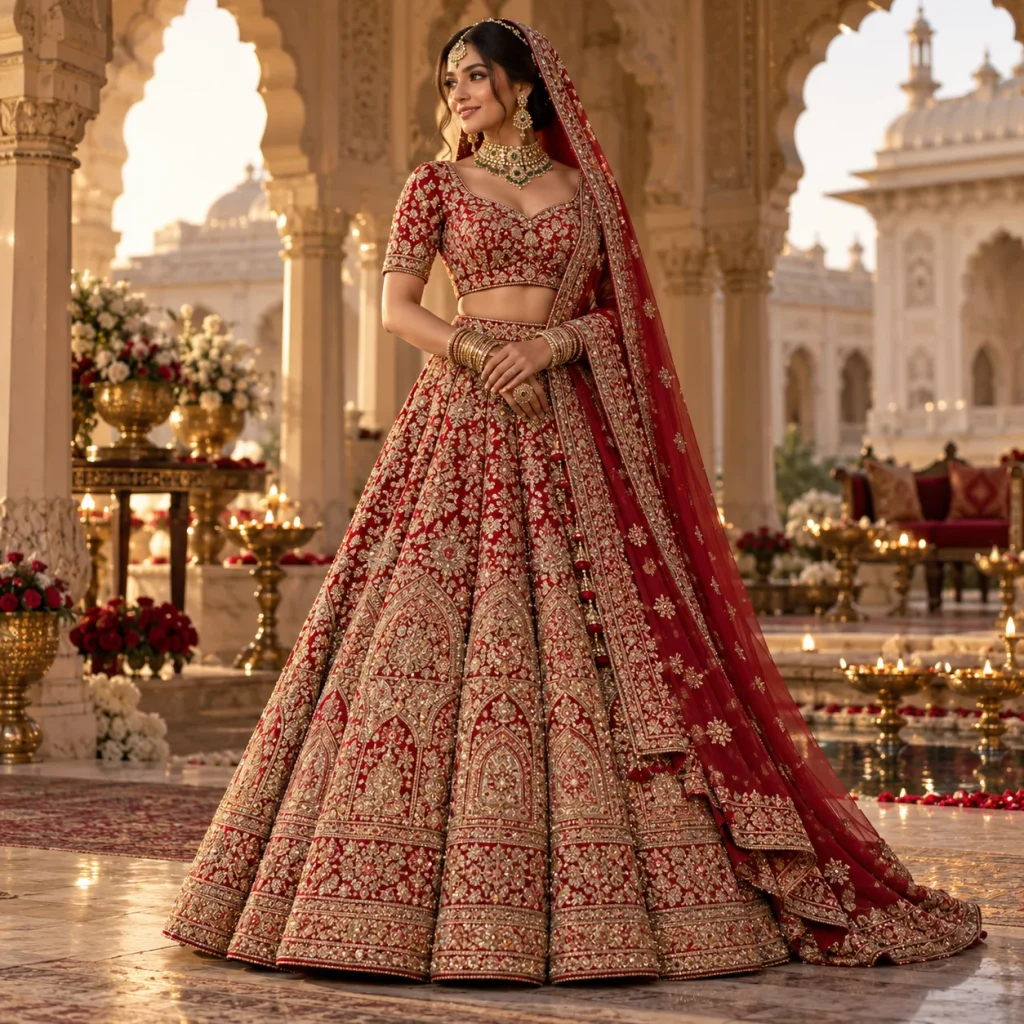
The A-line silhouette offers a structured, straight-cut flare reminiscent of a Western skirt shape, creating a flattering, elongating line that works beautifully across body types. Finished with heavy zari or resham embroidery, this style remains one of the most consistently popular choices for bridal lehenga outfits.
Fishtail Lehenga
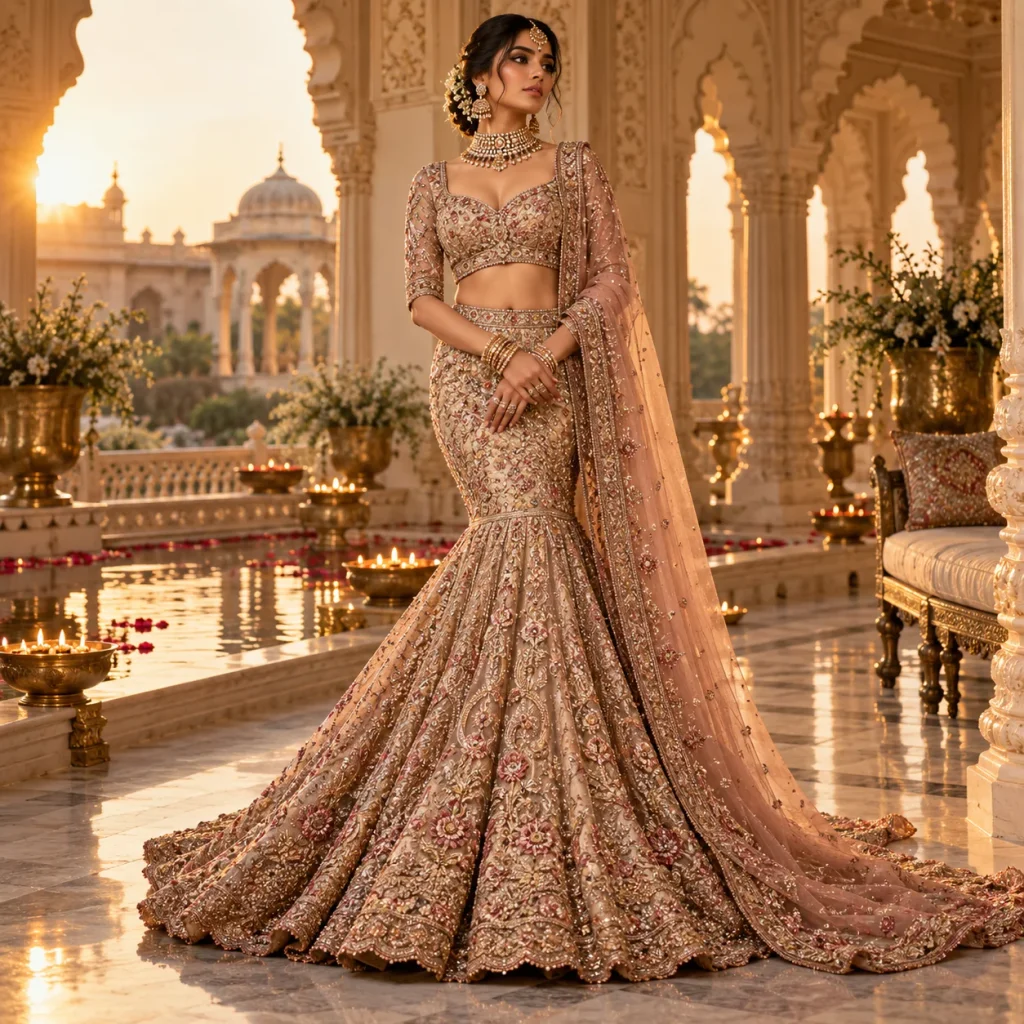
A fishtail or mermaid-cut lehenga fits closely through the hips and thighs before dramatically flaring out near the knee, creating a sleek, modern silhouette that works particularly well for reception functions where a more contemporary, fitted look feels appropriate.
Circular Lehenga
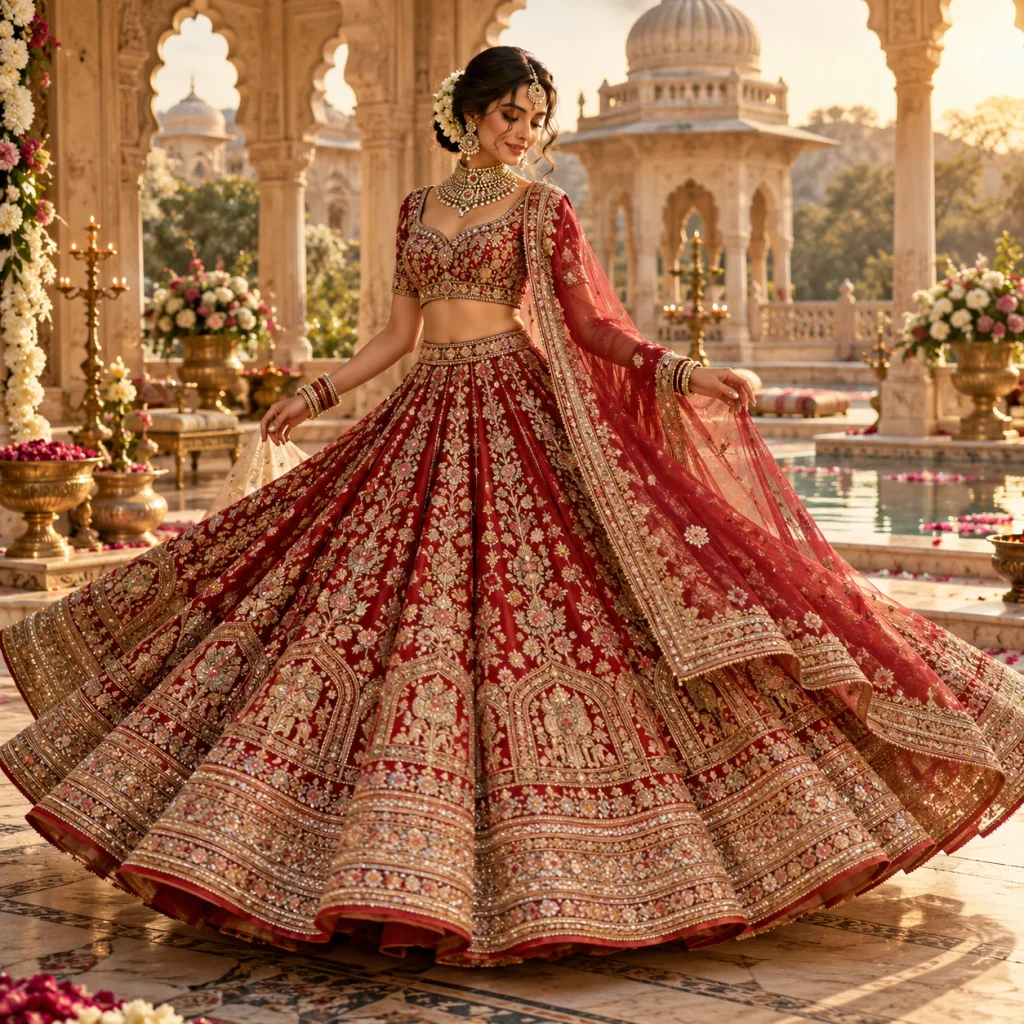
Offering maximum volume and drama, a circular lehenga uses a wide, fully rounded cut to create dramatic movement, particularly striking during dancing at sangeet or reception functions. This traditional silhouette remains a favorite for brides wanting a genuinely voluminous, royal presence.
Panelled Lehenga
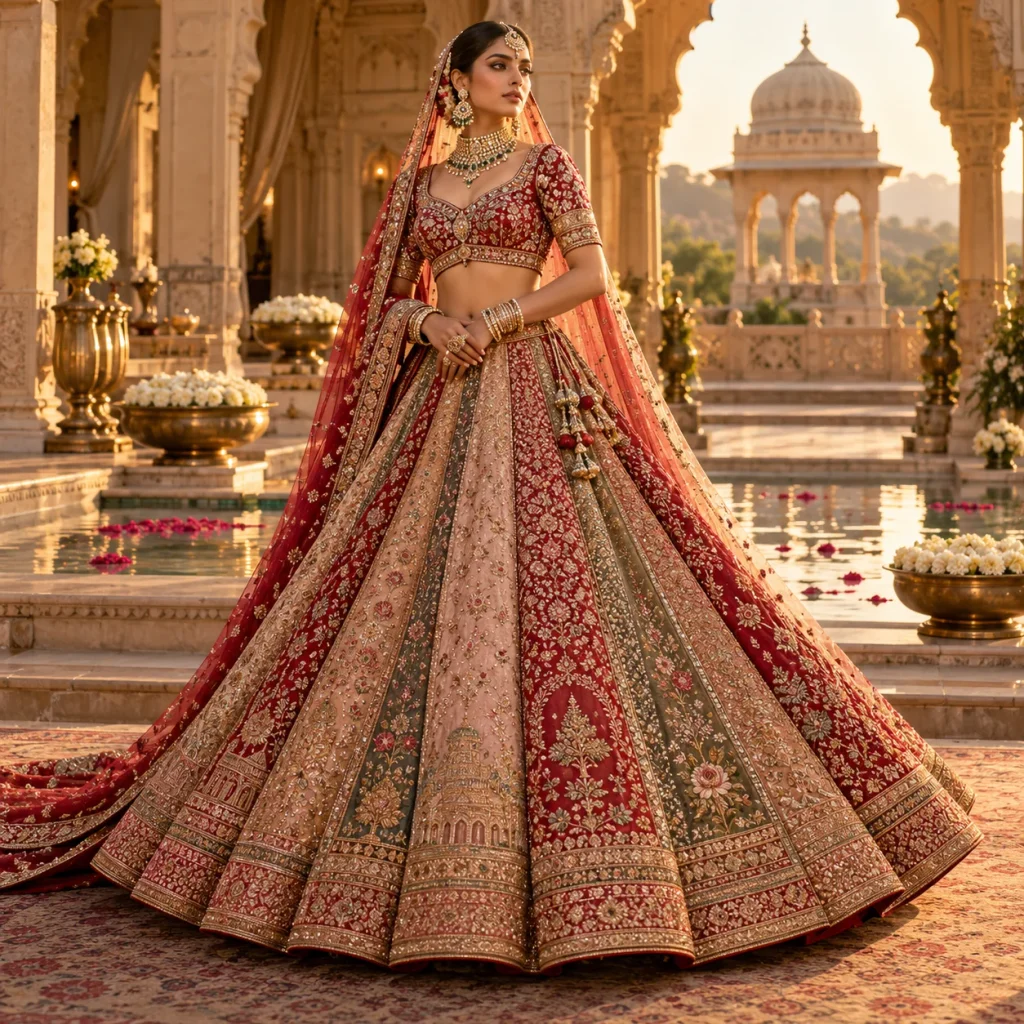
A panelled lehenga uses multiple fabric panels, often in contrasting colors or embroidery patterns, stitched together to create the skirt’s flare. This construction technique allows for striking visual detail and depth, making it a popular choice for designer and high-embellishment bridal pieces.
Indo-Western Crop Top Lehenga
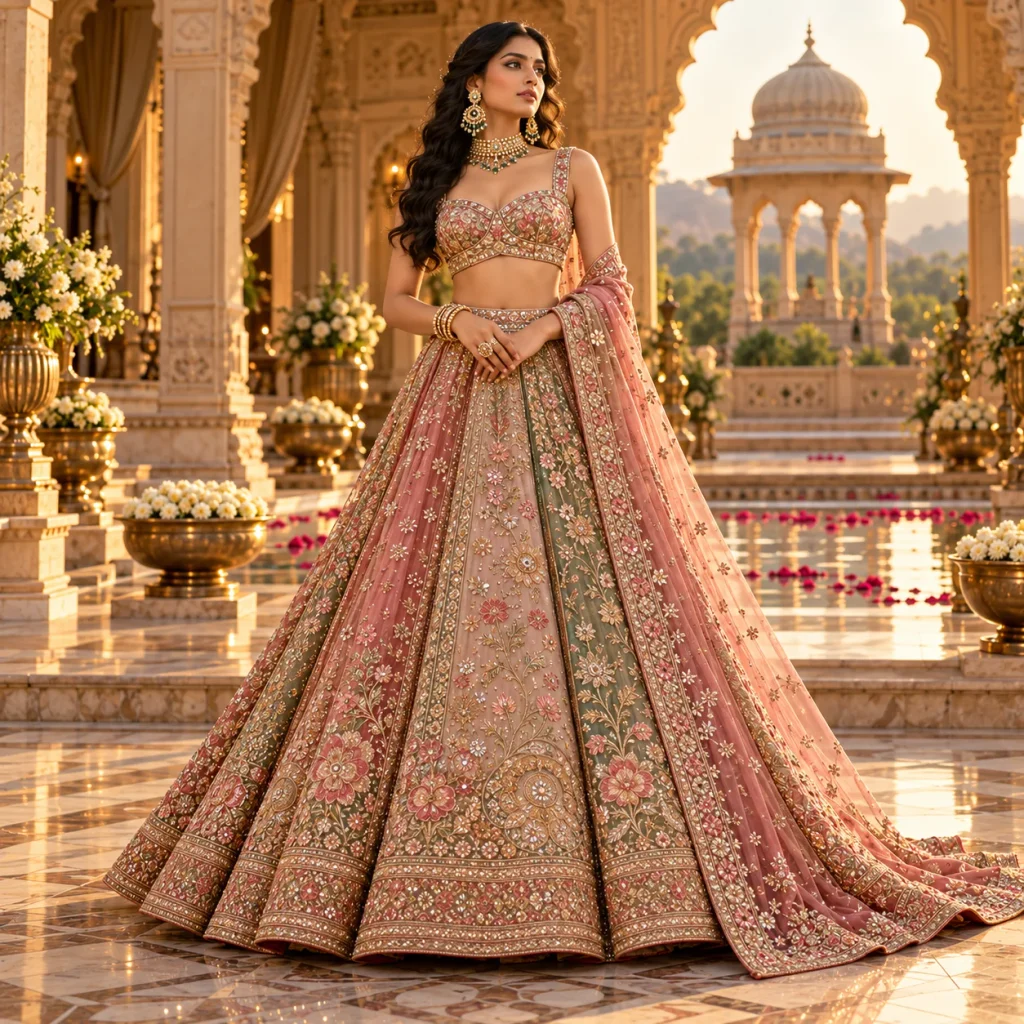
Pairing a cropped, fitted top with a traditional lehenga skirt, this Indo-Western style offers a fresh, contemporary take on the classic silhouette, popular for sangeet functions or destination weddings where a slightly more modern aesthetic feels fitting.
Lehenga with Jacket
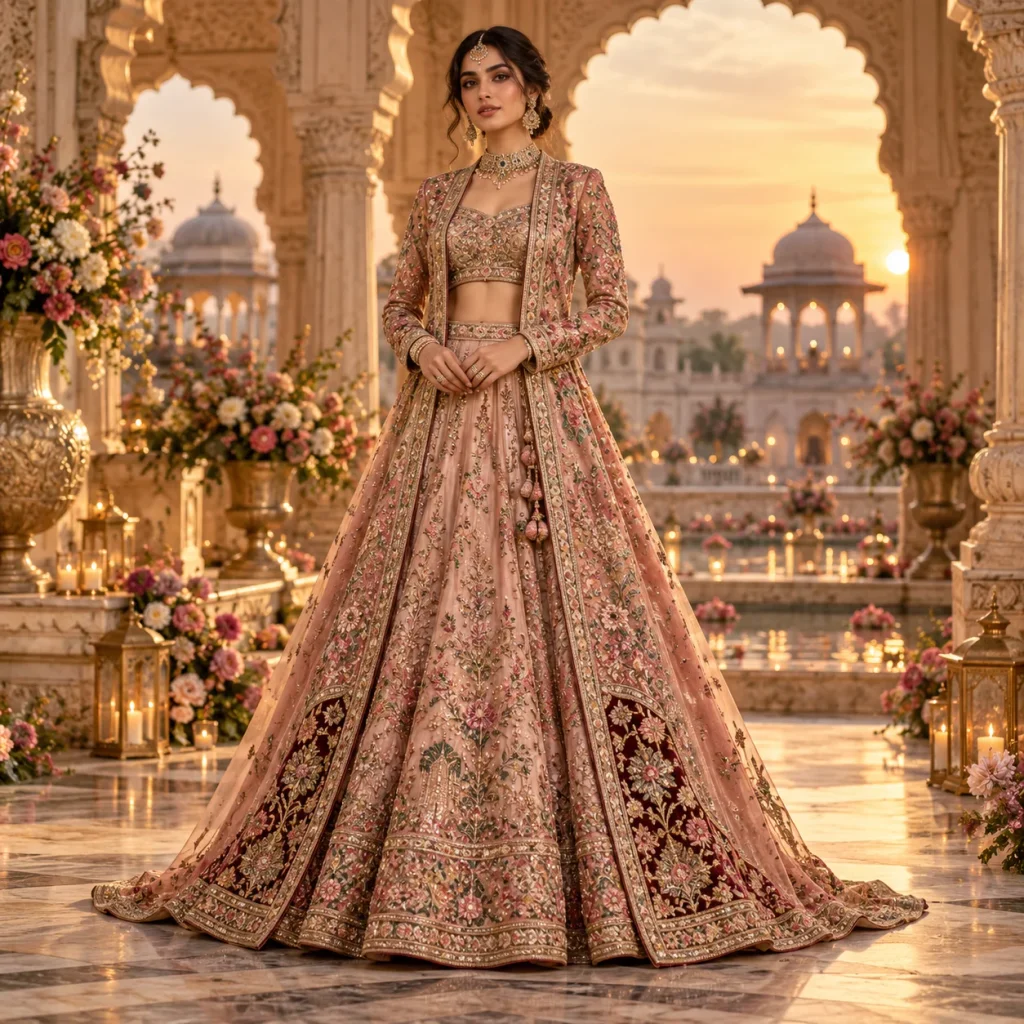
Adding a long, structured jacket over a simpler lehenga skirt and choli creates a striking, layered silhouette increasingly popular for engagement functions and receptions. The jacket often carries much of the outfit’s embellishment, allowing the skirt beneath to remain relatively simple.
Velvet Lehenga for Winter Weddings
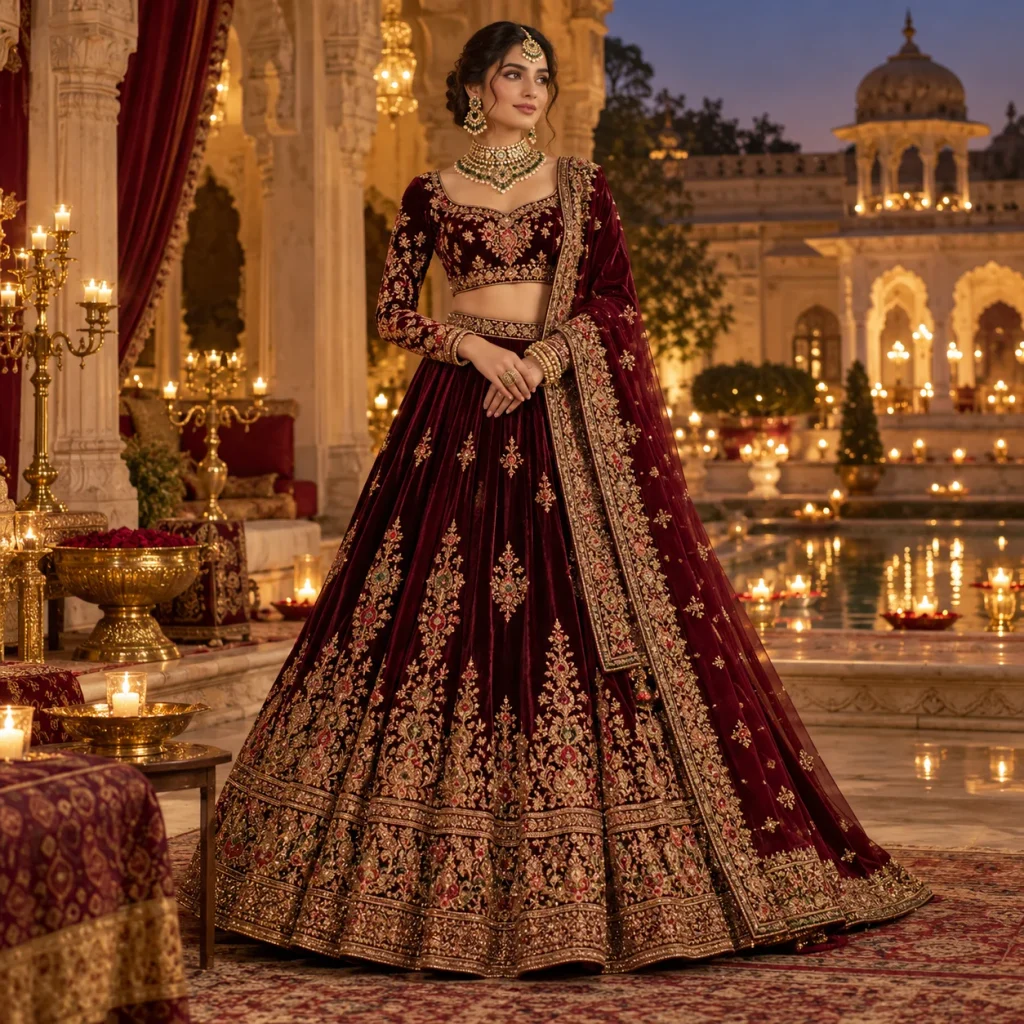
Velvet’s rich, heavier texture makes it an excellent choice for winter wedding lehengas, offering both genuine warmth and a luxurious, formal appearance particularly well suited to evening functions during cooler months.
Georgette Lehenga for Mehndi and Sangeet
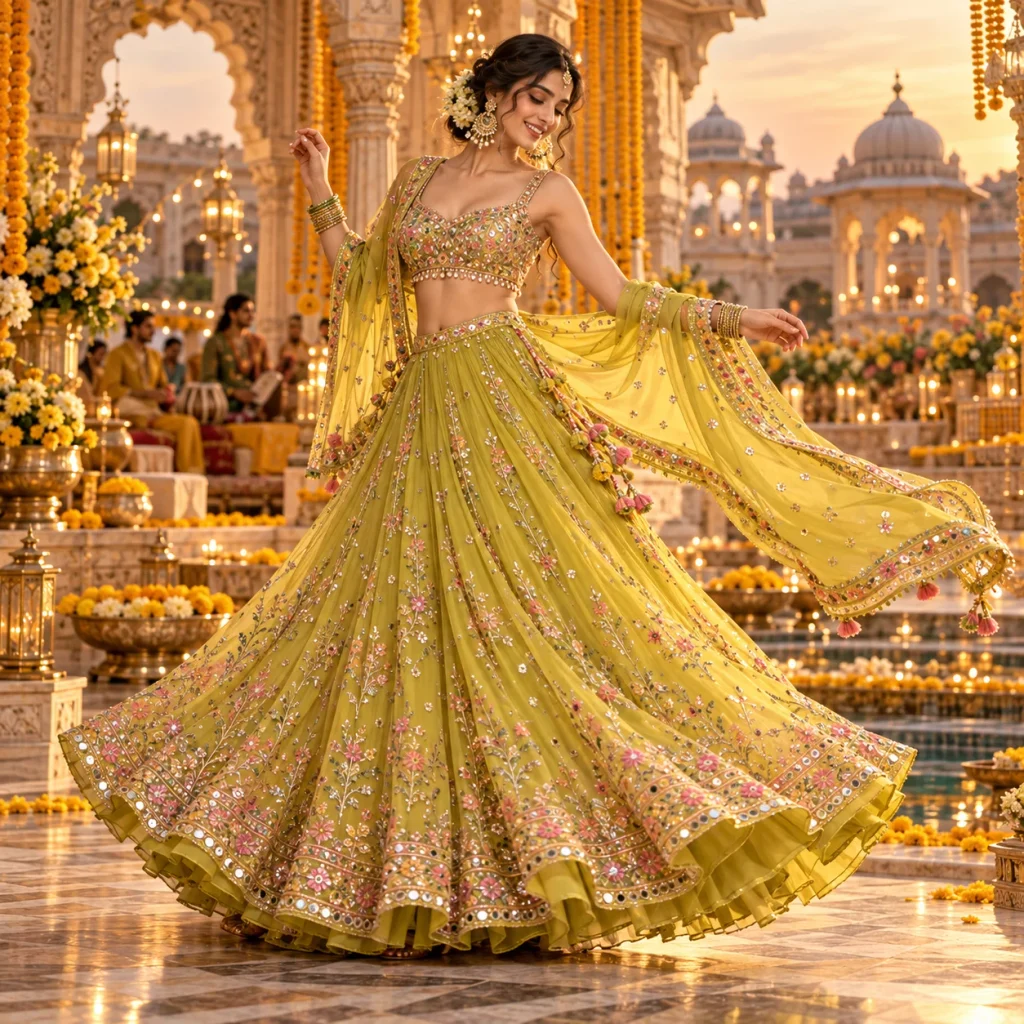
Lightweight and flowing, a georgette lehenga prioritizes ease of movement, making it especially well suited to mehndi and sangeet functions that involve extended dancing. This fabric choice balances festive embellishment with genuine day-long wearability.
Pastel Lehenga for Daytime Functions
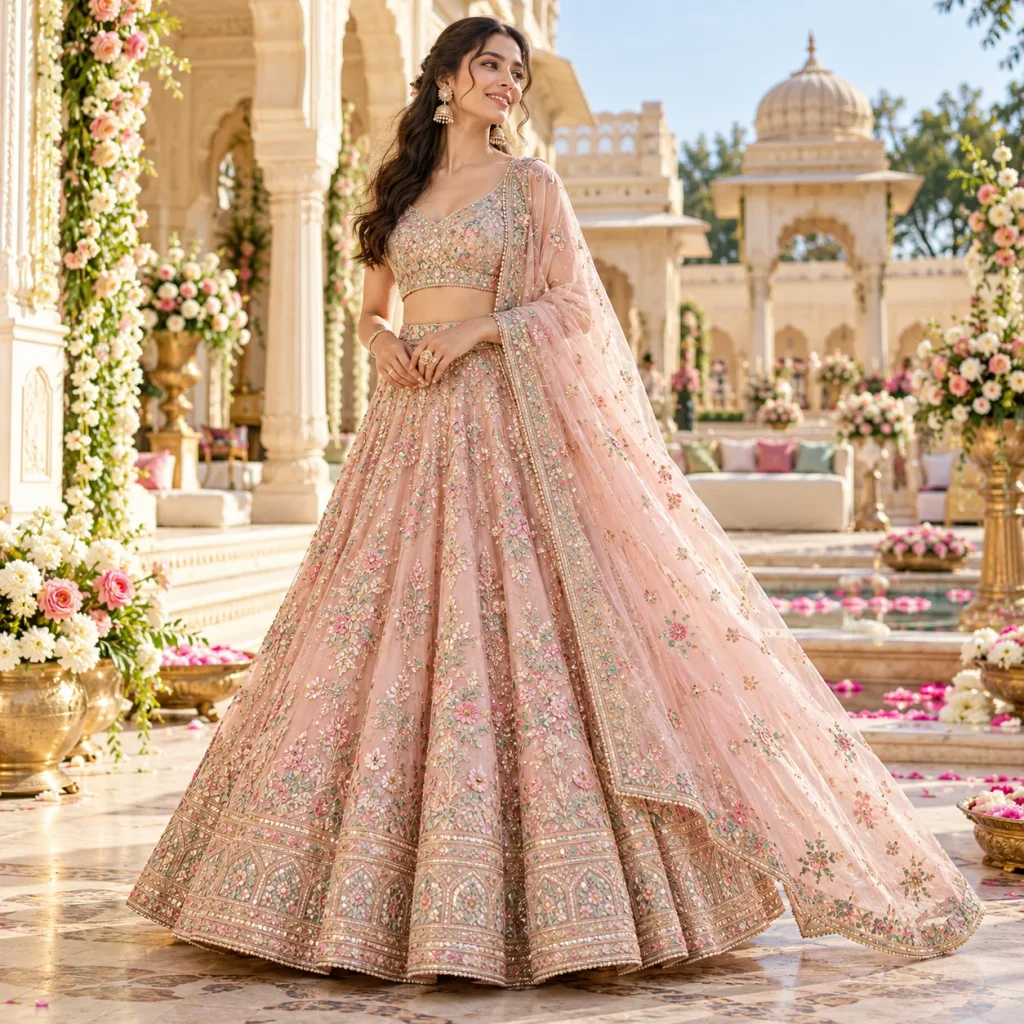
A soft pastel lehenga in shades like blush, mint, or lavender offers an elegant, softer alternative to traditional bridal reds, particularly well suited to daytime engagement functions or destination weddings with a more relaxed, romantic aesthetic.
Mirror Work Lehenga for Festivals
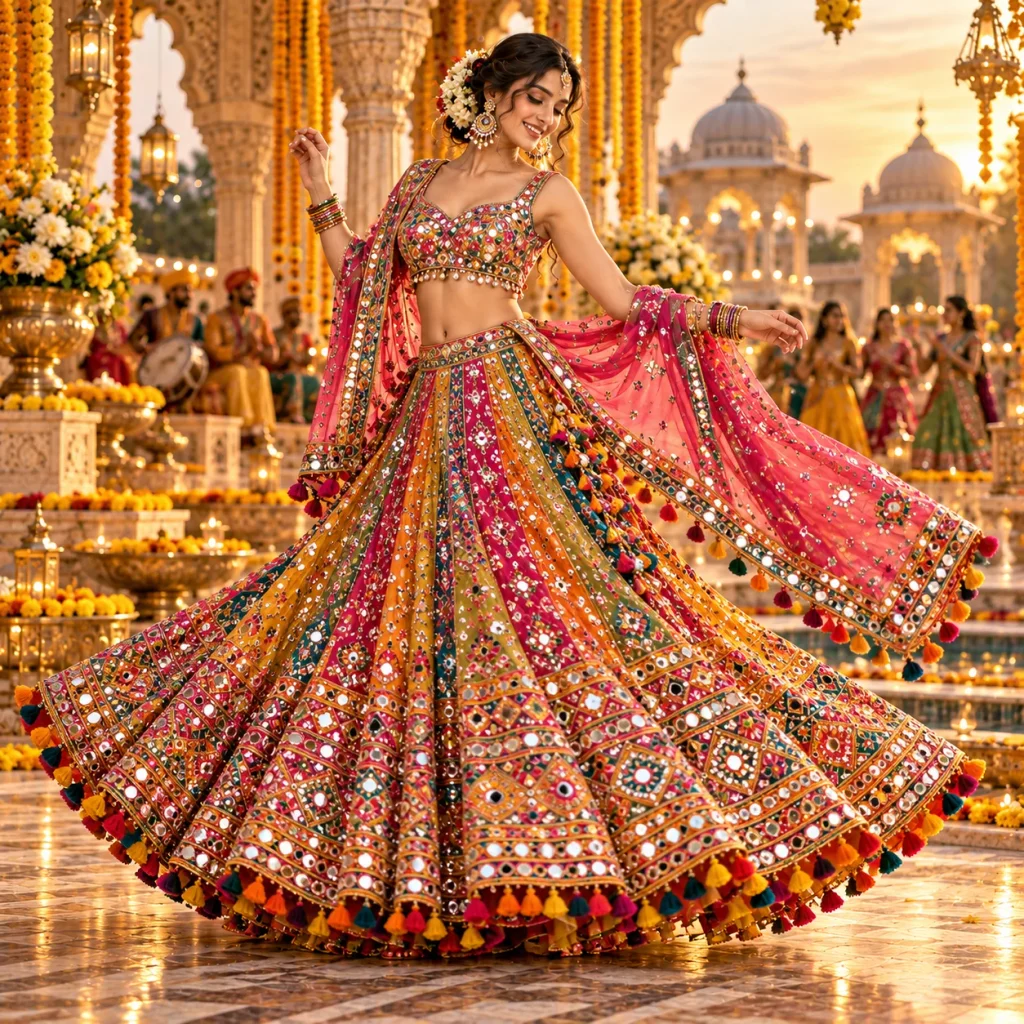
Drawing directly from traditional Rajasthani and Gujarati ghagra choli craft techniques, a mirror work lehenga offers a vibrant, eye-catching option particularly popular for Navratri and other festival celebrations, where reflective embellishment catches the light beautifully during dancing.
Sequin Reception Lehenga
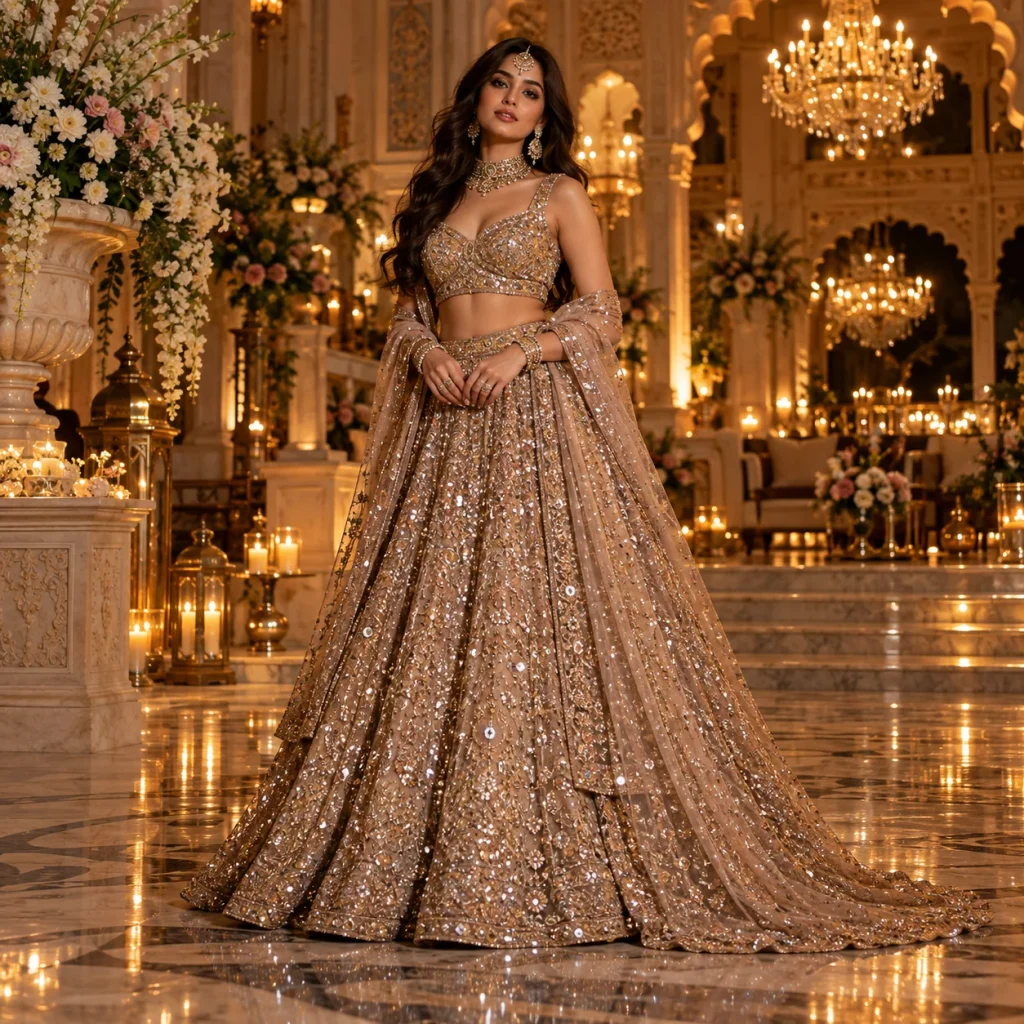
For maximum shimmer and evening glamour, a fully sequined lehenga delivers dramatic sparkle well suited to reception functions with dim, ambient lighting. This style photographs beautifully and offers a distinctly modern, statement-making alternative to traditional hand embroidery.
Also Read: 14 Blouse Designs for Women That Feel Effortlessly Elegant
Lehenga Outfits by Color
Red bridal lehenga outfits remain the most traditional and widely chosen color for North Indian weddings, symbolizing prosperity and marital significance.
Maroon lehenga outfits offer a deeper, richer alternative to classic red, particularly popular for winter weddings and reception functions.
Gold lehenga outfits bring regal opulence, frequently chosen for reception or sangeet functions where maximum shimmer feels appropriate.
Pastel lehenga outfits suit daytime and destination wedding functions, offering a softer, more contemporary bridal aesthetic.
Black lehenga outfits, once considered unconventional for Indian weddings, have become increasingly popular for reception and sangeet functions specifically, offering a bold, modern alternative to traditional colors.
Pink and green lehenga outfits remain popular choices for both bridal and festive wear, with green in particular carrying auspicious significance in many Indian wedding traditions.
Lehenga Outfits by Occasion
Bridal lehenga outfits call for the richest fabrics and most extensive embellishment, typically in silk or velvet with heavy zari and embroidery work.
Wedding guest lehenga outfits generally opt for lighter embellishment and more versatile colors, balancing festivity with the practicality of not overshadowing the bride.
Reception lehenga outfits often lean toward more contemporary silhouettes like fishtail cuts or sequin detailing, suited to evening glamour.
Engagement lehenga outfits frequently favor pastel tones or lighter embroidery, striking a balance between festive and refined.
Mehndi lehenga outfits typically use lighter fabrics like georgette or cotton-silk blends in vibrant yellows, oranges, or greens, prioritizing comfort for a daytime, dance-heavy function.
Sangeet lehenga outfits call for dramatic movement and shine, making circular or panelled silhouettes with sequin or mirror work particularly popular.
Festival lehenga outfits, especially for Navratri, favor mirror work and vibrant colors suited to traditional folk dance styles like garba and dandiya.
Choosing a Lehenga Outfit for Your Body Type
A-line and circular lehengas tend to suit most body types well, since their balanced flare doesn’t emphasize any particular area disproportionately. Fishtail and mermaid-cut lehengas work particularly well for taller frames or hourglass figures, where the fitted silhouette through the hips can be shown off effectively. For petite frames, choosing a lehenga with vertical embroidery patterns or a slightly higher waistline can help create the illusion of additional height, while panelled lehengas with strategic color blocking can help balance broader proportions.
How to Style a Lehenga Outfit
Dupatta Draping Styles
The dupatta offers significant room for personal styling. A classic drape over one shoulder remains the most traditional choice, while a double dupatta look — one draped over the shoulder and a second worn over the head — has become increasingly popular for bridal looks specifically. A belted dupatta, cinched at the waist with a decorative belt, offers a more contemporary, structured alternative for festive or reception functions.
Jewelry to Pair with a Lehenga
Jewelry choice should generally complement, rather than compete with, the lehenga’s own embellishment level. A heavily embroidered bridal lehenga often pairs well with a statement necklace set, maang tikka, and matching earrings, while a simpler festive lehenga offers more room for bold, standalone jewelry choices like oxidized silver or colorful stone-set pieces.
Hairstyles for a Lehenga Outfit
Hairstyle choice often depends on the dupatta styling chosen. An elegant low bun or side-swept curls work particularly well when the dupatta is draped over the head, keeping the overall silhouette clean and balanced. For lehenga outfits without head-covering dupatta styles, loose waves or a more elaborate braided updo offer additional options depending on the occasion’s formality.
How to Choose the Right Lehenga Outfit
Start by considering the occasion’s formality and the season, since these two factors most directly influence fabric choice between heavier options like silk and velvet versus lighter choices like georgette and chiffon. From there, factor in comfort requirements specific to the function — a sangeet or mehndi involving extended dancing calls for a lighter, more flexible lehenga than a formal, largely seated wedding ceremony. Finally, consider color coordination with the broader wedding’s palette, particularly for bridesmaids or close family members whose outfits may need to complement, rather than clash with, the bride’s own choices.
Where to Buy or Rent Lehenga Outfits
Lehenga outfits are available through a wide range of channels, from established designer boutiques offering fully custom, made-to-order pieces to more accessible online retailers carrying ready-to-wear designer and semi-custom options. For occasions where purchasing a heavily embellished lehenga outfit doesn’t make practical financial sense, particularly for guest or reception functions, renting has become an increasingly popular and accessible option, allowing access to designer-quality pieces without the full cost of ownership.
Frequently Asked Questions
Which lehenga outfit suits which body type?
A-line and circular silhouettes tend to suit most body types well due to their balanced flare, while fishtail and mermaid cuts work particularly well for taller or hourglass figures. Petite frames often benefit from vertical embroidery detailing or a slightly higher waistline for added visual height.
How much does a bridal lehenga cost?
Bridal lehenga pricing varies enormously based on fabric quality, embellishment complexity, and whether the piece is custom-designed or ready-to-wear, ranging from moderately priced options to significant investment pieces for heavily hand-embroidered designer lehengas.
Can lehenga outfits be worn casually?
Yes, particularly simpler, lighter versions made from cotton or lightweight georgette with minimal embellishment, which have become increasingly popular for casual festive gatherings and daytime celebrations beyond formal weddings.
What color lehenga is best for weddings?
Red remains the most traditional choice for North Indian bridal wear, though maroon, gold, and increasingly pastel tones have all become popular alternatives depending on the wedding’s season, formality, and personal preference.
How do you choose a lehenga outfit for a reception?
Reception lehenga outfits generally lean toward more contemporary, statement-making silhouettes like fishtail cuts or sequin detailing, suited to evening lighting and a slightly less traditional, more glamorous aesthetic than the primary bridal ceremony look.
Final Thoughts
The lehenga’s remarkable staying power in Indian fashion comes down to exactly what makes it so compelling today: a garment with genuine historical depth that continues to evolve with every generation of designers and brides who reimagine it. From a classic red bridal A-line to a contemporary Indo-Western crop-top style, the eleven outfits covered here each capture a different facet of what makes this centuries-old silhouette feel completely at home in a modern wedding season. Whatever occasion you’re dressing for, a well-chosen lehenga remains one of the most reliably regal, elegant choices Indian fashion has to offer.
Also Read: Modern Saree Outfit Ideas: 15 Stylish Looks to Try in 2026