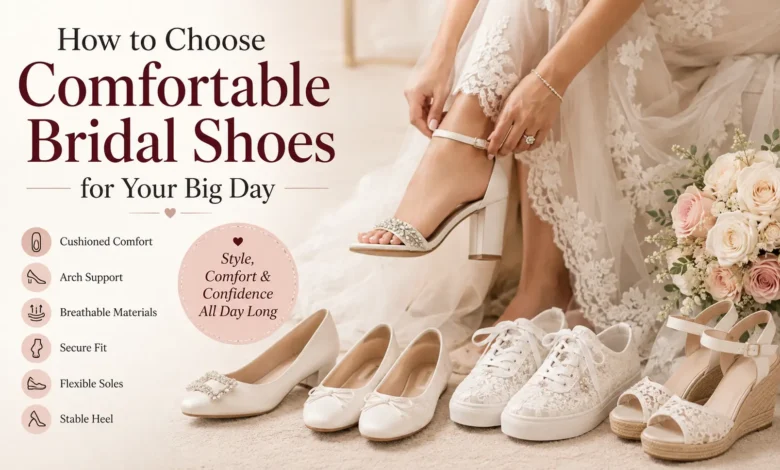
Your wedding day is one of the longest days you’ll wear a single pair of shoes — hours of standing during the ceremony, walking for photos, greeting guests, and dancing well into the night. That’s why finding comfortable bridal shoes matters just as much as finding the perfect dress. A shoe that looks stunning in photos but leaves you limping by the reception isn’t a win; it’s a problem waiting to happen.
The good news is that comfort and style are no longer a trade-off. Bridal shoe brands have caught up with what brides actually need, and there are now countless options that look elegant while genuinely protecting your feet through a full day of celebration. In this guide, we’ll walk through exactly how to choose the best comfortable bridal shoes for your body, your venue, and your personal style — so you can focus on enjoying your day instead of counting down the minutes until you can take your shoes off.
Why Comfort Should Be a Top Priority, Not an Afterthought
It’s easy to get swept up in choosing a shoe based purely on how it looks with your dress. But consider this: most brides are on their feet for 8-12 hours on their wedding day, often in unfamiliar shoes they’ve barely broken in. Add dancing, standing for photos, and walking across uneven surfaces like grass or cobblestone, and you have a recipe for blisters, aching arches, and sore heels by the end of the night.
Choosing the most comfortable bridal shoes isn’t about sacrificing style — it’s about being strategic. The right shoe lets you move confidently, stand through a long ceremony without shifting your weight uncomfortably, and dance without wincing. When your feet feel good, it shows in your posture, your smile, and how present you are for the moments that matter most.
Understanding What Makes a Bridal Shoe Truly Comfortable
Before diving into styles, it helps to understand the specific features that separate a genuinely comfortable shoe from one that just looks comfortable in a product photo.
- Cushioned insoles: Look for shoes with memory foam or gel-cushioned footbeds. These absorb shock with every step and reduce pressure on the balls of your feet, which matters enormously over a long day.
- Arch support: Proper arch support prevents fatigue and helps distribute your weight evenly, especially important if you’ll be standing for extended periods during the ceremony.
- Breathable materials: Fabrics like satin, mesh, or soft leather allow airflow and reduce sweating, which in turn reduces friction and blister risk.
- Secure fit without tightness: A shoe that’s snug but not restrictive prevents your foot from sliding forward (a common cause of toe pain) while avoiding pressure points.
- Flexible soles: A sole that bends naturally with your foot’s movement reduces strain compared to a rigid, stiff sole that forces your foot into an unnatural position.
- Appropriate heel height and width: A stable, wider heel distributes weight far better than a thin stiletto, significantly reducing wobbling and ankle strain.
Keeping these features in mind while shopping will help you filter out shoes that are stylish but impractical, and focus on ones that will genuinely hold up through your entire day.
Also Read: Fashion Trends 2026: The Complete Guide to What’s In, What’s Out, and How to Actually Wear Them
Low Heel Comfortable Bridal Shoes: A Smart Middle Ground
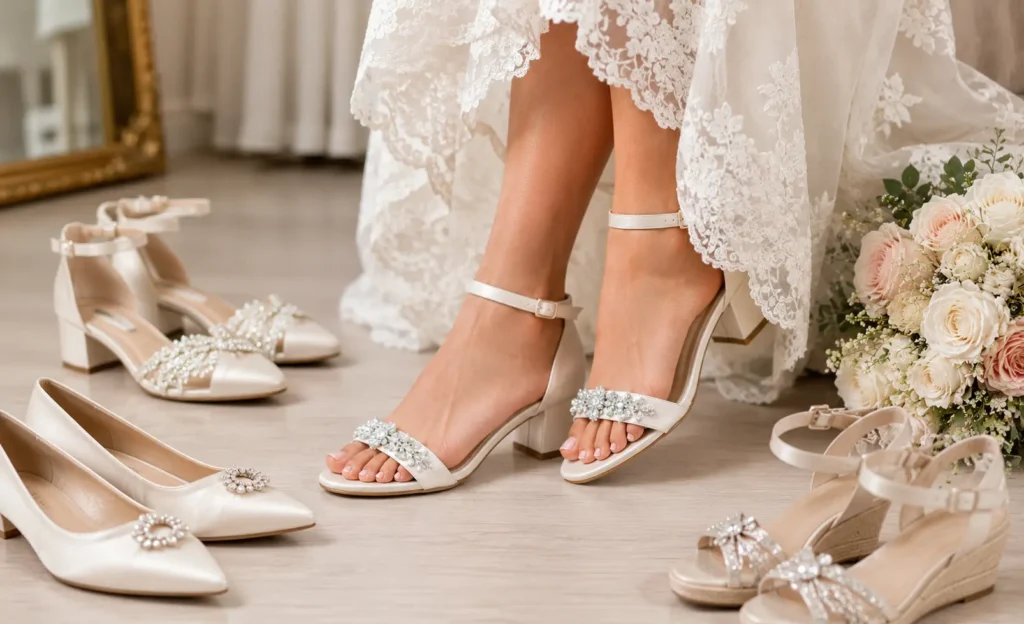
If you want some height without the instability of a tall heel, low heel comfortable bridal shoes are one of the smartest choices available. A heel between one and two inches offers a flattering silhouette under your dress while dramatically reducing the pressure on the ball of your foot compared to a 3-4 inch heel.
Types of low heels worth considering:
- Block heels: Wider and more stable than a stiletto, block heels distribute your body weight over a larger surface area, making them significantly easier to stand and walk in for hours.
- Kitten heels: A slim but very short heel (usually under 1.5 inches) that adds a touch of elegance without much added strain.
- Wedge heels: These distribute weight along the entire sole rather than concentrating it at a single point, making them one of the most stable and comfortable heel options, especially for outdoor venues.
Comfortable bridal shoes low heel styles also tend to be more forgiving if you haven’t had much practice walking in heels, which is a big relief for brides who don’t wear heels often in everyday life.
Comfortable Bridal Flats: Zero Compromise on Elegance
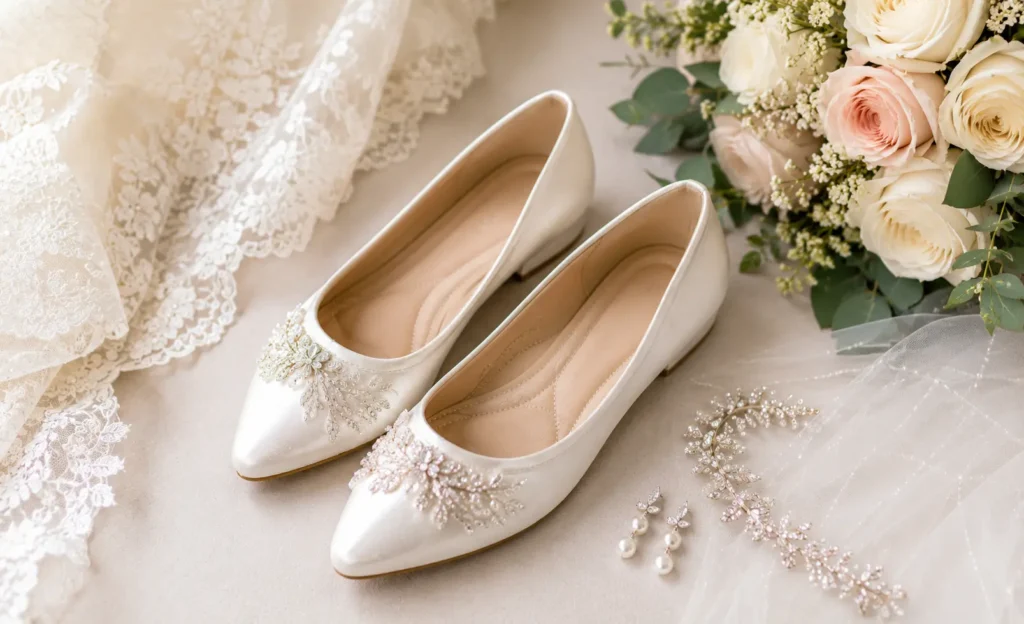
For brides who want maximum comfort without giving up a polished look, flats have come a long way from being seen as “too casual” for a wedding. Bridal flats now come in the same range of fabrics and embellishments as heels — lace, satin, crystal detailing, delicate straps — so you don’t have to sacrifice elegance for practicality.
Flats are also an excellent option if:
- You’re getting married outdoors on grass, sand, or uneven terrain.
- You want to dance freely without worrying about ankle stability.
- You’re petite and prefer a more natural stride, or tall and don’t need extra height.
- You plan to change shoes for the reception and want your ceremony pair to be effortless to walk in.
Many brides now opt for a “his and hers” approach with two pairs: a beautiful heel for photos and the ceremony walk, and a comfortable flat or sneaker for the reception once the dancing begins.
Comfortable Bridal Sneakers: A Modern, Practical Choice
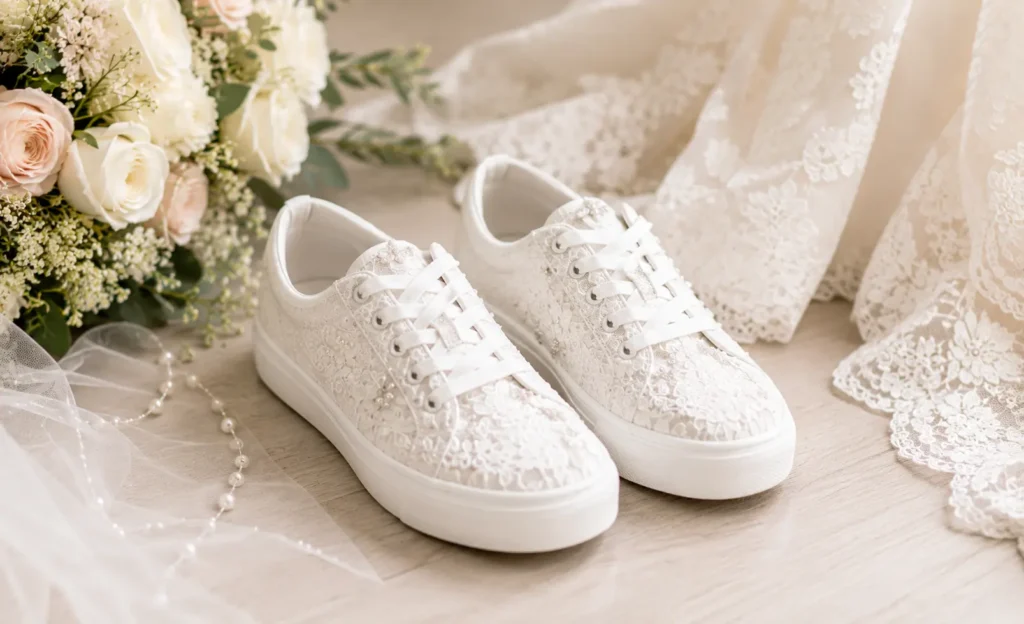
Bridal sneakers have become increasingly popular, especially for brides having a casual, boho, or destination wedding. These are specifically designed with white or ivory uppers, subtle lace or embellishment details, and cushioned soles built for genuine, long-lasting comfort.
This option works particularly well for:
- Beach weddings or garden weddings where heels can sink into sand or soft ground.
- Brides planning an active reception with lots of dancing.
- Anyone who prioritizes practicality and wants a shoe they might actually wear again afterward.
If a full sneaker feels too casual for your ceremony but you still want that level of comfort later, plan to change into them specifically for the reception.
Comfortable Bridal Shoes for Outdoor Weddings
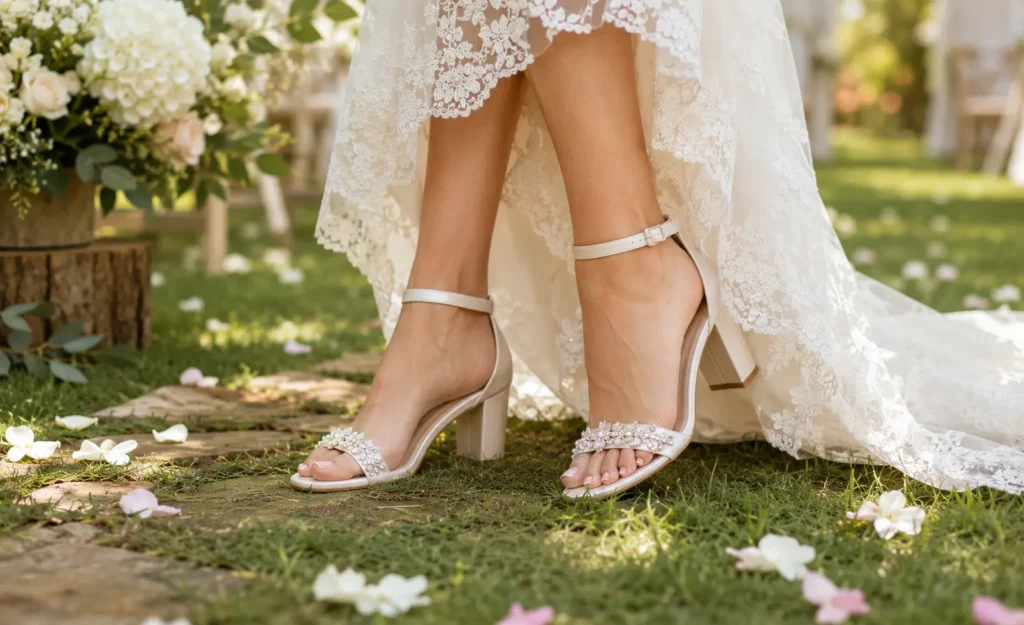
Outdoor venues add a layer of complexity that indoor venues don’t have to consider. Grass, sand, gravel, and cobblestone are notoriously difficult to walk on in traditional heels, and a stiletto heel sinking into soft ground is a common (and stressful) wedding day mishap.
For comfortable bridal shoes for outdoor wedding ceremonies, consider:
- Wedges: As mentioned earlier, the wider surface area prevents sinking into grass or sand and offers much better stability than a thin heel.
- Block heels: A sturdy, wide heel performs far better outdoors than a narrow one.
- Flats or espadrilles: For casual outdoor or beach weddings, flats paired with natural fabrics like jute or canvas suit the setting while keeping you comfortable.
- Heel protectors: If you’re set on wearing heels outdoors, small clear heel caps (sold separately) can be added to prevent your heels from sinking into soft ground.
It’s also worth walking the actual venue terrain in your shoes before the big day if possible — many venues will allow a walkthrough, and testing your shoes on the real surface can save you from surprises.
How to Break In Bridal Shoes Before Your Wedding
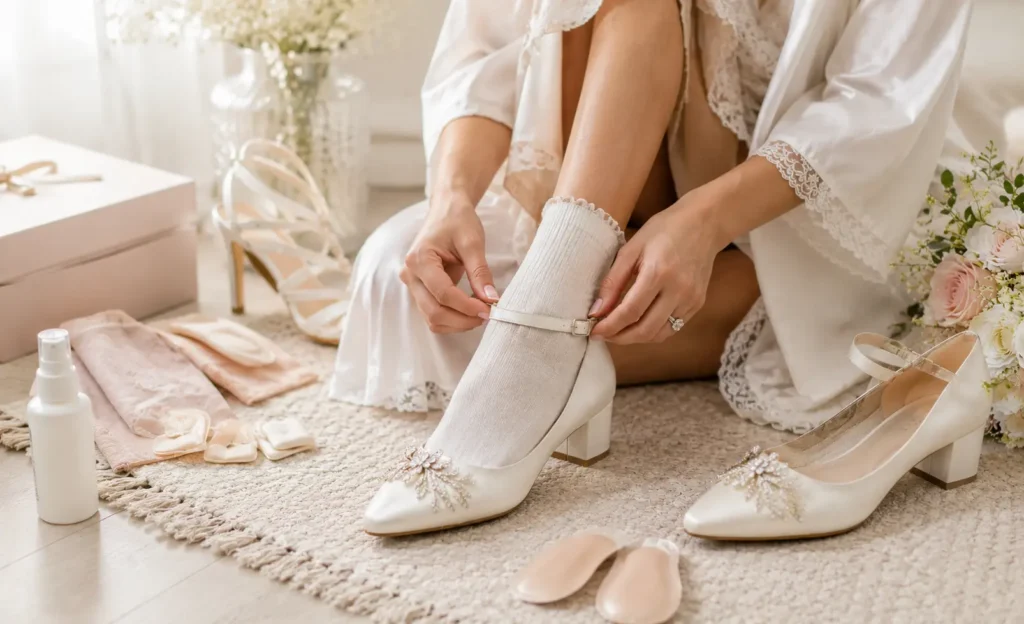
Even the most comfortable bridal shoes benefit from a proper break-in period. Wearing brand-new shoes for the first time on your wedding day is one of the most common mistakes brides make, since even soft materials need time to mold to your foot.
Steps to break them in properly:
- Wear them around the house for short periods, gradually increasing the time over a few weeks.
- Wear thick socks with them for an hour or two at home to gently stretch tight areas without risking blisters on your actual skin.
- Use a shoe stretcher or cobbler if certain spots feel tight, especially around the toes or sides.
- Apply moleskin or blister pads in advance to any areas that tend to rub, so your skin gets used to slight pressure gradually.
- Practice walking and standing in them the way you will on the day itself — including practicing how you’ll walk down the aisle and stand for photos.
Start this process at least a month before your wedding, if possible, so your shoes have plenty of time to adjust to your feet rather than the other way around.
Tips for All-Day Comfort on Your Wedding Day
Beyond choosing the right shoe, a few extra strategies can make a noticeable difference in how your feet feel by the end of the night:
- Bring a backup pair. Many brides pack a second, more casual pair (like sandals or slippers) to change into for the reception once formal photos are done.
- Use gel inserts or cushioned insoles. Even a comfortable shoe can benefit from an added layer of cushioning, especially for all-day wear.
- Apply anti-blister balm or tape to friction-prone areas like the back of the heel and sides of the toes before putting your shoes on.
- Keep a small emergency kit nearby with band-aids, blister pads, and a spare pair of tights or socks in case anything starts to rub.
- Elevate your feet whenever you get a quiet moment, even for a few minutes between events, to reduce swelling.
- Stay hydrated. Dehydration can contribute to foot swelling and cramping, especially if you’re on your feet for many consecutive hours.
Best Comfortable Bridal Shoes by Foot Concern
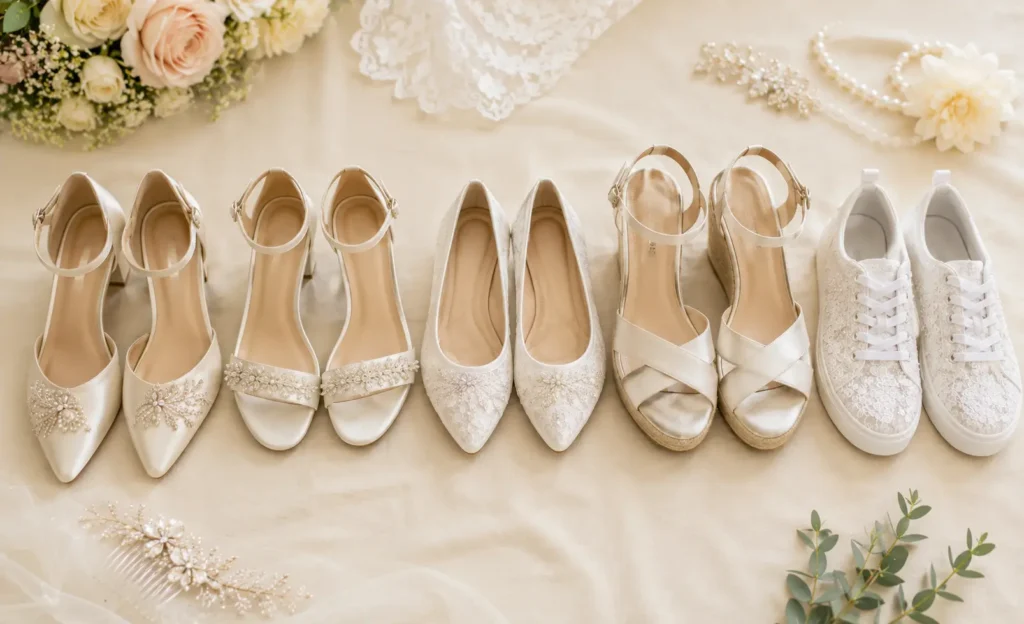
Not every bride has the same foot needs. Here’s a quick guide based on common concerns:
| Foot Concern | Recommended Shoe Type | Why It Helps |
|---|---|---|
| Wide feet | Wider block heels, adjustable strap flats | Reduces pinching and pressure on the sides of the foot |
| Narrow feet | Shoes with adjustable straps or laces | Prevents slipping and sliding inside the shoe |
| High arches | Shoes with built-in arch support or added orthotic insoles | Prevents arch fatigue over long hours of standing |
| Flat feet | Supportive flats or low wedges with structured soles | Offers stability and reduces overpronation discomfort |
| Sensitive skin/blister-prone | Soft satin or leather with minimal seams | Reduces friction points that commonly cause blisters |
| Swelling-prone feet | Adjustable strap styles rather than fixed, snug fits | Allows room for natural swelling throughout a long day |
If you have a pre-existing foot condition such as bunions, plantar fasciitis, or chronic arch pain, it’s worth consulting a podiatrist before your wedding to get personalized recommendations, and to allow enough time to try orthotic-friendly shoe options.
Choosing the Right Shoe for Your Dress Length
Your dress silhouette also plays a role in what shoe makes sense:
- Floor-length gowns: Since your shoes will barely be visible, comfort can take priority over the exact heel height — flats, low block heels, or wedges all work beautifully underneath.
- Tea-length or midi dresses: Shoes are more visible here, so choose a style that complements the dress while still checking the comfort boxes discussed above.
- Short or knee-length dresses: Your shoes become a key style element, so this is where you might want to invest slightly more in a statement heel — just be sure to prioritize a lower, wider heel for practicality.
Materials to Look For (and Avoid)
Not all bridal shoe materials are created equal when it comes to comfort:
Look for:
- Soft, genuine leather or high-quality leather-look fabric, which molds to your foot over time
- Satin with a cushioned lining
- Breathable mesh panels, especially for warm-weather weddings
- Stretch fabric panels near the toes for a more forgiving fit
Be cautious with:
- Stiff, non-breathable synthetic materials that don’t flex with movement
- Shoes with rigid, unpadded straps that can dig into the skin over long wear
- Extremely narrow, pointed toe boxes, which tend to cause discomfort even in otherwise well-made shoes
When to Buy Your Bridal Shoes
Timing matters more than most brides expect. A good rule of thumb:
- 3-4 months before the wedding: Start shopping and narrow down your top choices.
- 8-10 weeks before: Purchase your shoes so you have enough time for alterations (if needed) and breaking them in.
- 1 month before: Begin your break-in routine, including short wear sessions at home.
- 1-2 weeks before: Do a final fitting with your dress to make sure the length and hem are properly adjusted for your chosen heel height.
Buying too close to the wedding date leaves no room for exchanges, alterations, or a proper break-in period — all of which significantly increase your risk of discomfort on the day itself.
Comfortable Bridal Shoes on Any Budget
You don’t need to spend a fortune to find genuinely comfortable bridal shoes. Here’s how comfort typically breaks down across different price points:
- Budget-friendly ($30-$70): Many mass-market retailers now offer cushioned, wide-heel bridal styles with decent comfort features. These work well for brides who don’t plan to wear the shoes again after the wedding.
- Mid-range ($70-$150): This range often includes better-quality leather or satin, more refined cushioning, and sturdier construction that holds up through a full day of wear and beyond.
- Higher-end ($150+): Designer bridal shoe lines frequently include podiatrist-designed insoles, premium leather that molds to your foot, and superior arch support, making them a worthwhile investment if you plan to rewear them for future events.
Regardless of your budget, prioritize the comfort features discussed earlier (cushioning, arch support, breathable material) over brand name alone — a well-constructed budget option will always outperform an expensive shoe that ignores comfort fundamentals.
Matching Your Bridal Shoes to Your Wedding Colors and Theme
While white and ivory remain the most popular choices, comfort doesn’t have to limit your color options:
- Classic white or ivory: Timeless and versatile, working with virtually any dress shade.
- Blush or champagne tones: A soft, romantic alternative that photographs beautifully and pairs well with warmer dress tones.
- Metallic (silver, gold, rose gold): A popular choice for brides wanting their “something blue” moment to shine through their shoes instead, or simply wanting a subtle sparkle under the dress.
- Bold colors: Some brides opt for a pop of color, like red, blue, or emerald, as a personal style statement, especially for less traditional or destination weddings.
Whatever color you choose, make sure the comfort features remain non-negotiable. A stunning color palette won’t make up for sore feet by the end of the night.
Also Read: Shoe Capsule for Every Budget: How Many Pairs You Really Need
Top Features to Check Before You Buy: A Shopping Checklist
Use this quick checklist while trying on or ordering bridal shoes:
- [ ] Does the shoe have a cushioned or padded insole?
- [ ] Is there noticeable arch support, or can an insert be added easily?
- [ ] Is the heel wide enough to feel stable when standing and walking?
- [ ] Is the toe box wide enough that your toes aren’t pinched?
- [ ] Are the straps or closures adjustable to accommodate potential swelling?
- [ ] Is the material breathable, especially if your wedding is in a warm climate?
- [ ] Have you allowed enough time before the wedding to break the shoes in?
- [ ] Do you have a backup plan (second pair, insoles, blister kit) for the reception?
Going through this checklist before finalizing your purchase can help you catch potential comfort issues early, while you still have time to make adjustments or try a different style.
Common Mistakes Brides Make When Choosing Wedding Shoes
- Choosing a shoe based purely on how it looks in photos, without considering the venue terrain or how long you’ll actually be wearing them.
- Buying a half-size too small, thinking they’ll stretch — most bridal shoe materials do stretch slightly, but not enough to fix an incorrect size.
- Skipping the break-in period entirely, which is one of the most common causes of wedding-day blisters and foot pain.
- Not considering the reception separately from the ceremony, and ending up stuck in uncomfortable heels for hours of dancing.
- Forgetting to test-walk on the actual venue surface, especially for outdoor or destination weddings.
Why Feet Swell on Wedding Day (and How to Plan Around It)
Many brides are surprised to notice their feet feel tighter in their shoes by the evening, even if the fit felt perfect that morning. This is completely normal and happens for a few reasons:
- Extended standing and walking causes fluid to naturally pool in the feet and ankles over the course of the day.
- Heat and excitement can cause mild, temporary swelling, especially at outdoor or warm-weather venues.
- Salt intake from wedding meals and champagne can contribute to water retention throughout the evening.
To plan around this:
- Choose shoes with a little room to spare rather than an extremely snug fit, especially in strap or buckle styles that can be loosened slightly as needed.
- Avoid excessive salty foods earlier in the day if you know swelling is a concern for you.
- Elevate your feet for a few minutes whenever you get a quiet break, such as during hair and makeup touch-ups.
- If you notice swelling is a recurring issue for you, opt for adjustable straps over fixed, structured closures.
Fitting Tips When Trying Shoes On In-Store
If you have the chance to try shoes on in person rather than ordering online, a few practical fitting tips can make a big difference:
- Shop later in the day when your feet are naturally slightly more swollen, similar to how they’ll feel by your wedding evening.
- Wear the same type of undergarments or shapewear you plan to wear on the day, since this can subtly affect posture and fit.
- Walk around the store for several minutes, not just a few steps, to get a genuine feel for comfort.
- Try both feet, since it’s common for one foot to be slightly larger than the other — always fit to the larger foot.
- Test on different surfaces if possible (carpet vs. hard flooring) to simulate your venue conditions.
- Bring a friend or family member for a second opinion, both on comfort and on how the shoe photographs alongside your dress.
Caring for Your Bridal Shoes After the Wedding
If you’d like to keep your bridal shoes as a keepsake, or plan to rewear them for anniversaries or future events, a little care goes a long way:
- Store them in their original box or a breathable shoe bag, away from direct sunlight to prevent yellowing of white or ivory materials.
- Use a soft brush to gently remove any dirt or grass stains from outdoor wear before storing.
- For satin or fabric uppers, avoid harsh cleaning products; a slightly damp cloth is usually sufficient for light marks.
- Consider adding shoe trees or stuffing them with acid-free tissue paper to help maintain their shape over time.
Frequently Asked Questions
What are the most comfortable bridal shoes overall?
Generally, shoes with cushioned insoles, a low block heel or wedge, and breathable materials like soft leather or satin tend to offer the best overall comfort for a full day of wear.
Are flats or heels more comfortable for a wedding?
Flats are typically more comfortable for extended wear, but well-designed low heels with proper cushioning and a wide heel base can be nearly as comfortable while offering more height.
How do I stop my bridal shoes from hurting my feet?
Break them in gradually before the wedding, use gel or cushioned insoles, apply blister prevention products to friction-prone areas, and choose a slightly wider toe box if you’re prone to discomfort.
What heel height is best for a wedding?
A heel height of one to two inches is generally considered the most comfortable option, offering some elevation without excessive pressure on the ball of the foot.
Should I bring a second pair of shoes to my wedding?
Many brides do, especially for the reception. A comfortable flat or sneaker to change into after photos are finished can make a significant difference in your comfort for the rest of the night.
Can I wear sneakers under my wedding dress?
Yes, bridal sneakers are increasingly popular, especially for casual, destination, or outdoor weddings. They offer excellent comfort while still looking polished under a floor-length gown.
Final Thoughts
Choosing comfortable bridal shoes doesn’t mean settling for less style — it means being intentional about the features that actually matter for a full day of standing, walking, and dancing. Whether you land on a low block heel, a delicate flat, or a pair of bridal sneakers for the reception, the goal is the same: shoes that let you fully enjoy your wedding day without a single distracting thought about your feet.
Give yourself enough time to shop, break in your shoes properly, and consider your specific venue and foot needs. When you get the details right, comfort and elegance aren’t a trade-off — they go hand in hand.
Also Read: Accessorizing on a Budget: Gold, Layered, and Intentional Looks