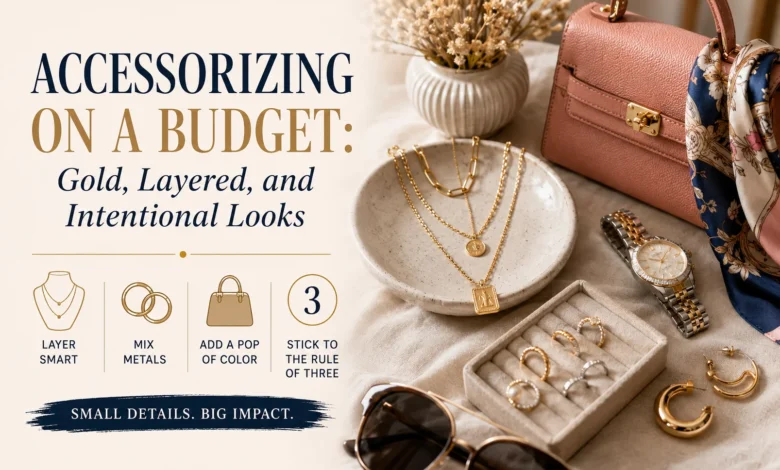
The fastest, cheapest way to update an outfit isn’t a new top or a new pair of shoes — it’s the handful of small details layered on top of what’s already in the closet. Gold jewelry, in particular, has become one of the most accessible ways to participate in 2026’s bigger style movements without spending a single dollar on new clothing. Stacked rings, chain necklaces, and layered beaded pieces can shift an outfit from plain to intentional in under a minute, and almost all of it can be done affordably.
The challenge most people run into isn’t a lack of accessories — it’s not knowing how many to wear at once, which pieces to combine, or where a small splurge actually pays off versus where it doesn’t matter at all. This guide breaks all of that down: the rule that keeps layered accessories looking curated instead of cluttered, how to build a budget-friendly accessory rotation, and where a slightly higher spend genuinely makes a visible difference.
Why Accessories Are the Smartest Budget Upgrade
Clothing trends shift every season, but accessories offer something clothing rarely can: the ability to update an entire look using pieces that are small, affordable, and reusable across dozens of different outfits. A single necklace or ring stack doesn’t go out of style the way a specific silhouette or cut might, which makes accessories one of the highest-value categories in any budget-conscious wardrobe strategy.
There’s also a practical cost advantage. A well-chosen accessory rotation — a few necklaces, a couple of ring stacks, one or two bags in versatile colors — typically costs far less than replacing clothing to chase the same trend, while delivering a comparable visual shift. This is exactly why gold jewelry, layering techniques, and a punchy accent color have become some of the most talked-about approaches in 2026’s accessory trends: they’re low-commitment, high-impact, and easy to build gradually rather than all at once.
The Rule of Three: The Foundation of Intentional Accessorizing
Before getting into specific pieces, it helps to understand the single rule that separates a curated, intentional look from one that feels cluttered or overdone.
The Rule of Three is simple: wear a maximum of three statement accessories at once. A typical combination might be a necklace, a pair of earrings, and one ring stack. Beyond three distinct statement pieces, accessories start competing with each other instead of complementing the outfit — the eye no longer knows where to land, and the overall look reads as busy rather than styled.
This rule matters just as much on a budget as it does with an expensive collection, because it means money doesn’t need to be spent on dozens of pieces. Three well-chosen accessories, worn consistently and combined thoughtfully, will always look more put-together than ten mismatched ones worn all at once.
How to Apply the Rule of Three in Practice
A simple way to apply this rule day-to-day is to treat it like a checklist before leaving the house:
- Choose one “anchor” piece — usually a necklace or a pair of statement earrings
- Add one supporting piece — a ring stack, a bracelet, or a second necklace layer
- Stop at three total categories, even if each category includes multiple small pieces (like three layered necklaces counting as one category)
This framework also makes shopping more efficient. Instead of buying random pieces that catch the eye, purchases can be planned around filling a specific role — an anchor necklace, an everyday ring stack, a pair of go-to earrings — which naturally limits impulse spending on accessories.
Also Read: How to Style an Oversized Blazer: 5 Ways That Actually Work for Every Occasion
Layered Necklaces: The Easiest Gold Trend to Recreate
One of the most accessible ways to bring 2026’s accessory trends into an everyday wardrobe is through layered necklaces. Rather than reaching for a single large statement piece, the current approach favors two to three necklaces of different lengths, worn together to create depth and visual interest.
Why Length Variation Matters
The key to layering necklaces successfully is choosing pieces that sit at different points on the chest, rather than several chains of the same length that simply bunch together. A typical layered set might include:
- A shorter choker-length piece, sitting close to the collarbone
- A mid-length chain, resting just below the collarbone
- A longer pendant or beaded piece, extending toward the chest
This kind of variation creates a visual “staircase” effect that reads as deliberate, even when the individual pieces are inexpensive.
Budget-Friendly Layering Tips
Layering doesn’t require buying an entirely new set of necklaces. A few practical, low-cost approaches:
- Start with necklaces already owned and simply combine them in new lengths, even if they weren’t purchased together
- Look for affordable gold-plated or gold-toned chains rather than solid gold, which achieve a nearly identical visual effect at a fraction of the cost
- Beaded necklaces are particularly budget-friendly and pair especially well with simple, textured tops like button-ups or plain knits, since the smooth beads let the fabric texture show through rather than competing with it
Mixed Metals: Why Gold and Silver Together Now Read as Intentional
For years, conventional styling advice insisted on sticking to one metal tone throughout an outfit. That rule has relaxed significantly, and mixed metals — gold and silver worn together — now read as deliberate rather than mismatched, provided it’s done with a bit of structure.
How to Mix Metals Without It Looking Accidental
The easiest way to make mixed metals look intentional rather than like a wardrobe malfunction is to assign each metal a clear role rather than randomly combining pieces:
- Let one metal dominate (for example, mostly gold pieces with one silver accent, like a single silver ring or bracelet)
- Repeat the secondary metal at least twice if possible, so it reads as a choice rather than a mistake — for example, silver earrings and a silver ring, rather than just one lone silver item
- Avoid mixing metals within the exact same piece category unless the design is specifically made that way (like a two-tone bracelet)
This approach is especially useful for a budget accessory rotation, since it means existing gold and silver pieces from different points in life — hand-me-downs, older purchases, gifts — can all be worn together instead of needing to be replaced with a single matching metal set.
The Bag as the Lowest-Commitment Color Trend
Bold or trend-driven colors can be intimidating to commit to in clothing, since a brightly colored jacket or dress is highly visible and harder to style repeatedly. A bag, on the other hand, offers one of the lowest-risk ways to participate in a color trend.
Why a Colorful Bag Works So Well on a Budget
A single bag in a punchy, trend-forward color can be paired with an otherwise neutral outfit — jeans, a plain top, simple shoes — and instantly feel current, without needing to buy any new clothing at all. Because bags are typically styled the same way regardless of season (unlike, say, a seasonal coat), one well-chosen colorful bag can realistically be worn across an entire year’s worth of outfits.
This also makes it one of the smarter places to allocate a slightly higher portion of an accessory budget, since a well-made bag tends to be used far more frequently and for far longer than most jewelry trends, which shift more quickly year to year.
Where to Spend More vs. Where to Save
Not every accessory deserves the same budget allocation. A practical way to think about spending is to separate accessories by how often they’re actually worn and how visible they are up close.
| Accessory Type | Recommended Budget Approach | Reasoning |
|---|---|---|
| Everyday ring stack | Low-to-mid spend | Worn constantly, but small pieces are less costly to replace |
| Layered necklaces | Low spend (gold-toned/plated) | Visual effect is nearly identical to solid gold at a much lower cost |
| Statement earrings | Mid spend | Sit close to the face, so slightly better materials show |
| Everyday bag | Mid-to-high spend | Used across nearly every outfit and season; durability matters most here |
| Occasion-only jewelry | Low spend | Worn rarely, so a lower-cost piece is rarely noticed as such |
This kind of budget mapping mirrors the logic used in other capsule-style wardrobe planning: spend where use is highest, save where use is occasional.
Building a Budget Accessory Capsule Step by Step
A practical, low-cost way to build an accessorizing system from scratch:
- Start with an audit. Gather every piece of jewelry, every bag, and every belt currently owned, and sort by how often each has actually been worn in the last six months.
- Identify the anchor pieces. Choose one everyday necklace or necklace set, one ring stack, and one pair of go-to earrings that can be worn on repeat.
- Add one mixed-metal accent. Choose a single secondary-metal piece to introduce intentional mixing, rather than trying to overhaul the entire collection at once.
- Invest in one colorful bag. This single purchase often delivers the most visible “trend” update relative to its cost.
- Apply the Rule of Three going forward. Before adding any new piece, check whether it fills a genuine gap or simply duplicates an existing role.
This structure keeps spending intentional and prevents the common trap of accumulating dozens of small, similar pieces that all compete for the same three “slots” in an outfit.
Also Read: Denim Capsule: How Many Jeans You Actually Need
Common Budget Accessorizing Mistakes to Avoid
Buying trend pieces instead of foundational ones. A single trendy statement necklace might feel exciting in the moment, but a few well-chosen basics (a simple chain, a classic ring stack) get worn far more often and offer better long-term value.
Ignoring the Rule of Three. Piling on every accessory at once, especially when several pieces are inexpensive and easy to reach for, often results in a cluttered look rather than an elevated one.
Treating mixed metals as “anything goes.” Mixing metals works well with a bit of intentional structure, but combining pieces completely at random can still read as accidental rather than styled.
Underestimating the bag’s impact. Many people focus accessory spending entirely on jewelry while overlooking how much visual impact a single well-chosen bag color can have across an entire wardrobe.
Overspending on occasion-only pieces. A piece worn only once or twice a year rarely benefits from a large budget allocation, since its cost-per-wear will always be high regardless of quality.
Frequently Asked Questions
What is the Rule of Three in accessorizing?
The Rule of Three means wearing a maximum of three statement accessory categories at once — for example, a necklace, earrings, and one ring stack. Beyond three categories, accessories tend to compete with each other rather than complement the outfit.
Is mixing gold and silver jewelry acceptable in 2026?
Yes. Mixed metals now read as intentional rather than mismatched, especially when one metal dominates the look and the secondary metal is repeated at least twice for balance.
How many necklaces should be layered together?
Two to three necklaces of different lengths typically works best, creating a staggered visual effect. Necklaces of the same length tend to bunch together rather than creating the intended layered look.
What’s the most budget-friendly way to try a jewelry trend?
Gold-plated or gold-toned pieces achieve a nearly identical visual effect to solid gold at a much lower price point, making them one of the most cost-effective ways to participate in layered gold trends.
Why is a colorful bag considered low-commitment?
A bag is easy to pair with an otherwise neutral outfit, gets worn across most seasons, and doesn’t require any additional clothing purchases — making it one of the lowest-risk ways to try a bold color trend.
Do beaded necklaces work with every outfit?
Beaded necklaces pair especially well with simple, textured tops like button-ups or plain knits, since the smooth beads stand out against understated fabric rather than competing with a busy print.
Where should accessory spending be prioritized on a tight budget?
Everyday pieces worn frequently — like a go-to ring stack, a versatile bag, or simple layered necklaces — offer the best value, while occasion-only jewelry can stay at a lower price point since it’s worn far less often.
Also Read: Fashion Trends 2026: The Complete Guide to What’s In, What’s Out, and How to Actually Wear Them