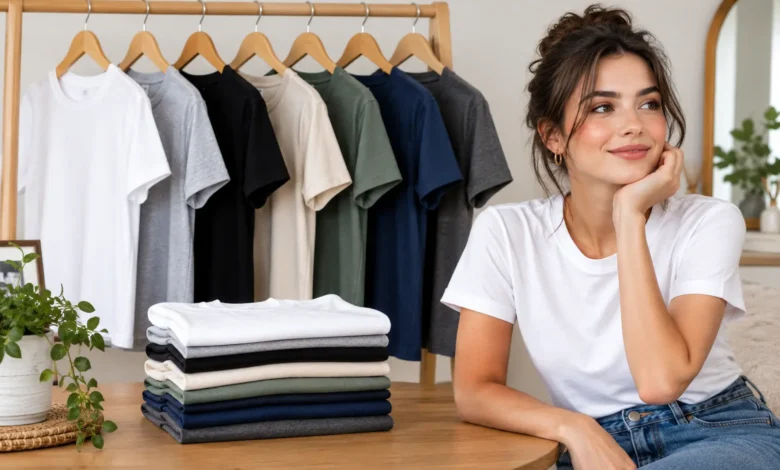
There’s a reason the plain t-shirt has survived nearly every fashion cycle for the past century without ever really going out of style. It’s the one piece that works underneath a blazer, on its own with jeans, tucked into a skirt, or layered under a cardigan — and somehow it never feels wrong for the occasion. A great basic tee isn’t flashy, but it’s often the single most-worn item in an entire wardrobe.
If you’ve been searching for the best basic tees for women, or trying to figure out why some plain t-shirts feel like they were made for you while others end up shapeless and faded after a few washes, this guide covers everything you need to know. From fabric and fit to 7 basic tees you’ll wear on repeat, plus practical advice on styling, care, and building a genuinely useful capsule wardrobe around them.
What Makes a Good Basic Tee?
A truly good basic tee comes down to a handful of specific qualities: fabric that feels soft against the skin without being flimsy, a cut that flatters without needing to be adjusted all day, stitching that holds up over repeated washes, and a color that stays true rather than fading or yellowing after just a few wears.
What separates a genuinely excellent basic tee from an average one is often invisible at first glance — it’s in the weight of the fabric, the quality of the seams, and how the shirt holds its shape after being washed dozens of times. A basic tee that looks great once but loses its shape by the fifth wash isn’t actually doing its job as a wardrobe staple.
What Defines a Quality T-Shirt?
Quality in a t-shirt is measured by a few concrete factors rather than price alone. Fabric weight matters significantly — a t-shirt that’s too thin will often become see-through or lose shape quickly, while a heavier, well-constructed fabric tends to hold up over time and drape more intentionally. Seam construction is another marker of quality; reinforced seams at the shoulders and hems resist stretching and unraveling far better than minimal, budget stitching.
Colorfastness — how well a fabric holds its dye through repeated washing — is also a strong indicator of quality, since a shirt that fades or dulls quickly rarely feels worth repurchasing. Finally, a well-constructed basic tee should hold its shape at the neckline and hem after washing rather than stretching out or curling, which is often one of the first signs of lower-quality fabric or construction.
What Fabric Is Best for Basic Tees?
Fabric is arguably the single most important factor in how a basic tee feels, fits, and holds up over time.
100% cotton remains one of the most popular choices for basic tees, prized for its breathability, softness, and natural feel against the skin. Cotton basic tees tend to be comfortable in a wide range of temperatures, though they can shrink slightly if not cared for properly.
Cotton-blend fabrics, often mixed with a small percentage of spandex or elastane, add stretch and recovery, helping fitted basic tees hold their shape better over time compared to 100% cotton alone. These stretch basic tees are particularly popular for more fitted or bodycon-style cuts.
Ribbed knit fabric offers a slightly more structured, textured feel compared to standard jersey cotton, and tends to hold its shape especially well, making ribbed basic tees a popular choice for both fitted and slightly cropped styles.
Modal and Tencel blends are increasingly popular for their exceptionally soft hand-feel and excellent drape, offering a slightly more elevated alternative to standard cotton for anyone prioritizing a soft, silky texture.
Why Cotton Is Considered the Best Fabric for Basic Tees
Cotton has remained the gold standard for basic tees for good reason. It’s breathable, which helps regulate body temperature in both warm and cool conditions, and it’s naturally soft against the skin, making it comfortable for extended, all-day wear. Cotton also tends to be relatively easy to care for compared to more delicate fabrics, generally tolerating regular machine washing without requiring special handling, which matters enormously for a piece of clothing meant to be worn — and washed — as frequently as a basic tee.
Basic Tee vs. Graphic Tee: What’s the Difference?
While both fall under the broader t-shirt category, basic tees and graphic tees serve fairly different purposes in a wardrobe. A basic tee is defined by its simplicity — a solid color with no print, graphic, or logo — designed specifically to be versatile and layer easily with other pieces without competing for visual attention. A graphic tee, by contrast, features a design, image, text, or logo, functioning more as a standalone statement piece meant to be seen and appreciated on its own.
This distinction matters practically as well as stylistically: basic tees are built to disappear seamlessly into an outfit, working as a foundation layer under blazers, cardigans, or jackets, while graphic tees are generally worn as the outfit’s focal point rather than a background piece.
A Brief History of the Basic T-Shirt
The t-shirt’s origins are considerably humbler than its current status as a wardrobe icon might suggest. It descended from the union suit, a one-piece undergarment worn in the 19th century, which was eventually split into separate top and bottom pieces to create a more practical option for warmer conditions. The garment we’d recognize as a modern t-shirt began as standard-issue underwear for the U.S. Navy in the early 20th century, worn entirely out of sight beneath a uniform.
The word “t-shirt” itself entered common usage relatively recently in the garment’s long history — author F. Scott Fitzgerald is often credited with one of the earliest print references to the term, listing it among a college student’s wardrobe items in a novel published in 1920. From there, the shirt spread from military use into civilian labor throughout the 1930s, adopted by workers who valued its breathability, low cost, and ease of care.
How the Plain Tee Became a Wardrobe Staple
The t-shirt’s transformation from hidden undergarment to visible fashion staple accelerated dramatically around the mid-20th century. American soldiers wore t-shirts as part of their uniform during the Second World War, and it took the cultural shift of the postwar years for it to become socially acceptable to wear a t-shirt on its own, without anything layered over it.
Hollywood played a defining role in this shift during the 1950s, with actors popularizing the plain t-shirt as a symbol of youthful rebellion and casual confidence rather than something meant to stay hidden. From there, the introduction of screen printing in the 1960s gave rise to the graphic tee as its own category, while the plain, unadorned basic tee remained the quieter, more versatile counterpart — eventually becoming a foundational piece in minimalist and capsule wardrobe philosophies that prioritize investing in fewer, higher-quality essentials over a large volume of trend-driven pieces.
Why Basic Tees Are a Wardrobe Essential
A handful of consistent reasons explain why basic tees remain such a reliable wardrobe essential decades after their rise to mainstream fashion staple status.
They work with nearly everything. A solid-color tee pairs effortlessly with jeans, skirts, trousers, or layered under jackets and cardigans, making it one of the most versatile clothing pieces a wardrobe can include.
They simplify getting dressed. Having a rotation of reliable basic tees removes decision fatigue from everyday outfit planning, since they function as a dependable foundation rather than something that needs to be carefully coordinated.
They bridge seasons. A basic tee can be worn alone in warm weather or layered under sweaters and jackets as temperatures drop, extending its usefulness across nearly the entire year.
They photograph and layer cleanly. Because they’re solid and unembellished, basic tees don’t compete visually with statement jewelry, jackets, or other outfit elements, making them a genuinely foundational piece for building varied looks.
Benefits of Investing in Quality Basic Tees
Spending a bit more on a genuinely well-made basic tee often pays off considerably over time. Higher-quality fabric and construction mean the shirt holds its shape, color, and softness through far more washes than a budget alternative, which ultimately makes it more cost-effective per wear even at a higher upfront price. A well-fitted, quality basic tee also tends to look more polished in photos and in person, elevating even the simplest outfit rather than looking like an afterthought.
Why Fit Matters More Than Trend for Tees
Trends in t-shirt silhouette come and go — boxy one season, fitted the next — but a basic tee that’s cut to genuinely flatter your body will always look more intentional than one chosen purely because it’s currently trending. A well-fitted tee skims the body without pulling tightly across the chest or bunching at the waist, while an oversized style, when chosen deliberately rather than simply too large, should still have enough structure at the shoulders to avoid looking shapeless.
Prioritizing fit over trend also tends to be more cost-effective in the long run, since a well-fitting basic tee in a flattering silhouette rarely feels dated, unlike more exaggerated, trend-driven cuts that can look distinctly of-the-moment a few years later.
What Is a Capsule Wardrobe Basic?
A capsule wardrobe basic refers to a foundational clothing item chosen specifically for its versatility, quality, and ability to mix and match with a wide range of other pieces, rather than for its trend value. Basic tees are one of the most quintessential examples of a capsule wardrobe basic, since a handful of well-chosen colors and fits can be styled dozens of different ways across seasons and occasions, reducing the need for a large, cluttered wardrobe.
7 Basic Tees You’ll Wear on Repeat
The Classic Crew Neck Tee
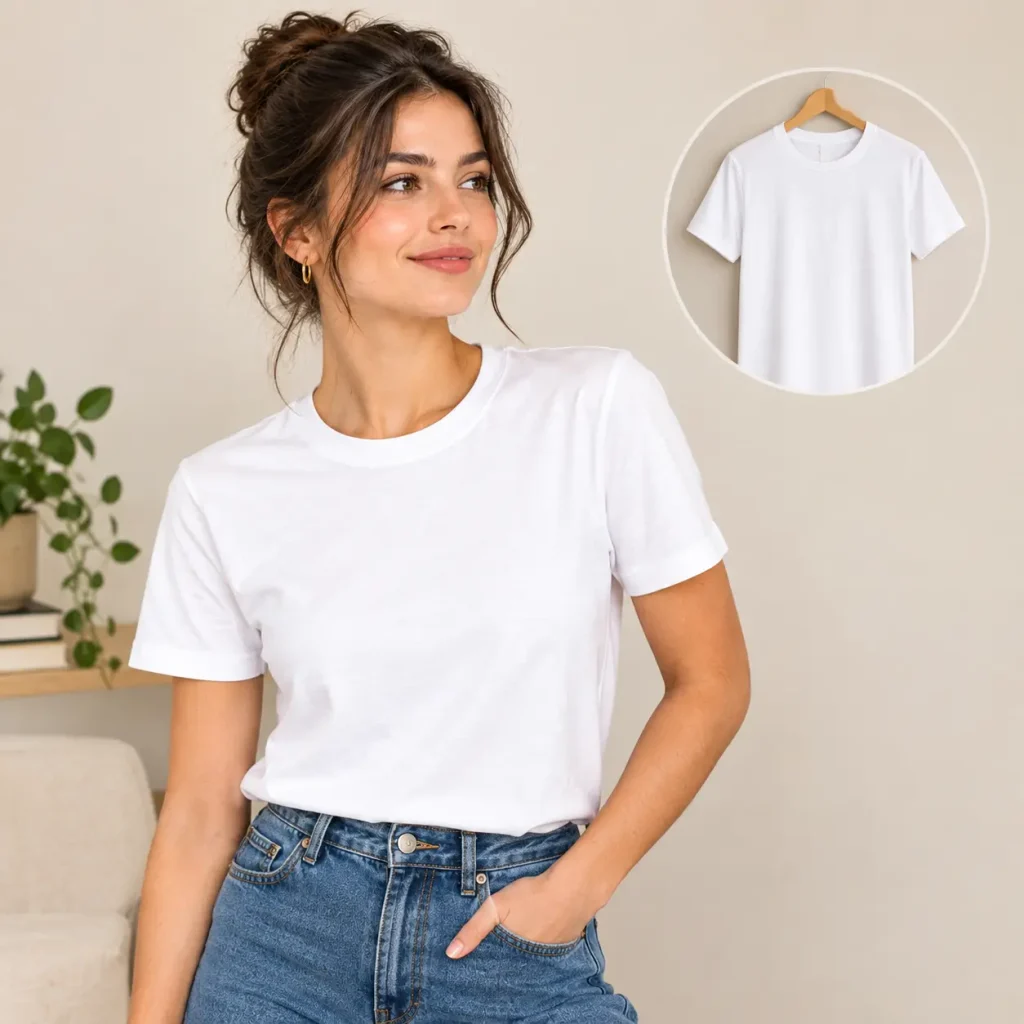
The crew neck tee is the definitive basic — a rounded, close-fitting neckline that sits at the base of the throat, paired with a straightforward, uncomplicated cut. This is the most universally versatile basic tee style, working equally well tucked into trousers for a polished daytime look or worn loose with jeans for something more relaxed. Its simplicity is exactly what makes it such a reliable foundation for nearly any outfit.
V-Neck Tee
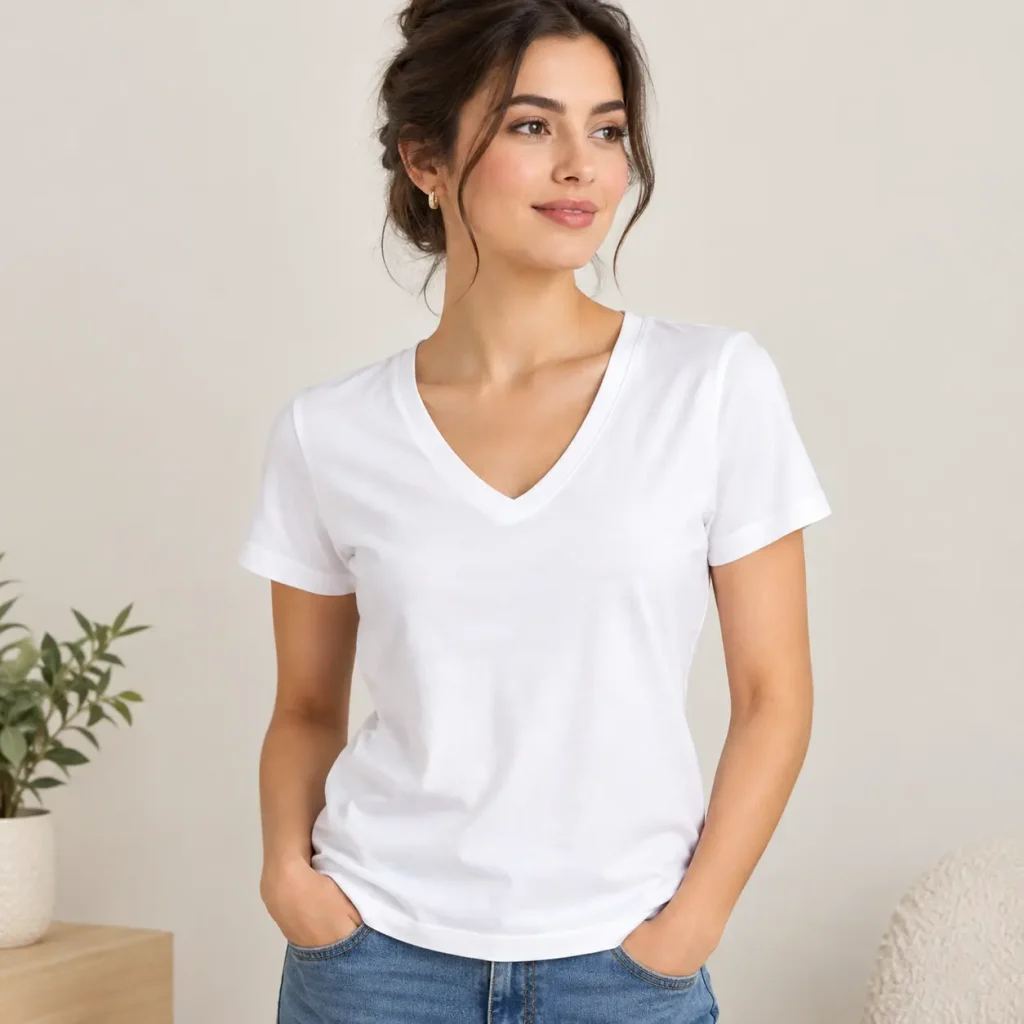
A V-neck tee offers a slightly more elongating effect at the neckline compared to a crew neck, making it a popular choice for anyone who wants a subtly more flattering silhouette without sacrificing the simplicity of a basic style. This cut also layers particularly well under blazers and cardigans, since the V-shaped opening creates a bit of visual interest at the collar without needing any additional jewelry.
Scoop Neck Tee
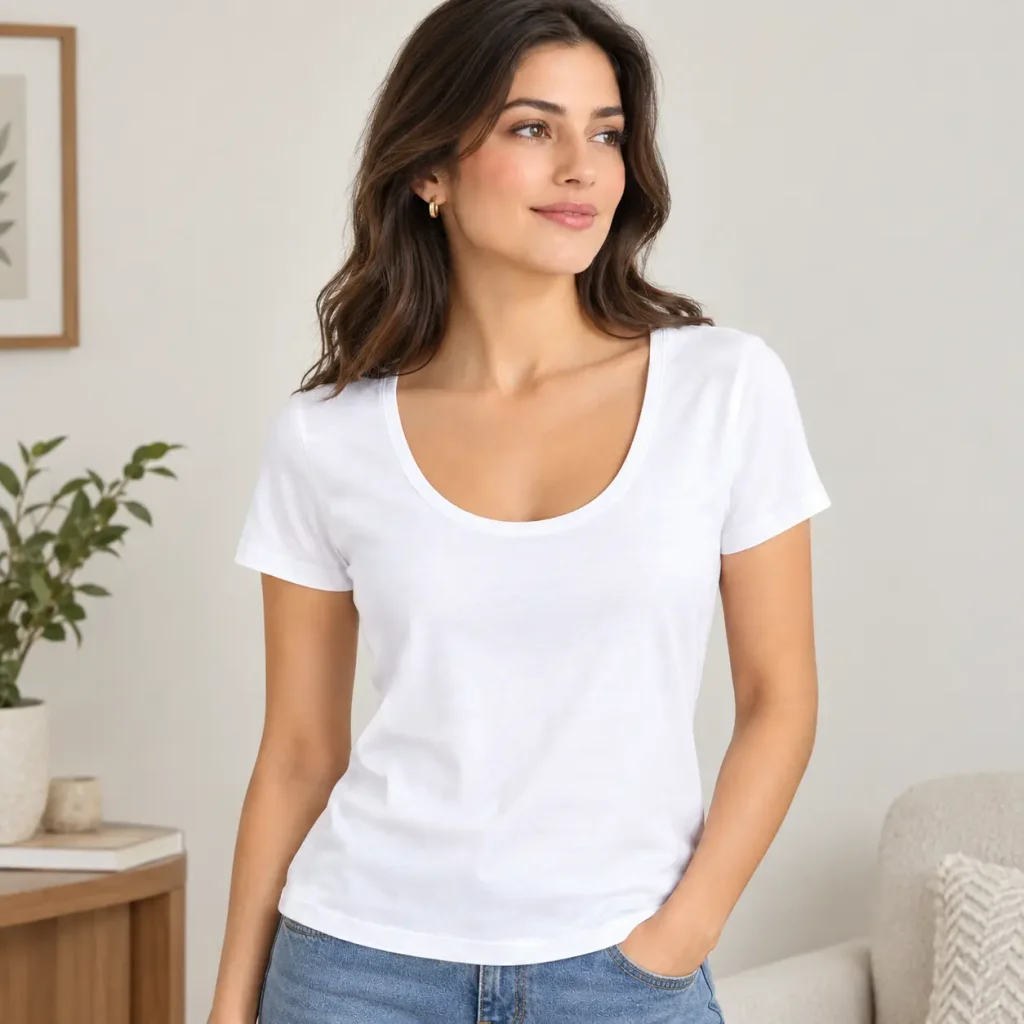
The scoop neck tee features a wider, more rounded neckline that sits slightly lower than a crew neck, offering a softer, more feminine silhouette. This style works particularly well for layering necklaces or scarves, since the open neckline provides more visible space for accessories, and it tends to feel a bit more relaxed and casual compared to a classic crew neck.
Fitted Ribbed Tee
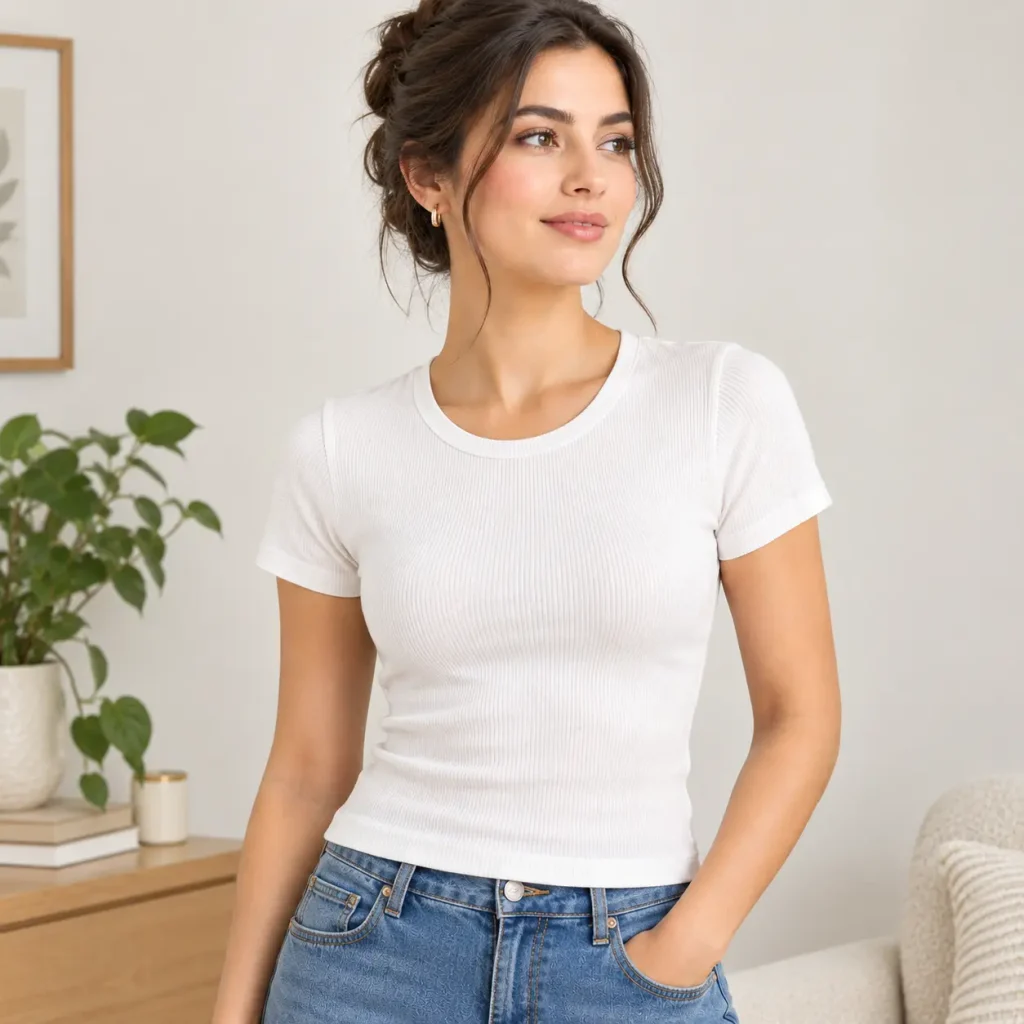
A fitted ribbed tee uses textured, ribbed knit fabric to create a close, body-skimming silhouette that holds its shape exceptionally well over repeated wears. This style is a popular choice for anyone who wants their basic tee to look slightly more polished and intentional, whether worn alone with high-waisted jeans or layered under an open blazer for a smart-casual look.
Oversized Boxy Tee
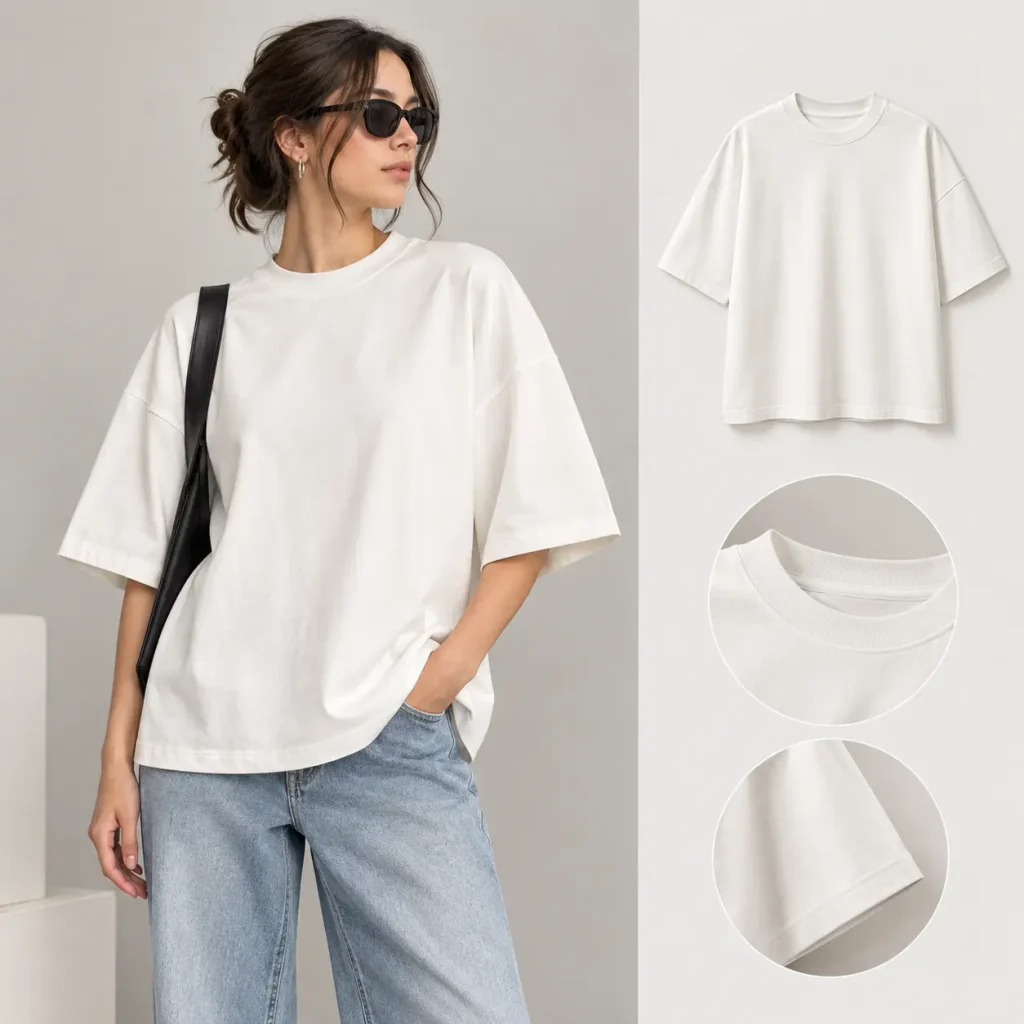
For a more relaxed, effortless silhouette, an oversized boxy tee offers a loose, structured fit through the body with dropped shoulders, creating a comfortable, casual aesthetic that’s become a defining piece in minimalist and streetwear-inspired wardrobes alike. This style pairs particularly well with fitted bottoms — like leggings, skinny jeans, or a slim skirt — to balance out its volume.
Long Sleeve Basic Tee
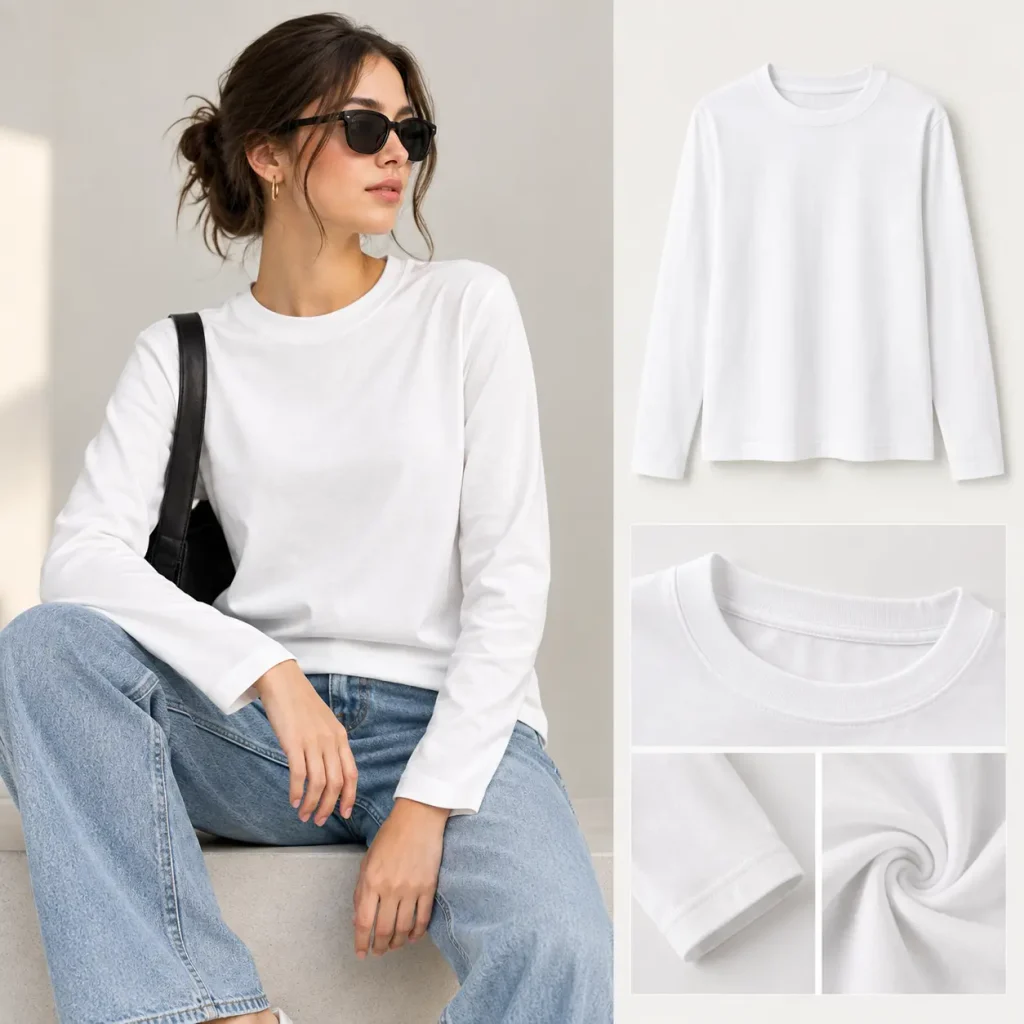
A long sleeve basic tee extends the versatility of the classic short-sleeve style into cooler months, working just as well layered under a jacket as it does worn on its own with jeans on a mild day. This style is one of the most practical basic tees for layering, since its close-fitting sleeves slide easily under sweaters, cardigans, and coats without adding bulk.
Cropped Basic Tee
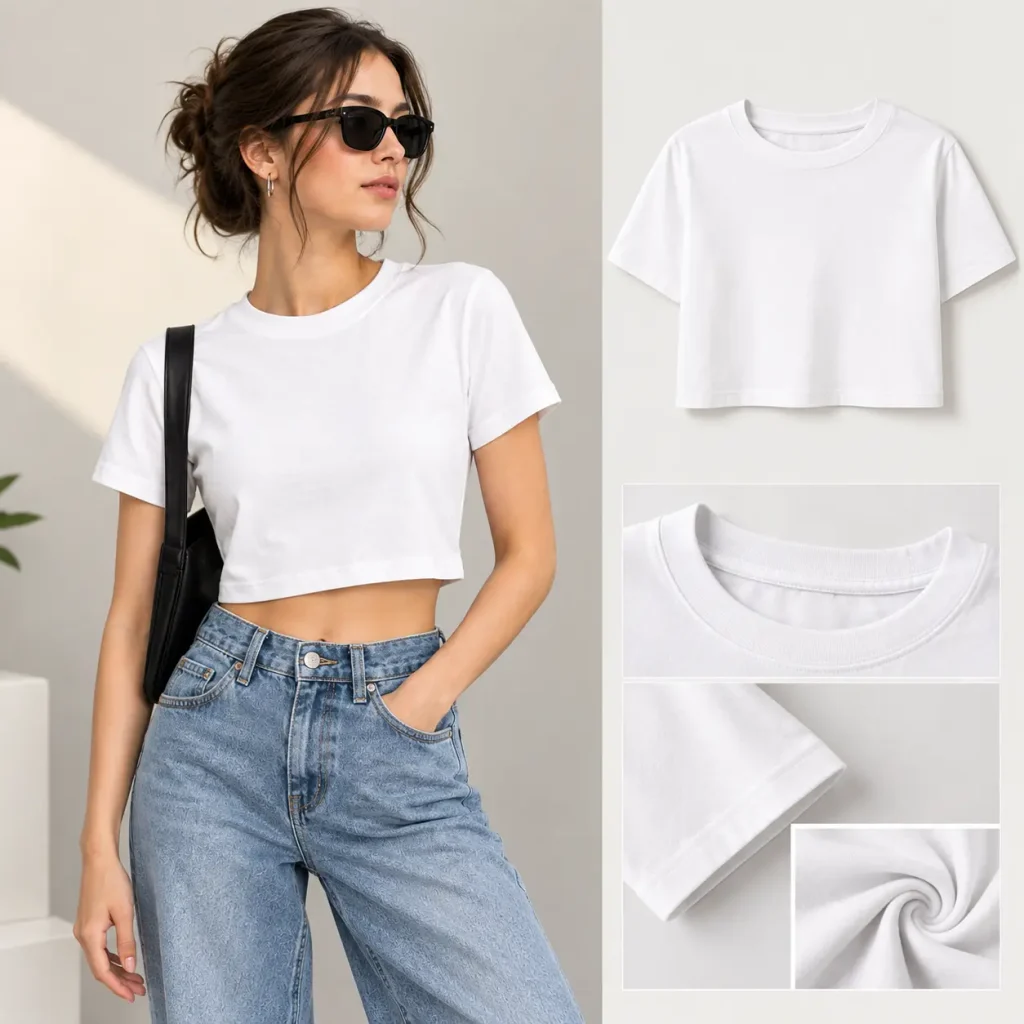
A cropped basic tee offers a shorter length that hits at or just above the natural waist, making it a popular choice for pairing with high-waisted jeans, skirts, or trousers. This style works particularly well for warmer weather or casual outfits where a slightly more modern, cropped silhouette feels appropriate, and it remains simple enough in construction to layer just as easily as any other basic tee style.
Also Read: 11 Girls Camis That Feel Effortlessly Comfy
How to Choose the Perfect Basic Tee
Start by identifying which neckline and fit genuinely flatter your body and feel most comfortable, since these two factors matter more than color or brand when it comes to a tee you’ll actually reach for repeatedly. From there, pay close attention to fabric weight and composition — a slightly heavier, higher cotton-content fabric tends to hold its shape and color better over time than a very thin, lightweight blend.
It’s also worth trying a tee on and moving in it before committing, checking that the fit still looks and feels comfortable when sitting, raising your arms, or reaching overhead, since a shirt that only looks good standing perfectly still isn’t practical for everyday wear.
How to Style a Basic Tee for Any Occasion
One of the biggest advantages of a great basic tee is how effortlessly it adapts to different levels of formality. For a casual, everyday look, pairing a basic tee with well-fitted jeans and simple sneakers creates an easy, put-together outfit with minimal effort. For a smart-casual or office-appropriate look, layering a fitted basic tee under a structured blazer instantly elevates the outfit, particularly when paired with tailored trousers.
For warmer weather, a basic tee tucked into a skirt or paired with shorts offers a simple, breathable outfit that requires very little additional styling. And for cooler months, layering a long sleeve basic tee under a chunky cardigan or an oversized boxy tee under a denim jacket both offer practical, comfortable ways to extend a basic tee’s usefulness into colder weather.
Basic Tee and Blazer Outfit Ideas
Pairing a basic tee with a blazer is one of the most reliable ways to dress up an otherwise casual piece. A fitted crew neck or V-neck tee under a structured blazer, paired with tailored trousers, creates a polished, office-appropriate outfit without needing a full separate top. For a more relaxed take, an oversized boxy tee under a slightly oversized blazer, paired with straight-leg jeans, offers a more casual, contemporary version of the same pairing.
How to Care for Basic Tees So They Last
Proper care makes a significant difference in how long a basic tee maintains its shape, softness, and color. Washing in cold water rather than hot helps prevent shrinking and preserves the fabric’s color over time, while turning tees inside out before washing reduces surface friction that can cause pilling or fading, particularly for darker colors.
Air drying, or using a low-heat setting if machine drying, tends to be gentler on both the fabric and the shape of the garment compared to high-heat drying, which can cause cotton fibers to shrink and weaken more quickly. Avoiding fabric softener on cotton tees can also help maintain the fabric’s natural breathability and moisture-wicking properties over time.
How to Keep White Basic Tees from Yellowing
White basic tees are particularly prone to yellowing over time, especially around the underarms, but a few care habits can slow this process considerably. Washing white tees separately from colored garments prevents dye transfer, while avoiding high heat in the dryer helps prevent the yellowing that can result from heat interacting with sweat, deodorant residue, or natural oils left on the fabric. Treating any underarm staining promptly, rather than letting it set through repeated wash cycles, also helps keep white basic tees looking crisp and fresh for longer.
How Many Basic Tees Should You Own?
For most everyday wardrobes, having somewhere between five and ten basic tees in rotation strikes a practical balance — enough variety across colors and necklines to avoid frequent laundry, without accumulating far more than actually gets worn. A useful starting point includes a couple of tees each in white, black, and one or two neutral tones, along with a mix of at least two different necklines or fits to cover different styling needs, from tucked-in office looks to relaxed weekend outfits.
Are Basic Tees Worth Splurging On?
For frequently worn pieces like basic tees, spending a bit more on quality fabric and construction is often worth it, since a well-made tee tends to outlast several cheaper versions in both shape retention and color longevity. That said, splurging doesn’t necessarily mean choosing the most expensive option available — it means prioritizing fabric weight, stitching quality, and colorfastness over price alone, since some mid-range basic tees offer excellent durability without a designer price tag.
Frequently Asked Questions
How many basic tees should you own?
Most people find that five to ten basic tees, spanning a couple of neutral colors and at least two different necklines or fits, provides enough variety for everyday wear without excessive laundry or wardrobe clutter.
Do basic tees shrink after washing?
Yes, particularly 100% cotton basic tees can shrink somewhat after washing, especially in hot water or high-heat drying. Washing in cold water and air drying or using a low-heat setting helps minimize shrinkage over time.
What basic tee color is most versatile?
White and black remain the two most versatile basic tee colors, since both pair easily with virtually any other color or pattern in a wardrobe. Neutral tones like gray, beige, and navy follow closely behind for their similar ease of pairing.
Are basic tees worth splurging on?
Yes, for pieces worn as frequently as basic tees, investing in quality fabric and construction is generally worth it, since better-made tees tend to hold their shape, softness, and color significantly longer than budget alternatives.
How do you keep white basic tees from yellowing?
Washing white tees separately from colored items, avoiding high heat in the dryer, and treating underarm staining promptly are the most effective ways to prevent white basic tees from yellowing over time.
Final Thoughts
Basic tees have earned their permanent place in nearly every wardrobe by doing one thing exceptionally well: quietly working with everything else you own. From a classic crew neck to a relaxed oversized fit, the seven styles covered here each serve a slightly different purpose, but they all share the same underlying value — genuine versatility that never really goes out of style. With the right fabric, fit, and a bit of proper care, a great basic tee isn’t just something you’ll wear on repeat; it’s the quiet foundation that makes the rest of your wardrobe work harder for you.
Also Read: 18 Tank Top Styles That Feel Effortlessly Chic All Season