
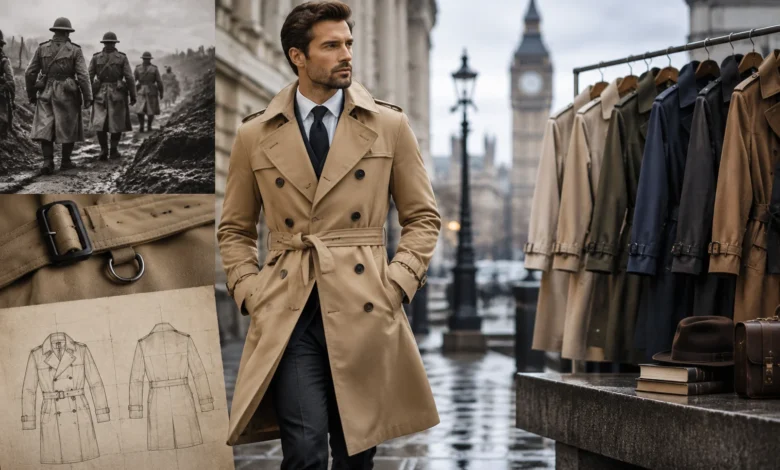
Few pieces of outerwear carry the same quiet authority as a well-cut trench coat. It’s not flashy, it doesn’t need a logo, and it doesn’t rely on trends to look good — it simply works, season after season, in a way that few other coats manage. Whether it’s layered over a suit for the office or thrown on over a t-shirt and jeans for the weekend, a trench coat has a way of making whoever’s wearing it look immediately more put-together.
If you’re shopping for a men’s trench coat for the first time, or trying to figure out which style, fabric, and fit actually suits your wardrobe, this guide covers everything from the coat’s military origins to 11 trench coats for men that command instant respect. Along the way, we’ll break down fabric choices, sizing, styling advice for different occasions, and the specific details that separate a genuinely well-made trench coat from an average one.
What Is a Trench Coat?
A trench coat is a long, belted outer coat traditionally made from a tightly woven, water-resistant fabric, most commonly gabardine. It typically features a double-breasted front, a wide collar that can be worn open or closed, storm flaps at the shoulders and back, and a self-fabric belt that cinches at the waist. Classic trench coats also include military-inspired details like epaulettes at the shoulders and D-ring hardware on the belt, both remnants of the coat’s original battlefield function.
While modern trench coats come in a wide range of fabrics, lengths, and fits, this core structure — a long, belted silhouette with a wide collar and storm-ready detailing — is what defines the style, distinguishing it from other long coats like overcoats or parkas.
What Makes a Trench Coat Different from a Regular Coat?
Several specific details separate a true trench coat from a standard overcoat. The double-breasted front with its distinctive wide lapels is one of the most recognizable markers, along with the self-belt, which most overcoats don’t include. Storm flaps — extra panels of fabric at the shoulders and sometimes the back — were originally designed to help shed water and wind, giving the trench coat a functional silhouette that regular dress coats typically lack.
The fabric also tends to differ meaningfully. While overcoats are frequently made from wool for warmth, a traditional trench coat is built from tightly woven, water-resistant gabardine, prioritizing weather resistance over pure insulation. This is part of why a classic trench coat reads as slightly more versatile across seasons than a heavy wool overcoat, which is generally reserved for the coldest months.
The Origin of the Trench Coat in Military History
The trench coat’s roots trace back further than many people realize — to the early 19th century, when inventors began experimenting with waterproof fabric coatings for outerwear. English draper Thomas Burberry founded his menswear business in 1856, and by 1879 had developed gabardine, a tightly woven, water-resistant fabric that was breathable enough to avoid the clammy, uncomfortable feel of earlier rubberized rain garments.
The coat’s true military moment came during the First World War, when British Army officers needed outerwear that could withstand the brutal, muddy conditions of trench warfare without restricting movement. Burberry’s earlier Tielocken coat, patented in 1912, served as a direct predecessor, and by 1916 a more refined version — featuring D-ring hardware for attaching equipment, a gun flap across the chest, and epaulettes to display rank — had become standard issue for officers stationed in the trenches, giving the coat its enduring name.
How the Trench Coat Became a Fashion Staple
Following the war, the trench coat’s transition from strictly military garment to civilian fashion staple happened relatively quickly, aided significantly by its adoption in film and popular culture through the mid-20th century. Hollywood’s golden age played an outsized role in cementing the trench coat’s image, with actors like Humphrey Bogart wearing the style in some of the era’s most iconic films, helping transform it from wartime utility wear into a symbol of understated sophistication and mystery.
By the mid-20th century, major fashion houses had begun reinterpreting the trench coat as a genuine style statement rather than purely functional outerwear, incorporating the coat’s signature details — the belt, the wide collar, the storm flaps — into increasingly refined, seasonal collections. That evolution has continued for decades, with the trench coat remaining one of the few military-derived garments to achieve near-permanent status in mainstream menswear.
Evolution of Trench Coat Designs for Men
While the trench coat’s foundational silhouette has remained remarkably consistent, its specific proportions and detailing have shifted considerably over the decades. Early versions were long, reaching well past the knee, reflecting their battlefield origins and the need for maximum coverage. As the coat moved further into civilian fashion, shorter, more tailored lengths became increasingly popular, offering a more contemporary silhouette suited to everyday city wear rather than military functionality.
More recently, designers have continued reworking the classic trench coat template with modern fits — slimmer, more tailored cuts alongside deliberately oversized, relaxed silhouettes — along with an expanded range of fabrics beyond traditional gabardine, including leather, wool, and technical waterproof materials, ensuring the trench coat remains relevant across an increasingly wide range of personal styles.
Why Trench Coats Are a Timeless Menswear Piece
A handful of consistent qualities explain why the trench coat has remained a menswear staple for over a century. Its clean, structured silhouette flatters a wide range of body types without needing significant alteration. Its neutral color palette — beige, black, navy, and grey being the most common — means it pairs effortlessly with nearly any outfit underneath, from a full suit to casual denim.
Perhaps most importantly, the trench coat carries genuine functional value alongside its style credentials. A well-made trench coat offers real protection from wind and light rain, meaning it earns its place in a wardrobe through practical use rather than serving as a purely decorative piece.
Why Trench Coats Command Respect and Authority
There’s a specific visual language associated with the trench coat that consistently reads as composed, deliberate, and authoritative. Its structured shoulders and clean, elongated lines create a strong, upright silhouette, while the coat’s military lineage lends it an inherent sense of seriousness that few other outerwear styles carry as naturally.
This effect is amplified by the coat’s simplicity — because a trench coat relies on cut and structure rather than decoration to make its statement, wearing one well signals a kind of quiet confidence rather than an attempt to stand out through logos or loud design choices. It’s a similar principle to power dressing more broadly: understated, well-fitted pieces often project more genuine authority than anything overtly flashy.
Why Every Man Needs a Trench Coat
Beyond its style credentials, the trench coat earns its place in a wardrobe through sheer versatility. It bridges the gap between formal and casual dressing more effectively than almost any other outerwear category, working just as well over a tailored suit for the office as it does thrown over jeans and a sweater for the weekend. It also transitions comfortably across seasons — lighter gabardine or cotton versions suit spring and fall, while wool or lined options extend the coat’s usefulness into colder months.
For anyone building a genuinely functional, long-term wardrobe rather than chasing seasonal trends, a well-made trench coat represents one of the more reliable investments available, since a quality piece can realistically be worn for a decade or more without looking dated.
What Fabric Is Best for Trench Coats?
Fabric choice significantly affects how a trench coat looks, feels, and performs across different weather conditions.
Gabardine remains the traditional and most iconic trench coat fabric, prized for its tight weave, water resistance, and durability. A gabardine trench coat for men offers a crisp, structured drape while remaining breathable enough for year-round wear in moderate climates.
Wool trench coats prioritize warmth over water resistance, making them a better fit for genuinely cold winter conditions. A wool trench coat men choose for deep winter typically offers a heavier drape and additional insulation compared to a classic gabardine version.
Cotton trench coats offer a lighter, more casual alternative to gabardine, often with a slightly softer hand-feel, making a cotton trench coat men’s wardrobe staple for milder weather or more relaxed styling.
Leather trench coats trade the classic soft drape of woven fabric for a bolder, more structured silhouette, offering a distinctly different aesthetic — sleeker, edgier, and often more fashion-forward than traditional fabric options.
Waterproof technical fabrics have become increasingly common in modern trench coat designs, offering genuine rain protection for anyone in consistently wet climates without sacrificing the coat’s classic silhouette.
11 Trench Coats for Men That Command Instant Respect
The Classic Double-Breasted Gabardine Trench
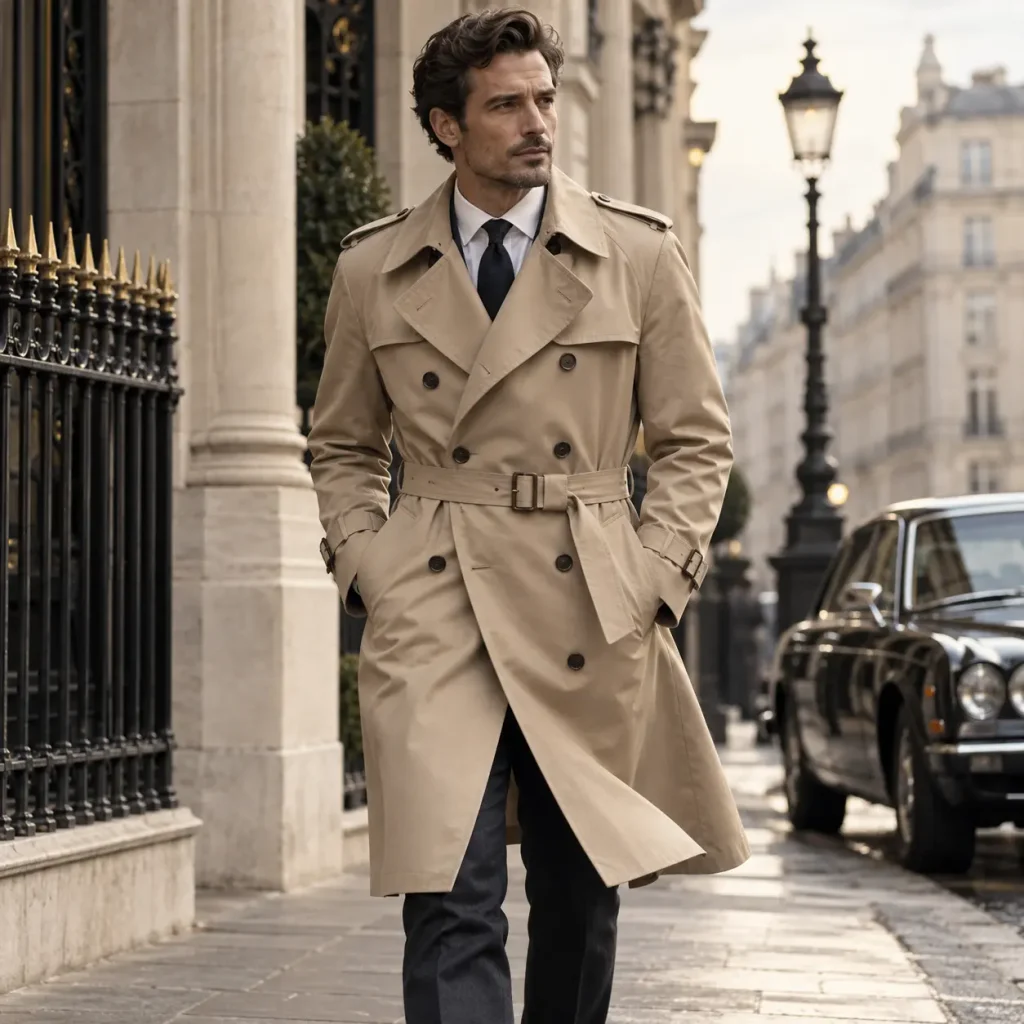
The double-breasted trench coat in traditional beige gabardine remains the definitive version of the style — the coat that essentially defines the entire category. With its wide collar, self-belt, and signature storm flaps, this is the most historically accurate interpretation of the trench coat, and it remains one of the most versatile options for layering over both formal and casual outfits alike.
Single-Breasted Trench Coat
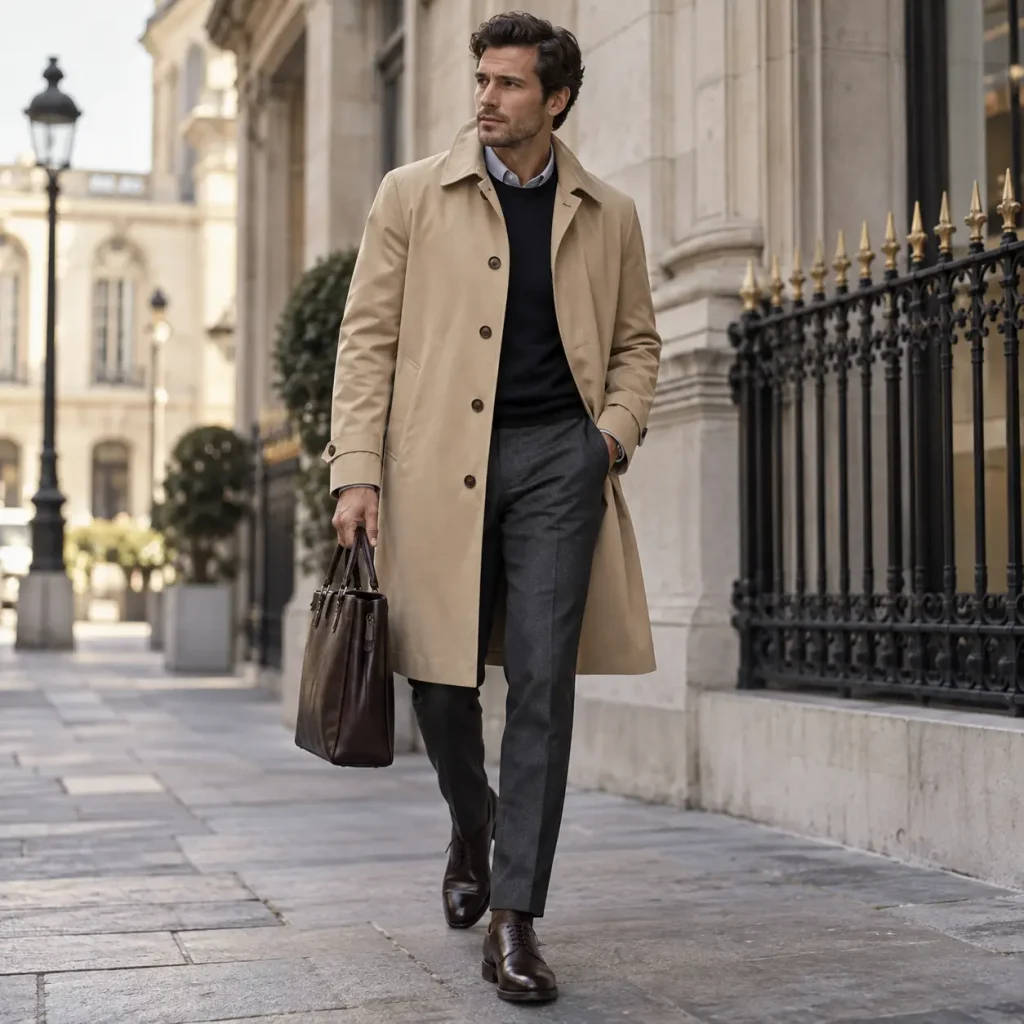
For a slightly more streamlined, modern silhouette, a single-breasted trench coat trades the classic double row of buttons for a cleaner, more minimal front closure. This style tends to feel a touch less formal than its double-breasted counterpart, making it a strong choice for everyday office wear or smart-casual outfits where a slightly less traditional silhouette feels appropriate.
Leather Trench Coat
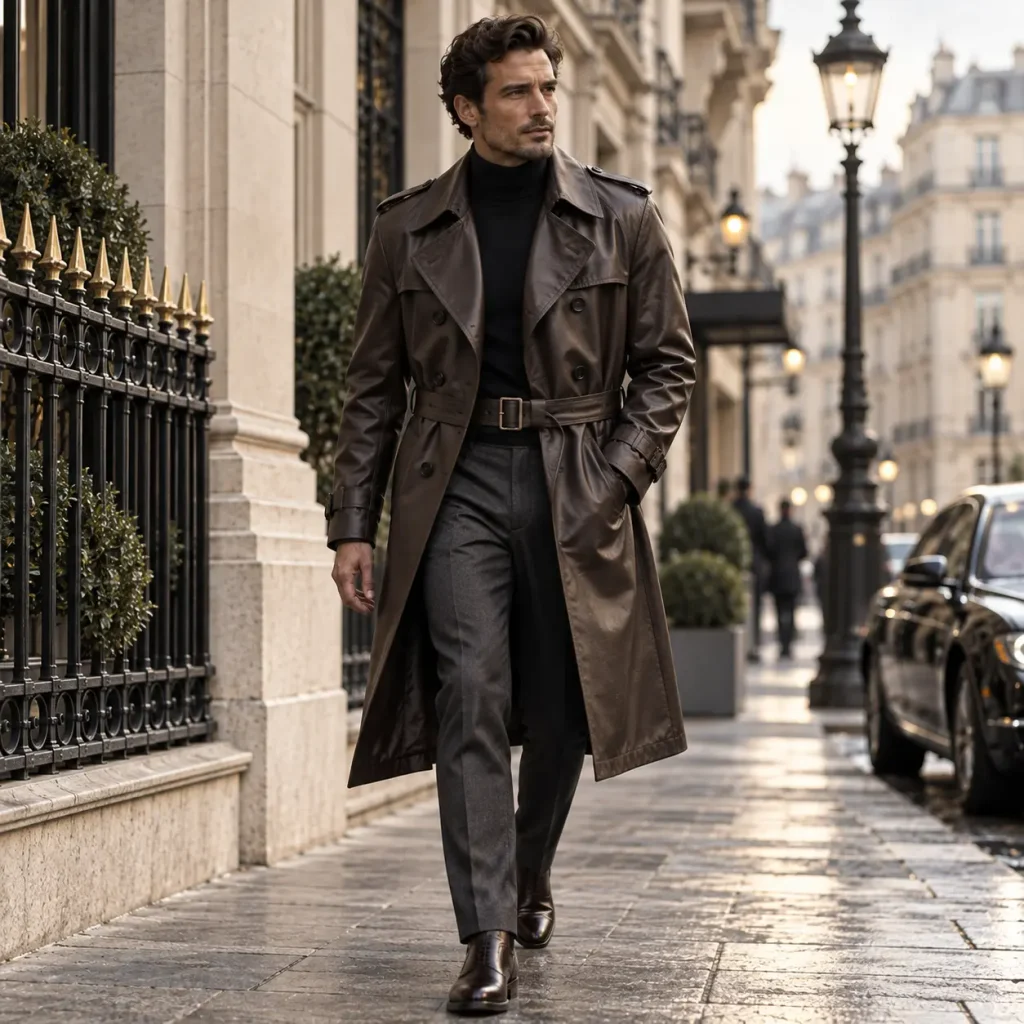
A leather trench coat brings a bolder, more contemporary edge to the classic silhouette, trading the soft drape of gabardine for leather’s structured, slightly stiffer hang. This style tends to skew more fashion-forward and works particularly well as a statement outerwear piece over simple, understated outfits, letting the coat itself take center stage.
Wool Trench Coat for Winter
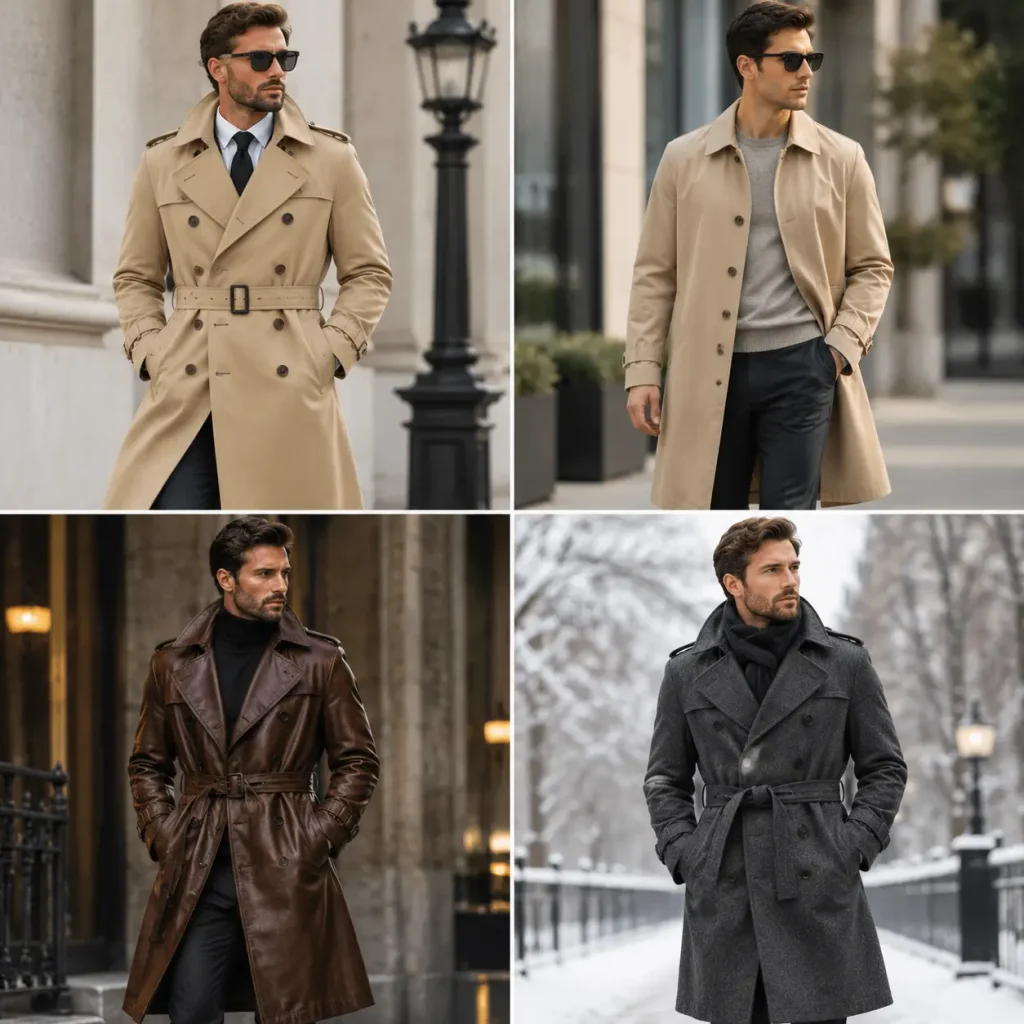
Designed specifically for colder climates, a men’s winter trench coat in a heavier wool fabric offers significantly more warmth than a traditional gabardine version without sacrificing the classic trench silhouette. Often finished with a warm lining, this style is one of the more practical choices for anyone who wants trench coat styling to carry them comfortably through the coldest months.
Cropped Trench Coat
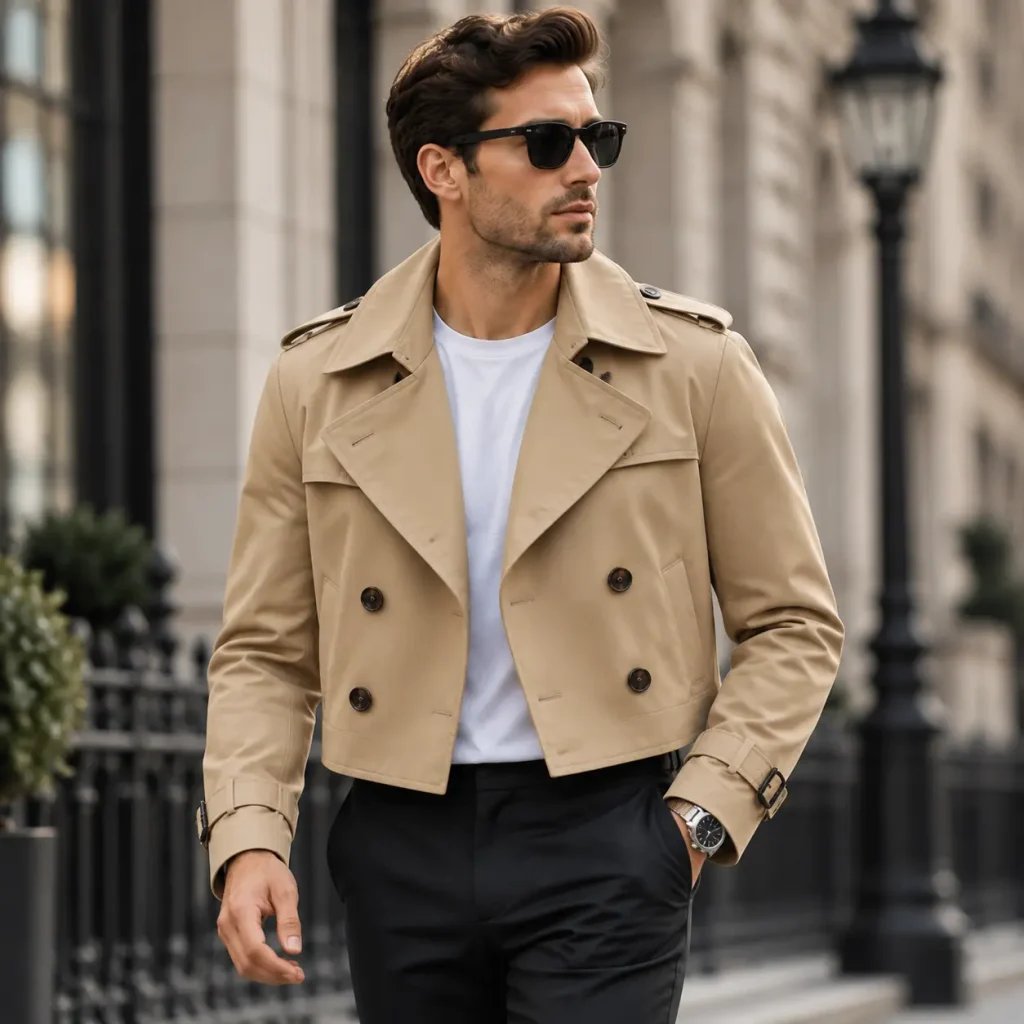
A cropped trench coat shortens the traditional knee-length or longer silhouette to a length that typically hits at or just below the hip, offering a more modern, streamlined take on the classic style. This shorter length pairs particularly well with slimmer trousers or denim, creating a more contemporary, city-ready silhouette compared to a full-length version.
Oversized Trench Coat
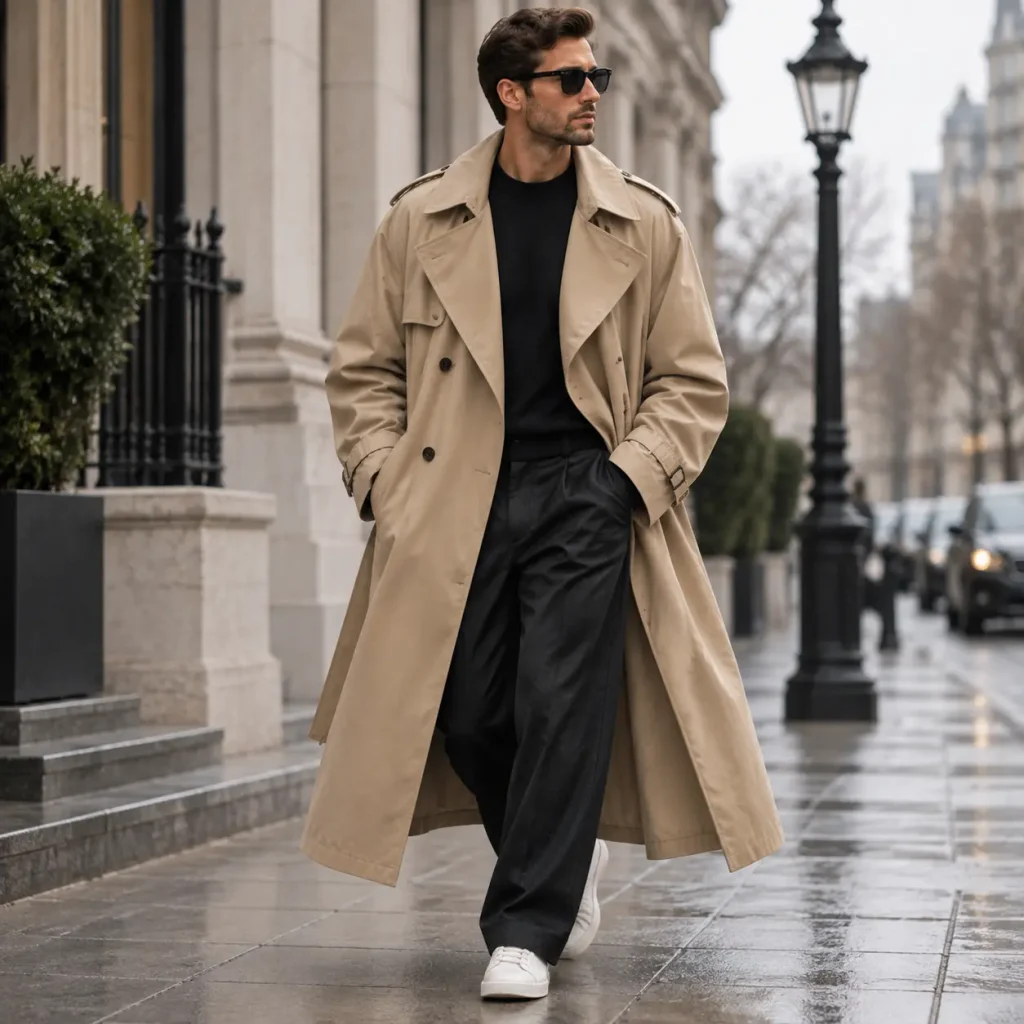
Leaning into a more relaxed, fashion-forward silhouette, an oversized trench coat uses extra room through the shoulders and body to create a deliberately loose, draped fit. This style has become increasingly popular for casual styling, often worn open over simple layers rather than belted and closed, offering a more laid-back interpretation of the classic silhouette.
Slim Fit Trench Coat
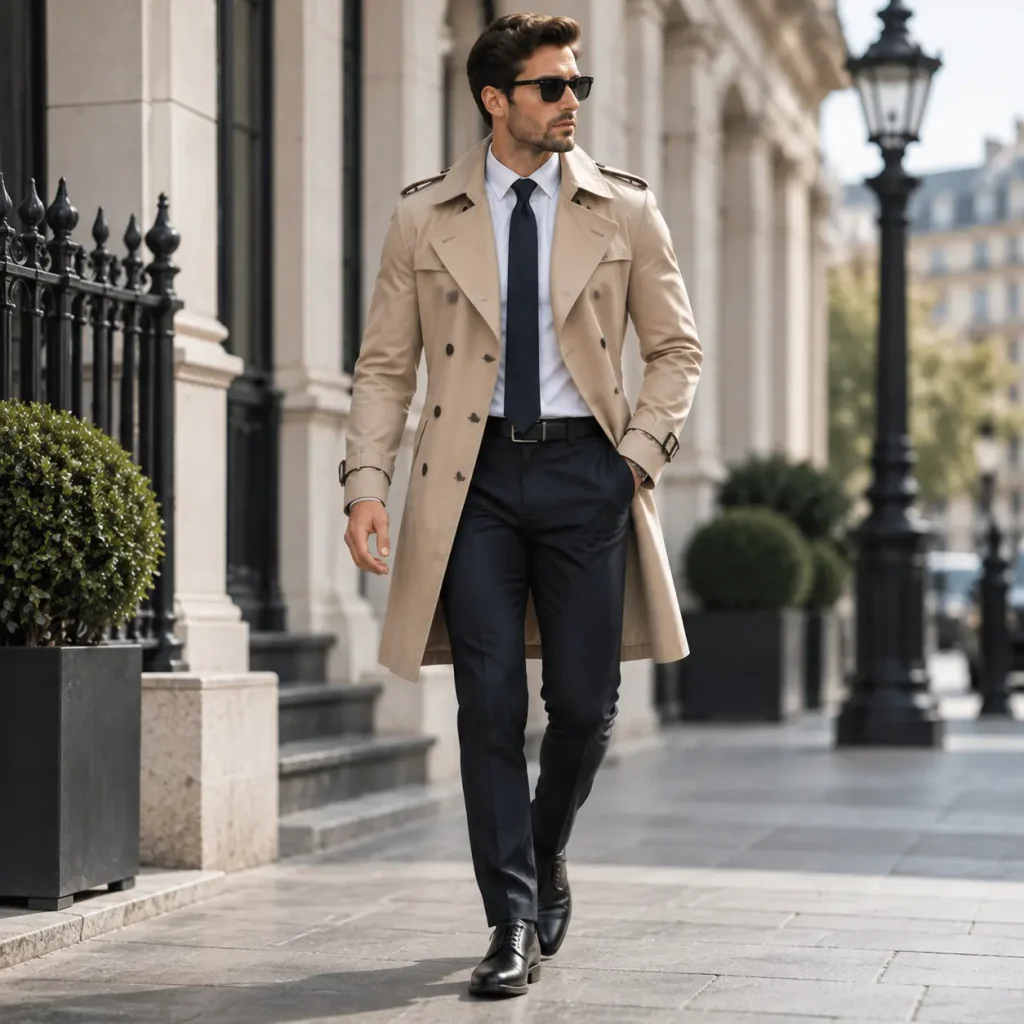
At the opposite end of the spectrum, a slim fit trench coat offers a closely tailored silhouette through the shoulders, chest, and waist, creating a sharper, more streamlined profile. This style works particularly well over slim-cut suiting for a cohesive, polished look, making it one of the most popular choices for professional or formal trench coat outfit men scenarios.
Waterproof Trench Coat
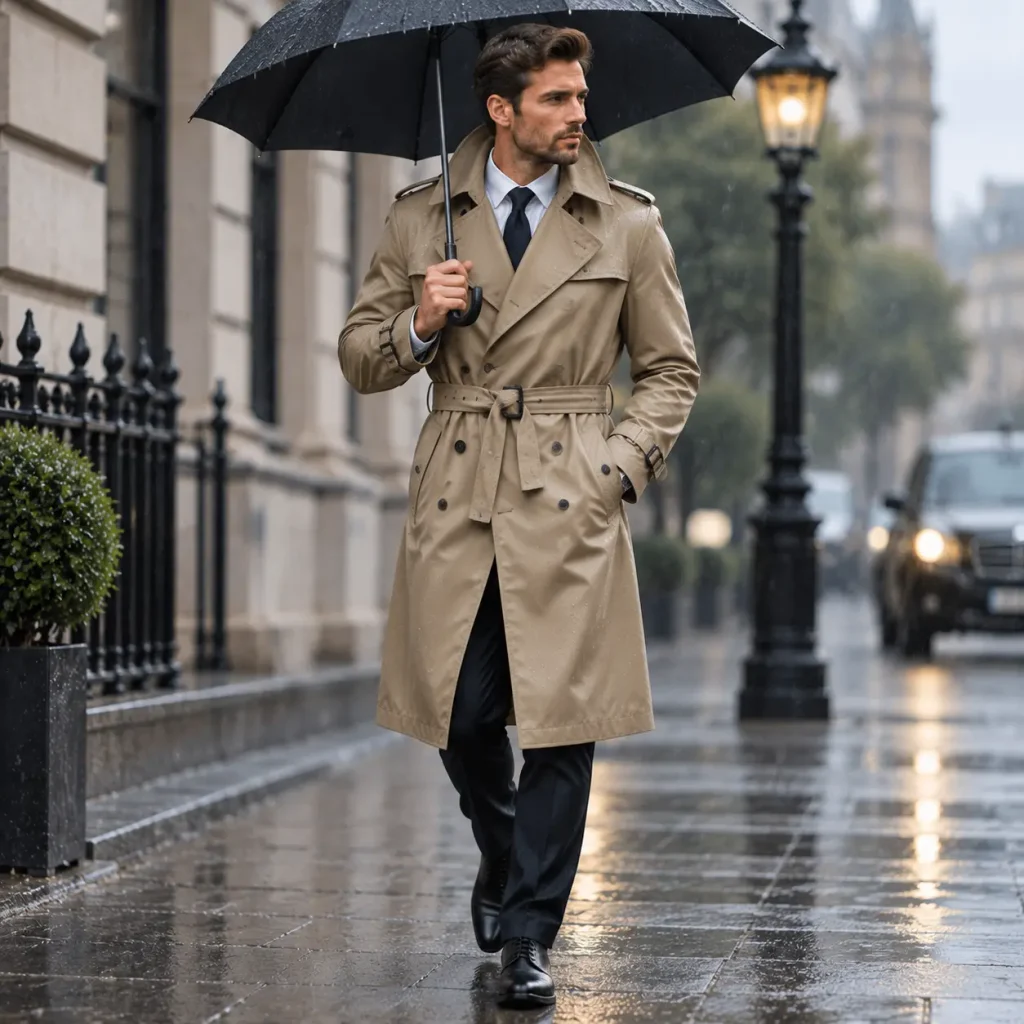
Built specifically for genuinely wet climates, a waterproof trench coat uses technical, weather-sealed fabric to offer real protection against rain, rather than the more moderate water resistance of traditional gabardine. This style is a practical choice for a trench coat for rainy season men in regions with frequent or heavy rainfall, without sacrificing the classic silhouette that defines the category.
Long Knee-Length Classic Trench
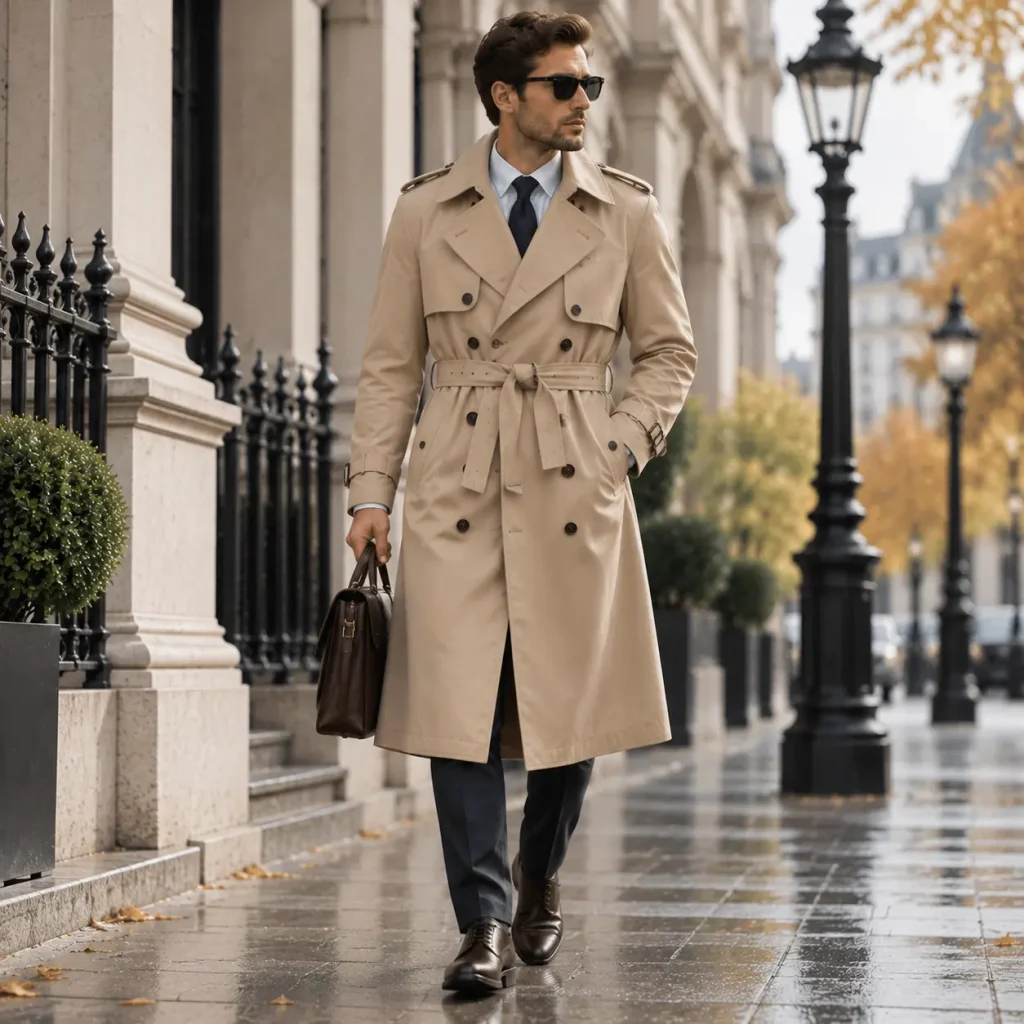
Sitting at or just below the knee, this length represents the traditional trench coat silhouette most closely associated with the coat’s military origins. A knee length trench coat men choose in this cut offers maximum coverage and a distinctly classic, formal appearance, making it particularly well suited to more traditional or conservative professional settings.
Black Trench Coat
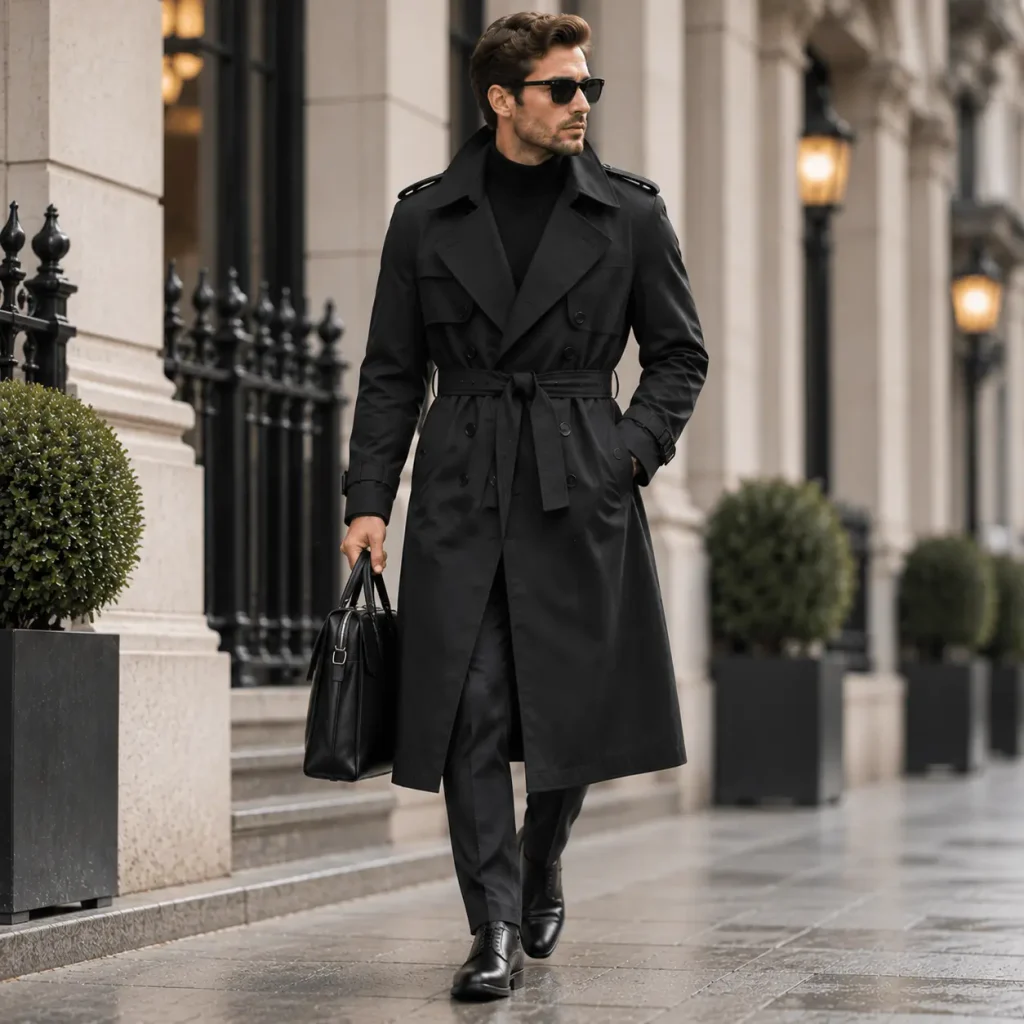
While beige remains the most iconic trench coat color, a black trench coat men wear offers a sleeker, more modern alternative that pairs especially well with monochrome or all-black outfits. This color choice tends to read as slightly more contemporary and versatile for evening or more fashion-forward styling compared to the traditional beige.
Olive Green Utility-Inspired Trench
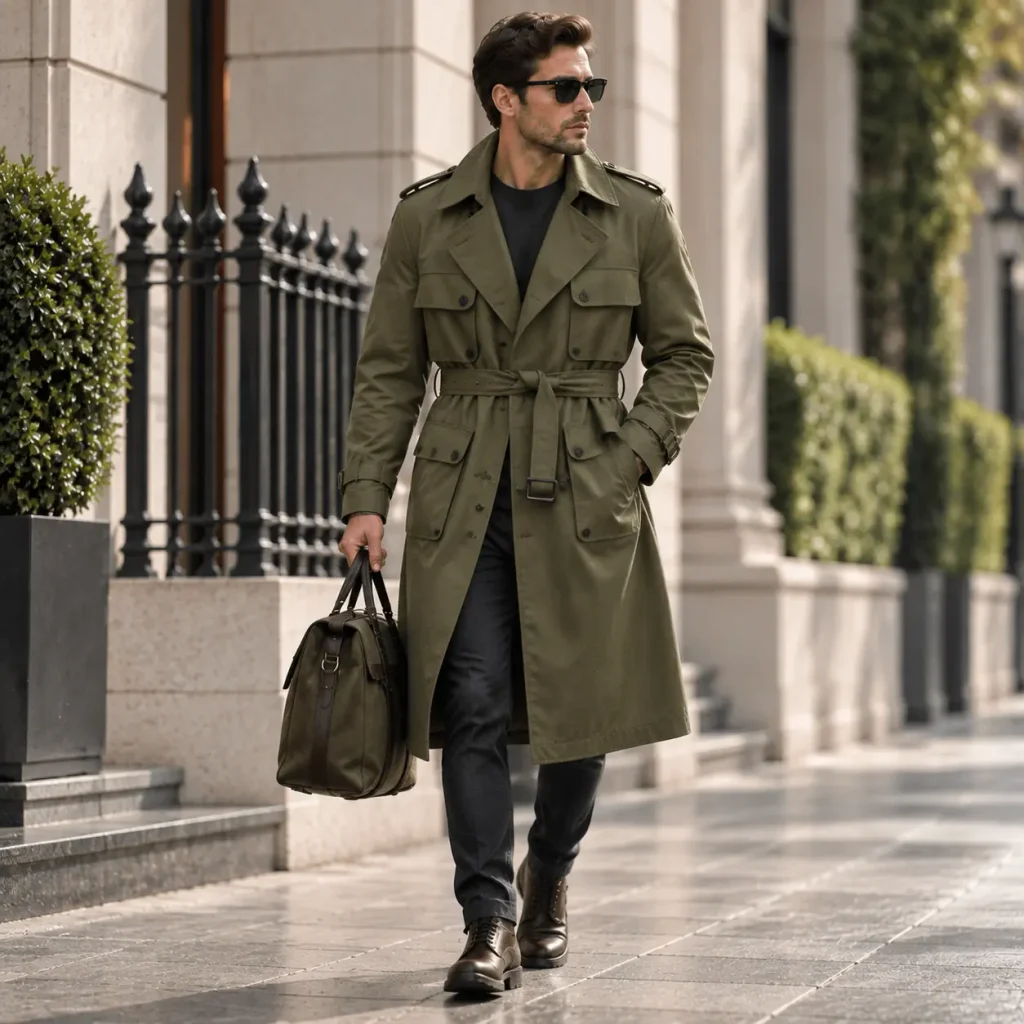
An olive green trench coat men choose leans into the style’s military DNA more visibly than a traditional beige or black version, often paired with slightly more utilitarian detailing like larger pockets or a heavier canvas-style fabric. This color and styling direction has become increasingly popular for casual outfits, offering a distinctive alternative to the coat’s more classic color palette.
Also Read: 12 Men’s Clothing Styles That Command Instant Respect
Trench Coat Colors: Which Is Most Versatile?
Beige remains the single most versatile trench coat color, given its historical association with the style and its ability to pair with nearly any outfit color underneath. Navy offers a slightly more formal, understated alternative that works particularly well for professional settings, while grey splits the difference between beige and black, offering a modern neutral that suits both casual and formal styling.
Black trench coats bring the most contemporary, sleek aesthetic of the traditional color options, particularly effective for evening wear or monochrome outfits, while olive green offers the boldest departure from the classic palette, best suited to casual, utility-inspired styling.
How to Choose the Right Trench Coat Size
Getting trench coat sizing right matters significantly, since both the shoulder fit and overall length affect how polished the coat looks once worn. The shoulder seam should sit right at the edge of your natural shoulder, since a seam that falls too far past this point will make the coat look oversized in an unintentional way, while one that sits too far in will restrict movement.
Length is largely a matter of personal preference and current styling trends, but a good general guideline is choosing a length that falls somewhere between mid-thigh and just below the knee, depending on whether you’re leaning toward a more modern, cropped silhouette or a classic, traditional cut. It’s also worth considering room underneath — a trench coat meant to be layered over a suit jacket needs slightly more room through the shoulders and chest than one intended to be worn over lighter layers alone.
How to Style a Trench Coat for Men
A trench coat’s versatility is exactly what makes it such a valuable wardrobe piece, since it adapts easily across formality levels depending on what’s worn underneath and how it’s styled.
Trench coat with a suit. Layering a trench coat over a tailored suit creates one of the most classically polished professional looks available, particularly effective with a slim fit trench coat that maintains a clean silhouette over structured suiting. Leaving the coat unbelted or loosely tied tends to look more modern than cinching it tightly over a suit.
Trench coat with jeans. For a more casual, everyday look, pairing a trench coat with well-fitted jeans and a simple sweater or button-down underneath creates an effortlessly put-together outfit without requiring formal dressing. This combination works particularly well with cropped or oversized trench coat styles.
Layering a trench coat in winter. During colder months, a trench coat can be layered over a chunky knit sweater or a lighter jacket underneath, provided there’s enough room in the coat’s cut to accommodate the extra bulk. A wool trench coat is generally the better choice for this kind of heavier layering compared to a traditional lightweight gabardine version.
Trench Coats by Occasion
Trench coat for formal wear calls for a classic beige or navy gabardine style in a slim or regular fit, worn over tailored suiting for a polished, professional appearance.
Trench coat for office settings benefits from a similarly classic approach, though a single-breasted style can offer a slightly less formal alternative to the traditional double-breasted cut.
Trench coat for casual outfits opens up more room for experimentation, with oversized, cropped, or olive green utility-inspired styles all offering a more relaxed take on the classic silhouette.
Trench coat for winter is best served by wool or heavily lined options, prioritizing warmth alongside the coat’s signature silhouette.
Trench coat for rainy season calls for genuinely waterproof technical fabric rather than traditional gabardine alone, particularly for anyone in a climate with frequent or heavy rainfall.
What to Wear Under a Trench Coat
A trench coat’s neutral, structured silhouette pairs well with almost anything worn underneath, but a few combinations tend to work particularly well. A suit and tie create the most classically formal pairing, while a simple sweater or button-down shirt offers a smart-casual alternative. For colder weather, a chunky knit sweater or a lightweight jacket can be layered underneath, provided the trench coat’s cut allows enough room to accommodate the extra bulk comfortably.
How to Care for a Wool Trench Coat
Wool trench coats require slightly more careful maintenance than their gabardine or cotton counterparts. Brushing the coat regularly with a soft-bristled clothing brush helps remove surface dirt and dust before it works its way into the fabric fibers. Spot-cleaning small stains promptly, rather than waiting and having the coat dry cleaned only when heavily soiled, helps prevent stains from setting permanently.
Professional dry cleaning is generally recommended for wool trench coats rather than home washing, since the process is gentler on both the wool fibers and the coat’s structured shape. Storing the coat on a proper, sturdy hanger — rather than a wire hanger that can distort the shoulders over time — also helps maintain its silhouette between wears.
Affordable vs. Luxury Trench Coats: What’s the Difference?
The price gap between affordable and luxury trench coats generally comes down to fabric quality, construction details, and craftsmanship rather than the basic silhouette itself, which remains fairly consistent across price points. Luxury trench coats typically use higher-grade gabardine or wool, feature more refined tailoring and finishing details, and often include reinforced stitching designed to hold up for decades of wear.
Affordable trench coats can still offer excellent value, particularly for anyone looking to try the style before committing to a significant investment, though it’s worth paying close attention to fabric weight and stitching quality even at a lower price point, since these details most directly affect how long the coat will last and how well it holds its shape over time.
Frequently Asked Questions
Is a trench coat still in style for men?
Yes, the trench coat remains a genuinely timeless menswear staple rather than a passing trend. Its classic silhouette has been continuously reinterpreted by designers for over a century, and it remains a reliable, versatile piece in men’s outerwear collections season after season.
What to wear under a trench coat?
A suit and tie create the most formal pairing, while a simple sweater, button-down shirt, or even a t-shirt work well for more casual styling. In colder weather, a trench coat can be layered over a chunky knit or a lightweight jacket, provided the coat’s cut allows enough room.
Can trench coats be worn in summer?
Yes, particularly lightweight cotton or gabardine trench coats can be worn in summer, especially during cooler evenings or in climates with mild summer temperatures. Heavier wool or leather versions are generally better suited to cooler months.
What color trench coat is most versatile for men?
Beige remains the most versatile and historically iconic trench coat color, pairing easily with nearly any outfit. Navy and grey are also highly versatile, more formal alternatives, while black offers a sleeker, more contemporary option.
How long should a trench coat be?
Trench coat length is largely a matter of personal preference, though a length falling between mid-thigh and just below the knee is generally considered the most classic and versatile range, with shorter, cropped styles offering a more modern alternative.
Final Thoughts
The trench coat has earned its place as one of menswear’s most enduring pieces by combining genuine function with a silhouette that consistently reads as composed and authoritative. From the classic double-breasted gabardine version to sleeker leather and modern oversized interpretations, the eleven styles covered here all trace back to the same military-born foundation while offering distinctly different ways to wear it. Whether layered over a suit for the office or thrown over jeans for the weekend, a well-chosen trench coat remains one of the most reliable investments a man can make in his wardrobe — proof that a piece born from wartime necessity can still command instant respect a century later.
Also Read: 12 Cargo Pants for Men That Look Effortlessly Cool