Few accessories offer as much versatility for as little cost as a scarf. A single square of silk or a soft knit wrap can change color, texture, and mood across dozens of outfits, work as both a fashion statement and a practical layer, and pack down small enough to bring on any trip. Yet scarves are also one of the most underused accessories, often relegated to pure function (staying warm) rather than styling.
This guide covers how to choose the right scarves for your wardrobe, how to tie them for different looks, and how they fit into the bigger picture we outline in our main Accessories Guide.
Types of Scarves and Wraps
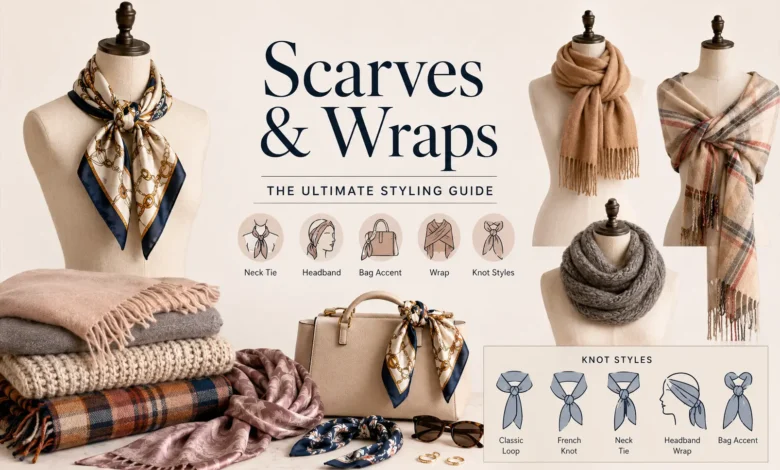
Silk scarves are lightweight, often printed, and among the most versatile pieces you can own. They can be tied around the neck, worn as a headband, tied to a bag handle, or even used as a belt. Their thin material means they add color and pattern without bulk, making them ideal for layering in any season.
Wool and cashmere scarves are built for warmth and texture, typically in solid colors or classic patterns like plaid or herringbone. These are functional first, stylish second, though a well-chosen wool scarf in a rich color can become a signature cold-weather piece.
Pashmina and wrap-style shawls are large, soft rectangles or squares that drape over the shoulders, offering more coverage than a traditional scarf. They’re especially useful for formal events where you need warmth over bare shoulders without committing to a full jacket.
Infinity scarves are pre-sewn into a continuous loop, designed for easy wear without tying. They’re a practical, low-effort option for daily wear, especially in chunky knits during colder months.
Bandanas and small square scarves have become popular beyond their western utility roots, now worn as headbands, neck ties, or tied to bag straps for a pop of pattern and color in a smaller, more casual format.
Also Read: Handbag Guide: Choosing the Right Bag for Every Occasion
How to Tie a Scarf: Five Essential Knots
The classic loop: Fold the scarf in half lengthwise, drape it around your neck, and pull the loose ends through the folded loop. This is the fastest, most casual tie and works well with infinity and long rectangular scarves.
The French knot: Drape the scarf around your neck with uneven ends, then tie the two ends together in a simple knot, letting it sit slightly off-center. This creates an effortless, undone look that pairs well with casual outfits.
The neck scarf tie: Fold a smaller square scarf into a triangle, then roll it into a thin band and tie it around your neck, letting the knot sit to one side. This is the polished, French-inspired look often seen with silk squares over blouses and simple tees.
The headband wrap: Fold a silk square into a band and tie it around your head, either as a full headband or a thin accent tied at the nape of the neck. This has become one of the most popular non-traditional ways to wear a scarf.
The bag accent: Tie a small silk scarf or bandana to your bag handle in a simple knot or bow. This is the lowest-effort way to introduce a scarf into your styling, adding color and personality to a plain bag without wearing it directly.
Choosing Scarves for Your Wardrobe
When building a scarf collection, prioritize versatility over impulse purchases. A solid neutral (black, cream, camel) works with nearly everything and is a safe first purchase. From there, a subtle print — small polka dots, thin stripes, or a muted floral — adds interest while still pairing easily with multiple outfits. Bolder, statement prints are worth having in your collection, but they work best when the rest of your outfit stays simple, letting the scarf serve as the clear focal point of the look, consistent with the rule of three from our main accessories guide.
Material matters as much as color. Silk and silk-blend scarves drape elegantly and work well tied close to the neck, while chunkier knit and wool scarves add texture and warmth but are bulkier to style. Having at least one of each — a lightweight silk piece and a cozy knit piece — covers most seasonal needs.
Scarves by Season
Spring: Lightweight silk scarves in florals or pastels work beautifully tied as a headband or loosely knotted around the neck over a light jacket.
Summer: Scarves shift toward function as accents rather than warmth — tied to bag handles, worn as headbands, or used as a light sarong-style cover-up over swimwear.
Fall: This is scarf season at its peak. Medium-weight scarves in plaid, rust, and warm neutrals pair beautifully with sweaters and trench coats, offering both style and the first real layer of warmth.
Winter: Chunky wool and cashmere scarves become functional necessities. Look for pieces long enough to wrap twice around the neck for maximum warmth, in colors that complement your existing coat collection.
Also Read: How to Choose Jewelry for Every Outfit: A Complete Guide
Scarf Types at a Glance
| Type | Material Weight | Best Use | Season |
|---|---|---|---|
| Silk Square | Lightweight | Neck tie, headband, bag accent | Spring, summer, transitional |
| Wool/Cashmere | Heavy, warm | Functional warmth layer | Fall, winter |
| Pashmina/Shawl | Medium, soft | Formal events, bare-shoulder coverage | Year-round for events |
| Infinity Scarf | Medium | Everyday, low-effort wear | Fall, winter |
| Bandana | Lightweight | Headband, neck tie, bag accent | Spring, summer |
Common Scarf Styling Mistakes to Avoid
Choosing a scarf too small for its purpose. A scarf meant for warmth needs enough length to wrap comfortably, while a decorative silk square only needs to be large enough to knot cleanly. Check dimensions before buying.
Overcomplicating the knot. Elaborate ties can look forced if you’re not comfortable tying them. Start with a simple loop or knot and build up to more complex styles as you get comfortable.
Pairing bold prints with busy outfits. A statement scarf works best against a simple base outfit. If your top or dress already has a pattern, opt for a solid-color scarf instead.
Neglecting proper care. Machine-washing delicate silk or over-washing wool can damage fibers and fade prints. Follow care labels closely, especially for higher-value pieces.
Only using scarves for warmth. Limiting scarves to purely functional winter wear misses their potential as headbands, bag accents, and lightweight styling tools in warmer months.
Wraps and Shawls for Formal Occasions
For weddings, galas, or any formal event with bare shoulders, a wrap or shawl solves the practical problem of staying warm without covering your outfit. Pashmina wraps in neutral or metallic tones are the most versatile, complementing a wide range of formal dress colors. Drape it loosely over both shoulders for a classic look, or wrap it once around the arms and let it drape at the elbows for a more relaxed, elegant effect. Keep a wrap in a color that won’t clash with your most-worn formal pieces, since this is typically a once-in-a-while purchase meant to serve many events.
Caring for Scarves
Silk scarves should generally be hand-washed in cold water with a gentle detergent, or dry-cleaned for printed and delicate pieces, since machine washing can damage both the fabric and the print. Always air dry silk flat, away from direct sunlight, which can fade colors over time. Wool and cashmere scarves should be washed sparingly, using a wool-specific detergent and cold water, then laid flat to dry to prevent stretching. Store scarves folded rather than hung, since hanging can cause stretching or misshaping over time, and keep delicate silk pieces separate from rougher materials that might snag the fabric.
Scarves as Gifts and Statement Pieces
Scarves make excellent gifts precisely because of their versatility — unlike clothing, they don’t require knowing someone’s exact size, and a beautiful print or quality material feels thoughtful without being overly personal. A silk scarf from a well-regarded brand is often considered a classic, elegant gift for exactly this reason.
Beyond gifting, a single high-quality statement scarf can serve as an entry point into a designer or luxury brand for people who aren’t ready to invest in bigger items like handbags. The relatively lower price point compared to bags or jewelry makes scarves one of the more accessible ways to own a piece from a brand you admire.
Also Read: Belts 101: How to Style and Choose the Perfect Belt
Frequently Asked Questions
What’s the most versatile scarf to own?
A solid neutral silk scarf, such as black, cream, or camel, offers the most versatility. It pairs with nearly any outfit and can be styled as a neck scarf, headband, or bag accent.
How do I keep a silk scarf from slipping while tied?
A small scarf ring or brooch can hold a knot in place throughout the day, and choosing a slightly textured knot (like the French knot) rather than a smooth loop also tends to hold better.
Can scarves be worn year-round?
Yes. Lightweight silk scarves work in warmer months as headbands, bag accents, or light neck ties, while wool and cashmere scarves take over as functional warmth pieces in colder months.
How many scarves should I own?
Two or three versatile pieces — one solid neutral, one subtle print, and one seasonal knit — cover most styling needs without becoming excessive. From there, add pieces based on genuine gaps or pieces you’re drawn to.
What’s the easiest way to tie a scarf for beginners?
The classic loop is the simplest method: fold the scarf in half, drape it around your neck, and pull the loose ends through the fold. It requires no knotting and works with most scarf lengths.
Also Read: Accessorizing on a Budget: Gold, Layered, and Intentional Looks