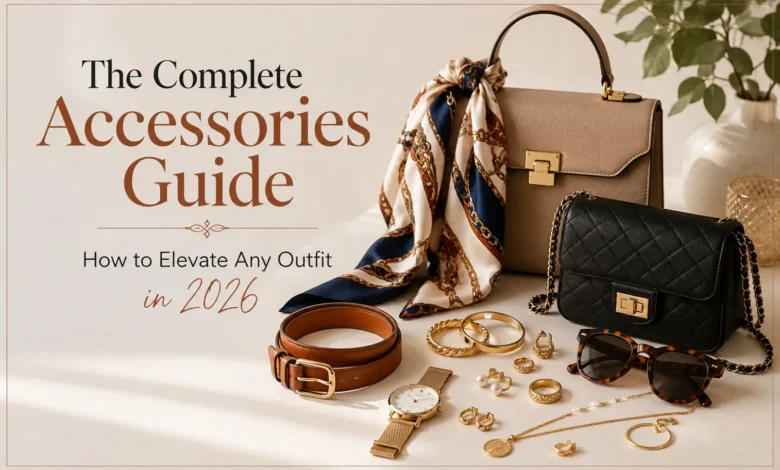
Accessories are the difference between an outfit that looks put-together and one that looks finished. The same jeans-and-tee combination can read as lazy or effortlessly chic depending entirely on what you layer around it — a stack of gold rings, a structured tote, a silk scarf knotted at the neck. Clothing sets the foundation, but accessories tell the story.
Yet accessorizing is one of the most misunderstood parts of getting dressed. Too many people either skip accessories entirely, treating them as an afterthought, or pile on so many that the outfit loses its center of gravity. The truth is that accessorizing is a skill, and like any skill, it follows principles that can be learned.
This guide is the foundation for everything we cover in the Accessories category at Style Blooming. Think of it as your reference point — the place you come back to before diving into our deeper guides on jewelry, handbags, scarves, belts, and eyewear. By the end, you’ll understand not just what to wear, but why certain combinations work and how to build an accessory wardrobe that serves you for years, not just a season.
Why Accessories Matter More Than You Think
There’s a psychological reason accessories carry so much weight in how an outfit is perceived. Clothing communicates broad signals — casual, formal, sporty, romantic — but accessories communicate specificity. They tell people who you are within that broad category. Two women in the same little black dress can look like entirely different people depending on whether one wears delicate pearl studs and a slim clutch while the other wears chunky gold hoops and a structured leather bag.
Accessories also do practical work that clothing alone cannot. A belt defines your waist and changes the proportions of an outfit instantly. A scarf adds color and texture without requiring you to buy a new top. A bag carries your essentials while acting as a focal point. Sunglasses shape your face and set the tone before anyone even registers what you’re wearing underneath.
There’s also a financial argument for prioritizing accessories. Clothing trends shift quickly, and rebuilding a wardrobe every season is expensive and wasteful. Accessories, by contrast, are often more transitional. A well-chosen leather bag, a classic gold chain, or a good pair of sunglasses can be restyled across dozens of outfits and multiple years, which makes them one of the smartest places to invest in quality.
Finally, accessories are where personal style actually shows up. Most people wear fairly similar categories of clothing — jeans, blazers, dresses, sneakers. What separates one person’s look from another’s is almost always in the details: the ring stack, the bag shape, the way a scarf is tied. If you want to develop a signature style, accessories are where that development happens fastest.
The Core Principles of Accessorizing
Before you shop for a single item, it helps to understand the rules experienced stylists use to build cohesive looks. These principles apply whether you’re dressing for a boardroom or a beach vacation.
1. Start with one focal point, then support it. Every well-accessorized outfit has a hierarchy. Pick one statement piece — a bold necklace, an eye-catching bag, a printed scarf — and let everything else play a supporting role. If your earrings are large and dramatic, keep your necklace simple or skip it. If your bag is a bright, attention-grabbing color, let your jewelry stay neutral. Competing focal points make an outfit feel chaotic rather than curated.
2. Match the formality of your accessories to your outfit, not just the color. A delicate gold chain looks lovely with a cocktail dress, but that same chain can feel out of place with heavy-duty denim and boots. Formality isn’t only about color coordination — it’s about weight, material, and finish. Chunky, matte, or textured pieces tend to read casual. Polished, delicate, and reflective pieces tend to read formal. Match the mood of your accessories to the mood of your outfit.
3. Use the rule of three. A widely used styling guideline suggests limiting yourself to three accessory categories per outfit: for example, earrings, a bag, and a belt — or a necklace, a watch, and sunglasses. Beyond three categories, an outfit often starts to feel overworked. This isn’t a rigid law, but it’s a useful check when you’re unsure if you’ve added too much.
4. Let one metal (or finish) lead. Mixing gold and silver has become far more accepted in recent years, and done intentionally it looks modern rather than mismatched. The key word is intentionally. Choose one metal to dominate — say, 70% gold — and let the other appear in smaller doses, like a single silver ring or a two-tone watch. Random mixing without a lead metal tends to look accidental rather than styled.
5. Consider proportion, not just style. Accessories interact with your body and your clothing’s silhouette. A petite frame can be overwhelmed by an oversized tote or extra-long layered necklaces, while a taller frame can carry larger, bolder pieces with ease. This isn’t about rules for body types — it’s about balance. If your outfit already has a lot of volume (an oversized coat, wide-leg trousers), a smaller, structured bag often balances it better than another bulky piece.
6. Repeat a color, don’t match it exactly. Instead of trying to match your bag precisely to your shoes or your earrings exactly to your top, look for accessories that echo a color already present in your outfit — even a subtle undertone. A rust-colored bag can pick up the warm brown in a printed blouse without being an exact match, and this kind of relationship reads as more sophisticated than perfect matching.
7. Dress down your dressy accessories to expand their use. The most cost-effective accessories are the ones that work across contexts. A pearl necklace styled with a silk blouse looks formal; the same necklace layered over a plain white tee looks unexpected and current. Before buying an accessory, ask whether you can picture it working in at least two different settings.
8. Edit before you leave the house. Coco Chanel’s famous advice to remove one accessory before leaving still holds up because it forces a final edit. Once you’ve built your outfit, look in the mirror and ask what could be removed without the outfit losing its intention. This habit alone will improve your accessorizing more than any single rule on this list.
The Five Essential Accessory Categories
Every accessory falls into one of five core categories, and each category serves a different function in an outfit. Understanding what each type is for makes it much easier to decide what to invest in first.
| Category | Primary Function | Best For | Cost to Invest In |
|---|---|---|---|
| Jewelry | Adds personality, sparkle, and detail near the face and hands | Everyday wear, layering, statement moments | Moderate — mix fine and costume pieces |
| Handbags | Carries essentials while anchoring the outfit visually | Every outfit; changes the whole formality level | High — worth investing in 2-3 quality pieces |
| Scarves & Wraps | Adds color, pattern, texture, and warmth | Transitional seasons, elevating simple outfits | Low to moderate |
| Belts | Defines the waist, adds structure, changes proportions | Dresses, high-waisted bottoms, oversized layers | Low to moderate |
| Sunglasses & Eyewear | Frames the face, sets tone before the outfit is even seen | Daily wear, travel, face-framing style statement | Moderate to high for quality lenses |
Each of these categories deserves a deeper dive than we can fit into one article, which is why we’ve written dedicated guides for each one. Think of the sections below as your map — read this pillar first to understand the why, then click through to each cluster guide for the specific how.
Accessorizing by Occasion
The same accessory wardrobe can be reshuffled to work across very different settings. Here’s how to think through accessorizing for the situations you’ll face most often.
Everyday and Casual Outfits
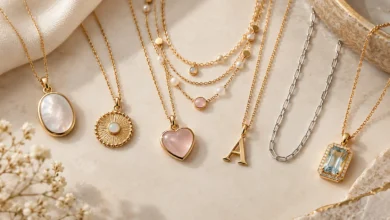
For daily wear, the goal is ease — accessories that you can put on in under a minute and not think about again. Stud or small hoop earrings, a stack of thin rings, a crossbody bag, and a simple pendant necklace form a reliable daily uniform. Layered necklaces of varying lengths add interest without requiring effort. This is also where scarves shine as a quick way to change up a repeated outfit; tying one around your neck, your bag handle, or your ponytail instantly refreshes a basic look.
Also Read: How to Choose Jewelry for Every Outfit for a full breakdown of everyday layering formulas.
Work and Office Settings
Office accessorizing calls for restraint and polish. Delicate jewelry, a structured handbag or tote that can carry a laptop, and a well-fitted belt on tailored trousers all read as professional without being boring. Avoid anything that jingles, jangles, or catches on keyboards. A quality watch remains one of the most respected accessories in professional settings, signaling reliability and attention to detail.
Also Read: Handbag Guide: Choosing the Right Bag for Every Occasion to find the ideal work tote or structured bag for your daily commute.
Evening and Formal Events
This is where you can lean into your statement pieces. A bold necklace or chandelier earrings, a small clutch or evening bag, and metallic or jeweled accents all belong here. The rule of three still applies — if your earrings are dramatic, keep your bag simple, and vice versa. Formal settings are also where scarves and wraps do double duty as both style statements and practical layers over bare shoulders.
Also Read: Scarves and Wraps: The Ultimate Styling Guide for elegant ways to drape, knot, and layer for evening looks.
Weekend and Travel
Comfort and versatility matter most here. A crossbody or belt bag keeps your hands free, sunglasses become both functional and stylish, and a scarf can serve as a travel companion — worn as a wrap, used as a light blanket, or tied around a bag strap for a pop of color. This is also the occasion where belts get the most practical use, cinching oversized jackets or denim for a more flattering travel silhouette.
Also Read: Sunglasses and Eyewear: A Complete Style Guide to find the right frame shape for your face and travel needs.
Special Occasions and Statement Dressing
For weddings, parties, or milestone events, accessories often become the most memorable part of the outfit. This is the time to invest in one truly special piece — a family heirloom, a designer bag, a bold cocktail ring — and build everything else around letting it shine.
Also Read: Belts 101: How to Style and Choose the Perfect Belt for cinching and defining silhouettes in occasion dressing.
Building an Accessory Wardrobe on Any Budget
You don’t need to spend a fortune to accessorize well, but knowing where to allocate your budget makes a real difference in how your collection performs over time.
Budget-Friendly (Under $50 per piece): Focus on trend-driven or seasonal pieces here — statement earrings in a color you’re testing out, a printed scarf, costume jewelry you might tire of within a year or two. This tier is also great for building your “fun” collection without the pressure of a big investment.
Mid-Range ($50–$200 per piece): This is the sweet spot for versatile staples: a well-made crossbody bag, a leather belt, quality sunglasses with real UV protection, and gold-filled or sterling silver jewelry that won’t tarnish quickly. Most of your everyday rotation should live in this tier.
Investment ($200+ per piece): Reserve this tier for the pieces you’ll use for a decade or more — a structured leather handbag in a neutral color, fine jewelry like a gold chain or diamond studs, or a designer belt with a timeless buckle. Cost-per-wear makes these pieces worthwhile if you genuinely reach for them often.
A smart approach is the 80/20 split: roughly 80% of your accessory wardrobe in the budget-to-mid-range tiers for flexibility and fun, and 20% in investment pieces that anchor your look and last for years.
Step-by-Step: How to Accessorize Any Outfit
When you’re getting dressed and unsure where to start, walk through this sequence.
| Step | What to Do | Why It Works |
|---|---|---|
| 1. Assess the outfit’s formality | Decide if the base outfit is casual, smart-casual, or formal | Sets the tone for which accessory weight and finish to choose |
| 2. Choose your focal point | Pick one standout piece — bag, necklace, or earrings | Prevents competing statement pieces |
| 3. Pick a lead metal or finish | Decide gold, silver, or mixed with a dominant tone | Keeps jewelry looking intentional, not random |
| 4. Add your bag | Match the bag’s formality and size to the outfit and occasion | The bag is often the largest accessory and anchors the whole look |
| 5. Layer in supporting pieces | Add 1–2 more categories max (belt, scarf, watch) | Follows the rule of three for balance |
| 6. Check proportions in the mirror | Make sure nothing overwhelms your frame or the outfit’s volume | Ensures visual balance |
| 7. Remove one item | Take off the least necessary piece before leaving | Final edit for a polished, not overdone, look |
Common Accessorizing Mistakes to Avoid
Over-accessorizing every category at once. Wearing a statement necklace, chandelier earrings, a bold bag, a printed scarf, and a chunky belt all together overwhelms the outfit and often the wearer too. Choose your battles.
Ignoring scale. Tiny stud earrings can disappear under a chunky turtleneck, while an oversized bag can swallow a petite frame. Always consider how an accessory’s size interacts with what you’re wearing.
Matching too literally. A bag that matches your shoes exactly, down to the shade, can look dated rather than intentional. Aim for a relationship between colors, not an exact copy.
Forgetting function. A beautiful bag that can’t hold your phone and wallet, or sunglasses that slide off your face, will end up unused no matter how stylish they are. Function and form need to coexist.
Neglecting maintenance. Tarnished jewelry, a scuffed bag, or scratched sunglasses undercut an otherwise great outfit. A little care — polishing cloths, leather conditioner, proper storage — extends the life and look of every piece.
Buying only trend pieces. A wardrobe built entirely on what’s trending right now needs constant replacing. Balance trend purchases with timeless staples that won’t feel dated in two years.
Seasonal Accessorizing Tips
Accessories shift with the seasons just as clothing does. In spring and summer, lighter materials — raffia bags, delicate gold jewelry, colorful scarves worn as headbands, and sunglasses with tinted or mirrored lenses — feel fresh and appropriate. In fall and winter, richer textures take over: suede and leather bags, chunkier jewelry, wool and cashmere scarves worn as actual warmth layers, and belts over coats to add shape to bulkier silhouettes.
Keeping a small rotation of seasonal accessories, rather than trying to make every piece work year-round, will keep your looks feeling current without requiring a complete wardrobe overhaul.
Caring for Your Accessories
Quality accessories last far longer with basic care. Store jewelry in a lined box or pouch to prevent tangling and scratching, and keep pieces you wear daily separate from special-occasion items. Wipe leather bags with a soft cloth and condition them every few months, especially if you live somewhere humid or very dry. Clean sunglasses lenses only with a microfiber cloth to avoid scratches, and store them in a hard case when not in use. Scarves made of silk or delicate fabrics should be hand-washed or dry-cleaned rather than machine-washed, which can damage the fibers and print.
Building a Capsule Accessory Wardrobe
Just as a capsule wardrobe streamlines your clothing into versatile, mix-and-match pieces, a capsule approach to accessories can simplify getting dressed while still giving you plenty of variety. The idea is to choose a small, intentional set of pieces that work together across multiple outfits rather than owning dozens of items that only pair with one specific look.
A solid capsule accessory collection typically includes: one everyday bag in a neutral tone, one going-out bag for evenings, two pairs of earrings (one simple stud, one statement pair), a layering necklace set, one versatile belt in a neutral leather, one printed or solid scarf that pairs with multiple colors in your closet, and one quality pair of sunglasses. From this short list, you can build dozens of distinct looks simply by changing which pieces you combine.
The benefit of this approach goes beyond convenience. When every piece in your collection is chosen deliberately, you stop accumulating accessories that sit unused in a drawer. Every item earns its place because it has a clear function and pairs with multiple outfits already in your closet.
Accessorizing for Your Personal Style
While the principles in this guide apply broadly, the way you apply them should reflect your own taste. Someone drawn to a minimalist aesthetic might follow the rule of three but lean toward a single delicate piece rather than three visible categories. Someone with a maximalist sensibility might stack rings, layer necklaces, and still keep the look cohesive by staying within one color family or metal tone.
Take note of what you’re naturally drawn to when browsing — whether that’s texture, color, shine, or shape — and let that guide your purchases more than trends alone. Accessories are one of the lowest-commitment ways to experiment with personal style, since a single piece is far less of an investment than an entire outfit. If you’re unsure of your style direction, use accessories as a testing ground before committing to bigger wardrobe changes.
Shopping for Accessories: Online vs. In-Store
Both shopping methods have advantages depending on the type of accessory. For jewelry and small items, online shopping often gives you access to a wider range of styles, materials, and price points, and many retailers now offer generous return policies that make it easier to try before committing. Reading material descriptions carefully matters here — terms like “gold-plated,” “gold-filled,” and “solid gold” all mean very different things for durability and price.
For handbags and sunglasses, in-store shopping has a real advantage because fit, scale, and comfort are hard to judge from photos alone. A bag that looks perfectly sized in a product photo might feel too large or too small once it’s actually on your shoulder, and sunglasses that look great online can sit oddly on your specific face shape. When possible, try these categories on in person, or shop from retailers with clear size references and easy returns if you’re buying online.
For scarves and belts, either method tends to work well, though checking the actual measurements (scarf dimensions, belt length in inches rather than just “S/M/L”) helps avoid surprises, since sizing can vary significantly between brands.
Sustainable and Ethical Accessorizing
As with clothing, the accessories industry has a sustainability conversation worth being aware of. Fast-fashion jewelry and bags are often produced quickly and cheaply, which can mean shorter lifespans, more waste, and questions around labor practices. If sustainability matters to you, a few approaches can help: buying fewer, better-made pieces that last for years instead of one season; choosing natural materials like genuine leather, sterling silver, and solid brass over synthetic alternatives that don’t age as gracefully; shopping secondhand or vintage for unique pieces with a lower environmental footprint; and researching brands that are transparent about their sourcing and manufacturing.
None of this means you need to overhaul your shopping habits overnight. Even small shifts, like choosing one investment piece over three trend pieces that will be discarded within a year, add up over time both financially and environmentally.
Accessory Trends to Watch
Trends in accessories move quickly, but a few directions have shown real staying power going into 2026. Chunky, sculptural jewelry continues to dominate over the delicate, minimalist styles that were popular a few years ago, with statement rings and thick chain necklaces leading the way. Mixed metals have moved from a stylist’s trick to mainstream practice, with more brands designing pieces specifically meant to be worn together in gold and silver combinations. Structured, boxy handbags are having a resurgence, offering a more polished alternative to the slouchy totes that dominated recent years. And face-framing, slightly oversized sunglasses remain a strong throughline, especially in warm-toned tortoiseshell and classic black finishes.
Trends are a useful source of inspiration, but they shouldn’t dictate your entire accessory wardrobe. Use them selectively — pick one or two trend pieces per season to keep your look current, while relying on your timeless staples to do most of the work.
Frequently Asked Questions
How many accessories is too many?
A helpful guideline is the rule of three: limit yourself to three accessory categories per outfit, such as earrings, a bag, and a belt. Beyond that, outfits often start to feel cluttered rather than curated, though this can flex depending on the formality of the occasion.
Can I mix gold and silver jewelry?
Yes, mixing metals is a well-established styling technique. The key is to let one metal lead, making up roughly 70% of what you’re wearing, while the other appears in smaller accents like a single ring or a two-tone piece.
What accessories should I invest in first?
Start with a versatile, well-made handbag in a neutral color and a pair of quality sunglasses with real UV protection. Both are used almost daily and have the highest cost-per-wear value over time.
Do accessories really change how an outfit looks?
Absolutely. The same base outfit can look casual, professional, or formal depending purely on the accessories layered on top. Accessories often communicate more about personal style than the clothing itself.
How do I know if my jewelry is too matchy?
If every metal, stone color, and finish is identical, it can look overly coordinated rather than styled. Aim for pieces that relate to each other in tone or color family without being exact matches.
What’s the difference between fine jewelry and costume jewelry?
Fine jewelry is made from precious metals like gold or sterling silver, often with genuine gemstones, and is built to last decades with proper care. Costume jewelry uses more affordable materials and is designed for trend-driven, shorter-term wear.
How often should I update my accessory collection? There’s no fixed timeline, but a useful approach is to review your collection each season and ask which pieces you actually reached for. Timeless staples like a good bag or fine jewelry don’t need replacing often, while trend-driven pieces can be refreshed once or twice a year depending on your budget and interest in staying current.
Is it okay to wear the same bag every day?
Yes — in fact, many stylists recommend it. A well-chosen everyday bag that matches most of your wardrobe reduces decision fatigue and often ends up looking more intentional than switching bags constantly. Save your second or third bag for occasions that call for a different size, formality, or color.
Also Read: Fashion Trends 2026: The Complete Guide to What’s In, What’s Out, and How to Actually Wear Them