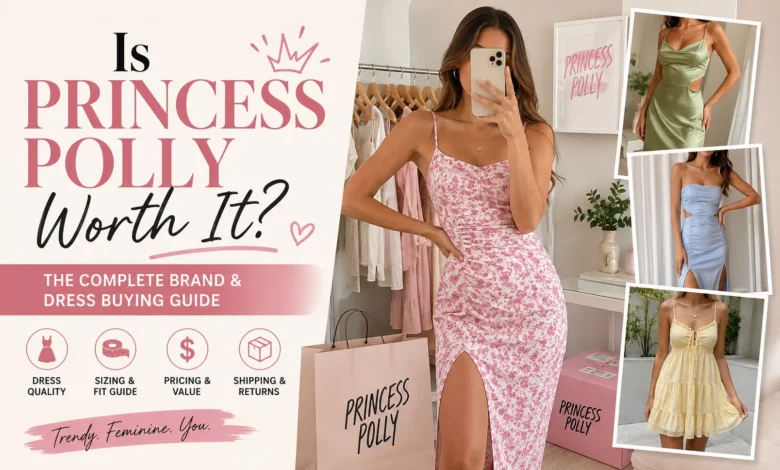
If you’ve spent any time scrolling TikTok or Instagram in the last few years, chances are a Princess Polly dress has landed on your feed — usually tagged to a festival outfit, a graduation photo, or a “get ready with me” video. The brand has built a loyal, mostly Gen Z following on the promise of trend-right pieces that photograph beautifully and don’t require a stylist to put together. But “trendy” and “worth the money” aren’t always the same thing, and dresses in particular are the category where quality, fit, and occasion all have to line up before you hit “add to cart.”
This guide breaks down everything you need to know before buying from Princess Polly — who the brand actually is, whether the quality holds up, how the sizing runs, what dresses work best for which occasions, how the pricing compares to similar brands, and what to expect from shipping and returns. By the end, you’ll have a clear answer to the question everyone asks before their first order: is Princess Polly actually worth it?
What Is Princess Polly?
Princess Polly is an Australian-founded online fashion brand that specializes in trend-driven women’s clothing, with dresses, denim, and going-out tops as its strongest categories. The brand started as a single brick-and-mortar shop on the Gold Coast in Queensland before moving into e-commerce in 2010, and it has since grown into a global retailer with offices in both Australia and West Hollywood, California.
A few things are useful to know about the brand’s background before you shop:
- It isn’t a marketplace. Unlike sites that resell dozens of third-party labels, most of what you see on Princess Polly is designed in-house, alongside a rotating selection of guest brands.
- It’s backed by real investment, not a dropshipping operation. The company has institutional backing that has funded international shipping, a fast-turnaround design cycle, and physical retail locations in the U.S.
- It positions itself above fast fashion, not alongside it. Princess Polly is often mentioned in the same breath as Shein or Fashion Nova because of the trend-chasing style, but the manufacturing standards, pricing, and quality control are closer to mid-tier retailers.
- Sustainability is part of the pitch. The brand has taken steps toward more accountable production practices, which is part of why it markets itself as a step above ultra-fast-fashion competitors.
Understanding this background matters because it explains the price point. Princess Polly isn’t trying to compete with $8 dresses — it’s positioned as “elevated fast fashion,” and that shows up in both the price tags and the finish of most pieces.
A Quick Look at the Brand’s Growth
What started as a small beachside operation eventually grew into a genuinely global retail business, with a design and merchandising team collaborating across two continents. That growth mattered for shoppers in a few concrete ways: it funded faster international shipping, it allowed the brand to open physical retail locations in major U.S. cities, and it pushed the company to formalize its manufacturing standards rather than relying purely on the lowest-cost supplier at any given moment. The brand also pursued formal accountability credentials around its production practices, which is part of why it’s positioned differently from brands that compete purely on rock-bottom pricing.
None of this means every piece in the catalog is flawless — no fashion brand at this scale has zero misses — but it does explain why the quality and price sit where they do relative to true budget fast fashion.
Who Is Princess Polly Actually For?
Before diving deeper into quality and sizing, it’s worth being honest about who gets the most value out of this brand, because “worth it” is always relative to the shopper.
- Best fit: Shoppers in their late teens through late twenties who want current, photograph-well pieces for going out, events, and social occasions, and who are comfortable refreshing their wardrobe a few times a year rather than buying pieces meant to last a decade.
- Good fit: Anyone who wants one or two statement pieces — a formal dress, a going-out top — without committing to designer pricing.
- Poor fit: Shoppers looking exclusively for minimalist, ultra-durable capsule wardrobe basics meant to be worn hundreds of times over many years. That’s not the brand’s core design philosophy, and there are better-suited retailers for that specific goal.
Also Read: Casual Outfit Ideas for Everyday Comfort and Style
Is Princess Polly Good Quality?
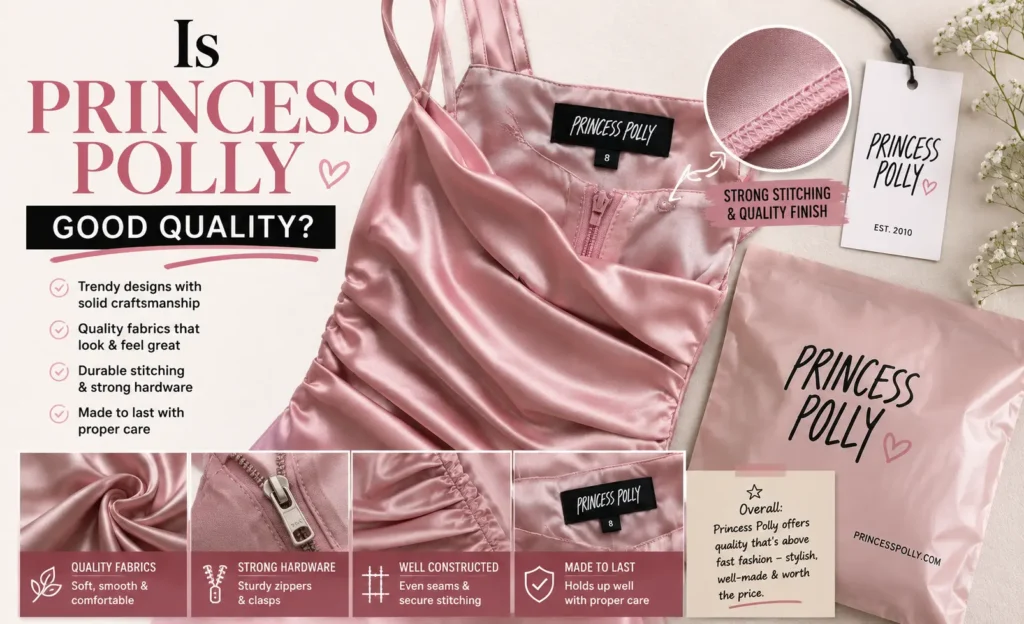
This is the single most-asked question about the brand, and the honest answer is: it depends on the fabric and construction of the specific piece, but on average, quality sits noticeably above budget fast fashion.
Here’s what tends to hold true across most reviews and customer feedback:
Where Princess Polly performs well:
- Structured pieces — corset-style tops, tailored trousers, and fitted mini dresses — generally hold their shape through multiple wears and washes.
- Hardware details (buckles, zippers, clasps) are usually sturdy rather than the flimsy plastic often found in ultra-cheap fast fashion.
- Denim is consistently one of the strongest categories in terms of both fit and longevity.
Where quality is more inconsistent:
- Sheer, mesh, and slinky/satin fabrics — which make up a large share of the dress catalog — are more delicate and prone to snagging or pilling if not hand-washed.
- Some going-out dresses are designed to be worn a handful of times rather than for years of rotation, which is common across the trend-driven price bracket.
- Sizing and fabric weight can vary between styles, since not everything is manufactured in the same facility.
A simple way to think about it: Princess Polly quality generally sits between Shein and Reformation — meaningfully better construction than ultra-cheap fast fashion, but not investment-piece durability. For occasion dresses you’ll wear a few times a season, that trade-off works in your favor. For everyday basics you want to last years, check fabric composition before buying.
A Quick Fabric Guide (So You Know What You’re Buying)
Because so much of the quality conversation comes down to fabric choice, it helps to know what you’re looking at on a product page before you order.
| Fabric | What to Expect | Care Tip |
|---|---|---|
| Satin / slinky | Smooth, drapey, photographs beautifully; snags easily | Hand wash or gentle cycle in a mesh bag |
| Mesh | Sheer, trendy, used for cutout and layered details | Never put in the dryer — air dry only |
| Ribbed knit | Stretchy, forgiving, holds shape well over time | Machine washable, cold water |
| Cotton / cotton-blend | Breathable, durable, best for everyday dresses | Machine washable; low heat if drying |
| Linen-blend | Lightweight, wrinkles easily, great for warm weather | Iron on low or steam to smooth |
| Denim | The brand’s strongest category for longevity | Wash inside-out, cold water, minimal drying |
As a general rule: the more delicate the fabric, the more limited the piece’s lifespan will be if it’s machine washed and dried carelessly. Reading the product’s fabric composition before buying — not just the photo — is the single best predictor of how long a piece will hold up.
Is Princess Polly True to Size?
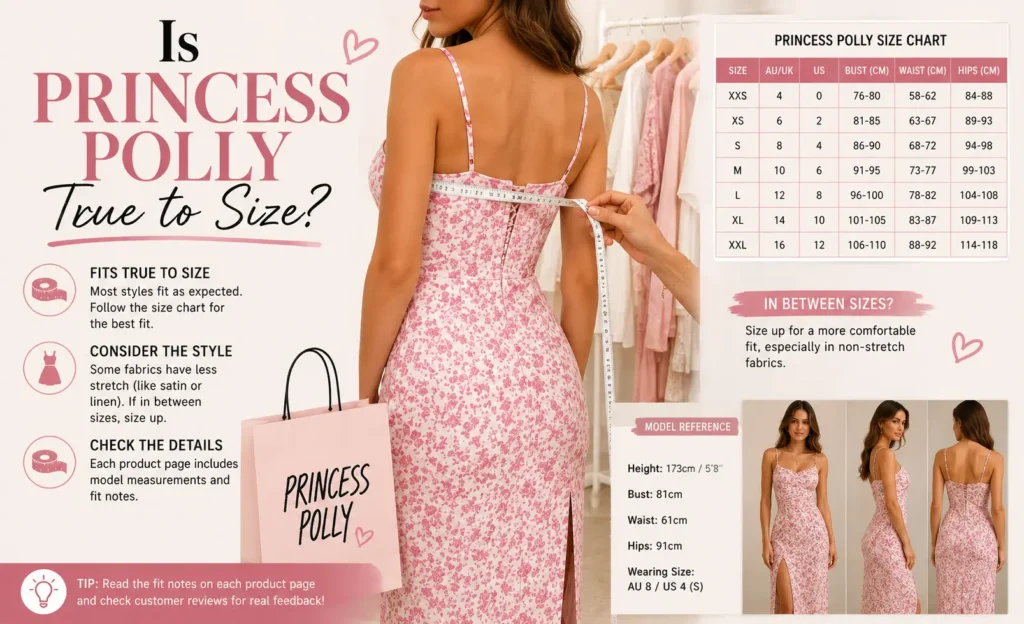
Sizing is where a lot of first-time buyers get tripped up, simply because fit expectations vary so much by dress style. Based on the pattern across most customer reviews, Princess Polly generally runs true to size, with a few style-specific exceptions worth knowing before you order.
| Dress Style | Sizing Notes |
|---|---|
| Bodycon / ribbed mini dresses | True to size, but stretchy — many buyers size down for a snatched fit |
| Corset-style / structured dresses | True to size; check the specific bust and waist measurements listed |
| Babydoll / tiered dresses | Runs slightly generous through the body |
| Satin slip dresses | True to size, but low-rise cuts sit differently than a natural waist |
| Wide-leg / low-rise denim | True to size in the waist, but the rise is shorter than traditional denim |
A few practical sizing tips:
- Always check the size chart for the individual item, not just a general brand chart — cuts vary across designers within the catalog.
- Read the fabric content. Anything with elastane or spandex has more forgiveness; 100% cotton or linen pieces do not.
- Look at the review photos when available. Customer-submitted photos are one of the most reliable ways to judge true fit on a specific silhouette.
- Princess Polly does carry an extended size range on many styles, so if you’re shopping outside a standard 0–12, filter by “plus size” or “curve” before assuming a style isn’t available in your size.
Is Princess Polly Expensive? Pricing Breakdown
Princess Polly sits in the mid-range of online fashion pricing — more expensive than ultra-fast-fashion sites, but well below premium contemporary brands. Here’s roughly what to expect by category:
| Category | Typical Price Range |
|---|---|
| Mini dresses | $50–$90 |
| Maxi dresses | $70–$120 |
| Formal / going-out dresses | $65–$130 |
| Tops | $30–$60 |
| Denim | $70–$100 |
| Accessories | $15–$45 |
A few things that affect whether the price feels “worth it”:
- Sales are frequent. The brand runs regular promotions, and it’s rare to pay full price if you’re not in a rush.
- Student discounts are available. A 25% student discount is a meaningful markdown if you qualify.
- Free shipping thresholds exist, which effectively lowers the per-item cost if you’re placing a larger order rather than buying one piece at a time.
- Cost-per-wear is the better lens than sticker price. A $75 dress you wear to five events works out cheaper than a $30 dress that falls apart after one wash and one wear.
Best Princess Polly Dresses by Occasion
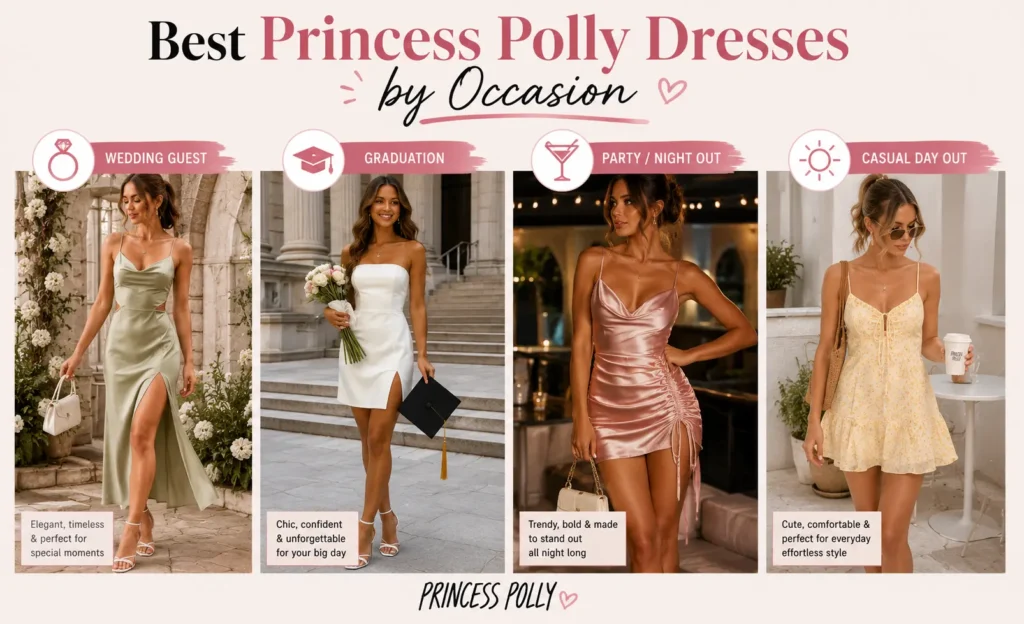
One of the brand’s biggest strengths is the sheer range of dress styles across occasions. Here’s how to shop the catalog with intention, rather than getting overwhelmed by the sheer number of options.
Wedding Guest Dresses
Look for midi or maxi lengths in solid colors or subtle prints — florals, structured wrap styles, and satin slip dresses in muted tones photograph beautifully without competing with the couple. Avoid anything white, ivory, or overly bridal-adjacent, and check the dress code before committing to a bodycon silhouette for a formal ceremony.
Graduation Dresses
This is one of the strongest categories in the catalog. Look for clean, structured silhouettes — fitted midi dresses, simple satin styles, or tailored mini dresses in solid colors work well under a gown and photograph well once it comes off. Bright colors and pastels tend to be popular picks for this occasion.
Formal & Cocktail Dresses
For black-tie-adjacent or upscale events, prioritize structured fabrics over anything too sheer or casual — think satin, crepe, or fitted knit. A fitted mini or a column-style maxi in a single color reads more “formal” than a printed or embellished piece.
Concert & Festival Outfits
This is where the brand’s trend-forward design really shines. Corset tops paired with mini skirts, slinky halter dresses, and going-out mini dresses in bold colors or metallics are consistently popular for concerts and festivals, where comfort and movement matter as much as the look.
Everyday & Casual Dresses
Look toward the cotton, linen-blend, and ribbed knit dresses rather than the sheer or satin going-out pieces. These fabrics are more breathable, wash better, and are built for regular rotation rather than a single event.
Homecoming & Semi-Formal Dresses
Similar to graduation, shorter structured dresses with a bit of shine or texture — sequin details, satin, or metallic finishes — tend to be the most popular picks in this category, since they read as dressed-up without tipping into full formal-wear territory.
How to Style a Princess Polly Dress
Getting the most out of a Princess Polly dress often comes down to how you style it, since the pieces are designed to be dressed up or down depending on what you pair them with.
- Mini dresses: Pair with knee-high boots and a moto jacket for a casual look, or heels and minimal jewelry for a night-out look.
- Maxi dresses: Add a denim jacket and sneakers for daytime; switch to strappy heels and a clutch for evening.
- Satin slip dresses: Layer a fitted blazer or cardigan over the top for a more polished, less “underwear-as-outerwear” effect.
- Corset-style dresses: Keep accessories minimal — the structured bodice is already a statement piece.
- Babydoll dresses: Balance the volume with sleek, low-profile shoes rather than chunky footwear, which can make the silhouette feel bulkier than intended.
As a general rule, simple gold or silver jewelry works better than statement pieces with Princess Polly dresses, since many of the designs already include built-in detail — ruching, cutouts, or hardware — that doesn’t need extra competition.
Princess Polly vs. Other Brands
Because Princess Polly sits in a crowded space, comparison is one of the most common pre-purchase questions. Here’s how it stacks up against the brands it’s most often compared to.
Princess Polly vs. Shein: Not a close comparison in quality terms. Shein is significantly cheaper but far less consistent on fabric quality, sizing accuracy, and construction. Princess Polly costs more but delivers noticeably better durability and fit reliability.
Princess Polly vs. Petal & Pup: These two brands are the closest in positioning — similar price point, similar target customer, similar going-out aesthetic. The choice often comes down to personal style preference rather than one brand being objectively better.
Princess Polly vs. Revolve: Revolve carries a mix of premium and contemporary labels at a noticeably higher price point. Princess Polly is the more affordable, faster-trend-cycle option, while Revolve leans toward investment pieces and established designer names.
Princess Polly vs. Nasty Gal: Similar target audience and trend focus, but Princess Polly generally holds a slight edge in consistency of fit and fabric quality based on customer feedback trends.
Also Read: 30+ Cowgirl Outfit Ideas for Every Occasion (Concerts, Costumes, Everyday Wear)
Shipping & Returns: What to Expect
Before ordering — especially your first time — it helps to know the logistics side of the brand.
- Domestic shipping is generally free over a set order minimum, with paid expedited options available for faster delivery.
- International shipping is available to most major markets, though delivery windows run longer and duties or import taxes may apply depending on your country.
- Returns are accepted within 30 days of delivery for most items, provided tags are attached and the item is unworn and unwashed.
- Final sale items, swimwear, and earrings are typically non-returnable for hygiene and discount-pricing reasons — always check the product page before buying anything in these categories.
- International returns are more limited than domestic ones, and in many cases the customer is responsible for return shipping costs, so factor that into your decision if you’re ordering from outside the brand’s primary markets.
If a return does become necessary, most customers report a straightforward process — the brand generates a return label through its website, and refunds are typically processed once the returned item is received.
Sustainability: How Responsible Is Princess Polly, Really?
Princess Polly markets itself as a more accountable alternative to ultra-fast-fashion brands, and there’s some substance behind that positioning, though it’s worth understanding the nuance rather than taking the marketing at face value.
- Production oversight: The brand manufactures across multiple countries rather than relying on a single ultra-low-cost facility, which generally allows for more consistent quality control.
- Slower release cycle than true fast fashion: While new styles do drop frequently, it’s not the daily thousands-of-new-items model used by the very cheapest fast-fashion retailers.
- Accountability commitments: The brand has pursued formal recognition around social and environmental accountability standards, which requires meeting a baseline of documented practices around labor and production impact.
- Still a trend-cycle business: None of this makes Princess Polly a sustainable or slow-fashion brand in the way that term is used for size-conscious, made-to-order, or secondhand-first retailers. It’s more accurate to call it a “better-than-average” fast-fashion brand rather than a genuinely sustainable one.
If sustainability is your top priority, treat Princess Polly purchases the way you’d treat any trend piece: buy less, buy pieces you’ll actually rewear, and avoid treating the low-relative-price point as permission to over-order.
Loyalty Perks, Discounts & the App
A meaningful part of getting good value from Princess Polly comes down to how you shop, not just what you buy. A few perks are worth knowing about before you check out:
- Student discount: A 25% discount is typically available for verified students, which meaningfully changes the cost-per-wear math on any purchase.
- Free shipping thresholds: Orders over a set minimum typically ship free, which rewards planning a slightly larger order rather than buying single items repeatedly.
- App-exclusive deals: The brand’s mobile app frequently surfaces promotions and early access to new drops that aren’t always visible on the desktop site.
- Frequent sales: Because new styles are added so often, older styles cycle into markdowns regularly — if you’re not in a rush for a specific event, waiting a few weeks after a style launches can meaningfully lower the price.
- SMS and email sign-up discounts: First-time sign-up codes are common and stack with sale pricing in many cases.
Together, these perks mean that very few repeat shoppers are paying full sticker price consistently — which is worth factoring into any “is this worth the money” calculation.
Common Mistakes to Avoid When Shopping Princess Polly
- Ignoring the individual size chart. Cuts vary enough between styles that relying on “my usual size” without checking the listing leads to avoidable returns.
- Buying sheer or satin pieces without reading the fabric care instructions. These fabrics need gentler washing than cotton or knit pieces.
- Assuming every dress works for every occasion. A going-out mini dress and a wedding guest dress are not interchangeable — match the silhouette and fabric to the dress code.
- Skipping the reviews and photos section. Customer-submitted photos are one of the most reliable fit references available, especially for bodycon and corset styles.
- Not checking the return window before final sale purchases. Discounted or final sale items typically cannot be returned, so those should be treated as confirmed purchases.
- Ordering internationally without checking duties and return terms. These vary significantly outside the brand’s core markets and can affect the real cost of an order.
Final Verdict: Is Princess Polly Worth It?
For the right shopper, yes. Princess Polly is worth it if you want trend-accurate dresses at a mid-range price, you’re shopping for a specific occasion rather than long-term wardrobe staples, and you’re comfortable following fabric-specific care instructions to protect delicate pieces. The quality is a genuine step above ultra-fast-fashion competitors, sizing is reasonably predictable once you check individual size charts, and the range of dress styles covers nearly every occasion from casual to formal.
Where it’s less worth it: if you’re looking for décor-level investment pieces meant to last a decade, or if you’re unwilling to hand-wash the more delicate sheer and satin fabrics that make up a large share of the dress catalog. In that case, the money may be better spent on a smaller number of higher-durability pieces from a premium label.
For most occasion-dress shoppers, though, Princess Polly hits a genuinely useful middle ground — trend-forward enough to feel current, well-made enough to survive more than one wear, and priced accessibly enough to update your wardrobe more than once a season.
Frequently Asked Questions
Is Princess Polly a good brand?
Yes, for trend-driven occasion wear and going-out dresses, Princess Polly is considered a solid mid-range brand with quality that generally exceeds ultra-fast-fashion competitors.
Is Princess Polly true to size?
Generally yes, though fit can vary by fabric and cut. Always check the size chart on the individual product page rather than relying on a general size assumption.
Does Princess Polly run small or big?
Most styles run true to size, though stretchy bodycon fabrics offer more forgiveness while structured or 100% cotton pieces fit more precisely to the listed measurements.
Is Princess Polly the same as Shein?
No. Princess Polly is an Australian brand with higher average quality and pricing than Shein, and it primarily designs its own collections rather than mass-producing from third-party manufacturers at ultra-low prices.
Does Princess Polly have plus size dresses?
Yes, many styles are available in an extended size range — filter by plus size or curve on the site to see the full selection for a given style.
What is Princess Polly’s return policy?
Most items can be returned within 30 days of delivery if unworn, unwashed, and with tags attached. Final sale items, earrings, and swimwear are typically excluded from returns.
Is Princess Polly expensive?
It’s mid-range — more expensive than ultra-fast-fashion sites but more affordable than premium contemporary or designer labels, with dresses generally falling between $50 and $130.
Does Princess Polly ship internationally?
Yes, though shipping times are longer and customers are typically responsible for any import duties or taxes, along with return shipping costs in most international cases.
Is Princess Polly Australian or American?
Princess Polly was founded in Australia and remains headquartered there, but it also has a major office and physical retail presence in the United States, giving it dual-market positioning.
What should I wear a Princess Polly dress with?
It depends on the style, but simple jewelry, neutral or complementary footwear, and a light layering piece (denim jacket, blazer, or cardigan) generally let the dress itself stay the focal point of the outfit.
Does Princess Polly restock sold-out styles?
Popular styles are sometimes restocked, but the brand’s fast release cycle means many pieces are limited-run, so it’s worth purchasing promptly if you find something you love in your size.
Is Princess Polly considered fast fashion?
It’s often categorized as fast fashion because of its frequent new releases and trend-driven design cycle, but its manufacturing standards, pricing, and durability generally place it above ultra-fast-fashion competitors like Shein.
Also Read: Outfit Ideas for Every Occasion: The Complete Guide to Building Looks You’ll Actually Wear