
The salon version was glossy, springy and perfectly shaped. Then you washed it. Now the crown is flat, the ends are wide, and one face-framing curl has promoted itself to surprise bang.
Before calling it a bad curly haircut, find out whether the silhouette is wrong or the curl clumps are falling apart during styling. If the overall outline stays bottom-heavy, shelf-like or uneven through different wash days, the cut probably needs attention. If it looks balanced while wet but loses definition after product, towel drying or diffusing, test the routine first.
Use one normal wash day as your evidence
Do not test a new haircut with three new products and a technique you learned twelve minutes ago. Use the cleanser, conditioner, part and styling method you already know. Skip the emergency kitchen-scissor meeting.
Take four quick photos in similar lighting:
- Hair soaking wet with no styler
- Hair immediately after your usual products
- Hair completely dry before you fluff or separate it
- The finished result from the front, both sides and back
The earliest photo where the result goes wrong is more useful than the final frizz count.
| What changes first? | Start by checking |
| The outline is already heavy at the bottom while wet | Layer placement and weight distribution |
| The shape looks balanced, but wet groups split into thin pieces | Product application, brushing and drying |
| The crown stays flat even with little or no product | Whether the cut left too much weight above or below |
| The crown only flattens after cream or oil | Product amount and placement |
| Face-framing curls spring much shorter than agreed | Whether dry shrinkage was allowed for |
| The salon finish worked, but only after a blowout | Whether the cut suits how you actually wear your hair |
Signs the cut, not your curl routine, needs attention
A curly haircut can be technically even and still be wrong for your natural pattern, density or daily routine. These clues point back to the shape:
- The same bottom-heavy outline returns after every wash. More gel may define it beautifully, but it will not move the width higher.
- You can see a hard shelf between layers. One band sits separately instead of blending into the length below.
- The shortest pieces shrink far above the planned length. This matters most around the face, where one extra curl turn can change the entire frame.
- One section consistently hangs outside the silhouette. Confirm it with your usual part and fully dry hair before deciding it is uneven.
Layers are not automatically good or bad for curls. They simply move weight. Shorter crown layers may create lift in dense hair, while too many short layers can make lower-density ends look thin. Long layers may preserve fullness, but they can leave a heavy perimeter if their placement does not suit the hair.
If you requested a dramatic layered style, compare the intended structure with this butterfly haircut guide. Focus on where the shortest dry layer was supposed to land, not just whether the reference photo has a similar curl pattern.
Signs the cut may be fine, but the salon styling did the heavy lifting
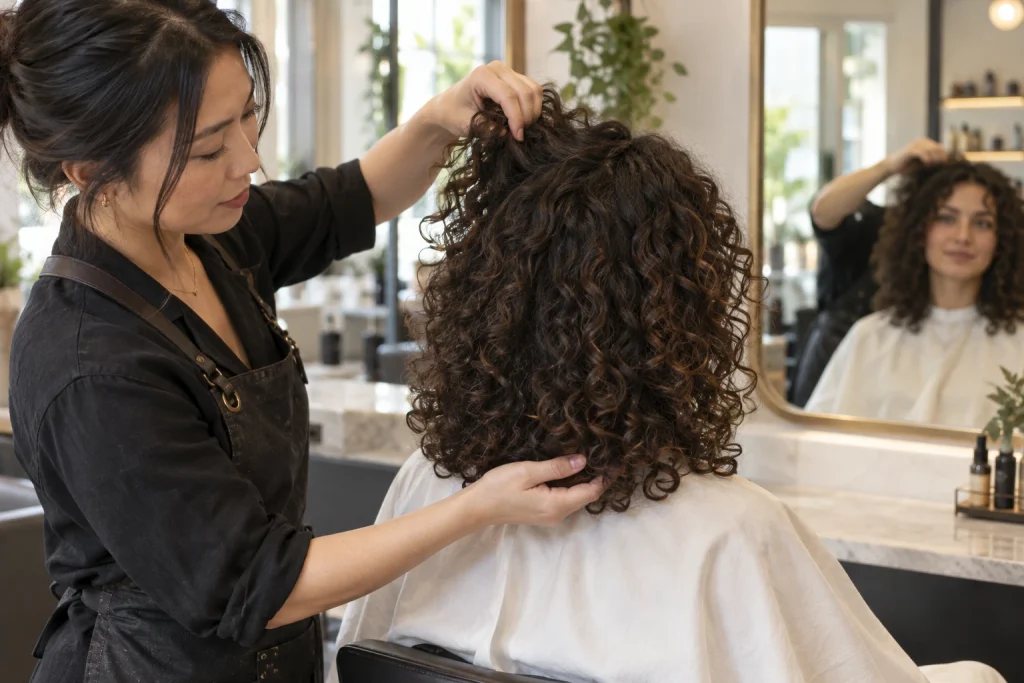
Sometimes the salon result was not showing you an everyday haircut. It was showing you that haircut after precise sectioning, generous water, controlled airflow and more time than most people have before work.
The routine is the better first suspect when the overall silhouette looks balanced but individual curls become wispy, puffy or limp as they dry.
Watch for the exact moment that happens. HairIsCurly’s guide to curls that look good wet, then turn stringy separates product application, brush styling, towel handling, diffusing and cast removal into individual tests.
Product placement can also disguise a good cut. Rich cream at the roots may collapse the crown. Too little hold may let carefully formed clumps expand before they dry. Repeated brushing can split larger groups into narrow ribbons.
Change one variable on the next wash. Use less cream at the crown, skip the styling brush on one section or lower the diffuser speed. If you change everything together and the hair improves, you still will not know what helped. That is how a bathroom shelf becomes a research lab with no results.
Do not ask one product to fix the wrong job
Curl cream mainly adds softness and slip. Gel mainly helps the formed shape last. Neither can blend a disconnected layer or replace missing weight at the ends.
If the haircut’s outline is good but the finish turns fluffy, choose a product by the result you need. This curl cream versus gel comparison explains when hair needs softness, hold or a light combination of both.
Keep the test small. More product is not a structural repair.
How to ask for a correction without losing more length
Contact the salon before anyone cuts again. Many salons allow a short correction window, and the original stylist needs to see how the shape behaved after your normal wash.
Send clear, dry photos and describe what you see in plain language:
- “The crown collapses, while the width begins at my jaw.”
- “The face-framing section shrinks above my cheek when I wear it naturally.”
- “This layer forms a visible shelf on both wash days.”
- “I need the shape to work air-dried, without a round-brush finish.”
Ask what can be blended while preserving the perimeter. Do not lead with “add more layers.” That may be the answer, but it may also remove the fullness you are trying to save.
If the only proposed fix is much shorter hair and you are not ready, pause. Looking through genuinely short options such as these bixie haircut ideas can help you separate a style you actually want from a panic cut you merely want over with.
Make the next consultation about your real routine
Bring photos of your own hair on a normal good day and a normal difficult day. A reference model may have a similar curl pattern but very different density, shrinkage and styling habits.
Ask three questions before the cut begins:
- Where will the shortest layer sit when my hair is fully dry?
- What will this shape look like with my usual air-dry or diffuser routine?
- Which part of the salon finish will I need to recreate at home?
Wet cutting and dry cutting are methods, not guarantees. What matters is that the stylist accounts for shrinkage, uneven curl patterns and how you normally wear your hair, then checks the final dry shape.
A good curly haircut should not require a small engineering degree to look intentional. Give your normal routine one controlled test, document the first point of failure and take that evidence back to the chair. You will know whether to adjust the styling, request a careful correction or simply stop letting that one dramatic curl make management decisions.
Also Read: 10 Old Money Hairstyles for Women and Why They’re Popular