If you’ve spent any time on TikTok or Pinterest over the past couple of years, you’ve almost certainly seen the butterfly haircut — that soft, feathery, face-framing layered look that seems to work on absolutely everyone. It’s one of those rare trends that manages to feel both nostalgic and completely modern at the same time, blending the volume of a ’70s shag with a more polished, wearable finish.
But with so much conflicting advice floating around online, it can be hard to know exactly what to ask for, whether it’ll actually suit your hair, and how to style it once you leave the salon. This guide covers everything — what the cut actually is, how it works across every hair type and length, how to talk to your stylist, and exactly how to style and maintain it at home.
What Is a Butterfly Haircut?
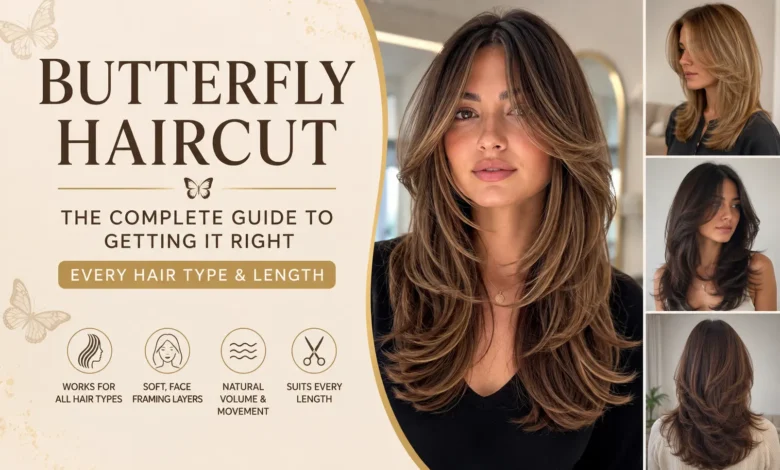
A butterfly haircut is a layered hairstyle built around two distinct layer lengths: shorter, face-framing layers up top (usually falling somewhere between the cheekbones and the jawline) and longer layers underneath that preserve your overall length. When you look at the cut from the front, the shorter layers “fan out” around your face, resembling the shape of butterfly wings — which is exactly where the name comes from.
Unlike a traditional layered haircut, where layers are blended evenly throughout the hair for a smooth, gradual transition, a butterfly cut relies on more contrast between the short and long sections. That contrast is what creates the airy, voluminous, “winged” look the style is known for. Think of it as two haircuts working together: the shorter layers give you movement, lift, and face-framing definition, while the longer layers underneath keep your length intact.
The technique itself isn’t entirely new — it draws heavily from the heavily-layered, volume-focused haircuts of the 1970s. But it’s been reimagined for a modern audience, with softer, more feathered ends and a finish that reads as polished rather than shaggy.
Butterfly Cut vs. Wolf Cut vs. Shag: What’s the Difference?
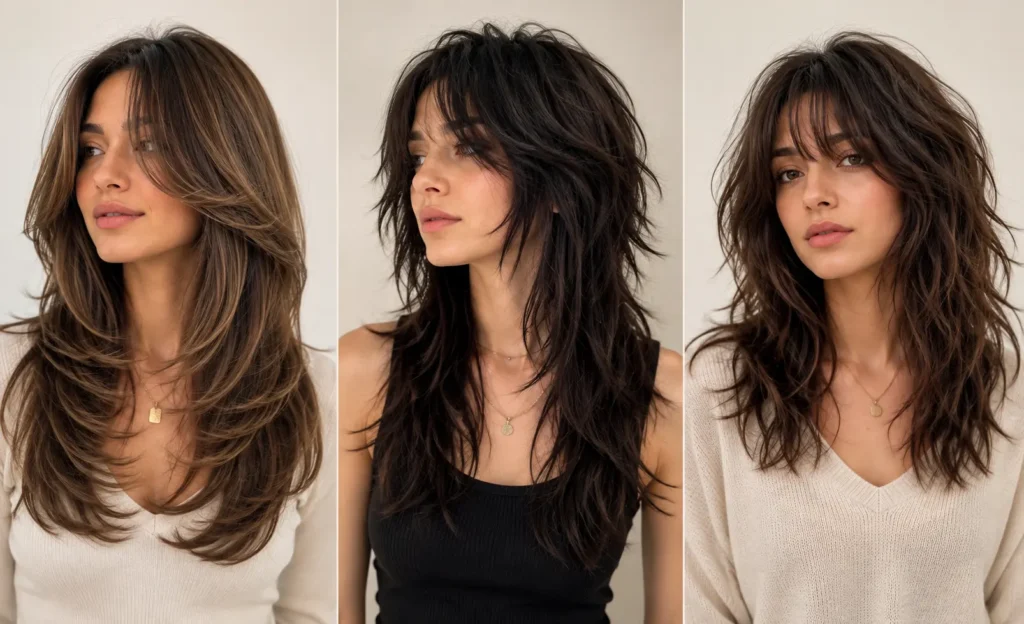
Because so many layered haircuts have gone viral in recent years, it’s easy to mix them up. Here’s a quick breakdown of how the butterfly cut compares to its closest relatives.
| Haircut | Layer Style | Overall Vibe | Best For |
|---|---|---|---|
| Butterfly cut | Two distinct lengths — short face-framing layers, long underlayers | Soft, polished, airy | Those who want volume without a messy or edgy finish |
| Wolf cut | Choppy, heavily textured layers with a shorter crown | Edgy, rock-and-roll | Those wanting a bold, high-contrast statement look |
| Shag | Evenly distributed choppy layers throughout | Undone, textured, retro | Those wanting all-over texture rather than face-framing focus |
| Octopus cut | Rounded, voluminous crown with long, tentacle-like ends | Dramatic, sculptural | Those wanting a bigger, more statement-making silhouette |
The easiest way to remember the distinction: a butterfly cut is the “soft and polished” version of heavy layering, while a wolf cut and shag lean into a messier, choppier finish. An octopus cut, meanwhile, takes the concept even further with more dramatic contrast between the crown and the ends. If you’re bringing a reference photo to your stylist, it’s worth double-checking which style you’re actually looking at, since these terms are often used interchangeably online even though the finished results are quite different.
Also Read: Shaggy Pixie Cut: Best Styles, Face Shape Guide & Styling Tips
Is a Butterfly Haircut Good for Your Hair Type?
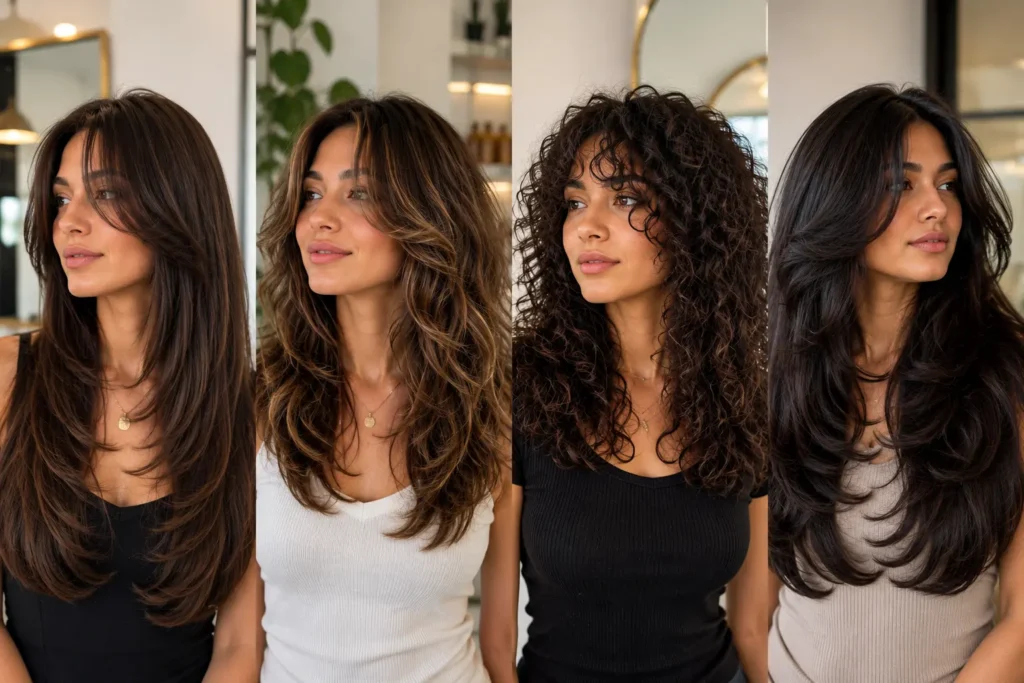
One of the biggest reasons this cut has stayed popular is its adaptability — it genuinely works across a wide range of hair types, though the exact approach your stylist takes should shift depending on your texture.
Butterfly Haircut for Straight Hair
Straight hair can sometimes look flat or heavy, especially with longer lengths, and this is exactly where a butterfly cut earns its keep. The layered structure adds noticeable movement and dimension that a single-length straight cut simply can’t achieve. Because straight hair shows off the shape of layers very clearly, this is also one of the more visually dramatic transformations, especially when styled with a round brush for extra volume at the crown.
Butterfly Haircut for Wavy Hair
Wavy hair tends to be a favorite for this cut, since the layering enhances your natural wave pattern rather than fighting against it. Removing bulk from thicker waves also helps them look softer and more defined instead of bulky or triangular in shape. Many stylists consider wavy hair one of the most naturally flattering textures for this particular haircut, since the movement of the wave pairs so well with the feathered layer technique.
Butterfly Haircut for Curly Hair
Curly hair benefits significantly from the weight removal this cut provides, allowing curls to spring up and show their natural shape rather than being weighed down. That said, curl pattern and shrinkage need to be factored into the cutting process — hair that curls up significantly when it dries can end up shorter than expected if it’s cut while stretched or wet. Working with a stylist who understands curl-cutting techniques (and who may recommend a dry cut specifically to account for shrinkage) is especially important for this hair type.
Butterfly Haircut for Thick Hair
Thick hair is often considered one of the best candidates for this style, since the internal layering removes bulk that can otherwise make hair feel heavy or look shapeless. The result is a lighter, more manageable style that still retains plenty of fullness. Thick, textured hair also tends to show off the “winged” layering effect particularly well, since there’s enough density for the shorter and longer sections to create real visual contrast.
Butterfly Haircut for Fine or Thin Hair
Fine hair requires a slightly different approach. Too much heavy layering can actually make thin strands look sparse rather than voluminous, so a softer, more strategic version of the cut tends to work best. Rather than dramatic all-over layering, many stylists recommend pairing face-framing curtain layers with a blunter, less-layered cut through the rest of the hair — this creates the appearance of fuller ends while still adding movement around the face. If you have fine hair, it’s worth explicitly mentioning this to your stylist so they can adjust the technique accordingly, since a heavy-handed butterfly cut can backfire on finer textures.
Butterfly Haircut by Length
Short Butterfly Haircut
While the classic butterfly effect is most pronounced on longer hair, shorter versions are absolutely possible — they just rely more heavily on face-framing layers (and sometimes fringe) to recreate that same movement and dimension. A short butterfly haircut tends to feel lighter and more playful, and it’s a great low-maintenance option for those who want the volume and texture of the trend without committing to longer lengths.
Medium-Length / Shoulder-Length Butterfly Haircut
This is often considered the sweet spot for the cut, since shoulder-length hair provides enough length for both the shorter and longer layer sections to read clearly, without requiring the extended growing-out period that comes with longer hair. It’s also one of the more versatile lengths, offering enough hair to experiment with half-up styles or clips while still being quick to wash and dry.
Butterfly Haircut for Long Hair
Long hair is where the butterfly cut truly shines, since the extra length allows the layered “wing” shape to blend seamlessly while leaving plenty of room to adjust the layering to your preference. This is also generally considered the most forgiving length for the style, since there’s more hair to work with if you want to soften or intensify the contrast between your shorter and longer layers over time.
How to Ask Your Stylist for a Butterfly Haircut
Communication is everything when it comes to getting the exact result you want. A few tips to make your consultation as smooth as possible:
- Bring reference photos. Because haircut terminology varies so much between stylists, visual examples are the clearest way to make sure you’re both picturing the same finished look.
- Mention your hair type and texture upfront. Straight, wavy, curly, thick, and fine hair all require slightly different layering approaches, so this context helps your stylist tailor the cut to you specifically.
- Use specific terminology. Phrases like “face-framing layers,” “internal layering,” and “soft curtain fringe” tend to communicate the look more precisely than simply saying “butterfly cut” alone.
- Clarify your length priorities. Let your stylist know how much length you’re comfortable losing, especially since face-framing layers are usually cut shorter than the rest of your hair.
- Discuss bangs or fringe. Decide in advance whether you want curtain bangs, side-swept fringe, or no fringe at all, since this significantly changes the overall shape of the cut.
- Talk about your styling routine. If you rarely use heat tools, mention this so your stylist can adjust the layering to look good with more minimal, low-effort styling.
One detail worth flagging if you have fine hair: avoid asking for heavily razored ends, which can make already-thin strands look wispy rather than full. A soft point-cut finish tends to be more flattering for finer textures.
Choosing a Butterfly Cut Based on Your Face Shape
Beyond hair type and length, your face shape can help guide exactly where your face-framing layers should start and how much fringe (if any) makes sense for you.
| Face Shape | Recommended Approach |
|---|---|
| Oval | Highly flexible — most fringe styles and layer placements work well |
| Round | Longer, side-swept layers or fringe to help elongate the face |
| Square | Soft, wispy layers around the jaw to soften angular features |
| Heart-shaped | Layers starting around the chin, paired with curtain fringe to balance a wider forehead |
| Long/Oblong | Blunter fringe or layers starting higher, to visually shorten the face |
| Diamond | Layers around the cheekbones to soften angles at the temples |
These are general starting points rather than strict rules — your stylist will look at your specific bone structure and adjust the layering placement accordingly. If you’re unsure how your face shape might affect the cut, it’s worth bringing this up directly during your consultation.
How to Style a Butterfly Haircut
The beauty of this cut is that it can be styled multiple ways depending on the finish you’re after — sleek and voluminous, soft and wavy, or completely heat-free.
Styling with a Blow Dryer and Round Brush
This is the classic method for achieving maximum volume and definition in the layers.
- Start with damp, towel-dried hair and apply a heat protectant throughout.
- Section your hair, starting at the nape and working upward.
- Using a large round brush, blow-dry each section, focusing on lifting the roots for volume.
- Pay special attention to your face-framing layers, directing them outward and away from your face to enhance the “winged” shape.
- Once fully dry, you can set the top layers with large velcro rollers for extra lift, letting them cool completely before removing.
- Finish with a light, flexible-hold hairspray to lock in shape without stiffness.
Styling with a Curling Iron or Wand
If you prefer not to wash your hair before styling, a curling iron is a great alternative.
- Apply a heat protectant to dry or slightly damp hair.
- Use a medium-barrel curling iron on the longer underlayers, wrapping each section away from the face.
- Start the curl a few inches down from the root to preserve volume at the crown.
- For the shorter face-framing layers, hold the iron vertically and give the ends a gentle outward flick.
- Let everything cool completely before running your fingers through to break up the curls into a soft, natural finish.
- Add a small amount of shine serum through the mid-lengths and ends for a polished look.
Air-Drying and Heat-Free Styling
For those with naturally wavy or curly hair, or anyone who prefers to skip heat tools, this cut is also very air-dry friendly.
- Apply a texturizing mousse or curl-defining cream to damp hair.
- Scrunch gently from the ends upward to encourage your natural texture.
- Let hair air-dry fully, or use a diffuser attachment on low heat for extra lift at the roots without disrupting your natural pattern.
- Once dry, separate any pieces that have clumped together with your fingers for a softer, more separated finish.
Adjusting Your Styling Routine by Hair Density
- Fine hair: Focus on root-lifting sprays or mousses applied before blow-drying, and avoid heavy creams or oils that can weigh the layers down.
- Thick hair: A smoothing serum on the mid-lengths and ends helps control frizz and bulk while allowing the layering to show through clearly.
- Curly hair: Diffusing on low heat, or air-drying with a curl-defining cream, tends to give the best definition without disrupting your natural curl pattern.
Butterfly Haircut with Bangs and Fringe
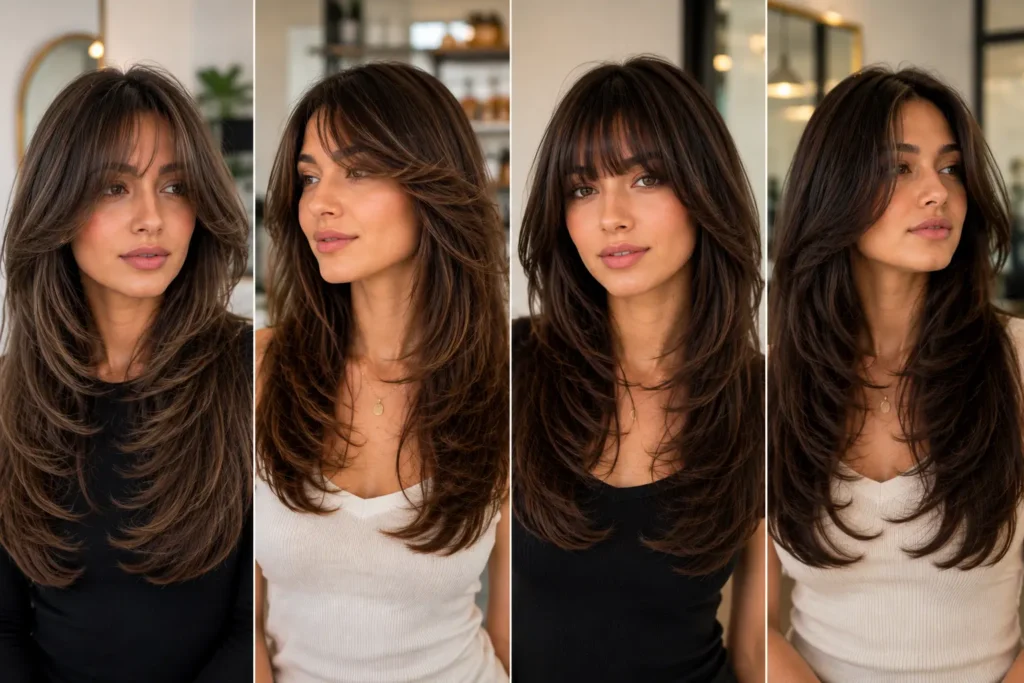
Adding fringe to a butterfly cut is one of the easiest ways to customize the overall shape and framing.
- Curtain bangs: Parted in the middle and swept to either side, these blend naturally into the existing face-framing layers and suit most face shapes.
- Side-swept fringe: A softer, more subtle option that’s easy to grow out or pin back if you want to change your look later.
- Blunt fringe: Works particularly well for long face shapes, helping to visually shorten the overall proportions.
- No fringe: Entirely optional — the face-framing layers on their own already create a similar effect to soft curtain bangs, so skipping fringe altogether is a completely valid choice, especially if you’re not ready to commit to regular fringe trims.
Maintaining Your Butterfly Haircut
Regular maintenance is what keeps this cut looking intentional rather than overgrown, since the layered structure depends on consistent upkeep.
- Get trims every 6-8 weeks. This is the general guideline for most butterfly cuts, helping to preserve the shape of the layers and prevent uneven growth.
- Extend slightly for curly or coily hair. Natural shrinkage can help disguise minor growth, so curl types may be able to stretch to 8-10 weeks between appointments.
- Trim fringe more frequently if you have one, since bangs tend to grow out faster than the rest of the layered shape.
- Detangle from the ends upward using a wide-tooth comb or wet brush, which helps preserve the definition of your layers rather than disrupting them.
- Apply products in sections rather than all at once, ensuring even distribution through both the shorter and longer layers.
- Refresh face-framing pieces between washes with a bit of dry shampoo or texturizing spray to keep them looking styled rather than flat.
Common Mistakes to Avoid
- Skipping the consultation details. Not mentioning your hair type, density, or styling habits can lead to a cut that doesn’t quite work with your daily routine.
- Choosing heavy layering with fine hair. This is one of the most common regrets — too much layering on thin strands can make hair look sparser rather than fuller.
- Neglecting regular trims. Because the shape relies on the contrast between short and long layers, skipping trims causes the style to lose definition faster than a more uniform haircut.
- Using heavy styling products. Thick creams and oils can weigh down the face-framing layers, flattening the volume that defines the cut.
- Not accounting for curl shrinkage. Curly-haired clients who don’t discuss shrinkage with their stylist sometimes end up with shorter face-framing layers than expected.
- Forgetting to bring reference photos. Since terminology varies between stylists, skipping this step increases the risk of miscommunication about the exact look you want.
Why the Butterfly Haircut Became So Popular
The butterfly cut’s rise to popularity is a good example of how a single well-executed tutorial can turn a haircut into a full-blown trend. The style gained massive traction after being shared widely on social media, where hairstylists demonstrated the layering technique step by step, showing just how dramatically it could transform hair with minimal length loss. Millions of viewers were drawn to the idea of getting the volume and movement of a shorter cut without actually committing to short hair.
Part of the ongoing appeal also comes down to how photogenic the style is. The contrast between the shorter and longer layers photographs beautifully both in stillness and in motion, which has made it a favorite among content creators and everyday users alike sharing before-and-after transformations.
That said, the trend also led to a wave of at-home attempts, with mixed results. Because the technique relies on precise layer placement and blending, it’s one of those cuts that can look dramatically different depending on execution — which is a big part of why professional guidance is so strongly recommended, even for those who feel confident with at-home trims.
Also Read: Hair Care Routine 101: How to Build Healthy Hair Habits for Your Hair Type
Should You Try a DIY Butterfly Haircut at Home?
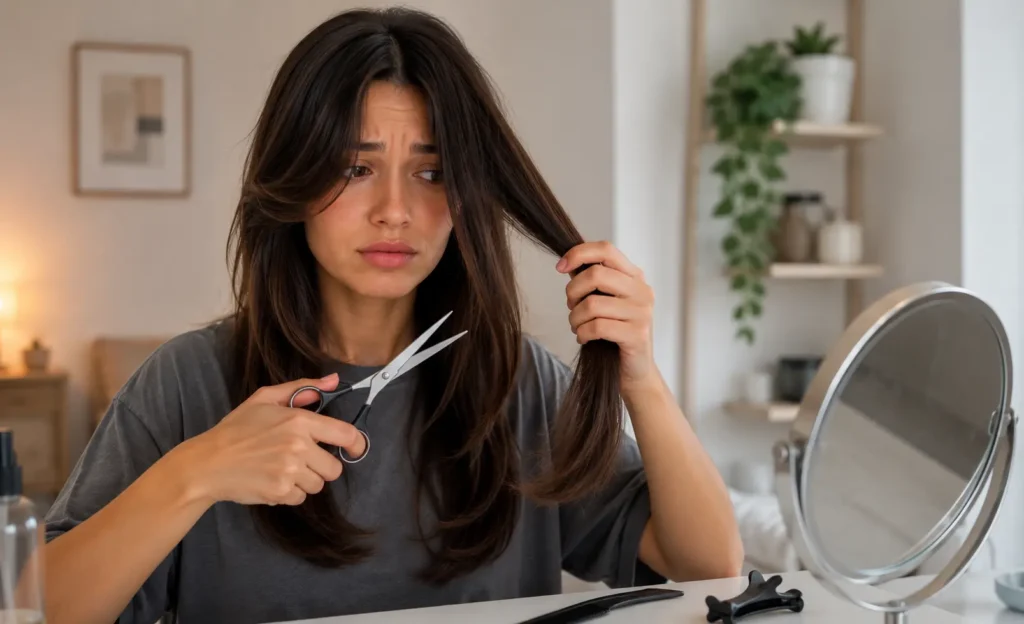
While it might be tempting to recreate the look yourself, especially after watching a confident-looking tutorial, this is genuinely one of the trickier layered cuts to execute well without professional training.
A few reasons to think twice before reaching for the scissors yourself:
- Layer placement is highly technical. The contrast between the short and long sections needs to be precise, or the finished result can look uneven rather than intentionally layered.
- Mistakes are hard to reverse. Unlike a simple length trim, uneven layering often requires a stylist to correct, sometimes resulting in more length loss than if you’d gone to a professional from the start.
- Face-framing sections require careful measurement. Cutting these too short, too long, or unevenly can throw off the entire shape of the cut.
- Curly and coily hair adds extra complexity, since shrinkage needs to be accounted for during cutting, which is difficult to judge accurately without experience.
If you’re set on trying this at home despite the risks, start conservatively — cut less than you think you need, working gradually rather than attempting the full transformation in one sitting. But for most people, this is a cut best left to a professional, at least for the initial transformation.
Products That Help a Butterfly Haircut Look Its Best
While the exact products you use will depend on your hair type, a few categories are worth having on hand regardless of texture:
- Heat protectant: Essential any time you’re using a blow dryer, curling iron, or flat iron on the layers, since repeated heat styling without protection can lead to dryness and split ends over time.
- Volumizing mousse or root spray: Especially useful for fine or straight hair types looking to maximize lift at the crown.
- Texturizing or curl-defining cream: Helpful for wavy and curly hair types wanting to enhance natural texture without adding heaviness.
- Lightweight shine serum: A small amount smoothed through the mid-lengths and ends adds polish without weighing down the layers.
- Flexible-hold hairspray: Ideal for setting the style without creating a stiff, crunchy finish that can make layered cuts look less natural.
- Dry shampoo: Useful for refreshing face-framing pieces between washes, keeping them looking styled rather than falling flat.
Choosing lightweight formulas over heavier, richer products tends to serve this cut best overall, since the goal is movement and lift rather than a sleek, weighed-down finish.
How Much Does a Butterfly Haircut Cost?
Pricing for this cut varies significantly depending on your stylist’s experience level, your location, and your existing hair length and thickness (since more hair generally means more time at the chair). As a general guide:
- Budget salons or students in training programs typically offer the most affordable pricing, though it’s worth checking reviews carefully before booking.
- Mid-range salons tend to offer a solid balance of experience and price, and are often a safe choice for a layered cut like this one.
- High-end or celebrity stylist salons will charge significantly more, but may be worth it if you’re making a dramatic change or have a hair type that requires specialized layering expertise (like curly hair).
Since this cut relies heavily on precise layer placement, it’s often worth prioritizing a stylist with specific experience in layered, texturized cuts over simply choosing the cheapest option available, especially for your first attempt at the style.
Frequently Asked Questions
What is a butterfly haircut exactly?
A butterfly haircut is a layered hairstyle featuring two distinct layer lengths — shorter, face-framing layers on top and longer layers underneath — creating a soft, voluminous, “winged” effect while preserving overall length.
Is a butterfly haircut the same as a wolf cut?
No. While both are heavily layered styles, the butterfly cut has a softer, more polished, blended finish, while the wolf cut features choppier, more dramatic layering with a more textured, edgy overall look.
Does a butterfly haircut work for short hair?
Yes, though it typically relies more heavily on face-framing layers and sometimes fringe to recreate the same movement and volume seen on longer versions of the cut.
Is a butterfly haircut good for thin hair?
It can be, but the approach needs to be adjusted. A softer, more strategic layering technique paired with face-framing curtain layers tends to work better for thin hair than heavy, all-over layering, which can make fine strands look sparse.
How often do I need to trim a butterfly haircut?
Most butterfly cuts need trimming every 6-8 weeks to maintain their shape, though curly and coily hair types may be able to stretch slightly longer between appointments.
Can I style a butterfly haircut without heat tools?
Yes. This cut is genuinely air-dry friendly, especially for those with natural wave or curl, using a texturizing mousse or curl cream and either air-drying or diffusing on low heat.
What should I ask my stylist for to get this exact cut?
Bring reference photos and mention your hair type, density, and desired length retention. Using terms like “face-framing layers,” “internal layering,” and “soft curtain fringe” can help communicate the specific look more clearly than the trend name alone.
Final Thoughts
The butterfly haircut has earned its staying power because it genuinely adapts to a wide range of hair types, lengths, and face shapes — something that can’t be said for every viral hairstyle. Whether you have straight hair that needs a bit more movement, thick hair that could use some weight removed, or curly hair ready to spring into its natural shape, there’s a version of this cut designed to work with what you’ve already got rather than against it.
The key to getting it right comes down to clear communication with your stylist, a styling routine that matches your hair’s natural texture, and consistent trims to keep the layered shape looking intentional. Get those three things right, and the butterfly cut can be one of the most flattering, versatile haircuts you try.
Also Read: Wedding Hairstyles: Best Looks for Long, Short & Curly Hair