Every woman who has ever slipped off a pair of heels halfway through a wedding reception, or packed three pairs of shoes for a two-day trip just to cover every possible outfit, understands the exact problem convertible heels were built to solve. One shoe, multiple heel heights, zero compromise on style — it sounds almost too good to be true, and yet the technology behind it has quietly been refined for decades before finally becoming genuinely wearable.
This guide covers what convertible heels actually are, how the technology behind them works, and 6 genius convertible heels that’ll steal your heart, along with the surprisingly long history behind interchangeable heel design and practical guidance on choosing, sizing, and caring for a pair of your own.
What Are Convertible Heels?
Convertible heels are shoes engineered so the heel itself can be changed, removed, or adjusted, allowing a single pair of shoes to function at multiple heel heights or in multiple styles. Depending on the specific design, this might mean literally detaching one heel and clicking on another of a different height or color, or it might mean a heel that folds, retracts, or collapses down into a flat sole entirely.
The core appeal is straightforward: rather than owning a separate pair of shoes for every heel height and occasion, a single convertible pair can transform to suit a formal event, a long day of walking, or a spontaneous change in plans, all without changing shoes.
How Do Convertible Heels Work?
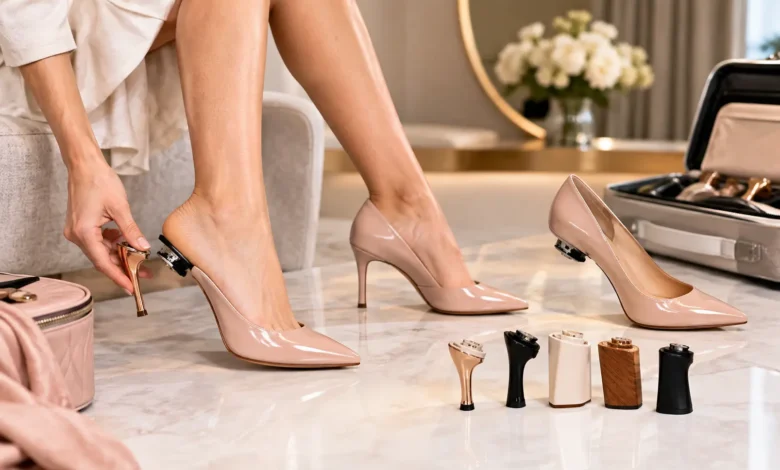
Convertible heels generally rely on one of two mechanisms. The first, and most common among modern interchangeable heel brands, uses a heel base built into the sole of the shoe, paired with separate heel attachments that click, twist, or lock into place. A spring-mounted button or a similar locking mechanism confirms the heel is securely seated before wearing, and detaching it typically involves releasing that same lock and pulling the heel free.
The second mechanism, associated with fold-down or collapsible convertible heels, uses a heel structure that can retract or fold flat against the sole of the shoe, transforming a stiletto into a flat without removing any separate piece at all. Both approaches achieve the same underlying goal — genuine heel-height flexibility from a single shoe — but differ in how many separate components the wearer needs to carry and manage.
What Is a Heel Kit?
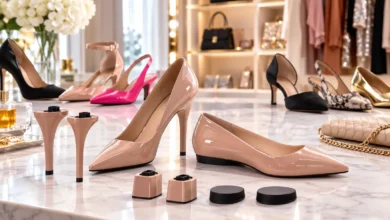
A heel kit refers to a set of interchangeable heel attachments sold separately from the shoe itself, typically offered in a range of heights, colors, and finishes. Owning a single pair of convertible shoe bodies alongside multiple heel kits allows a wearer to dramatically expand their shoe wardrobe’s versatility without buying entirely new pairs of shoes for each look, since only the heel component changes.
What Makes Heels Convertible?
At its core, a heel is “convertible” when its height or structure can be meaningfully changed after the shoe has already been manufactured and put on. This distinguishes convertible heels from ordinary shoes, where the heel is a fixed, permanent part of the shoe’s construction. The specific engineering — locking mechanisms, hinges, expandable shanks, or magnetic attachments — varies by brand and patent, but the defining feature remains the same: one shoe body, more than one usable heel configuration.
A Brief History of Convertible Heel Technology
The idea of a shoe with a changeable heel is considerably older than most people assume. Patent records show interchangeable and convertible heel designs stretching back well over half a century, including a 1954 patent filed by Frank T. Romano for a women’s shoe with an extensible, retractable heel that could convert from high to low and back again. Some of the earliest known interchangeable heel concepts trace back even further, to designs from renowned early-20th-century shoe designer André Perugia, whose replaceable-heel shoe used a curved metal tenon and matching mortise slide to let heels of different shapes and styles be swapped onto the same shoe.
Throughout the following decades, dozens of additional patents were filed refining various interchangeable heel mechanisms, addressing recurring engineering challenges like durability, cost of manufacturing, and the risk of the attachment points wearing out or breaking if a shoe was worn without a heel attached. Despite this long history of patented ideas, convertible heels remained largely a novelty or engineering curiosity rather than a mainstream commercial product for much of the 20th century.
Who Invented Convertible Heels?
There isn’t a single inventor credited with convertible heels — the concept has been reinvented and refined by numerous designers and engineers across more than a century of patent filings, from André Perugia’s early replaceable-heel designs to Frank Romano’s mid-century extensible heel patent and the many interchangeable heel mechanisms patented in the decades since. What changed more recently wasn’t the core idea but its successful commercialization: designer Tanya Heath is widely credited as the first to successfully bring interchangeable heel shoes to international retail markets, launching her namesake Paris-based brand in 2015 after years of refining a genuinely durable, fashionable interchangeable heel system.
Evolution of Convertible Shoe Designs
Early convertible and interchangeable heel patents tended to rely on relatively complex or bulky mechanical mechanisms, which made the shoes more expensive to produce and occasionally less reliable or comfortable than a standard fixed-heel shoe. As materials science and manufacturing techniques improved, later designs were able to simplify the locking mechanisms considerably, resulting in the sleeker, more secure click-in or fold-down systems used by today’s convertible heel brands.
This evolution has also expanded well beyond simple heel-height changes. Modern convertible shoe designs now offer heels in multiple colors, textures, and finishes, along with fold-to-flat mechanisms that eliminate the need to carry separate heel pieces at all, reflecting a broader shift toward genuinely practical, everyday-wearable versions of a once-niche engineering concept.
Why Convertible Heels Are Becoming Popular
Convertible heels have gained genuine mainstream traction in recent years as more shoppers prioritize versatility and value per purchase over owning a large volume of single-purpose shoes. The rise of both business and leisure travel, where luggage space is at a premium, has also fueled interest in a single shoe capable of covering multiple heel heights and occasions rather than requiring several separate pairs.
Growing awareness of foot health and comfort has played a role as well, with more shoppers actively seeking the ability to lower a heel height partway through a long event rather than suffering through hours of discomfort or switching to a completely different, less polished-looking shoe.
Benefits of Interchangeable Heels
Genuine versatility from one shoe. A single convertible shoe with multiple heel kits can replace what would otherwise require several separate pairs, offering considerably more outfit flexibility from less closet space.
Travel efficiency. Packing one convertible shoe with a couple of compact heel attachments takes up far less luggage space than packing multiple full pairs of shoes for different occasions and heel heights.
Adaptability throughout the day. Being able to lower a heel height, or convert entirely to a flat, partway through a long event means genuine relief for tired feet without needing to change into a completely different, less coordinated shoe.
Long-term value. While the upfront cost of a convertible shoe and heel kits can be higher than a single pair of regular heels, the ability to avoid purchasing multiple separate pairs can offer meaningful value over time for anyone who would otherwise buy several heel heights and styles.
Why Choose Convertible Heels Over Regular Heels?
The clearest advantage convertible heels offer over regular heels is flexibility without compromise. A regular pair of heels locks you into one specific height and style for the life of the shoe, while a convertible pair adapts as your day, event, or outfit changes. This matters considerably for anyone attending an event with multiple distinct phases — a wedding ceremony followed by hours of dancing, for instance — where a single fixed heel height rarely suits every part of the occasion equally well.
Why Convertible Heels Are Ideal for Events
Events like weddings, parties, and formal celebrations often stretch across many hours and multiple distinct activities, from standing during a ceremony to dancing well into the night. Convertible heels for weddings and convertible heels for parties address this directly, allowing a bride, guest, or partygoer to start the day at full height for photos and formal moments, then convert to a lower or flat option once comfort becomes the priority. This single-shoe flexibility also means fewer shoe changes to manage throughout an already busy day.
6 Genius Convertible Heels That’ll Steal Your Heart
1. Fold-to-Flat Convertible Pump
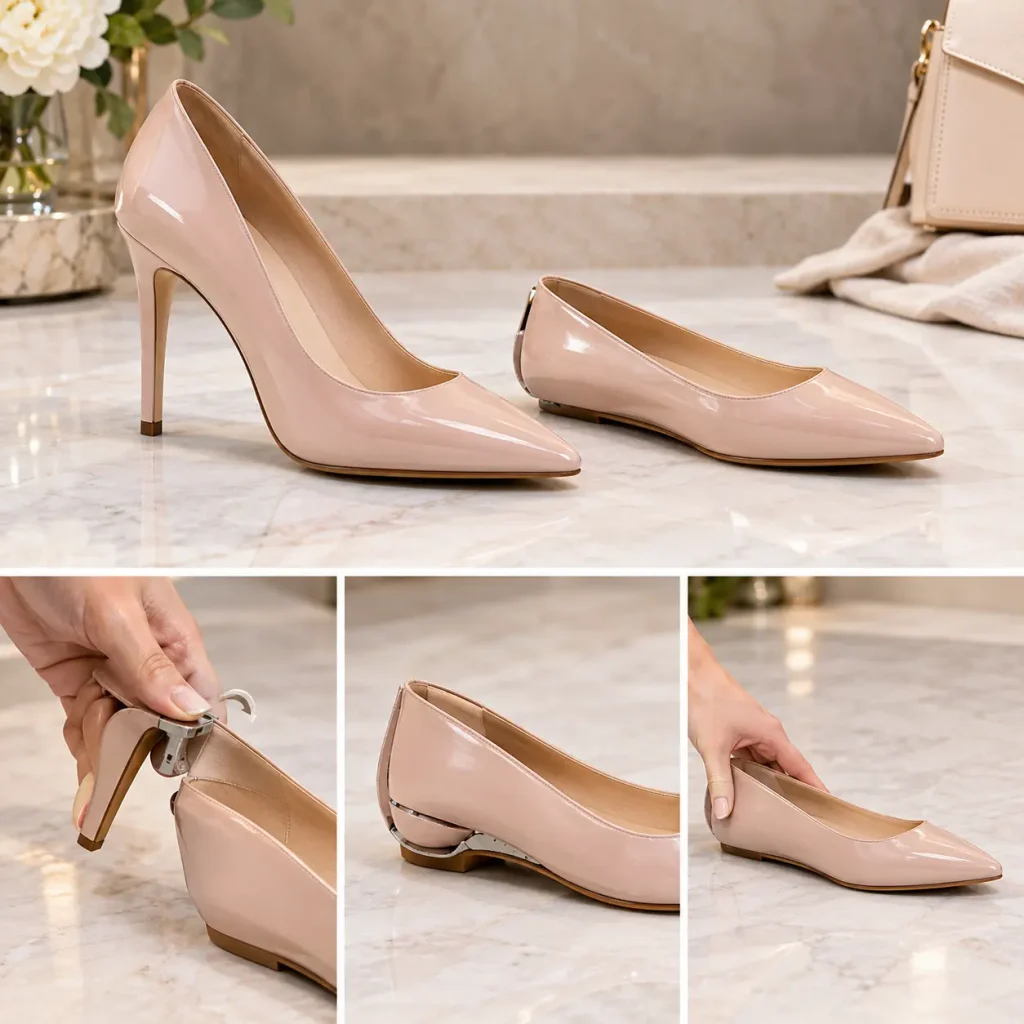
A fold-to-flat convertible pump uses a heel structure that collapses down into a flat sole in seconds, without needing to remove or carry any separate pieces. This style has become particularly popular among brands focused on all-day comfort, since it eliminates the need to pack a backup pair of flats entirely — the same shoe simply transforms when your feet need a break.
2. Interchangeable Heel Kit Pump
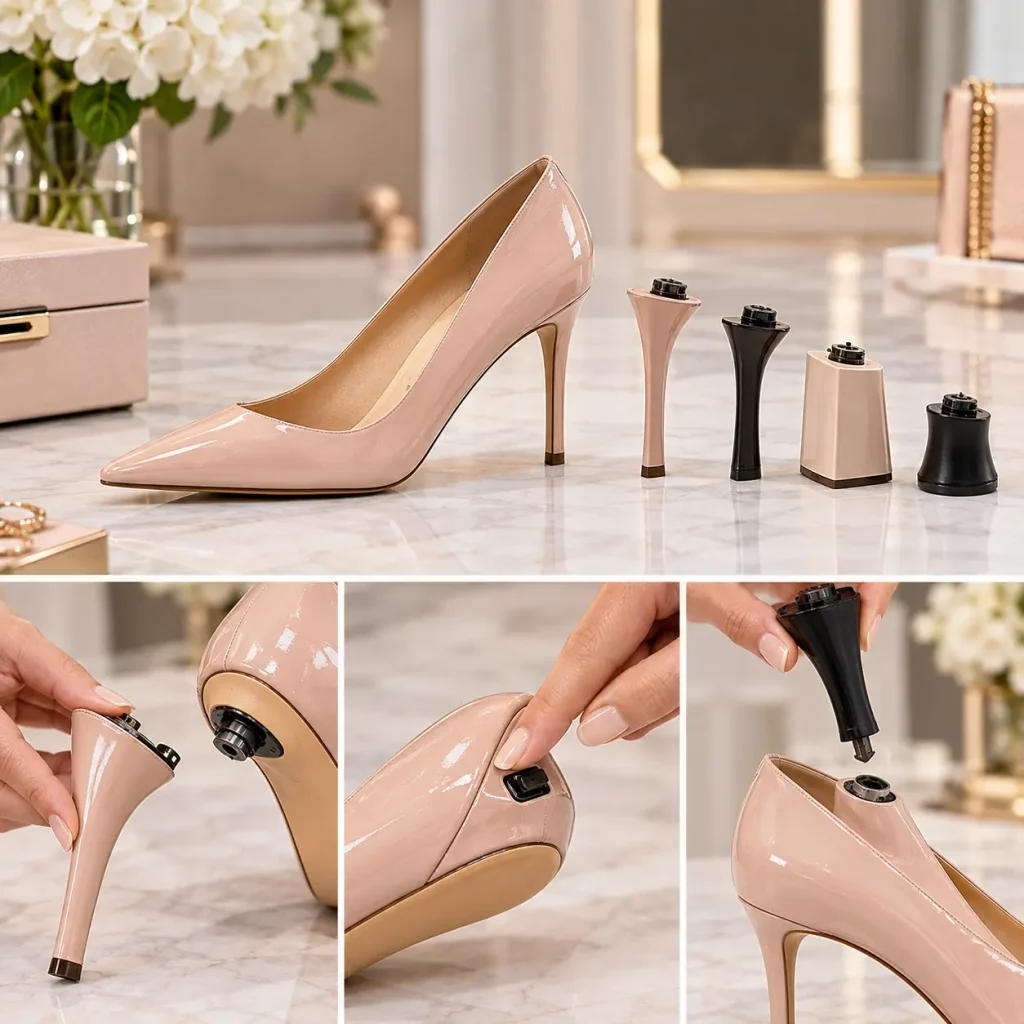
Built around a click-in heel base, this style pairs a single shoe body with a set of separately purchased heel attachments in varying heights and finishes. Brands offering this heel-kit approach allow genuinely dramatic transformations — swapping a sleek stiletto for a sturdy block heel or a completely flat sole — all from the same pump base, making it one of the most versatile convertible heel styles available.
3. Convertible Strappy Sandal
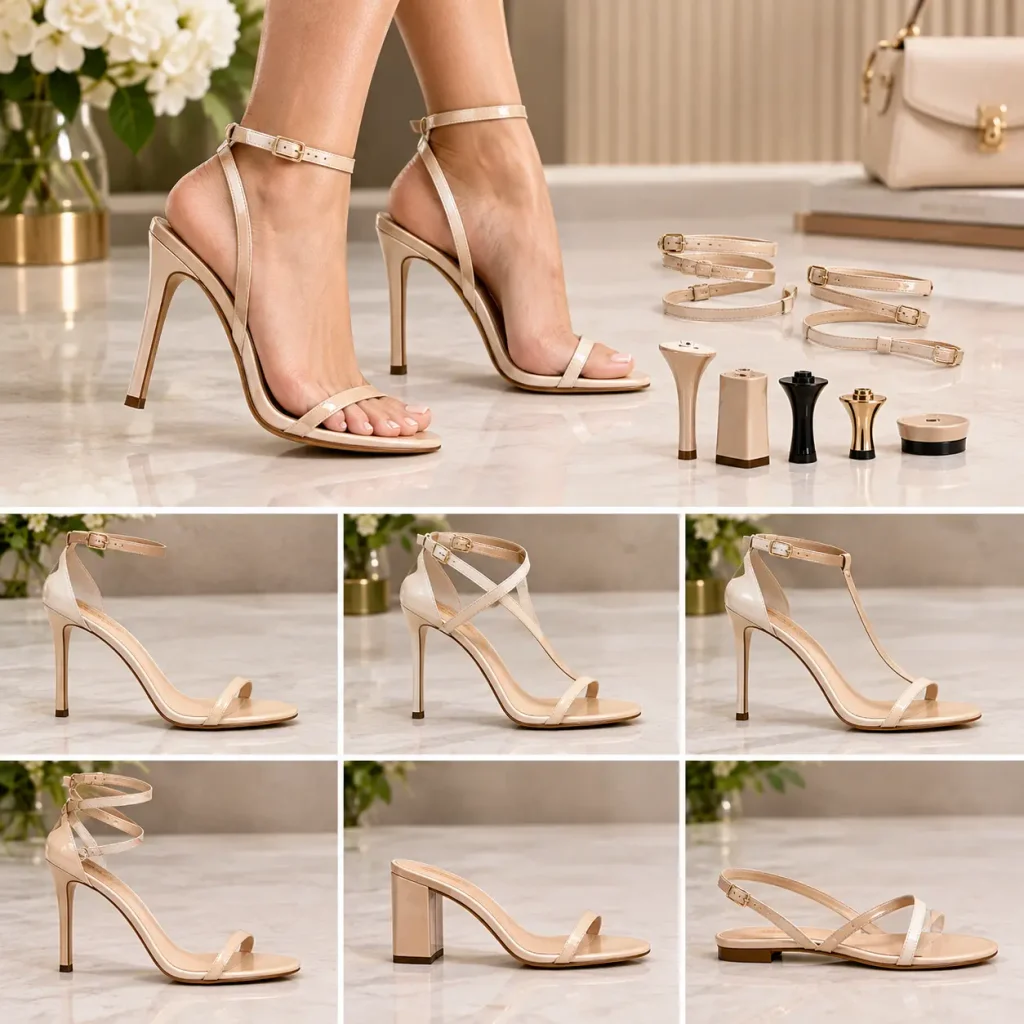
A convertible strappy sandal brings interchangeable heel technology to warm-weather and evening dressing, typically using the same click-in heel base system as convertible pumps but paired with an open, strappy silhouette. This style works particularly well for convertible heels for parties or summer events, where a lower, more comfortable heel option becomes especially appreciated as the night goes on.
4. Convertible Wedding Heel
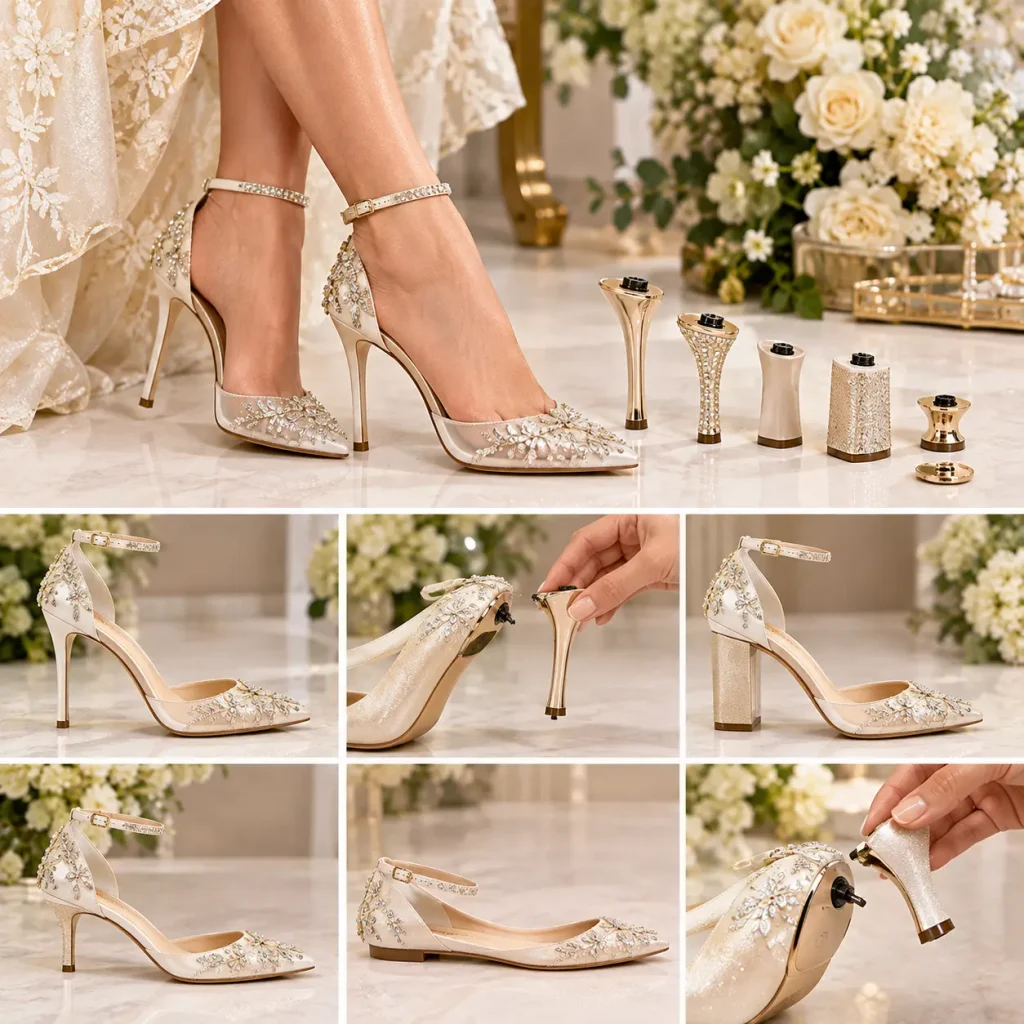
Designed specifically with brides and wedding guests in mind, a convertible wedding heel typically pairs an elegant, often ivory or metallic shoe body with multiple heel height options, allowing a bride to wear a taller heel for the ceremony and photos before converting to a lower or flat option for dancing. Several convertible heel brands offer heel kits in colors specifically designed to match bridal color palettes for exactly this purpose.
Also Read: How to Choose Comfortable Bridal Shoes for Your Big Day
5. Convertible Bootie
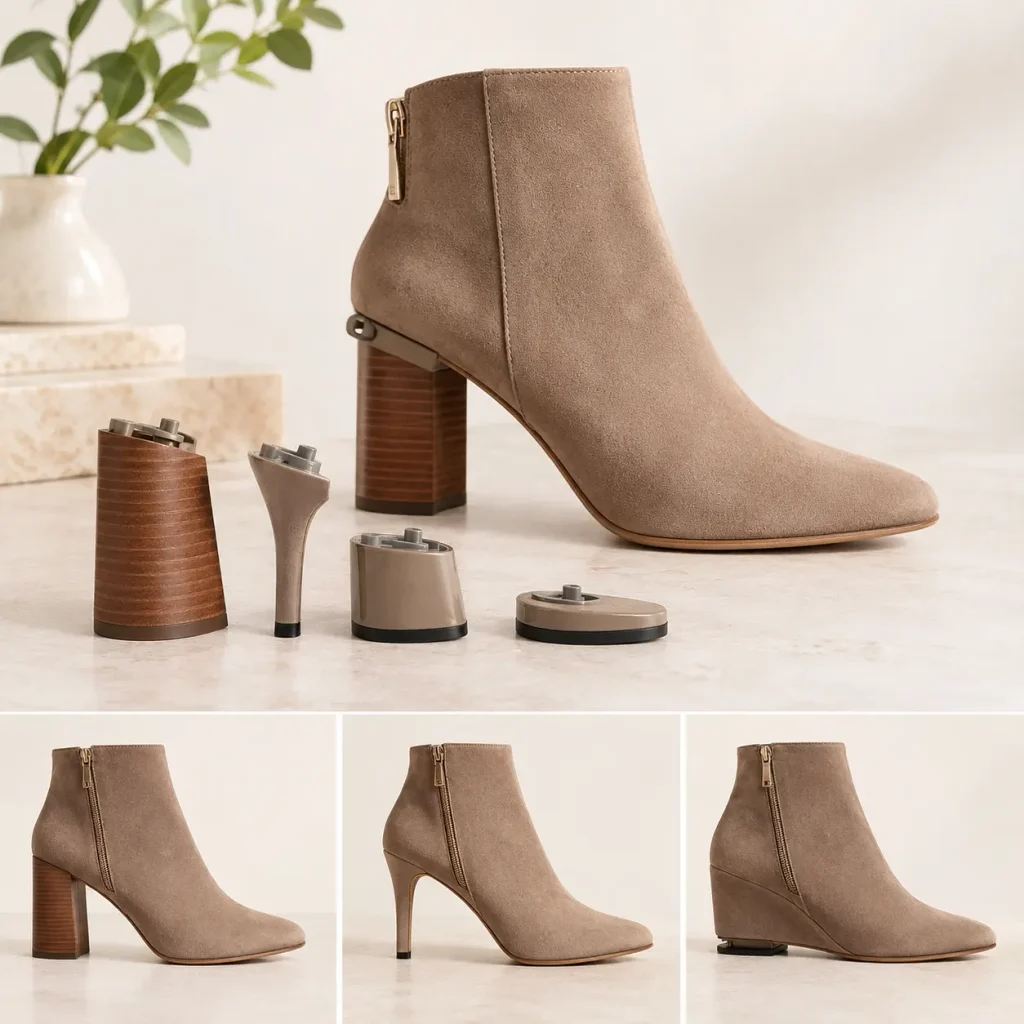
A convertible bootie applies interchangeable heel technology to a closed, ankle-length silhouette, offering the same height flexibility in a style better suited to cooler weather or more casual settings. This style is particularly well suited to convertible heels for travel, since a single bootie can transition from a polished daytime heel height to a flatter, more walkable option for exploring a new city.
6. Convertible Block Heel
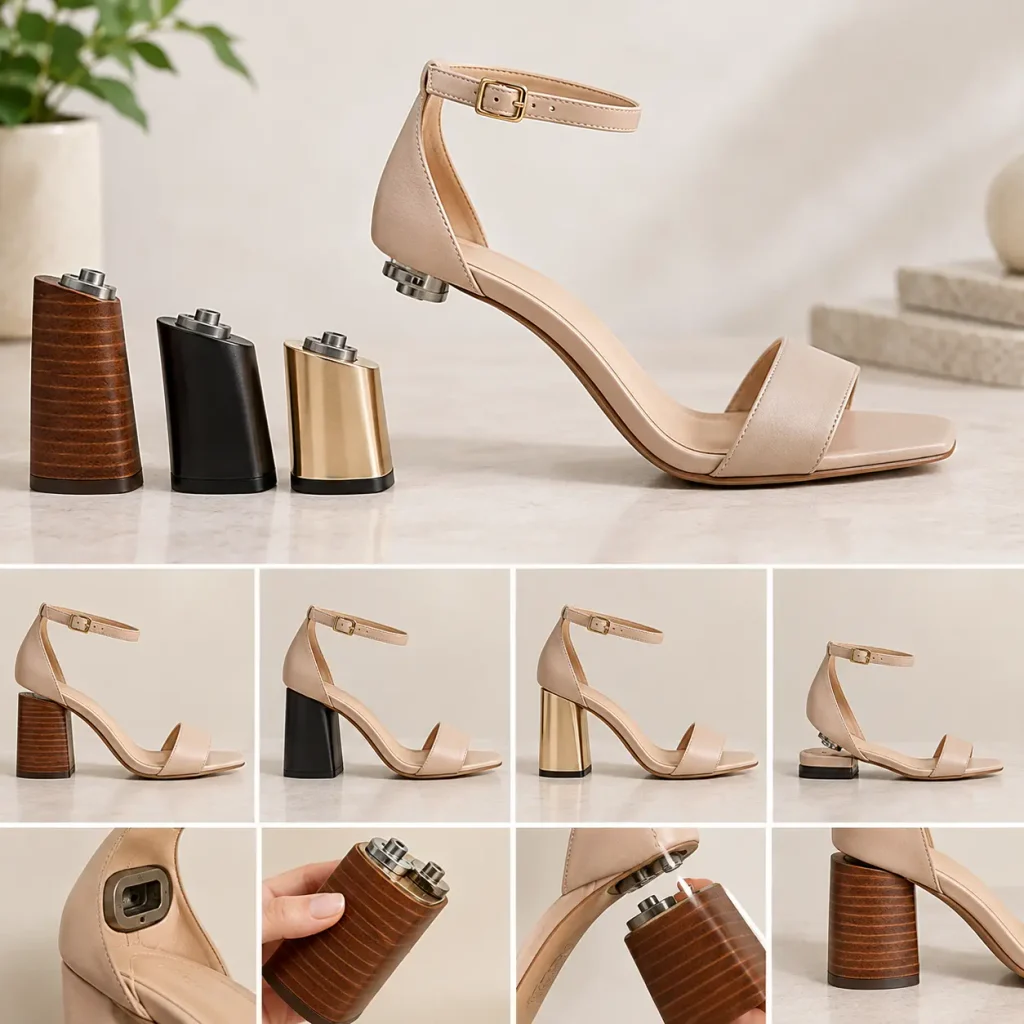
A convertible block heel pairs the stability and comfort advantages of a wider heel base with the same swap-in-seconds flexibility as other convertible styles, making it a strong option for anyone who finds thin stiletto heel kits less comfortable or stable. This style works well for convertible heels for all day wear, offering a sturdier profile without sacrificing the core convertible functionality.
Convertible Heels by Use Case
Convertible heels for weddings allow a bride or guest to move seamlessly from ceremony to reception to dancing without a single uncomfortable moment or an awkward shoe change mid-event.
Convertible heels for travel minimize luggage space by replacing what would otherwise be multiple pairs of shoes with one adaptable pair and a couple of compact heel attachments.
Convertible heels for dancing benefit especially from fold-to-flat or lower heel kit options, offering genuine relief and stability once the dancing starts in earnest.
Convertible heels for office to night out let a single pair transition from a professional daytime height to a taller, more polished evening look without needing to pack a separate pair for after-work plans.
Comfortable Convertible Heels for All-Day Wear
Comfort remains one of the biggest draws of convertible heel technology, particularly for anyone who finds standard high heels genuinely painful after a few hours. Convertible heels for sore feet and convertible flats for tired feet essentially describe the same use case from two different angles — the ability to reduce heel height, or eliminate it altogether, exactly when discomfort sets in, rather than pushing through pain or carrying an entirely separate pair of flats just in case.
How to Choose the Right Convertible Heel Kit
When selecting a convertible heel kit, start by considering the range of occasions you actually need to cover — a versatile neutral color and a mix of one higher and one lower or flat heel option will typically serve more situations than several heel kits in similar heights. Material matters too; leather and vegan leather heel kits tend to offer more durability for frequent wear, while heel kits are also produced in a range of colors and finishes for anyone building out a more expansive, coordinated collection.
How to Convert Heels to Flats
The exact process varies by brand and mechanism, but most click-in style convertible heels follow a similar basic sequence: locate and release the locking mechanism, typically a button or clip near the top of the heel attachment, gently pull the heel free from its base, and then attach the desired flat or lower heel piece by aligning it with the base and pressing until the locking mechanism clicks securely into place. Fold-down style convertible heels typically require simply pressing or folding the built-in heel mechanism until it collapses flat against the sole, without needing to remove or attach any separate pieces at all.
How to Size Convertible Heels
Sizing convertible heels generally follows standard shoe sizing, though it’s worth paying attention to how the specific brand’s convertible mechanism affects overall fit, since some heel-kit systems add slight bulk or height variation depending on which heel is attached. Checking a brand’s specific size chart and reading any fit notes related to their particular convertible mechanism helps avoid sizing surprises, particularly for anyone ordering online without the ability to try the shoe on first.
How to Care for Convertible Heels
Caring for convertible heels involves slightly more attention than a standard fixed-heel shoe, given the additional moving parts and attachment points involved. Keeping the locking mechanism and heel base clean and free of dirt or debris helps ensure heels attach and detach smoothly over time. Storing heel attachments not currently in use in a dedicated case or pouch, rather than loose in a bag, helps prevent scratches or damage to the attachment points. Avoiding walking on the shoe’s base without a heel or flat attached, where applicable, also helps protect the attachment mechanism from unnecessary wear.
Convertible Heels vs. Regular Heels
| Feature | Convertible Heels | Regular Heels |
|---|---|---|
| Heel height | Adjustable across multiple options | Fixed at one height |
| Versatility | One shoe covers multiple occasions | Typically suited to one specific look |
| Upfront cost | Generally higher, especially with multiple heel kits | Generally lower per pair |
| Travel efficiency | High — fewer pairs needed | Lower — separate pairs for each height |
| Long-term value | Potentially higher if replacing multiple pairs | Lower if multiple heel heights are needed |
| Mechanism complexity | Additional moving parts to maintain | Simple, fixed construction |
Best Convertible Heel Brands
Several brands have built genuine reputations in the interchangeable and convertible heel space. Tanya Heath Paris is widely recognized as the brand that first successfully commercialized interchangeable heel shoes internationally, offering handmade shoes from Portugal and Italy paired with an extensive range of interchangeable heel colors and heights. Pashion Footwear has built a strong following around its fully convertible high heel designs paired with customizable heel kits. Vice Versa focuses specifically on heels that fold flat in seconds, emphasizing everyday comfort alongside style. Other established names in the space include Mestrae and Mime Et Moi, both offering their own take on interchangeable heel technology with varying price points and style ranges.
Also Read: 7 Pashion Footwear Styles That Redefine Convertible Chic
Are Convertible Heels Worth the Price?
Convertible heels typically carry a higher price point than a comparable single pair of regular heels, particularly once additional heel kits are factored in. Whether that investment is worth it largely depends on how many different heel heights and occasions you’d otherwise need separate shoes for — for anyone who regularly buys multiple pairs of heels in different heights, a convertible system can offer genuine long-term value, while an occasional heel-wearer may find a simpler, single-purpose pair more cost-effective.
Frequently Asked Questions
Are convertible heels comfortable?
Yes, many convertible heel brands specifically emphasize comfort as a core design priority, since the ability to lower heel height or convert to a flat directly addresses the discomfort that often comes with wearing a single fixed heel height for extended periods.
How long do convertible heels last?
Durability varies by brand and specific mechanism, but well-made convertible heels with quality materials and secure locking mechanisms can last comparably to regular heels with proper care, including keeping the attachment points clean and avoiding excessive strain on the locking mechanism.
Are convertible heels worth the price?
For anyone who would otherwise purchase multiple pairs of heels in different heights, convertible heels can offer genuine long-term value despite a higher upfront cost, since a single shoe with a few heel kits can replace what might otherwise require several separate pairs.
Can convertible heels be customized?
Yes, many convertible heel brands offer heel kits in a range of colors, heights, and finishes, allowing wearers to customize their shoe’s appearance and functionality considerably beyond what a single fixed-heel shoe could offer.
Is convertible heel technology durable?
Modern convertible heel mechanisms have improved considerably compared to earlier, bulkier patent designs, with secure locking systems engineered specifically for durability and stability, though proper care and avoiding excessive wear on the attachment points remains important for longevity.
Final Thoughts
Convertible heels prove that sometimes the most practical fashion innovations take the longest to get right — over a century of patents and engineering refinement led to the genuinely wearable, stylish interchangeable heel systems available today. From a fold-to-flat pump to a fully customizable heel-kit sandal, the six styles covered here each solve the same everyday problem in a slightly different way: giving you the versatility of multiple shoes without the closet space, luggage weight, or compromise that used to come with it. For anyone who’s ever kicked off their heels halfway through a night out, convertible heels genuinely deliver on their promise.
Also Read: 8 Famous Footwear Brands That Redefine Everyday Style