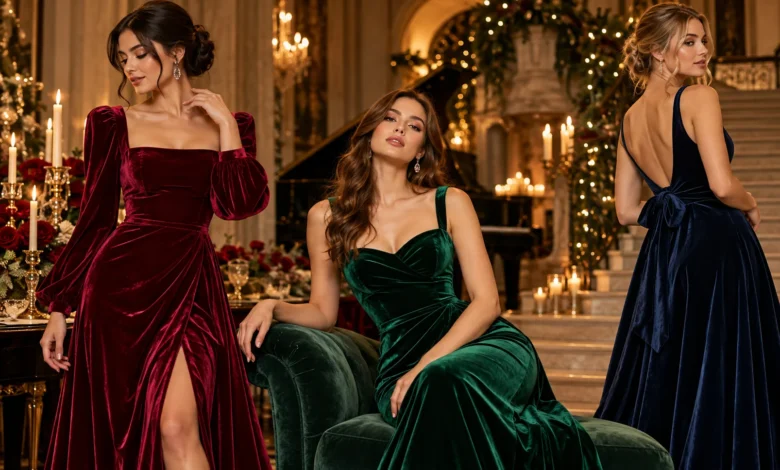
There’s a reason velvet has been synonymous with luxury for literally thousands of years. Long before it became a holiday-party staple, velvet was a fabric reserved almost exclusively for royalty and the extraordinarily wealthy, prized for a richness and depth that no other textile could replicate. That same inherent opulence is exactly why a velvet dress still feels like an instant upgrade today, whether it’s draped over a chair at a wedding or catching candlelight at a New Year’s Eve party.
This guide covers what actually makes velvet such a distinctive, luxurious fabric, the genuinely fascinating history behind its journey from ancient trade routes to modern wardrobes, and 11 velvet dresses for women that feel luxuriously elegant. Along the way, we’ll cover color choices, seasonal styling, body-type guidance, and the care tips that keep this notoriously finicky fabric looking its best.
Also Read: How to Wear a Polka Dot Dress: Styling Tips, Best Occasions & Body Type Guide
What Is Velvet Fabric?
Velvet is a woven fabric characterized by a short, dense pile created by cutting the loops of warp threads during the weaving process, giving the fabric its signature soft texture and subtle sheen. Traditionally made from silk, velvet today is also commonly produced from cotton, rayon, or various synthetic blends, each offering a slightly different balance of softness, sheen, and price point. What all varieties share is that distinctive raised pile, which catches and reflects light differently depending on which direction it’s brushed, creating velvet’s characteristic depth and visual richness.
What Makes Velvet Dresses Luxurious?
Velvet’s luxurious reputation comes down to both its physical qualities and its genuinely long historical association with wealth and status. The fabric’s dense pile creates a visual depth and softness that few other materials can replicate, while its traditionally labor-intensive production process meant that, for most of history, only the wealthiest could afford it. Even today, when velvet is far more widely accessible, that centuries-long association with royalty and opulence continues to shape how the fabric is perceived, which is a significant part of why a velvet dress still reads as an instant style elevation.
What Is the Difference Between Velvet and Velour?
While often confused, velvet and velour are constructed quite differently. Velvet is a woven fabric, traditionally made from silk and now commonly from cotton or synthetic fibers, with its pile created through a specific cut-loop weaving technique. Velour, by contrast, is a knit fabric rather than a woven one, generally offering more stretch and a slightly less dense, less lustrous pile than true velvet. This structural difference means velvet typically drapes with more structure and sheen, while velour tends to feel softer and more casual, making velvet the preferred choice for formal dresses specifically.
What Occasions Suit Velvet Dresses?
Velvet’s rich texture and formal associations make it particularly well suited to evening and special-occasion dressing. Weddings, both as a guest and occasionally for the bride herself in deep jewel tones, holiday parties, New Year’s Eve celebrations, and formal winter events are among the most common occasions where a velvet dress feels genuinely appropriate. The fabric’s weight and warmth also make it a natural fit for cooler-weather formal events specifically, where lighter evening fabrics might feel insufficient.
A Brief History of Velvet Fabric in Fashion
Velvet’s origins trace back remarkably far, with early velvet-like fabrics appearing in ancient China and Egypt as far back as 2000 BC, traditionally woven entirely from silk. The technique of velvet weaving spread significantly through the Islamic world around the 8th century, with Persian weavers becoming particularly renowned for their intricate designs, before the knowledge eventually traveled westward along the Silk Road. By the 13th century, Italy, particularly the cities of Venice and Genoa, had become the primary center of velvet production in the Western world, and the fabric became deeply associated with European nobility throughout the Renaissance.
This association with wealth wasn’t merely cultural — in medieval Europe, sumptuary laws in some regions legally restricted who could wear velvet based on social rank, and commoners who wore it without appropriate noble status could face financial penalties. The fabric’s status as a luxury good was reinforced further by its genuinely labor-intensive, handloom-based production process, which kept prices far beyond the reach of ordinary people until well into the Industrial Revolution.
Evolution of Velvet Dress Trends
The Industrial Revolution marked a genuine turning point for velvet, as mechanized looms dramatically reduced the labor and cost required for production, finally making the fabric accessible to a much broader range of consumers rather than exclusively the aristocracy. Throughout the 19th and 20th centuries, velvet became deeply embedded in both fashion and popular culture, immortalized in iconic film costuming and increasingly incorporated into everyday eveningwear rather than remaining an exclusively ceremonial or royal fabric.
How Velvet Fabric Is Made
Traditional velvet weaving is a genuinely complex process, involving two layers of fabric woven simultaneously on a special loom, connected by the warp threads that will eventually become the pile. These connecting threads are then carefully cut apart, separating the woven piece into two lengths of fabric, each left with the signature raised, cut pile that defines velvet’s texture. This complexity is exactly why well-made velvet, even today, commands a higher price point than many other fabrics, despite modern mechanization having made production considerably more efficient than the entirely handloom-based process of earlier centuries.
Velvet Dress Trends Through the Decades
Velvet’s popularity in fashion has moved through distinct cycles over the past century, often resurging specifically during periods when fashion embraces richer textures and more dramatic, formal silhouettes. The fabric has remained a particularly consistent presence in winter and holiday fashion specifically, with velvet dresses, blazers, and accessories reliably reappearing each cooler season regardless of broader fashion trend cycles, a testament to how deeply embedded velvet has become in seasonal formal dressing specifically.
Why Velvet Dresses Are Popular in Winter
Velvet’s substantial weight and dense pile provide genuine warmth, making it a practical as well as stylish choice for cold-weather formal events. Unlike lighter evening fabrics such as chiffon or silk, velvet offers real insulation without sacrificing the elevated, formal aesthetic appropriate for winter weddings, holiday parties, and other seasonal celebrations.
Benefits of Wearing Velvet for Formal Occasions
Instant visual richness. Velvet’s dense pile and subtle sheen create a depth and texture that photographs beautifully, particularly under the warm, low lighting typical of evening events.
Genuine warmth. Unlike many formal fabrics, velvet offers real insulation, making it practical for cold-weather occasions without requiring a bulky coat layered on top.
Versatility across formality levels. Velvet works equally well for a fully formal black-tie gown or a simpler, more casual holiday party dress, depending on the specific cut and styling.
A flattering drape. Velvet’s weight allows it to skim the body with a flattering, structured drape that holds its shape well throughout a long event.
Why Velvet Feels Luxurious
Velvet’s luxurious feel comes down to a combination of physical sensation and deep-rooted cultural association. The fabric’s dense, soft pile creates a genuinely plush tactile experience unlike flatter woven fabrics, while centuries of association with royalty and the aristocracy have embedded a lasting cultural perception of velvet as inherently opulent, an association that persists even now that the fabric is widely accessible.
Why Velvet Dresses Suit Holiday Parties
Holiday parties call for a specific kind of festive formality — more elevated than everyday dressing, but typically not as rigidly formal as a black-tie gala. Velvet dresses strike this balance particularly well, offering genuine visual richness and a celebratory feel without requiring the most elaborate possible gown, making the fabric a natural, enduringly popular choice for this specific category of seasonal event.
11 Velvet Dresses for Women That Feel Luxuriously Elegant
1. Classic Black Velvet Slip Dress
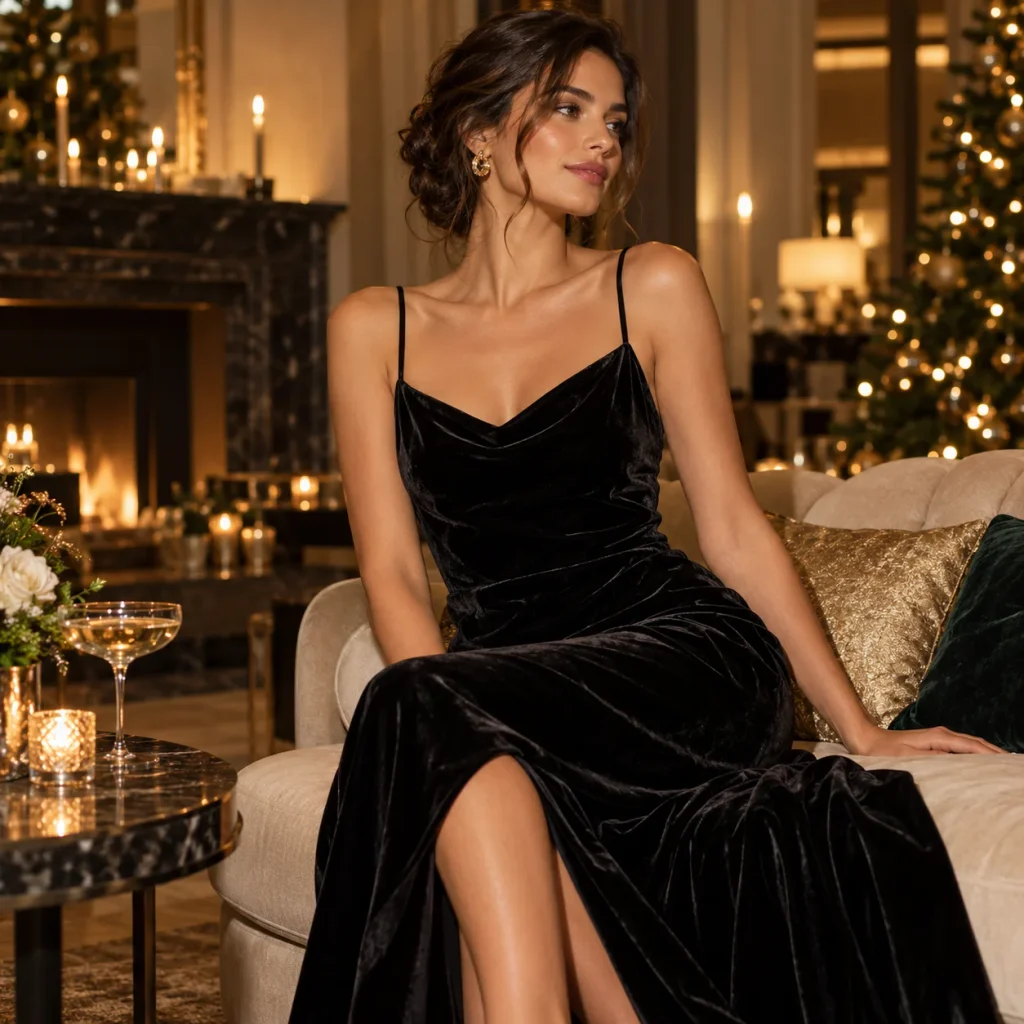
A black velvet slip dress offers timeless, versatile elegance, working equally well for a formal dinner or a dressed-up holiday gathering. The slip silhouette lets velvet’s natural sheen and drape take full visual focus without competing embellishment.
2. Emerald Green Velvet Gown
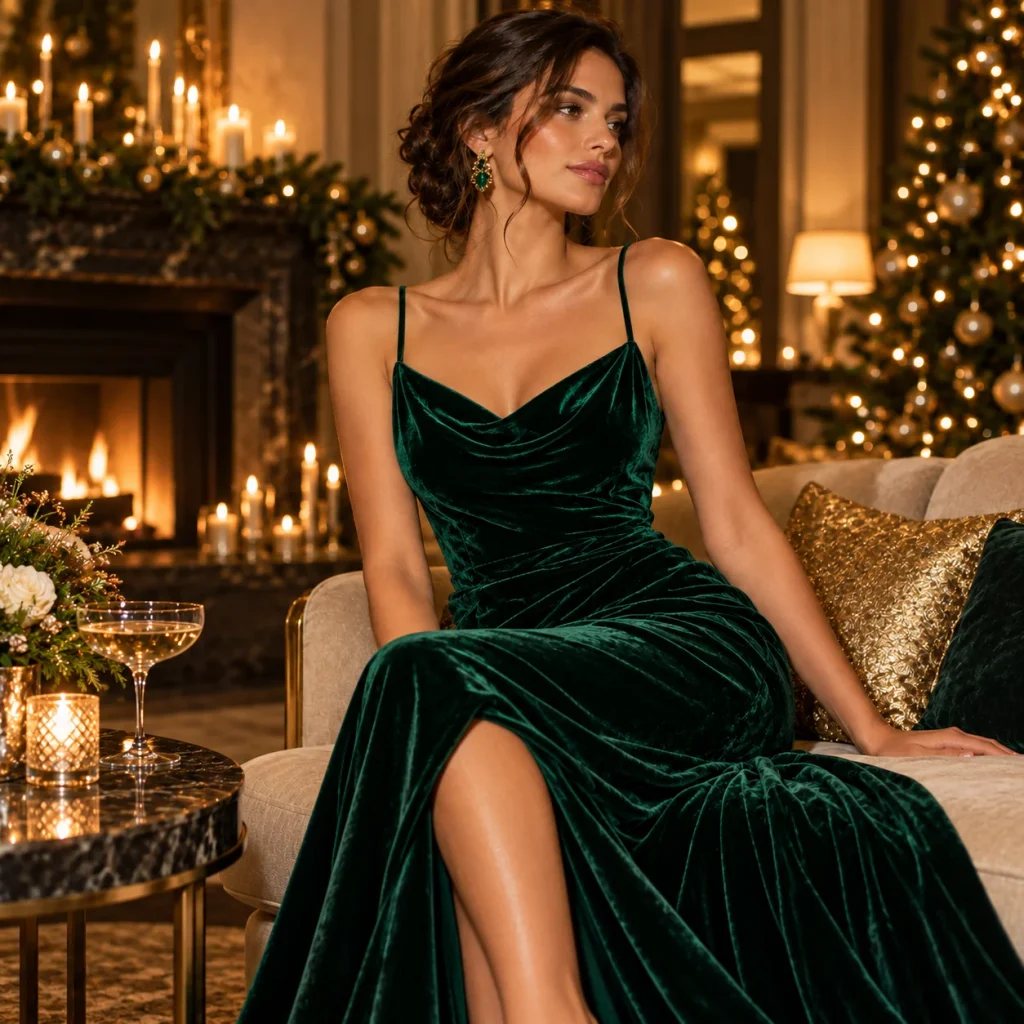
Rich emerald green velvet creates a genuinely striking statement piece, particularly popular for winter weddings and formal holiday events. The jewel tone photographs beautifully against velvet’s natural depth, creating a look that feels both festive and genuinely elegant.
3. Burgundy Velvet Midi Dress
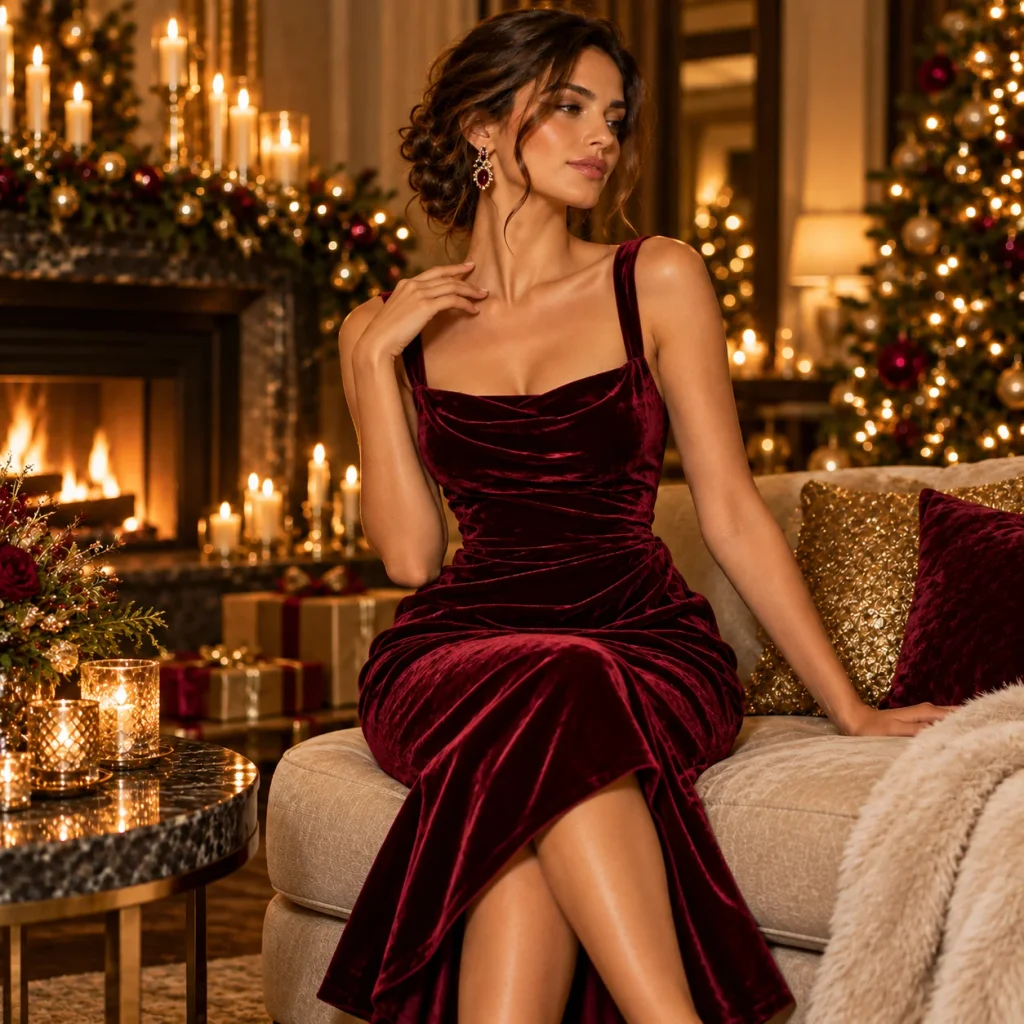
A burgundy velvet midi dress offers a slightly more versatile length than a full gown, suited to both formal dinners and dressier holiday office parties. This deep wine-red tone remains one of the most enduringly popular velvet color choices for cooler-season events.
4. Royal Blue Velvet Off-Shoulder Dress
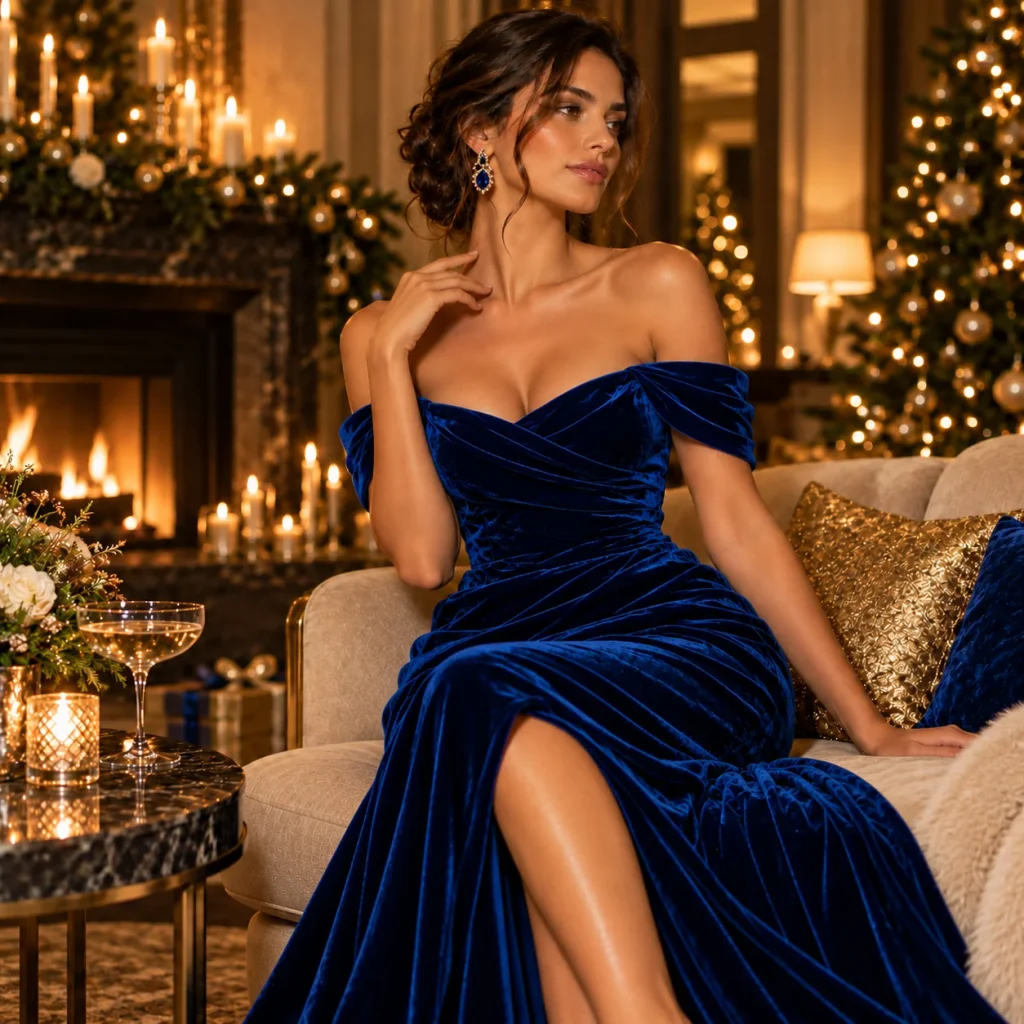
An off-shoulder neckline adds a romantic, elegant detail to a royal blue velvet dress, creating a striking silhouette well suited to formal evening events or a winter wedding guest look. The bold blue tone offers a vibrant alternative to more traditional black or deep red velvet.
5. Wine Red Velvet Wrap Dress
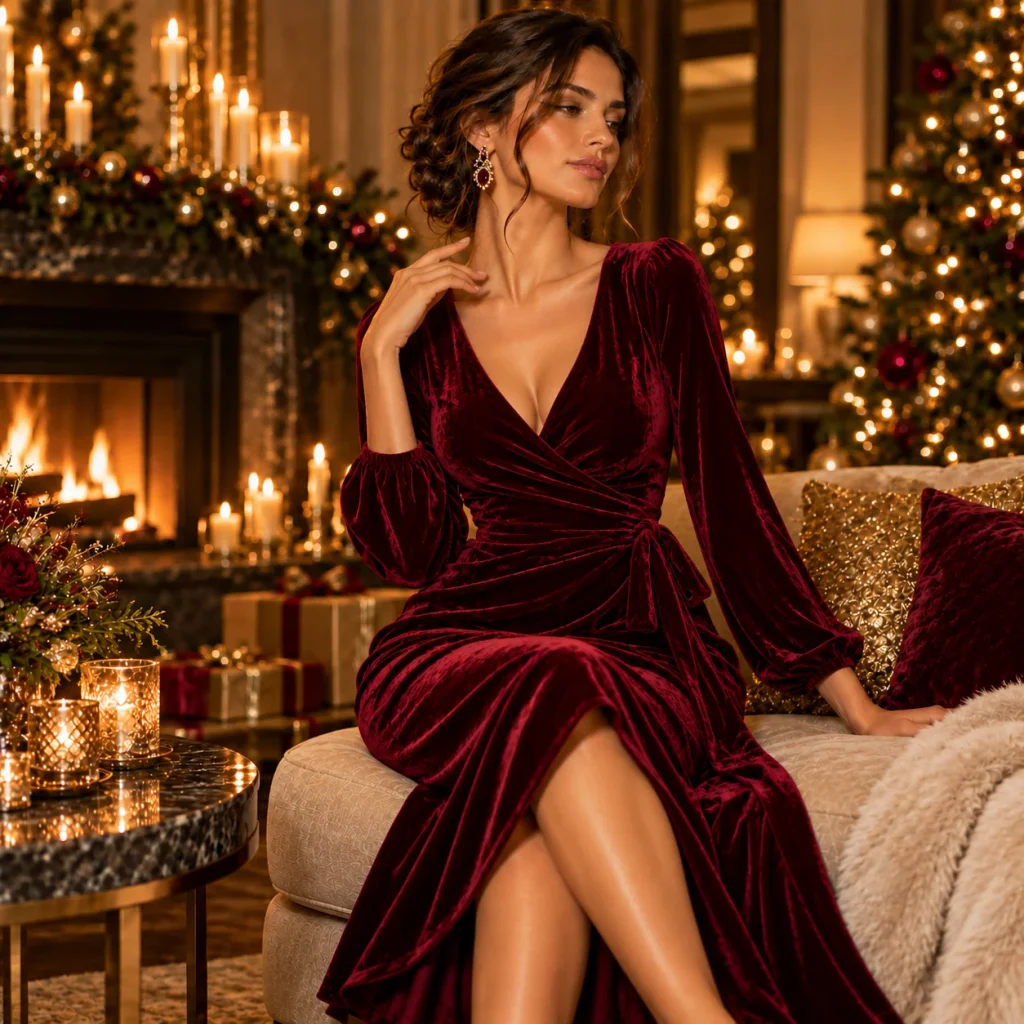
A wrap-style velvet dress in a deep wine red offers flattering, adjustable shaping alongside velvet’s signature rich texture. This silhouette works particularly well for a range of body types, given the wrap style’s naturally forgiving, customizable fit.
6. Navy Velvet A-Line Dress
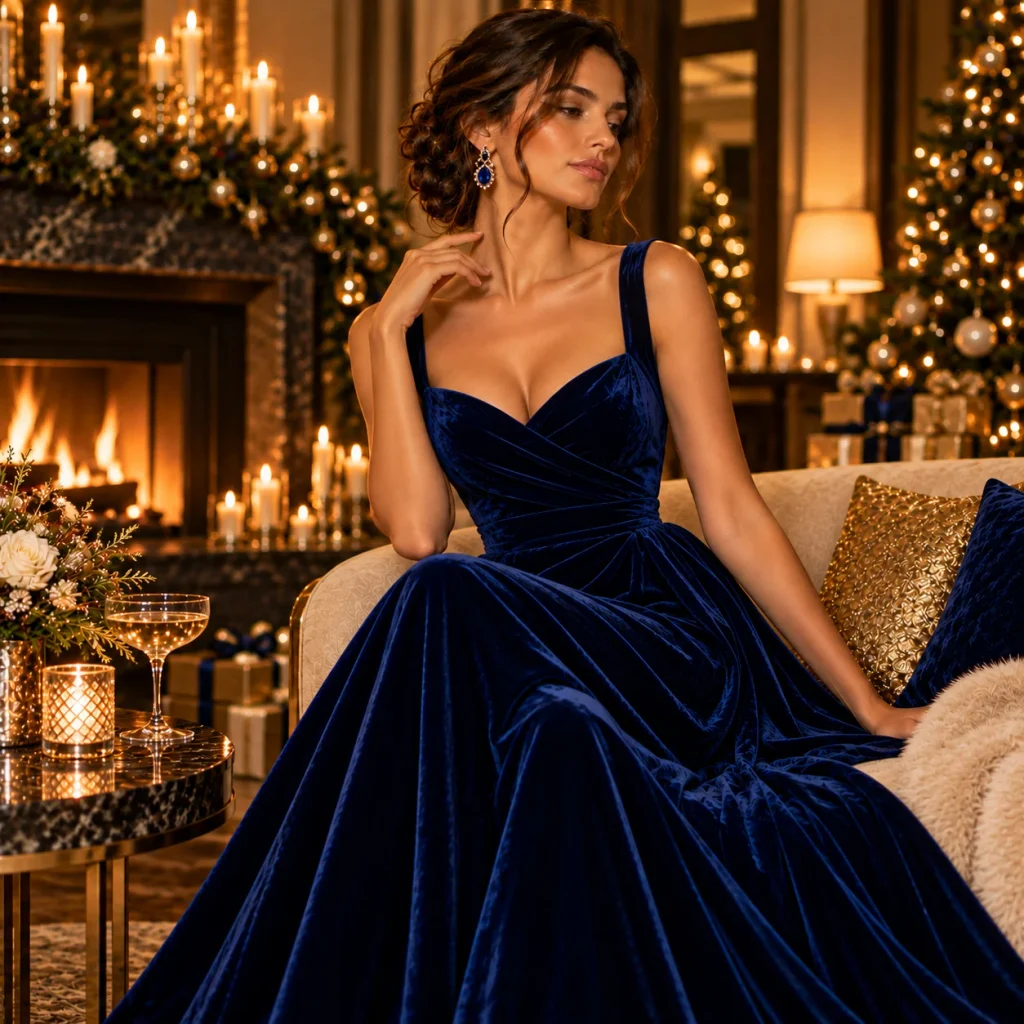
Navy velvet offers a slightly softer, more versatile alternative to classic black, paired here with an A-line silhouette that flatters a wide range of body types. This combination suits both formal events and slightly more relaxed holiday gatherings equally well.
7. Velvet Bodycon Mini Dress
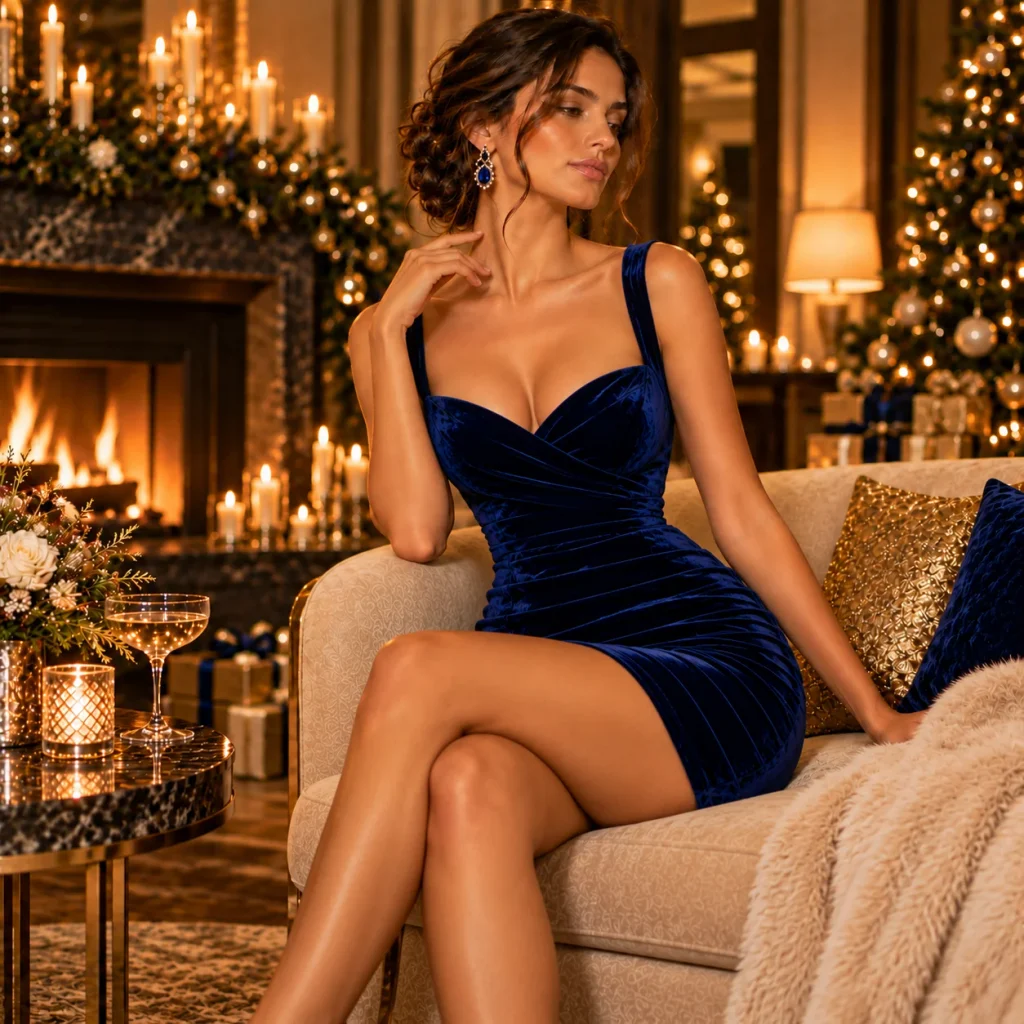
For a bolder, more contemporary take on velvet dressing, a fitted bodycon mini dress showcases the fabric’s drape and sheen in a sleek, modern silhouette, well suited to parties and evening events calling for a more fashion-forward look.
8. Velvet Maxi Dress for New Year’s Eve
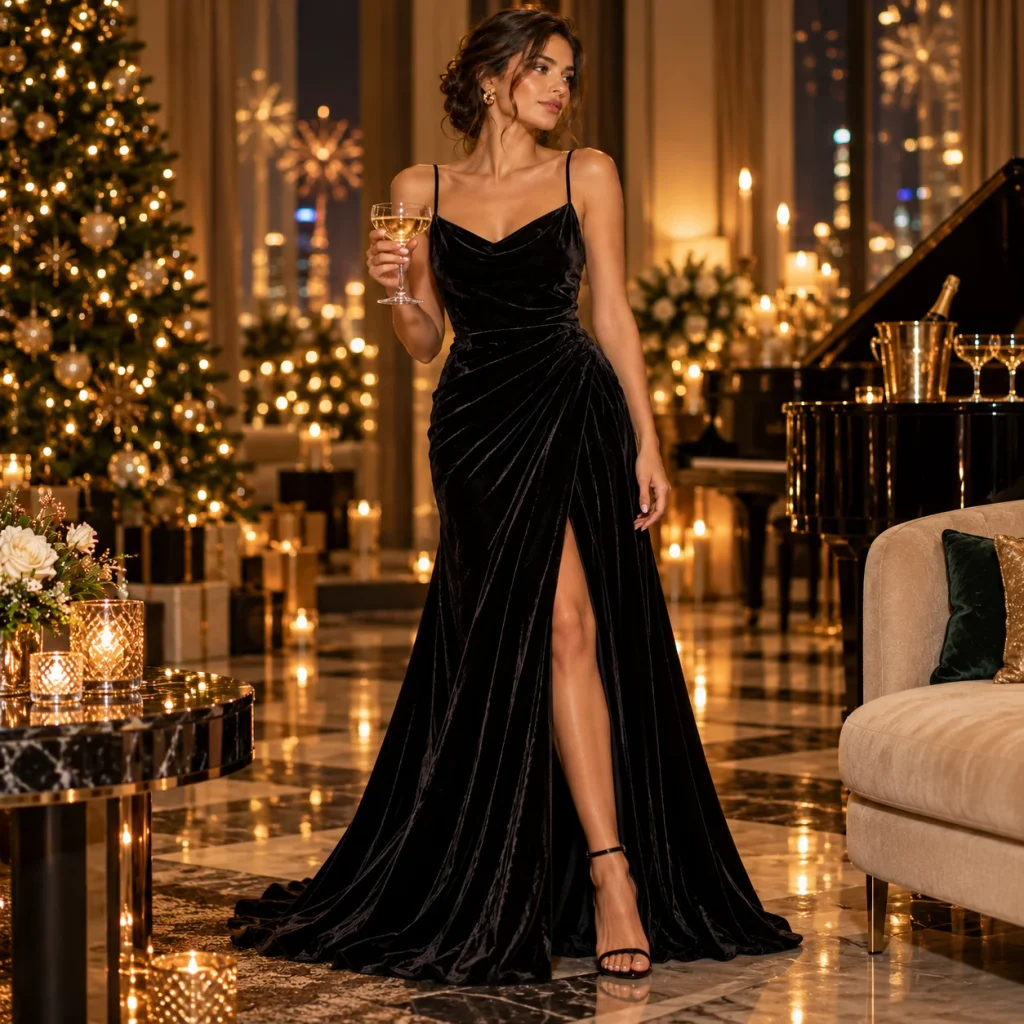
A floor-length velvet maxi dress delivers maximum drama and glamour, particularly well suited to New Year’s Eve celebrations where a more elaborate, statement-making look feels appropriate. Deep jewel tones or classic black both work beautifully in this silhouette.
9. Soft Pastel or Mint Velvet Dress
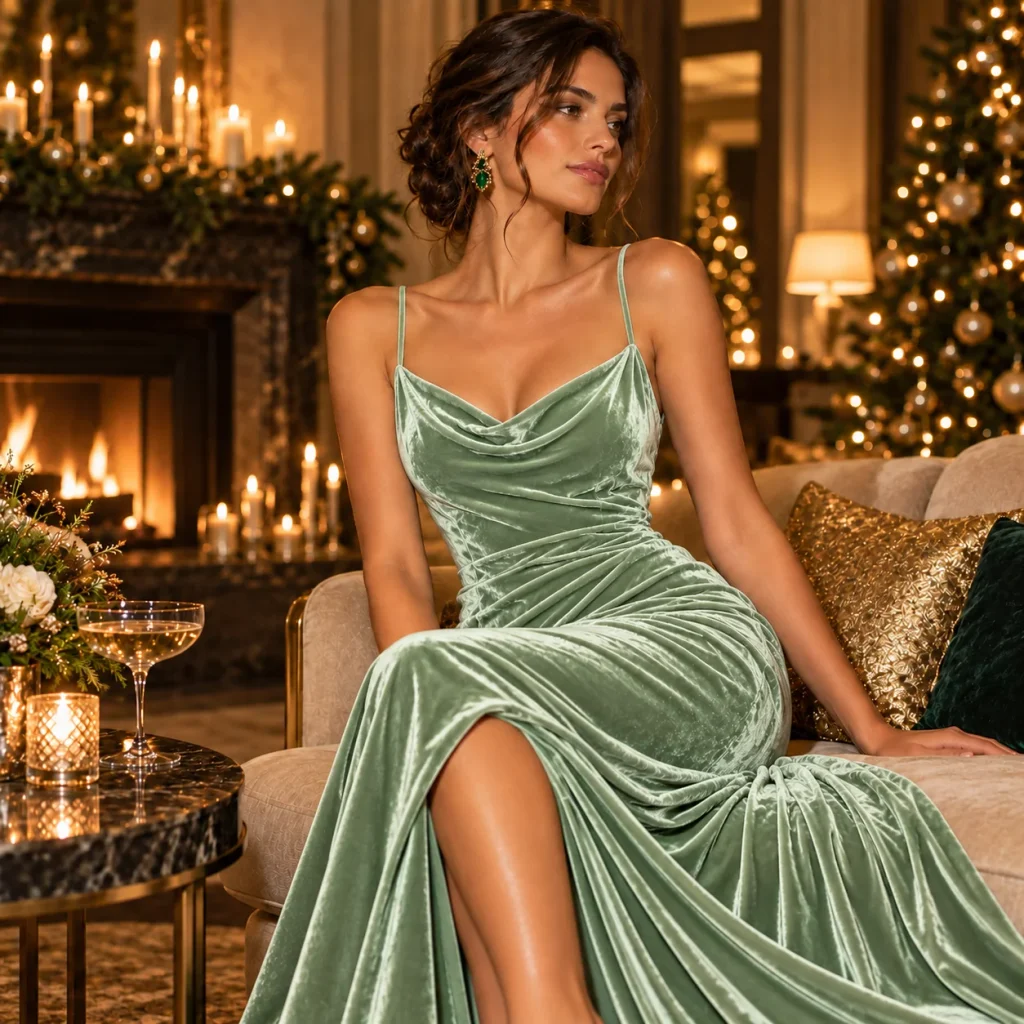
For a gentler, more unexpected take on velvet dressing, a soft pastel or mint-toned velvet dress offers the fabric’s signature texture in a considerably lighter, more romantic color palette, well suited to daytime winter events or more softly styled formal occasions.
10. Plus Size Velvet Dress
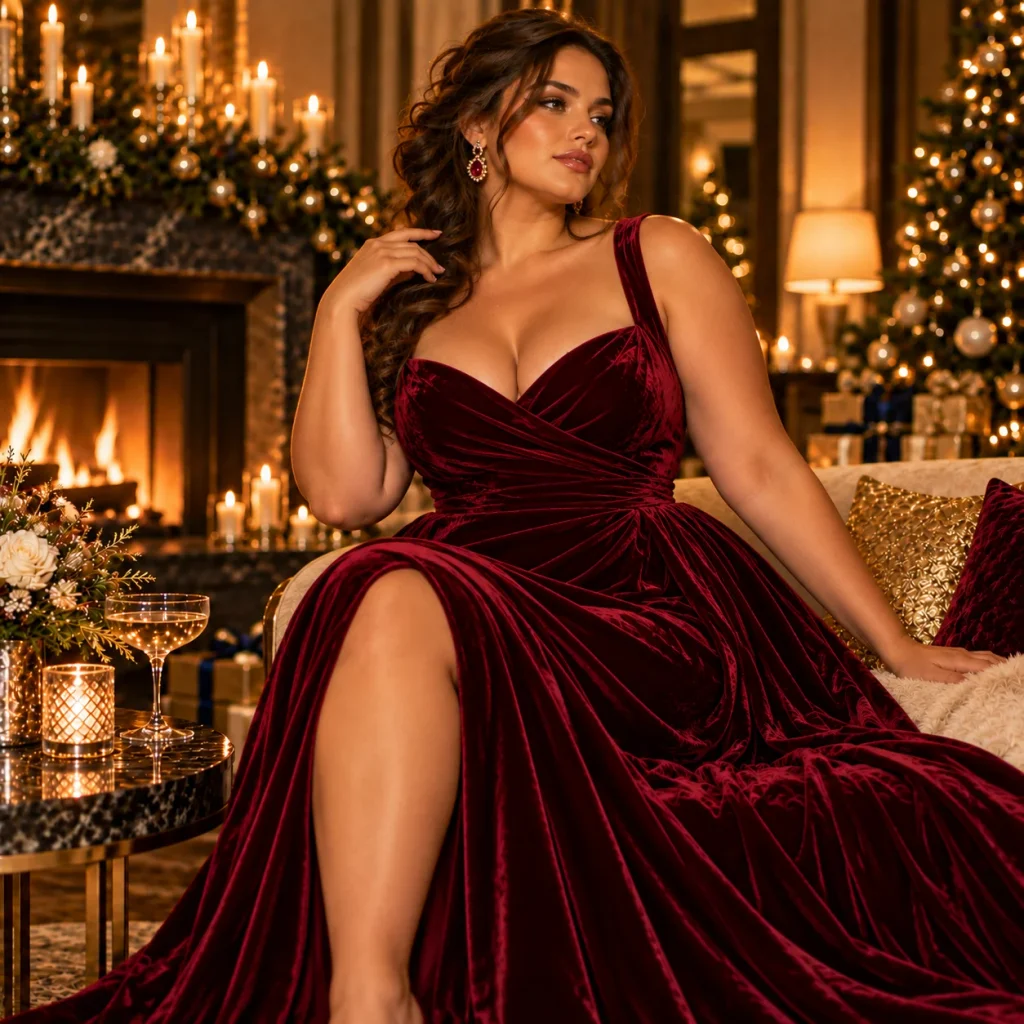
Velvet’s rich, flattering drape works beautifully across a full range of body types, and plus size velvet dresses ensure the same luxurious texture and quality construction are available in properly proportioned sizing, rather than simply scaling up a design built around a smaller frame.
11. Velvet Dress with a Coordinating Jacket
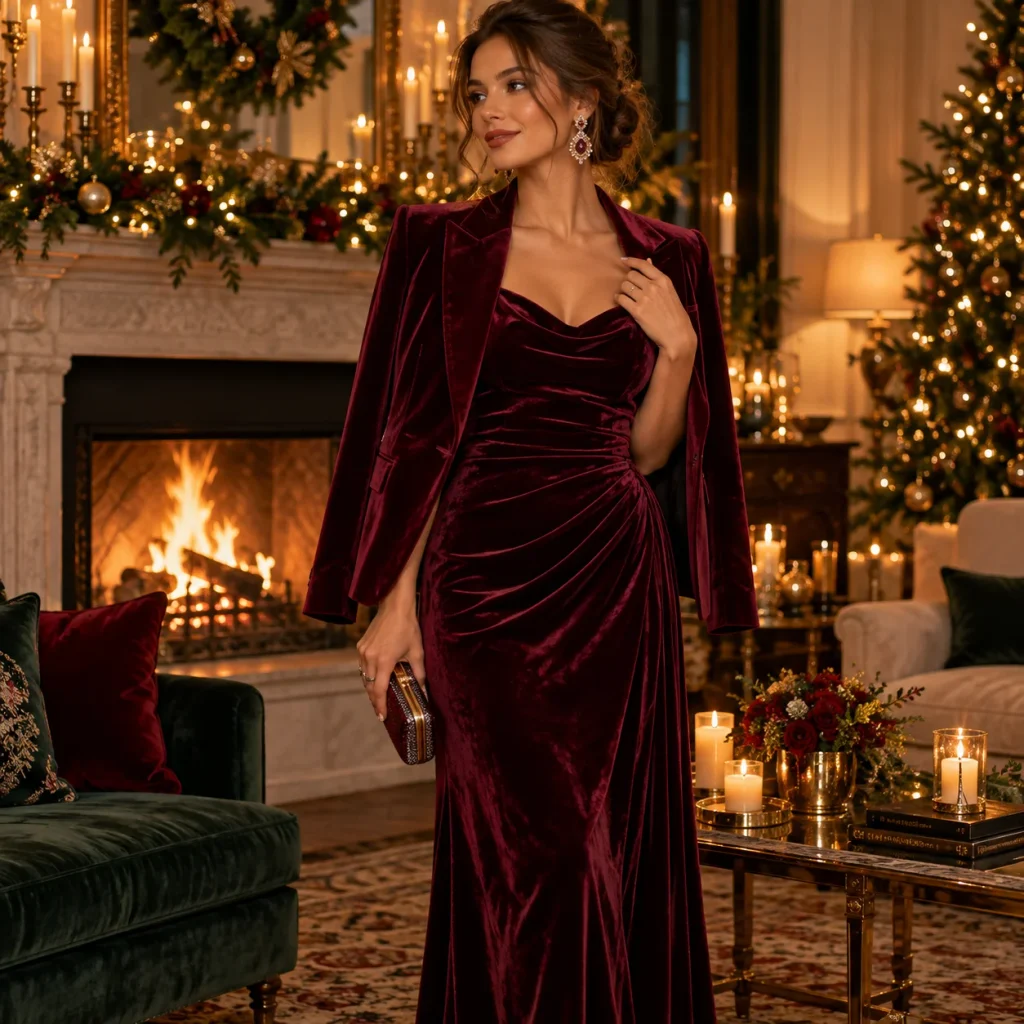
Pairing a simpler velvet dress with a coordinating velvet or complementary jacket offers both practical warmth and a polished, layered silhouette, particularly well suited to winter wedding guest looks or formal events requiring an extra layer.
Also Read: 10 Puff Sleeve Dresses That Feel Romantically Chic
Velvet Dresses by Color
Black velvet dresses remain the most versatile and universally flattering choice, working across nearly any formal occasion.
Red velvet dresses, whether a bright true red or deeper wine tone, bring bold, festive drama particularly popular for holiday events.
Emerald green velvet dresses have become especially popular for winter weddings specifically, offering a rich, naturally festive jewel tone.
Navy and royal blue velvet dresses offer sophisticated alternatives to classic black, suited to both formal and slightly more relaxed occasions.
Burgundy and wine red velvet dresses pair beautifully with the broader autumn and winter color palette, making them especially popular for fall and holiday events.
Velvet Dresses by Season and Occasion
Velvet dresses for winter take full advantage of the fabric’s natural warmth and weight, making it one of the most practical formal fabric choices for the coldest months.
Velvet dresses for fall work particularly well in deeper, richer tones like burgundy or forest green, aligning with the season’s broader color palette.
Velvet dresses for the holiday season span the full range from simple slip dresses for a casual office party to elaborate gowns for a formal holiday gala.
Velvet dresses for weddings suit both guests and winter brides alike, particularly in deep jewel tones for guests or softer neutrals for bridal wear.
Velvet dresses for New Year’s Eve lean toward maximum drama, favoring maxi lengths, bold colors, or statement silhouettes suited to the occasion’s celebratory energy.
Choosing a Velvet Dress for Your Body Type
A-line and wrap-style velvet dresses tend to flatter the widest range of body types, since both silhouettes skim rather than cling while still defining the waist. For curvier figures, velvet’s natural weight and structure can create a particularly flattering, controlled drape, especially in a wrap or fitted midi silhouette. For petite frames, a shorter hemline or a dress with a defined waistline helps avoid the fabric’s visual weight overwhelming a smaller frame.
How to Style a Velvet Dress
Shoes to Wear with a Velvet Dress
Classic pumps in a complementary or contrasting metallic tone pair beautifully with velvet’s rich texture, while strappy heeled sandals offer a slightly lighter, more modern alternative for less formal occasions. For colder outdoor events, a sleek ankle boot can also work well with a shorter or midi-length velvet dress.
Jewelry for a Velvet Dress
Velvet’s matte, textured surface pairs particularly well with metallic or gemstone jewelry, since the contrast between velvet’s soft texture and jewelry’s shine creates visual interest. A simpler velvet dress offers more room for statement jewelry, while a more heavily detailed or embellished velvet piece generally looks best with more understated accessories.
Velvet Dress with a Jacket
Layering a tailored blazer or a coordinating velvet jacket over a simpler velvet dress adds both warmth and a polished, elevated silhouette, particularly well suited to winter events or settings calling for a bit more coverage.
How to Choose the Right Velvet Dress
Start by considering the occasion’s specific formality level and season, since these two factors most directly influence both color choice and silhouette. From there, factor in your own comfort with velvet’s natural weight and warmth, since the fabric can feel considerably heavier than lighter eveningwear alternatives, particularly in a longer, more voluminous silhouette.
Also Read: 10 Ethereal Outfits That Feel Dreamily Enchanting
How to Care for a Velvet Dress
Velvet requires more careful handling than many other fabrics, given its delicate pile construction. Dry cleaning is generally the safest option for most velvet dresses, since home washing can flatten or damage the pile considerably. Storing velvet garments on a padded hanger, rather than folded, helps prevent permanent creasing, and steaming rather than ironing directly helps remove wrinkles without crushing the fabric’s signature texture. If a small area of pile does become flattened or crushed, gently steaming it and brushing in the direction of the nap can often help restore some of its original texture.
Frequently Asked Questions
Are velvet dresses in style in 2026?
Yes, velvet remains a consistently popular choice for formal and seasonal dressing, particularly for fall and winter events. The fabric’s enduring association with warmth, texture, and luxury has kept it a reliable presence across multiple fashion cycles rather than tying it to a single passing trend.
How do you wash a velvet dress?
Most velvet dresses should be dry cleaned rather than washed at home, since water and standard washing can flatten or damage the fabric’s delicate pile. Always check the care label for specific instructions, since fiber content can vary between silk, cotton, and synthetic velvet blends.
Are velvet dresses good for winter?
Yes, velvet’s natural weight and dense pile provide genuine warmth, making it one of the more practical formal fabric choices for cold-weather occasions compared to lighter eveningwear fabrics like chiffon or silk.
What shoes go with velvet dresses?
Classic pumps, strappy heeled sandals, and sleek ankle boots all pair well with velvet dresses, with the specific choice depending on the dress’s length, the event’s formality, and the season.
Can velvet dresses be worn in summer?
While less common, lighter velvet blends or shorter, more minimal velvet dress silhouettes can work for summer evening events, particularly air-conditioned indoor settings, though velvet’s natural weight and warmth generally make it better suited to cooler months overall.
Final Thoughts
Velvet dresses carry a genuinely rare combination in fashion: a fabric with thousands of years of luxury history that still feels completely relevant and desirable today. From a classic black slip dress to a dramatic emerald green gown, the eleven styles covered here each showcase a different facet of what makes velvet such an enduringly elegant choice for formal and seasonal dressing. Whether you’re attending a winter wedding, a holiday party, or simply want an outfit that feels instantly more luxurious, a well-chosen velvet dress remains one of fashion’s most reliably sophisticated investments.
Also Read: 6 Hollywood Glamour Style Looks That Feel Timeless