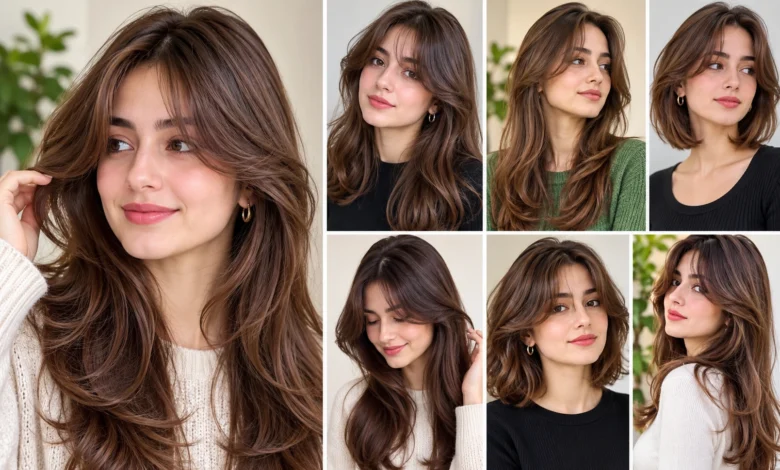
Curtain bangs are soft, face-framing bangs that part in the middle and sweep to each side like curtains. They are one of the easiest ways to refresh your hair without a big change: they work with long, medium, and short hair, and they suit most face shapes and hair types with a few small adjustments.
This guide explains what curtain bangs are, who they suit, and 10 flattering curtain bangs styles worth trying. You will also find how to ask for them at the salon, how to style and blow dry them, how to cut them at home safely, and how to grow them out.
What Are Curtain Bangs?
Curtain bangs are longer, center-parted bangs that start from the crown, sweep outward on both sides, and blend into the rest of your hair. Unlike blunt bangs that sit straight across the forehead, curtain bangs are open in the middle, so they frame the face and grow out more easily.
They are usually cut longer on the sides, often around cheekbone to chin length, and shorter toward the center. They have been popular on and off for decades and are often associated with 1960s and 70s styles, which is part of why they look so soft and vintage-inspired.
What Is the Difference Between Curtain Bangs and Side Bangs?
Curtain bangs part in the center and sweep to both sides, while side bangs sweep diagonally to one side of the forehead.
| Feature | Curtain bangs | Side bangs |
|---|---|---|
| Part | Center (or very slightly off-center) | Off to one side |
| Direction | Sweep out to both sides | Sweep across to one side |
| Look | Soft, open, face-framing | Asymmetrical, sweeping |
| Growing out | Blends easily | Can need more shaping |
| Best for | Soft framing, most face shapes | A diagonal, side-swept look |
Who Do Curtain Bangs Suit?
Curtain bangs suit many people because the open center and tapered sides are flexible. The best result depends on your face shape, hair texture, hairline, and how much time you want to spend styling.
A quick overview:
| Hair or face factor | How curtain bangs can work |
|---|---|
| Round face | Longer, side-swept pieces can add length and soften the face |
| Oval face | Almost any length works |
| Square face | Soft, wispy bangs help balance a strong jawline |
| Fine or thin hair | Light, wispy bangs avoid heaviness |
| Thick hair | Thinned or layered bangs keep them from looking heavy |
| Curly hair | Cut dry so you can see the curl pattern |
| Wavy hair | Natural movement helps bangs look effortless |
| Straight hair | Show off a clean, sleek shape |
| High forehead | Curtain bangs can add coverage and balance |
Curtain Bangs for a Round Face
Do curtain bangs suit round faces? Yes, usually. Longer curtain bangs that start higher on the crown and fall below the cheekbones can add vertical lines and soften the cheeks. Avoid very short, wide bangs that can emphasize width.
Curtain Bangs for an Oval Face
Oval faces have balanced proportions, so most curtain bang lengths work. You can choose based on the look you want, from wispy to heavier.
Curtain Bangs for a Square Face
Soft, wispy curtain bangs with longer side pieces help balance a strong jaw. Layers that curve toward the jawline add softness.
Curtain Bangs for a High Forehead
Curtain bangs can be a flattering option for a high forehead because they add coverage and frame the face. Ask for a slightly fuller section in the center if you want more coverage, and keep the sides long so they blend.
10 Flattering Curtain Bangs Styles Worth Trying
1. Soft Classic Curtain Bangs
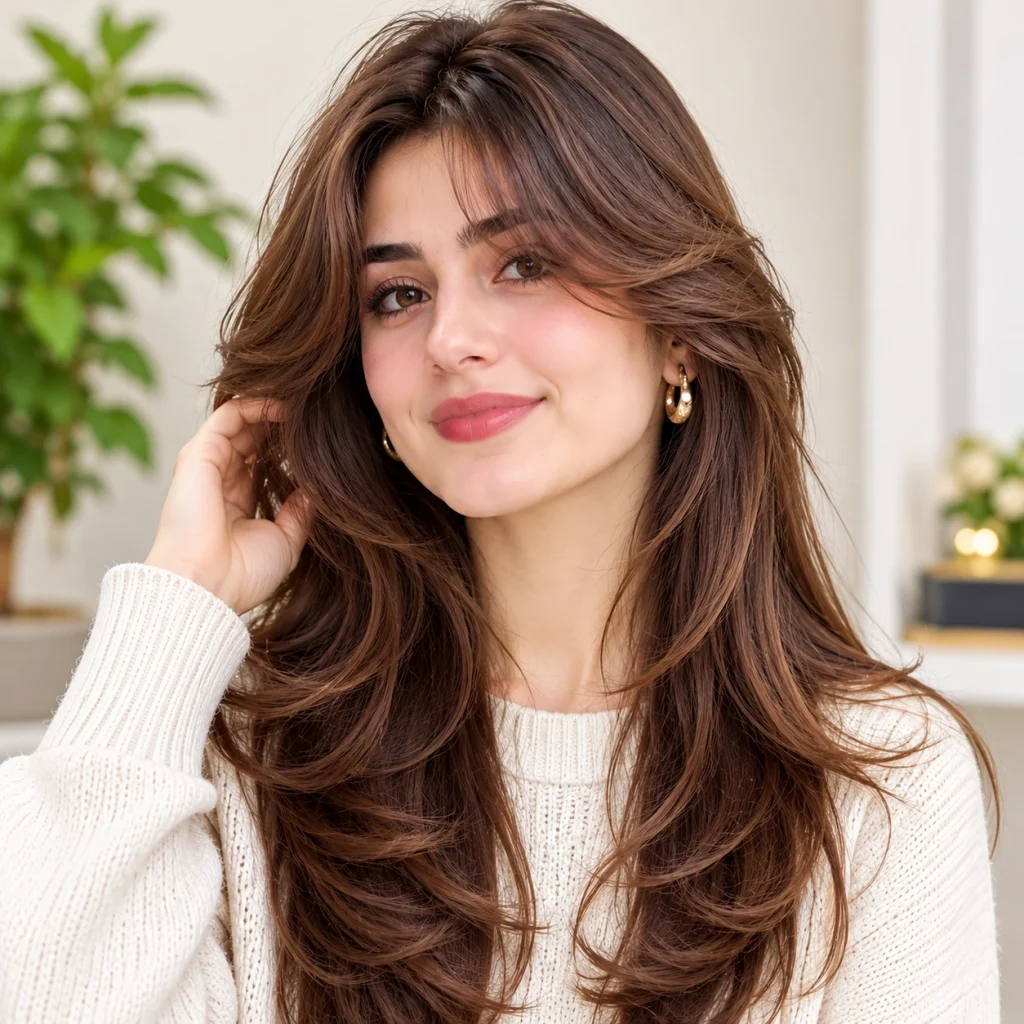
The look: a simple, center-parted fringe that sweeps to the sides.
This is the easiest place to start. Soft curtain bangs for beginners are cut slightly longer, so they blend into the rest of your hair and are easy to tuck behind your ears if you change your mind.
How to style it: blow dry the bangs away from the center with a round brush, then lightly mist with a flexible-hold spray.
Best for: first-timers, most face shapes, most hair types.
2. Wispy Curtain Bangs

The look: thin, airy bangs with a see-through finish.
Wispy curtain bangs let some forehead show through, which makes them feel light and effortless. They suit fine and thin hair well because they avoid a heavy, blocky look.
How to style it: use a light texturizing spray, and avoid heavy creams or oils that make the bangs clump.
Best for: fine or thin hair, a soft, low-commitment look.
3. Long Curtain Bangs
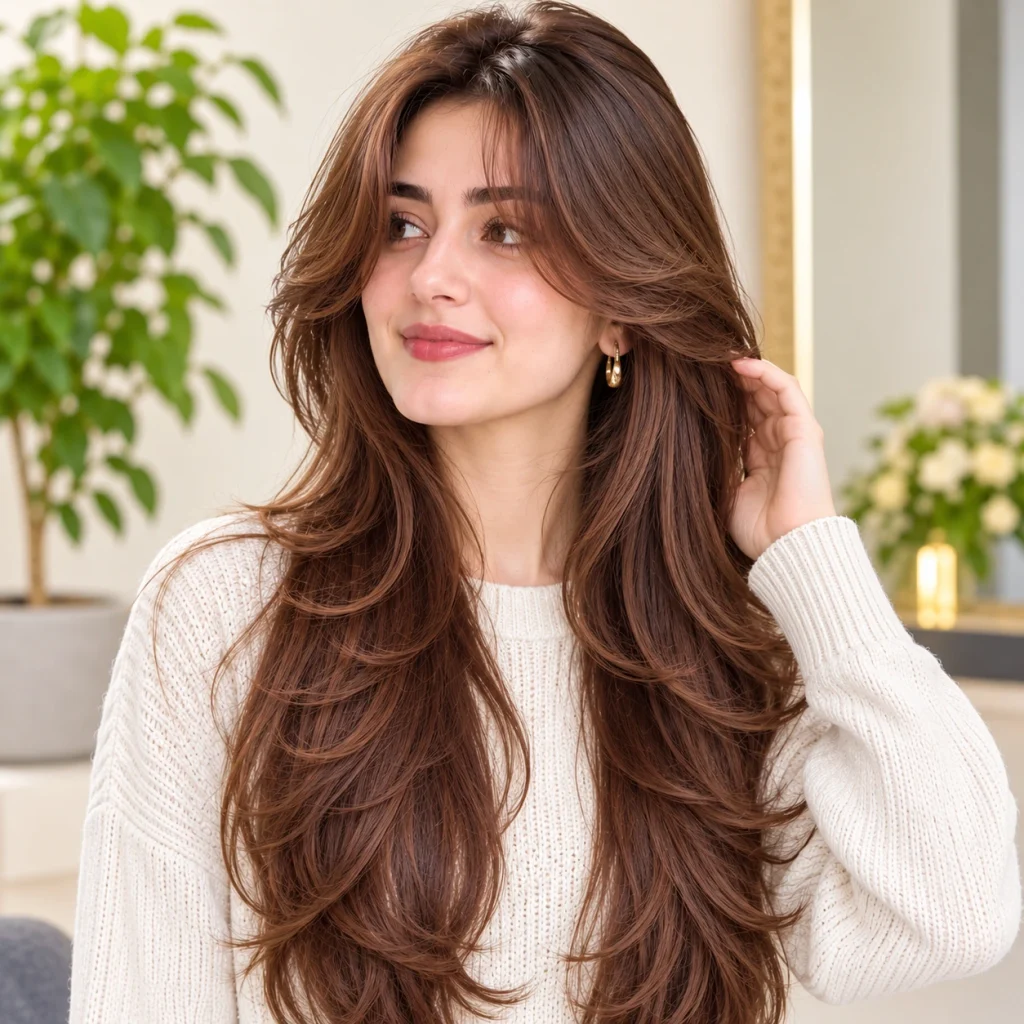
The look: curtain bangs that start longer and fall below the cheekbones or to the chin.
Long curtain bangs blend more easily into the rest of your hair and are easy to wear down or pinned back. They are a good choice if you want the look but are nervous about going shorter.
How to style it: curl the ends slightly away from the face for a polished sweep.
Best for: a gentle change, growing out other bangs, round and square faces.
4. Curtain Bangs With Long Layers
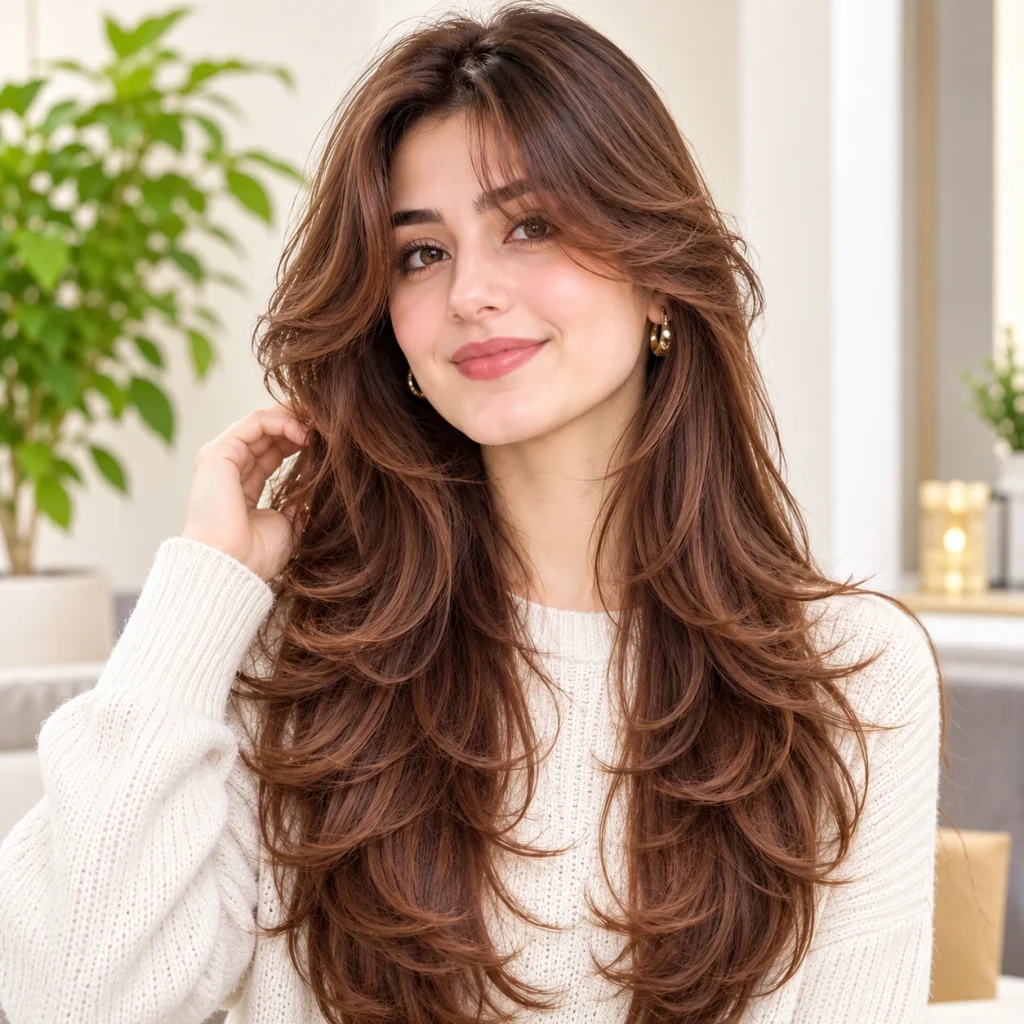
The look: curtain bangs paired with long, flowing layers.
Curtain bangs with layers connect the fringe to the rest of the cut, so it looks intentional. Long layers add movement and volume, and they are one of the most popular ways to wear curtain bangs with long hair.
How to style it: blow dry with a large round brush and flip the ends out slightly.
Best for: long hair, a classic romantic look.
5. Curtain Bangs With a Bob
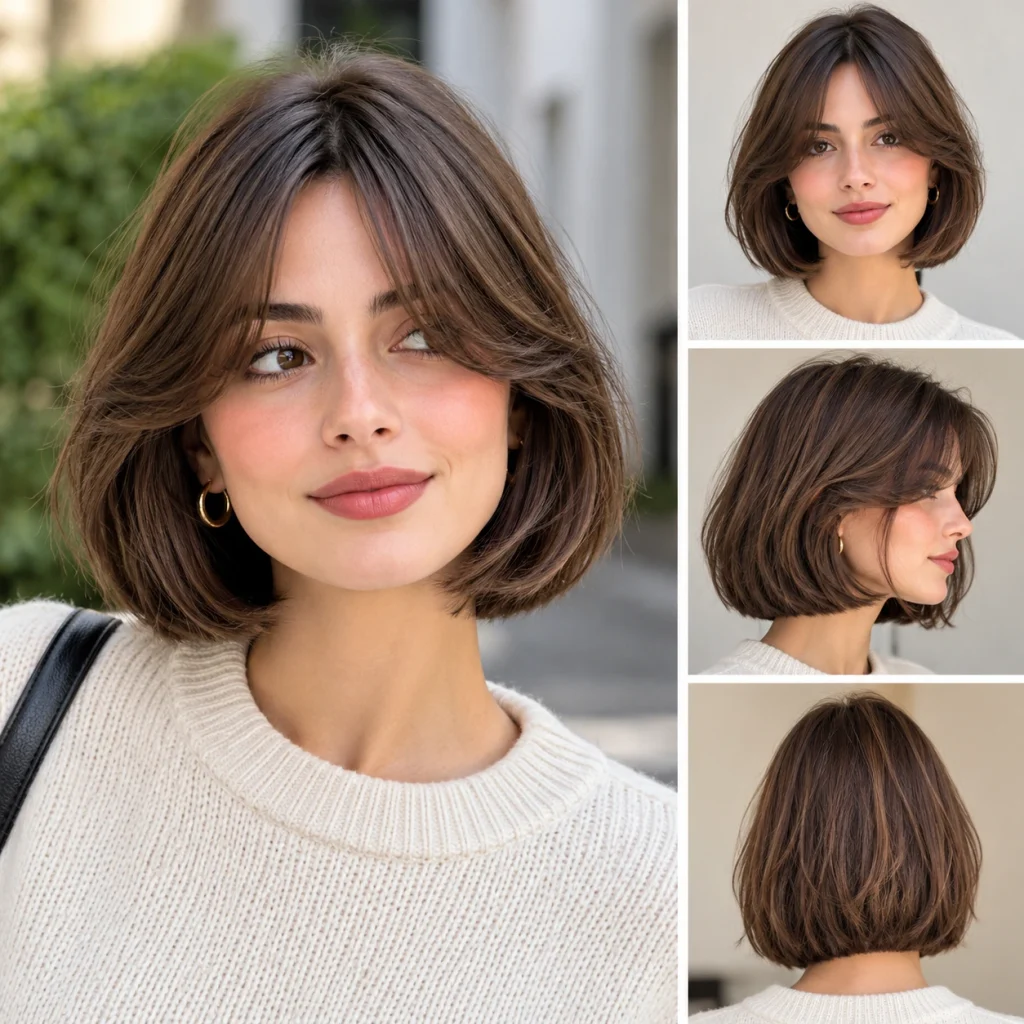
The look: a chin-length bob with center-parted, face-framing bangs.
Curtain bangs with a bob add softness to a structured cut. The bangs can blend into the bob’s length on the sides, creating a smooth shape that works with straight or wavy hair.
How to style it: smooth the bob with a flat iron and use a round brush to shape the bangs.
Best for: short to chin-length hair, a polished, modern look.
6. Curtain Bangs With a Lob
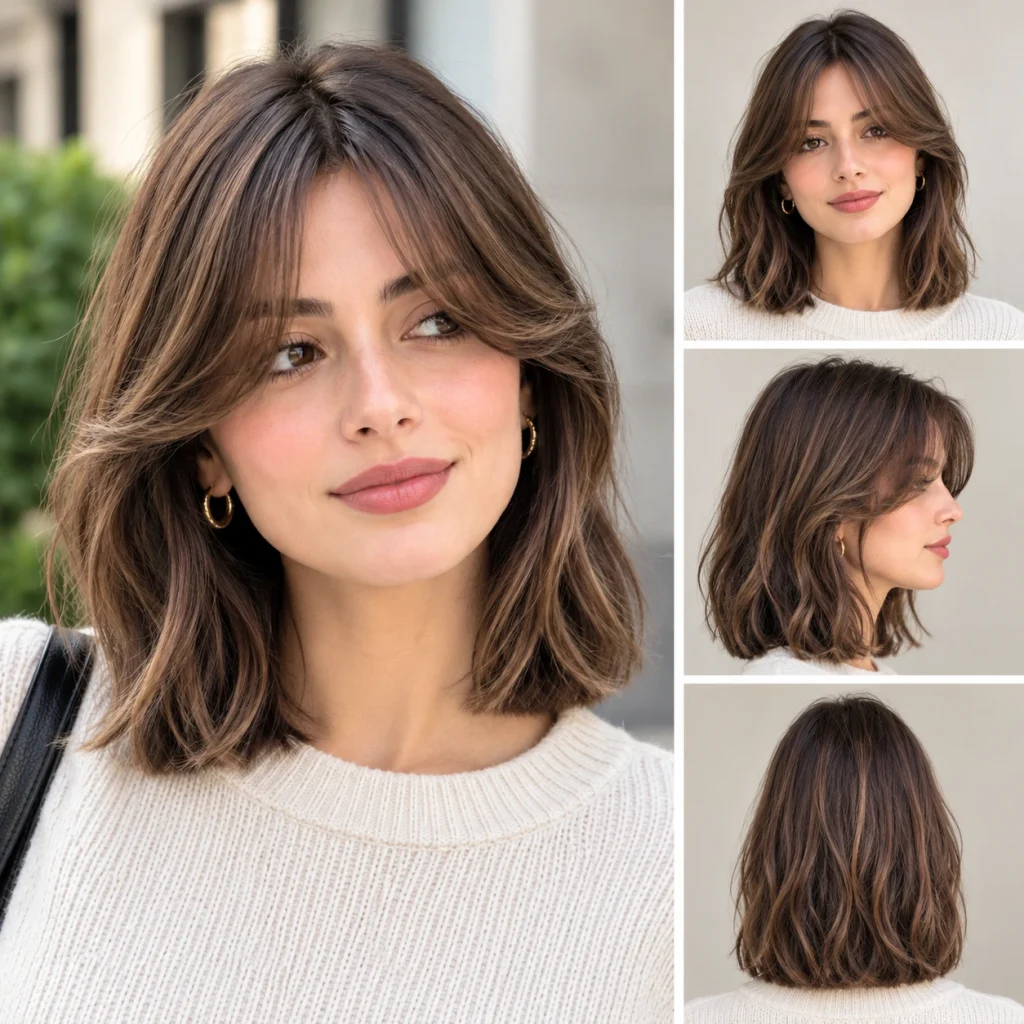
The look: a long bob (lob) with soft curtain bangs.
Curtain bangs with a lob are a flexible combination. The shoulder-grazing length gives you styling options, and the bangs add movement.
How to style it: add soft waves with a curling iron, leaving the ends out.
Best for: medium hair, everyday wear.
7. Curtain Bangs With Medium Hair
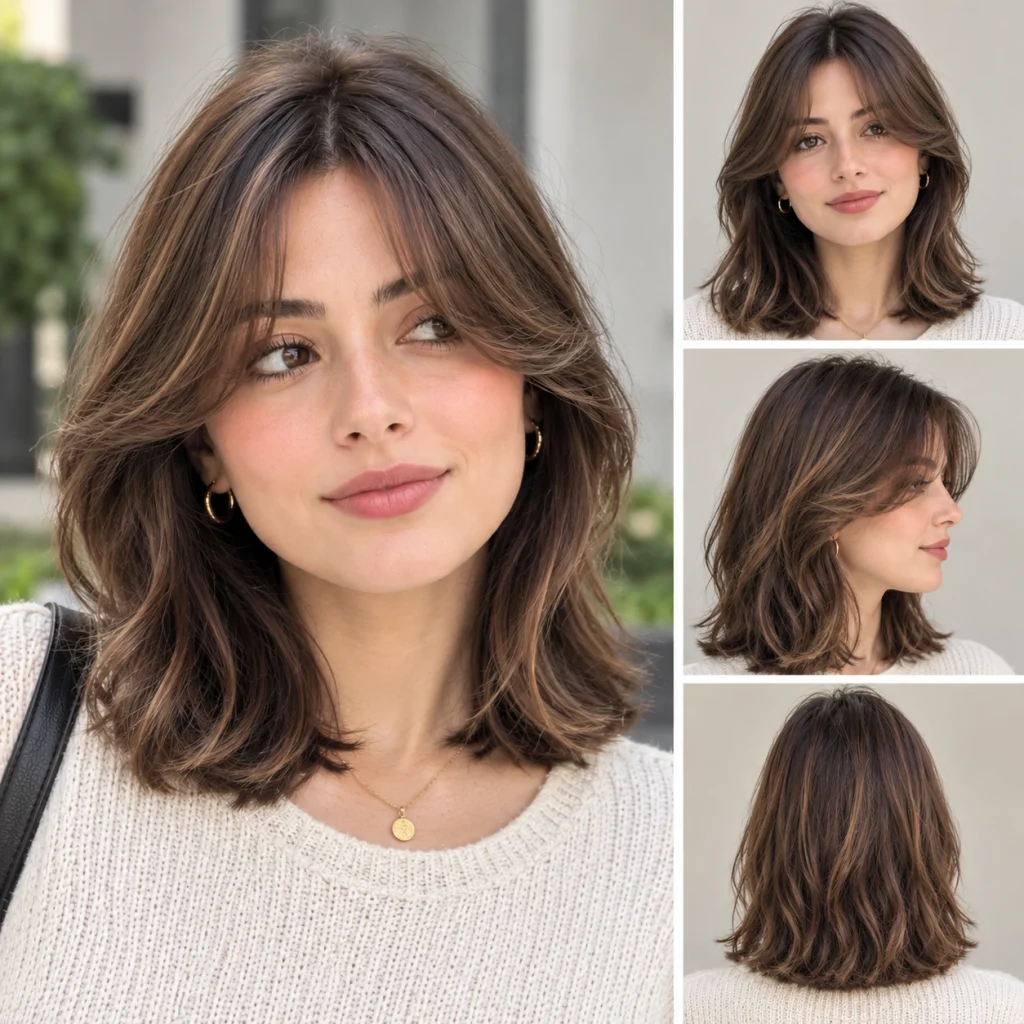
The look: shoulder-length hair with layers and curtain bangs.
Curtain bangs with medium hair look balanced because the bangs and layers frame the face without overwhelming a shorter length. They also show off texture well.
How to style it: use a texturizing spray and a round brush, or let natural waves do the work.
Best for: shoulder-length hair, most hair types.
8. Short Hair With Curtain Bangs
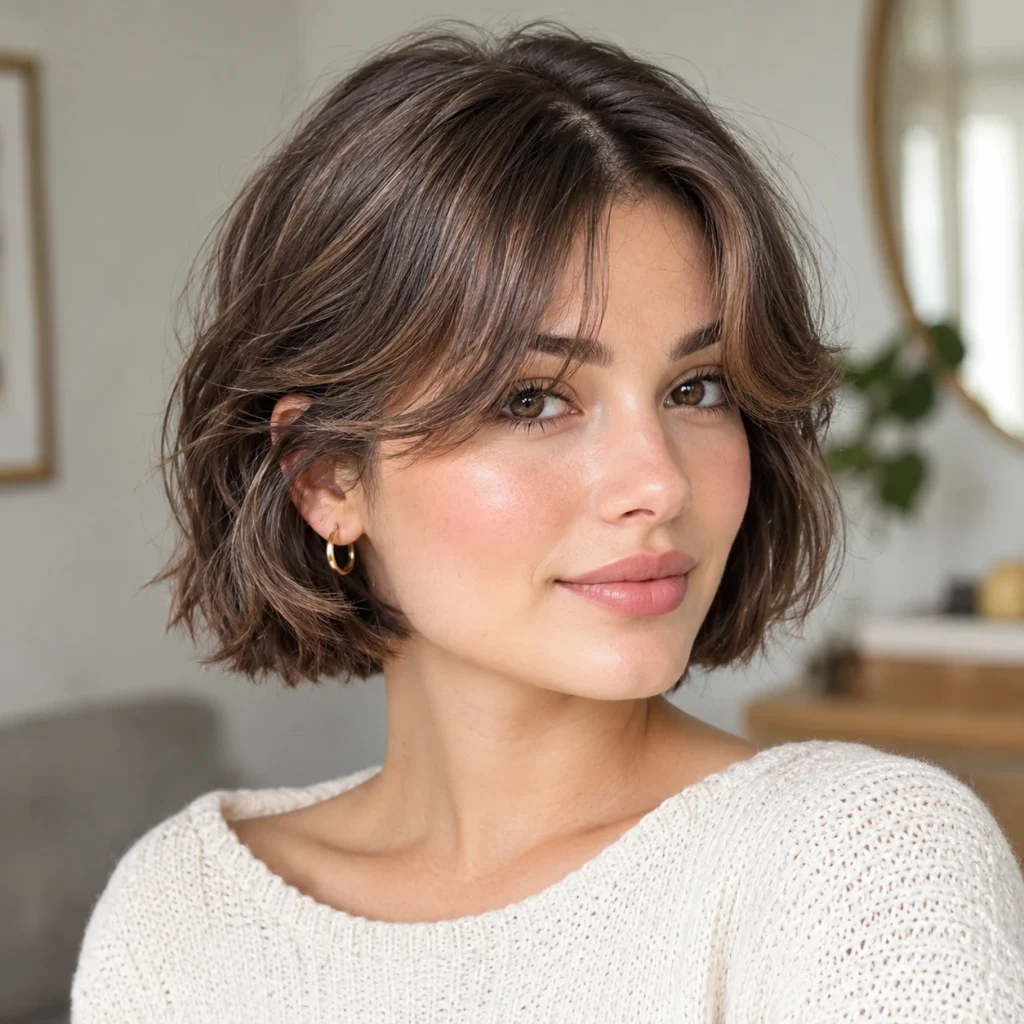
The look: a cropped cut or a short bob with soft, longer curtain bangs.
Curtain bangs short hair looks are bold and fresh. If your hair is short, ask for bangs that sweep to the sides and blend into the shortest layers. For more short-cut inspiration, see our guide to bixie haircuts.
How to style it: use a small amount of styling cream and a small round brush to shape the bangs.
Best for: short hair, pixie-bob styles, a statement cut.
9. Curtain Bangs for Curly and Wavy Hair
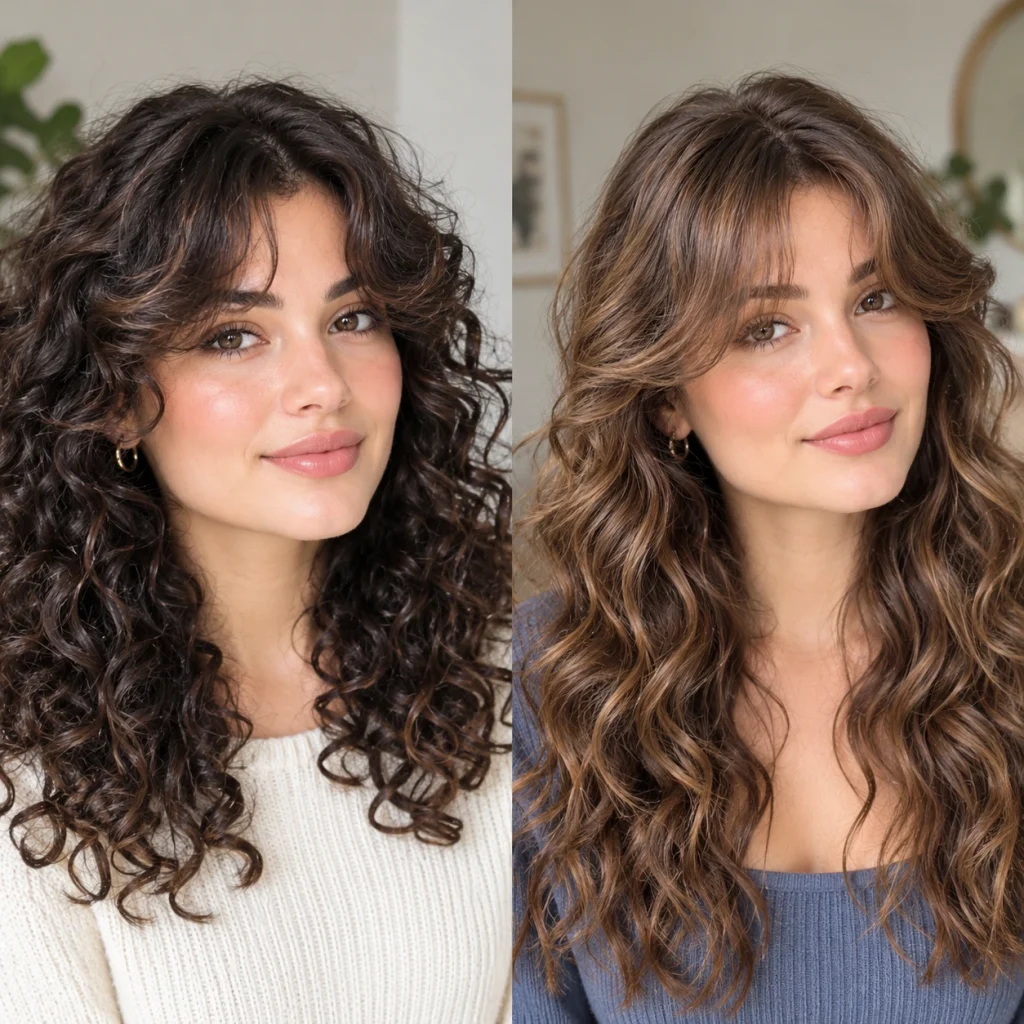
The look: curtain bangs that follow your natural curl or wave pattern.
Curtain bangs for curly hair work best when cut dry by a stylist who understands curls, since curls spring up after cutting. Curtain bangs for wavy hair look effortless because waves create natural movement. Thick wavy hair may need a little thinning for a lighter feel.
How to style it: use a curl cream or light mousse, diffuse on low heat, and avoid brushing the bangs once dry.
Best for: curly, wavy, and thick wavy hair.
10. Curtain Bangs Styled Up
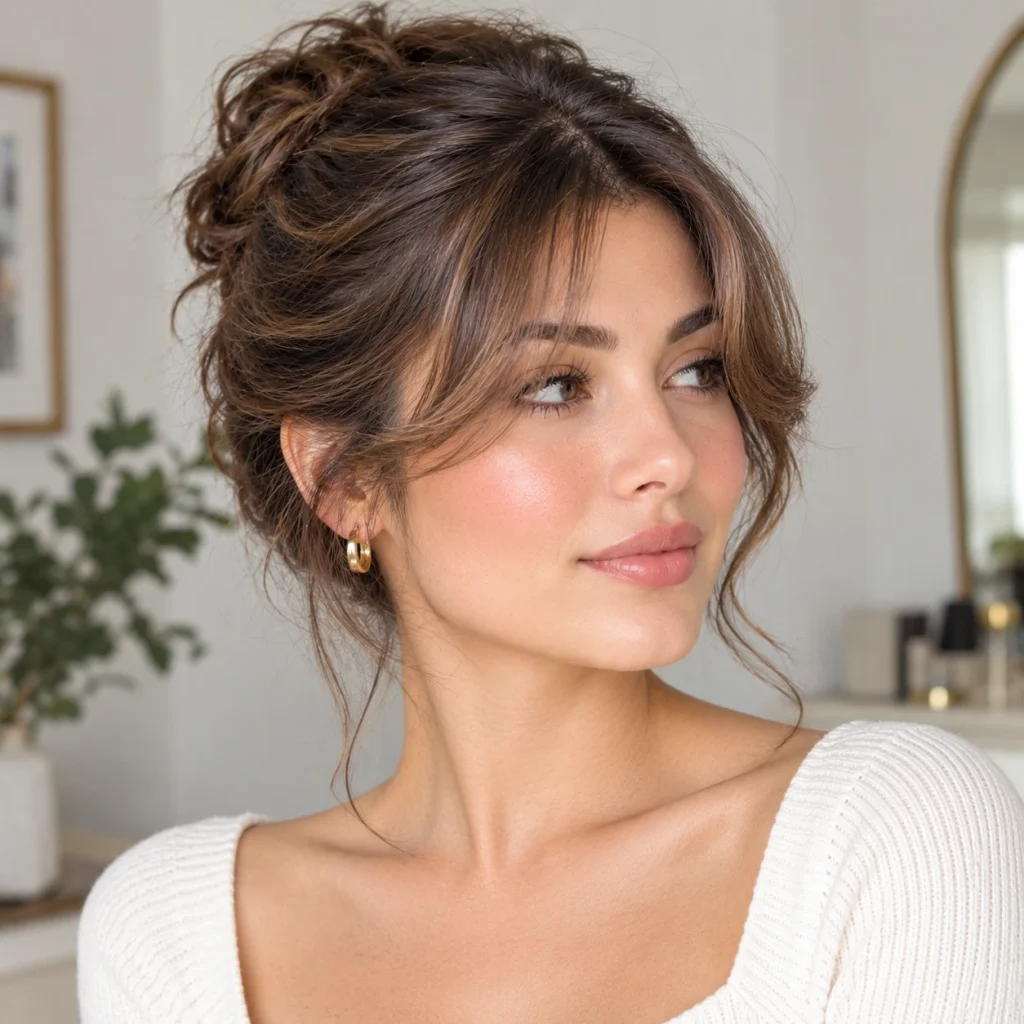
The look: curtain bangs with a ponytail or a half-up style.
Curtain bangs with a ponytail or half-up style are one of the best things about this fringe: it frames the face even when the rest of your hair is pulled back. This makes them practical for workouts and busy days.
How to style it: pull the rest of your hair back, leave the bangs out, and smooth them with a small amount of serum.
Best for: ponytails, half-up styles, everyday wear.
The 10 Styles at a Glance
| Style | Length | Best hair type | Maintenance |
|---|---|---|---|
| Soft classic | Medium | Most | Low to medium |
| Wispy | Short to medium | Fine, thin | Medium |
| Long | Long | Most | Low |
| With long layers | Long | Straight, wavy | Medium |
| With a bob | Medium | Straight, wavy | Medium |
| With a lob | Medium to long | Most | Medium |
| With medium hair | Medium | Most | Medium |
| Short hair | Short | Straight, wavy | Medium |
| Curly and wavy | Varies | Curly, wavy | Medium |
| Styled up | Medium | Most | Low |
Curtain Bangs for Different Hair Types
Curtain Bangs for Fine Hair
Fine hair benefits from light, wispy bangs. Avoid cutting them too thick, and use lightweight products so they do not look flat.
Curtain Bangs for Thin Hair
If your hair is thin, ask the stylist to take the bangs from a smaller section so they do not take hair from the sides. Keep them wispy and avoid heavy products.
Curtain Bangs for Thick Hair
Thick hair can look heavy in the front, so ask for thinning or soft layering. Use a smoothing serum to keep the bangs neat.
Curtain Bangs for Thick Wavy Hair
Thick wavy hair can make curtain bangs look full and voluminous. Ask the stylist to cut them while the hair is dry so they can see how the waves behave.
Curtain Bangs for Straight Hair
Straight hair shows the shape of the bangs clearly. Use a round brush to add a gentle curve and flip so they do not fall flat.
Curtain Bangs for Curly Hair
Cut curly bangs dry, and expect them to bounce up. Ask for slightly longer bangs than you think you want.
Curtain Bangs for Women Over 40
Curtain bangs are not limited by age, and many people find them a flattering way to soften lines around the forehead and frame the face. Focus on:
- A soft, blended shape. Longer side pieces look especially natural.
- Healthy-looking hair. A gloss or shine serum adds polish.
- A cut that suits your lifestyle. Choose a version you can style in a few minutes.
- Lightweight products. Avoid stiff or heavy formulas.
If you have thinning hair, ask your stylist how much hair to take for the bangs.
How to Ask for Curtain Bangs at the Salon
How to ask for curtain bangs at the salon is mostly about being specific.
- Bring photos. Show a few images that match your hair type and the look you want.
- Say how long you want them. For example, “cheekbone length” or “chin length.”
- Describe the center. Mention whether you want them wispy or fuller in the middle.
- Mention your cowlicks and hairline. A stylist can adjust placement.
- Ask for them to be blended with your layers. This helps the bangs look connected.
- Say if you are nervous. Many stylists will start longer and trim shorter.
- Ask how to style them. A stylist can show you how to blow dry and shape them.
Curtain Bang Wig and Clip-In Options
If you are not ready to cut, a curtain bang wig or clip-in curtain bangs can help you test the look. Clip-in bangs attach to the top of your head and blend with your hair. Check that the color and texture match your hair, and keep in mind that they will not behave exactly like real bangs.
How to Cut Curtain Bangs
The safest choice is a professional cut, especially for a first time. If you decide to try it at home, go slowly.
How to Cut Curtain Bangs at Home
- Use sharp hair scissors. Kitchen scissors can leave a rough edge.
- Start with dry, styled hair. Curtain bangs shift as hair dries, so cutting dry shows the real result.
- Section a small triangle. Take a triangle of hair from the crown, with the tip toward the back and the base at the front hairline. Clip away the rest of your hair.
- Start longer than you want. You can always cut more.
- Part in the center. Separate the section into two sides.
- Cut a gentle angle. Hold each side down and snip a gentle diagonal, longest at the outer edge and shorter toward the center.
- Point-cut for softness. Snip into the ends vertically to avoid a blunt line.
- Check in the mirror. Blow dry and style, then trim again if needed.
If you are unsure, ask a stylist for a quick consultation first. A bang trim is often a small service, and some salons offer free or low-cost trims between cuts.
How to Style Curtain Bangs
How to Blow Dry Curtain Bangs
- Start with damp bangs. Wash or lightly wet them if needed.
- Apply a small amount of product. A light mousse or heat protectant works.
- Blow dry with a round brush. Place the brush under the bangs, roll away from the center, and dry in the direction of the sweep.
- Alternate sides. Dry one side outward, then the other.
- Finish with cool air to set the shape.
- Mist lightly with hairspray if you need hold.
How to Style Curtain Bangs With a Round Brush
Use a medium round brush for most lengths. A smaller brush gives tighter curves for shorter bangs, and a larger brush gives a looser sweep. Roll the brush away from the center, hold for a few seconds, and release.
How to Keep Curtain Bangs From Separating
Bangs that split into clumps are a common complaint. To keep them smooth:
- Wash and dry the bangs on their own if they get oily during the day.
- Use dry shampoo at the roots to absorb oil.
- Avoid heavy products like oils and thick creams.
- Keep hands off your face. Touching adds oil.
- Use a light-hold spray on your brush and run it through.
- Check your skincare routine. Heavy forehead products can transfer to bangs.
Easy Everyday Styling
- Sweep and go: blow dry with a round brush and move on.
- Pin back: pin both sides behind your ears for a clean look.
- Half-up: pull the rest of your hair up while leaving the bangs out.
- Add a headband: soft headbands hold the bangs back on bad hair days.
For more ideas, see our guide to low-maintenance hairstyles for women.
Are Curtain Bangs High Maintenance?
Curtain bangs are moderate maintenance. They need a few minutes of daily styling, regular trims, and occasional washing on their own. Compared with blunt bangs, they are more forgiving because they blend into the rest of your hair and grow out gracefully.
How Often Should You Trim Curtain Bangs?
Most people trim curtain bangs every few weeks, commonly around every four to six weeks, depending on how fast hair grows and how short you like them. Ask your stylist about a quick bang trim between full haircuts.
How to Grow Out Curtain Bangs
Growing out curtain bangs is easier than growing out most bangs.
- Let them grow. Avoid trimming for several weeks.
- Ask for a blend. A stylist can blend them into longer layers.
- Pin or tuck them. Use pins, a headband, or tucking behind your ears.
- Use styling products. A light serum helps in the in-between stage.
- Be patient. Hair grows slowly, so expect a few months to reach chin length.
Products for Styling Curtain Bangs
| Product | What it does | Best for |
|---|---|---|
| Heat protectant | Protects hair from heat | Blow drying and curling |
| Light mousse | Adds volume and hold | Fine hair |
| Dry shampoo | Absorbs oil | Bangs that get greasy |
| Texturizing spray | Adds airy texture | Wispy bangs |
| Smoothing serum | Controls frizz | Thick or curly hair |
| Flexible-hold hairspray | Light hold | All bangs |
Common Curtain Bangs Mistakes
- Cutting too short. Start longer.
- Cutting when wet. Bangs shrink as they dry.
- Using heavy products. They make bangs clump.
- Skipping blending. Bangs should connect to your layers.
- Ignoring cowlicks. Tell your stylist about them.
- Not trimming regularly. They can drop into your eyes.
- Over-styling with heat. Use heat protectant and moderate temperatures.
Curtain Bangs and Your Cut: Quick Inspiration
For more cut ideas that pair well with curtain bangs, you might like our guide to the shaggy pixie cut for a short, textured version.
Frequently Asked Questions
What are curtain bangs?
Curtain bangs are center-parted, face-framing bangs that sweep to both sides and blend into the rest of your hair.
Do curtain bangs suit round faces?
Yes, usually. Longer curtain bangs that start higher and sweep below the cheekbones can add vertical lines and soften the face.
How do you cut curtain bangs at home?
Use sharp hair scissors, work on dry hair, take a small triangle section at the front, start longer than you want, and trim a gentle angle on each side. For a first time, a stylist is safest.
How do you blow dry curtain bangs?
Use a round brush to roll the bangs away from the center, dry in the direction of the sweep, alternate sides, and finish with cool air.
How do you keep curtain bangs from separating?
Avoid heavy products, use dry shampoo, wash the bangs on their own if they get oily, and keep your hands off your face.
Are curtain bangs high maintenance?
They are moderate maintenance: a few minutes of styling each day and a trim every few weeks. They are more forgiving than blunt bangs.
How often should you trim curtain bangs?
Most people trim them about every four to six weeks, depending on growth and preferred length.
How do you grow out curtain bangs?
Let them grow, ask for a blend into your layers, and pin or tuck them while they lengthen. Expect a few months.
Conclusion
Curtain bangs are flexible, flattering, and forgiving. Whether you pick soft classic bangs, wispy bangs, long curtain bangs, or a cut that pairs them with a bob or layers, the right choice depends on your face shape, hair type, and how much styling time you want.
For your next step, save two or three photos of curtain bangs on hair like yours, book a consultation, and ask your stylist to start longer. You can always shorten them, but you cannot add length back.