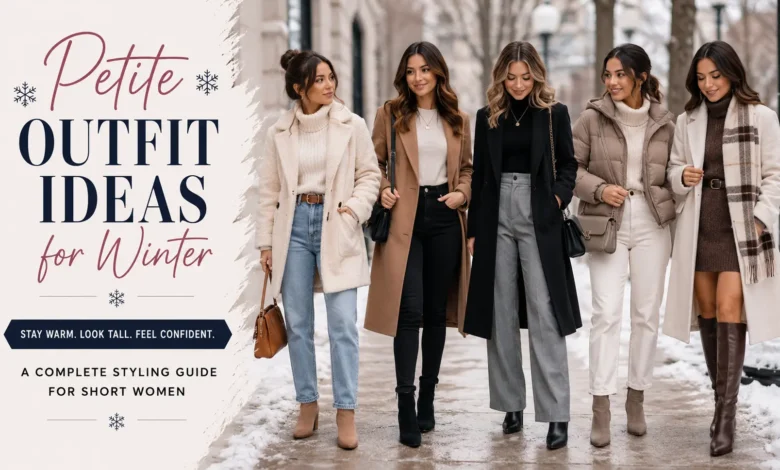
Winter dressing is hard enough with bulky coats, heavy layers, and knee-high boots to think about — but if you’re petite, there’s an extra layer of strategy involved. The same puffer jacket or oversized sweater that looks effortlessly cool on a tall friend can swallow a shorter frame whole, cutting your proportions in all the wrong places and making you look shorter, wider, or both.
The good news: dressing well for winter when you’re petite isn’t about avoiding cozy, warm clothing. It’s about choosing the right cozy, warm clothing — pieces cut, layered, and styled in a way that works with your proportions instead of against them. In this guide, we’ll walk through the core styling principles, the best coat shapes, smart layering tricks, outfit ideas for every occasion, a go-to formula table, budget-friendly shopping tiers, and the most common mistakes petite women make when the temperature drops.
Whether you’re 4’11” or 5’4″, these tips are built around one goal: staying warm without losing your shape.
Why Winter Dressing Is Different for Petite Body Types
Most winter clothing — coats, sweaters, scarves, boots — is designed on standard or tall sizing blocks. That means sleeves run long, hemlines fall at awkward points, and volume is added generously, assuming there’s more frame to balance it out. On a petite body, that same volume doesn’t get balanced — it gets absorbed, and the outfit ends up wearing you instead of the other way around.
There are a few specific ways this shows up:
- Coats overwhelm the frame. A knee-length or longer coat on a 5’1″ woman can visually eat up a huge percentage of her total height, leaving little room for anything else to register.
- Bulky knitwear erases the waistline. Oversized sweaters are a major winter trend, but on a petite frame, they often remove the one defining line (the waist) that creates shape.
- Long scarves cut proportions in half. A scarf that hangs past the hip on a taller person can hit at a much more visually disruptive point on a petite frame — often right at the widest part of the torso.
- Layering adds width, not just warmth. Three or four loose layers stacked on top of each other can make a small frame look padded rather than polished.
None of this means petite women need to sacrifice warmth for style. It means winter outfits need a bit more intention — choosing pieces and combinations that add visual length and structure rather than bulk.
Core Styling Principles for Petite Winter Dressing
These six principles are the foundation for almost every outfit combination in this guide. Once they click, building your own petite-friendly winter looks becomes second nature.
- Create vertical lines wherever possible. Vertical seams, monochrome dressing, open front layers, and tall boots all draw the eye up and down instead of side to side, adding the illusion of height.
- Choose structure over slouch. Structured coats, tailored trousers, and fitted knitwear hold their shape on a smaller frame in a way that slouchy, oversized pieces don’t.
- Keep coat lengths at or above the knee. Cropped, hip-length, or knee-length coats preserve leg line and avoid the “coat wearing you” effect of longer styles.
- Go high-waisted on bottoms. A higher waistline visually lengthens the legs, which matters even more in winter when boots and heavier fabric can shorten the lower half.
- Layer thin, not thick. Thermal base layers and lightweight knits let you stack warmth without stacking visible bulk.
- Match your shoe or boot height to your hemline. The gap (or lack of gap) between where your pants or skirt end and your boots begin has a big impact on how long your legs appear.
Keep these six rules in mind as a mental checklist any time you’re building a winter outfit, and most of the common petite styling mistakes solve themselves.
Best Winter Coats for Petite Frames
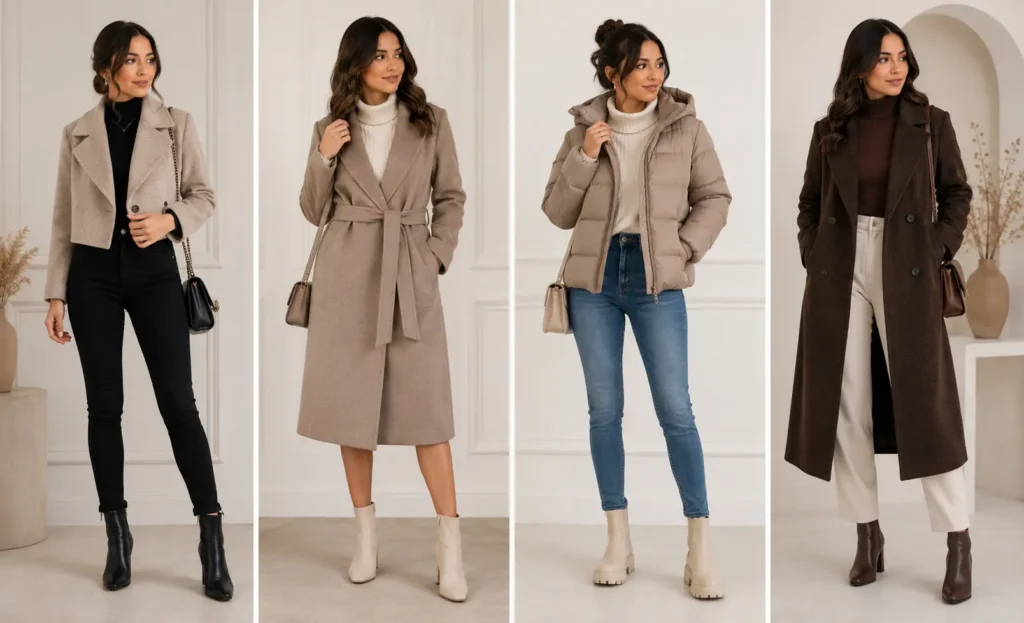
The coat is the single most important piece in a petite winter wardrobe, since it’s the outermost layer and often the first thing people notice. Length, structure, and proportion all matter more here than anywhere else in the outfit.
Length: Aim for coats that hit at the hip, mid-thigh, or just above the knee. Anything past the knee starts to compete with your actual height, especially in flat or low-heeled shoes.
Structure: A defined waist — whether through a belt, a fitted cut, or princess seams — does more for a petite frame than any other single design detail. It reintroduces the waistline that bulky winter fabric tends to hide.
Sleeve and shoulder fit: Oversized shoulders and long sleeves (a common issue with “one size fits most” outerwear) throw off proportions fast. Tailoring the sleeves, even by an inch, makes a noticeable difference.
Fabric weight: Wool-blend coats in a mid-weight fabric tend to hold structure better than puffer-style coats, which usually add width without adding definition. If you love a puffer for the warmth, look for a fitted or cropped style rather than an oversized one.
Coat Style Comparison Table
| Coat Style | Best For | Avoid If |
|---|---|---|
| Cropped structured coat | Everyday wear, adds visible waistline | You want maximum coverage from wind |
| Belted wool coat | Work, dressier occasions, defines shape | Belt sits too low on your torso |
| Fitted puffer (hip length) | Casual, cold climates, warmth-first days | The puffer style you like only comes oversized |
| Knee-length trench-style coat | Transitional winter days, polished look | You’re under 5’2″ — may run long |
| Cape or poncho coat | Statement layering pieces | You want to preserve arm and shoulder definition |
Layering Without Looking Bulky
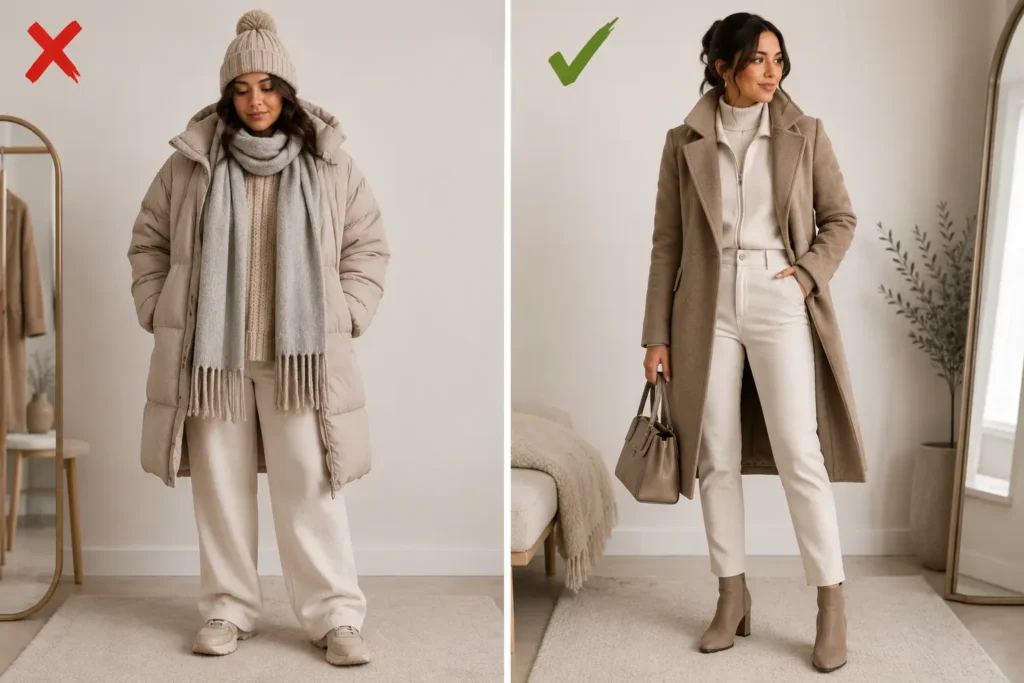
Layering is where most petite winter outfits go wrong — not because layering itself is a bad idea, but because the wrong layers are stacked together. The goal is warmth through thinner, smarter pieces rather than warmth through sheer volume.
Start with a thermal base. A fitted thermal top or leggings under your outfit adds real warmth without adding visible bulk, since it sits close to the body.
Choose one fitted mid-layer, not two loose ones. A single fitted sweater or turtleneck does more for your silhouette than two looser knits stacked together.
Use open-front layers to create a vertical line. An open cardigan, blazer, or unbuttoned coat worn over an outfit draws a continuous vertical line down the body, which reads as taller and leaner than a closed, boxy layer.
Tuck in at least one layer. Fully untucked, layered outfits tend to blur the waistline. Tucking in your base or mid-layer — even just the front — reintroduces definition.
Be intentional with scarves. A scarf looped once and left short, or a slim scarf rather than an oversized blanket scarf, avoids adding width at the torso. If you love a chunky scarf, let it hang open rather than wrapping it multiple times around the neck.
Petite Outfit Ideas by Occasion
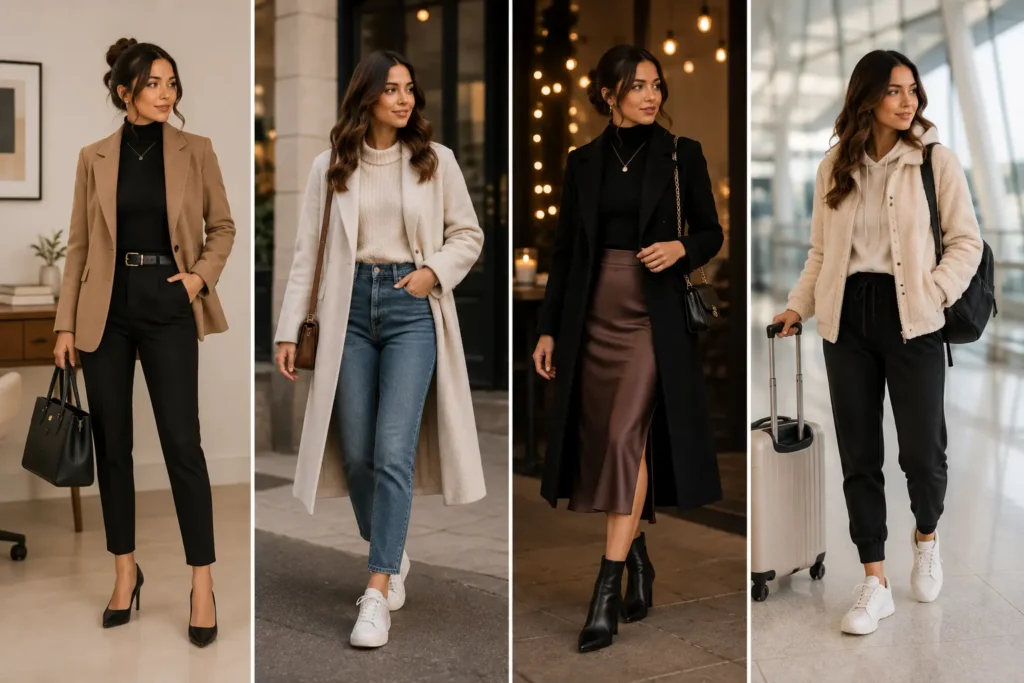
Petite Winter Work Outfit
Pair high-waisted tailored trousers with a tucked-in turtleneck and a cropped or belted wool coat. Add ankle boots with a slight heel to keep the leg line long, and a structured tote instead of an oversized bag that can visually compete with your frame. Stick to one or two colors head-to-toe for a clean, elongating silhouette that still feels professional.
Also Read: Office & Work Outfit Ideas That Look Sharp and Feel Professional
Petite Winter Casual Outfit
A fitted turtleneck tucked into straight-leg or slim jeans, topped with a cropped puffer or shearling jacket, works well for errands or casual weekends. Sneakers or ankle boots both work here — just make sure the jean hem doesn’t pool excessively at the shoe, which shortens the leg line.
Also Read: Casual Outfit Ideas for Everyday Comfort and Style
Petite Winter Date Night Outfit
A fitted sweater dress with a wide belt at the natural waist, paired with over-the-knee or tall boots, creates one long vertical line that’s ideal for petite frames. Layer a cropped leather or faux-fur jacket on top, and keep accessories minimal so the eye isn’t pulled sideways.
Also Read: Date Night Outfit Ideas to Feel Confident and Beautiful
Petite Winter Travel Outfit
Comfort matters most here, but the same principles apply. Choose leggings or joggers with a high waist, a fitted long-sleeve top, and a cropped or hip-length puffer rather than a long parka that can be cumbersome to move in. Slip-on sneakers or ankle boots keep things easy through security lines while still preserving your proportions.
Also Read: Weekend & Travel Outfit Ideas for Effortless Style On the Go
Color & Pattern Tips for Petite Winter Looks
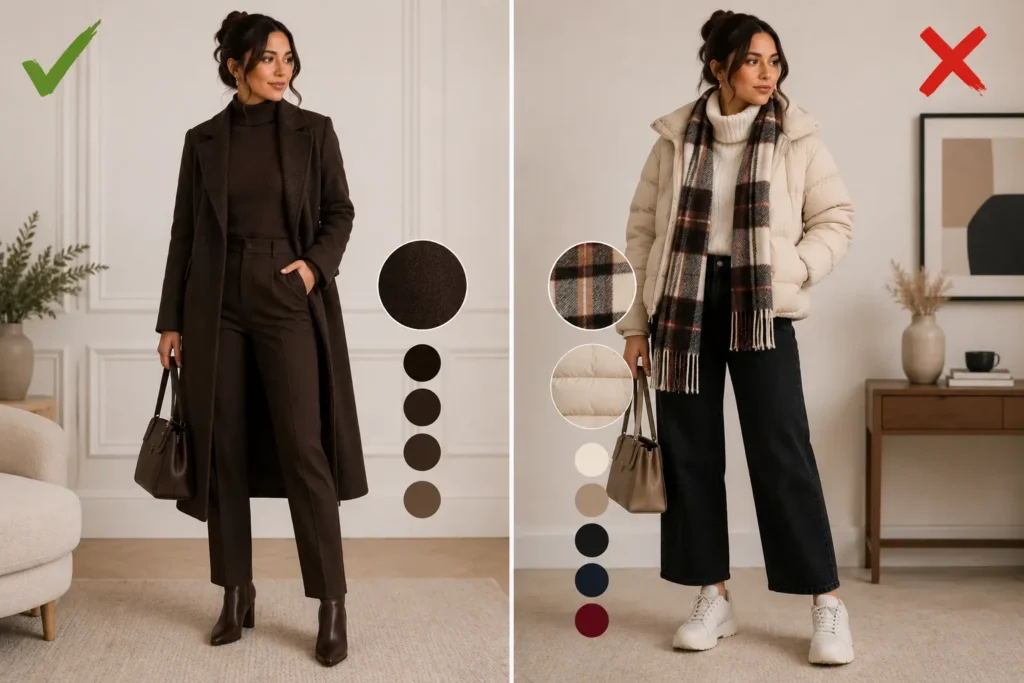
Monochrome dressing is your best friend in winter. Wearing one color — or close shades of the same color — from top to bottom removes visual breaks in the body and creates a longer line. Charcoal, camel, cream, and deep burgundy are all easy monochrome options for the season.
Save bold patterns and color blocking for one area. A patterned coat or sweater can work beautifully, but pairing it with plain, complementary pieces below keeps the eye from being pulled in too many directions at once.
Use color to separate top and bottom sparingly. A strong contrast between your top and bottom half (like a bright top with dark pants) visually cuts the body in half. If you want contrast, keep it subtle rather than stark.
Petite Winter Outfit Formula Table
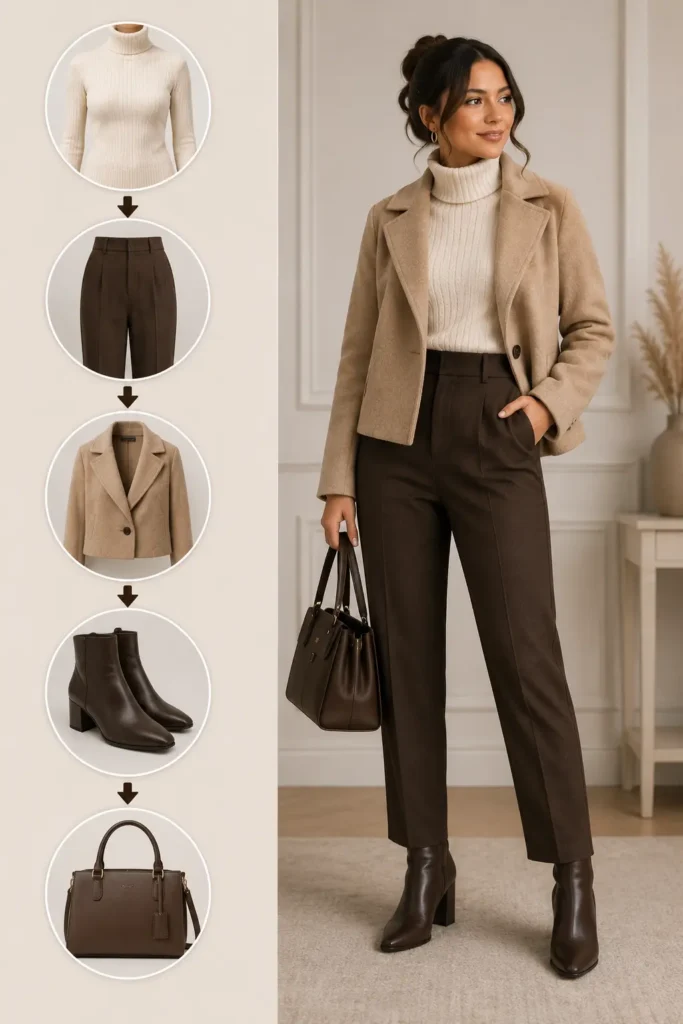
| Top | Bottom | Outerwear | Shoes | Accessory |
|---|---|---|---|---|
| Fitted turtleneck | High-waisted straight trousers | Cropped wool coat | Ankle boots | Structured tote |
| Tucked-in sweater | Slim dark denim | Belted trench coat | Pointed flats | Slim scarf |
| Sweater dress | — | Cropped leather jacket | Over-the-knee boots | Delicate layered necklace |
| Thermal base + cardigan | High-waisted joggers | Fitted puffer jacket | Sneakers | Crossbody bag |
| Fitted knit top | Wide-leg cropped trousers | Longline open cardigan | Block-heel boots | Statement earrings |
Budget Tiers for Petite Winter Wardrobe
Budget-friendly: Look for petite-specific lines at mainstream retailers, which are increasingly common and often priced the same as regular sizing. A well-fitted cropped coat and a couple of fitted sweaters go a long way here.
Mid-range: Invest in one structured wool coat and a pair of well-fitting ankle or knee-high boots. These two pieces get worn constantly through the season and have the biggest visual impact per outfit.
Investment: A tailored coat altered specifically to your proportions (even a small alteration to sleeve length or hem) is often worth more than an expensive coat bought off the rack in a standard size. Tailoring is one of the highest-impact investments a petite wardrobe can make.
Common Mistakes Petite Women Make in Winter
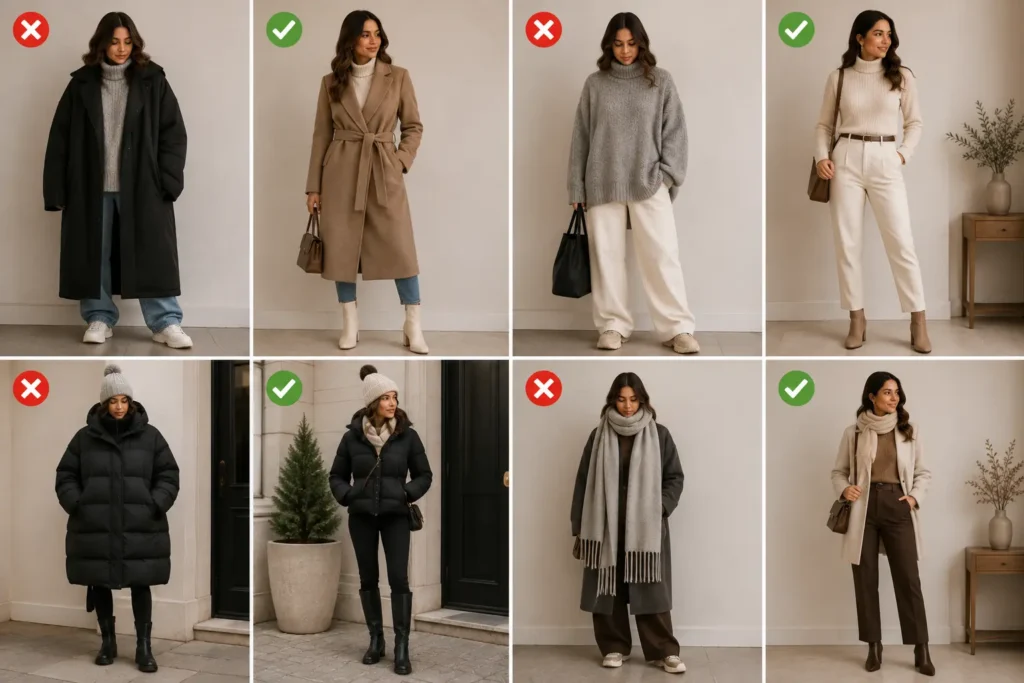
- Wearing coats that fall past the knee. Even a beautiful coat can shorten your frame if the length isn’t right.
- Choosing long, blanket-style scarves. These often hit at the widest point of the torso and add unintended bulk.
- Layering too many loose pieces at once. Multiple oversized layers stack width instead of warmth.
- Wearing boots that don’t match the hemline. A big gap between where pants end and boots begin can visually shorten the leg.
- Buying coats a size up “for warmth.” Sizing up usually adds shoulder and sleeve length that overwhelms a smaller frame; a well-fitted coat with a thermal layer underneath is almost always warmer in practice.
- Skipping tailoring. Sleeves, hems, and shoulder seams that are even slightly too long can throw off an otherwise great outfit.
Frequently Asked Questions
What coat length is best for petite women?
Hip-length, mid-thigh, or just-above-the-knee coats tend to work best, since they preserve leg line without overwhelming the frame the way longer coats can.
Do long coats make you look shorter?
They can, especially if the coat falls past the knee and isn’t fitted at the waist. A long coat isn’t off-limits, but it works best when structured and belted rather than loose.
What are the best boots for petite women in winter?
Ankle boots and knee-high boots with a slight heel both work well, as long as the boot height coordinates with the hemline above it to avoid an awkward gap.
How can I layer for warmth without looking bulky?
Start with a thin thermal base layer, add one fitted mid-layer instead of several loose ones, and finish with a structured outer layer. This keeps warmth close to the body rather than adding visible volume.
What colors make you look taller in winter?
Monochrome outfits — one color or close shades worn head-to-toe — create a continuous vertical line that visually adds height, which is especially useful once heavier winter fabrics are involved.
Also Read: 30+ Cowgirl Outfit Ideas for Every Occasion (Concerts, Costumes, Everyday Wear)