
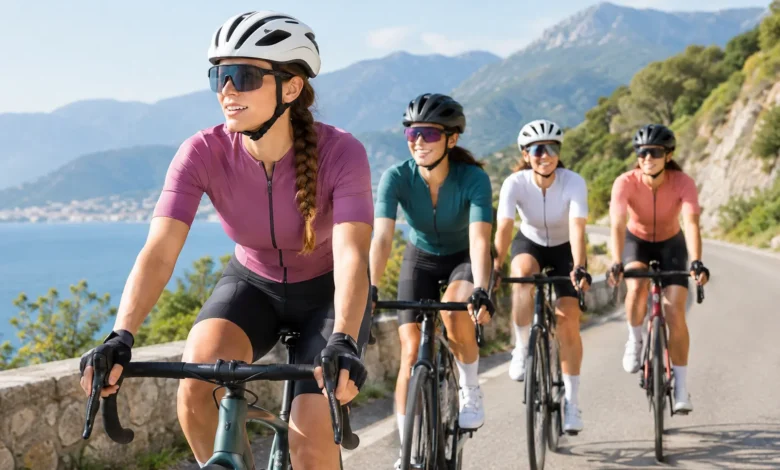
Anyone who has ever completed a long ride in the wrong clothing knows exactly how much difference proper cycling gear makes. What starts as mild discomfort in the first few miles can turn into genuine pain by mile twenty — chafing, overheating, a saddle that suddenly feels like a medieval torture device. The right women’s cycling clothing doesn’t just look the part; it fundamentally changes how far, how comfortably, and how confidently you can ride.
This guide breaks down what actually makes cycling-specific clothing different from regular activewear, the genuinely fascinating history behind how women’s cycling gear evolved, and 5 women’s cycling clothing picks that feel unstoppable. Along the way, we’ll cover fabric choices, sizing, seasonal layering, and the practical questions every rider — beginner or experienced — eventually asks about what to actually wear on a bike.
What to Wear for Cycling as a Woman
The foundation of a good cycling outfit for women typically includes a moisture-wicking jersey or top, padded shorts or bib shorts, and weather-appropriate outer layers depending on the season and length of ride. Beyond the basics, cycling-specific gloves, eyewear for wind and debris protection, and proper footwear round out a complete kit for anyone riding regularly rather than occasionally.
What you actually need scales considerably with how seriously and how often you ride. A casual commuter might get by with padded shorts and a breathable top, while someone training for long-distance road rides will typically build out a more complete wardrobe covering multiple weather conditions and ride lengths.
What Makes Cycling Clothing Different From Regular Activewear?
Cycling clothing is engineered around the specific, repetitive demands of being in a fixed riding position for extended periods, which is meaningfully different from the movement patterns most general activewear is designed for. Padded shorts address direct, sustained pressure on the sit bones and soft tissue from the saddle — a problem regular leggings simply aren’t built to solve. Cycling jerseys are typically cut slightly longer in the back to prevent gaps when leaning forward over handlebars, and many include rear pockets specifically positioned for easy access while riding, rather than the side or hip pockets common in general athletic wear.
Fabric choices also differ meaningfully — cycling clothing prioritizes wind resistance, aerodynamics, and moisture management tailored to sustained outdoor exposure, rather than the more general-purpose stretch and breathability prioritized in typical gym wear.
What Is Padded Cycling Shorts For?
The padding in cycling shorts, known as a chamois, exists specifically to cushion and protect the areas of the body under direct, sustained pressure from a bike saddle, while also reducing friction between skin and fabric that causes chafing over long rides. Modern chamois pads use varying densities of foam positioned strategically to relieve pressure precisely where it’s needed most, rather than simply adding uniform padding throughout the shorts.
Women’s chamois pads are specifically engineered differently from men’s, reflecting genuine anatomical differences in pressure points and sit-bone width, which is part of why women’s-specific padded shorts generally offer meaningfully better comfort than shorts originally designed for men and simply resized.
What Fabric Is Best for Cycling Clothing?
Fabric choice significantly affects comfort, performance, and weather resistance on the bike. Moisture-wicking synthetic blends, typically polyester or nylon combined with spandex for stretch, remain the standard for cycling jerseys and shorts, since they pull sweat away from the skin and dry quickly compared to natural fibers like cotton, which stay damp and can cause chafing on longer rides. Lycra and similar stretch fabrics allow the close, aerodynamic fit cycling clothing relies on while still accommodating the full range of pedaling motion.
For outer layers, wind-resistant and water-resistant technical fabrics matter considerably more than in general activewear, given how much time cycling clothing spends directly exposed to moving air and changing weather conditions.
A Brief History of Women’s Cycling Apparel
Cycling-specific padding has surprisingly old roots — the chamois pad traces back to the early 1900s, when it was originally just a piece of leather (named for the type of goat hide it came from) sewn into the crotch of otherwise itchy, ill-fitting wool cycling shorts. Riders in the earliest days of competitive cycling, including the first editions of the Tour de France, reportedly resorted to lining their shorts with raw steaks to reduce painful friction, since the padding technology of the era offered little genuine relief.
The real transformation came with the introduction of Lycra in the 1970s, with professional cycling teams among the first to adopt the new stretch fabric, quickly followed by synthetic padded inserts that replaced leather chamois entirely. This combination dramatically improved fit, ventilation, and comfort compared to the wool-and-leather shorts of earlier decades, and by the 1990s, bike shorts had become recognizable enough as a garment that they crossed over into mainstream fashion — even Princess Diana was frequently photographed wearing them as part of her off-duty athletic style.
How Cycling Gear Has Become More Women-Focused
For much of cycling apparel’s early commercial history, women’s gear was often little more than a men’s product resized and recolored, without meaningfully accounting for differences in body proportions, hip and chest shaping, or chamois design. This “shrink it and pink it” approach left many women wearing shorts with chamois padding positioned incorrectly for their anatomy, jerseys that fit awkwardly through the chest and hips, and shorts that lacked genuinely functional pockets.
The shift toward real women’s-specific design began gaining meaningful traction in the 1990s, as pioneering designers — Georgena Terry among the most notable, having started designing smaller, better-proportioned frames and gear after recognizing a genuine gap in properly fitting equipment for women cyclists — began building products around actual data and feedback from women riders rather than broad assumptions. This shift toward genuinely gender-specific cuts, sizing, and chamois engineering has continued to mature considerably since, helping bring far more women into the sport by addressing the real, practical barriers that generic “unisex” gear had created.
Evolution of Cycling Clothing Technology
Beyond padding and fit, cycling fabric technology overall has advanced dramatically from the heavy wool jerseys and baggy cotton shorts of cycling’s earliest days. Wool, while warm, was heavy, slow-drying, and uncomfortable when wet, while cotton became soggy with sweat and prone to chafing — neither fabric was particularly well-suited to sustained physical exertion outdoors. The shift to synthetic, moisture-wicking fabrics fundamentally changed what riders could expect from their clothing, prioritizing quick drying, breathability, and sustained comfort over many hours in the saddle.
More recent innovations have continued refining this technology further, including antimicrobial treatments to manage bacteria in chamois padding, increasingly sophisticated multi-density foam construction, and fabric printing techniques that have allowed cycling apparel design to become considerably more expressive and varied than the basic black shorts of earlier decades.
Difference Between Road and Mountain Cycling Clothing
Road cycling clothing generally prioritizes aerodynamics and a close, streamlined fit, since minimizing wind resistance matters considerably for road riding speed and efficiency. Mountain bike clothing, by contrast, tends to favor a slightly looser, more durable fit, with reinforced fabric in high-wear areas and clothing designed to accommodate a wider range of body positions and movement, given the more varied terrain and physical demands of off-road riding.
Padding also differs somewhat between the two disciplines — road cycling shorts often use a chamois optimized for the sustained, relatively fixed position of road riding, while mountain bike shorts sometimes use a slightly different padding profile suited to a more upright riding position and rougher terrain impact.
Why Padded Shorts Matter for Cycling Comfort
Beyond simple cushioning, padded shorts directly address two of the most common physical complaints among cyclists: saddle pressure and chafing. Without adequate padding, sustained pressure on the sit bones and surrounding tissue can cause genuine pain and even numbness on longer rides, while friction between skin and fabric or skin and saddle can create painful chafing that worsens the longer a ride continues. A well-fitted chamois addresses both issues simultaneously, which is exactly why padded shorts remain one of the most consistently recommended cycling-specific purchases for new riders.
Benefits of Moisture-Wicking Cycling Clothing
Moisture-wicking fabric offers several concrete benefits for cyclists beyond simple comfort. By pulling sweat away from the skin and toward the fabric’s outer surface where it can evaporate more quickly, these fabrics help regulate body temperature more effectively during sustained exertion, reducing the overheating that heavier, less breathable fabrics can cause. This same moisture management also reduces the friction and chafing risk that comes from prolonged contact with damp fabric, which matters considerably on rides lasting more than an hour or two.
Why Proper Cycling Gear Improves Performance
Well-designed cycling clothing contributes to performance in ways that go beyond simple comfort. Aerodynamic, close-fitting jerseys and shorts reduce wind resistance compared to loose, flapping regular activewear, which translates to measurably less effort required to maintain speed, particularly on longer or faster rides. Reduced chafing and saddle discomfort also mean less physical distraction and fatigue accumulating over a long ride, allowing more consistent effort and focus rather than constant, uncomfortable adjustment.
Why Fit Matters in Cycling Apparel
Fit affects cycling clothing’s function far more directly than it does most other activewear categories. A jersey that’s too loose creates unwanted wind drag and can flap uncomfortably at speed, while shorts that fit poorly around the chamois can shift out of position during a ride, undermining the padding’s entire purpose. Properly fitted cycling clothing should feel snug and supportive without restricting the specific range of motion cycling requires, particularly through the hips and knees.
Also Read: 8 Athletic Tank Top Picks Built for Fearless Workouts
5 Women’s Cycling Clothing Picks That Feel Unstoppable
1. Padded Bib Shorts
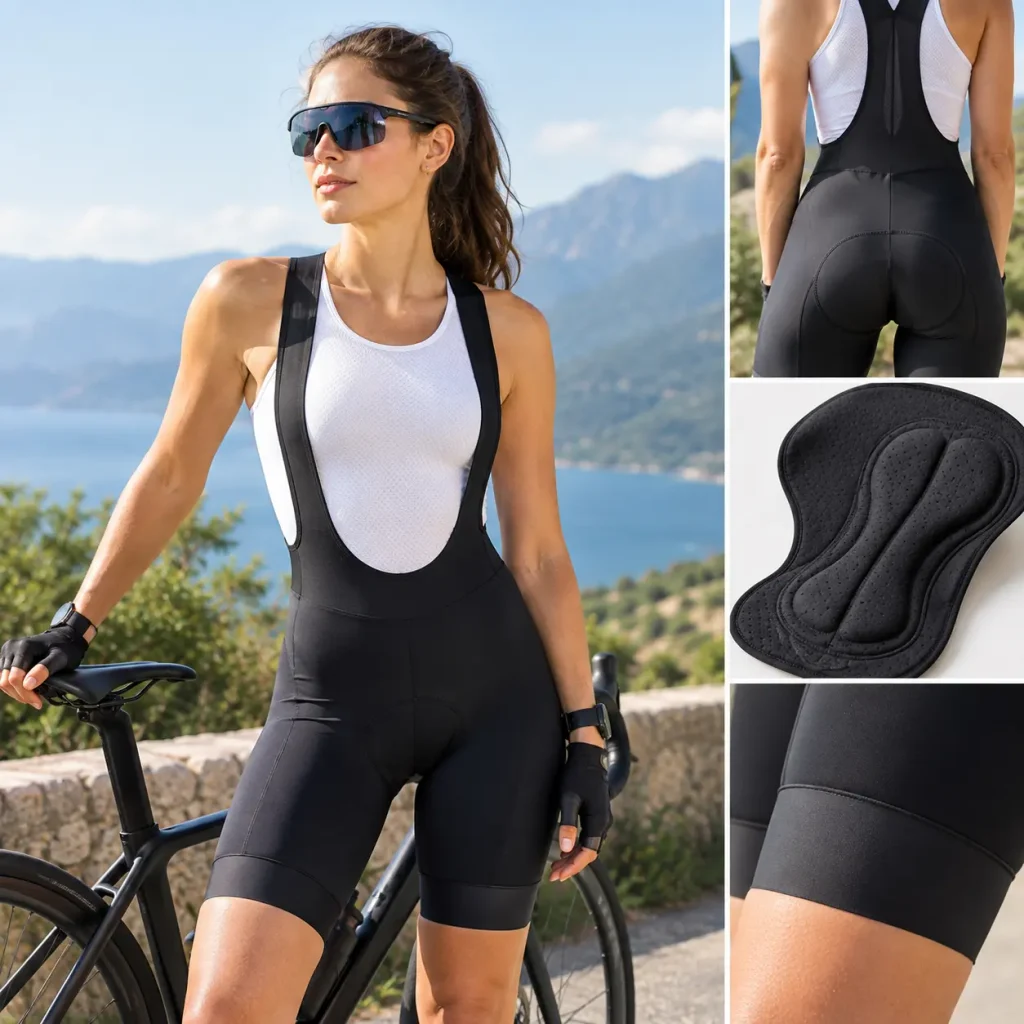
Bib shorts, which extend up over the shoulders rather than relying on a waistband alone, represent one of the most significant comfort upgrades available in women’s cycling clothing. This design eliminates the waistband pressure and potential slipping that standard padded shorts can experience, while keeping the chamois securely positioned throughout a ride. For anyone tackling longer distances regularly, well-fitted bib shorts with a quality women’s-specific chamois are consistently one of the most valued pieces in a cycling wardrobe.
2. Breathable Moisture-Wicking Cycling Jersey
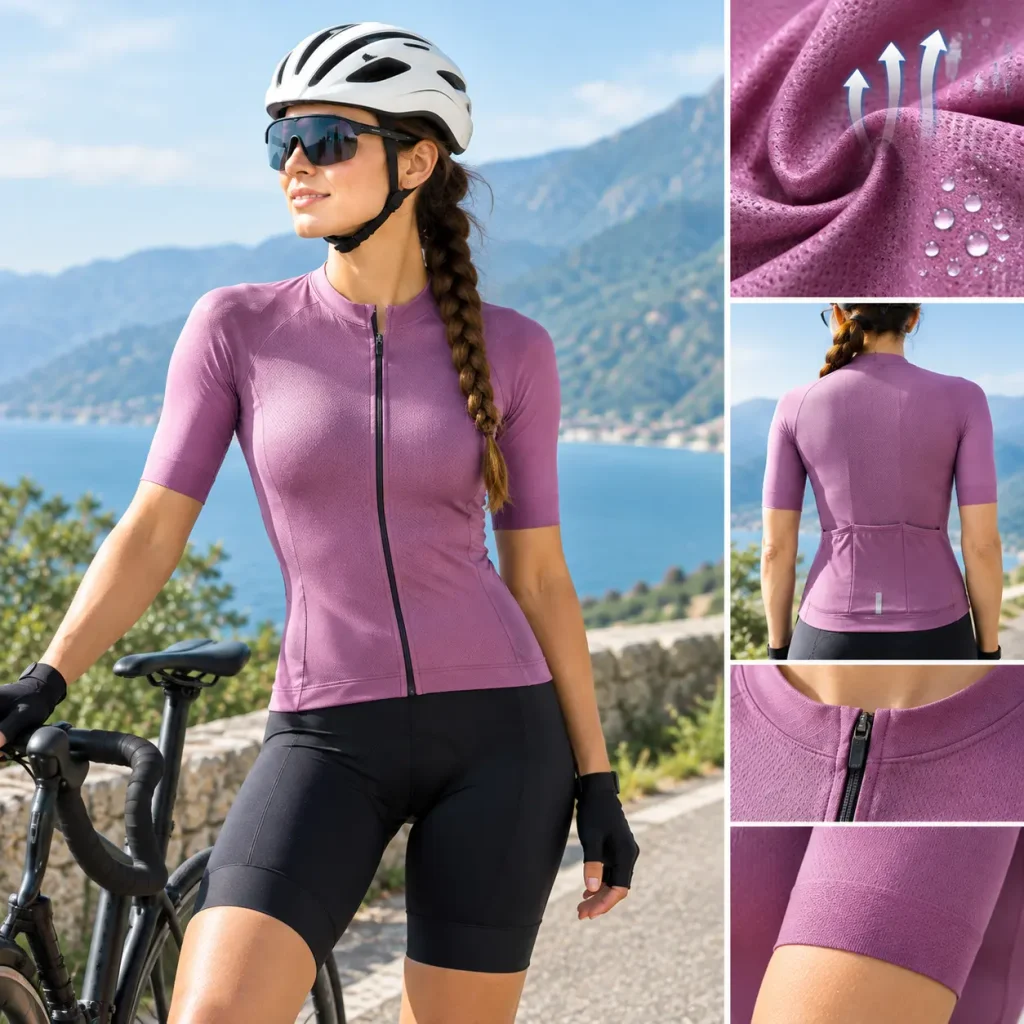
A properly fitted cycling jersey, cut slightly longer in the back and built from moisture-wicking synthetic fabric, addresses both temperature regulation and practical functionality through well-placed rear pockets for storing essentials during a ride. Full-zip options offer additional temperature control for variable weather, while the close, aerodynamic fit reduces wind drag compared to a standard athletic tee.
3. Wind and Rain-Resistant Cycling Jacket
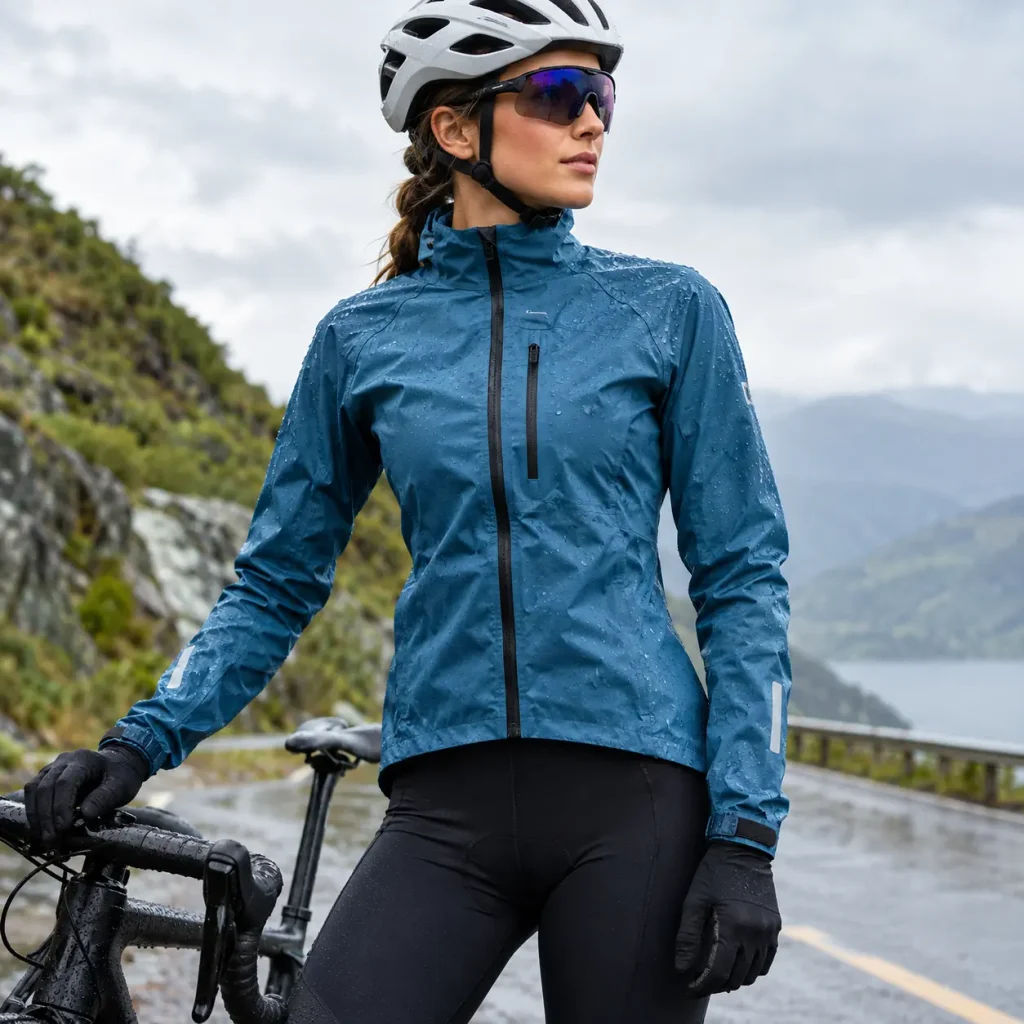
A dedicated cycling jacket, built from wind-resistant and water-resistant technical fabric, is essential for anyone riding regularly through unpredictable weather. Look for a jacket with a slightly longer back hem for coverage in a forward riding position, along with ventilation panels to prevent overheating once the effort of riding generates real body heat, even in cool conditions.
4. Thermal Cycling Tights for Cold Weather
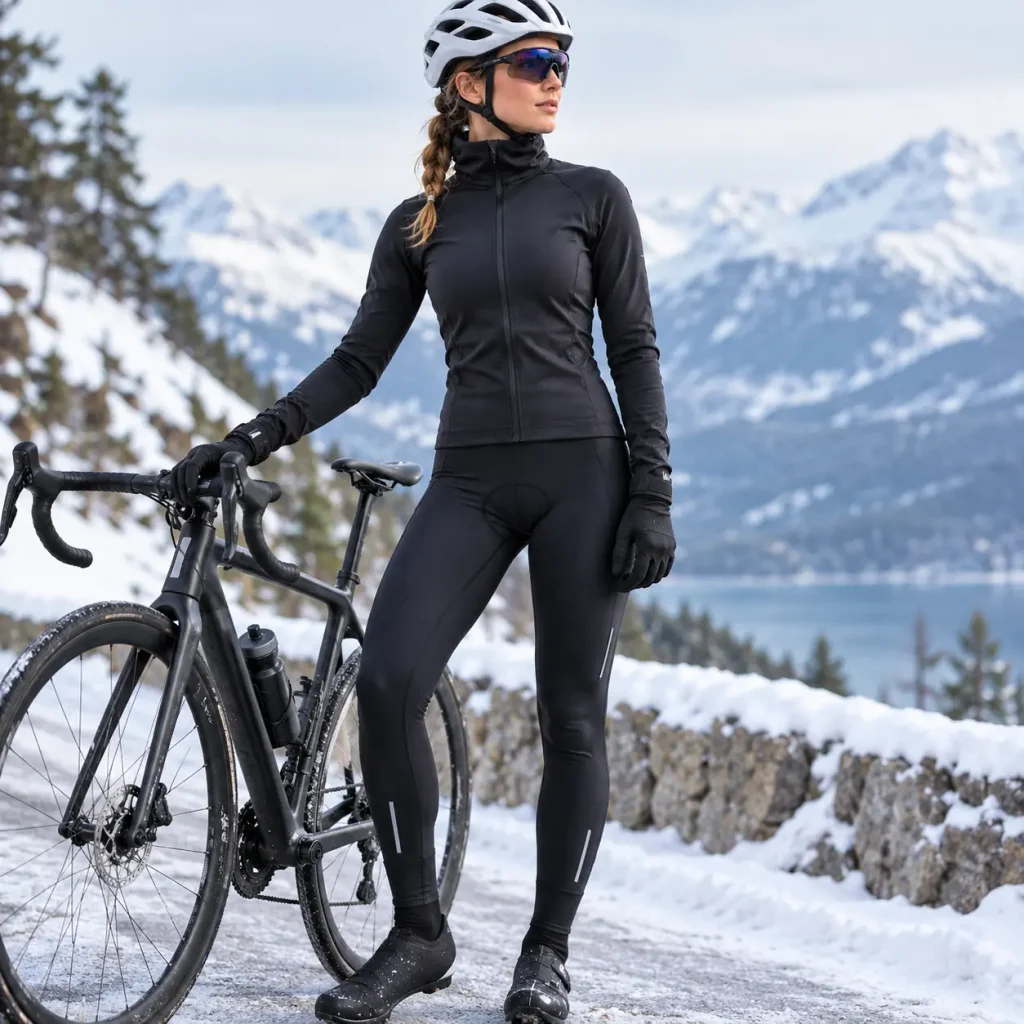
For winter cycling clothing, thermal tights with a built-in chamois offer the same padding and support as summer shorts while adding genuine insulation for cold-weather riding. A brushed fleece interior lining is particularly effective at retaining warmth without adding excessive bulk, making this piece essential for anyone who rides through colder months rather than pausing entirely until spring.
5. Cycling Gloves with Padded Palms
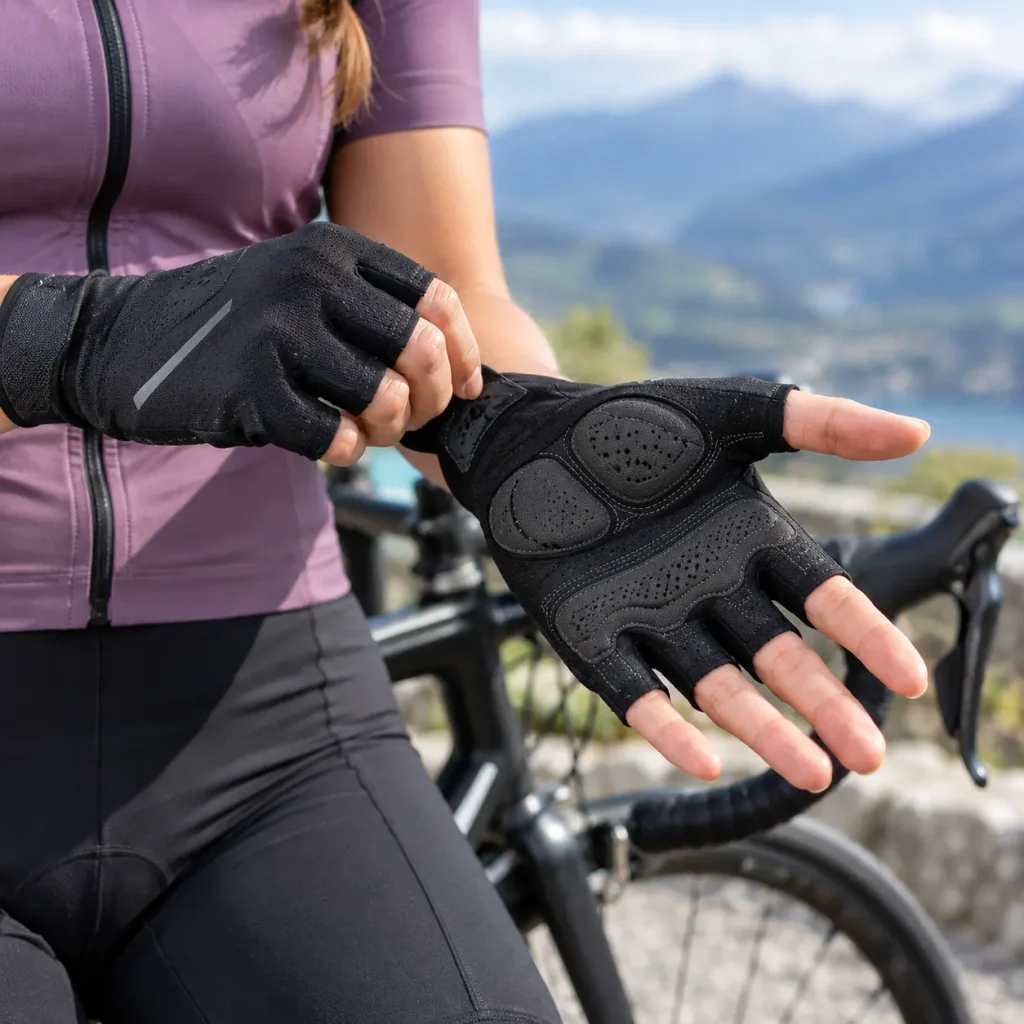
Often overlooked compared to shorts and jerseys, well-designed cycling gloves offer genuine benefits — padded palms reduce pressure and vibration transferred through the handlebars during long rides, while the grip and light protection they provide can make a real difference in both comfort and control. Full-finger options add extra protection for mountain biking or cooler-weather road riding, while fingerless styles remain popular for warm-weather rides where dexterity and breathability matter more.
Women’s Cycling Clothing by Season
Women’s winter cycling clothing should prioritize thermal base layers, insulated tights, and a genuinely wind-resistant outer jacket, since staying warm without overheating requires more deliberate layering than warm-weather riding.
Women’s summer cycling clothing benefits most from lightweight, highly breathable jerseys and shorts, often with additional UV protection built into the fabric for extended sun exposure during long daytime rides.
Women’s rain cycling gear calls for genuinely waterproof, rather than simply water-resistant, outer layers, along with attention to visibility features like reflective detailing for reduced-visibility conditions.
Women’s Cycling Clothing by Use Case
Women’s road cycling clothing emphasizes aerodynamics and a close, streamlined fit, prioritizing efficiency over the durability features mountain-specific gear requires.
Women’s mountain bike clothing favors a looser, more durable fit with reinforced fabric in high-wear areas, accommodating the varied body positions and rougher conditions off-road riding involves.
Women’s commuter cycling clothing often blends performance fabric with more everyday-appropriate styling, since commuters frequently need to transition directly from riding into work or other daily activities without a full outfit change.
Women’s indoor cycling clothing can prioritize breathability and moisture management above wind resistance or weatherproofing, since indoor riding eliminates outdoor weather considerations entirely.
Cycling clothing for long rides should prioritize genuinely high-quality chamois padding and moisture management above all else, since comfort issues that are minor on a short ride can become significant problems over several hours in the saddle.
Cycling Clothing for Different Body Types
Plus size women’s cycling clothing has become considerably more available in recent years as more brands recognize the importance of properly engineered chamois and fit across a full size range, rather than simply extending a design meant for a narrower body type. Cycling clothing for petite body types similarly benefits from brands offering true petite-specific sizing rather than simply the smallest standard size, since proportions — particularly torso and inseam length — can differ meaningfully from a standard size scaled down. Cycling clothing for curvy women often performs best with brands that have invested specifically in fit testing across a range of body shapes rather than a single standard silhouette.
How to Choose the Right Cycling Clothing Size
Cycling clothing generally runs snugger than typical activewear by design, so it’s worth consulting a specific brand’s size chart directly rather than assuming your usual athletic wear size will translate. Reading brand-specific fit notes, particularly around chamois positioning and torso length for jerseys, can help avoid common sizing mistakes, especially when shopping online without the ability to try items on first.
How to Layer Cycling Clothing for Cold Weather
Effective cold-weather cycling layering generally starts with a moisture-wicking base layer, followed by an insulating mid-layer if temperatures are genuinely cold, topped with a wind and water-resistant outer shell. The goal is trapping warmth without overheating once your body generates heat from the physical effort of riding, which is why breathable, removable layers generally outperform a single very heavy garment for cold-weather cycling.
How to Care for Padded Cycling Shorts
Proper care significantly extends the life of padded cycling shorts, particularly the chamois itself. Washing shorts after every ride, rather than reusing them multiple times, helps prevent bacteria buildup in the padding, which can otherwise lead to skin irritation or infection over time. Washing in cold water on a gentle cycle, and air drying rather than using high heat, helps preserve both the elastic recovery of the fabric and the integrity of the foam padding considerably longer than harsher washing methods.
How Tight Should Cycling Clothing Be?
Cycling clothing should fit snugly enough to avoid excess fabric that creates wind drag or bunches uncomfortably, but not so tight that it restricts circulation or the specific range of motion cycling requires, particularly around the hips and knees. A properly fitted chamois should stay in position without shifting during pedaling, which is one of the clearest practical indicators that padded shorts are sized correctly.
Can Regular Leggings Be Used for Cycling?
Regular leggings can technically be worn for very short, casual rides, but they lack the padding, moisture-wicking performance, and durability that cycling-specific shorts or tights are engineered to provide. For anyone riding regularly or for extended distances, the lack of a proper chamois in regular leggings will typically become uncomfortable fairly quickly, making dedicated cycling shorts a worthwhile investment even for otherwise casual riders.
Best Women’s Cycling Clothing Brands
Several brands have built strong reputations specifically around genuinely women-specific cycling apparel design. Terry, founded by cycling design pioneer Georgena Terry, remains particularly well known for its dedicated focus on properly fitted women’s chamois and gear built around real anatomical data rather than resized men’s products. Beyond specialty women’s-focused brands, many mainstream cycling apparel companies have also significantly expanded their women’s-specific lines in recent years, offering genuinely engineered fit and chamois design across a broader range of price points.
Frequently Asked Questions
Do you need special clothing for cycling?
For casual, very short rides, special clothing isn’t strictly necessary, but for anyone riding regularly or for longer distances, cycling-specific clothing — particularly padded shorts — makes a significant difference in comfort and reduces the risk of chafing and saddle discomfort.
Are padded shorts necessary for beginners?
Yes, padded shorts are generally recommended even for beginners, since saddle discomfort is one of the most common reasons new riders find early rides unpleasant. Investing in a properly fitted pair early on can make the learning process considerably more enjoyable.
What should women wear for their first cycling ride?
A moisture-wicking top, padded shorts or bib shorts, and comfortable, supportive footwear form a solid starting point for a first ride, with additional layers added based on weather conditions.
How tight should cycling clothing be?
Cycling clothing should fit snugly without restricting circulation or movement — close enough to avoid wind drag and keep the chamois properly positioned, but not so tight that it feels constricting during pedaling.
Can regular leggings be used for cycling?
Regular leggings can work for very short, casual rides, but they lack a proper chamois and cycling-specific moisture management, making them a poor substitute for dedicated cycling shorts on longer or more frequent rides.
Final Thoughts
Women’s cycling clothing has come a long way from leather-lined wool shorts and generic, resized men’s gear, evolving into a category genuinely engineered around how women actually ride. From properly fitted bib shorts to a wind-resistant jacket built for real weather, the five picks covered here each address a specific, practical need that makes riding more comfortable and considerably more enjoyable. Whether you’re commuting, training for long distances, or just getting started, the right cycling clothing isn’t a luxury — it’s the difference between a ride you endure and one you genuinely look forward to.
Also Read: 11 Outcast Clothing Pieces That Redefine Rebel Style