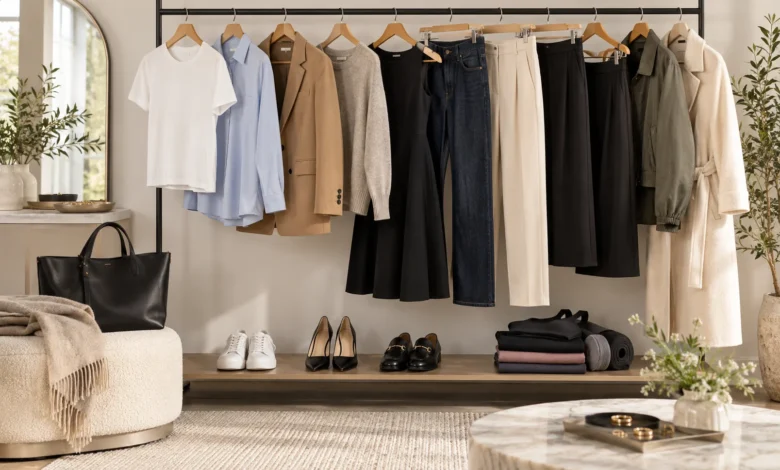
Open most closets and you’ll find the same problem: plenty of clothes, but nothing that feels quite right to wear. That disconnect usually isn’t about having too few clothes — it’s about having the wrong mix of clothing types. A wardrobe built on trend pieces alone will always feel incomplete, while one built around genuine wardrobe essentials can be mixed, matched, and re-worn for years without ever feeling stale.
This guide walks through the 15 types of clothes every wardrobe truly needs, why each one earns its place, and how to think about building a capsule wardrobe that actually works for your life — whether you’re shopping for a first apartment, refreshing a work wardrobe, or simply trying to figure out what’s missing from your current closet.
What Are Wardrobe Essentials, Really?
Before diving into the list, it helps to define the term. Wardrobe essentials (sometimes called basic clothing types or fashion basics) are the clothing items that form the foundation of a functional closet — pieces that are versatile enough to be worn in multiple ways, durable enough to last several seasons, and neutral enough to pair easily with almost everything else you own.
The key word is foundation. Essentials aren’t meant to be the most exciting pieces in your closet — they’re the reliable base that trend pieces, statement items, and occasion wear are layered on top of. A wardrobe with a strong foundation of essentials needs far fewer total items to feel “complete” than one without, which is exactly why understanding the different types of clothes that qualify as essentials can save both money and closet space.
What Is a Capsule Wardrobe?
A capsule wardrobe is a curated, intentionally limited collection of clothing — typically 25 to 50 pieces — chosen specifically because every item works with multiple others. Instead of owning 200 items where only a fraction get regular wear, a capsule wardrobe essentials list focuses on high-versatility pieces that combine into dozens of different outfits. The 15 types of clothes in this guide double as a strong starting point for anyone interested in building a capsule wardrobe, since each category is chosen for exactly that kind of flexibility.
Why Every Wardrobe Needs Certain Clothing Types
There’s a reason certain clothing categories show up in nearly every “wardrobe essentials” list, regardless of personal style or budget. A few core benefits explain why:
- Versatility saves money. A well-chosen basic can be worn dozens of different ways, reducing the total number of items you need to buy.
- Time efficiency. A wardrobe built on essentials makes getting dressed faster, since core pieces are designed to pair easily with almost anything else in the closet.
- Longevity over trend cycles. Wardrobe staples that never go out of style remain wearable for years, while trend-driven pieces often feel dated within a single season.
- Easier outfit-building for any occasion. Once the essentials are covered, dressing for work, casual outings, or special events becomes a matter of small additions rather than starting from scratch each time.
- Simplified decision-making. Fewer, better-chosen pieces reduce daily decision fatigue — a well-known reason capsule wardrobes have grown so popular in recent years.
A Brief History of Clothing Categories in Fashion
Understanding how fashion basics have changed over decades adds useful context to why today’s wardrobe essentials look the way they do. Early 20th-century wardrobes were far more occasion-specific, with separate clothing designated strictly for formal, work, or leisure settings, and far less overlap between categories. The rise of ready-to-wear fashion in the mid-20th century, followed by the increasing casualization of both office and social dress codes from the 1990s onward, gradually blurred those lines — a blazer that once belonged strictly in a formal wardrobe now pairs easily with jeans, and denim itself moved from strictly casual to acceptable in many workplaces.
This evolution is part of why classification of clothing types today leans more on function and versatility than on rigid formality rules. Modern wardrobe essentials are chosen because they flex across multiple contexts — a real shift from decades past, when clothing types were far more siloed by occasion.
15 Types of Clothes Every Wardrobe Truly Needs
1. A Well-Fitted White T-Shirt
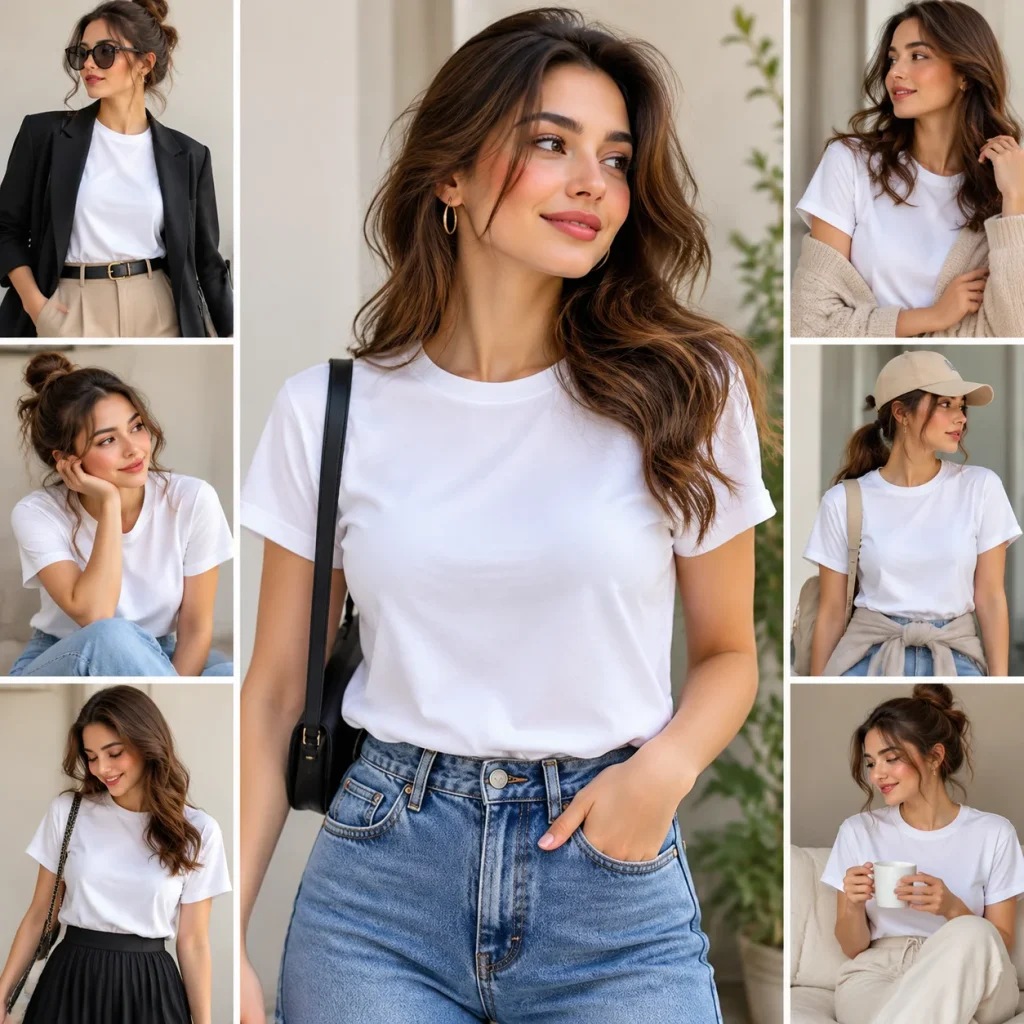
It sounds almost too simple to include, but a well-fitted white t-shirt is one of the most reworn basic clothing types in nearly every wardrobe, regardless of personal style. It layers under blazers, pairs with jeans or skirts, and works as a base for countless outfit combinations. The fit matters more than the price — a slightly structured, well-tailored tee looks intentional, while an overly boxy or overly tight one can undercut an otherwise put-together look.
Also Read: 7 Basic Tees You’ll Wear on Repeat
Works for: everyday clothing essentials, layering, casual and smart-casual outfits.
2. A Classic Button-Down Shirt
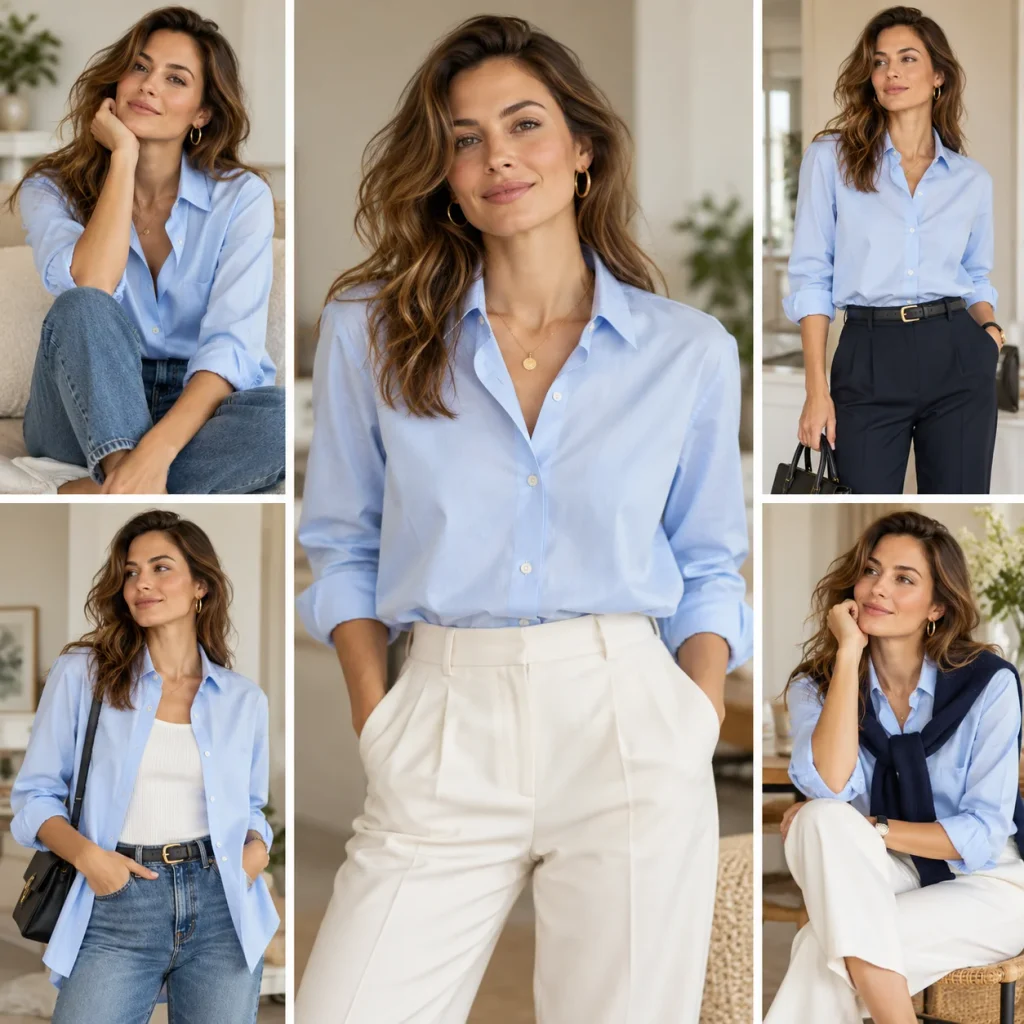
A crisp button-down — white, light blue, or a subtle stripe — bridges the gap between casual and formal effortlessly. Worn tucked into trousers for the office, tied at the waist over a dress for a casual look, or layered under a sweater, it’s one of the most versatile types of tops for women and men alike. This single piece can carry a work wardrobe essentials list and a weekend-casual rotation at the same time.
Works for: office wear, layering, smart-casual and semi-formal occasions.
3. A Tailored Blazer
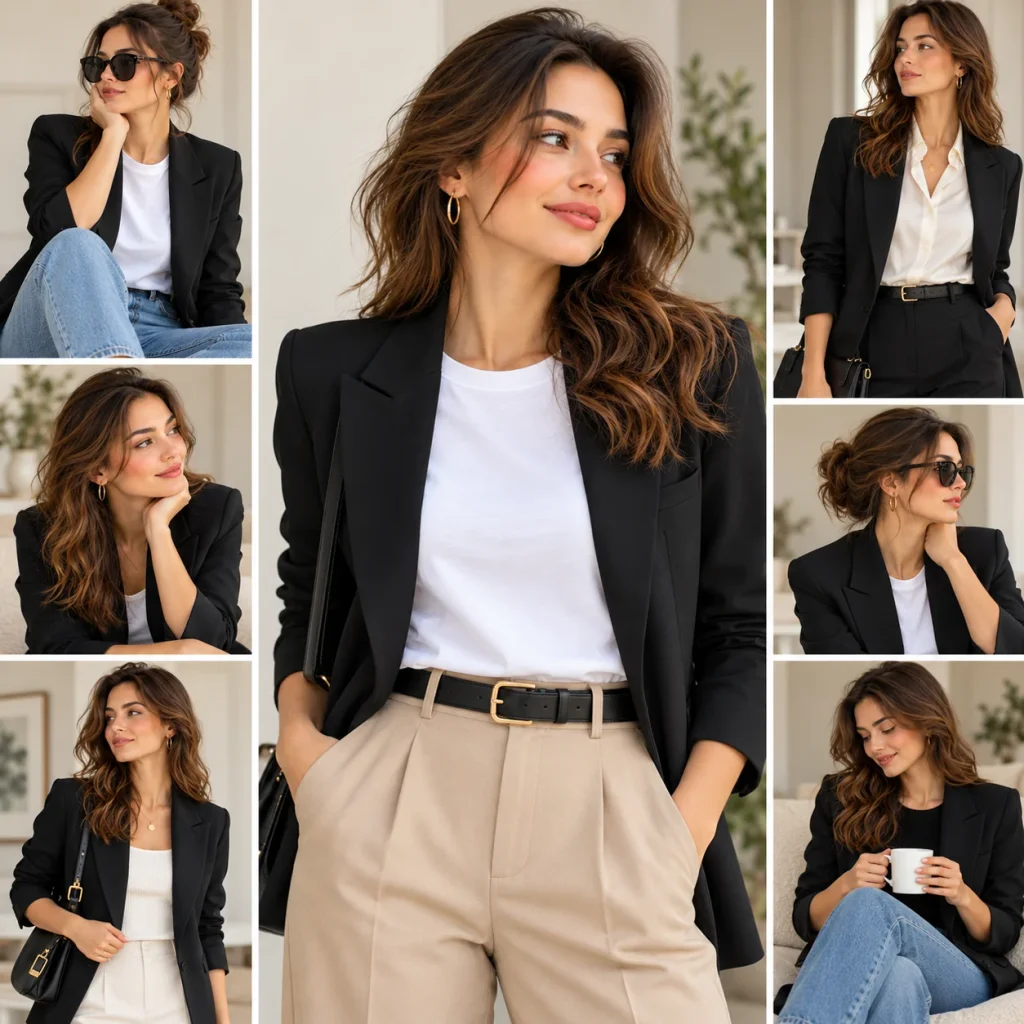
A well-fitted blazer instantly elevates almost any outfit — thrown over a t-shirt and jeans, it reads polished; paired with trousers, it becomes a full work-ready look. Neutral colors (black, navy, camel, or grey) offer the most flexibility, though a blazer in a slightly bolder color can double as a statement piece for special occasions. It’s consistently one of the top picks in any list of essential wardrobe pieces because of how much visual “effort” it adds with minimal styling work.
Works for: office wear, smart-casual outfits, special occasions.
4. A Quality Pair of Dark Denim Jeans
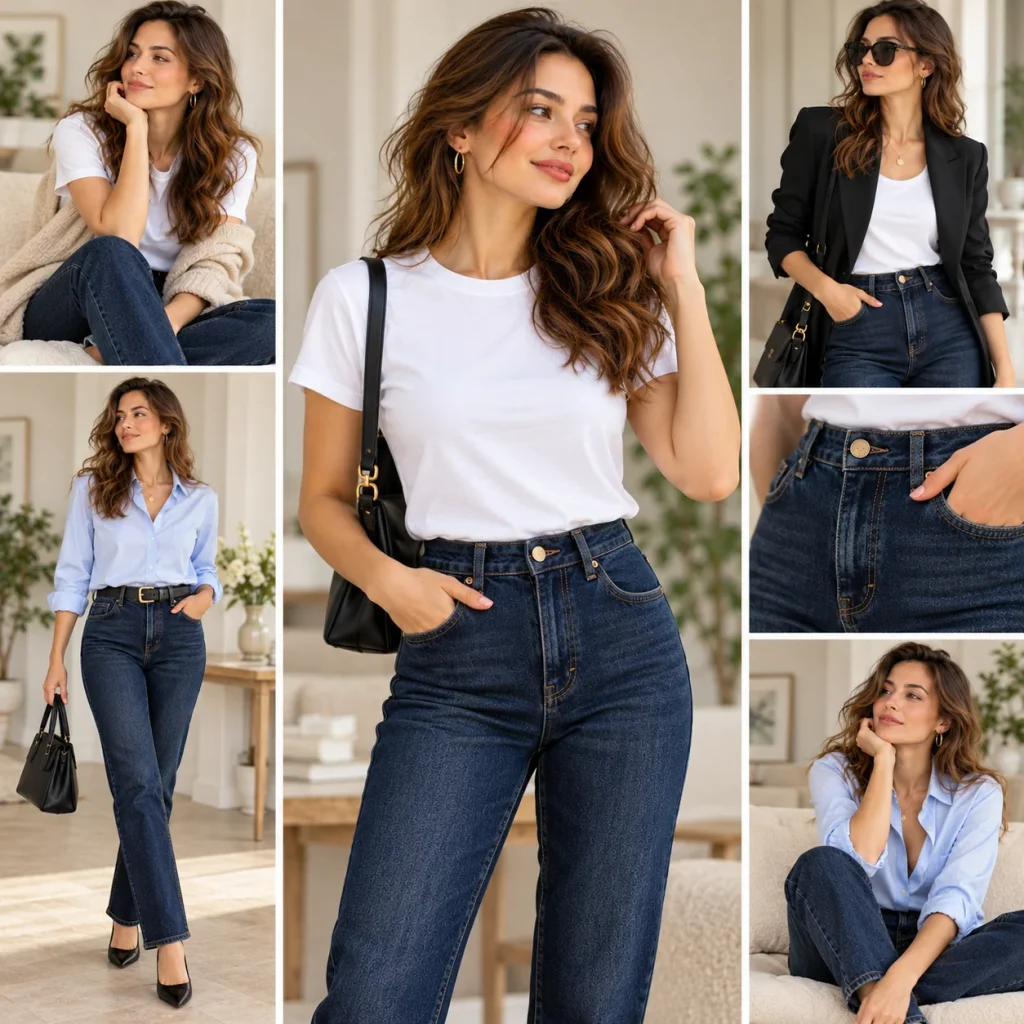
Dark-wash, well-fitted jeans are one of the most universally useful types of pants for women and men, since the darker wash reads slightly more polished than lighter or distressed denim and pairs easily with almost anything — sneakers, heels, blazers, or simple tees. A well-fitting pair (not too tight, not too baggy, hemmed to the correct length) is worth prioritizing over trend-driven denim styles that may not last past a season or two.
Also Read: Denim Capsule: How Many Jeans You Actually Need
Works for: casual clothing, smart-casual outfits, everyday wear.
5. Tailored Trousers
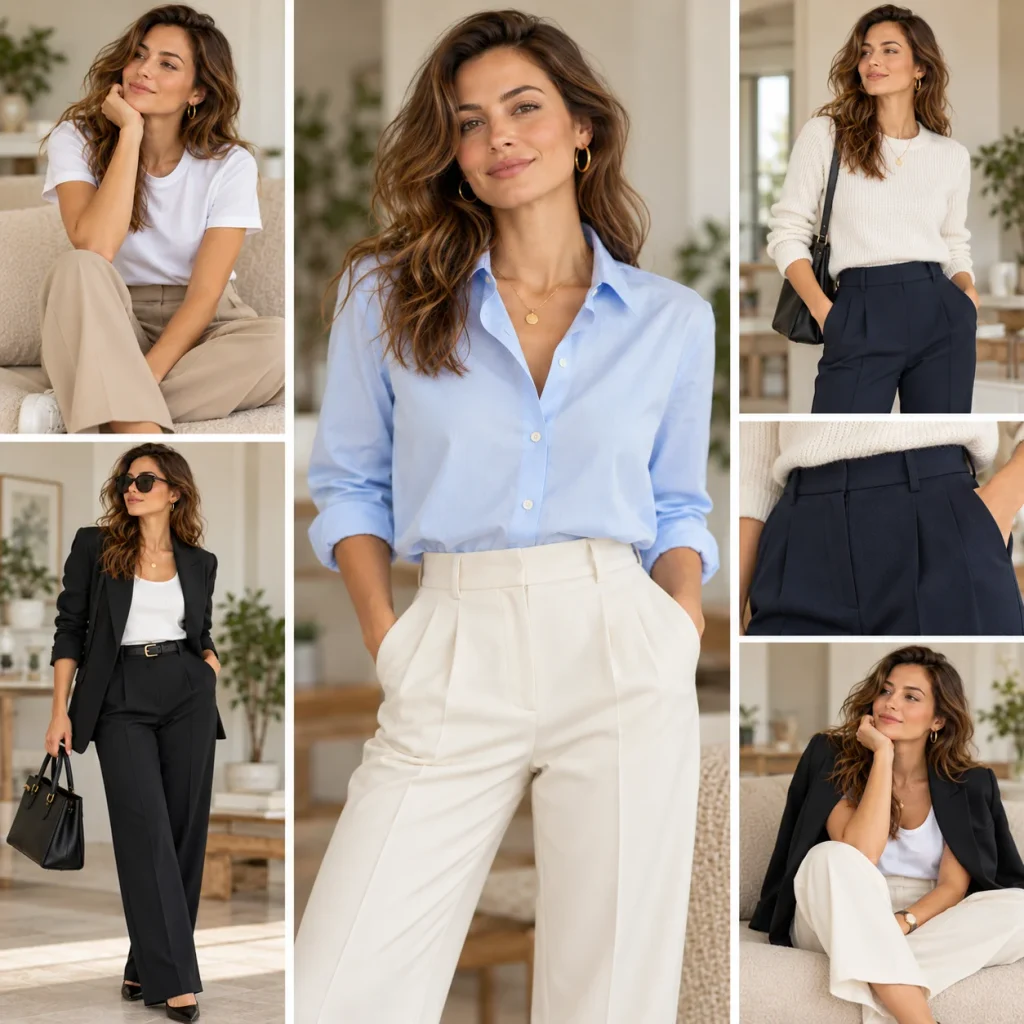
A pair of well-tailored trousers — straight-leg or slightly wide, in black, navy, or grey — rounds out the “bottoms” category alongside denim. Trousers read more formal than jeans without requiring a full suit, making them one of the most essential clothing types for a versatile wardrobe that needs to move between casual and professional settings within the same week.
Works for: office wear, formal clothing occasions, smart-casual looks.
6. A Little Black Dress (or Versatile Solid-Color Dress)
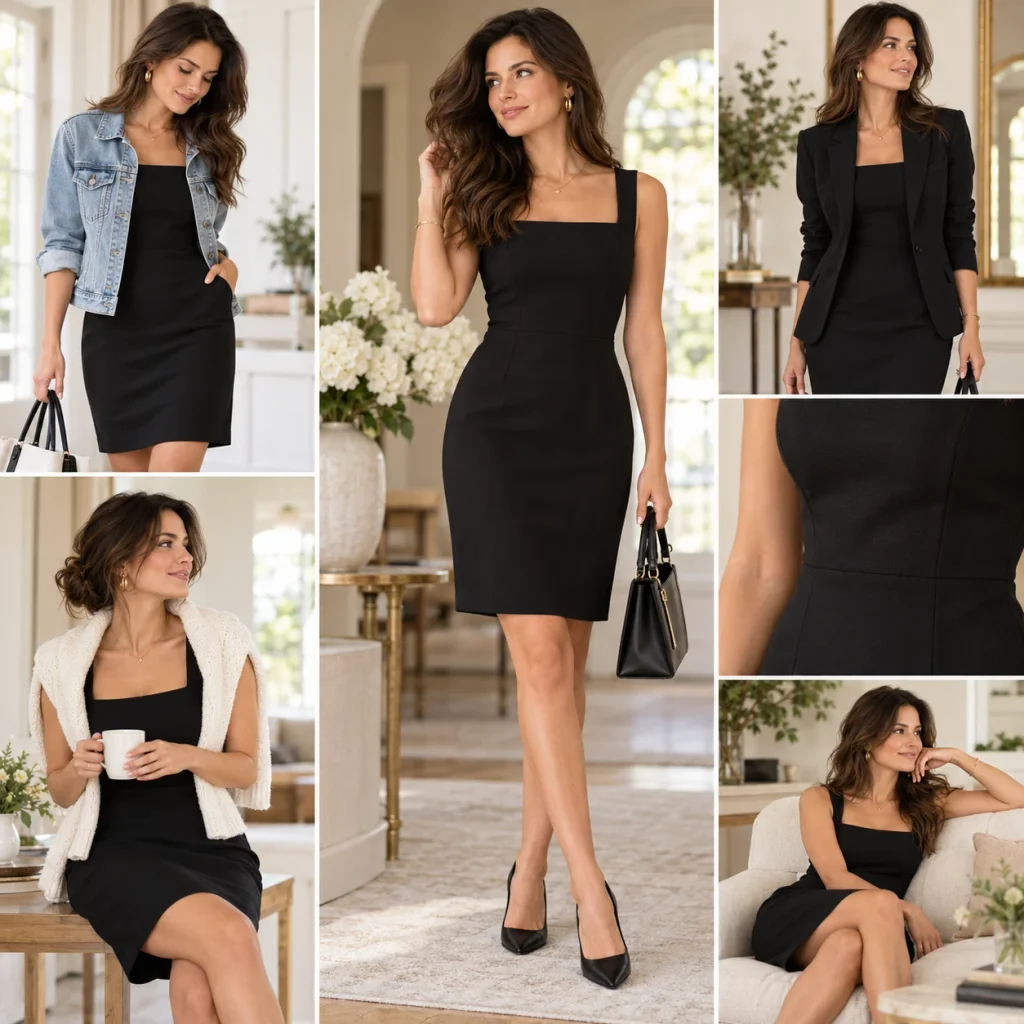
The little black dress earns its reputation as a wardrobe staple because it works for nearly every occasion with only minor styling changes — flats and a denim jacket for daytime, heels and statement jewelry for evening. Among the many types of dresses for women, a simple, well-fitted solid-color dress remains one of the highest-value pieces in any closet because of how effortlessly it adapts across occasions.
Works for: special occasions, work-appropriate dressing, evening events.
7. A Neutral Sweater or Knit Top
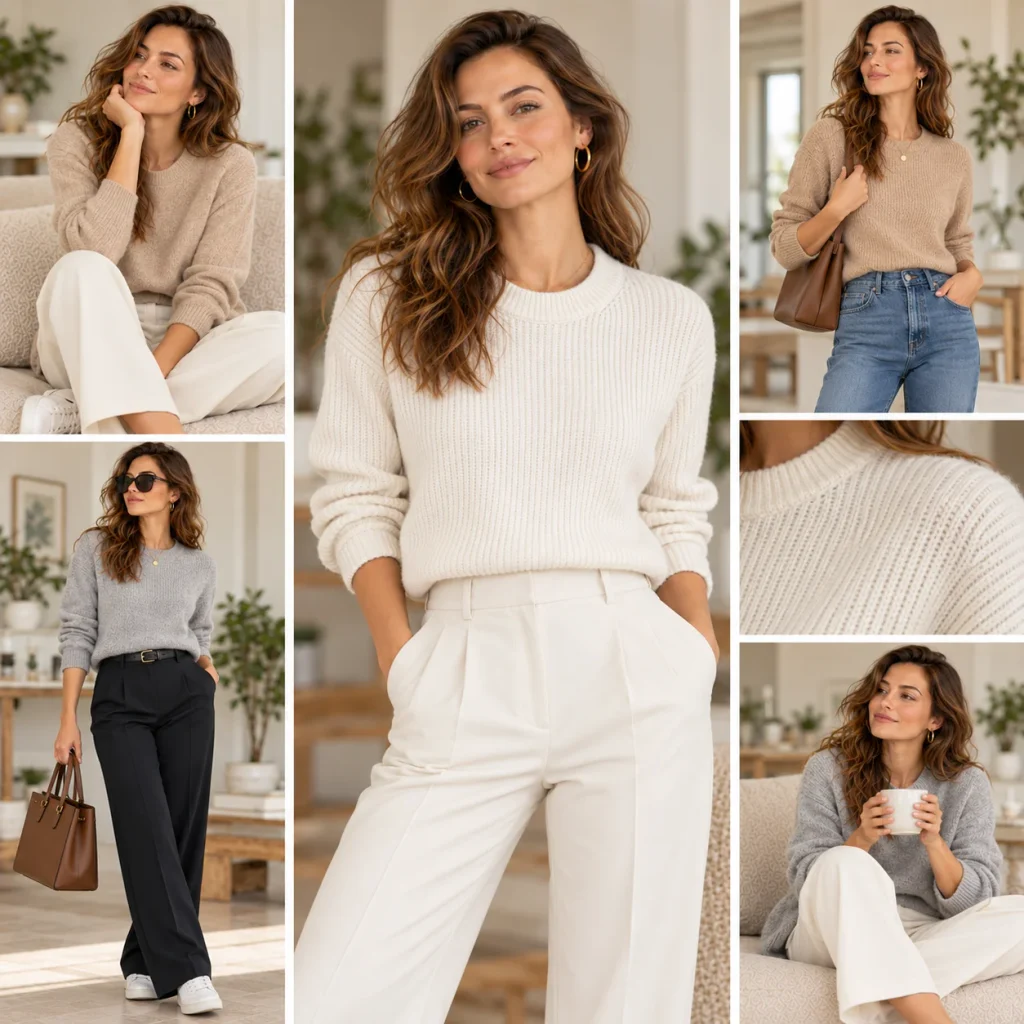
A well-made sweater in a neutral tone (cream, grey, camel, or black) works as both a standalone top and a layering piece under jackets or over collared shirts. Because knitwear naturally reads as slightly more relaxed than woven fabrics, it’s one of the most useful clothing types for a functional wardrobe that needs to move between casual comfort and slightly more polished layering.
Works for: everyday wear, layering, transitional-season dressing.
8. A Structured Coat
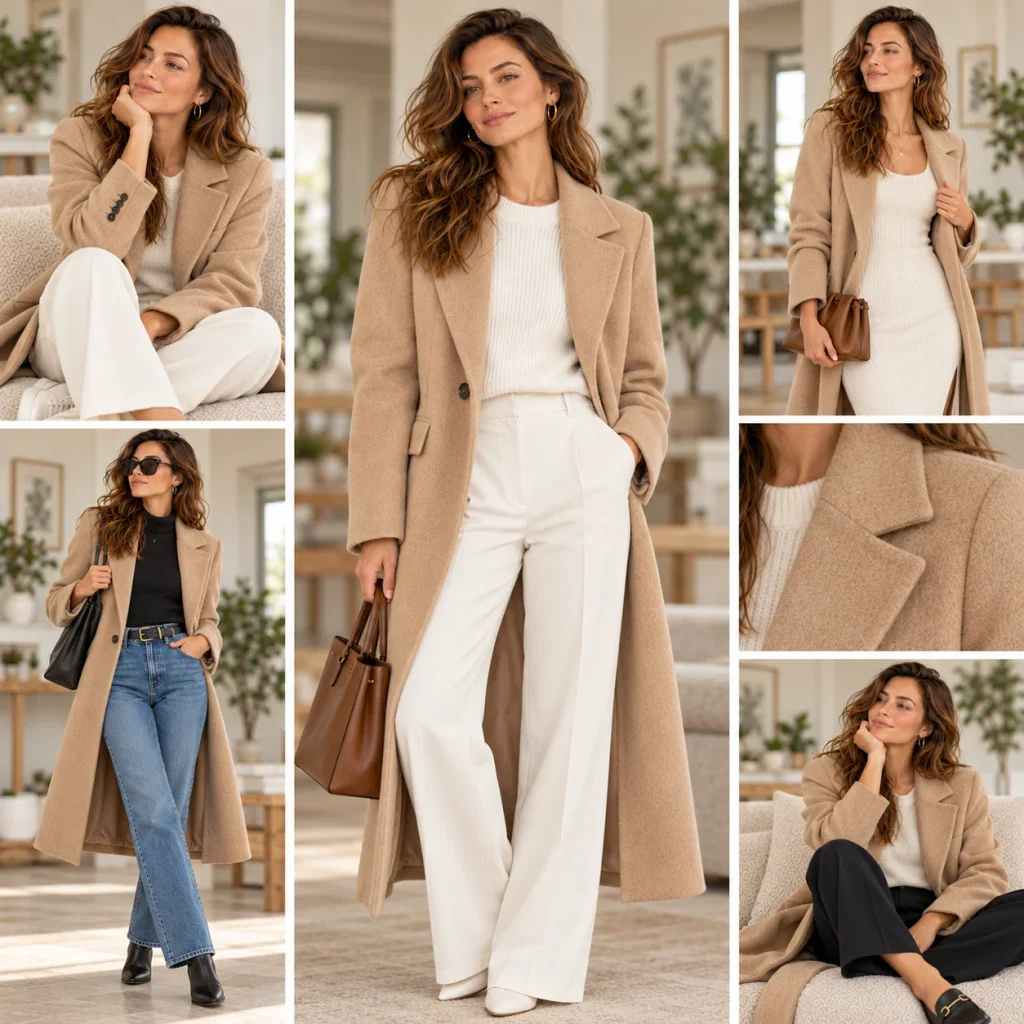
Outerwear is often the most overlooked category, but a well-tailored coat — wool or wool-blend, in a neutral color — is one of the highest-impact types of outerwear clothing you can own. Unlike casual jackets, a structured coat elevates whatever is worn underneath, making it a smart investment piece for both work wardrobe essentials and general cold-weather dressing.
Works for: winter clothing needs, office wear, formal and casual occasions alike.
9. A Casual Jacket (Denim or Leather)
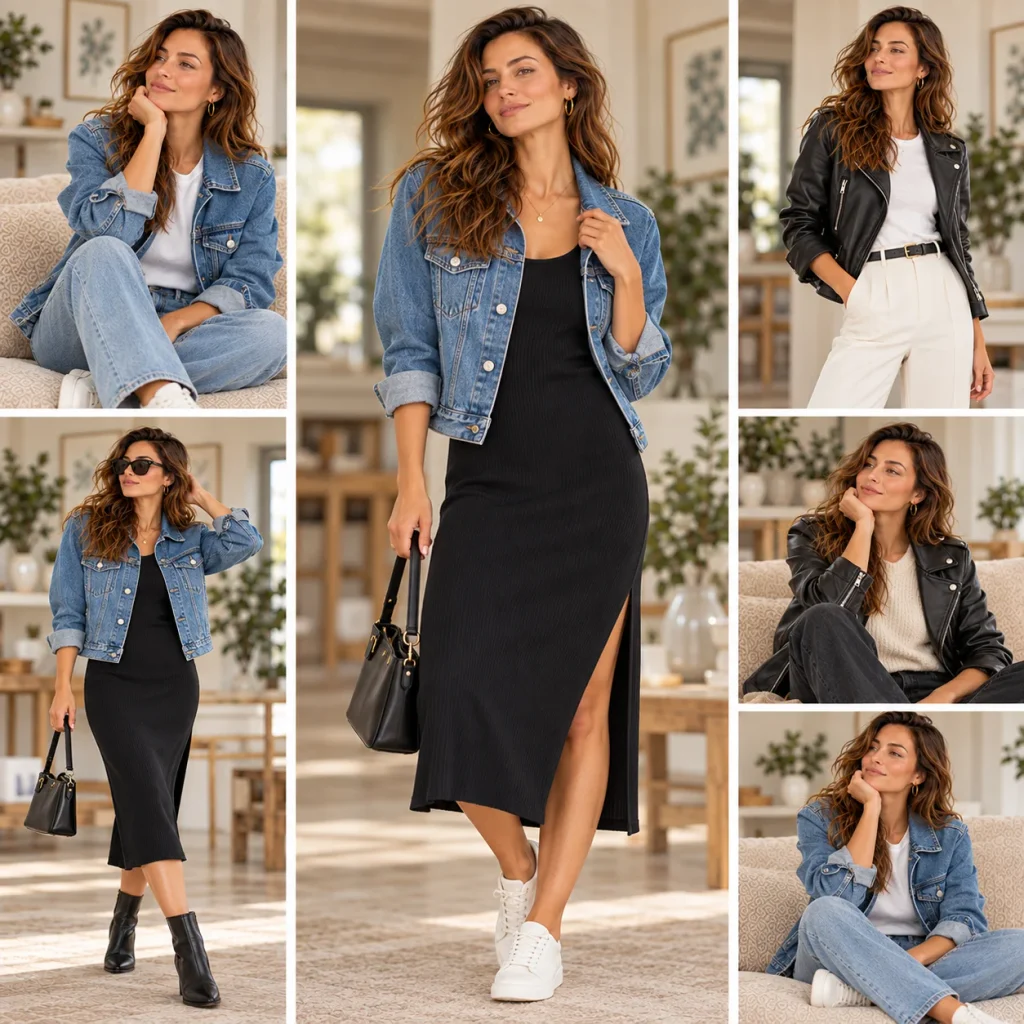
Where a structured coat leans formal, a casual jacket — denim or leather (real or faux) — leans the opposite direction, adding a relaxed edge to dresses, t-shirts, or even slightly formal outfits. This is one of the most versatile types of jackets and coats precisely because it works against expectation: throwing a leather jacket over a dressy outfit or a denim jacket over a slip dress instantly casualizes an otherwise formal look.
Works for: casual clothing, weekend outfits, transitional-season layering.
Also Read: Leather Jacket for Women: A Complete Guide to Buying & Styling
10. A Well-Fitted Skirt (A-Line or Pencil)
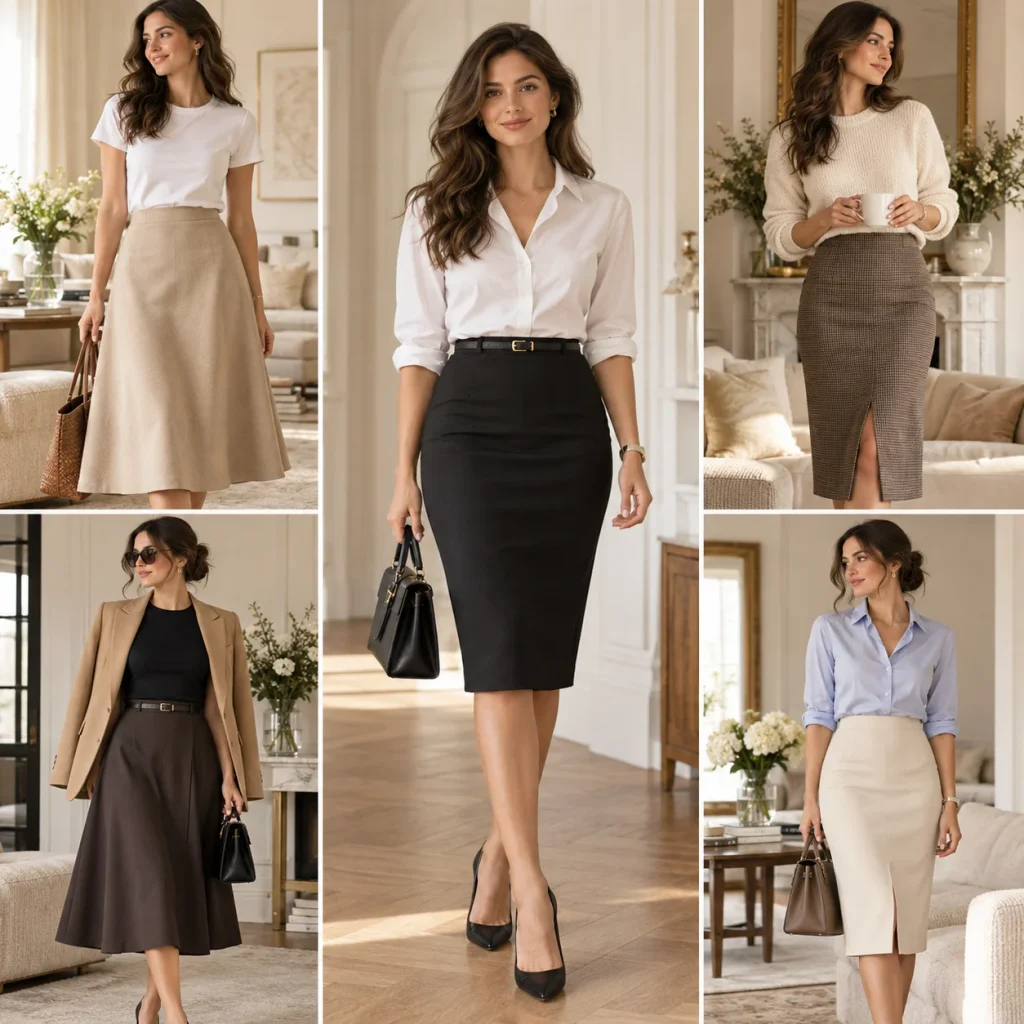
Among the different types of skirts, an A-line or pencil skirt in a neutral color remains one of the most versatile bottoms options, since both styles move easily between office wear and casual weekend outfits depending on what’s paired with them. A well-tailored skirt often gets underutilized compared to dresses or pants, but it deserves a firm place on any wardrobe essentials list.
Works for: office wear, semi-formal occasions, warm-weather dressing.
11. Comfortable, Well-Made Sneakers
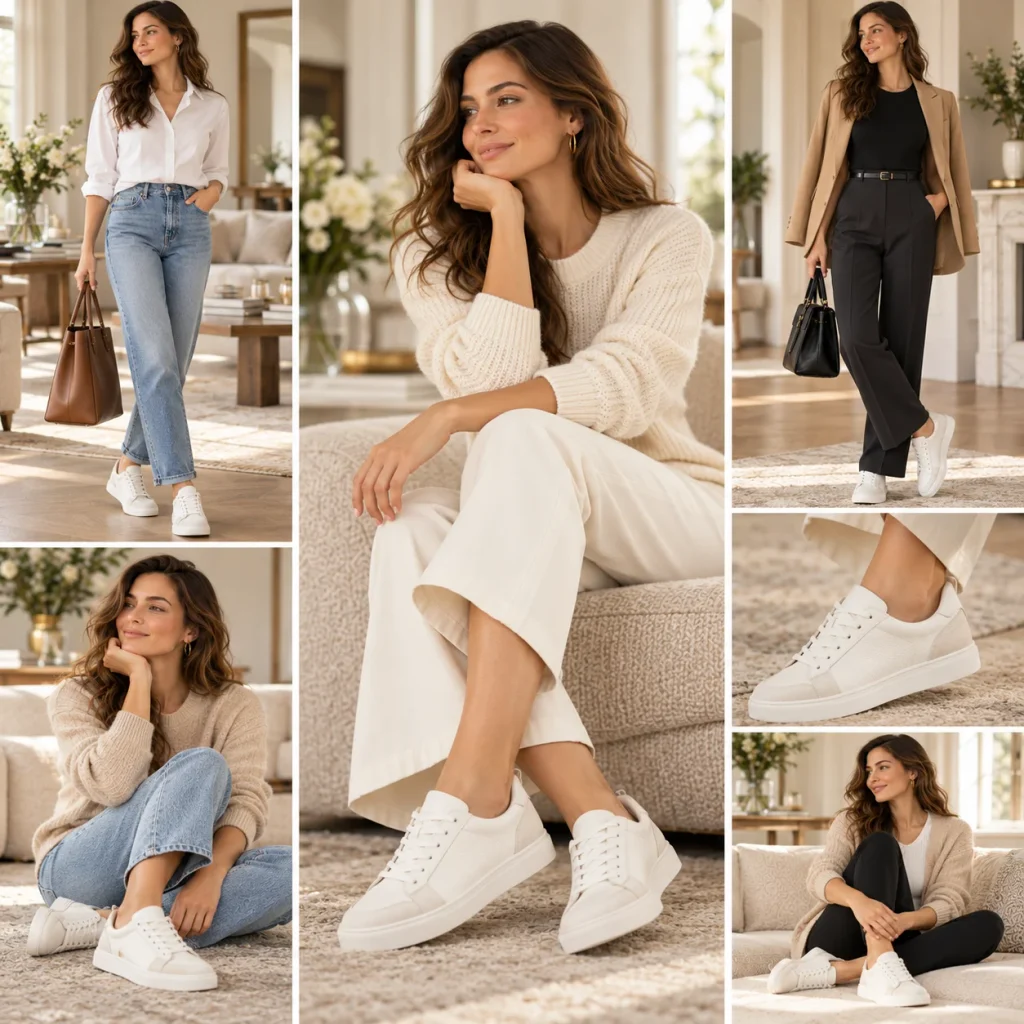
Footwear rarely gets grouped with “types of clothes,” but no wardrobe essentials list is complete without addressing it. A pair of clean, well-made sneakers in white or a neutral tone works with nearly every casual and even some smart-casual outfits, making them one of the most reworn items across an entire wardrobe regardless of style preference.
Works for: everyday clothing essentials, casual and athleisure looks.
12. A Pair of Versatile Heels or Dress Shoes
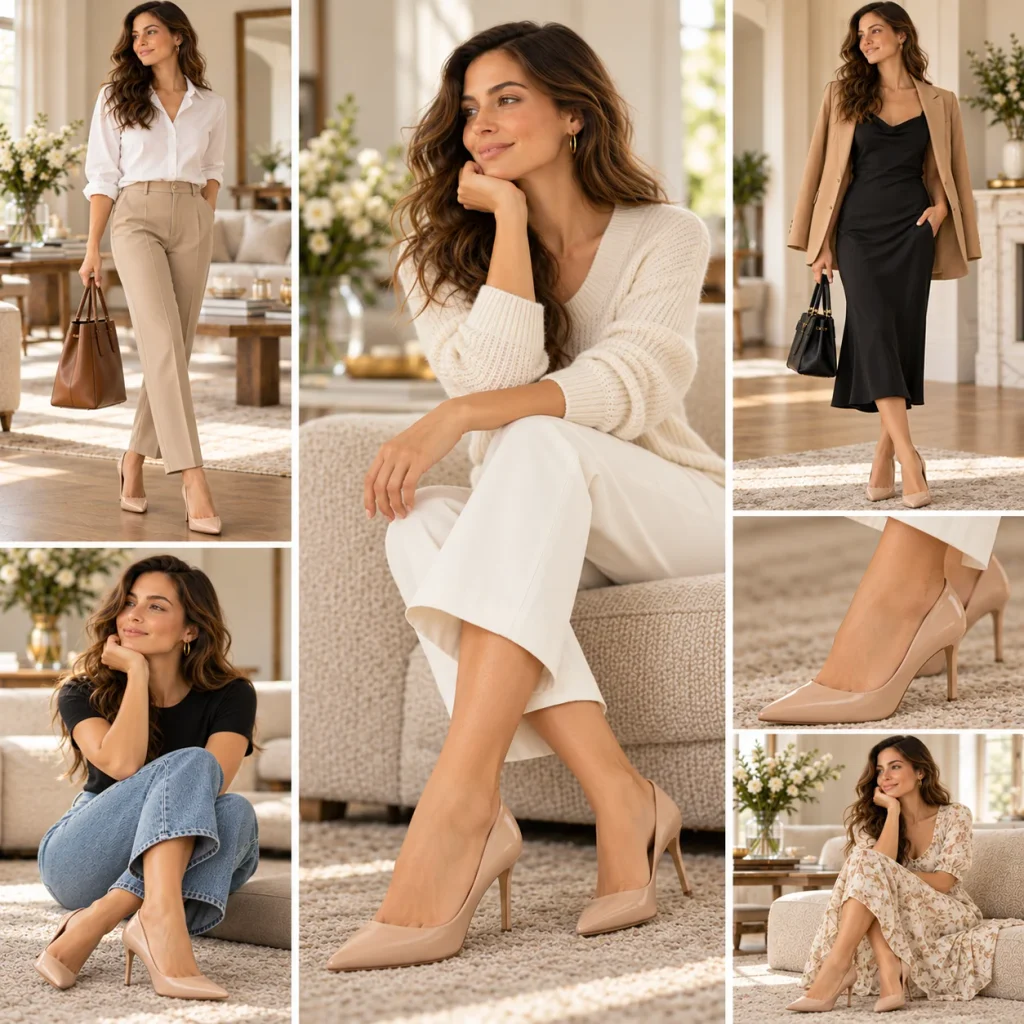
For more formal or work-related occasions, a single reliable pair of heels (for women) or polished dress shoes (for men) rounds out the footwear essentials. Neutral colors — black, nude, or brown — maximize versatility across a wide range of outfits, from office wear to special occasions.
Works for: formal clothing, office wear, evening and special occasions.
Also Read: 6 Genius Convertible Heels That’ll Steal Your Heart
13. Quality Undergarments and Base Layers
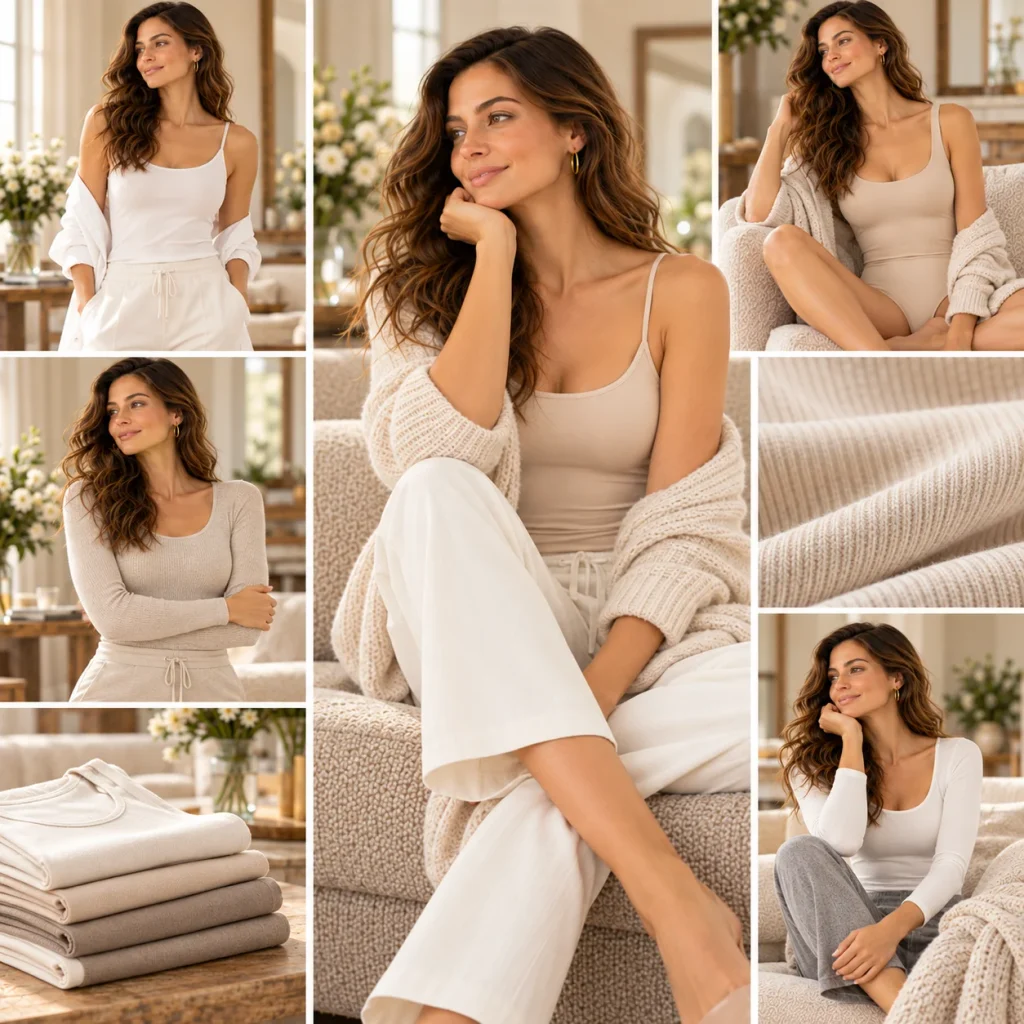
Often overlooked in wardrobe essentials discussions, well-fitted undergarments and base layers directly affect how every other clothing item looks and feels. A properly fitted bra, comfortable underwear, and breathable base layers (thermal tops for winter, moisture-wicking tanks for summer) form the literal foundation beneath every outfit, and investing here pays off across the entire wardrobe.
Works for: everyday comfort, seasonal layering, fit and silhouette across all other clothing types.
Also Read: 11 Seamless Bras That Feel Like Second Skin
14. A Versatile Activewear Set
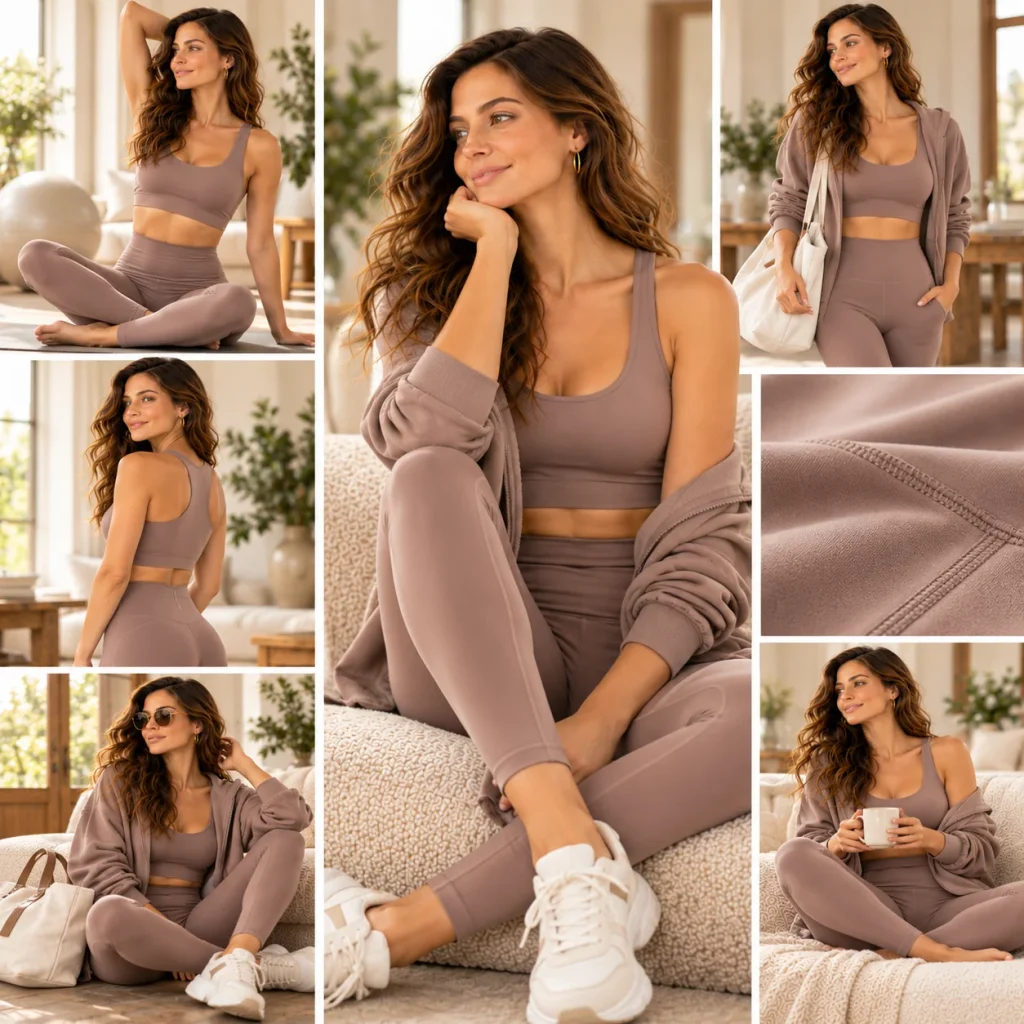
Whether or not exercise is a daily habit, a comfortable, well-fitting activewear set (leggings or joggers plus a breathable top) has become one of the most practically essential clothing items to own, given how much crossover exists today between athleisure and everyday casual dressing. This category also covers travel wardrobe essentials well, since activewear tends to be comfortable, easy to pack, and simple to layer.
Works for: exercise, travel, casual errands, loungewear.
15. One Statement or Special-Occasion Piece
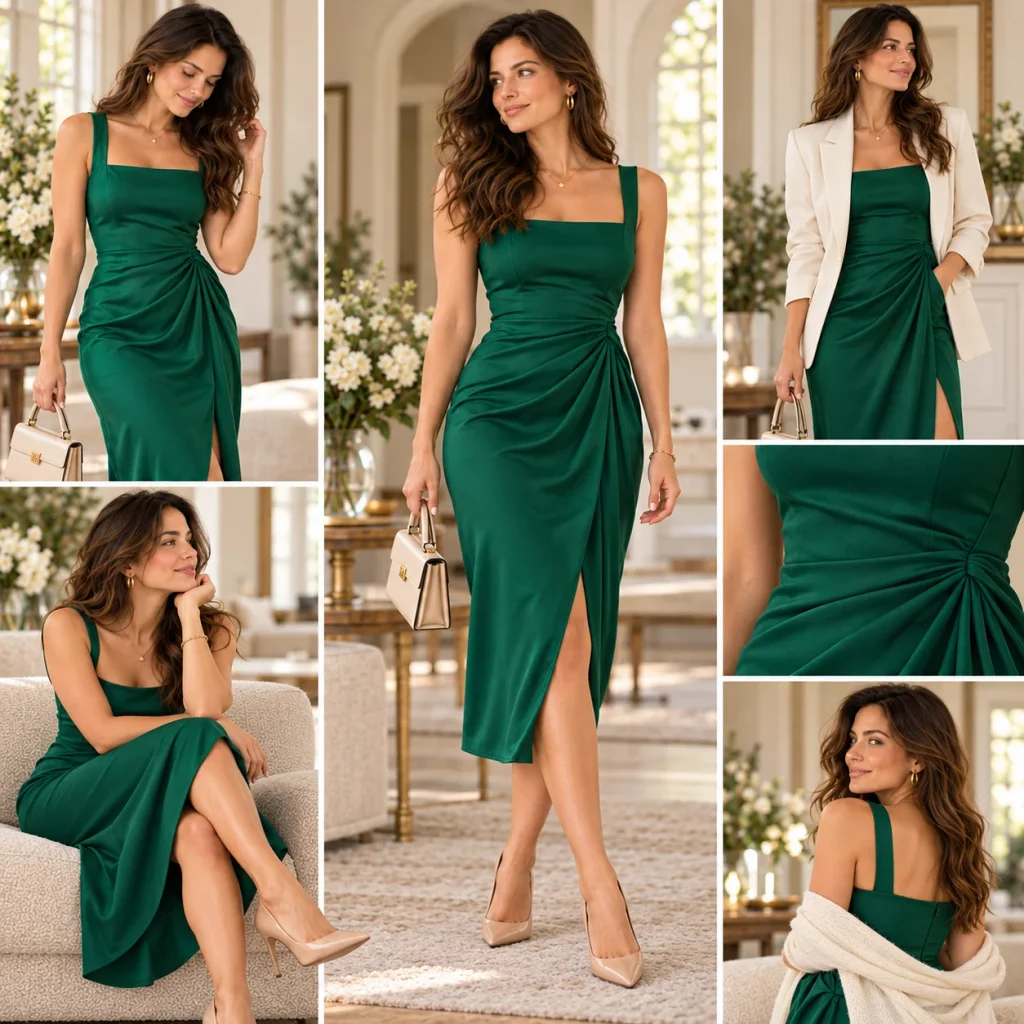
While most of this list focuses on neutral, highly versatile basics, every wardrobe benefits from at least one statement piece — a bold-colored dress, a patterned blazer, or a distinctive accessory-adjacent item — reserved for special occasions. This single piece doesn’t need to be versatile in the same way as the rest of the list; its value comes from giving you a reliable, “put together” option the moment a special event comes up without last-minute shopping.
Works for: special occasions, events, formal gatherings.
Also Read: 6 Hollywood Glamour Style Looks That Feel Timeless
Comparison Table: Matching Clothing Types to Wardrobe Purpose
| Clothing Type | Primary Use | Best Season | Formality |
|---|---|---|---|
| White T-Shirt | Everyday, layering | All seasons | Casual |
| Button-Down Shirt | Office, layering | All seasons | Casual–Semi-formal |
| Tailored Blazer | Office, elevate outfits | Fall/Spring | Semi-formal–Formal |
| Dark Denim Jeans | Everyday, casual | All seasons | Casual |
| Tailored Trousers | Office, formal | All seasons | Semi-formal–Formal |
| Little Black Dress | Evening, special occasions | All seasons | Semi-formal–Formal |
| Neutral Sweater | Layering, everyday | Fall/Winter | Casual |
| Structured Coat | Outerwear, formal warmth | Winter | Semi-formal–Formal |
| Casual Jacket | Layering, casual edge | Fall/Spring | Casual |
| A-Line/Pencil Skirt | Office, semi-formal | Spring/Summer | Semi-formal |
| Sneakers | Everyday, casual | All seasons | Casual |
| Heels/Dress Shoes | Office, evening, formal | All seasons | Semi-formal–Formal |
| Undergarments/Base Layers | Foundation, comfort | All seasons | N/A |
| Activewear Set | Exercise, travel, casual | All seasons | Casual |
| Statement Piece | Special occasions | Varies | Formal |
How to Build a Versatile Wardrobe: A Step-by-Step Approach
- Audit what you already own. Before buying anything new, sort your current closet into “regularly worn,” “rarely worn,” and “never worn” piles — this alone often reveals which of the 15 categories above are missing or under-represented.
- Prioritize neutral colors first. Building around black, white, navy, grey, and camel maximizes how many outfit combinations your wardrobe can produce before adding any bolder colors or patterns.
- Invest more in high-rewear items. Items you’ll wear weekly (jeans, t-shirts, a blazer) are worth spending more on for quality and fit than lower-rewear items like a single statement piece.
- Fill gaps by category, not by impulse. Rather than shopping reactively, use a checklist approach — if you’re missing a structured coat or a reliable pair of trousers, shop specifically for that gap rather than adding another item to a category you’ve already covered.
- Reassess seasonally. A capsule wardrobe essentials list isn’t static — reviewing your closet each season helps identify what’s worn out, what’s no longer fitting your lifestyle, and what new gap has emerged.
How to Know What’s Missing From Your Wardrobe
A simple way to check your current wardrobe against the 15 essential types above:
- Go category by category. For each of the 15 types listed in this guide, check whether you own at least one well-fitted, good-condition version.
- Note near-misses, not just gaps. A stained, ill-fitting, or badly worn version of an essential (like a t-shirt that’s lost its shape) counts as a gap too, even though technically you “own” the item.
- Track what actually gets worn. If a category is filled but that specific item never gets worn, the fit, color, or style may be off — the gap isn’t the category itself, but the specific execution of it.
- Prioritize by frequency of need. If you dress for an office five days a week but rarely attend formal events, prioritize filling office-wear categories first, even if the “statement piece” slot remains empty for now.
Wardrobe Essentials by Occasion
Types of Formal Clothing
For formal occasions, prioritize a tailored blazer or full suit, a structured coat, dress shoes or heels, and one statement piece reserved specifically for events like weddings or galas. Fabric quality and fit matter more here than in almost any other category, since formal clothing is judged closely on structure and finish.
Types of Casual Clothing
Casual wardrobes lean heavily on the white t-shirt, dark denim, sneakers, and a casual jacket — all pieces designed for comfort and easy mixing rather than polish. Activewear sets increasingly blur into this category too, given how much overlap exists between athleisure and everyday casual dressing.
Types of Clothes for Office Wear
Office-appropriate wardrobes typically combine the button-down shirt, tailored trousers or an A-line skirt, a blazer, and heels or dress shoes. Depending on the specific workplace dress code, dark denim and a neutral sweater can often slot into more relaxed office environments as well.
Types of Clothes for Special Occasions
Special-occasion dressing calls on the little black dress (or an equivalent versatile dress), heels, and the dedicated statement piece — the one category on this list specifically reserved for moments when standing out, rather than blending in, is the goal.
Wardrobe Essentials by Gender and Age Group
Essential Wardrobe Pieces for Men
For men, the same underlying categories apply with small adjustments: a well-fitted t-shirt, a button-down shirt, a blazer, well-fitted trousers or dark jeans, a structured coat, a casual jacket, quality sneakers, polished dress shoes, and appropriate base layers cover essentially the same 15-category foundation, just tailored to menswear silhouettes.
Types of Clothes for Kids
For kids, versatility and durability matter even more given how quickly they grow — prioritize simple t-shirts, well-fitted jeans or leggings, a lightweight jacket, comfortable sneakers, and easy-to-layer basics over trend-driven pieces that may not survive a full season of wear.
Basic Clothing Types for Teens
Teen wardrobes benefit from the same neutral, versatile foundation as adult wardrobes, but with more flexibility for personal style experimentation layered on top — think the same 15 core categories, personalized through color, fit preferences, and a few trend pieces mixed in around the essentials.
Types of Clothing Fabrics Worth Knowing
Fabric choice affects how well any of the 15 wardrobe essentials perform and last. A quick breakdown of common types of clothes fabric by season:
Summer clothing fabric types: Lightweight cotton, linen, and breathable cotton-blends work best for warm-weather essentials like t-shirts, skirts, and dresses, since they allow airflow and resist overheating.
Winter clothing fabric types: Wool, cashmere, and heavier cotton or fleece blends suit sweaters, coats, and layering pieces, offering insulation without excessive bulk.
All-season staples: Denim, mid-weight cotton, and certain synthetic blends (like polyester-spandex mixes for activewear) tend to perform reasonably well across seasons, which is part of why they show up so often in wardrobe essentials lists.
Understanding types of clothing fabrics also helps with care and longevity — natural fibers like cotton and wool generally last longer with proper care than many synthetic alternatives, which matters most for higher-investment pieces like coats and blazers.
Types of Clothes Hangers and Wardrobe Organization
A well-built wardrobe also depends on how it’s stored. Slim, non-slip hangers help keep tops and dresses in shape without stretching shoulders, while wider, sturdy hangers suit heavier items like coats and blazers. Clip hangers work well for skirts and trousers, preventing the crease marks that flat-folded storage can leave behind. Organizing by category (tops, bottoms, outerwear) rather than by color alone also makes it easier to spot gaps in the 15 essential types covered in this guide.
Mistakes to Avoid When Building a Wardrobe
- Buying trend pieces before covering the basics. A trend item is only as useful as the essentials it can be paired with — without a solid foundation, trend pieces end up unworn.
- Prioritizing quantity over fit. Ten ill-fitting t-shirts are less useful than two or three that fit well and photograph and wear consistently better.
- Ignoring fabric quality on high-rewear items. Items worn weekly (jeans, t-shirts) benefit the most from investing in better fabric, since they see the most wear and washing over time.
- Skipping the “audit” step before shopping. Buying reactively, without checking what’s already owned, often leads to duplicate categories and continued gaps elsewhere.
- Neglecting undergarments and base layers. These invisible essentials directly affect how every visible piece of clothing fits and looks.
Frequently Asked Questions
What are the different types of clothes every wardrobe needs?
The core categories include a white t-shirt, button-down shirt, tailored blazer, dark denim jeans, tailored trousers, a versatile dress, a neutral sweater, a structured coat, a casual jacket, a skirt, sneakers, dress shoes or heels, quality undergarments, an activewear set, and one statement piece for special occasions.
What is a capsule wardrobe?
A capsule wardrobe is a curated collection of a limited number of clothing items — often 25 to 50 pieces — chosen specifically because they combine easily with one another, maximizing the number of outfits possible from a relatively small closet.
How many types of clothes should a wardrobe have?
There’s no fixed number, but covering the 15 categories in this guide with at least one well-fitted item each provides a strong, versatile foundation that most people can build a full wardrobe around.
What are the most essential clothing items to own?
A well-fitted white t-shirt, dark denim jeans, a tailored blazer, and a versatile dress or trousers are typically considered the highest-value essentials, since they’re worn most frequently and pair with the widest range of other items.
How do I know what clothes are missing from my wardrobe?
Check your closet against each of the 15 essential categories, noting not just outright gaps but also items that are worn out, ill-fitting, or rarely worn despite technically filling that category.
What clothing types work for every season?
Denim, mid-weight cotton pieces, and certain activewear fabrics tend to work reasonably well year-round, while true seasonal essentials (heavy wool coats in winter, linen in summer) require some seasonal rotation.
Why are capsule wardrobes so popular?
Capsule wardrobes reduce decision fatigue, save money by minimizing rarely-worn purchases, and make packing and outfit-building faster — all of which have made the approach increasingly popular as people look to simplify their daily routines.
How do I build a wardrobe with fewer clothing types?
Focus on maximum versatility within each category — a single well-fitted blazer, one great pair of jeans, and one adaptable dress can each be styled multiple ways, allowing a smaller total wardrobe to function like a much larger one.
Final Thoughts
Building a wardrobe that actually works isn’t about owning more clothes — it’s about owning the right clothing types. The 15 categories in this guide, from a simple white t-shirt to a single well-chosen statement piece, form a foundation flexible enough to carry you through work, casual weekends, and special occasions alike. Start by auditing what you already have, fill genuine gaps rather than shopping impulsively, and prioritize fit and fabric quality on the pieces you’ll wear most often. Do that, and you’ll end up with a wardrobe that feels complete — not because it’s full, but because every piece in it actually earns its place.
Also Read: 5 90s Clothing Style Looks That Feel Nostalgically Cool