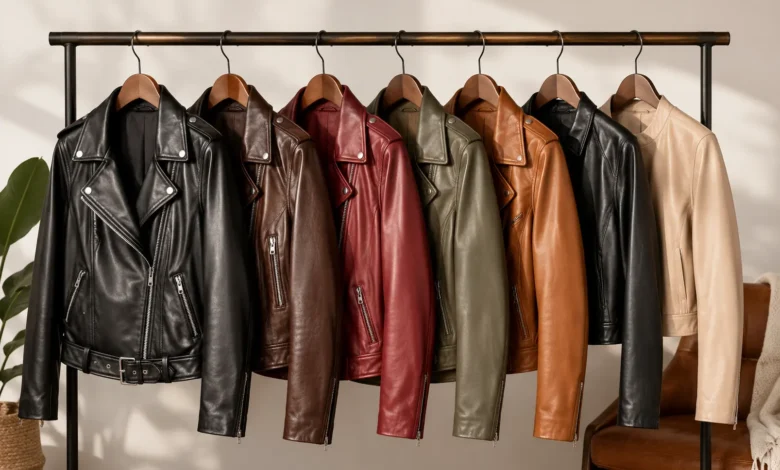
Few pieces do as much work in a wardrobe as a great leather jacket for women. Toss it over a simple dress and you’ve got instant edge; layer it over a t-shirt and jeans and you’ve got effortless cool; wear it over a work outfit and you’ve got a polished, slightly rebellious finishing touch. It’s one of those rare investment pieces that genuinely earns its price tag through years of near-constant wear.
But “leather jacket” covers an enormous range of colors, fits, and materials, and choosing the wrong one can mean a piece that sits unworn in your closet rather than becoming the reliable go-to it’s meant to be. This guide walks through everything — colors, fits, materials, how to style it across seasons and occasions, and how to care for it so it only gets better with age.
Why Every Wardrobe Needs a Leather Jacket
- Instant texture and contrast. Leather adds a different visual weight than fabric alternatives, immediately making an outfit feel more intentional.
- Genuinely versatile. A single well-chosen leather jacket can move between casual, edgy, polished, and even semi-formal outfits depending on what it’s paired with.
- Built to last. Quality leather, properly cared for, can genuinely last for decades, aging into a richer, more characterful piece rather than wearing out.
- Transcends trend cycles. While specific silhouettes go in and out of style, the leather jacket itself has remained a wardrobe staple across nearly every fashion era since it entered mainstream style.
Choosing the Right Leather Jacket Color
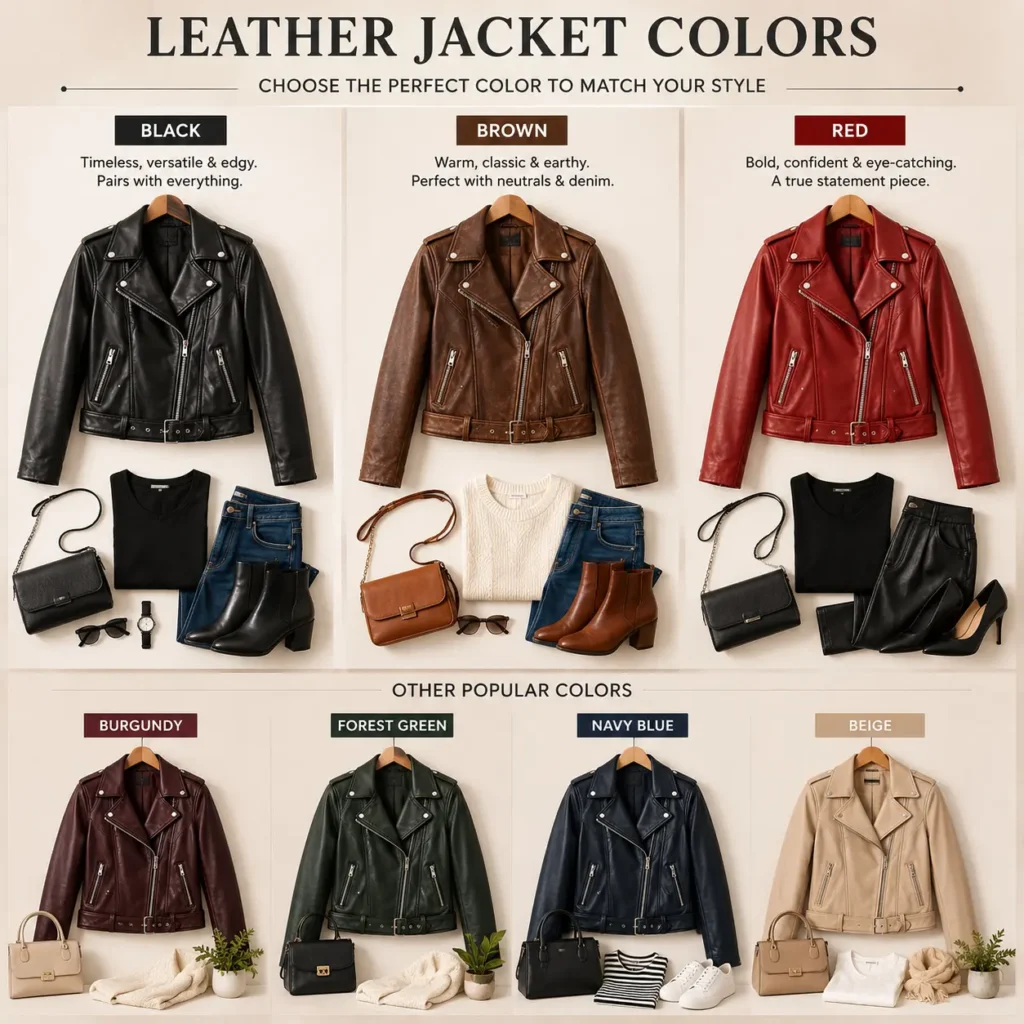
Black Leather Jacket
The black leather jacket is the most classic, versatile choice available, and for most people, it’s the smartest first investment in this category.
- Pairs with literally any color, making it the easiest option to style with an existing wardrobe.
- Reads as slightly edgier or more rock-inspired than other colors, working well for both casual and evening looks.
- Tends to hide minor scuffs and wear better than lighter colors, making it a practical everyday choice.
Brown Leather Jacket
A brown leather jacket brings a warmer, slightly more vintage or bohemian feel compared to the sharper edge of black.
- Pairs beautifully with earth tones, denim, and warm neutral color palettes.
- Tends to develop an especially rich, attractive patina over time, since brown leather often shows aging character more visibly than black.
- Works well for those wanting a slightly softer, less overtly “tough” leather jacket aesthetic.
Red Leather Jacket
For those wanting a bolder statement piece, a red leather jacket offers a striking, attention-grabbing alternative to the more neutral black and brown options.
- Works best as a true statement piece, styled with simple, neutral basics underneath so the jacket remains the outfit’s clear focal point.
- Particularly striking for evening looks or occasions where you want to stand out.
- Requires a bit more intentional styling than neutral colors, since red doesn’t blend as effortlessly into every outfit combination.
Other Popular Colors
Beyond the core three, leather jackets are increasingly available in deep burgundy, forest green, and even pastel tones, offering additional ways to express personal style while still working within the classic leather jacket silhouette.
Choosing the Right Leather Jacket Fit
Oversized Leather Jacket
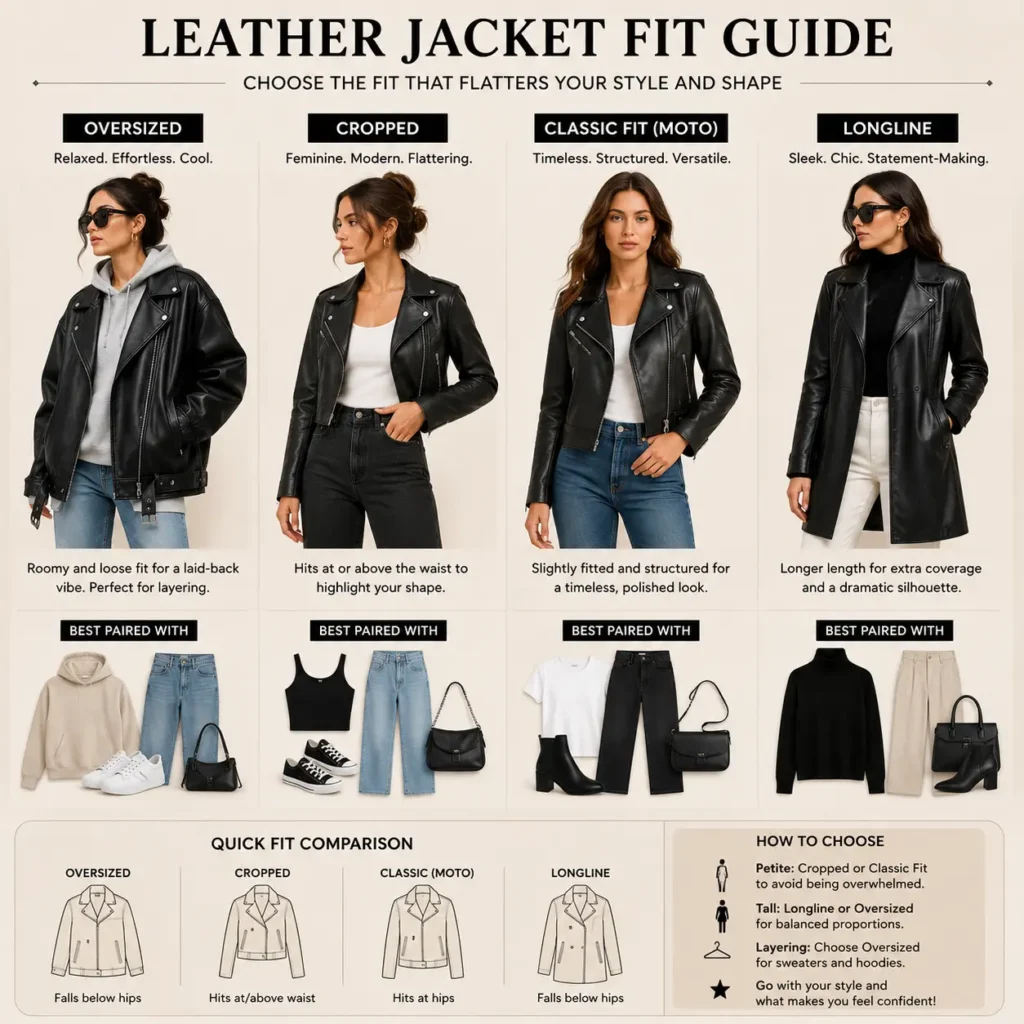
The oversized leather jacket has become one of the most popular silhouettes in recent years, offering a relaxed, effortlessly cool aesthetic that works particularly well layered over other pieces.
- Creates a lived-in, casual feel, especially when paired with more fitted pieces underneath to balance the volume.
- Offers more room for layering during colder months, since there’s extra space for a sweater or hoodie underneath.
- Tends to suit a wide range of body types, since the relaxed cut isn’t designed to closely follow the body’s shape.
Cropped Leather Jacket
A cropped leather jacket ends at or above the waist, creating a more fitted, feminine silhouette that pairs particularly well with high-waisted bottoms.
- Highlights the waistline, especially when paired with high-rise jeans, trousers, or skirts.
- Offers a slightly more polished, modern take on the classic leather jacket silhouette.
- Works especially well for petite frames, since the shorter length avoids overwhelming a smaller body with excess length.
Classic Fitted Moto Jacket
The traditional, closely fitted motorcycle jacket silhouette remains a timeless choice, following the body’s natural shape with structured details like asymmetrical zippers and notched collars.
Longline Leather Jacket
Extending past the hip, this silhouette offers a more dramatic, coat-like presence, working particularly well as a statement outer layer during transitional weather.
Genuine Leather vs. Faux Leather Jacket
One of the biggest decisions when shopping for a leather jacket is whether to invest in genuine leather or opt for a faux leather jacket instead.
| Factor | Genuine Leather | Faux Leather |
|---|---|---|
| Durability | Extremely durable, improves with age | Less durable, prone to cracking or peeling over years of wear |
| Price | Significant upfront investment | Much more budget-friendly |
| Maintenance | Requires occasional conditioning | Minimal maintenance, just wipe clean |
| Appearance over time | Develops a rich, unique patina | Tends to look the same or degrade rather than improve |
| Animal-free | No | Yes |
| Breathability | Generally more breathable | Can feel less breathable, particularly in warm weather |
If you’re planning to wear your leather jacket for years and want it to become a genuine long-term wardrobe staple, real leather typically offers better long-term value despite the higher upfront cost. If you’re experimenting with a specific color or trend (like a bold red or an oversized silhouette) without wanting to commit to a major investment, a well-made faux leather option can still look and perform well for lighter, shorter-term use.
Types of Leather Used in Jackets
- Lambskin: Soft, lightweight, and buttery to the touch, though generally less durable than heavier leather types. Popular for more fashion-forward, fitted silhouettes.
- Cowhide: Thicker and more durable, often used for classic moto and bomber styles that need to hold their structured shape.
- Sheepskin: Similarly soft to lambskin, often used in bomber-style jackets for its combination of softness and reasonable durability.
- Suede: A napped leather finish offering a completely different texture from smooth leather, softer and more casual in feel, though it requires more careful maintenance and is more prone to staining.
Avirex Leather Jackets: A Heritage Aviation-Inspired Option
Among established leather jacket brands, Avirex has built a strong reputation specifically around military and aviation-inspired outerwear, with a history spanning several decades in flight jacket and bomber design. Avirex leather jackets for women typically feature:
- Structured, sculpted silhouettes, including cropped and classic moto-inspired cuts.
- Heritage flight jacket details, like stand collars, embroidered patches, and bold stitching drawn from military aviation design.
- A range of leather types, including heavier cowhide for classic bomber styles and lighter leather for more fashion-forward cropped pieces.
- Both classic and bold colorways, spanning jet black and rich cognac-brown tones to more standout color options.
If you’re drawn to a leather jacket with genuine heritage design roots — structured shoulders, aviation-style hardware, and a slightly more military-inspired silhouette than a typical fashion-driven moto jacket — this is a category worth exploring specifically for that aesthetic.
Leather Jacket Hardware and Design Details
Beyond color and fit, hardware and design details significantly affect a leather jacket’s overall aesthetic:
- Silver hardware: Zippers, studs, and buckles in silver tend to read as slightly edgier and more classic-moto in feel.
- Gold hardware: Offers a warmer, softer contrast, often pairing especially well with brown or cognac leather tones.
- Asymmetrical zippers: A signature moto jacket detail, adding visual interest and a slightly rebellious edge to the silhouette.
- Quilted panels: Often found on shoulders or elbows, adding texture and a slightly more structured, biker-inspired look.
- Minimal, zip-front designs: A cleaner, more streamlined alternative to heavily hardware-detailed styles, suited to those wanting a more polished, versatile piece.
- Belted waists: Add adjustability and definition, particularly useful for oversized or longline silhouettes where waist shaping isn’t built into the cut itself.
Shopping for Leather Jackets: Price Tiers and What to Expect
- Budget-friendly options ($50-$150): Typically faux leather with simpler construction, a solid entry point for testing out a specific color or silhouette before committing to a larger investment.
- Mid-range options ($150-$400): Often genuine leather with moderate construction quality, offering a good balance of authenticity and accessibility.
- Higher-end options ($400-$800+): Premium leather types (like lambskin) with refined tailoring and more detailed craftsmanship, often from established heritage or designer brands.
- Investment/luxury pieces ($800+): Top-tier leather, meticulous construction, and often limited production runs from luxury or highly specialized leather goods brands.
Setting a budget range before shopping helps narrow down realistic options, since this category spans such a wide spectrum of price points and quality levels.
Building a Leather Jacket Capsule
While one great leather jacket can serve as a genuine wardrobe workhorse, those who want more variety might consider building out a small collection over time:
- One classic black leather jacket in a moto or simple zip-front silhouette for maximum everyday versatility
- One cropped leather jacket for a more feminine, high-waisted styling option
- One brown or cognac leather jacket for a warmer, slightly softer alternative
- One bold statement piece (red, oversized, or a heritage-style option like Avirex) for occasions when you want the jacket to be the outfit’s clear focal point
Starting with the versatile black option and expanding gradually ensures you get consistent wear out of each addition rather than accumulating pieces that rarely leave the closet.
Casual Everyday Looks
Pair a classic black or brown leather jacket with a simple graphic tee, straight-leg jeans, and sneakers for an easy, reliable everyday combination.
Date Night
A cropped leather jacket layered over a slip dress or fitted top, paired with heeled boots, creates a polished-yet-edgy evening look.
Office or Smart-Casual Settings
A structured leather jacket in black or brown, worn over a blouse and tailored trousers, adds texture and personality to an otherwise conservative office outfit.
Weekend Casual
An oversized leather jacket thrown over a hoodie or sweater, paired with joggers or wide-leg jeans, creates a relaxed, effortlessly cool weekend look.
Evening or Statement Occasions
A red or otherwise bold-colored leather jacket paired with simple black basics lets the jacket serve as the outfit’s clear focal point for a night out.
What to Wear Under a Leather Jacket
- Simple tees and tanks: The most versatile base layer, letting the jacket itself remain the outfit’s focal point.
- Slip dresses: A popular combination for balancing the toughness of leather with a softer, more feminine silhouette underneath.
- Sweaters and knitwear: Particularly suited to oversized leather jackets, since there’s enough room to layer comfortably underneath.
- Blouses: A great option for smart-casual or office-appropriate leather jacket outfits.
- Bodysuits: Offer a clean, fitted base layer that works especially well under cropped leather jacket styles.
Leather Jacket Outfit Ideas by Season
Spring
A lightweight leather jacket layered over a simple tee or blouse works well for cooler spring mornings, easily removed as temperatures rise throughout the day.
Summer
While less common, a cropped leather jacket can still work for cool summer evenings, layered over a sundress or simple tank for unexpectedly chilly nights out.
Fall
This is where leather jackets truly shine — layered over sweaters, paired with boots, and worn as a reliable transitional piece between summer and full winter outerwear.
Winter
A leather jacket can work as an outer layer on milder winter days, or layered under a heavier coat for extra structure and warmth on particularly cold days.
Accessorizing a Leather Jacket
- Boots: Ankle boots or combat boots are a natural pairing, reinforcing the jacket’s inherently edgy aesthetic.
- Statement jewelry: Layered necklaces or bold earrings add personality without competing with the jacket’s own visual weight.
- Crossbody bags: A practical, casually cool accessory choice that complements the overall leather jacket aesthetic.
- Sunglasses: A classic pairing that reinforces the effortlessly cool feel leather jackets are known for.
- Scarves: A lightweight scarf tucked under the collar adds texture and can help transition the jacket across seasons.
How to Care for a Leather Jacket
- Condition regularly. Genuine leather needs conditioning every few months (more often in dry climates) to prevent cracking and maintain its natural softness.
- Avoid prolonged sun exposure. Direct sunlight can dry out and fade leather over time, so store your jacket away from direct light when not in use.
- Keep away from excessive moisture. While a small amount of rain generally isn’t harmful, prolonged exposure can damage the leather, so it’s worth drying it properly (never with direct heat) if it does get wet.
- Store on a padded hanger. This helps the jacket maintain its shape rather than developing creases from being folded or crumpled in storage.
- Spot clean rather than machine wash. Leather should never go in a washing machine — use a damp cloth for light cleaning and consult a leather specialist for deeper stains.
- Address faux leather differently. Synthetic leather generally just needs a wipe with a damp cloth, without the conditioning genuine leather requires, though it should still be kept away from excessive heat, which can cause cracking or peeling.
Choosing the Right Leather Jacket for Your Body Type
- Petite frames: A cropped leather jacket tends to be the most flattering, avoiding the visual weight a longer silhouette can add to a smaller frame.
- Curvy figures: A structured, fitted moto style highlights the waist beautifully, while an oversized style can also work well when balanced with fitted pieces underneath.
- Tall frames: Both oversized and longline leather jackets tend to look particularly striking on taller frames, since there’s enough length to fully showcase the silhouette.
- Broad shoulders: A jacket with set-in (rather than dropped) sleeves tends to create a cleaner, more streamlined shoulder line.
Common Mistakes to Avoid When Buying a Leather Jacket
- Prioritizing trend over versatility for a first purchase. A bold color or unusual silhouette is fun, but a classic black or brown jacket tends to offer far more long-term styling flexibility as a first investment.
- Ignoring proper fit through the shoulders. Unlike many other jacket styles, leather doesn’t stretch or adjust easily, so shoulder fit should be correct from the start.
- Skipping care instructions. Genuine leather requires some basic maintenance to age well, and skipping this step can significantly shorten the jacket’s lifespan.
- Choosing based on price alone. A cheaply made jacket, whether genuine or faux leather, often shows wear far faster than a slightly higher-quality option, making the higher upfront cost worthwhile for a piece meant to last.
- Overlooking lining quality. A well-lined jacket tends to be more comfortable and easier to layer over other pieces, so it’s worth checking the interior construction, not just the exterior leather.
The History Behind the Leather Jacket
The leather jacket’s roots trace back to early 20th-century aviation and military gear, designed for durability and wind resistance during flight. It later became strongly associated with motorcycle culture in the mid-20th century, and eventually with rock and rebellious youth subcultures throughout the following decades.
This layered history is part of why the leather jacket carries such a distinct symbolic weight compared to many other wardrobe staples — it draws on threads of functionality, rebellion, and enduring cool all at once. Understanding this background also explains why certain design details (aviation-style collars, moto-inspired zippers, bomber silhouettes) continue to appear across modern leather jacket collections, including heritage-focused brands that lean directly into this history.
Hair and Makeup Pairing for Leather Jacket Outfits
A leather jacket tends to pair particularly well with a few complementary styling choices:
- Sleek, straight hair or a low bun complements the jacket’s structured, slightly edgy aesthetic.
- A bold red lip pairs naturally with the classic rebellious energy of a leather jacket, particularly with black leather.
- Smoky eye makeup suits evening leather jacket outfits especially well, reinforcing the overall edgier styling direction.
- Natural, minimal makeup works just as well for daytime looks, letting the jacket itself remain the outfit’s main statement.
Frequently Asked Questions
What color leather jacket is the most versatile?
Black is generally considered the most versatile choice, since it pairs easily with nearly any color and outfit style, making it the smartest first investment for most wardrobes.
Is genuine leather or faux leather better?
Genuine leather offers greater durability and develops a rich character over time, but comes at a higher price point, while faux leather is more budget-friendly and easier to maintain, though generally less durable long-term.
What’s the difference between an oversized and a cropped leather jacket?
An oversized leather jacket offers a relaxed, roomy silhouette ideal for layering, while a cropped leather jacket ends at or above the waist, creating a more fitted, feminine shape that pairs well with high-waisted bottoms.
Are Avirex leather jackets good quality?
Avirex is known for structured, heritage-inspired leather jackets with a strong background in military and aviation-style design, generally offering solid construction and distinctive design details compared to more purely fashion-driven brands.
How do I care for a genuine leather jacket?
Condition it regularly, avoid prolonged sun exposure, keep it away from excessive moisture, store it on a padded hanger, and spot clean rather than machine washing to help it age well over time.
Can a leather jacket be worn in the summer?
Yes, particularly a lightweight or cropped style worn over a sundress or tank top for cooler summer evenings, though it’s less commonly worn during the height of daytime summer heat.
What’s the difference between lambskin and cowhide leather jackets?
Lambskin is softer, lighter, and more fashion-forward but generally less durable, while cowhide is thicker, more durable, and better suited to classic, structured moto and bomber silhouettes that need to hold their shape.
How much should I expect to spend on a good leather jacket?
Genuine leather jackets typically start around $150-$200 for solid mid-range quality, while premium leather types and heritage brands can run $400 and above, depending on craftsmanship and materials.
Final Thoughts
A great leather jacket for women is one of those rare pieces that genuinely earns its place as a long-term wardrobe investment, working across casual, polished, and statement-making outfits alike. Whether you’re drawn to the timeless versatility of black, the warmth of brown, the boldness of red, or a heritage-inspired option like Avirex, choosing a jacket with the right fit, color, and material for your personal style will pay off in years of reliable, ever-improving wear.
Start with a classic silhouette in a versatile color if this is your first leather jacket, take care of it properly, and don’t be afraid to let it become one of the most-worn pieces in your entire closet.
Also Read: What to Wear With Wide Leg Jeans: 15 Stylish Outfit Ideas