If you’ve ever counted down the hours until you could unhook your bra and finally exhale, you’re far from alone. Finding truly comfortable bras that hold up through a full day — from an early morning commute to a late work shift to whatever the evening brings — is one of those wardrobe challenges that seems simple until you actually go looking for the right one.
The truth is, “comfortable” means something a little different depending on your body, your daily activities, and what you’re wearing on top. This guide breaks down six of the most comfortable bra categories for all-day wear, what makes each one work, and how to figure out which type actually fits your specific needs.
What Actually Makes a Bra Comfortable?
Before getting into specific styles, it helps to understand the features that separate a genuinely comfortable bra from one that just looks comfortable on the hanger.
- Breathable, soft fabric. Materials like modal, cotton blends, and moisture-wicking synthetics feel noticeably better against the skin than stiffer, less breathable fabrics, especially over many hours of wear.
- Minimal or well-placed seams. Seams that sit in the wrong spot are one of the most common sources of irritation, particularly under fitted clothing.
- Wide, adjustable straps. Straps that are too thin tend to dig into the shoulders over time, while adjustable straps let you fine-tune fit throughout the day as needed.
- A band that sits flat without digging in. The band, not the straps, should be doing most of the actual supportive work — a properly fitted band shouldn’t ride up or leave deep marks by the end of the day.
- Appropriate support for your activity level and bust size. A bra that offers too little support for your body can be just as uncomfortable as one that offers too much structure for a low-key day.
Keeping these principles in mind will help you evaluate any bra, not just the six categories covered in this guide.
1. Wireless Bras
Wireless bras have become one of the most popular categories for all-day comfort, and for good reason — removing the underwire eliminates one of the most common sources of discomfort, especially for anyone sitting for long stretches or moving between different activities throughout the day.
Why They Work for All-Day Wear
- Without a rigid underwire, there’s no risk of the wire digging in, shifting, or poking through fabric after hours of wear.
- Many wireless styles use soft, molded cups or lightly lined fabric to provide shape and light support without needing structural wire.
- They tend to move more naturally with the body, which is especially helpful for anyone who transitions between sitting, standing, and walking throughout the day.
Who They’re Best For
Wireless bras suit a wide range of bust sizes, though those with larger busts may want to look specifically for wireless styles designed with reinforced side panels or wider bands for added support, since not all wireless designs offer the same lift.
2. Bralettes
Bralettes have moved well beyond a purely loungewear category, becoming a genuine everyday option for those prioritizing softness and minimal structure above all else.
Why They Work for All-Day Wear
- Typically made from soft, stretchy fabric with little to no padding or underwire, bralettes offer an extremely lightweight, barely-there feel.
- Many styles use a pullover design rather than hook closures, eliminating another common source of discomfort (a poorly placed hook-and-eye closure) entirely.
- The soft, unstructured fit moves naturally with the body rather than compressing or shaping it.
Who They’re Best For
Bralettes tend to work best for those with smaller to medium busts who don’t require significant lift or support, or for anyone wearing looser, non-fitted clothing where structured support isn’t a priority. They’re also a popular choice for low-key, low-activity days.
3. Sports Bras
While often associated purely with workouts, a well-designed sports bra has become a genuine all-day comfort option for many people, particularly those who prioritize maximum support and minimal bounce over traditional shaping.
Why They Work for All-Day Wear
- Sports bras are specifically engineered for movement, using compression or encapsulation designs to minimize bounce and provide substantial support.
- Moisture-wicking fabric helps keep the skin dry and comfortable, even outside of actual exercise, particularly in warmer climates or for those prone to sweating throughout the day.
- Wide, non-slip straps and bands are designed to stay in place through significant movement, which also translates well to long, active days that aren’t necessarily workout-focused.
Who They’re Best For
Sports bras are especially well-suited for those with larger busts who need substantial support, anyone with an active daily routine, or those who simply prefer the secure, no-bounce feeling regardless of their day’s specific activities.
4. Plus Size Bras
Comfortable, well-fitting bras for fuller busts require some specific design considerations that differ from standard sizing, and thankfully, this category has expanded significantly in recent years.
Why They Work for All-Day Wear
- Reinforced, wider bands distribute weight more evenly across the ribcage, reducing the digging and discomfort that can occur with a standard band width.
- Wider, cushioned straps help prevent shoulder indentation, which becomes a more common concern with increased bust size and weight.
- Full-coverage cup designs offer more complete support and reduce spillage or gapping that can occur with cups not designed for larger sizes.
- Some styles include additional side support panels specifically engineered to prevent shifting throughout the day.
Who They’re Best For
Anyone with a fuller bust who has struggled with standard sizing will likely find significantly more comfort in bras specifically designed and graded for plus size proportions, since these styles account for weight distribution and support needs that standard sizing often overlooks.
5. Sleep Bras
Designed specifically for overnight or lounging comfort, sleep bras prioritize softness and gentle support above all else, making them a genuinely different category from daytime bras despite some visual similarity to bralettes.
Why They Work for All-Day (and All-Night) Wear
- Extremely soft, stretchy fabric with no underwire or rigid structure ensures comfort even while lying down in various positions.
- Light, gentle support helps some people feel more comfortable overnight, particularly those with larger busts who experience discomfort without any support at all.
- The pullover, seamless design typically found in sleep bras minimizes any pressure points that could otherwise disrupt sleep.
Who They’re Best For
Those who prefer some light support while sleeping, postpartum or nursing individuals looking for gentle overnight support, or anyone who simply wants a soft transitional piece between daytime wear and being completely bra-free at home.
6. Everyday T-Shirt Bras
The classic, reliable option many people default to for good reason — a well-made t-shirt bra offers smooth, seamless coverage designed specifically to disappear under fitted clothing while still providing structured, all-day support.
Why They Work for All-Day Wear
- Smooth, molded cups eliminate visible lines under fitted tops and t-shirts, making this style especially practical for everyday work or casual wear.
- Balanced support (typically underwire, though wireless t-shirt bra options exist too) provides shape and lift without the more aggressive compression of a sports bra.
- Because this category is so widely produced, there’s a huge range of fabric, support level, and price point options available, making it easier to find a specific fit that works for your body.
Who They’re Best For
This is often the most versatile, universally practical option across bust sizes and daily activities, making it a smart default choice for anyone building out a small, comfortable bra collection from scratch.
Comparing the 6 Bra Types at a Glance
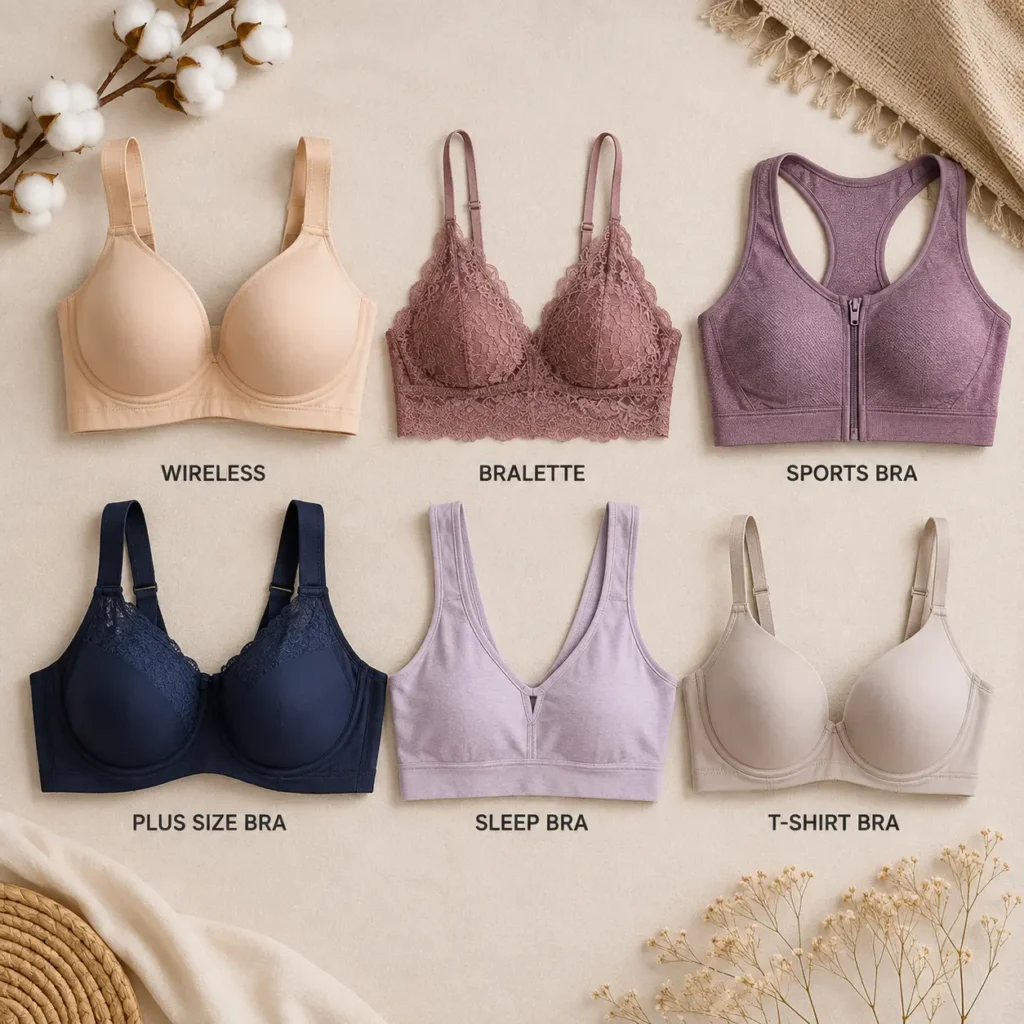
| Type | Support Level | Best For | Structure |
|---|---|---|---|
| Wireless | Light to moderate | Everyday comfort, sitting for long periods | Molded cups, no underwire |
| Bralette | Minimal | Smaller busts, casual/low-key days | Soft, unstructured, pullover |
| Sports bra | Moderate to high | Active days, larger busts needing lift | Compression or encapsulation |
| Plus size | Moderate to high | Fuller busts needing reinforced support | Wide bands, cushioned straps |
| Sleep bra | Very light | Overnight, lounging, postpartum comfort | Seamless, soft, no wire |
| T-shirt bra | Moderate | Everyday wear under fitted tops | Smooth molded cups, often underwire |
Use this table as a quick reference when deciding which category to prioritize first, especially if you’re starting to rebuild your bra collection around comfort rather than defaulting to whatever’s easiest to find in stores.
Also Read: Fashion Lifestyle: How Your Style Choices Shape Your Everyday Life
Shopping Tips for Comfortable Bras
- Try before committing to multiples. Since fit varies so much by brand, it’s worth purchasing a single piece first to test comfort and sizing before buying several of the same style.
- Read reviews specifically about comfort and true-to-size fit, since these details tend to be more reliable indicators than product photos alone.
- Don’t assume your size is fixed. Many people wear the wrong size for years simply because they were sized once and never rechecked, especially after weight changes or after nursing.
- Consider your budget across categories. It’s often smarter to invest a bit more in one or two high-quality, well-fitted everyday bras (like a t-shirt bra or sports bra) than to buy several lower-quality options that don’t hold up well over time.
- Look for a size range that matches your actual body. Not all brands offer the same range of band and cup size combinations, so seek out retailers specifically known for a wide, inclusive size range if standard sizing hasn’t worked well for you in the past.
Wearing the wrong size is one of the most common — and most fixable — causes of bra discomfort, regardless of which style you choose.
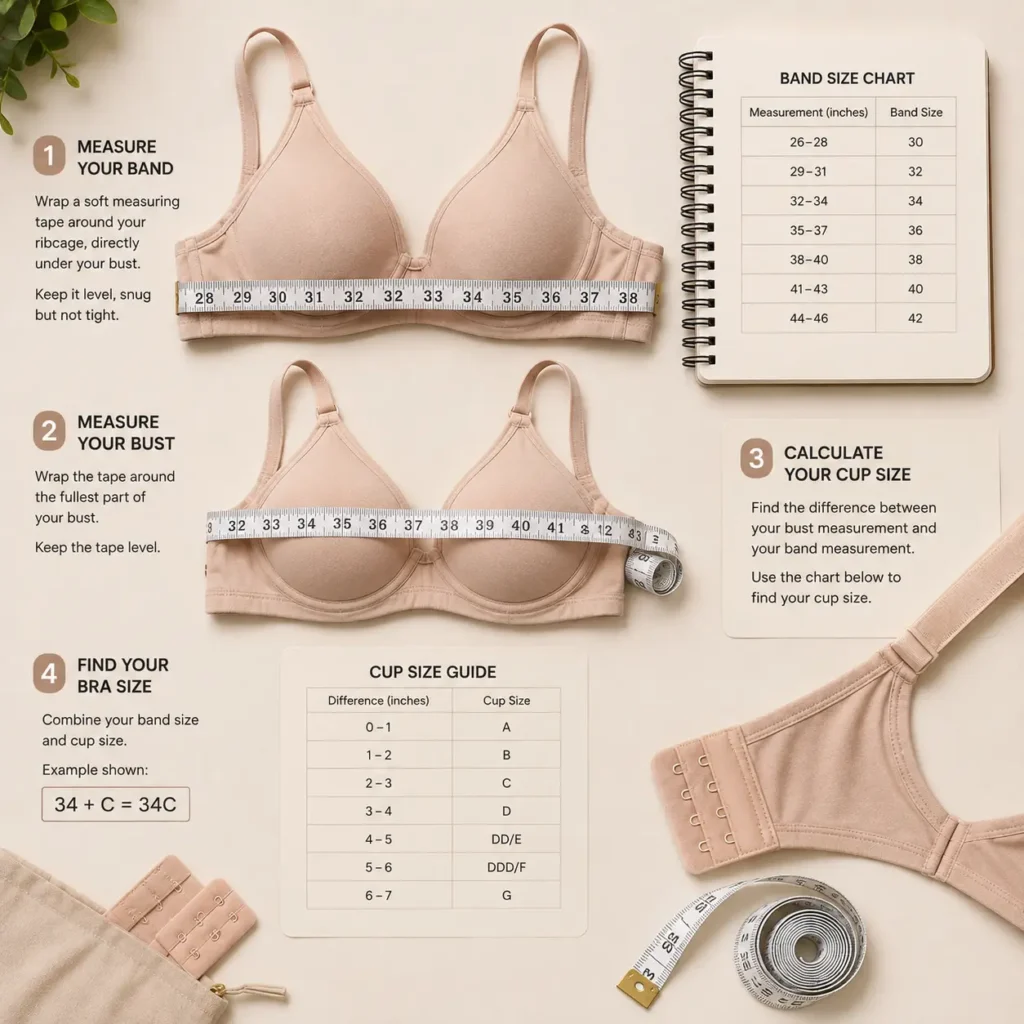
- Measure your band size by wrapping a soft measuring tape around your ribcage, directly under your bust, keeping the tape level and snug but not tight.
- Measure your bust size by wrapping the tape around the fullest part of your bust, again keeping it level.
- Calculate your cup size based on the difference between your band and bust measurements, since cup sizing is relative to band size rather than an absolute measurement.
- Remember that sizing varies between brands. The same labeled size can fit noticeably differently depending on the brand’s specific cut and construction, so use online sizing as a helpful starting point rather than an exact guarantee.
- Reassess your size periodically. Weight fluctuations, hormonal changes, and simply wearing a bra for a long period can all affect what size fits best, so it’s worth remeasuring every year or so, or whenever a bra that used to fit well starts to feel off.
Signs Your Bra Doesn’t Fit Properly
- The band rides up in the back rather than sitting parallel to the ground, which usually means the band is too loose or the straps are doing too much of the supportive work.
- Straps dig in or leave deep marks, indicating the band may need to be tightened so the straps aren’t compensating for inadequate band support.
- Cups gape or wrinkle, suggesting the cup size is too large for your actual bust.
- Breast tissue spills over the top or sides, indicating the cup size is too small.
- The underwire (if present) sits on breast tissue rather than around it, which is one of the most common and uncomfortable fit issues, usually solved by sizing up in the band or adjusting the cup size.
Fabric and Feature Guide for All-Day Comfort
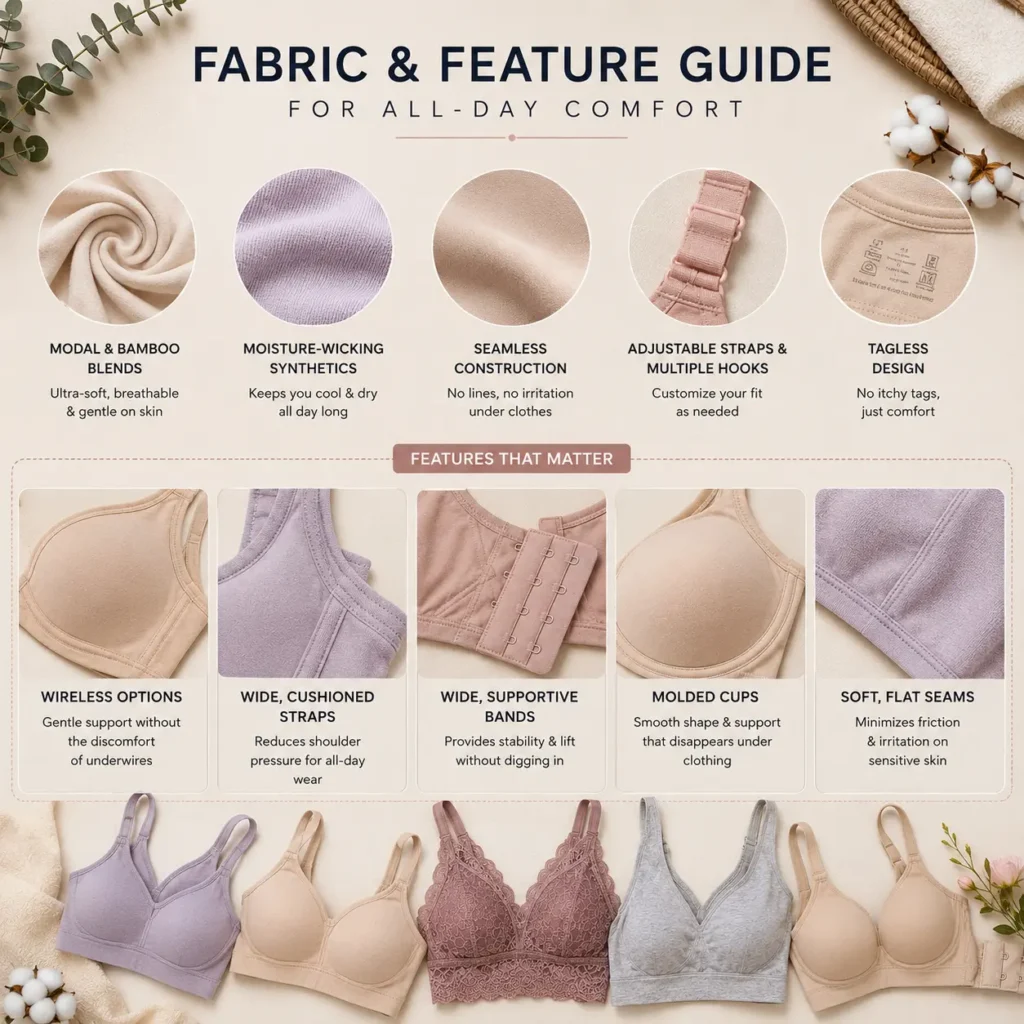
- Modal and bamboo blends: Extremely soft against the skin and naturally breathable, making them a popular choice for sensitive skin or all-day wear.
- Moisture-wicking synthetics: Particularly useful for warmer climates or those prone to sweating, commonly found in sports bras but increasingly available in everyday styles too.
- Seamless construction: Reduces visible lines under clothing and minimizes potential irritation points, especially valuable for fitted tops.
- Adjustable straps and multiple hook closures: Allow for a more customized, comfortable fit that can be adjusted as needed throughout the day or as your body changes over time.
- Tagless designs: Eliminate one small but genuinely common source of irritation, particularly along the center back or underarm area.
Tips for Extending the Comfort and Life of Your Bras
- Rotate between multiple bras rather than wearing the same one daily, which gives the elastic time to recover its shape between wears.
- Hand wash or use a lingerie bag on a gentle cycle to help preserve elastic and fabric quality over time.
- Avoid the dryer, since high heat tends to break down elastic fibers significantly faster than air drying.
- Replace bras periodically. Even well-cared-for bras lose elasticity and support over time, typically needing replacement every 6-12 months depending on frequency of wear and care.
- Store bras properly, avoiding folding cups into each other, which can distort their shape over time.
Transitioning Between Bra Types Throughout the Day
For some people, a single bra style genuinely can’t cover every part of a busy day comfortably, and that’s completely normal. A few practical approaches:
- Keep a soft bralette or wireless option on hand to switch into once you’re home, even if you wore a more structured style during the day.
- Choose your morning bra based on your actual schedule, not just habit — a day full of meetings and sitting calls for a different priority than a day spent running errands or on your feet.
- Layer a light cardigan or jacket if you need to switch to a less structured bra partway through the day but still want a polished look on top.
- Keep a spare in your bag for long days, especially if you know you’ll be transitioning from work to a workout, a social event, or an unusually long commute.
Bras for Sensitive Skin
For those prone to irritation, chafing, or skin sensitivity, a few additional features are worth prioritizing regardless of which of the six categories you choose:
- Tagless designs eliminate a small but common irritation point, particularly along the center back.
- Flat, bonded seams reduce friction compared to traditional stitched seams, especially under fitted clothing.
- Natural fiber blends, like cotton or modal, tend to be gentler against sensitive skin than fully synthetic fabrics.
- Avoid decorative lace directly against the skin if you’re prone to irritation, opting instead for lace as a trim detail rather than the primary fabric touching your body.
- Wash new bras before the first wear to remove any manufacturing residue that could contribute to irritation, particularly for those with especially sensitive skin.
- Office or desk days: A t-shirt bra or wireless style typically offers the best balance of support and all-day comfort for extended sitting.
- Active or on-your-feet days: A sports bra provides the most reliable support and minimal bounce for movement-heavy schedules.
- Low-key or casual days: A bralette or sleep bra offers maximum softness for days when structured support isn’t a priority.
- Larger bust, all-day support needed: Plus size-specific styles or a well-fitted sports bra tend to offer the most reliable, comfortable support throughout a full day.
- Layering under fitted clothing: A seamless t-shirt bra remains the most reliable choice for avoiding visible lines under close-fitting tops.
Also Read: What to Wear With Wide Leg Jeans: 15 Stylish Outfit Ideas
Comfortable Bras for Postpartum and Nursing Needs
For those navigating body changes after pregnancy, comfort needs often shift significantly, and several of the categories in this guide adapt well to that transition:
- Sleep bras are a popular choice for gentle overnight support during a time when breast tenderness and fluctuating size are common.
- Wireless styles are frequently recommended during this period, since underwire can sometimes contribute to discomfort or, in the case of breastfeeding, potential blocked ducts.
- Bras with stretchier, more adjustable construction accommodate the natural size fluctuations that often occur during postpartum recovery and breastfeeding.
- Nursing-specific designs, which share many features with the wireless and sleep bra categories covered here, add functional clasps or pull-aside panels for easier access, without sacrificing the soft, supportive comfort this guide focuses on throughout.
If you’re shopping during this specific life stage, it’s worth prioritizing flexibility and gentle support over more structured shaping, since comfort needs during this time often shift week to week.
What is the most comfortable type of bra for all-day wear?
This depends on your bust size and daily activities, but wireless bras and well-fitted t-shirt bras are generally considered the most versatile, comfortable options for extended daily wear across a range of body types.
Are wireless bras supportive enough for larger busts?
Some wireless styles, particularly those with reinforced side panels and wider bands, can offer adequate support for larger busts, though many people with fuller busts still prefer the more structured support of a well-fitted sports bra or plus size-specific style.
How do I know if my bra band is too big or too small?
The band should sit level and snug around your ribcage without riding up in the back or digging in uncomfortably. If it rides up, the band is likely too loose; if it leaves deep marks or feels restrictive, it may be too tight.
How often should I replace my bras?
Most bras need replacing every 6-12 months, depending on how frequently they’re worn and how well they’re cared for, since elastic naturally loses its shape and support over time.
Can I sleep in a bra comfortably?
Yes, particularly with a sleep bra specifically designed for overnight wear, which offers soft, gentle support without underwire or rigid structure that could cause discomfort while lying down.
What’s the difference between a bralette and a wireless bra?
Bralettes typically offer minimal structure and support, often in a pullover design ideal for smaller busts or low-key days, while wireless bras can offer more shaping and support through molded cups, without the discomfort of an actual underwire.
Is it normal to need different bras for different days?
Yes, many people find that no single bra style covers every activity comfortably — a rotation across a few categories (like a t-shirt bra for work and a bralette for home) is a completely normal and practical approach.
What features help most with sensitive skin?
Tagless designs, flat bonded seams, and natural fiber blends like cotton or modal tend to be gentler against sensitive skin than fully synthetic fabrics or bras with decorative lace directly against the body.
Final Thoughts
Truly comfortable bras aren’t one-size-fits-all — the right choice depends on your bust size, your daily activities, and what you’re layering on top. Whether you gravitate toward the soft simplicity of a bralette, the reliable structure of a t-shirt bra, or the secure support of a sports bra, understanding what makes each style work (and getting your correct size) makes an enormous difference in all-day comfort.
Consider building a small rotation across a few of these six categories, matched to your different types of days, rather than relying on a single style to cover every possible need. Comfort, much like the rest of your wardrobe, tends to work best when it’s tailored to your actual life rather than a one-size-fits-all approach.
Also Read: College Fashion 2026: Trends, Essentials & Style Tips