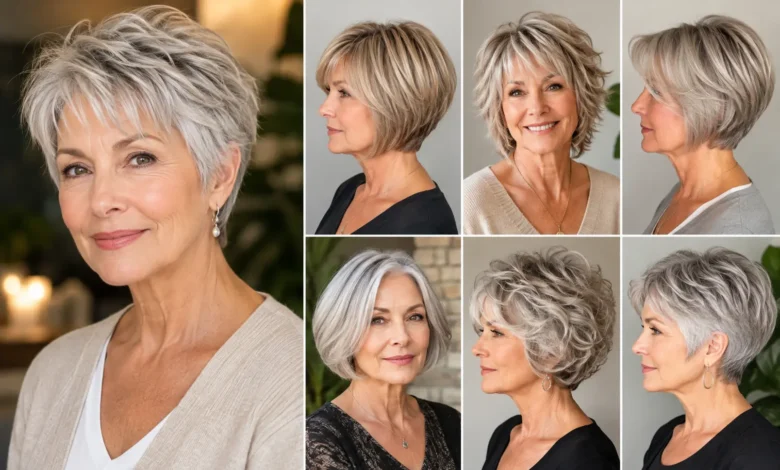
Fine hair changes over time, and for many women over 60, strands become noticeably thinner, drier, and less voluminous than they once were. The good news is that the right haircut can work with these changes rather than against them — adding the appearance of fullness, cutting down on daily styling time, and still looking polished with minimal effort.
This guide walks through six genuinely low-maintenance hairstyles well-suited to fine hair over 60, along with styling tips, product advice, and guidance on choosing the right cut for your face shape and lifestyle.
Why Fine Hair Needs a Different Approach After 60
Hair naturally changes with age due to a combination of hormonal shifts, slower growth cycles, and a gradual reduction in the size of individual hair follicles. For many women, this means:
- Reduced volume and density, even if hair was thicker earlier in life.
- Increased dryness, since oil production tends to decrease over time.
- Slower growth, meaning haircuts can hold their shape a bit longer between trims, which is actually a small advantage for low-maintenance styling.
- A need for styles that create the illusion of volume, since heavy, weighty cuts can make fine hair look even flatter and thinner.
Choosing a cut specifically suited to these changes — rather than holding onto a style from decades earlier — often makes a bigger visual difference than any product or styling technique alone.
What Makes a Hairstyle Genuinely Low-Maintenance?
Before diving into specific cuts, it helps to understand what actually defines “low-maintenance” for fine hair over 60:
- Minimal daily styling required. The best low-maintenance cuts are designed to fall into place with little more than a quick blow-dry or even air-drying.
- Longer stretches between trims. A well-designed short-to-medium cut can often go 6-8 weeks between appointments without losing its shape.
- Works with natural texture, rather than requiring daily heat styling to look intentional.
- Doesn’t rely on complicated tools or techniques, making it realistic to maintain at home between salon visits.
1. The Classic Pixie Cut
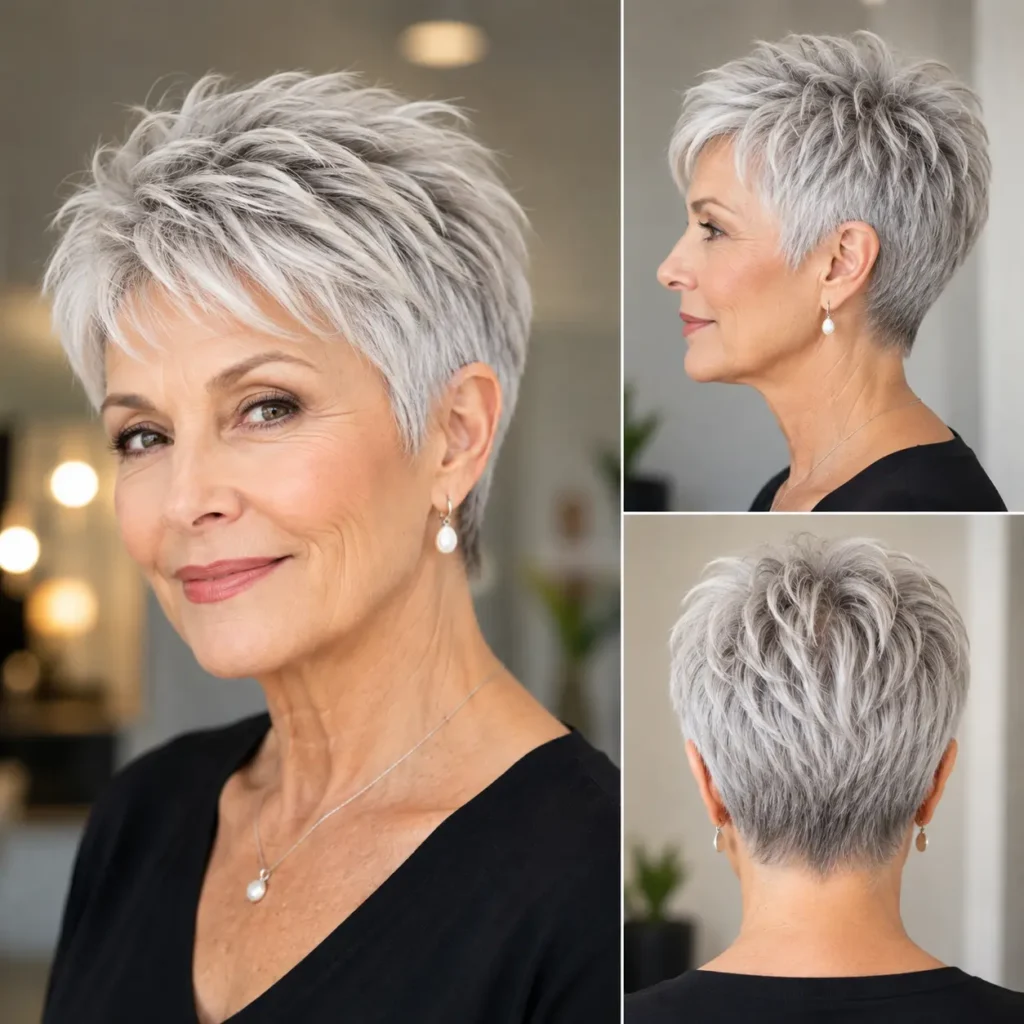
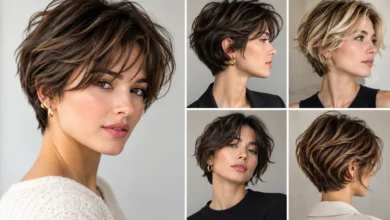
A well-cut pixie remains one of the most reliably low-maintenance options for fine hair, and it’s a particular favorite among women over 60 for good reason.
Why It Works
- Short layers reduce the weight that can make fine hair look flat, creating natural lift and movement.
- Requires minimal daily styling — often just a bit of texturizing product worked through with fingers.
- Grows out gracefully, since the shorter overall length means less noticeable difference between fresh and slightly grown-out cuts.
Styling Tips
Apply a small amount of volumizing mousse to damp hair before blow-drying with your fingers, focusing on lifting the roots. A texturizing paste or light pomade can add definition to the ends once dry.
2. The Textured Bob
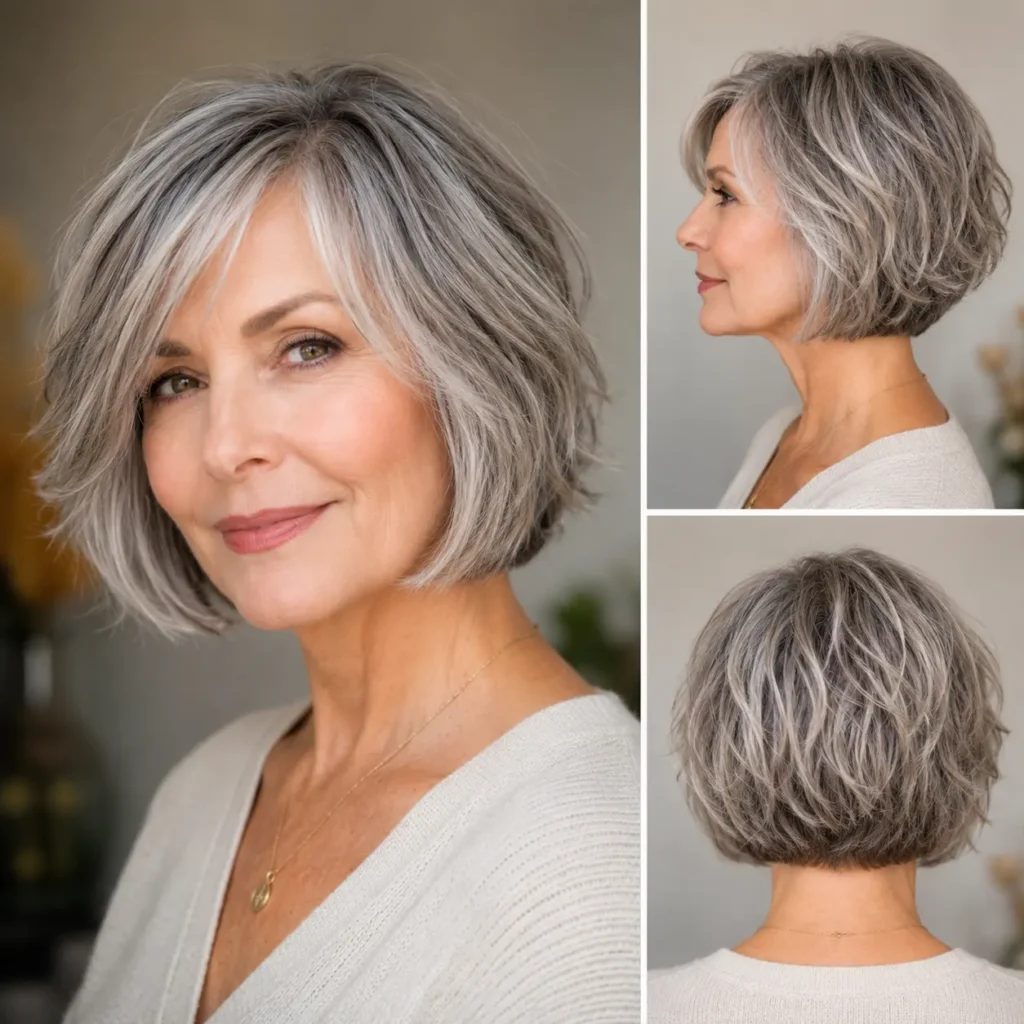
A bob with soft, textured layers offers more length than a pixie while still remaining genuinely easy to maintain, making it a popular middle-ground choice.
Why It Works
- The chin-to-jaw length flatters a wide range of face shapes, while soft layering adds movement without excessive daily styling effort.
- Slightly angled or textured ends create the illusion of thickness, which is especially helpful for fine hair.
- Versatile enough to wear straight, with a light wave, or air-dried, depending on your natural texture and time available.
Styling Tips
A root-lifting spray applied before blow-drying, combined with a large round brush for a bit of volume at the crown, gives this cut a polished finish in just a few minutes.
3. Short Layered Shag
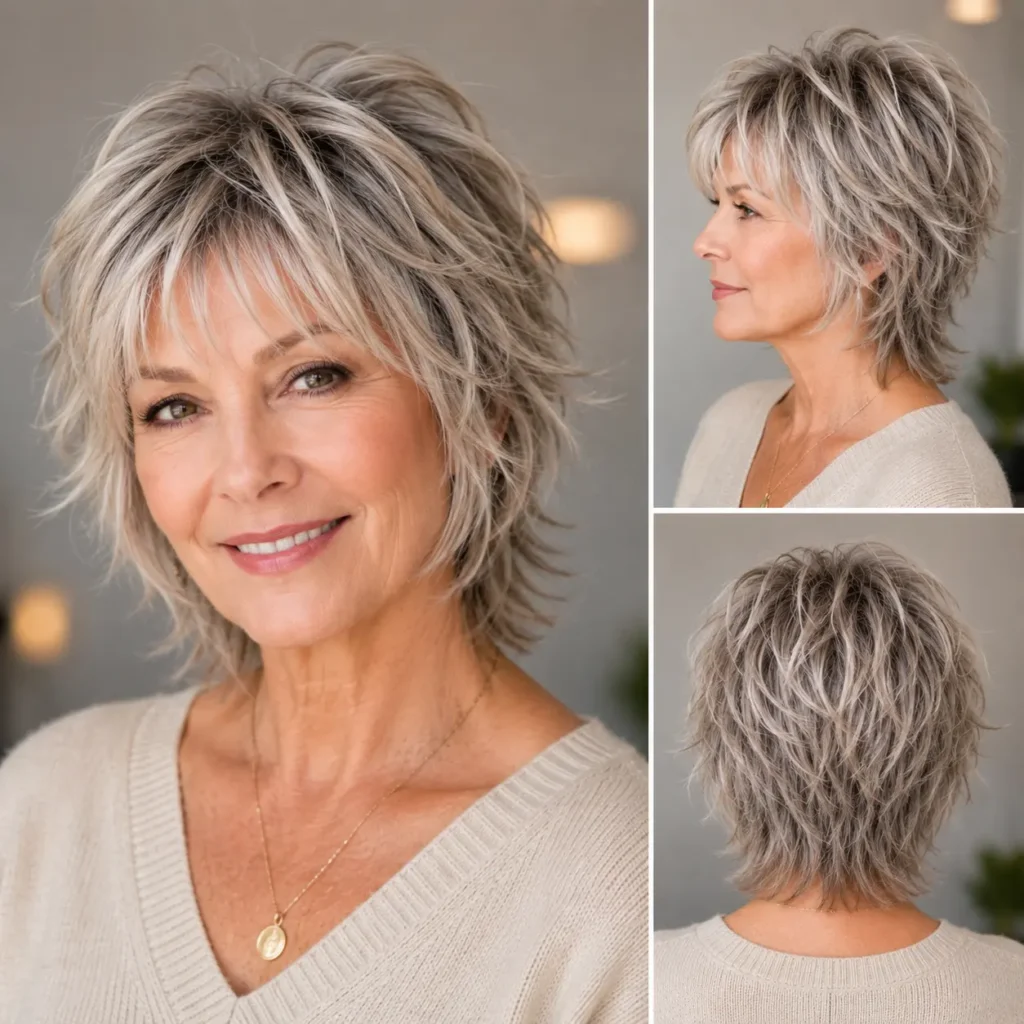
A layered shag haircut brings texture and movement throughout the hair, which works particularly well to disguise thinning and add visual density to fine strands.
Why It Works
- Heavy internal layering removes the flat, single-length look that can make fine hair appear thinner than it actually is.
- The choppy, textured finish is inherently forgiving, meaning it still looks intentional even without daily precise styling.
- Works especially well with natural texture, requiring less blow-drying effort than smoother, more polished cuts.
Styling Tips
Scrunch a lightweight mousse or texturizing spray through damp hair and either air-dry or diffuse on low heat for a soft, effortless finish.
4. The Cropped Layered Bob (Lob Alternative)
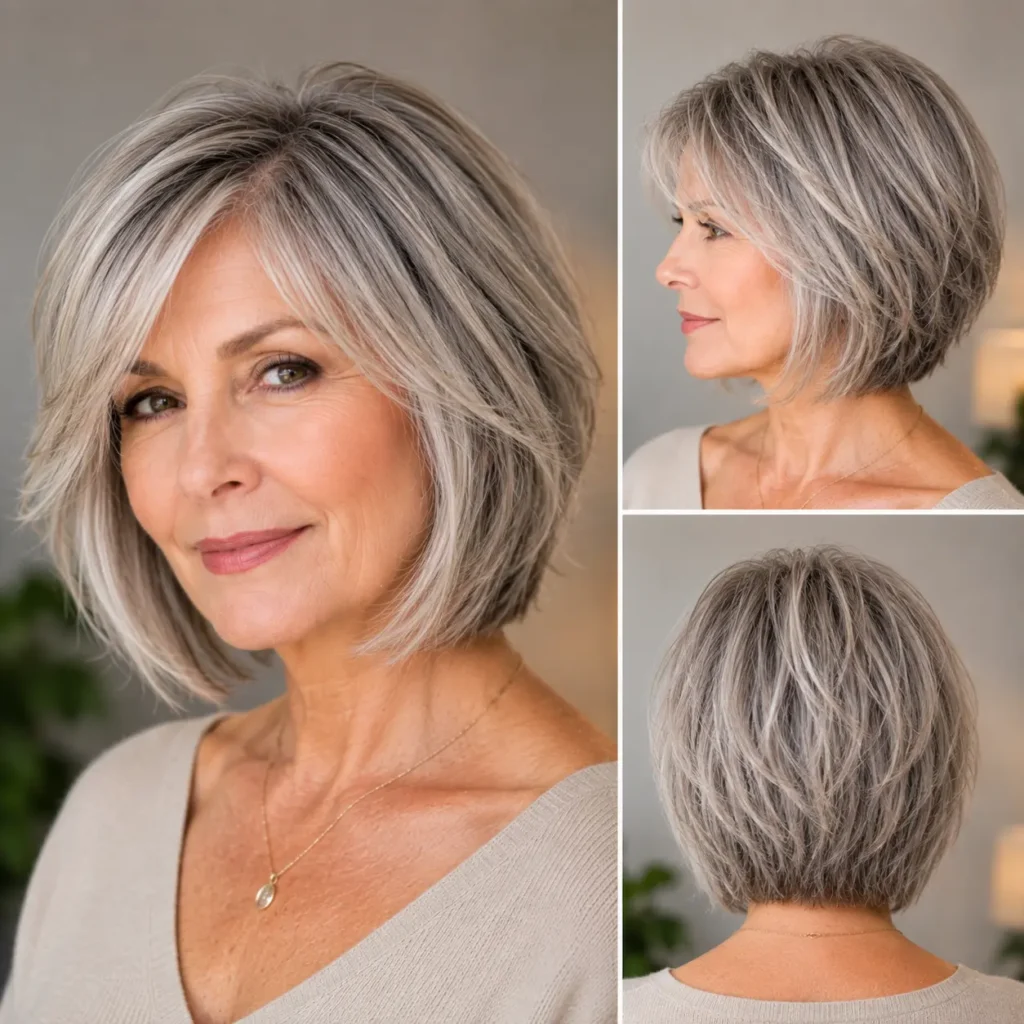
A slightly longer bob with soft layers throughout offers a bit more length and versatility while still keeping styling time to a minimum.
Why It Works
- The added length compared to a classic pixie or short bob offers more styling flexibility (including light waves or half-up options) without significantly increasing maintenance.
- Layers throughout the length prevent the “flat sheet” look that can happen with fine hair in a one-length cut.
- Tends to require trims slightly less frequently than very short cuts, since the longer length shows growth less noticeably.
Styling Tips
A smoothing serum applied sparingly to the ends helps control any flyaways, while a volumizing spray at the roots keeps the crown from looking flat throughout the day.
5. Soft, Face-Framing Layers with Length Left In
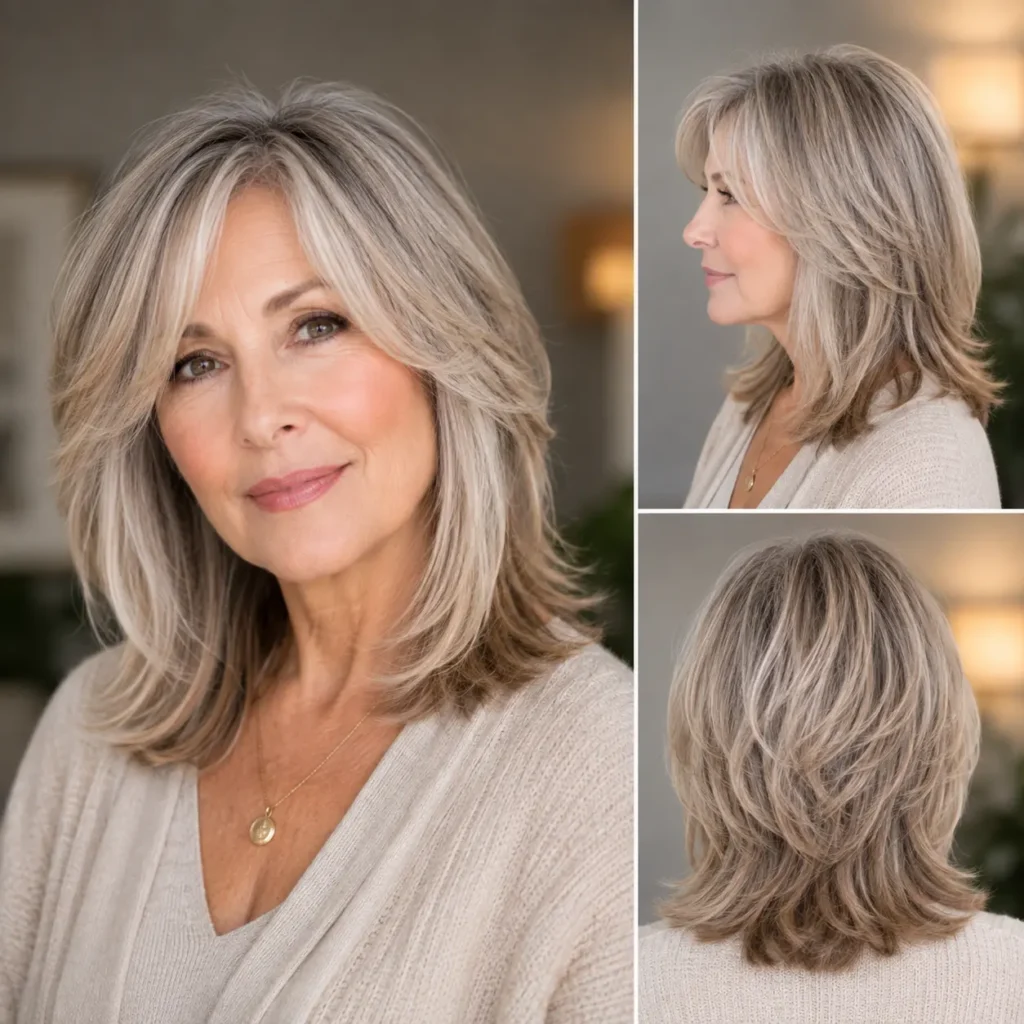
For women who prefer to keep more length rather than going short, adding soft, face-framing layers throughout can significantly improve how fine hair looks and moves, without requiring a dramatic cut.
Why It Works
- Removing weight through strategic layering allows fine hair to have more natural movement and bounce, rather than hanging flat under its own weight.
- Face-framing pieces add dimension around the face, which can also have a subtly flattering, lifting effect.
- This option allows women who aren’t ready for a shorter cut to still address the flatness and thinning appearance common with fine hair.
Styling Tips
Focus product application at the roots (volumizing mousse) and avoid heavy conditioners or oils on the top layers, saving richer products for just the ends to prevent weighing down the crown.
6. The Wash-and-Go Crop
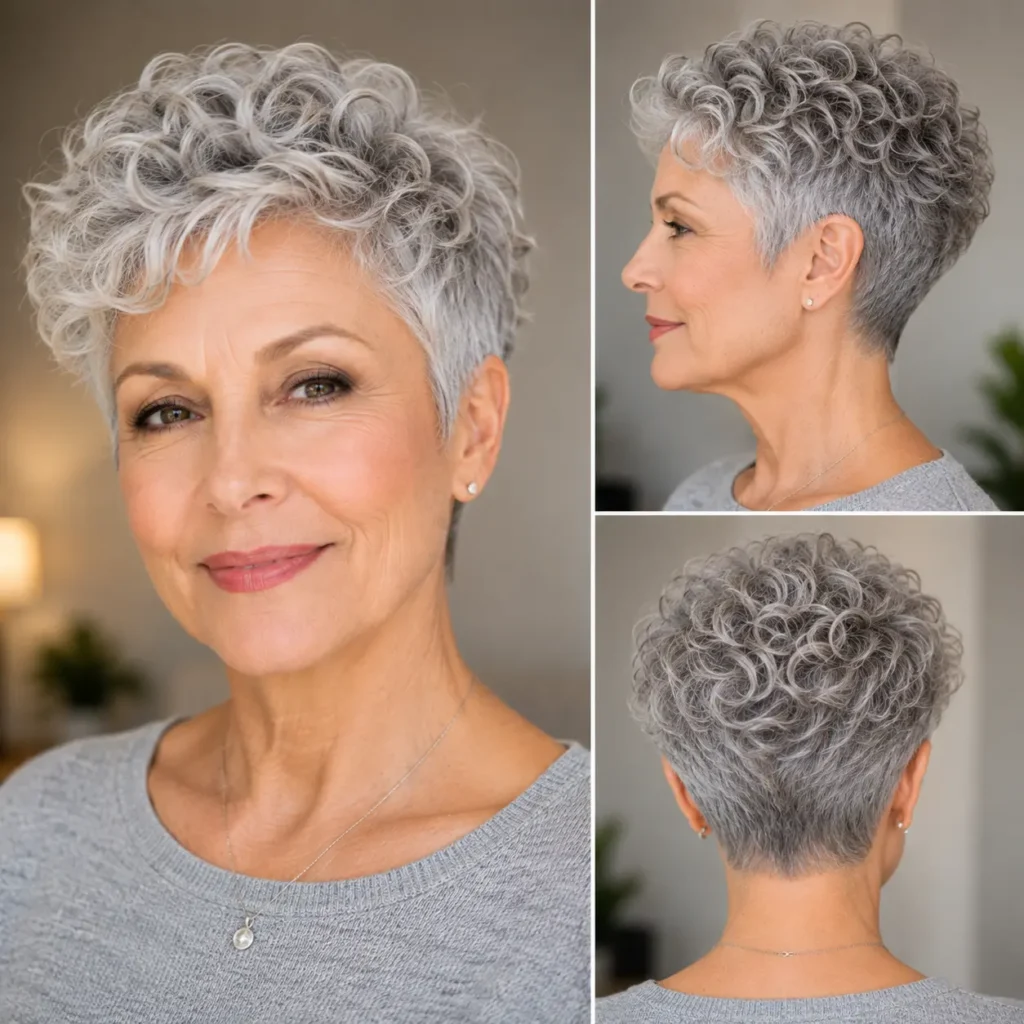
For maximum simplicity, a very short, textured crop offers some of the lowest possible daily maintenance of any hairstyle on this list.
Why It Works
- Requires little to no blow-drying, since the short length dries quickly and naturally falls into place.
- The cropped shape adds structure and definition, working well even on days when there’s no time for any styling at all.
- Particularly well-suited to very fine or thinning hair, since shorter styles inherently create the appearance of more density.
Styling Tips
A small amount of texturizing cream worked through towel-dried hair with fingers is often all that’s needed. This cut also tends to look intentional even when air-dried completely, making it one of the truest wash-and-go options available.
Also Read: Butterfly Haircut: The Complete Guide to Getting It Right (Every Hair Type & Length)
Choosing the Right Cut for Your Face Shape
- Round faces: Styles with height at the crown (like a pixie or textured shag) and side-swept layers tend to elongate and balance rounder features.
- Square faces: Soft, layered pieces around the jawline (like a textured bob) help soften more angular bone structure.
- Oval faces: Nearly all six styles on this list work well, since this face shape tends to be the most universally flexible.
- Heart-shaped faces: Chin-length bobs or face-framing layers help balance a narrower jawline against a wider forehead.
- Long faces: Styles with width at the sides (rather than height at the crown) and fuller, textured layers help create better proportion.
Product Recommendations for Fine Hair Over 60
- Volumizing mousse: Applied at the roots on damp hair, this is one of the most effective tools for adding lift without weighing hair down.
- Dry shampoo: Useful not just for extending time between washes, but also for adding texture and grip to naturally flat, fine strands.
- Lightweight leave-in conditioner: Helps address the increased dryness common with aging hair without adding heaviness.
- Texturizing spray or paste: Adds definition to shorter, layered cuts without the greasy weight of heavier styling creams.
- Heat protectant spray: Especially important for fine, more fragile hair, which tends to be more susceptible to heat damage than thicker hair types.
Color Considerations for Fine Hair
While this guide focuses primarily on cut and styling, color can also play a supporting role in how full and healthy fine hair appears:
- Subtle highlights or lowlights add dimension that can make hair appear thicker than a completely flat, single-process color.
- A slightly warmer tone can help offset any dullness that sometimes comes with graying or thinning hair.
- Avoid overly dark, flat colors if volume is a priority, since solid dark tones can sometimes emphasize a lack of thickness more than a color with some natural variation.
Pairing These Cuts With Gray or Silver Hair
Many women over 60 are also navigating the transition to gray or silver hair, and the right cut can complement this transition beautifully:
- Textured, layered cuts (like the shag or textured bob) help add visual dimension to solid gray hair, which can otherwise look flat in a single-length style.
- Shorter cuts tend to show off the natural shine and texture of silver hair particularly well, since there’s less length for the color to look dull or weighed down.
- A glossing treatment at the salon can help enhance shine and reduce any yellowing that sometimes develops in gray or white hair over time, complementing whichever cut you choose.
- Face-framing layers can also help soften the transition period if you’re growing out color and dealing with visible regrowth lines.
Styling These Cuts for Special Occasions
While these six styles are designed to be low-maintenance for everyday wear, each can also be easily dressed up for special occasions with just a bit of extra effort:
- Pixie and cropped styles: Add a bit of extra texturizing product and use a fine-tooth comb to create more defined, polished styling for photos or events.
- Bob styles: A large-barrel curling iron can add soft waves for a slightly more formal finish without much additional time investment.
- Shag and layered styles: A light-hold hairspray after your normal routine adds a bit more polish while still keeping the textured, effortless character of the cut intact.
Accessorizing Short and Layered Haircuts
Hair accessories can add a bit of personal style to any of these low-maintenance cuts without requiring extra daily effort:
- Decorative hair clips or pins work well with pixie and cropped styles, adding a small style detail without disrupting the ease of the cut.
- Headbands pair nicely with bob and shag styles, particularly useful for keeping hair off the face during active days.
- Simple, elegant earrings become more of a focal point with shorter haircuts, since there’s less hair to draw attention away from the face and neckline.
- Wash less frequently if possible. Fine hair, especially as oil production decreases with age, often doesn’t need daily washing, and overwashing can contribute to additional dryness.
- Use a clarifying shampoo occasionally to prevent product buildup, which can weigh down fine hair more noticeably than thicker types.
- Be gentle when brushing or styling, since fine, aging hair can be more prone to breakage than it once was.
- Consider a scalp treatment or massage periodically, since scalp health plays a meaningful role in overall hair appearance and can support what volume and density remain.
- Trim regularly, even with low-maintenance cuts, since split or damaged ends can make fine hair look even thinner and less healthy.
Understanding Why Hair Thins With Age
A bit of background on the biology can help explain why certain haircuts work better than others for fine, aging hair:
- Hormonal shifts, particularly declining estrogen levels after menopause, can affect the hair growth cycle, often resulting in a higher percentage of hair follicles entering a resting phase rather than actively growing.
- Follicle miniaturization is a natural part of aging for many people, where hair follicles gradually produce thinner strands over time, even without significant hair loss in terms of total follicle count.
- Reduced scalp circulation as we age can also play a role in how effectively follicles receive nutrients, which is part of why scalp health and gentle care become increasingly important.
- Slower hair growth cycles mean that any damage (from heat styling, chemical treatments, or rough handling) takes longer to grow out and be replaced, making gentle care more impactful than it may have been earlier in life.
Understanding these underlying changes helps explain why the strategic layering and volume-focused techniques in this guide aren’t just cosmetic tricks — they’re specifically designed to work with these natural biological shifts.
Also Read: Wedding Hairstyles: Best Looks for Long, Short & Curly Hair
The Right Way to Blow-Dry Fine, Aging Hair for Volume
Since several of the styles in this guide rely on a quick blow-dry for their finished look, technique matters as much as the products used:
- Start with the right product. Apply a volumizing mousse or root-lift spray to towel-dried hair, focusing specifically at the roots rather than throughout the length.
- Flip your head upside down for the first minute or two of drying, which helps lift the roots away from the scalp before you begin styling the rest of the hair.
- Use a medium round brush rather than a very large one, since a smaller brush creates more lift and bend, particularly helpful for shorter cuts like a pixie or bob.
- Dry from roots to ends, following the brush with the dryer nozzle pointed downward along the hair shaft to encourage smoothness without flattening the volume you’ve just created.
- Finish with cool air for a few seconds once each section is dry, which helps set the style and hold the volume longer throughout the day.
- Bring reference photos for any of the six styles above, since terminology can vary between stylists.
- Mention your hair type specifically — fine, thinning, or textured — so your stylist can adjust the layering technique accordingly.
- Be clear about your desired maintenance level. If you want something you can genuinely wash-and-go, say so directly, since some layered styles still require a few minutes of intentional styling to look their best.
- Discuss your typical routine. If you rarely use heat tools, your stylist can choose a cut and layering approach designed to look good with air-drying specifically.
Common Mistakes to Avoid
- Keeping hair too long without enough layering, which can leave fine hair looking flat and stringy rather than full and healthy.
- Using heavy, rich products meant for thick or coarse hair, which can weigh fine strands down further.
- Skipping regular trims, since damaged or split ends are especially visible and aging on fine hair.
- Choosing a cut based on old photos of yourself rather than your hair’s current texture and density, which naturally shifts over time.
- Over-brushing or over-styling, which can cause unnecessary breakage on already fragile, fine strands.
Finding a Stylist Who Specializes in Aging Hair
Not every stylist has extensive experience specifically with the texture and density changes common in hair over 60, so it’s worth being a bit selective when choosing who to work with:
- Look for stylists with visible experience cutting shorter, layered styles, since precision layering is especially important for fine hair, where mistakes are much more noticeable than on thicker hair types.
- Ask about their experience with gray and silver hair transitions, if that’s relevant to your situation, since color and cut decisions often work best when planned together.
- Read reviews specifically mentioning fine or thinning hair, which can be a good indicator of a stylist’s comfort and skill level with this particular hair type.
- Don’t be afraid to ask questions during a consultation about how they plan to approach layering and volume specifically for your hair’s current texture and density.
A stylist who takes the time to understand your hair’s specific needs, rather than defaulting to a generic cut, will make a noticeable difference in how well any of these six styles actually work for you day to day.
Frequently Asked Questions
What is the best low-maintenance haircut for fine hair over 60?
A classic pixie or short textured bob tends to offer the lowest maintenance overall, since both styles minimize daily styling time while adding volume and definition to fine hair.
How often should I get my hair trimmed with a low-maintenance cut?
Most of the styles in this guide hold their shape well for 6-8 weeks between trims, though very short cuts like a pixie or cropped style may benefit from slightly more frequent trims to maintain a crisp shape.
Does short hair really make fine hair look thicker?
Yes, generally. Shorter lengths reduce the weight pulling hair down, allowing it to sit with more natural volume and movement, which tends to visually read as thicker and fuller.
What products help fine hair look fuller without heavy styling?
Volumizing mousse applied at the roots, along with a lightweight texturizing spray, tend to be the most effective for adding fullness without weighing fine hair down.
Can I still have longer hair if I have fine hair over 60?
Yes, though heavy layering to remove weight becomes especially important, since fine hair left at a longer, single length tends to look flatter and thinner than the same hair cut with strategic layers.
How do I know which of these six styles is right for me?
Consider your face shape, how much daily styling time you’re willing to spend, and how quickly you’d like to be able to grow between salon visits — bringing reference photos to a consultation is the best way to get a personalized recommendation from your stylist.
Will a shorter haircut make my gray or silver hair look better?
Often, yes. Shorter cuts tend to show off the natural shine and texture of gray or silver hair particularly well, and layered styles add dimension that can prevent solid gray hair from looking flat.
Why does my fine hair feel thinner now than it did a decade ago?
This is a normal part of aging, often related to hormonal shifts and a natural process called follicle miniaturization, where hair follicles gradually produce thinner strands over time.
Final Thoughts
Fine hair over 60 doesn’t have to mean sacrificing style for the sake of simplicity — the six haircuts in this guide are specifically designed to work with, rather than against, the natural changes hair goes through over time. Whether you’re drawn to the simplicity of a classic pixie, the versatility of a textured bob, or a slightly longer layered option, the right cut can genuinely reduce your daily styling time while still leaving you with hair that looks full, healthy, and polished.
Bring this guide to your next salon visit, be specific about your hair type and maintenance goals, and don’t be afraid to try a shorter or more layered cut than you’ve had in the past — for many women, it ends up being the lowest-effort, most flattering choice they’ve made in years.
Also Read: Hair Care Routine 101: How to Build Healthy Hair Habits for Your Hair Type