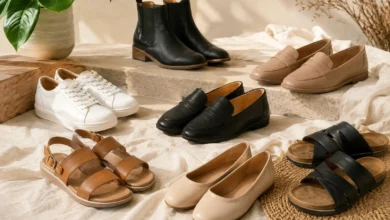
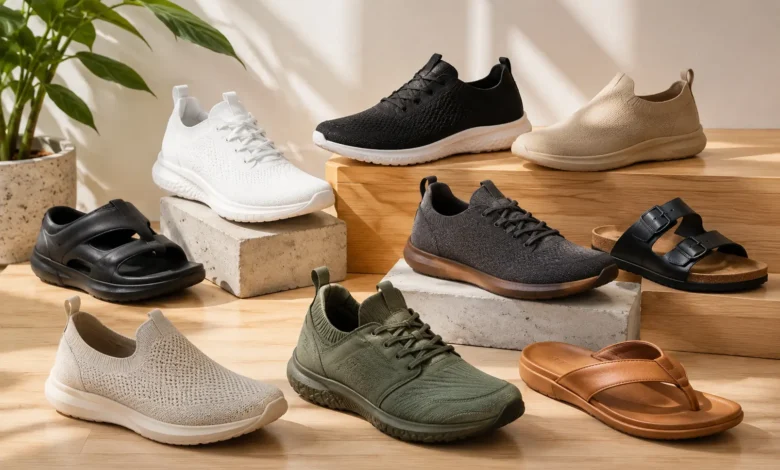
Walk into any shoe store and you will find rows of familiar names promising comfort, support, and style all at once. But a new wave of independent footwear brands is quietly changing what “everyday shoes” actually mean. These are not just companies chasing trends — they are founder-led, problem-solving brands built around a single frustration: why should comfort and style always feel like a trade-off?
From recovery slides engineered by athletes to convertible heels invented after a literal foot injury, this list covers eight footwear brands that have earned loyal followings by solving real problems for real feet. Whether you are hunting for branded footwear at an affordable price, comparing a shoe store chain to a niche footwear retailer, or simply trying to find the best affordable branded shoes for your lifestyle, this guide breaks down what makes each of these eight brands worth knowing.
We have grouped brands by what they are best known for — recovery, minimalism, adventure, comfort, arch support, grounding, podiatrist design, and convertibility — so you can quickly find the one that fits your feet and your life.
This matters more than most people realize. Foot health influences posture, knee alignment, and even lower-back comfort, yet footwear is often the last thing people upgrade when they are trying to feel better day to day. The brands on this list were each built by people who noticed a specific gap — a recovery need, a support need, a style need — and engineered a product around it instead of just relabeling an existing shoe. That distinction is why they have built such dedicated followings rather than blending into the sea of generic sneaker brands.
Each brand below was researched from its official product details, founder background, and verified customer reviews — so you’re comparing real features, not marketing fluff. Let’s get into the eight brands.
1. Kane Footwear — Recovery Shoes Built Like an Athlete Designed Them
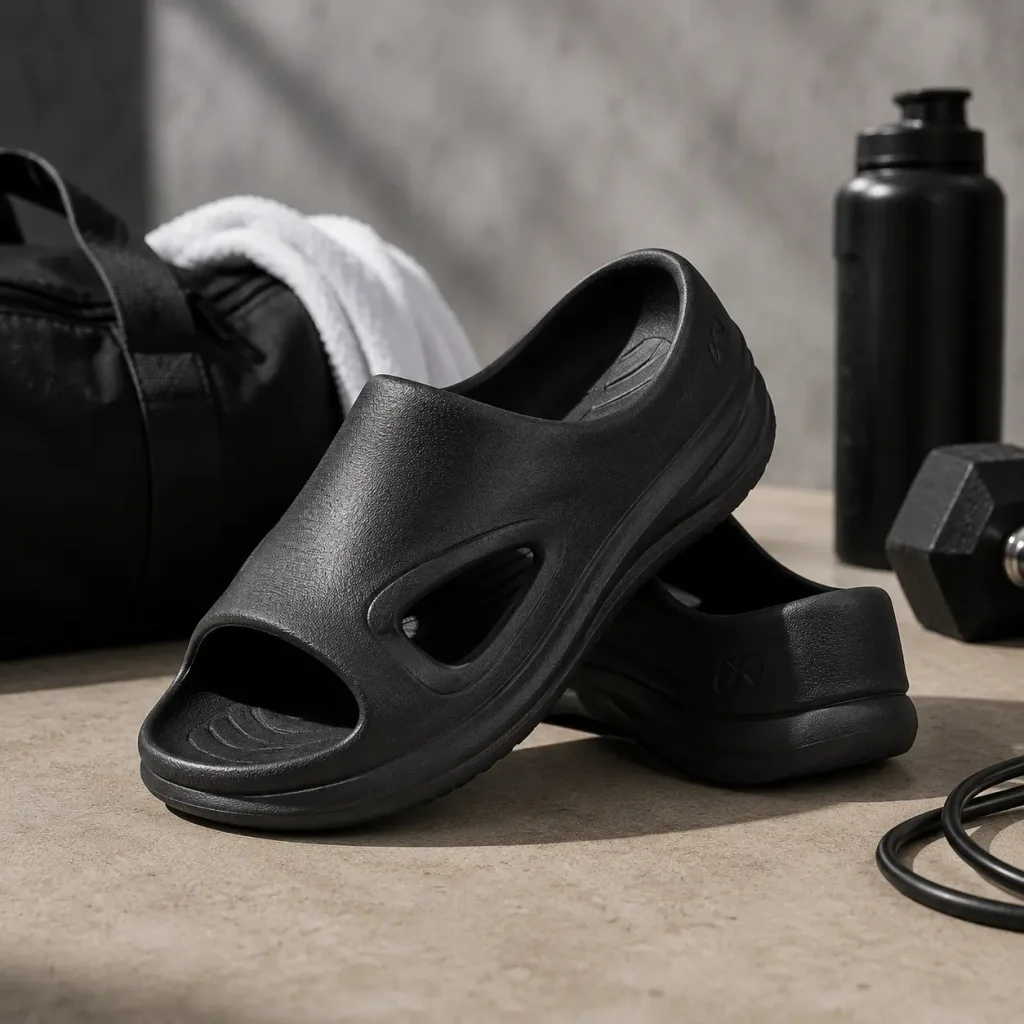
If your feet feel destroyed after a long run, a double shift, or a full day standing on concrete, Kane Footwear was built with you in mind. Founded in 2021, Kane has grown quickly into one of the most recognized names in the recovery footwear category, with distribution across major retailers including Dick’s Sporting Goods, Nordstrom, and Scheels, and reported triple-digit year-over-year growth.
What makes Kane stand out:
- RestoreFoam technology — Kane’s signature midsole is made from a sugarcane-derived EVA foam that is renewable and carbon-negative, offering a soft landing without the environmental cost of traditional foam.
- Anatomically molded footbed — designed to secure the heel, arch, and instep, with raised footbed nodes that stimulate blood flow and pressure points.
- Athlete-informed design — the brand’s product decisions come directly from conversations with professional athletes across the NFL, NHL, and NBA about what they actually want to slip into after practice.
- Everyday crossover appeal — while Kane started as a post-workout recovery shoe, its slip-on Revive style has become a genuine athleisure staple, spotted on musicians and NFL stars alike, not just in locker rooms.
Best for: runners, gym-goers, people on their feet all day (nurses, retail and hospitality workers), and anyone who wants a slide that looks intentional rather than purely functional.
Kane’s growth story is also worth noting from a trust standpoint. The brand did not build its reputation through paid advertising alone — it grew by getting into the hands of professional athletes and locker rooms first, then expanding into mainstream retail once the product had already proven itself under real physical demand. That kind of organic, performance-first credibility is part of why the brand has been able to scale into hundreds of retail partners in just a few years, while still keeping its core recovery-shoe identity intact.
It also helps that Kane has kept its price point accessible. Most Revive styles sit in a similar range to a mid-tier pair of slides or sandals, which makes trying the brand a low-risk decision compared to some of the more clinical recovery products on the market that carry a much steeper price tag.
If sore, tired feet by the end of the day are your main complaint, Kane belongs on your shortlist. For a closer look at specific styles worth buying, check out our companion guide: 9 Kane Footwear Picks That Feel Effortlessly Comfortable.
2. Flux Footwear — Barefoot-Inspired Shoes That Move With You
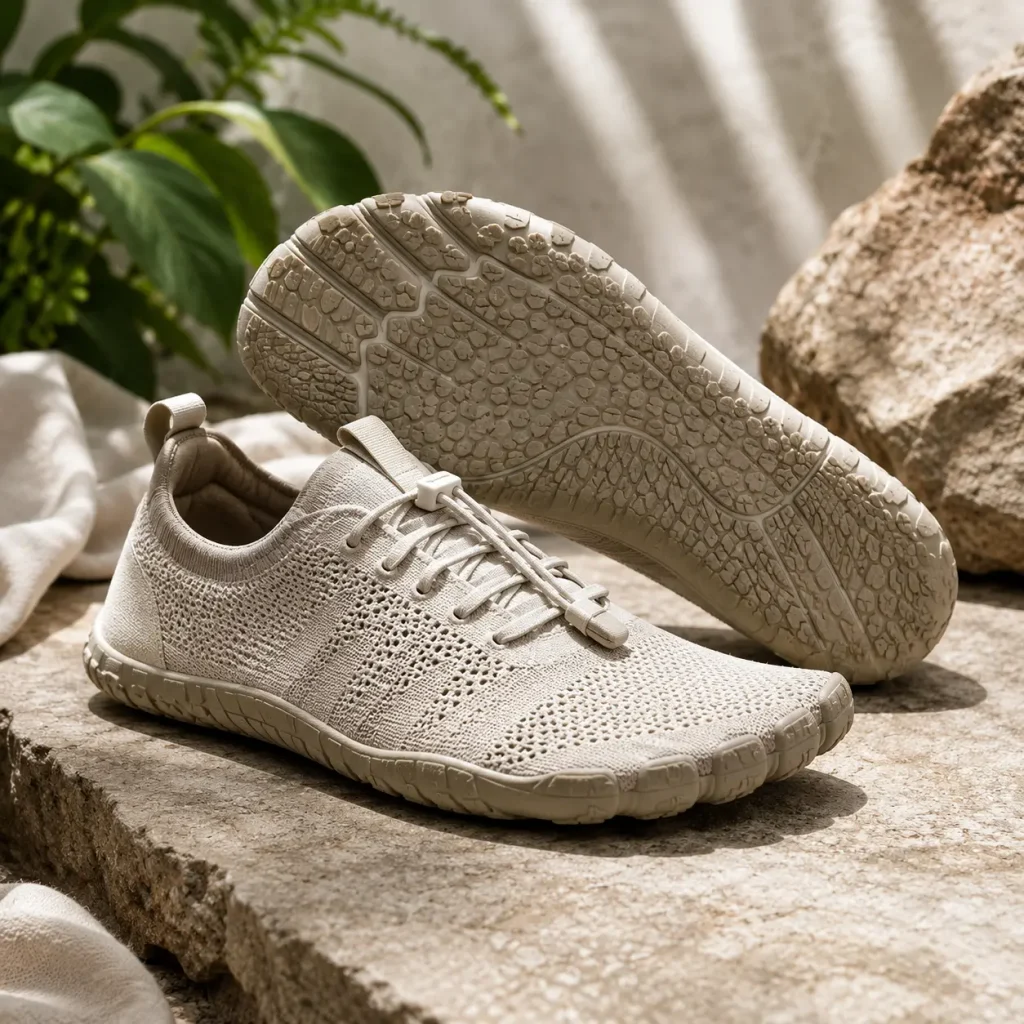
Flux Footwear takes the opposite approach from heavily cushioned recovery shoes. Founded in 2020, Flux built its identity around the barefoot and minimalist footwear movement — the idea that modern shoes have become so padded and structured that they actually weaken natural foot strength and posture over time.
What makes Flux stand out:
- Zero-drop sole design — the heel and forefoot sit at the same height, encouraging a more natural standing and walking posture instead of forcing weight forward onto the toes.
- Wide toe box construction — Flux shoes are built to let toes spread naturally, which the brand and independent reviewers point to as a way to reduce pressure-related foot issues over time.
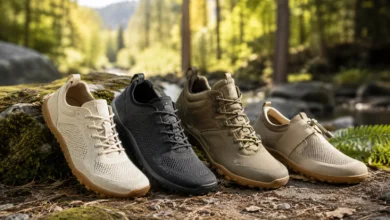
- Adapt lineup — Flux’s core collection includes trail runners, road runners, and knit trainers, all sharing the same flexible, foot-shaped sole platform so you are not choosing between “natural” and “athletic.”
- Machine washable materials — a practical, everyday-life detail that makes the shoes easier to maintain than most performance footwear.
Best for: people who already do strength training or mobility work and want their footwear philosophy to match; casual runners transitioning toward a more natural gait; and anyone whose feet feel cramped in traditional sneakers.
One detail that separates Flux from many minimalist competitors is how quickly new wearers adapt to the shoes. Barefoot-style footwear often comes with warnings about a lengthy break-in period, since feet accustomed to cushioned shoes need time to rebuild strength. Reviewers of the Flux Adapt line have specifically noted a shorter-than-expected adjustment period, with many describing the shoes as comfortable “right out of the box” rather than requiring weeks of gradual wear.
Flux also leans into versatility across activities rather than specializing narrowly. The same core sole platform shows up across trail runners, road runners, and knit trainers, so someone who likes the brand’s fit and feel does not need to relearn sizing or comfort expectations when moving between shoe types for different parts of their week.
Flux is proof that “minimalist” does not have to mean “basic” — the brand markets itself as athleisure that moves with your feet, not against them. See specific recommendations in 7 Flux Footwear Styles That Move With Your Life.
3. Hike Footwear — Barefoot Comfort Built for Real Adventure
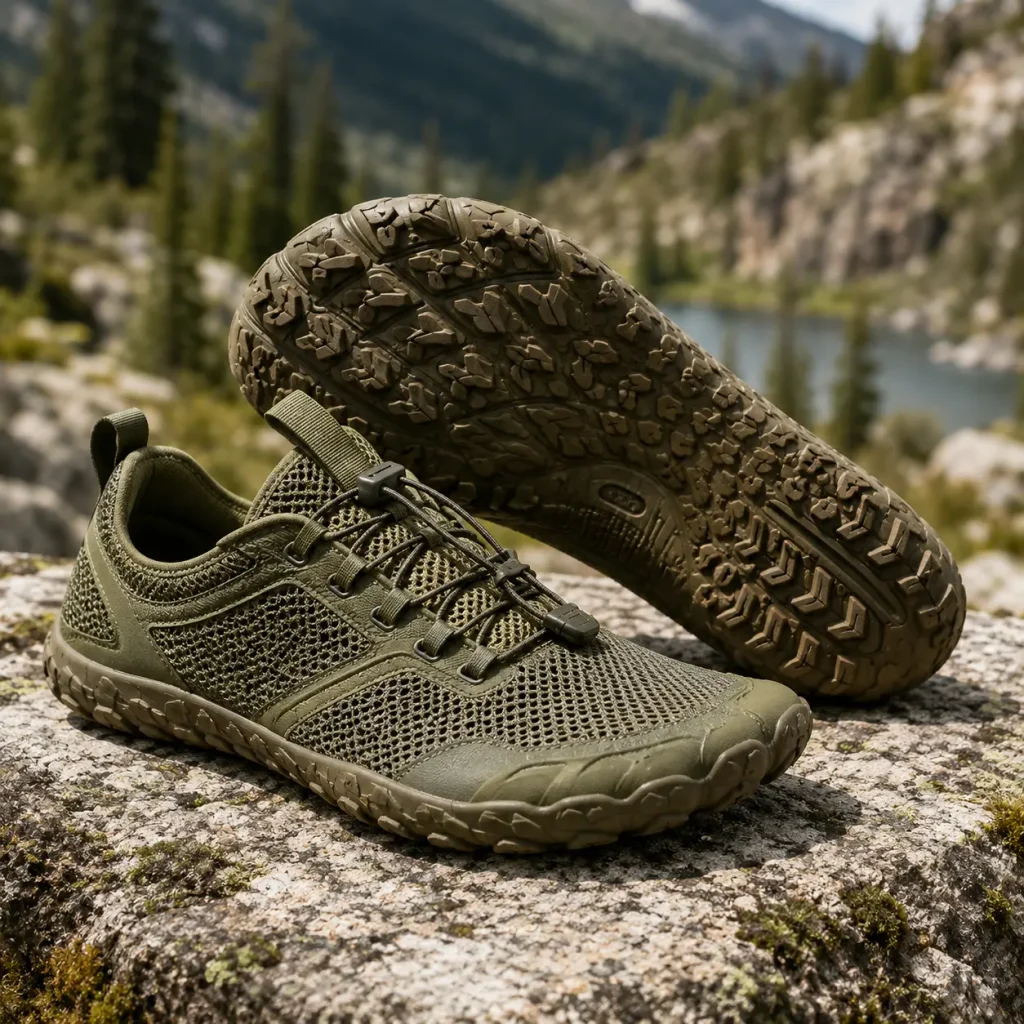
Don’t let the name fool you — Hike Footwear is not only for the trail. This brand has built a large, loyal customer base (the brand states over two million customers) around barefoot-style shoes designed to handle daily adventures, from city sidewalks to actual hiking trails, without sacrificing comfort or foot health.
What makes Hike stand out:
- Zero-drop, flexible soles — like other barefoot-style brands, Hike prioritizes ground feel and natural foot movement over thick cushioning, while still offering enough protection for outdoor terrain.
- Wide toe space — designed specifically to accommodate natural toe splay, which the brand positions as beneficial for balance, posture, and long-term foot alignment.
- Trail-tested traction — independent reviewers have specifically praised the brand’s grip on wet roots and loose gravel, a detail that matters if “adventure” for you includes actual unpaved ground.
- All-day versatility — the same shoe that handles a multi-mile trail outing can reasonably go straight into errands or travel days, which is part of the appeal for people who do not want a separate wardrobe of shoes for every activity.
Best for: hikers and outdoor walkers who also want one shoe for daily life; people managing foot conditions like plantar fasciitis who have found relief in a wider, flatter shoe shape; and travelers who want one versatile pair for a trip.
What sets Hike apart from other barefoot brands attempting to cover the same “trail plus everyday” niche is scale of trust: reaching a customer base in the millions for a relatively young, independently positioned brand suggests the shoes are delivering on their comfort claims consistently, not just in a handful of curated reviews. That kind of repeat-purchase loyalty tends to be a stronger signal of genuine product quality than marketing alone.
The brand’s design philosophy also reflects a growing shift in how people think about “hiking shoes” generally. Traditional hiking footwear has trended toward more structure, more ankle support, and more built-up cushioning over the decades. Hike Footwear pushes in the opposite direction, betting that most day hikers and casual outdoor walkers are better served by a lighter, more natural shoe that still grips confidently on uneven terrain.
Explore specific styles in 10 Hike Footwear Picks Built for Fearless Adventure.
4. Taos Footwear — Comfort Technology Wrapped in Southwestern Style
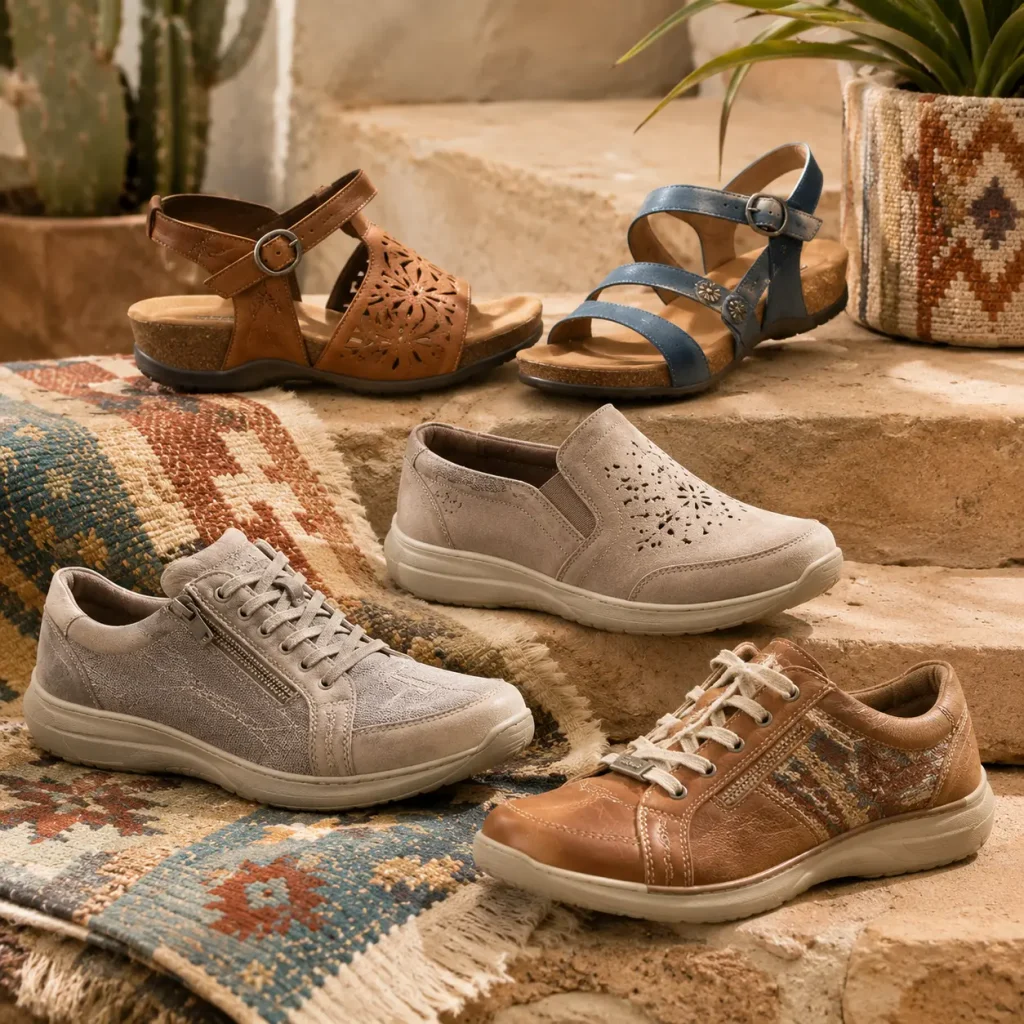
Taos Footwear has carved out a specific lane: stylish, supportive women’s footwear with a distinct Southwestern design influence, built around a proprietary comfort system rather than generic cushioning.
What makes Taos stand out:
- Curves & Pods® footbed — Taos’s signature removable footbed is designed to follow the natural contours of the foot, providing targeted cushioning and stability rather than a flat, one-size-fits-all insole.
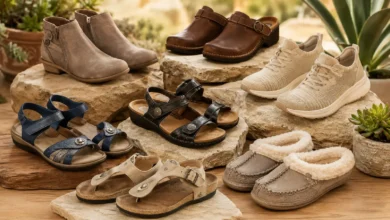
- Category range — the brand covers sneakers, sandals, boots, and slippers, meaning it can realistically cover a customer’s footwear needs across every season, not just one category.
- Premium materials with durability in mind — Taos combines leather uppers, rubber outsoles built for varied surfaces, and removable orthotic-friendly insoles, appealing to buyers who want shoes that last multiple seasons.
- Design identity — intricate stitching, embossed leather detailing, and Southwestern-inspired patterns give Taos a visual signature that is easy to recognize on shelves, which matters for a brand competing in a crowded comfort-shoe market.
Best for: women who want all-day comfort without giving up a distinct personal style; people who prefer to buy one trusted comfort brand across multiple shoe categories; and buyers who want a removable footbed that can accommodate custom orthotics.
Taos has also built a strong presence in specialty comfort-shoe retailers, where trained fit experts help customers match specific foot shapes and conditions to the right style. This in-store fitting culture, common at independent comfort footwear stores, has helped Taos build credibility with an audience that is often shopping out of necessity — dealing with foot pain, mobility limitations, or long work shifts — rather than shopping purely for trend reasons. That combination of function-first engineering and genuinely distinctive design is a large part of why the brand has such a dedicated repeat customer base.
See our curated picks in 12 Taos Footwear Styles That Feel Like Pure Comfort.
5. Archies Footwear — The Arch Support Flip-Flop That Started a Category
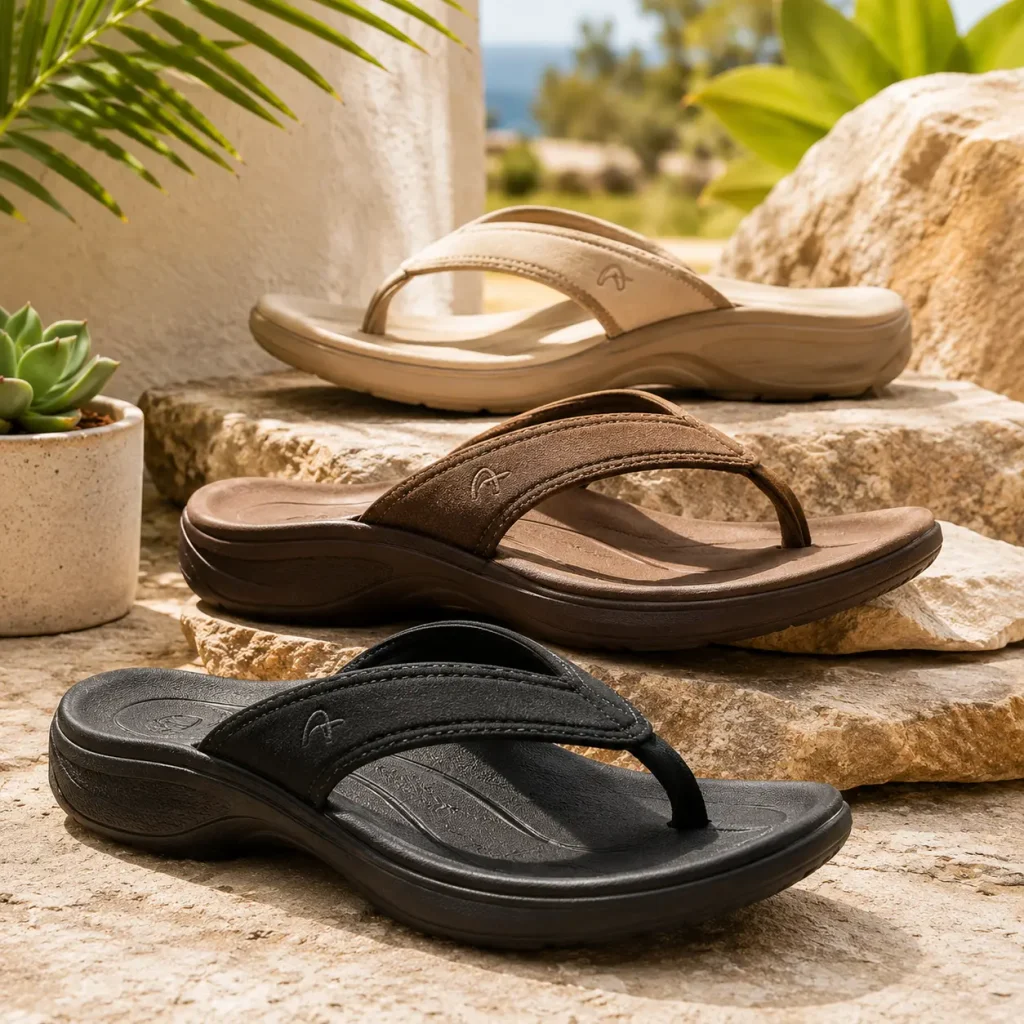
Archies Footwear turned one of the most casual, least supportive shoe styles — the flip-flop — into a genuinely orthopedic product. Designed with input from a physiotherapist, Archies flip-flops and slides are built to deliver real arch support in a shape people already know and love wearing.
What makes Archies stand out:
- Physiotherapist-designed arch support — Archies’ signature style includes roughly one inch of built-in arch support, aiming to promote proper foot alignment rather than the flat, unsupportive base of a typical flip-flop.
- Closed-cell foam footbed — the footbed is designed to adapt to the shape of your foot over repeated wear, so the fit reportedly improves the more you use them.
- Secure strap design — a tighter strap construction is intended to eliminate “toe clawing,” the awkward gripping motion many people do to keep loose flip-flops on their feet.
- 60-day trial policy — Archies backs its comfort claims with an extended return window, letting customers walk in the shoes long enough to judge real-world comfort before committing.
Best for: people managing plantar fasciitis or general arch pain who still want the ease of a slip-on sandal; beach and travel days where a supportive-but-casual shoe matters; and anyone who has given up on flip-flops because of foot pain and wants to try again with real support.
Archies also deserves credit for making arch support feel unintimidating. Traditional orthotic sandals have historically looked clinical — bulky, beige, and clearly “medical.” Archies reversed that expectation by offering its supportive flip-flops and slides in a wide range of colors and finishes, including options with subtle embellishments, so wearers do not have to sacrifice a casual, beach-ready look just because they need genuine arch support. That combination of medical-grade design and everyday styling is precisely why the brand has become a household name in a category that used to be an afterthought.
For specific recommendations, browse 9 Archies Footwear Picks That End Foot Pain Fast.
6. Grounded Footwear — Barefoot Design for Natural Movement
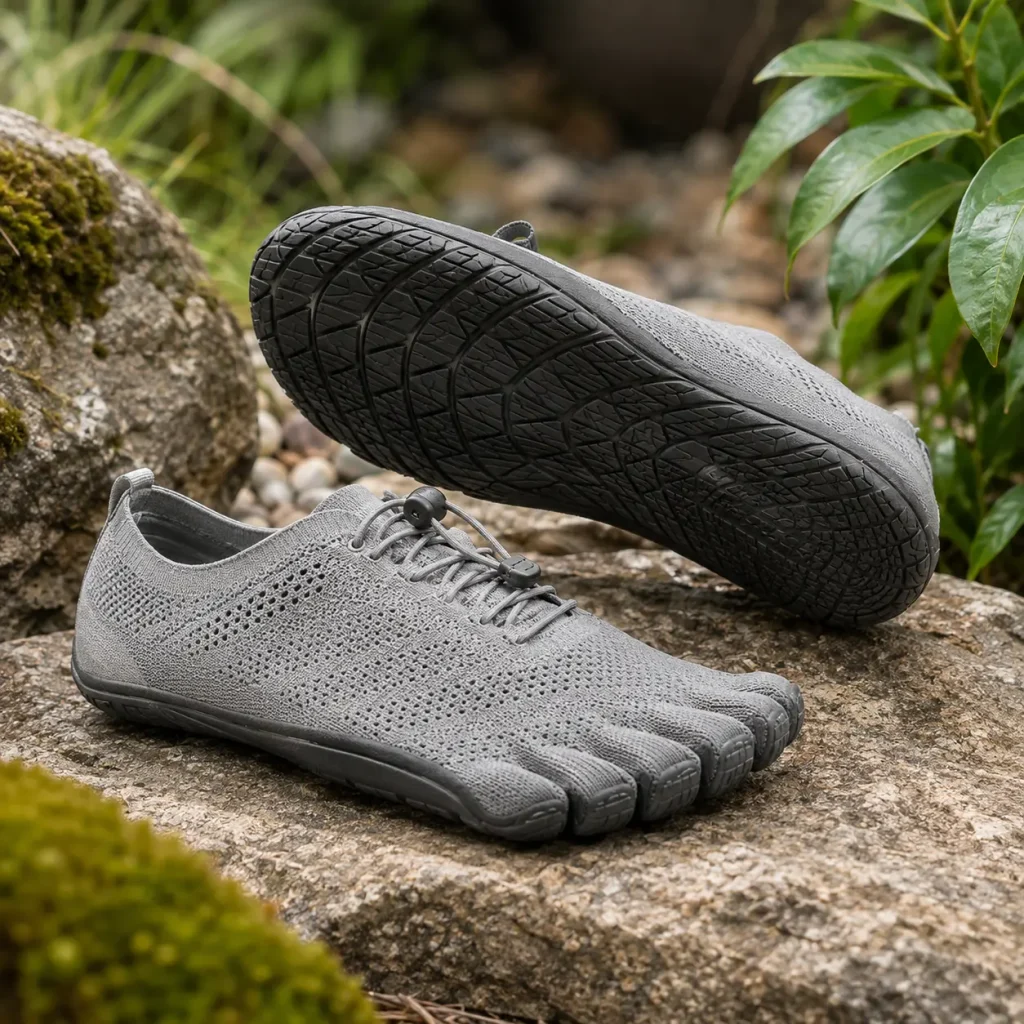
Grounded Footwear focuses on barefoot-style sneakers designed to support natural foot movement and posture, occupying a similar design philosophy to other minimalist brands but with its own distinct product range and branding.
What makes Grounded stand out:
- Barefoot-inspired silhouette — Grounded’s shoes emphasize a thin, flexible sole profile intended to keep the foot closer to natural ground contact compared to heavily cushioned athletic shoes.
- Support for natural foot mechanics — the brand’s design approach centers on allowing the foot’s own muscles and structure to do more of the work, rather than relying on external stabilizing features.
- Everyday-first design — rather than positioning itself purely as a performance or trail product, Grounded is built with daily wear in mind, from errands to casual outings.
- Simple, versatile styling — the brand keeps its silhouettes clean and adaptable, making the shoes easy to pair with everyday outfits rather than looking overtly “technical.”
Best for: anyone curious about the barefoot and minimalist footwear movement who wants a low-key, everyday-wearable entry point; people transitioning away from heavily cushioned shoes; and casual walkers who prioritize natural movement over maximal support.
For shoppers exploring the minimalist footwear category for the first time, Grounded represents a comfortable starting point precisely because it does not lean heavily into niche technical language. Instead of overwhelming new customers with detailed biomechanics claims, the brand keeps its value proposition simple: let your feet move the way they were designed to move, in a shoe you would not mind wearing to run errands or meet friends for coffee.
Check out 4 Grounded Footwear Styles That Reconnect You to Nature for specific picks.
7. Bared Footwear — Podiatrist-Designed Shoes That Don’t Look “Comfortable”
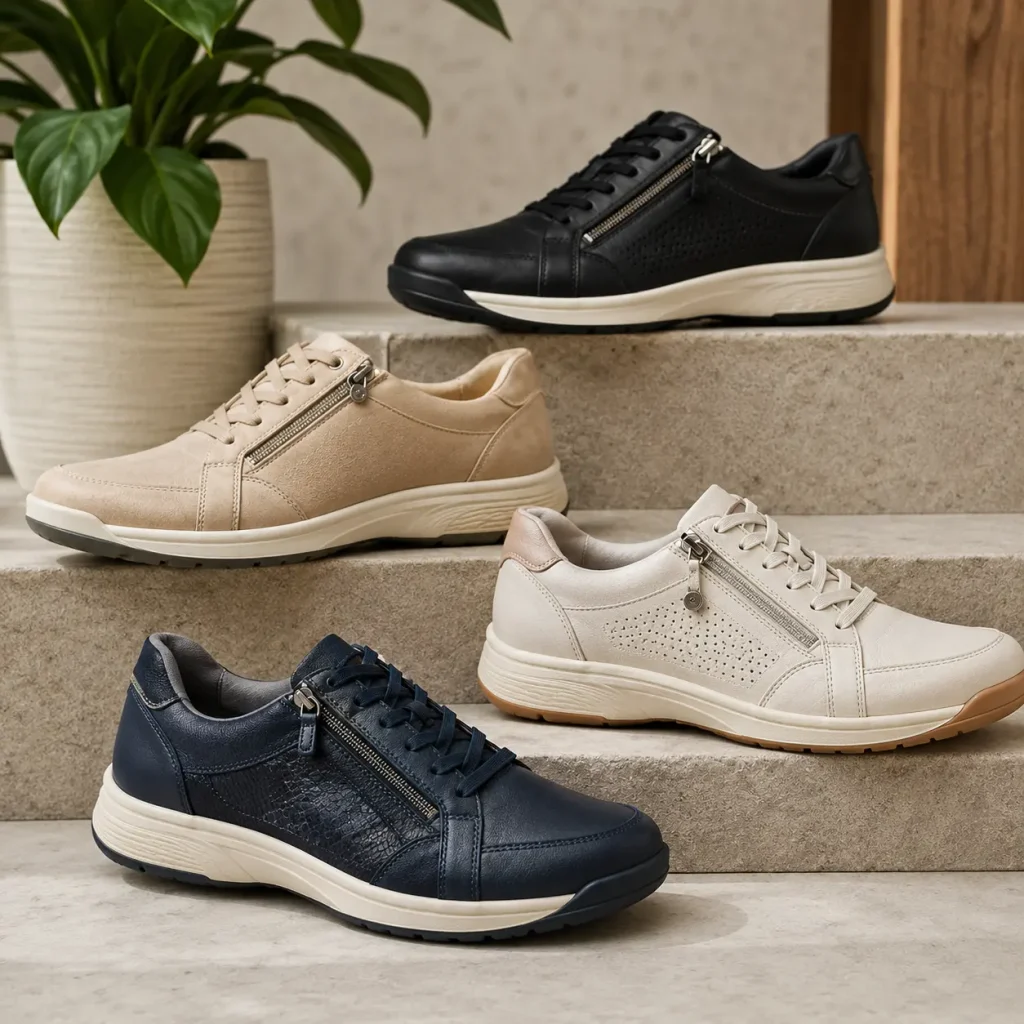
Bared Footwear was founded in Melbourne in 2008 by podiatrist Anna Baird, after she grew frustrated recommending patients wear shoes she would never want to be seen in herself. The result is a brand built entirely around hiding real medical-grade support inside genuinely fashionable shoes.
What makes Bared stand out:
- Biomechanical footbed, hidden in every pair — Bared calls it “secret support”: a footbed engineered by a podiatrist to support the foot’s structure, built into styles that look like ordinary loafers, boots, flats, and sneakers.
- Removable insoles for custom orthotics — the footbed can be taken out to accommodate a person’s own prescribed orthotic device, a detail aimed directly at people managing specific foot conditions.
- B Corp certification — Bared became Australia’s first footwear label to earn B Corp status, reflecting a broader commitment to ethical sourcing and sustainability, including sugarcane-based footbeds and recycled materials.
- Health-professional endorsed — the brand is frequently recommended directly by podiatrists to their own patients, which is a meaningfully different kind of trust signal than a typical influencer partnership.
Best for: people who need medically informed support but refuse to sacrifice style for it; professionals who need to look polished at work while managing foot pain; and shoppers who care about a brand’s sustainability and ethical sourcing practices.
Bared’s origin story is part of what gives the brand real authority in this space. Anna Baird was not a designer who later added a comfort feature to an existing shoe line — she was a practicing podiatrist who saw the gap firsthand, from behind the exam table, before she ever built a shoe. That clinical starting point shows up in small but meaningful details: multiple fitting options per style, staff trained specifically in fitting orthotic devices, and a footbed system built around actual foot biomechanics rather than marketing language borrowed from more casual comfort brands.
Explore specific styles in 8 Bared Footwear Picks Crafted for Real Comfort.
8. Pashion Footwear — The World’s First Fully Convertible High Heel
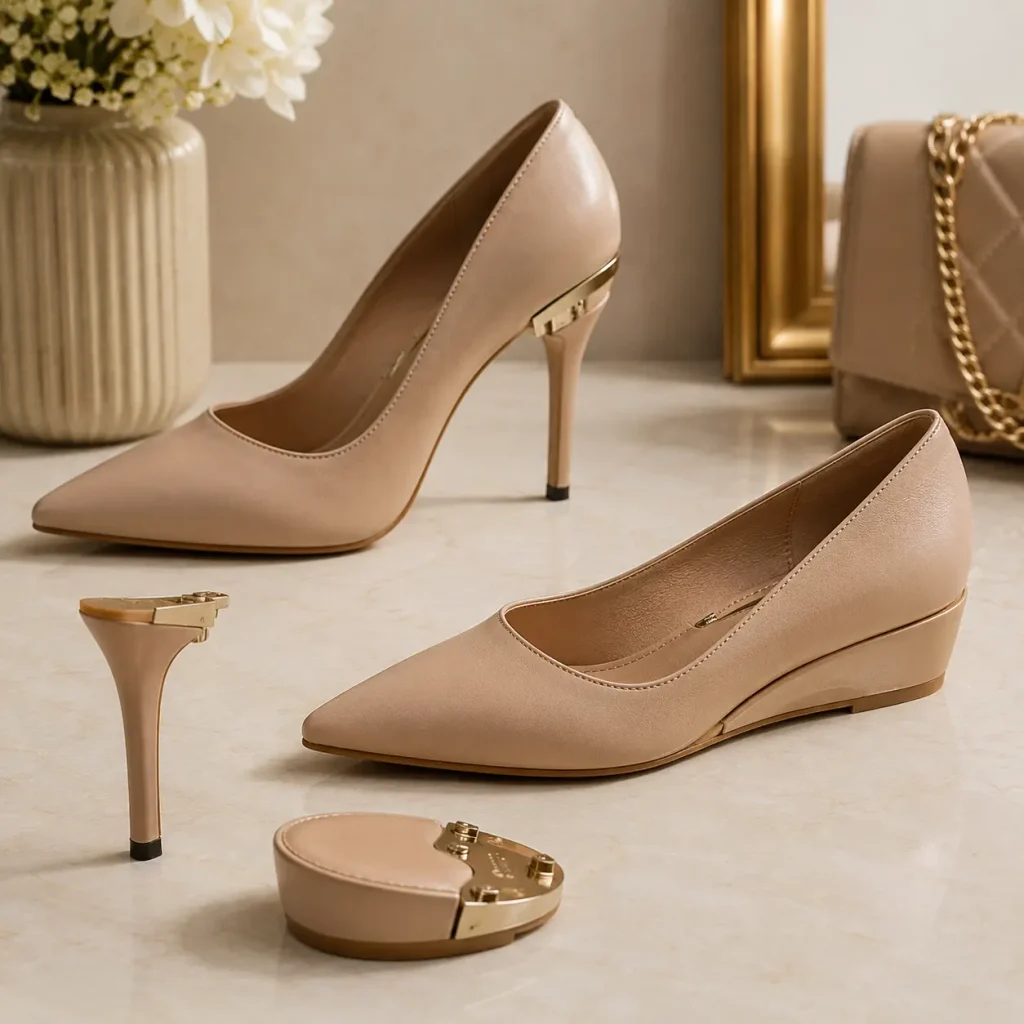
Pashion Footwear solves a problem nearly every woman who has worn heels understands instantly: what happens when your feet cannot take another hour in stilettos, but the flats you brought don’t match the outfit? Founder Haley Pavone, who has since been named to the Forbes 30 Under 30 list, invented a patented convertible heel system after a genuinely painful heel-related accident at a wedding.
What makes Pashion stand out:
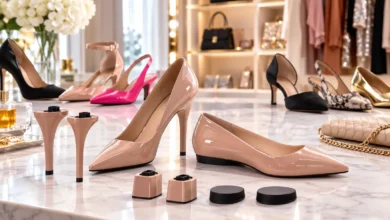
- Patented convertible technology — with one click, a Pashion heel detaches and the shoe converts into a flat, meaning a single pair effectively functions as two (or more) pairs of shoes.
- Interchangeable heel kits — customers can swap in different heel heights and finishes on the same shoe base, customizing height and look without buying an entirely new pair.
- Genuine business traction — Pashion has scaled to eight figures in lifetime sales with minimal traditional marketing spend, largely driven by word-of-mouth and social sharing of the heel-to-flat transformation.
- Practical for real occasions — reviewers specifically highlight using Pashion shoes across an entire event: heels for photos and mingling, flats for dancing, and a single pair that folds flat enough to pack for travel.
Best for: anyone attending weddings, work events, or nights out who wants heel height without sacrificing the ability to comfortably stand or dance later; frequent travelers who want to pack fewer shoes; and shoppers who want one shoe that visually adapts to multiple outfits.
What makes Pashion particularly compelling from a product-innovation standpoint is that the convertible mechanism is patented, not just a marketing gimmick layered on top of an ordinary shoe. Pavone spent years researching prior attempts at similar concepts, understanding why they failed, before developing a version that could actually hold up to real-world wear. That level of engineering rigor is part of why the brand has been able to grow into an eight-figure business primarily through word-of-mouth, rather than needing to lean heavily on paid advertising to convince skeptical first-time buyers.
See specific style breakdowns in 7 Pashion Footwear Styles That Redefine Convertible Chic.
How These 8 Footwear Brands Compare
| Brand | Known For | Best For |
|---|---|---|
| Kane Footwear | Recovery shoes, athlete-tested comfort | Post-workout recovery, all-day standing jobs |
| Flux Footwear | Barefoot/zero-drop running and training shoes | Natural gait, strength training, minimalist lifestyles |
| Hike Footwear | Barefoot adventure and trail-ready shoes | Hikers who want one versatile everyday shoe |
| Taos Footwear | Curves & Pods® comfort technology | Women wanting stylish, all-season comfort footwear |
| Archies Footwear | Arch-support flip-flops and slides | Plantar fasciitis relief in a casual sandal |
| Grounded Footwear | Barefoot-style everyday sneakers | Low-key entry into minimalist footwear |
| Bared Footwear | Podiatrist-designed “secret support” shoes | Fashionable shoes that double as medical-grade support |
| Pashion Footwear | Patented convertible heels | Events requiring both heels and comfort in one shoe |
What to Look for When Choosing Everyday Footwear
With eight genuinely different brands on this list, it helps to have a simple framework for deciding which one actually fits your needs, rather than picking based on name recognition alone.
Start with your biggest daily complaint. If your feet ache specifically after physical activity or long shifts on your feet, a recovery-focused brand like Kane is the more logical starting point than a fashion-forward option. If your complaint is closer to “my shoes feel restrictive,” a barefoot-style brand like Flux, Hike, or Grounded is worth trying before you invest in more heavily cushioned footwear.
Consider whether you need medical-grade support. Not every comfort claim is backed by clinical design. Archies and Bared both involve a healthcare professional directly in the design process — a physiotherapist and a podiatrist, respectively — which matters if you are managing a diagnosed condition like plantar fasciitis rather than general everyday fatigue.
Think about how many “jobs” you need one shoe to do. Taos is built to cover multiple categories (sneakers, sandals, boots, slippers) under one comfort system, which suits people who would rather commit to one trusted brand across their whole wardrobe. Pashion takes a different approach to the same problem, letting a single shoe physically convert between two entirely different use cases.
Factor in your budget and how often you will wear the shoe. A shoe worn daily justifies a higher upfront investment more easily than an occasional-use item. Recovery and barefoot-style shoes from Kane, Flux, Hike, and Grounded tend to sit in a more accessible price bracket, while podiatrist-engineered and patented convertible designs from Bared and Pashion reflect their more specialized engineering in a higher price point.
Don’t ignore return policies. Comfort is deeply personal, and a shoe that feels perfect on a five-minute try-on can feel completely different after a full day of wear. Brands like Archies, which offers an extended 60-day trial window, make it easier to judge real-world comfort without financial risk.
Frequently Asked Questions
Are recovery shoes like Kane actually good for everyday wear, or just for after workouts?
While Kane was originally designed as post-workout recovery footwear, many customers wear the brand’s slip-on styles throughout the day, particularly in jobs that involve long hours of standing. The anatomically molded footbed and cushioning are not exclusive to athletic recovery.
What is the difference between “barefoot” shoes and “grounded” or “earthing” shoes?
Barefoot-style shoes, like those from Flux, Hike, and Grounded, focus on a zero-drop, flexible sole to encourage natural foot movement. Earthing or grounding shoes are a related but separate category that specifically add conductive materials to the sole, intended to connect the wearer to the earth’s natural electrical charge. Not every barefoot-style shoe includes this conductive technology, so it’s worth checking a brand’s specific product details rather than assuming the terms are interchangeable.
Do arch-support flip-flops like Archies actually help with plantar fasciitis?
Archies markets its flip-flops as physiotherapist-designed specifically to provide arch support that traditional flat flip-flops lack. Many customers and some health professionals report relief from foot pain when switching from flat sandals to arch-supportive options. As with any foot condition, persistent or severe pain is worth discussing with a podiatrist, since footwear changes work differently for different underlying causes.
Are podiatrist-designed shoes like Bared worth the higher price point compared to typical comfort brands?
Bared’s core value proposition is combining fashion-forward design with a biomechanical footbed engineered by a podiatrist, plus the ability to remove the insole for a custom orthotic. For people who need that level of support but do not want to compromise on style, the price reflects both the medical design input and the brand’s sustainability practices, including B Corp certification.
How does Pashion Footwear’s convertible heel actually work?
Pashion’s patented system allows the heel component to detach from the base of the shoe with a simple click mechanism, converting a heeled shoe into a flat. Customers can also purchase additional interchangeable heel kits in different heights and finishes to use with the same shoe base, effectively multiplying the number of looks one pair can produce.
Is it worth switching from a mainstream shoe brand to one of these niche footwear brands?
It depends on what specific problem you are trying to solve. Mainstream shoe brands are often designed for broad appeal rather than a specific foot concern, which is exactly the gap these eight brands were built to fill. If you have a clear, recurring complaint — recovery, arch pain, restrictive toe boxes, or needing one shoe to serve multiple purposes — a specialized brand is more likely to deliver a noticeable improvement than another generic pair from a big-box retailer.
Can barefoot-style shoes from brands like Flux, Hike, or Grounded be worn straight out of the box, or is a transition period required?
Most footwear professionals recommend a gradual transition when switching to any zero-drop or barefoot-style shoe, since your feet and lower legs may be used to the support of traditional cushioned footwear. That said, reviewers of brands like Flux have specifically noted a shorter adjustment period than expected, so comfort out of the box can vary by individual foot strength and prior footwear habits.
Do any of these brands offer wide-width or extended sizing options?
Sizing ranges vary by brand and specific style, and availability can change over time. Since accurate sizing is especially important for barefoot-style, recovery, and orthotic-friendly shoes, it is worth checking each brand’s own size guide and current catalog directly before ordering, rather than assuming standard sizing will apply across every brand on this list.
Final Thoughts
The common thread across all eight of these footwear brands is that none of them treat comfort and style as competing priorities. Kane and Flux approach the problem from a performance and recovery angle. Taos, Archies, Bared, and Grounded focus on engineered support inside familiar, wearable shapes. Hike blends outdoor durability with daily practicality. And Pashion solves an entirely different kind of problem — the need for one shoe to functionally become two.
Whichever category matches your biggest footwear frustration, each of these brands has built a genuine, loyal following by solving it properly rather than simply marketing around it. Use the individual brand guides linked above to find the specific styles worth adding to your own rotation.
Also Read: Shoe Capsule for Every Budget: How Many Pairs You Really Need