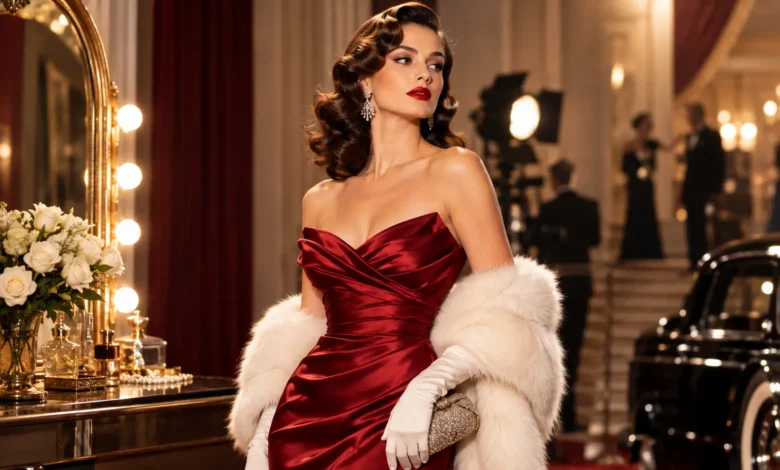
There’s a reason old Hollywood glamour never really leaves the fashion conversation. Nearly a century after Greta Garbo first glided across a black-and-white screen in a bias-cut satin gown, that same silhouette — sleek, deliberate, unmistakably confident — still shows up on red carpets, at black-tie weddings, and in the mirror of anyone getting dressed for a night that calls for something more than ordinary.
This guide breaks down exactly what defines Hollywood glamour style, the genuinely rich history behind how it came to be, and 6 Hollywood glamour looks that feel timeless. Along the way, we’ll cover the hair and makeup pairings that complete the aesthetic, how to recreate these looks affordably, and the specific eras and icons that shaped what “glamorous” has meant for the better part of a century.
What Is Hollywood Glamour Style?
Hollywood glamour style refers to the polished, dramatic fashion aesthetic associated with cinema’s Golden Age, roughly spanning the late 1920s through the early 1960s. It’s defined by fluid, body-skimming silhouettes, luxurious fabrics like satin and velvet, and a level of intentional, camera-ready polish that treats getting dressed as a genuine performance rather than an afterthought.
Unlike more casual vintage aesthetics, Hollywood glamour was designed from the outset to be seen — first on movie screens under studio lighting, and later on red carpets and at formal events, where the same principles of dramatic, confident dressing continue to apply.
What Era Does Hollywood Glamour Come From?
Hollywood glamour is generally understood to span the Golden Age of Hollywood, from the late 1920s through the early 1960s, though its most iconic and frequently referenced period runs through the 1930s, 1940s, and 1950s specifically. Each of these three decades contributed a distinct silhouette to the broader aesthetic, meaning “Hollywood glamour” today actually references several related but visually different looks depending on which decade inspired a given piece.
What Defines Old Hollywood Fashion?
A handful of consistent elements define old Hollywood fashion across its various decades. Luxurious fabrics — satin, silk, velvet, and chiffon — appear constantly, chosen specifically for how beautifully they moved and caught light under studio cameras. Structured, deliberate silhouettes, whether the fluid bias cut of the 1930s or the sharply tailored shoulders of the 1940s, replaced anything loose or accidental-looking. And a commitment to finishing touches — long gloves, fur stoles, statement jewelry — meant no old Hollywood look was ever considered complete without at least one deliberate, elevated accessory.
What Makes a Look “Hollywood Glamour”?
Beyond specific garments, what makes a look read as genuinely Hollywood glamour rather than simply “vintage” comes down to intention and polish. The aesthetic prioritizes a sense of deliberate drama — a single bold statement piece, a fabric chosen specifically for how it catches light, a silhouette that skims rather than clings carelessly. Glamour, in this specific sense, has as much to do with posture and presentation as it does with the clothing itself, which is part of why simply wearing a satin dress doesn’t automatically create the look without the accompanying polish in hair, makeup, and overall presentation.
A Brief History of Hollywood Glamour Fashion
Hollywood glamour fashion emerged directly out of the film industry’s growing cultural influence in the late 1920s and 1930s, a period when the movie star effectively replaced European royalty as the public’s primary source of aspirational style inspiration. As the Great Depression settled over America, audiences turned to cinema for escapism, and Hollywood answered with some of the most opulent, visually stunning fashion the screen had ever presented — floor-length gowns dripping with embroidery, fur, and jewels, worn by stars like Joan Crawford, Jean Harlow, and Gloria Swanson.
Studio costume designers played an outsized role in shaping this aesthetic. Designers like Adrian and Travis Banton worked closely with individual stars to create signature looks tailored precisely to their bodies and screen presence, helping establish what became known as the distinctly glamorous “American look.” Joan Crawford’s white organdie gown from the 1932 film Letty Lynton became so influential that it reportedly inspired thousands of copies sold across American department stores, offering an early example of just how directly film costuming could shape mainstream fashion.
Evolution of Old Hollywood Style Through the Decades
The 1930s were defined by the bias cut, a fabric-cutting technique that let gowns hang on the fabric’s diagonal grain, creating a fluid, body-following drape that no other cutting method could replicate. This soft, diaphanous silhouette, paired with structural but understated shoulder lines, created the elongated, sophisticated look associated with stars like Greta Garbo and Marlene Dietrich.
The 1940s brought a significant shift, largely driven by wartime fabric rationing. Silhouettes became sharper and more structured, moving away from the unstructured drape of the previous decade toward a more defined, fitted shape, often featuring strapless bodices and plunging necklines as new lingerie technology allowed for more structure without visible support. Rita Hayworth’s strapless gown in the 1946 film Gilda remains one of the most referenced examples of this era’s glamour.
The 1950s, following the hardships of World War II, saw fashion explode into renewed opulence. Christian Dior’s “New Look” — nipped-in waists paired with voluminous, full skirts — became the decade’s defining silhouette, epitomized by stars like Grace Kelly, whose effortless elegance came to represent 1950s femininity and glamour at its most refined.
Famous Actresses Who Defined Hollywood Glamour
Several actresses became genuinely synonymous with the Hollywood glamour aesthetic, each contributing a distinct visual signature. Jean Harlow’s figure-hugging satin gowns and platinum blonde hair became a defining image of 1930s sensuality. Greta Garbo favored sophisticated simplicity and elegant, mysterious silhouettes. Marlene Dietrich pioneered sharp, masculine-inspired tailoring for women, proving glamour didn’t require florals or softness to feel powerful. Rita Hayworth bridged 1930s foundational glamour into the more accessible, hourglass-driven appeal of 1940s style. Later, Grace Kelly and Audrey Hepburn carried the aesthetic into the 1950s and early 1960s — Kelly through opulent, Dior-influenced eveningwear, and Hepburn through clean, minimalist lines that proved glamour could be understated as well as dramatic.
Iconic Hollywood Glamour Fashion Moments
A handful of specific on-screen fashion moments have become permanently associated with the broader Hollywood glamour aesthetic. Joan Crawford’s white organdie gown in Letty Lynton sparked one of fashion history’s earliest documented instances of a film costume directly driving mass-market retail trends. Rita Hayworth’s strapless black gown and opera gloves in Gilda remains one of the most referenced single images in old Hollywood fashion history. These moments matter beyond simple nostalgia — they represent the specific instances where a costume design decision became so visually powerful that it transcended the film itself and entered the broader cultural fashion vocabulary.
Why Hollywood Glamour Style Is Timeless
Hollywood glamour has proven remarkably durable as a style reference for a few consistent reasons. The silhouettes themselves were engineered specifically to flatter the human body — bias cuts that skim rather than cling, structured shoulders that create confident presence, full skirts that create drama through movement rather than tightness — meaning these shapes have never genuinely gone out of fashion the way more trend-specific silhouettes eventually do. There’s also the simple fact that the aesthetic was built for exactly the kind of formal, elevated occasions that continue to exist today: galas, weddings, red carpets, and any event where dressing with genuine intention matters.
Why Old Hollywood Fashion Still Influences Trends
Contemporary fashion continues to return to old Hollywood glamour precisely because the aesthetic represents a kind of dressing that feels increasingly rare — deliberate, formal, and unapologetically polished in an era where casual dressing has become the mainstream default. Designers and stylists regularly reference specific old Hollywood silhouettes for red carpet and eveningwear precisely because the look reads as instantly elegant and recognizable, requiring no explanation to communicate sophistication.
Why Hollywood Glamour Suits Formal Events
Because the aesthetic was originally designed for exactly this purpose — visually striking, camera-ready presentation — Hollywood glamour translates naturally to modern formal events. Its emphasis on structured, deliberate silhouettes and luxurious fabric means these looks photograph beautifully under both flash photography and ambient event lighting, while the aesthetic’s built-in sense of drama ensures the wearer stands out appropriately at galas, formal weddings, and other black-tie occasions.
6 Hollywood Glamour Style Looks That Feel Timeless
1. Bias-Cut Satin Slip Gown
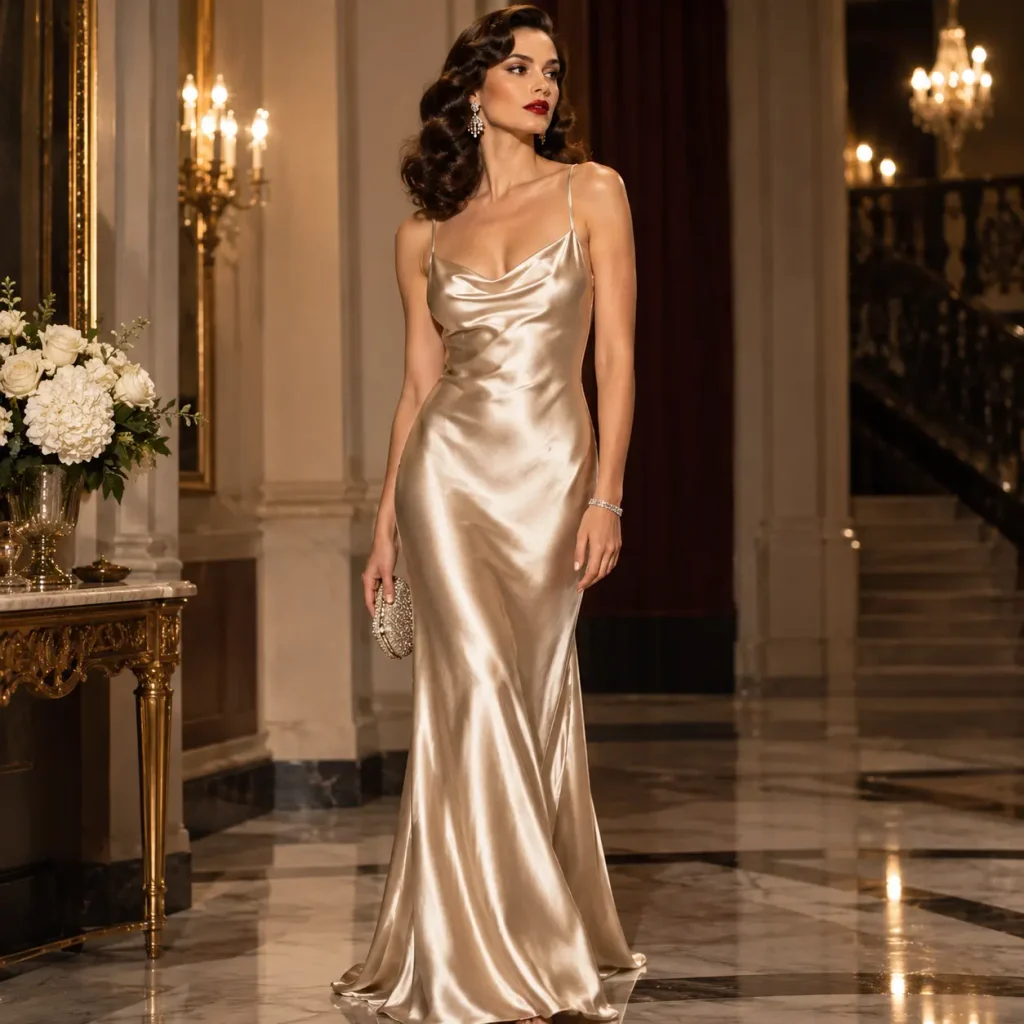
Channeling the defining silhouette of the 1930s, a bias-cut satin slip gown skims the body in a fluid, diagonal drape that no other cutting technique replicates. This look captures the era’s soft, diaphanous glamour perfectly, particularly in a deep jewel tone or classic ivory, and pairs beautifully with simple, delicate jewelry that lets the fabric’s movement remain the clear focal point.
2. Structured Shoulder Tailored Suit
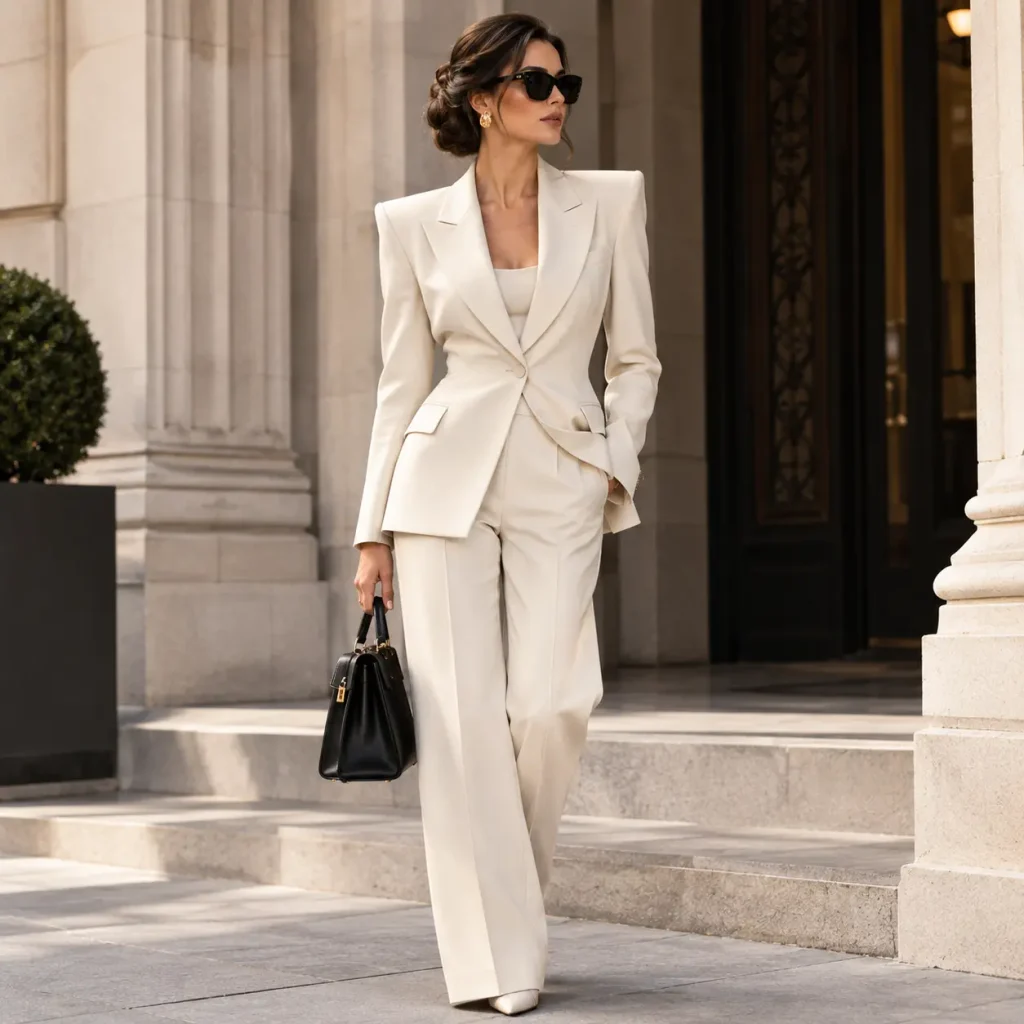
Drawing directly from Marlene Dietrich’s pioneering, sharply tailored menswear-inspired looks, a structured shoulder suit brings a different kind of glamour to the aesthetic — powerful, confident tailoring rather than soft drape. A well-cut blazer with strong, clean shoulder lines paired with tailored trousers proves old Hollywood glamour was never limited to gowns alone.
Also Read: 5 Boss Lady Outfits That Radiate Unstoppable Power
3. Strapless Sweetheart Evening Gown
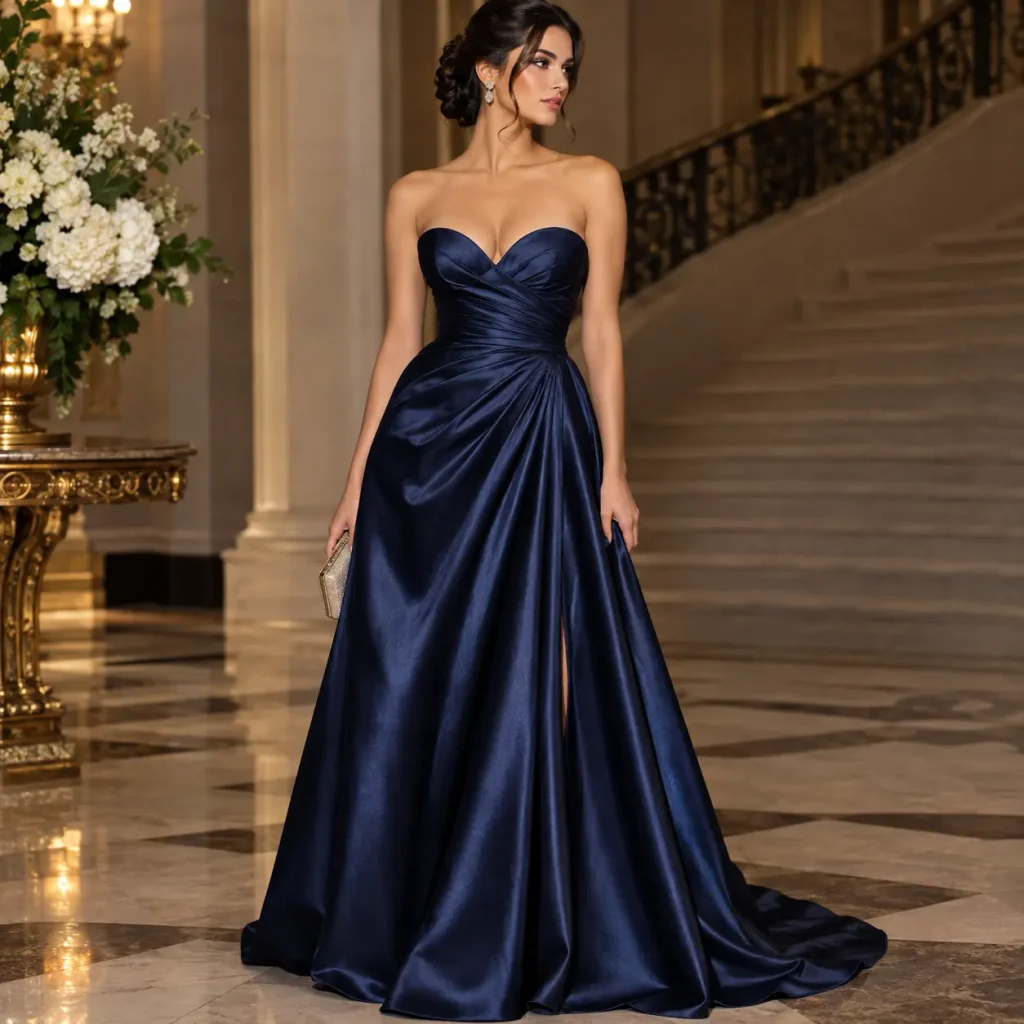
Capturing the more structured, wartime-influenced silhouette of the 1940s, a strapless gown with a sweetheart neckline and fitted bodice channels the glamour of stars like Rita Hayworth. Finished with long opera gloves, this look brings genuine screen-siren drama to any formal evening event.
4. Full-Skirt New Look Gown
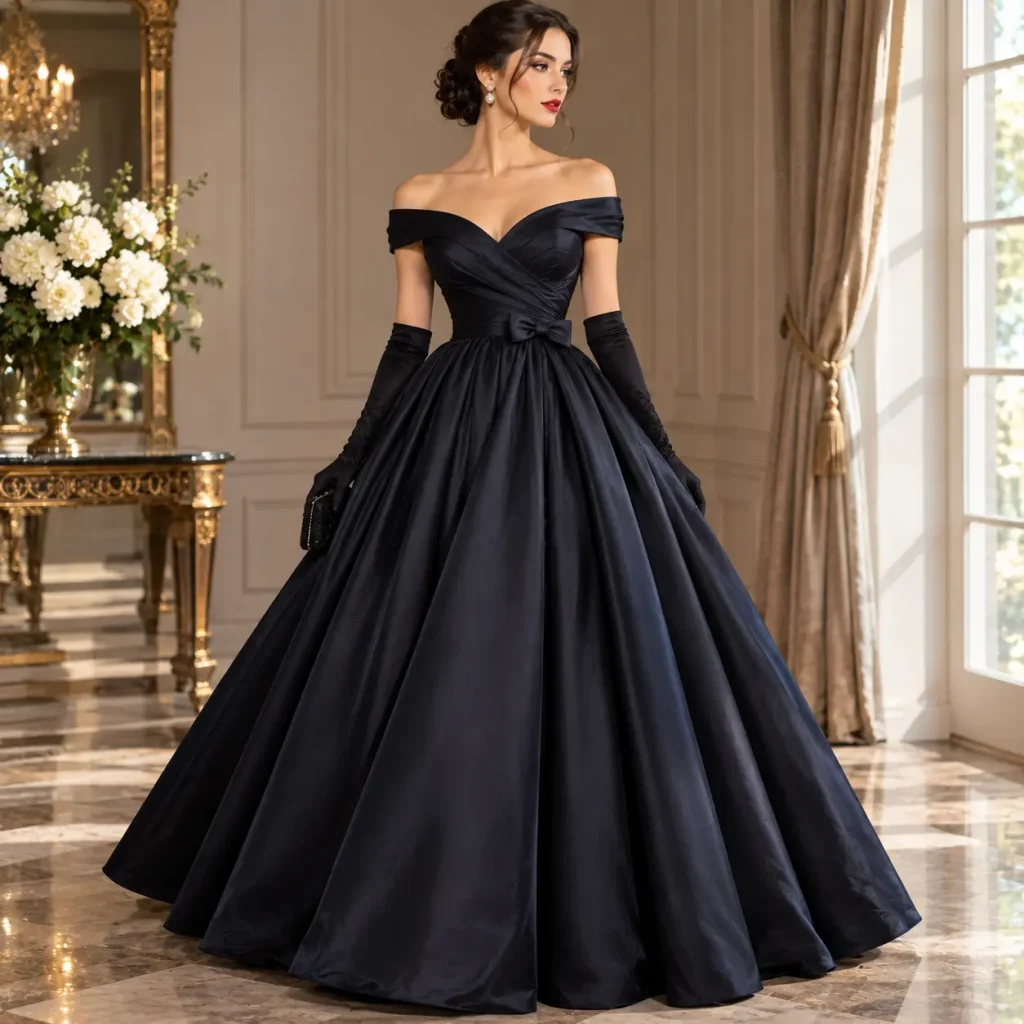
Representing the opulent 1950s silhouette popularized by Dior’s New Look and worn so memorably by Grace Kelly, this style pairs a nipped-in waist with a dramatically full skirt, creating movement and volume that reads as elegant rather than costume-like. This look works beautifully for galas, formal weddings, or any event calling for genuine old Hollywood drama.
5. Minimalist Column Dress
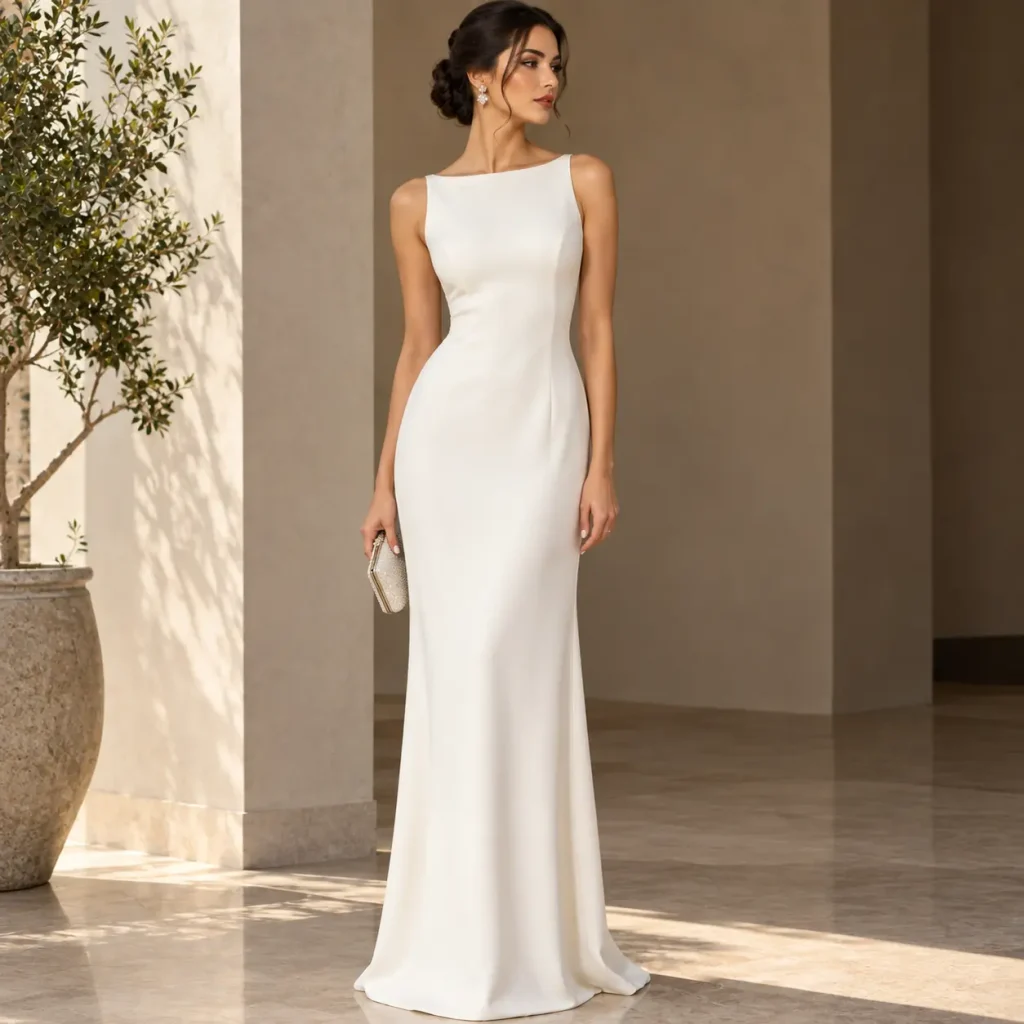
Reflecting the cleaner, more understated glamour later popularized by stars like Audrey Hepburn, a sleek column dress in a solid, rich color proves the aesthetic doesn’t always require maximum embellishment to feel glamorous. Paired with simple pearl accessories and a defined red lip, this look offers old Hollywood elegance in its most wearable, versatile form.
Also Read: 12 Millennial Style Looks That Feel Nostalgically Cool
6. Cocktail Dress with a Fur Stole
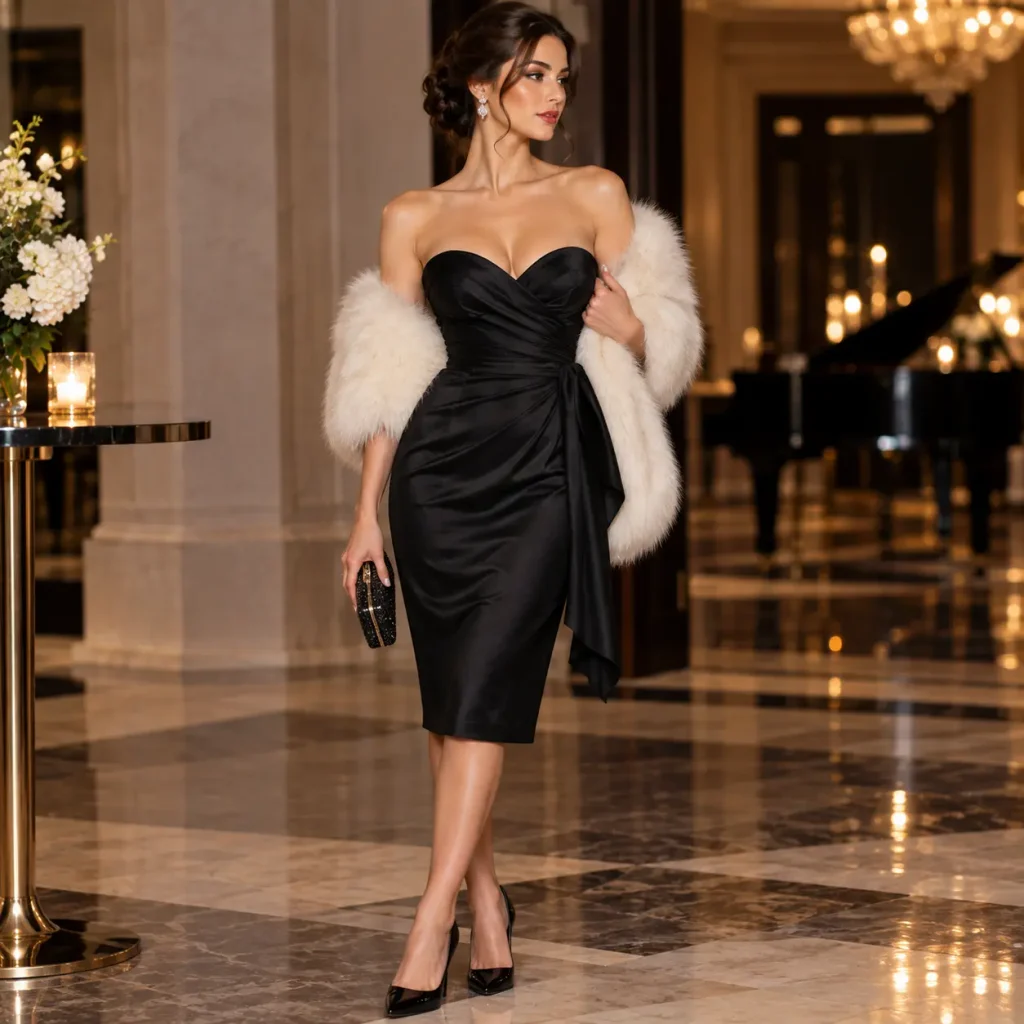
No old Hollywood glamour wardrobe felt complete without a fur or faux-fur stole draped elegantly over the shoulders, and pairing one with a fitted cocktail dress instantly elevates a simpler silhouette into full Hollywood glamour territory. This combination works particularly well for cooler-weather formal events, offering both genuine warmth and unmistakable old-world elegance.
Hollywood Glamour Hair and Makeup Pairing
Completing a Hollywood glamour look genuinely depends on hair and makeup carrying equal weight to the clothing itself. Old Hollywood waves — deep, structured finger waves or soft, glamorous curls set close to the head — remain the most immediately recognizable hairstyle associated with the aesthetic, pairing beautifully with nearly every era-specific silhouette covered here. A classic red lip, paired with soft, defined eyes, completes the look’s signature polished, camera-ready quality, echoing the flawless, architectural makeup styles favored by era-defining stars like Rita Hayworth.
How to Achieve Old Hollywood Glamour Style Today
Successfully recreating Hollywood glamour today comes down to committing fully to a single era’s silhouette rather than mixing elements from different decades, which tends to undercut the look’s cohesive, deliberate quality. Pairing one era-appropriate garment — a bias-cut slip dress or a full-skirted gown — with the era’s corresponding hair and makeup styling creates a genuinely convincing, elegant result, whereas modern hairstyles or overly casual accessories can pull an otherwise well-chosen outfit out of the aesthetic entirely.
How to Style a Hollywood Glamour Outfit
Styling old Hollywood glamour successfully relies on restraint paired with one clear statement element. Rather than layering multiple bold accessories simultaneously, choosing a single standout piece — dramatic earrings, a fur stole, or a statement clutch — while keeping the rest of the outfit’s accessories simple allows that one element to genuinely read as intentional rather than cluttered. This mirrors exactly how original studio costume designers approached old Hollywood looks: one clear, deliberate statement, executed with total confidence.
Old Hollywood Glamour vs. Modern Glamour
Old Hollywood glamour relies heavily on structured, era-specific silhouettes — the bias cut, the sweetheart neckline, the full New Look skirt — paired with classic, formal accessories like long gloves and fur stoles. Modern glamour, by contrast, tends to favor sleeker, more minimal silhouettes with fewer overtly vintage-coded details, often incorporating current trend elements like cutouts or asymmetrical necklines that wouldn’t have appeared in the original era.
Understanding this distinction helps when shopping specifically for an old Hollywood aesthetic, since many contemporary “glamorous” pieces draw more from current red carpet trends than from the specific silhouettes that defined the original studio era.
Also Read: 22 Fashion Trends You Can’t Afford to Miss This Fall
Hollywood Glamour Style for Different Occasions
Hollywood glamour for a gala calls for the most formal interpretations of the aesthetic — a full-skirted New Look gown or a strapless sweetheart silhouette both work beautifully for black-tie events.
Hollywood glamour prom dresses often lean toward the bias-cut slip gown or a fitted, sweetheart-neckline silhouette, offering a genuinely distinctive alternative to more conventional modern prom styles.
Hollywood glamour wedding guest outfits work particularly well in a more understated column dress or cocktail dress paired with a fur or faux-fur stole, striking a balance between formal and appropriately restrained for someone else’s event.
Hollywood glamour red carpet looks allow for the most dramatic interpretation of the aesthetic, making a full-skirted gown or a structured, strapless silhouette particularly fitting.
Old Hollywood glamour party themes offer the most creative freedom, where fully committing to one era’s silhouette, hair, and makeup together creates the most convincing and enjoyable overall look.
Can Hollywood Glamour Style Be Casual?
While Hollywood glamour is fundamentally rooted in formal, dramatic dressing, elements of the aesthetic can absolutely be incorporated into more casual outfits. A simple satin slip skirt paired with a fitted knit top, or soft old Hollywood waves worn with an otherwise everyday outfit, can reference the aesthetic’s key signatures without requiring a full formal gown, offering an accessible way to bring a touch of old Hollywood polish into daily dressing.
What Fabrics Are Used in Hollywood Glamour Fashion?
Satin, silk, velvet, and chiffon remain the fabrics most closely associated with Hollywood glamour, chosen originally for how beautifully they moved and caught light under studio cameras. Satin in particular remains the most iconic choice, prized for its fluid drape and subtle sheen, which is exactly why it continues to dominate modern Hollywood-glamour-inspired eveningwear today.
How to Dress Hollywood Glamour on a Budget
Achieving old Hollywood glamour doesn’t require a designer budget. A well-made satin slip dress or a simple column silhouette in a rich, saturated color can be found at a wide range of price points, and the aesthetic’s reliance on one clear statement piece — rather than extensive embellishment throughout an entire outfit — makes it genuinely achievable without significant investment. Thrifting and vintage or vintage-inspired retailers can also be excellent, affordable sources for era-appropriate accessories like faux fur stoles, long gloves, and statement costume jewelry.
Frequently Asked Questions
What colors define Hollywood glamour style?
Rich jewel tones like emerald, sapphire, and deep burgundy, along with classic black, ivory, and metallic gold or silver, are among the colors most closely associated with Hollywood glamour, chosen for how dramatically they photograph and catch light.
Can Hollywood glamour style be casual?
Yes, elements of the aesthetic — a satin piece, soft vintage-inspired waves, or a classic red lip — can be incorporated into more casual, everyday outfits without requiring a full formal gown to reference the style.
What fabrics are used in Hollywood glamour fashion?
Satin, silk, velvet, and chiffon are the fabrics most associated with the aesthetic, chosen originally for their fluid drape and the way they caught light under studio cameras.
Is old Hollywood glamour still in style today?
Yes, old Hollywood glamour remains a consistently referenced aesthetic in contemporary formal and red carpet fashion, prized for its timeless, universally flattering silhouettes and inherent sense of polished drama.
How can I dress Hollywood glamour on a budget?
Focusing on one well-chosen statement piece — a satin dress or a structured silhouette — rather than extensive embellishment throughout an entire outfit, along with sourcing accessories like faux fur stoles and costume jewelry from vintage or budget retailers, makes the aesthetic genuinely accessible without a large investment.
Final Thoughts
Hollywood glamour has remained one of fashion’s most consistently referenced aesthetics because it was built, quite literally, to be unforgettable — silhouettes engineered to flatter under studio lights, fabrics chosen for how they moved, and a level of intentional polish that never went out of style. From a fluid 1930s bias-cut gown to a dramatic 1950s full-skirted silhouette, the six looks covered here each capture a different chapter of an aesthetic that continues to define what “glamorous” genuinely means, nearly a century after Greta Garbo first proved a single gown could stop an entire audience mid-scene.
Also Read: 2000s Fashion Aesthetic: 14 Nostalgically Bold Looks