
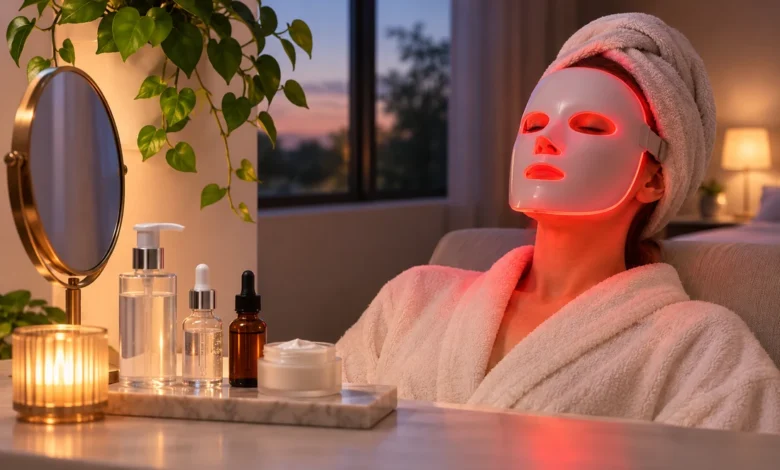
Evenings are the only stretch of the day most people genuinely control, which is why skincare routines get built there and also why they fall apart there. The hour between finishing up and going to bed has to absorb everything that did not happen earlier, and a ten-minute device session is exactly the sort of thing that gets dropped first when that hour runs short.
Light therapy survives that pressure better than most additions, but only when it is placed deliberately rather than squeezed in at the end. Where it sits relative to cleansing, what goes on afterward, and which colors belong at night rather than in the morning all change how much a session is worth. Layering is the part that goes wrong most often, and this site’s look at how hyaluronic acid serum helps oily but dehydrated skin makes the same point from the product side.
Reasons Evening Suits Light Therapy Better Than Morning
Skin runs its own repair cycle overnight, with higher cell turnover through the small hours than across the working day, which makes anything meant to support repair a better fit for the end of the day than the start of it. Light therapy works on that same unhurried timescale, building across weeks rather than producing a visible change by morning, so lining it up with the body’s own schedule costs nothing and may well help.
Practical reasons matter at least as much as biological ones. Mornings are compressed and end in sunscreen and makeup, neither of which leaves room for ten hands-free minutes, while evenings offer a stretch where sitting still with something on your face is actually possible. Retinoids belong at night too, which puts the two best-evidenced parts of an anti-aging routine in the same window, where they need sequencing rather than competing for it.
Where a Light Therapy Session Belongs in the Evening Order
Sequence decides how much of a session survives contact with the rest of the routine, and three placements cover almost all of it.
Cleanse first and leave the skin bare
Light reaches skin, or it reaches whatever is sitting on top of skin, and serums, oils and the remains of the day’s sunscreen all stand in the way. A gentle cleanse and a minute to dry is the entire preparation. Nothing should go on before the session, including the hydrating mist that feels as though it would help, because a damp surface means part of the session is spent on water.
Run the session on dry skin
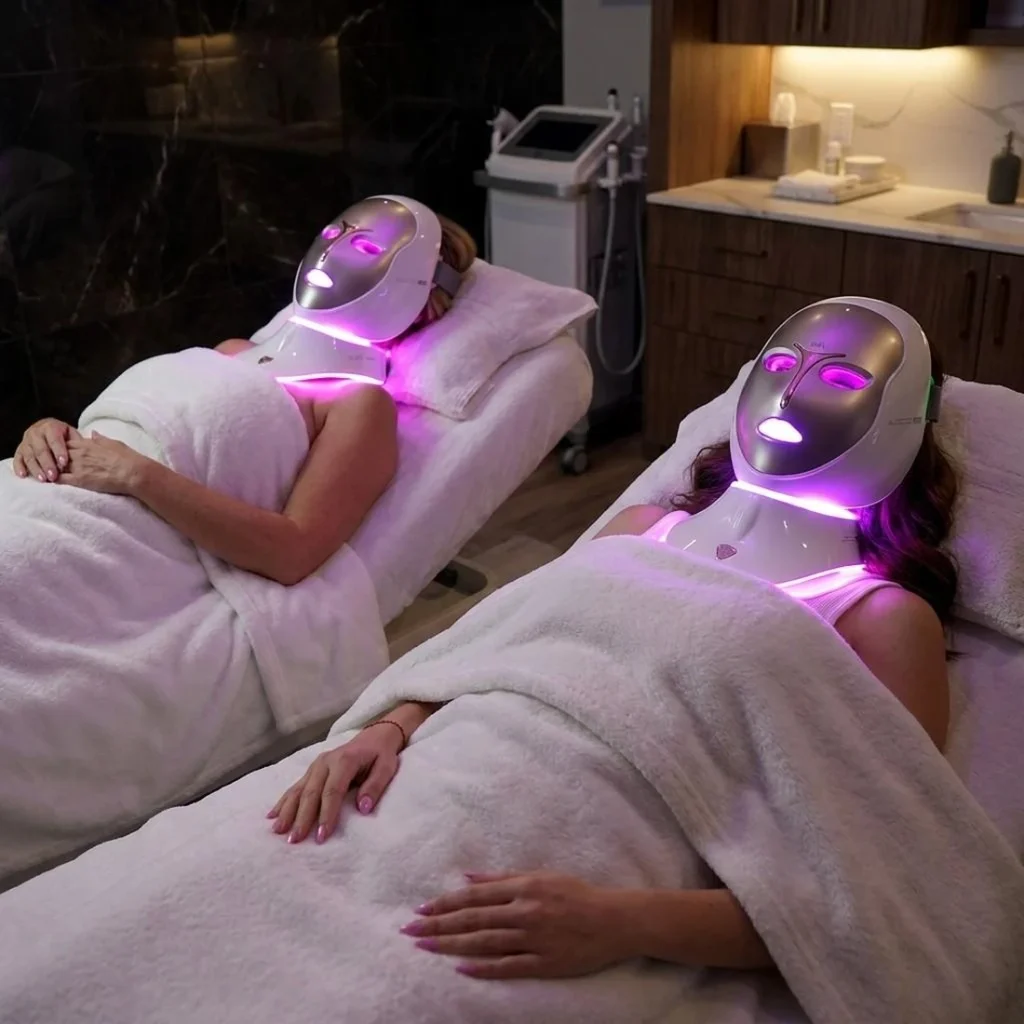
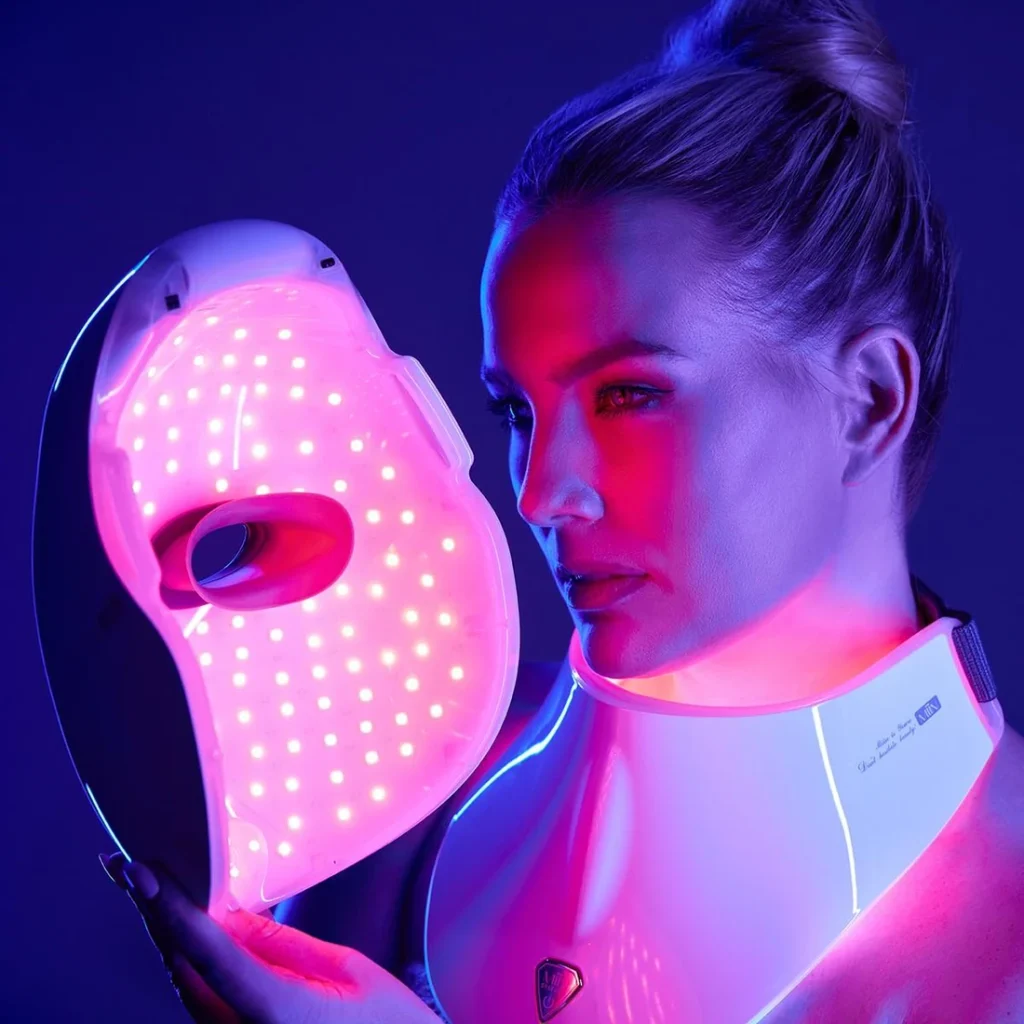
Ten to fifteen minutes is the range most manufacturers publish, and that figure is a ceiling rather than a target to beat. Masks carrying several wavelengths let the color follow the purpose of the evening, which is where a red light therapy mask range earns its place over a single-mode device, since red and near-infrared suit the end of the day while other colors have slots of their own. Artemis publishes 635nm for red and 850nm for near-infrared across 720 diodes at 45mW/cm², and divides the face into 16 zones, so a session can weight the eye area or the jaw rather than treating everything equally.
Everything else goes on afterward
Serums, retinoids and moisturizer all belong after the mask comes off, applied while skin is still slightly warm. Retinoids and light therapy on the same night suit most people, though anyone whose skin is already reacting should alternate nights rather than stack them, and barrier ingredients such as ceramides go on last to hold the rest in place. Order within that final stage runs thinnest to thickest, which is the same logic set out in this site’s guide to the Drunk Elephant approach to routine order.
Does Light Therapy at Night Affect Sleep?
Red and near-infrared wavelengths do not carry the melatonin problem that evening screen time does, since the research connecting light exposure to suppressed melatonin concerns the blue end of the spectrum rather than the red. A red or near-infrared session an hour before bed sits comfortably inside a wind-down, and a fair number of people find the enforced stillness helps rather than hinders.
Blue modes are the one thing worth planning around. Blue on a mask runs for a fraction of the duration and at nothing like the exposure of an evening spent on a phone, so any effect is likely small, but anyone who already sleeps badly has an easy adjustment available. Running blue in the morning or early evening and keeping the final hour for red and near-infrared costs nothing, because the two wavelengths do entirely different jobs and were never going to be interchangeable.
Fitting a Light Therapy Session Into a Real Evening
Routines fail on duration far more often than on technique, and a sequence that reads well on paper can quietly ask for forty minutes. A version that survives an ordinary week looks closer to this.
- Cleanse, then let skin dry for a minute while the mask comes off its charger
- Ten to fifteen minutes with the mask on, doing something you would be doing anyway
- Serums and treatments straight afterward, while skin is still warm
- Moisturizer last, with something occlusive over it through the winter
- Three or four nights a week rather than seven, so missing one costs nothing
Doing it while reading or watching something is most of the difference between a habit and a chore, and a cordless mask matters more here than any figure on the specification sheet, because a session tethered to an outlet becomes a session spent sitting in one particular chair. Keeping the products afterward down to the few you actually believe in helps as well, since every additional step is another reason for the whole routine to be skipped on a bad night.

Questions People Ask About Evening Light Therapy Routines
Should the mask go on before or after a shower?
After, in nearly every case. Warm water strips some of the barrier lipids and leaves skin damp, and a session on damp skin is partly spent on water rather than on skin, so cleansing in the shower and running the mask once dry is the simpler order. The only argument for going first is purely practical, since a mask kept in the bathroom tends to get used more often than one living in a drawer.
Does the specific time of evening matter?
Less than consistency does, though earlier generally beats later. Any slot that repeats reliably beats a theoretically better one that keeps getting skipped, and the main reason to avoid the last ten minutes before bed is that it leaves nothing applied afterward enough time to absorb before a pillow collects most of it.
Which Evening Light Therapy Routine Is Worth Keeping?
The shortest one still running in March. Three nights a week of a cleanse, a ten-minute session and two products afterward will outperform an elaborate sequence attempted twice and then abandoned, because the research behind light therapy rewards repetition rather than intensity and cannot tell the difference between an ambitious routine and an imaginary one. Put the session where the evening already has a gap, keep what follows it short, and let the rest of the shelf wait its turn.