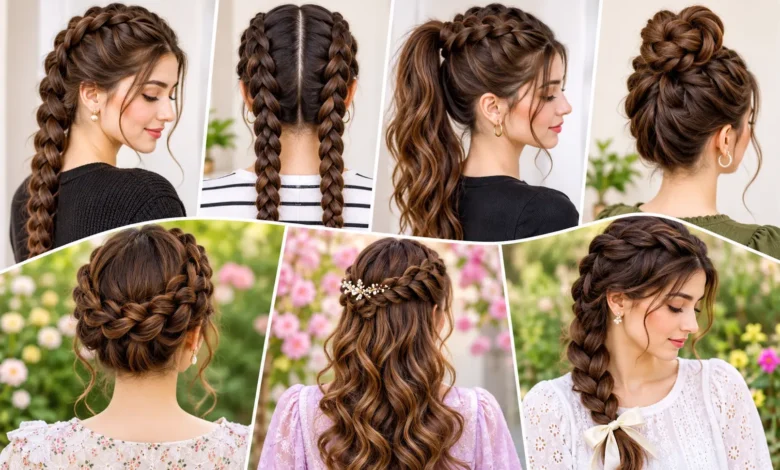
Dutch braid hairstyles are one of the easiest ways to make your hair look styled without much effort. The braid sits on top of your head instead of tucking underneath, which gives it a raised, 3D look that works for school, work, the gym, summer days, and even weddings.
This guide shows 7 magical Dutch braid looks, explains how a Dutch braid works and how it differs from a French braid, and walks you through how to do one on your own hair step by step. You will also find tips for different hair lengths and types, ways to make a braid look fuller, and how to keep it from falling out.
What Is a Dutch Braid?
A Dutch braid is a braid where you cross the strands under each other instead of over, so the braid stands out on top of your hair. It is made by starting at the front or crown and adding hair from both sides as you braid toward the nape. Many people call it an “inside-out French braid,” because it uses the same method in reverse.
The result is a raised, textured braid that looks full and defined. It also sits closer to the scalp and tends to stay put well, which is why it is so popular for active days.
What Is the Difference Between a Dutch Braid and a French Braid?
The difference is the direction you cross the strands: in a French braid, the outer strands cross over the middle one, and in a Dutch braid, they cross under it.
| Feature | Dutch braid | French braid |
|---|---|---|
| Strand direction | Outer strands cross under the middle | Outer strands cross over the middle |
| Look | Raised, sits on top | Flat, blends into the hair |
| Best for | A bold, textured braid | A neat, understated braid |
| Pancaking | Works especially well | Works too |
Both styles use the same “add hair as you go” technique. If you can do one, you can usually learn the other with a little practice.
7 Magical Dutch Braid Hairstyles
Each look includes how to do it and who it suits.
1. The Classic Single Dutch Braid
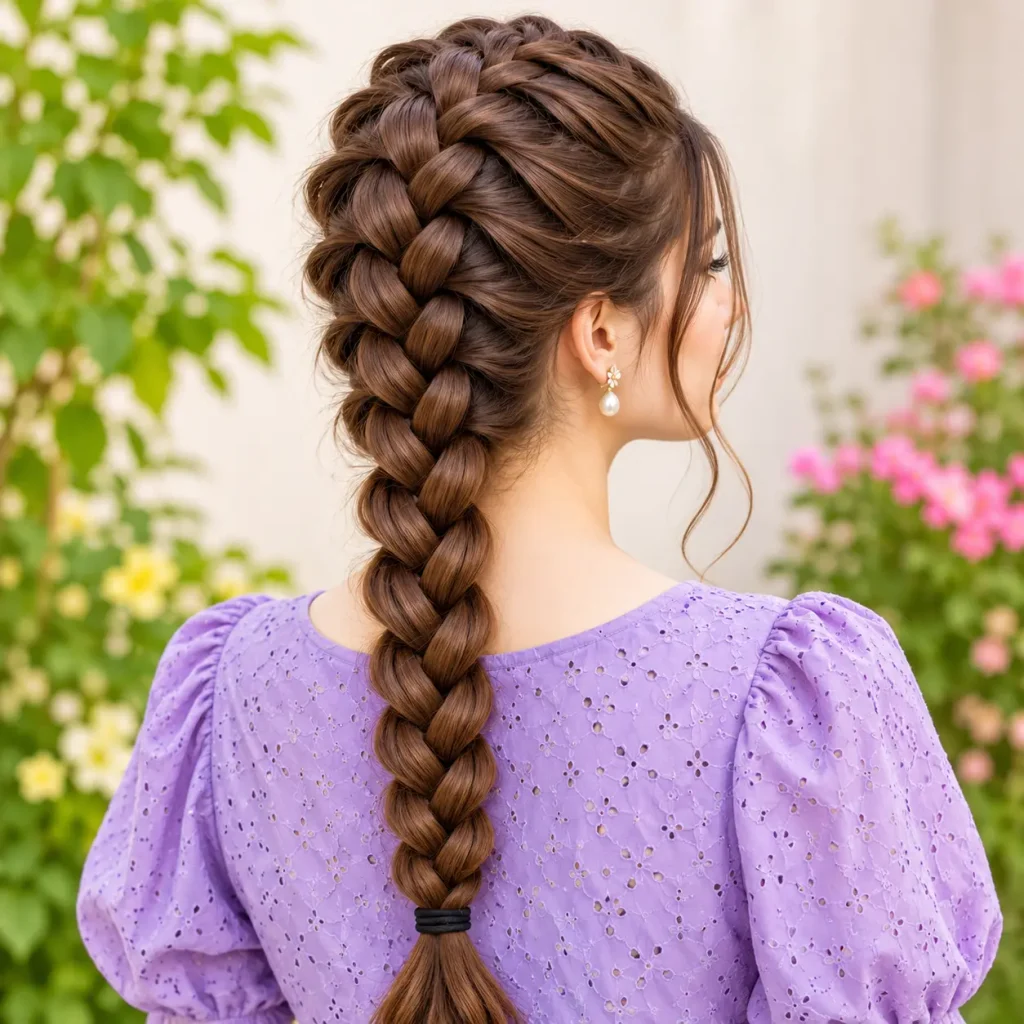
The look: one Dutch braid starting at the crown and running down the center of your back.
This is the easiest place to start and the best Dutch braid hairstyle for beginners. It works on long and medium hair, and you can wear it as is or loosen it for a softer, undone look.
How to style it: braid from the crown to the nape, continue with a regular braid to the ends, and secure with a small elastic. Gently tug the edges of the braid to make it look fuller.
Best for: everyday wear, school, errands, beginners.
2. Double Dutch Braids (Pigtails)
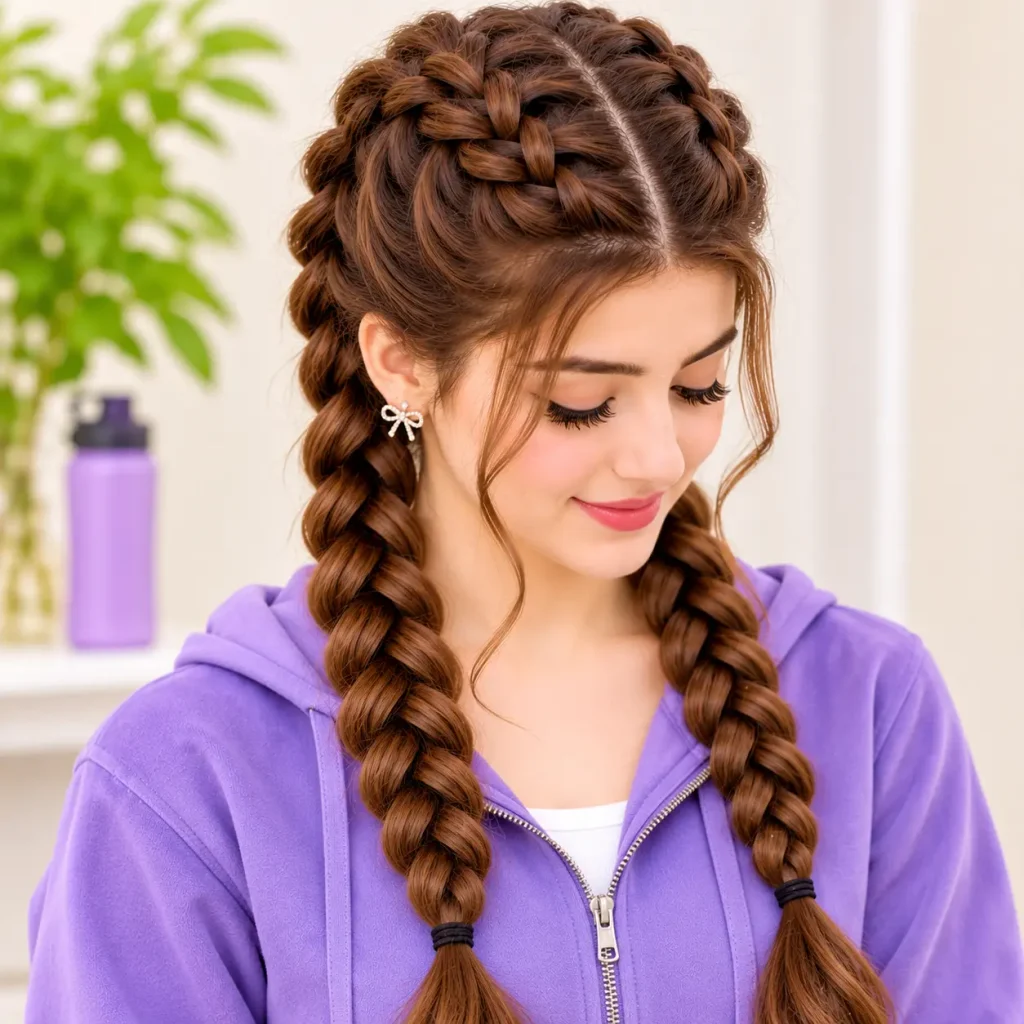
The look: two Dutch braids, one on each side of your part, running down the back.
Double Dutch braids are sporty, practical, and easy to wear for hours. They are sometimes called boxer braids because they keep hair out of the way during activity.
How to do it:
- Part your hair down the middle and clip one side out of the way.
- Start a Dutch braid at the front of the part on the other side and braid down toward the nape.
- Finish and tie with an elastic.
- Repeat on the other side, keeping the tension even.
Best for: the gym, school, travel, long days. These are among the best Dutch braid hairstyles for the gym.
3. The Dutch Braid Ponytail
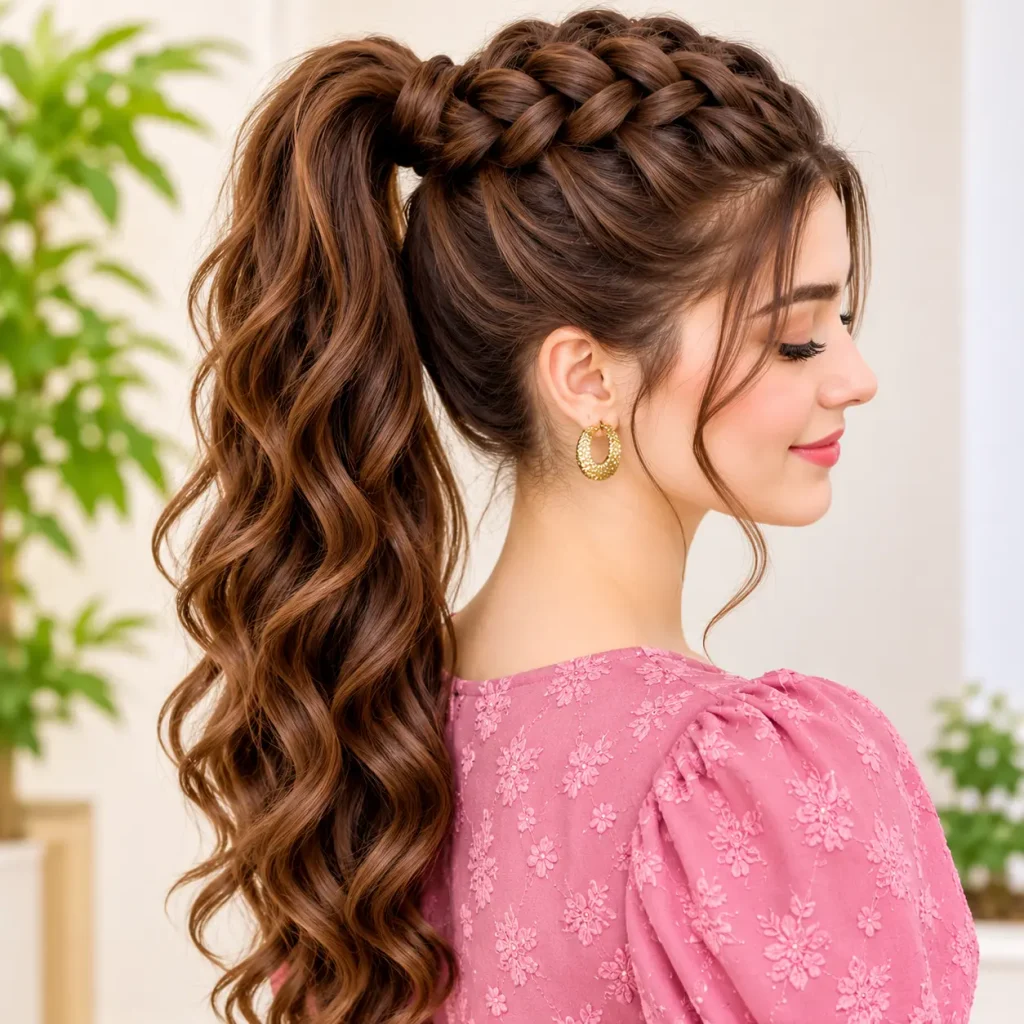
The look: a Dutch braid that starts at the front and gathers into a ponytail.
A Dutch braid ponytail adds structure to a basic ponytail and keeps flyaways down. It works as a high pony, a low pony, or a half-up version.
How to do it:
- Start the Dutch braid at the crown and braid back toward where you want the ponytail.
- Stop adding hair when you reach the pony point.
- Gather all the hair into a ponytail and secure with an elastic.
- Wrap a small section around the elastic to hide it.
Best for: work, school, a polished look, easy styling. For more everyday looks, see our guide to low-maintenance hairstyles for women.
4. The Dutch Braid Bun
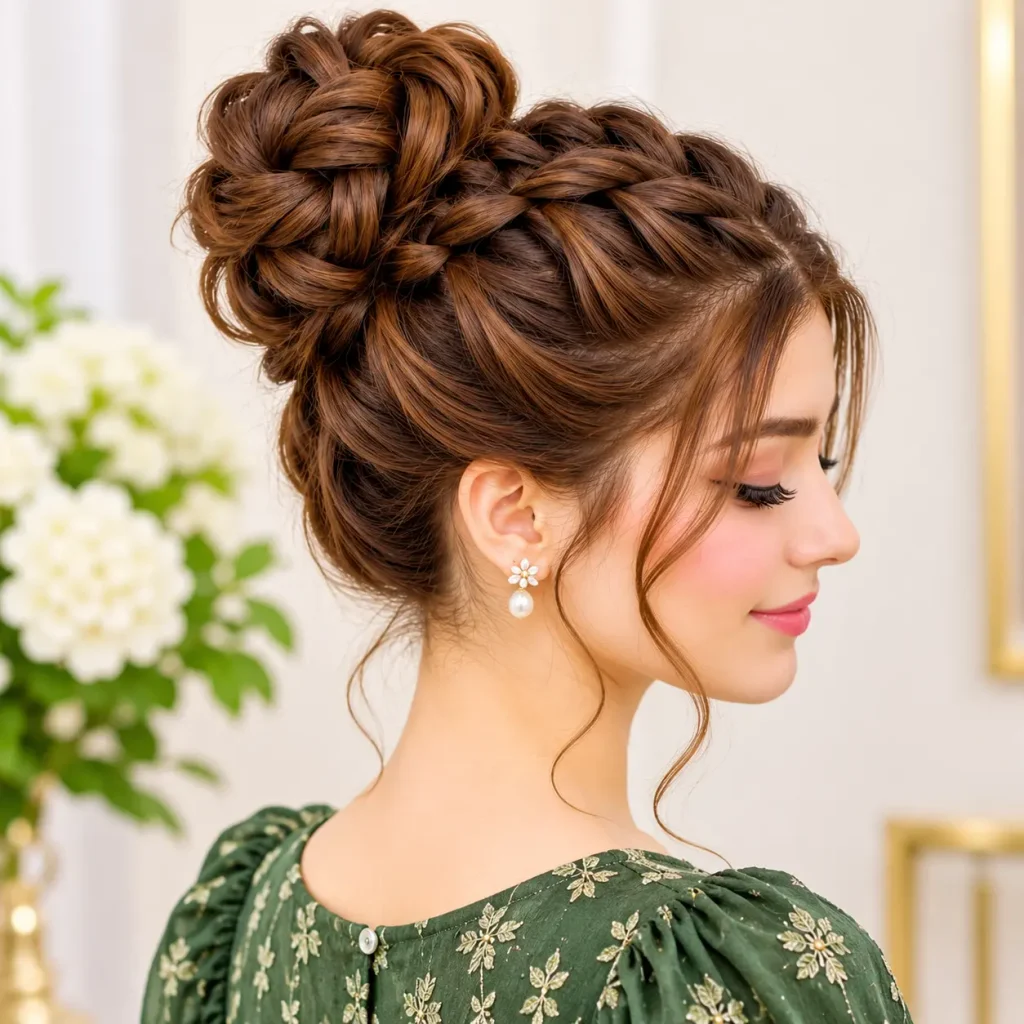
The look: a Dutch braid that leads into a bun, either at the top of the head or at the nape.
A Dutch braid bun looks neat and elegant. The braid works as a base so the bun stays smooth and secure.
How to do it:
- Start a Dutch braid at the front of your head and braid to the back or crown.
- Gather all the hair, including the braid, into a ponytail.
- Twist the ponytail around its base and pin it in place.
- Smooth flyaways with a light spray.
Best for: office wear, travel days, events. This is a great option for Dutch braid hairstyles for work, since it keeps hair off your face and neck.
5. The Dutch Braid Crown
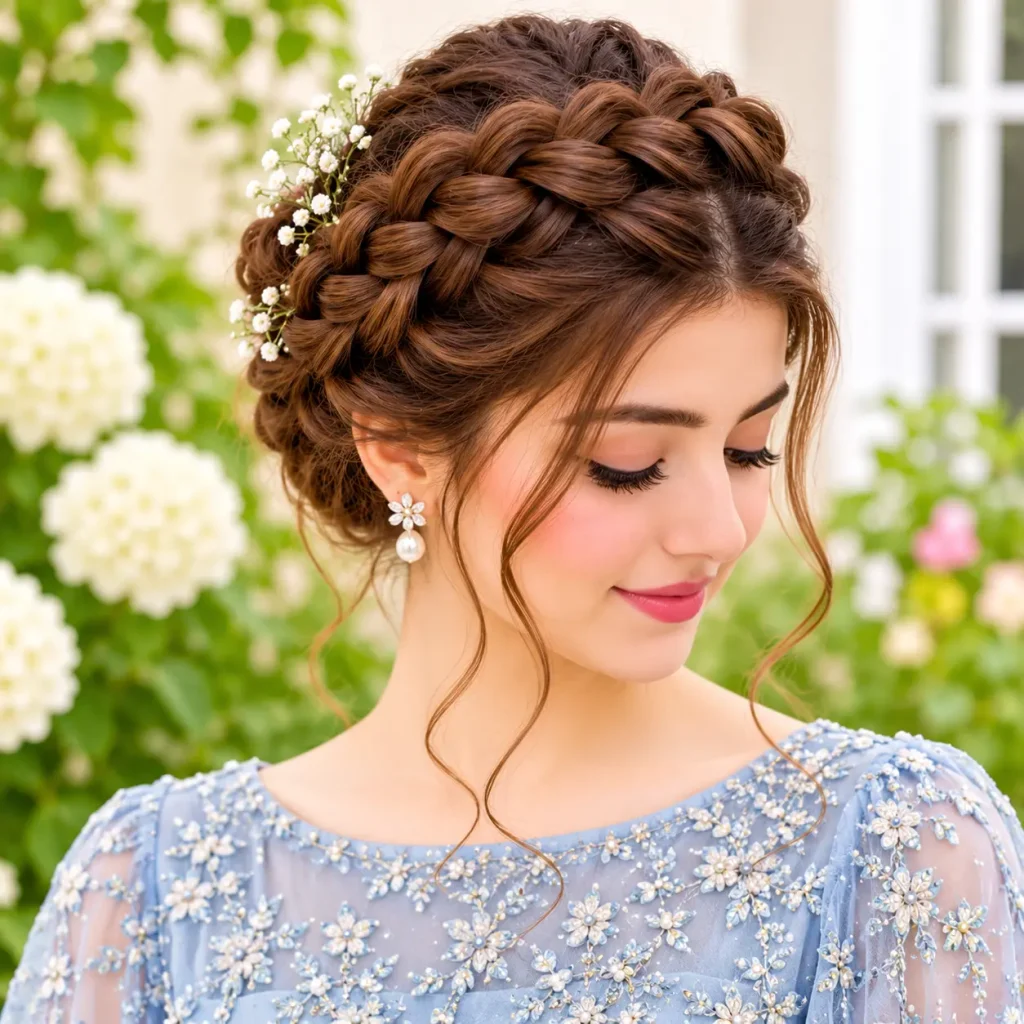
The look: a Dutch braid that wraps around your head like a headband or halo.
A Dutch braid crown looks romantic and takes a little practice. It is ideal for hot weather because it keeps hair off your neck.
How to do it:
- Part your hair down the middle.
- Start a Dutch braid behind one ear and braid around the head, adding hair from the top as you go.
- Continue across the back of your head to the other ear.
- Finish with a regular braid, tuck the end, and secure it with bobby pins.
Best for: weddings, summer, special occasions, outdoor events.
6. The Half-Up Dutch Braid With Curls
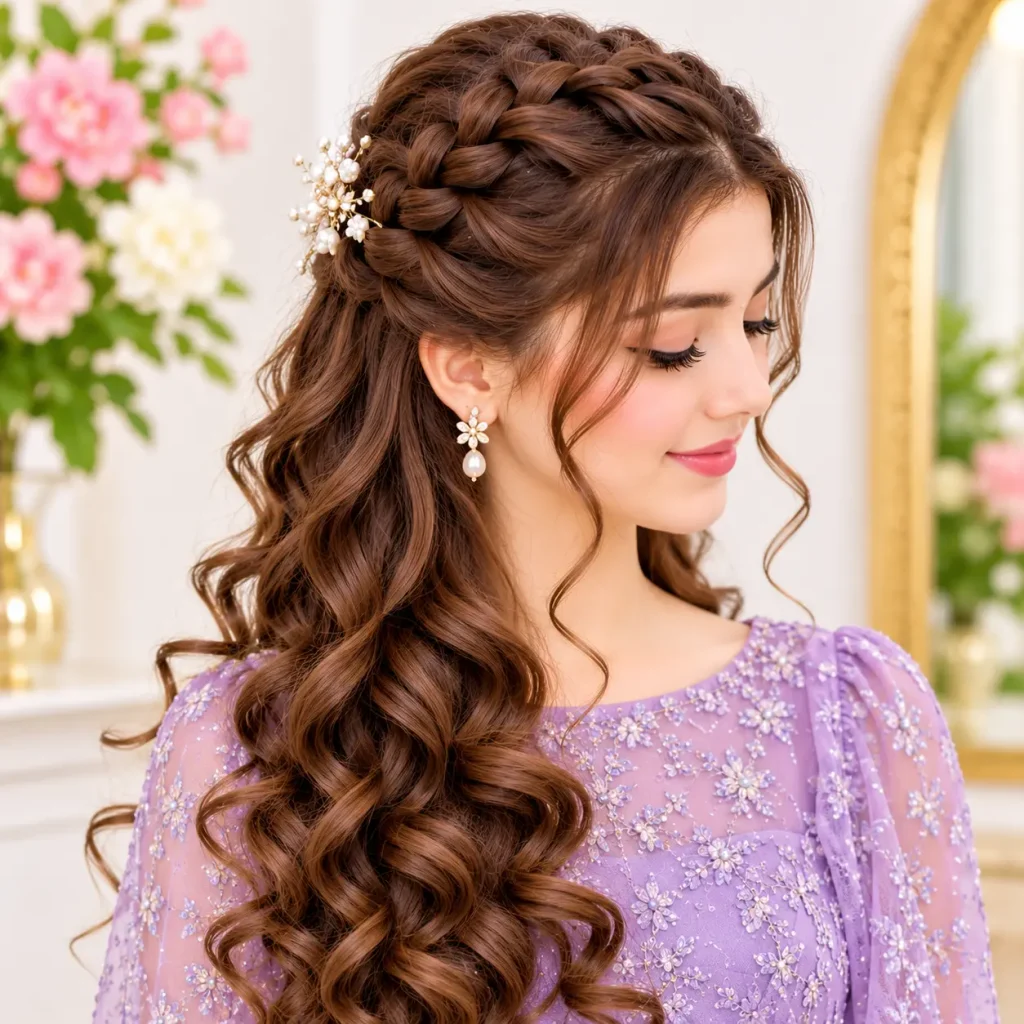
The look: a Dutch braid across the top section, with the rest of the hair down in curls or waves.
Dutch braid with curls is a soft, romantic style. The braid frames the face and the loose curls add movement. It suits formal events and photos.
How to do it:
- Curl your hair first with a curling iron or wand.
- Take a section from the front and start a Dutch braid, adding hair from each side.
- Braid back across the head to the crown and secure with a small elastic or pins.
- Let the rest of the curls fall naturally.
Best for: weddings, parties, dates. These are some of the best Dutch braid hairstyles for wedding guests.
7. The Side Dutch Braid
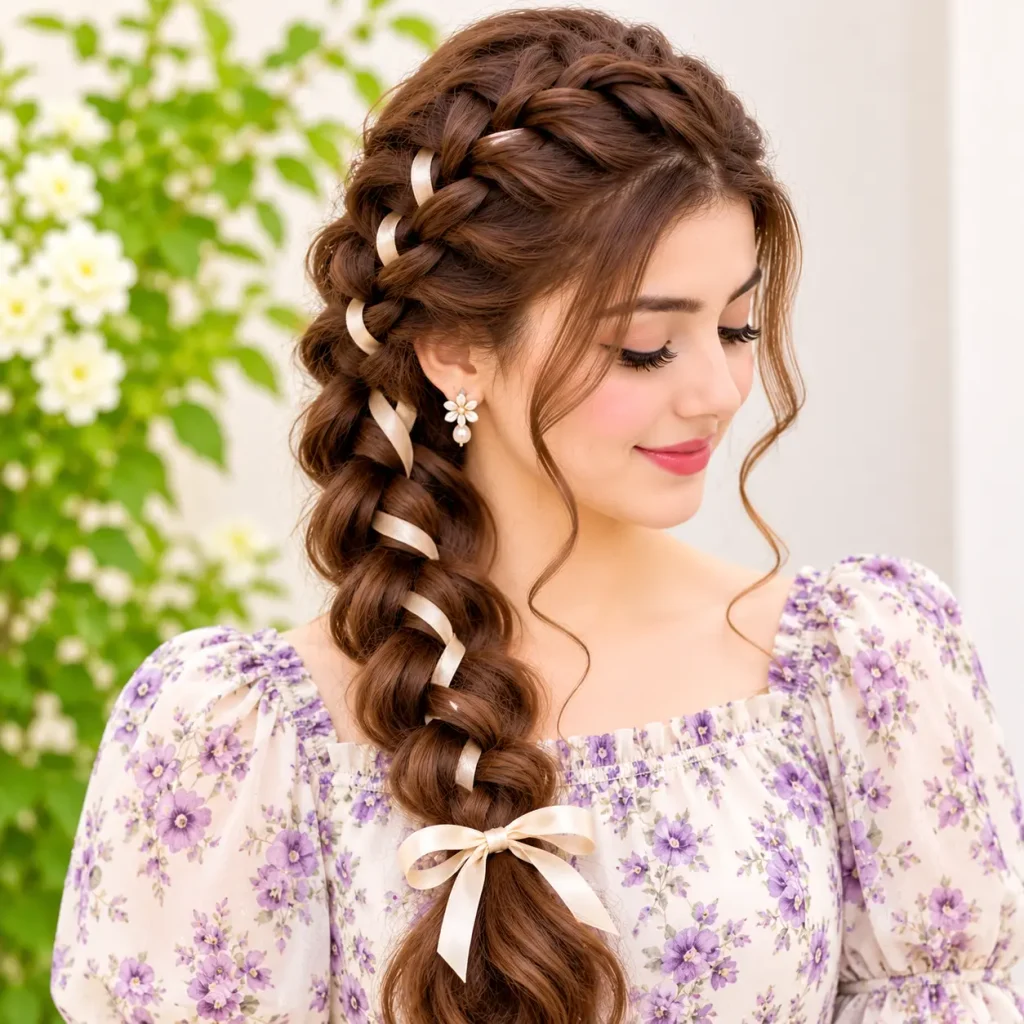
The look: a Dutch braid that starts on one side and falls over one shoulder.
A side Dutch braid is a relaxed, feminine option. Add a ribbon for a sweet detail, and it works especially well in summer.
How to do it:
- Part your hair on the side you like.
- Start the braid at the front of that side and braid diagonally toward the opposite shoulder.
- Continue with a regular braid and tie.
- Weave a ribbon through the braid if you like.
Best for: summer, casual outings, dates. Dutch braid hairstyles with a ribbon are especially pretty for warm weather.
The 7 Looks at a Glance
| Look | Difficulty | Best for | Hair length |
|---|---|---|---|
| Classic single | Easy | Everyday, beginners | Medium to long |
| Double Dutch braids | Easy to medium | Gym, school | Medium to long |
| Dutch braid ponytail | Medium | Work, school | Medium to long |
| Dutch braid bun | Medium | Office, events | Medium to long |
| Dutch braid crown | Advanced | Weddings, summer | Long |
| Half-up with curls | Medium | Weddings, dates | Medium to long |
| Side Dutch braid | Easy to medium | Summer, casual | Medium to long |
How to Dutch Braid Your Own Hair, Step by Step
Learning how to Dutch braid your own hair takes practice, so be patient. Start with one braid before attempting two.
How to Dutch Braid for Beginners
- Brush your hair. Remove tangles so strands glide smoothly.
- Take a section at the front. Gather a small section near the hairline, around the crown, and split it into three equal strands.
- Cross the right strand under the middle. The right strand now becomes the middle.
- Cross the left strand under the new middle. The left strand becomes the middle.
- Add hair from the right side. Take a small section of loose hair from the right and add it to the right strand. Then cross the combined strand under the middle.
- Add hair from the left side. Do the same on the left and cross under the middle.
- Continue down the head. Keep alternating, adding hair each time, and keep your hands close to your scalp.
- Finish with a regular braid. When you run out of hair to add, braid the remaining length by crossing strands under until you reach the ends.
- Secure with an elastic. Use a small elastic or a hair tie that matches your hair color.
Tips for beginners:
- Practice with a mirror or a phone camera to check the back.
- Keep tension even so the braid does not look lopsided.
- Use a comb to separate sections if your hair is thick.
- Do not worry about perfection, since loose braids look good too.
How to Dutch Braid Wet Hair
Dutch braiding damp hair can help it dry in a soft wave. Use a leave-in or a light cream, braid while the hair is damp, and let it air dry. Avoid braiding very wet hair too tightly, since wet hair is more fragile.
How to Dutch Braid Layered Hair
Short layers can poke out of a braid. To keep them in:
- Use a texturizing spray or a light mousse to add grip.
- Smooth layers into each section with your fingers.
- Use a bit of hairspray or a clear mascara wand to tame the strays.
- Choose a looser, textured braid and let a few layers fall out on purpose.
Dutch Braid Hairstyles for Different Hair Lengths
Dutch Braid Hairstyles for Long Hair
Long hair has the most options: a classic single braid, double braids, a crown, a bun, a ponytail, or a half-up style. Long braids can get heavy, so use sturdy elastics and secure with pins if needed.
Dutch Braid Hairstyles for Medium Hair
Shoulder-length hair works well for double Dutch braids, a half-up Dutch braid, and a Dutch braid ponytail. A shorter braid looks neat and is easy to hold in place.
How to Dutch Braid Short Hair
Short hair can still be Dutch braided. If your hair is chin length or longer, you can try a small Dutch braid across the front or along one side, then pin it behind your ear. Very short hair, such as pixie cuts, may not hold a braid, but you can use tiny braids near the temple or a headband braid. For short styles, see our guide to bixie haircuts for cuts that pair well with small accents.
Tips for short hair:
- Use smaller sections and a lighter hold.
- Add texture spray so strands grip.
- Use bobby pins to secure short ends.
- Try a side Dutch braid that ends at the ear.
Dutch Braid Hairstyles for Different Hair Types
| Hair type | What works | Tips |
|---|---|---|
| Thin or fine | Looser braids, pancaking, half-up styles | Add volume spray and pancake the braid |
| Thick | Double braids, crown, ponytail | Use smaller sections for a neat look |
| Curly | Braid on defined curls or stretched hair | Use a curl cream and avoid brushing dry curls |
| Natural or coily | Braids on stretched or moisturized hair | Moisturize first, use gentle tension |
| Straight | Texturized braids | Add texture spray for grip |
| Wavy | Natural wave plus braid | Use light product and keep it soft |
Dutch Braid Hairstyles for Thin Hair
For thin hair, make the braid look fuller by pancaking (see below), using a volumizing spray at the roots, and choosing a looser braid.
Dutch Braid Hairstyles for Thick Hair
Thick hair holds a Dutch braid well. Take smaller sections to keep the braid defined, and use strong elastics.
Dutch Braid Hairstyles for Curly Hair
Curly hair can look gorgeous in a Dutch braid. Braid on stretched or lightly defined curls, and use a cream to reduce frizz. The braid can show off the curl texture along the ends.
Dutch Braid Hairstyles for Natural Hair
On natural hair, moisturize first, detangle gently, and braid with even, comfortable tension. Avoid pulling hard at the hairline. A satin scarf at night protects the style.
Dutch Braid Hairstyles With Bangs
If you have bangs, you can leave them out and braid from just behind them, or sweep them to the side and incorporate them into the braid for a pulled-back look. Curtain bangs work well with a half-up Dutch braid.
How to Make a Dutch Braid Look Fuller
How to Pancake a Dutch Braid
Pancaking is a technique that gently pulls the braid’s loops outward so it looks wider and fuller.
- Secure the end of the braid with an elastic so it does not unravel.
- Hold the braid at the base with one hand to keep it steady.
- Gently tug on the outer edges of each loop, starting near the end of the braid and working up.
- Pull evenly on both sides so the braid stays balanced.
- Stop when it looks fuller. Pulling too much can loosen the braid too far.
- Smooth stray hairs and finish with a light spray.
More Ways to Add Fullness
- Start with texture. A texturizing spray or dry shampoo adds grip and body.
- Use smaller, more even sections when adding hair.
- Braid a bit looser at the start.
- Add a clip-in extension under the braid if you want more thickness.
How to Keep a Dutch Braid From Falling Out
How to keep a Dutch braid from falling out comes down to prep, tension, and hold.
- Prep with texture. Add dry shampoo or a texturizing spray if your hair is silky.
- Keep your hands close to your scalp as you braid for a secure base.
- Use even tension. Snug but not tight enough to cause pain.
- Secure with a strong elastic at the end, and add bobby pins at the base if needed.
- Finish with a light-hold hairspray.
- Avoid brushing the braid after it is done.
A note on tension: very tight braids can pull on the scalp and hairline, and repeated tension may contribute to hair loss over time. If you feel pain, loosen the braid. The American Academy of Dermatology is a reliable source for hair-care guidance.
How Long Does a Dutch Braid Last?
A Dutch braid typically lasts a day or two if you wear it in everyday settings, depending on hair type, activity, and how well it was set. Slippery or fine hair may loosen faster, while textured or thick hair may hold longer. You can refresh it by smoothing strays and adding a little dry shampoo.
How to Sleep With a Dutch Braid
- Keep the braid loose or leave it as is if it is comfortable.
- Wrap a satin scarf or wear a satin bonnet to reduce friction.
- Use a satin pillowcase if you prefer.
- Avoid sleeping on a tight braid that pulls at your scalp.
- Do not sleep with wet hair if you can avoid it.
How to Take Out a Dutch Braid Without Damage
- Remove the elastic by cutting it carefully or unwinding it, without cutting your hair.
- Unravel from the bottom, working up to the top.
- Spray with a detangler if the hair is tangled.
- Finger-detangle gently, then use a wide-tooth comb.
- Give your scalp a rest. Avoid tight styles every day.
For more hairstyle ideas, browse our hair style guides.
Dutch Braid Hairstyles by Occasion
Dutch Braid Hairstyles for School
Double Dutch braids and a Dutch braid ponytail are practical for school: they stay put during activities and keep hair out of your face.
Dutch Braid Hairstyles for Work
A Dutch braid bun or a low Dutch braid ponytail looks neat and professional. Choose a smooth finish, and keep stray hairs tidy. For polished outfits that pair well, see our office and work outfit ideas.
Dutch Braid Hairstyles for the Gym
Double Dutch braids are the classic choice. They keep hair secure and tidy during workouts, and they are easy to wear for hours.
Dutch Braid Hairstyles for Wedding Guests
A half-up Dutch braid with soft curls, or a Dutch braid crown, looks elegant. Practice before the day, and use pins and a flexible-hold spray to keep it in place.
Dutch Braid Hairstyles for Summer
A crown braid, side Dutch braid, or braided bun keeps hair off your neck. Add a ribbon or small flowers for a summer touch.
Easy Dutch Braid Hairstyles
If you want something simple: a single Dutch braid, double Dutch braids, or a Dutch braid ponytail. These take a few minutes once you have the technique.
Cute Dutch Braid Hairstyles
Add a ribbon, a small clip, or a few face-framing pieces to make a basic braid feel special. A side braid with a ribbon is especially cute.
Braided Hairstyles for Women: Where the Dutch Braid Fits
Braided hairstyles for women range from simple everyday plaits to elaborate protective styles. The Dutch braid is one of the easiest to wear daily because it is quick and secure. Other popular options include French braids, fishtail braids, and waterfall braids.
Common Dutch Braid Mistakes
- Braiding too tightly. It can cause scalp discomfort and breakage.
- Uneven sections. This makes the braid lopsided.
- Dropping hair when adding sections. Keep your fingers close to the scalp.
- Skipping texture. Silky hair slips out easily.
- Over-pancaking. Too much tugging can unravel the braid.
- Using elastics that snag. Choose smooth, soft ones.
- Not practicing. It takes a few tries to get comfortable.
Frequently Asked Questions
What is a Dutch braid?
A Dutch braid is a braid where the strands cross under each other so the braid sits on top of the hair, creating a raised, 3D look.
What is the difference between a Dutch braid and a French braid?
In a Dutch braid, the strands cross under the middle one, and in a French braid they cross over. The Dutch braid stands out more.
How do I Dutch braid my own hair?
Divide a front section into three strands, cross the outer strands under the middle, add hair from each side as you go, and finish with a regular braid.
How do I make a Dutch braid look fuller?
Pancake the braid by gently pulling the outer loops, start with a texturizing spray, and braid a little looser.
How do I keep a Dutch braid from falling out?
Use texture spray, keep your hands close to the scalp, braid with even tension, and secure with a strong elastic and pins.
Can I Dutch braid short hair?
Yes, if your hair is chin length or longer. Use smaller sections, texture spray, and bobby pins. Very short hair may hold only a small braid or headband braid.
How long does a Dutch braid last?
Typically a day or two, depending on your hair type, activity, and how it was set.
How do I take out a braid without damage?
Remove the elastic carefully, unravel from the bottom, spray with detangler, and finger-detangle before combing.
Conclusion
Dutch braid hairstyles are versatile, practical, and pretty, and the seven looks above cover everyday wear, work, the gym, summer, and weddings. The key is to practice the technique, use texture for grip, keep the tension comfortable, and pancake the braid for fullness.
For your next step, start with a single Dutch braid in front of a mirror, then try double braids once you are comfortable. Add a ribbon or curls when you want to dress it up.