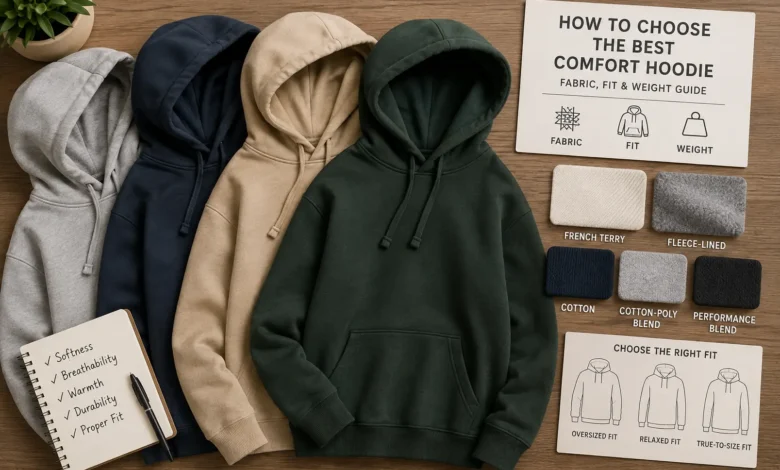
A hoodie should be the easiest thing in your closet. No zippers to fight, no fabric to fuss over — just pull it on and feel instantly better. But if you’ve ever bought a “cozy” hoodie that turned out scratchy, boxy in all the wrong places, or too thin to actually keep you warm, you already know that comfort isn’t guaranteed just because a tag says so.
The truth is, comfort in a hoodie comes down to three things working together: the fabric against your skin, the fit around your body, and the weight that determines how warm or breathable it feels. Get one of these wrong, and the whole hoodie feels off — even if the other two are perfect.
This guide breaks down exactly what makes a hoodie comfortable, how to evaluate fabric and fit before you buy, and how to match a hoodie to the way you actually plan to wear it — whether that’s lounging at home, running errands, traveling, or layering through a cold winter.
What Actually Makes a Hoodie Comfortable?
Comfort isn’t a single feature — it’s the result of several details working in harmony. Before you shop, it helps to understand what you’re actually evaluating.
Fabric composition determines how the hoodie feels against your skin, how breathable it is, and how it behaves after repeated washing. A hoodie can look identical to another on a hanger and feel completely different once worn.
Fit affects how freely you move and how the hoodie sits on your shoulders, waist, and wrists. A fit that’s too tight restricts movement; one that’s too loose can feel sloppy or let in cold air at the openings.
Fabric weight controls temperature regulation — how warm the hoodie feels in cool weather and how quickly you overheat indoors or during activity.
Construction details — like flat-lock seams, ribbed cuffs, and a properly lined hood — reduce chafing and help the hoodie hold its shape wash after wash.
Break-in period matters too. Some fabrics (like heavyweight cotton fleece) feel stiff out of the packaging and soften significantly after a few washes, while performance blends tend to feel soft immediately but may not improve much over time.
Understanding these five factors before you shop saves you from buying based on look alone and being disappointed once you actually wear it.
Fabric Guide: What Your Hoodie Is Made Of Matters Most
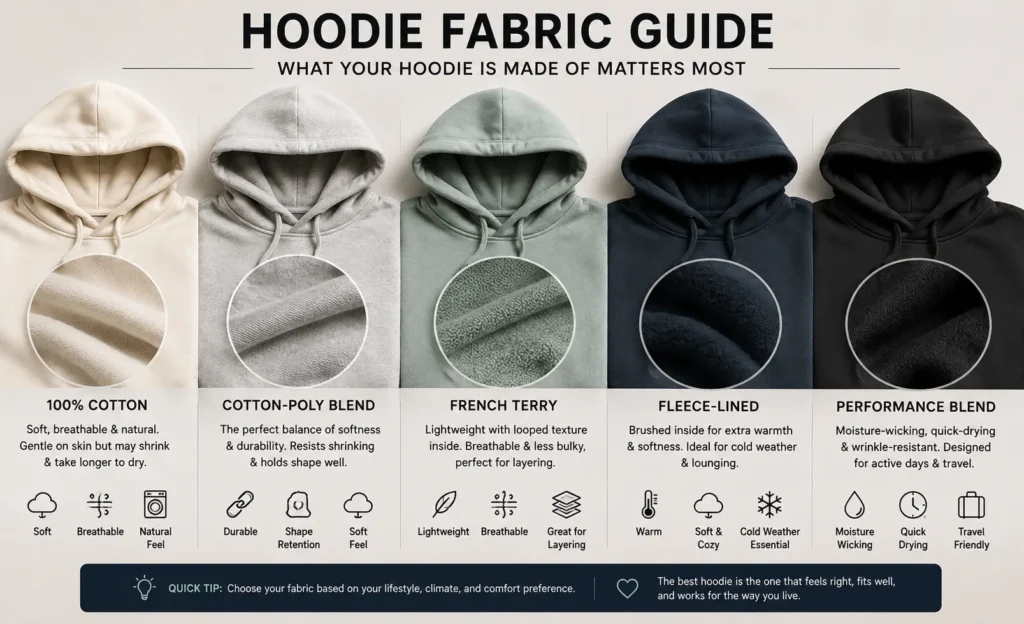
Fabric is the single biggest factor in comfort, so it’s worth understanding your main options.
100% Cotton
Soft, breathable, and gentle on skin, cotton is the classic hoodie fabric. It handles moisture reasonably well but tends to shrink after washing and dries slower than blended fabrics. Cotton is a strong choice if softness and breathability matter more to you than shape retention over time.
Cotton-Polyester Blends
This is the most common fabric for everyday hoodies, and for good reason. A 50/50 or 80/20 cotton-poly blend keeps much of cotton’s softness while adding durability, shrink resistance, and better shape retention. Some people with sensitive skin find higher-polyester blends slightly less soft, so if you’re skin-sensitive, look for blends where cotton is the dominant fiber.
French Terry
A lighter-weight knit with looped texture on the inside, French terry is breathable and less bulky than fleece. It’s a good pick if you want a hoodie you can wear indoors without overheating, or layer under a jacket without added bulk.
Fleece-Lined (Brushed Fleece)
Brushed on the inside for extra softness and warmth, fleece-lined hoodies are the go-to choice for cold weather and lounging. They trap heat well but can feel too warm for indoor wear or mild climates.
Performance/Technical Blends
Increasingly common in “comfort” and travel-focused hoodies, these blends often mix recycled polyester with fibers like Tencel or modal for a soft, moisture-wicking feel. They tend to resist wrinkling, dry quickly, and stay comfortable during activity or long travel days, though they usually cost more than standard cotton blends.
Quick fabric comparison:
| Fabric Type | Softness | Warmth | Durability | Best For |
|---|---|---|---|---|
| 100% Cotton | High | Moderate | Moderate (shrinks over time) | Everyday softness, breathability |
| Cotton-Poly Blend | High | Moderate | High | All-around daily wear |
| French Terry | Moderate-High | Low-Moderate | Moderate | Layering, mild weather |
| Fleece-Lined | High | High | High | Cold weather, lounging |
| Performance Blend | High | Moderate | High | Travel, active days |
Fit Guide: Oversized, Relaxed, or True-to-Size?
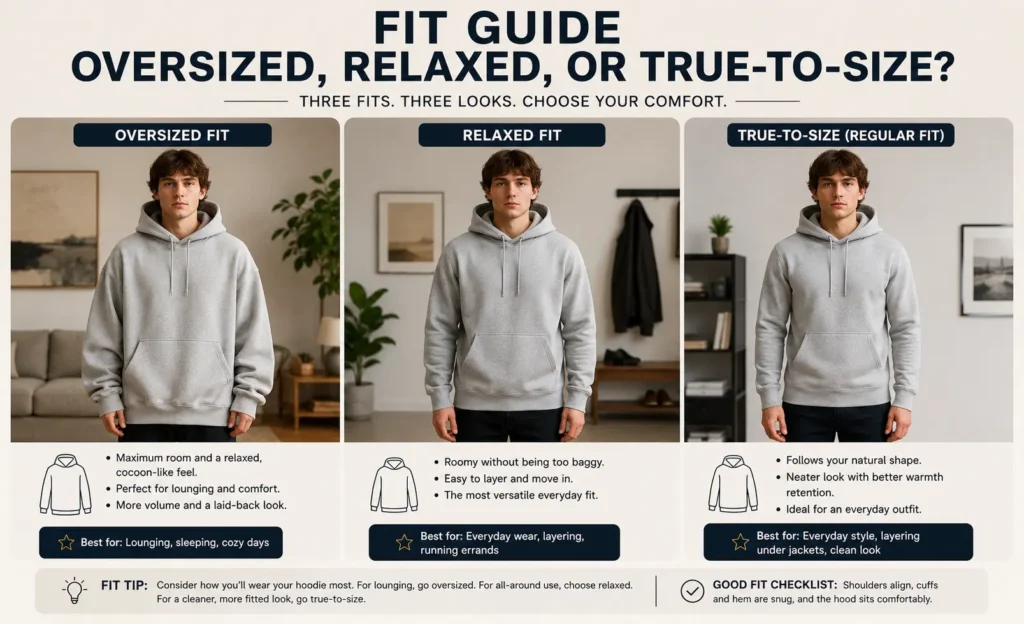
Fit is where comfort and personal preference meet, and there’s no single “correct” answer — but understanding the differences helps you choose intentionally rather than by accident.
Oversized fit offers maximum room to move and a relaxed, cocoon-like feel that many people find the coziest option for lounging or sleeping. The tradeoff is that it can look sloppy in more polished casual settings and lets in more cold air at the hem and cuffs unless the ribbing is snug.
Relaxed fit sits between oversized and fitted — roomy enough to layer under or move freely, but still holds its shape. This is generally the safest choice if you want one hoodie that works for both lounging and running errands.
True-to-size (regular) fit follows your body’s natural shape more closely. It looks neater under jackets and in public settings, and it traps warmth more efficiently since there’s less loose fabric for heat to escape through. It’s the better pick if you plan to wear your hoodie as an actual outfit piece rather than just loungewear.
A properly fitted hoodie — regardless of which fit style you choose — should have:
- Shoulders that sit at or slightly past your natural shoulder line (not sliding down your arm)
- Cuffs and hem ribbing snug enough to hold in warmth without digging in
- A hood that sits comfortably without pulling at your neck when down
- Sleeve length that reaches your wrist bone, not stopping short or bunching past it
Weight and Warmth: Matching Your Hoodie to Its Purpose
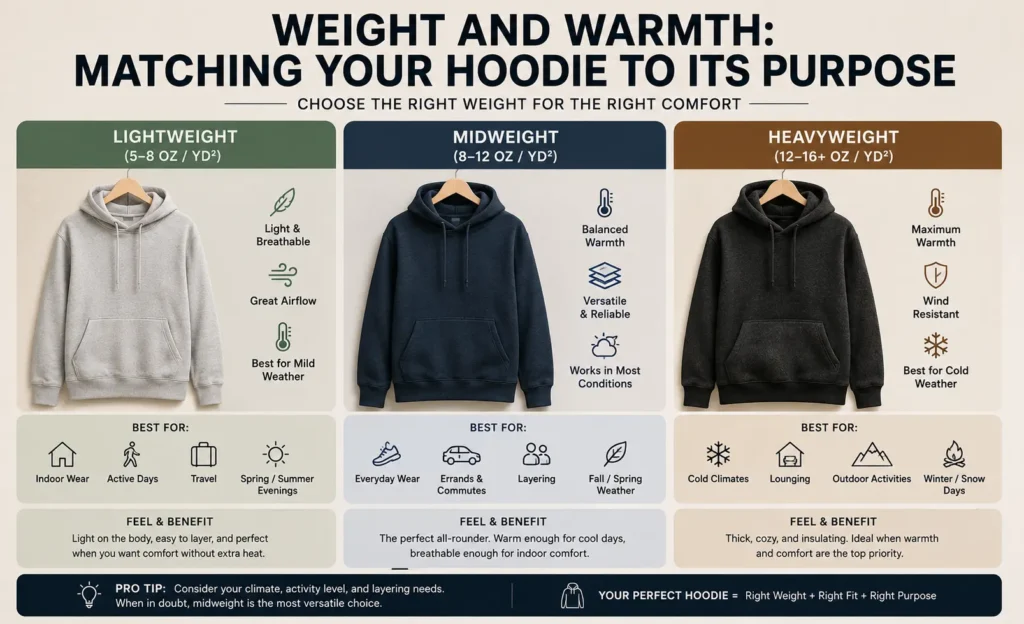
Hoodie weight is usually measured in ounces per square yard, and it directly affects how warm — or how breathable — the hoodie feels.
Lightweight (under 10 oz): Best for warmer climates, indoor wear, or layering under a jacket without bulk. These breathe well but offer minimal insulation on their own.
Midweight (10–13 oz): The most versatile range, offering enough warmth for cool days without feeling stifling indoors. Most everyday cotton-poly hoodies fall in this range.
Heavyweight (13 oz and up): Built for cold weather and standalone wear without an extra layer. Heavyweight fleece hoodies are the warmest option, but they can feel excessive in mild temperatures or indoor settings.
If you only plan to own one comfort hoodie, midweight is the safest choice — warm enough for most cool days, breathable enough for indoor wear.
Also Read: How to Style an Oversized Blazer: 5 Ways That Actually Work for Every Occasion
Comfort Hoodies by Occasion

Comfort means something different depending on how and where you’re wearing the hoodie. Matching the hoodie to its actual use case is one of the most overlooked steps in choosing the right one.
Lounging at Home
Prioritize oversized or relaxed fit, fleece-lined or heavyweight cotton fabric, and minimal hardware (skip zippers if you plan to lounge in it for hours — pullovers tend to feel cozier for this specific use).
Sleeping
A soft, breathable fabric like French terry or lightweight cotton works better than heavyweight fleece, which can cause overheating overnight. Look for minimal seams and no drawstrings that could dig in while you sleep.
Travel
A relaxed or true-to-size fit with a cotton-poly or performance blend strikes the best balance — breathable enough for changing cabin temperatures, structured enough to not look rumpled after hours of wear. Pockets for essentials like your phone or passport are a practical bonus for this use case.
Working From Home
A midweight, true-to-size or relaxed fit works well here, since you may be on video calls and want something that looks put-together above the waist while staying comfortable all day.
Cold Weather / Outdoor Wear
Heavyweight fleece-lined fabric in a relaxed fit gives you both warmth and freedom of movement for layering under a jacket. Ribbed cuffs and hem matter most here to seal in heat.
Everyday Errands and Casual Outings
A relaxed or true-to-size fit in a cotton-poly blend keeps you comfortable while still looking presentable in public — the middle-ground choice most people reach for by default.
Budget Guide: What You’re Actually Paying For
| Budget Tier | Price Range | What to Expect |
|---|---|---|
| Budget | $20–$40 | Basic cotton-poly blends, decent for occasional wear, may pill or shrink faster |
| Mid-Range | $40–$80 | Better fabric quality, reinforced seams, more consistent fit across sizes |
| Premium | $80–$150+ | Heavyweight or technical fabrics, reinforced construction, better shape retention over years of wear |
Spending more doesn’t always mean more comfort — a well-made mid-range cotton-poly hoodie can feel just as good as a premium option for everyday use. Where premium pricing tends to matter most is in longevity (holding its shape and softness after dozens of washes) and specialized features like moisture-wicking or built-in extras for travel-specific hoodies.
How to Check Comfort Before You Buy (In-Store or Online)
If you’re shopping in person, do a quick hands-on check: rub the fabric between your fingers to gauge softness and stiffness, check the seams for how they’ll sit against your skin, and try the hood up to make sure it doesn’t restrict your neck movement.
If you’re shopping online, read the fabric composition and weight (often listed in the product details) rather than relying on photos alone, and check the return policy in case the fit or fabric doesn’t match what you expected. Customer reviews mentioning “true to size,” “runs small,” or “shrinks after washing” are often more reliable than the brand’s own sizing chart.
Caring for Your Hoodie So It Stays Comfortable
Comfort doesn’t stop once you buy the hoodie — how you wash it determines how long that softness lasts.
- Wash in cold water to reduce shrinking and fabric breakdown
- Turn the hoodie inside out before washing to protect any printed designs and reduce pilling on the outer surface
- Avoid high heat when drying — tumble dry on low or air dry to preserve fabric softness and elasticity in the ribbing
- Skip fabric softener on fleece-lined hoodies, since it can reduce the fabric’s natural loft and warmth over time
Common Mistakes to Avoid When Buying a Comfort Hoodie
Buying based on look alone. A hoodie can photograph beautifully and still feel scratchy or stiff in person — always check the fabric composition, not just the design.
Ignoring fabric weight for your climate. A heavyweight fleece hoodie that feels perfect in winter can feel unbearable indoors or in warmer months.
Choosing size based on brand alone. Sizing varies significantly between brands, even within the same fit category — always check the actual measurements, not just the labeled size.
Overlooking cuff and hem ribbing. Loose or stretched-out ribbing is one of the fastest ways a hoodie starts to feel less comfortable and less warm over time.
Assuming all cotton is the same. Combed cotton, ring-spun cotton, and standard cotton all feel noticeably different — cheaper cotton often feels rougher and pills faster.
Pullover vs. Zip-Up: Which Is More Comfortable?
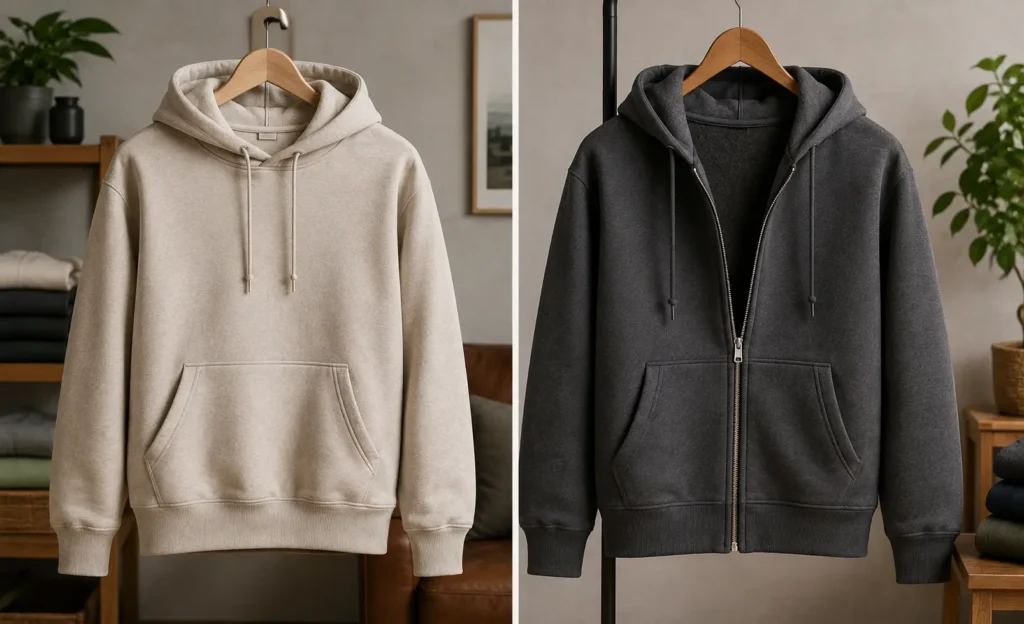
The style of closure affects comfort more than most people expect.
Pullover hoodies have no zipper, which means no hardware pressing against your chest or catching on other layers. They tend to feel warmer since there’s no gap for cold air to sneak through, and the single-piece front construction usually means fewer seams. The tradeoff is less temperature control — you can’t easily vent heat without pulling the whole thing off.
Zip-up hoodies offer more flexibility. You can wear them fully closed for warmth, half-zipped for airflow, or fully open as a light jacket over a t-shirt. They’re a better choice for changing environments — like traveling between an air-conditioned airport and a warm car — but the zipper track and pull can occasionally feel less smooth against bare skin.
If your priority is pure coziness with no fuss, pullovers usually win. If you want one hoodie that adapts to different temperatures throughout the day, a zip-up is the more practical choice.
Hood, Pocket, and Cuff Details That Affect Comfort
Beyond fabric and fit, smaller construction details quietly shape how comfortable a hoodie feels over hours of wear.
Hood size and lining. A hood that’s too small feels tight and restrictive when pulled up; one that’s oversized can slide down and block your vision. A soft, lined interior on the hood adds warmth around the neck without adding bulk elsewhere.
Drawstrings. Flat, fabric-covered drawstrings are more comfortable than thin cord, especially if you tend to lie down or lean back while wearing the hood up. Metal or plastic aglets at the tips can feel cold or dig in if you’re lounging.
Pocket style. A kangaroo pocket (single front pouch) is the most comfortable for keeping hands warm and offers a place to tuck a phone or tissues, but it adds a layer of fabric across the stomach that some people find too warm indoors. Split pockets or side-entry pockets reduce that extra layer while still offering storage.
Cuffs and hem. Ribbed cuffs should be snug enough to trap warmth but not so tight they leave marks on your wrist. Over time, cheap ribbing loses its elasticity and stops holding its shape — a sign of lower fabric quality.
Seam placement. Flat-lock seams (where the fabric edges are stitched flat rather than overlapped) reduce chafing, especially at the shoulders and underarms, and are worth checking for if you plan to wear the hoodie for extended periods or during light activity.
Seasonal Comfort: Transitioning Your Hoodie Through the Year
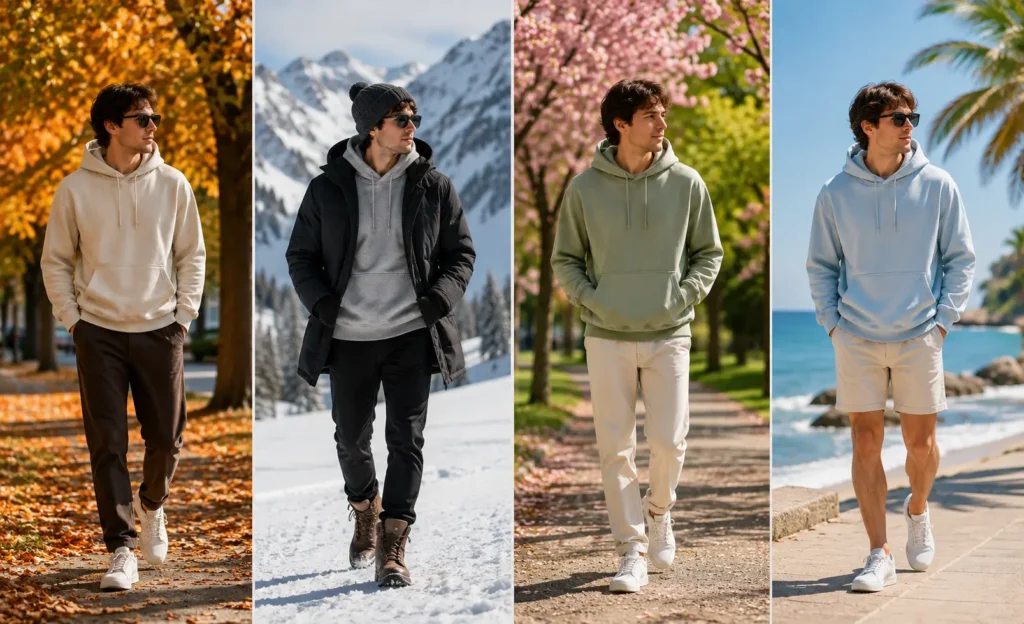
A hoodie that feels perfect in December can feel unbearable in April, so it helps to think about comfort across seasons rather than as a fixed feature.
Fall: A midweight cotton-poly blend in a relaxed fit works well for layering over a t-shirt as temperatures start to drop, without the bulk of a full winter fleece.
Winter: Heavyweight fleece-lined hoodies shine here, especially when layered under a jacket or coat. A relaxed fit allows room for a base layer underneath without feeling constricting.
Spring: Lightweight French terry or a lower-weight cotton blend keeps you comfortable during the transitional period when mornings are cool but afternoons warm up.
Summer: Most people skip hoodies entirely in peak summer, but a lightweight, breathable option is still useful for air-conditioned spaces, early morning walks, or cooler evenings — just avoid anything fleece-lined.
Rotating between a lightweight and a heavyweight hoodie, rather than relying on one hoodie year-round, is one of the simplest ways to stay comfortable across seasons without compromising on warmth or breathability at either extreme.
Comfort Hoodie Buying Checklist
Before you check out, run through this quick list to make sure you’re choosing based on comfort — not just appearance:
- Fabric composition is listed and matches your priority (softness, warmth, or breathability)
- Fabric weight suits the climate and setting you’ll wear it in most
- Fit style (oversized, relaxed, or true-to-size) matches how you plan to use it
- Cuffs, hem, and hood have well-finished ribbing or lining
- Seams are flat or minimal at contact points like underarms and shoulders
- Pocket style suits your needs (extra warmth vs. less bulk)
- Closure style (pullover vs. zip-up) matches your need for temperature control
- Care instructions align with how much maintenance you’re willing to do
- Reviews mention true-to-size fit, shrinkage, or fabric feel — not just appearance
Going through this list takes less than a minute but significantly reduces the chance of ending up with a hoodie that looks good in photos but disappoints once you actually wear it.
Men’s, Women’s, and Unisex Comfort Hoodies: What’s Different
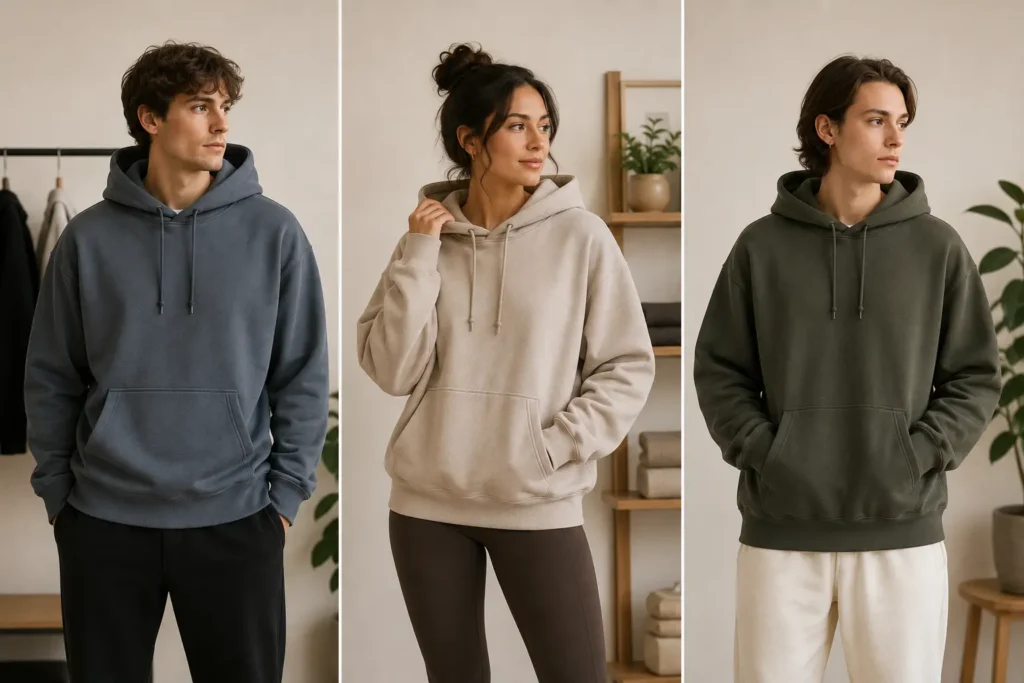
Comfort hoodies are cut differently depending on whether they’re designed for men, women, or as unisex pieces, and understanding these differences helps you pick the right fit rather than sizing up or down and hoping for the best.
Men’s hoodies are typically cut with broader shoulders, a straighter torso, and longer sleeve and body length. Comfort here usually comes from room through the chest and shoulders without excess fabric pooling at the waist.
Women’s hoodies are often tailored with a narrower shoulder line, more shaping at the waist, and a shorter overall length. A women’s-specific cut can feel more comfortable for those who find unisex sizing too boxy through the middle, though it offers less room for layering.
Unisex hoodies split the difference — usually boxier through the body with straight side seams, dropped shoulders, and no waist shaping. They tend to run larger than gender-specific sizing, which is part of why oversized unisex hoodies have become such a popular comfort choice. If you like a relaxed, no-shape silhouette, unisex sizing is often the most comfortable starting point regardless of gender.
When in mind, checking the actual garment measurements (chest width, body length, sleeve length) rather than relying on the size label alone is the most reliable way to predict fit and comfort, since sizing charts vary widely between brands and cuts.
Fabric Sourcing and Comfort: Does It Make a Difference?
How a fabric is sourced and processed can also influence how it feels against your skin, beyond just the fiber type.
Combed cotton goes through an extra processing step that removes short fibers and impurities, resulting in a smoother, softer, more durable fabric than standard carded cotton. Hoodies made with combed or ring-spun cotton tend to feel noticeably softer straight out of the packaging.
Organic cotton is grown without synthetic pesticides and is often (though not always) processed with fewer harsh chemicals, which some wearers find gentler on sensitive skin. It doesn’t inherently feel different in hand-feel from conventional cotton, but the more careful processing standards common in organic lines can result in a smoother finish.
Recycled polyester blends are increasingly used in performance and travel-focused hoodies. They tend to feel a bit more structured and less “fluffy” than traditional cotton fleece, but they resist wrinkling and dry faster, which some people find adds to overall day-to-day comfort, especially while traveling.
If you have sensitive skin or specific fabric sensitivities, checking for combed cotton or a higher natural-fiber percentage in the blend is generally a safer bet than choosing based on marketing terms like “ultra-soft” alone, which aren’t standardized.
Also Read: How to Wear Color Without Overdoing It: The One-Punch Rule for Confident Dressing
Frequently Asked Questions
What makes a hoodie comfortable?
A combination of soft, breathable fabric, a fit that allows free movement without excess bulk, and a weight suited to the temperature you’ll wear it in. Construction details like ribbed cuffs and a well-lined hood also play a role.
Is an oversized hoodie more comfortable than a regular fit? Oversized hoodies often feel cozier for lounging since they allow more freedom of movement, but a well-fitted relaxed or true-to-size hoodie can feel just as comfortable while looking neater for everyday wear. Comfort ultimately depends on personal preference and use case.
What fabric is best for a comfort hoodie?
Cotton and cotton-polyester blends are generally considered the most comfortable for everyday wear due to their softness and breathability. Fleece-lined fabric is best for warmth, while performance blends suit travel or active use.
How should a hoodie fit for maximum comfort?
Shoulders should sit at your natural shoulder line, cuffs and hem should be snug without digging in, and the hood should sit comfortably without pulling at your neck. The right fit depends on whether you prioritize freedom of movement or a neater silhouette.
Do heavier hoodies mean more comfort?
Not necessarily. Heavier fabric means more warmth, which is only more comfortable in cold conditions. In mild or indoor settings, a lighter or midweight hoodie is usually more comfortable since it won’t cause overheating.
How often should I wash my hoodie to keep it comfortable?
Washing after every 2–3 wears is generally enough to keep it fresh without over-washing, which can wear down fabric softness faster. Always use cold water and avoid high heat when drying.
Are zip-up or pullover hoodies more comfortable?
Pullover hoodies typically feel warmer and cozier since they have no zipper hardware or gaps for cold air, making them a common choice for lounging. Zip-up hoodies offer more temperature control, which some people find more comfortable in changing environments like travel or transitional weather.
What size should I buy for the most comfortable fit?
Rather than relying on the labeled size alone, compare the brand’s actual garment measurements — chest width, body length, and sleeve length — to a hoodie you already own and find comfortable. This is more reliable than sizing charts, since fit varies significantly between brands and cuts.
Also Read: How to Build a Capsule Wardrobe in 2026: The Step-by-Step Guide for Every Budget