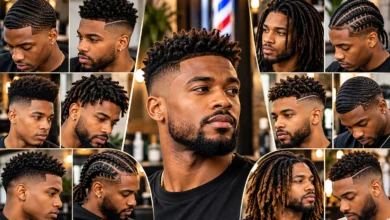
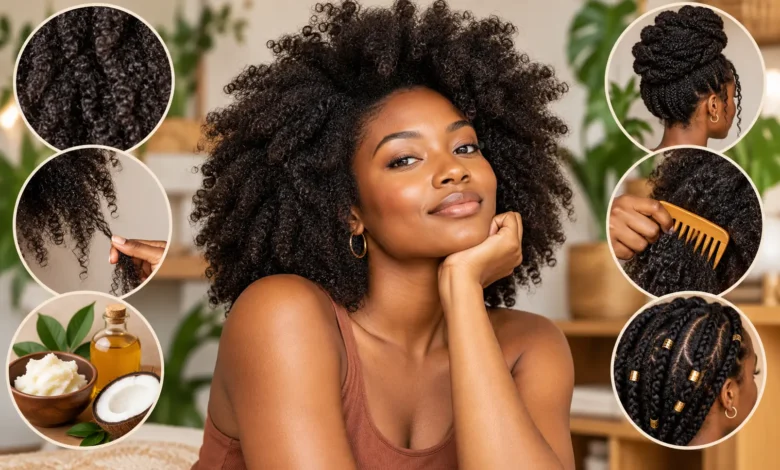
If you’ve spent years fighting your natural texture — chasing definition it was never really built for, or feeling frustrated when a product that worked wonders for someone else’s curls did absolutely nothing for yours — you’re not alone, and it’s not a flaw in your hair. 4C Curly hair has its own distinct needs, and once you understand what those actually are, caring for it stops feeling like guesswork and starts feeling like something you can genuinely master.
This guide covers what 4C hair actually is, the science and history behind how it’s classified, and 9 steps to finally feel confident in your natural texture. Along the way, we’ll cover moisture, detangling, protective styling, and the product and mindset shifts that make the biggest difference for anyone working with tightly coiled hair.
What Is 4C Curly Hair?
4C hair refers to the tightest, most densely coiled hair texture on the widely used hair typing chart, characterized by a very small curl diameter, significant shrinkage, and a naturally dense, voluminous appearance when fully dry. Unlike looser curl patterns that form clearly defined ringlets, 4C hair often forms extremely tight coils or, in some cases, shows very little visible curl definition at all without the help of styling products, relying instead on its natural zigzag pattern.
Also Read: Why Your Curly Haircut Looks Wrong at Home (And What to Fix)
What Is the Difference Between 4A, 4B, and 4C Hair?
The distinctions among the three Type 4 subcategories come down to coil tightness and curl definition. 4A hair forms a more defined, springy coil roughly the width of a crochet needle, with visible curl pattern even when dry. 4B hair has a less uniform pattern, bending at sharper angles in a shape often described as resembling the letter Z, with less consistent curl definition than 4A. 4C hair has the tightest coil pattern of the three, often so tight that individual curls are difficult to see without stretching the hair, and it typically experiences the most dramatic shrinkage of any texture on the chart.
What Causes 4C Hair Shrinkage?
Shrinkage happens because of how tightly the hair’s natural coil pattern is wound. As 4C hair dries, each strand’s zigzag structure pulls the visible length inward, sometimes reducing the hair’s apparent length by well over half compared to its fully stretched state. This is a completely natural characteristic of the hair’s structure rather than a sign of damage, though factors like moisture level and styling technique can influence exactly how much shrinkage occurs on any given day.
Understanding the Hair Typing System
The hair typing system most commonly used today, running from straight 1A hair through the tightest coily 4C hair, was developed in the 1990s by Andre Walker, who spent decades as Oprah Winfrey’s personal hairstylist and created the system originally to help market his own hair care product line. Walker’s original chart, however, stopped at 4B — the 4C category wasn’t actually part of his initial system at all. It emerged later from within the natural hair community itself, as people with the tightest, least-defined coil patterns needed a way to describe hair that didn’t fit neatly into the existing categories.
It’s worth understanding a few real limitations of this system, since relying on it too rigidly can create more confusion than clarity. The chart doesn’t account for porosity or density, both of which significantly affect how any given hair type responds to specific products and techniques. Most people also have more than one curl pattern across different areas of their head, meaning a single label rarely captures the full picture of how your hair actually behaves.
The Science Behind the 4C Curl Pattern
Curl pattern is determined largely by the shape of the hair follicle itself. Rounder follicles tend to produce straighter hair, while more oval or asymmetrical follicle shapes produce increasingly curly and coily textures. In 4C hair specifically, the follicle’s shape creates an especially pronounced curve in the hair shaft, resulting in the tight, zigzagging coil pattern that defines this texture. This same structural curve is also part of why natural oils from the scalp have a harder time traveling down the length of the hair shaft in tightly coiled hair, contributing directly to its tendency toward dryness.
Difference Between Coily and Curly Hair Types
Curly hair, generally corresponding to Type 3 on the hair typing chart, forms looser, more clearly defined spiral curls. Coily hair, corresponding to Type 4, forms a much tighter, more compact curl or zigzag pattern, generally with significantly more shrinkage and a denser overall appearance than curly hair types. While both fall under the broader “textured hair” umbrella, coily hair typically requires more intensive, consistent moisture care than looser curl patterns, given how much harder that tighter coil structure makes it for natural oils to travel down each strand.
Why 4C Hair Needs Extra Moisture
Because of its tightly coiled structure, 4C hair faces a genuine structural disadvantage when it comes to natural moisture distribution. Sebum, the scalp’s natural oil, has to travel much further along a winding, zigzagging path to reach the ends of 4C hair compared to straighter hair types, where oil can travel a relatively direct path down the strand. This structural reality is exactly why 4C hair care routines place such heavy emphasis on manually replacing that moisture through leave-in conditioners, oils, and deep conditioning treatments.
Why Porosity Matters for 4C Hair Care
Porosity refers to how easily hair absorbs and retains moisture, based on how open or tightly closed the outer cuticle layer is. Low porosity hair has tightly overlapping cuticles that resist moisture absorption, often requiring warmth or gentle heat to help products penetrate the strand effectively. High porosity hair, by contrast, has raised or gapped cuticles that absorb moisture quickly but also lose it just as fast, generally benefiting from heavier creams and oils to help seal that moisture in. Understanding your specific porosity level, rather than relying on curl pattern alone, often makes a far bigger practical difference in product selection and routine than knowing your exact hair type classification.
9 Steps to Finally Feel Confident with 4C Hair
Step 1: Understand Your Hair’s Specific Needs

Before changing any products or routines, take time to genuinely observe your hair’s behavior — how it responds to water, how quickly it dries, and how it handles different products. A simple porosity check, such as observing how a clean strand of hair behaves in a glass of water, can offer useful insight beyond curl pattern alone, helping you choose products and techniques suited to your hair’s actual behavior rather than generic advice aimed at “4C hair” as a single uniform category.
Step 2: Build a Consistent Wash Day Routine
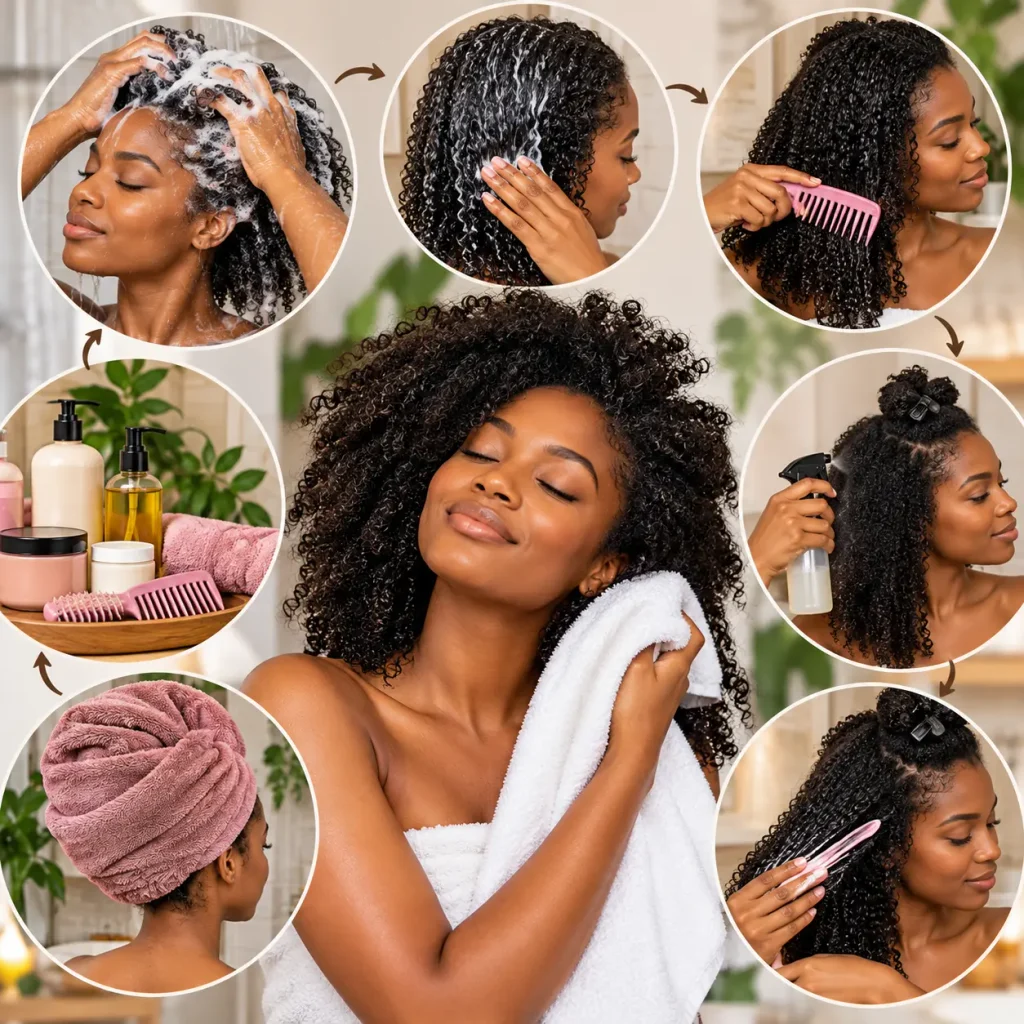
A dedicated wash day routine — typically involving pre-poo treatment, cleansing, deep conditioning, and moisturizing in sequence — helps ensure 4C hair receives thorough, consistent care rather than sporadic, rushed attention. Washing in sections, rather than attempting to detangle and cleanse the entire head at once, generally produces better results and considerably less breakage for densely coiled hair.
Step 3: Detangle Gently and Strategically
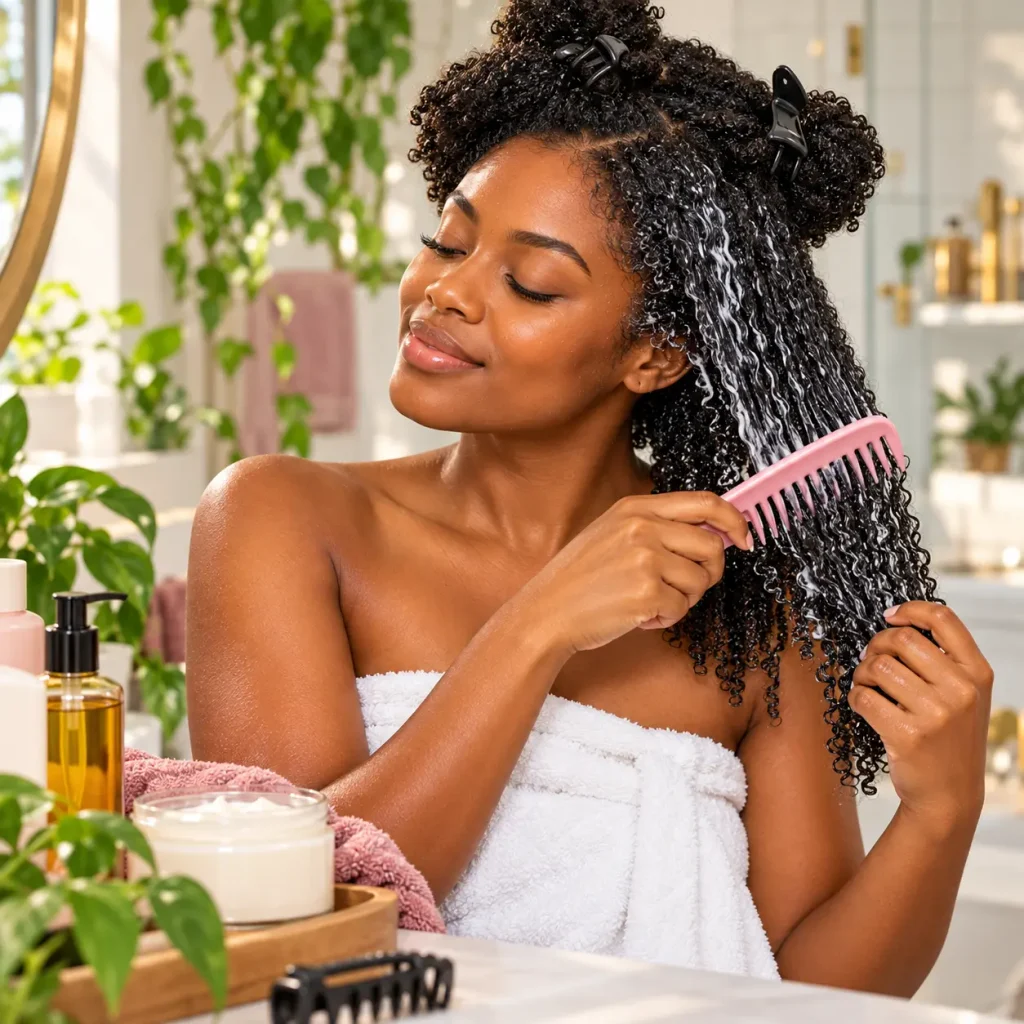
Detangling 4C hair works best when done on damp hair coated generously with conditioner, using fingers first to work through larger knots before finishing with a wide-tooth comb. Starting detangling from the ends and gradually working upward toward the roots, rather than starting at the root, significantly reduces breakage and tension on already-fragile strands.
Step 4: Prioritize Deep, Layered Moisture
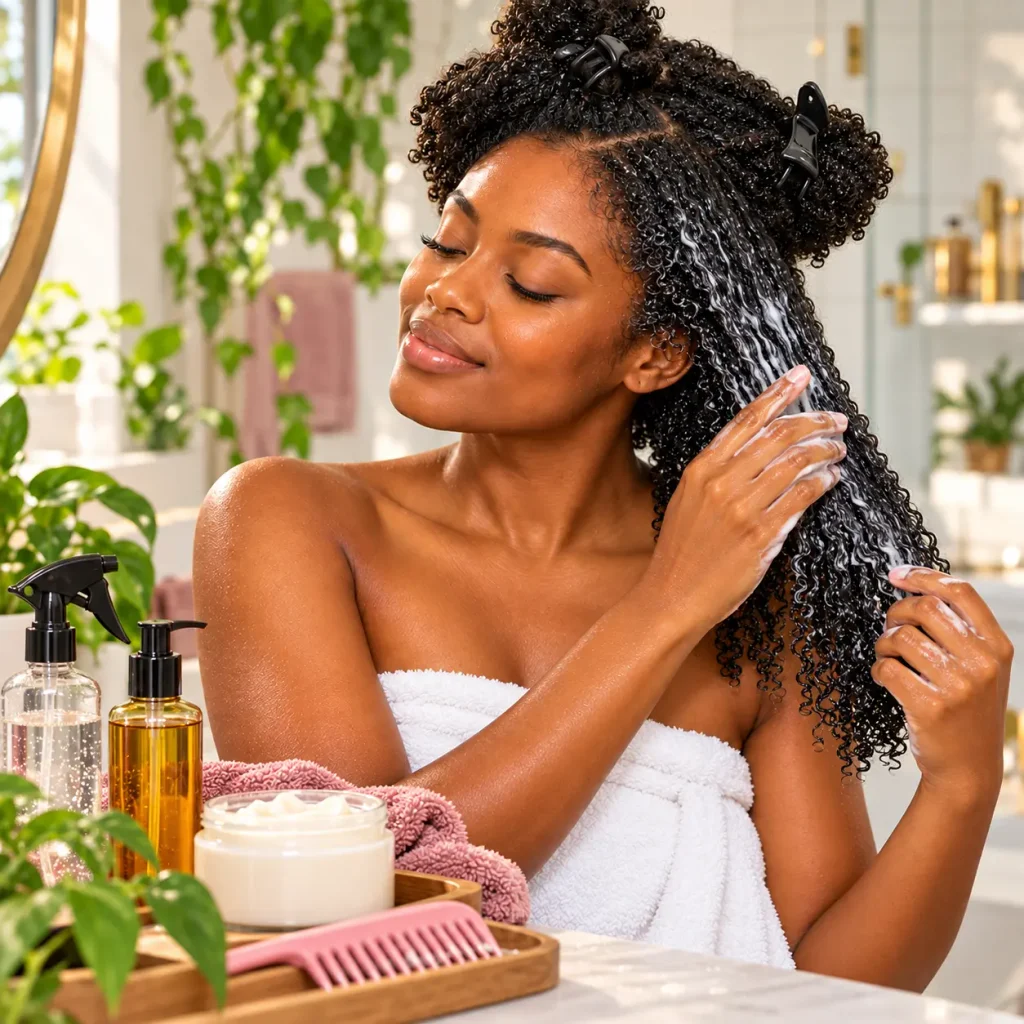
Given how difficult it is for natural oils to travel down a tightly coiled strand, 4C hair benefits enormously from a layered moisture approach, often described as the LOC or LCO method — applying a liquid or leave-in conditioner, followed by an oil, and finished with a cream, adjusting the exact order based on your hair’s specific porosity. Regular deep conditioning treatments, ideally on a weekly basis, further support this ongoing moisture need.
Step 5: Choose Products Suited to Your Hair’s Specific Behavior

Rather than assuming any product labeled for “curly” or “coily” hair will work universally, pay attention to how specific formulas perform on your hair’s actual porosity and density. A rich, heavier cream might work beautifully for high porosity hair struggling to retain moisture, while the same product could feel overly heavy on lower porosity strands, weighing curls down rather than defining them.
Step 6: Protect Your Hair at Night

Nighttime protection matters considerably for 4C hair, since friction against a standard cotton pillowcase can strip moisture and cause unnecessary breakage overnight. Wrapping hair in a satin or silk scarf, or sleeping on a satin or silk pillowcase, significantly reduces this friction, helping preserve both moisture and any styling from the previous day.
Step 7: Embrace Protective Styling

Protective styles — twists, braids, buns, or similar low-manipulation styles — reduce daily handling and friction, both of which contribute significantly to breakage over time for 4C hair specifically. Rotating between protective styles and periods of wearing hair out helps balance styling variety with genuine length retention over the long term.
Step 8: Learn Styling Techniques That Work With Your Texture

Techniques like twist-outs, braid-outs, and bantu knot-outs allow 4C hair to achieve more definition and stretched length than it might show when left completely free, without relying on heat styling that can cause long-term damage. Experimenting with these techniques, along with wash-and-go styles using the right combination of gel and cream, helps you discover which approaches genuinely work best with your specific curl pattern and porosity.
Step 9: Shift Your Mindset Toward Genuine Self-Acceptance
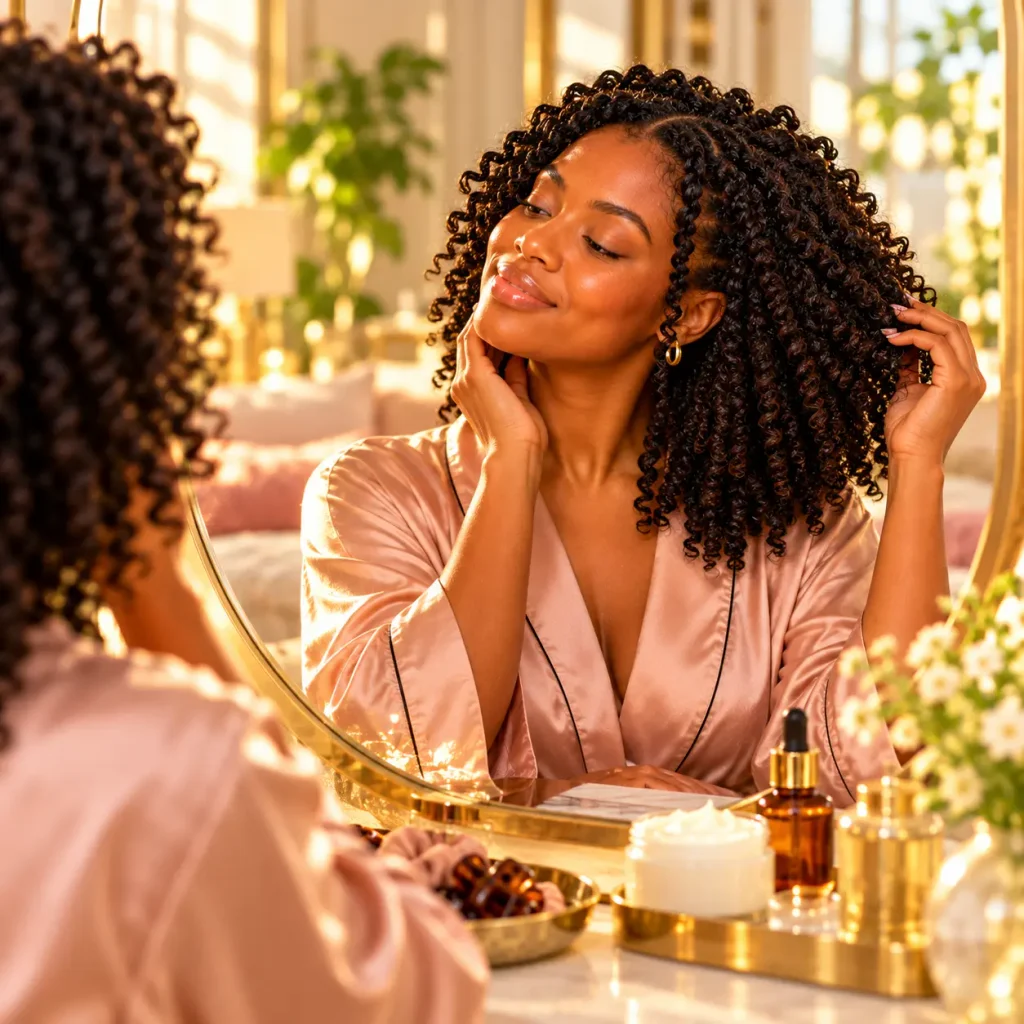
Perhaps the most significant step in feeling confident with 4C hair has less to do with technique and more to do with perspective. So much of the historical framing around hair typing, and around 4C hair specifically, has been shaped by beauty standards that treated looser, more “manageable” curl patterns as inherently more desirable. Recognizing this history — and consciously choosing to see your natural coil pattern as simply different, not lesser — is often the step that makes every other practical technique feel genuinely worthwhile rather than like an endless uphill battle.
Best Products for 4C Hair
Leave-in conditioners form the foundation of most 4C hair care routines, providing an essential first layer of moisture that other products can then help seal in. Moisturizing creams, ideally rich in natural butters and oils, help lock in that moisture and provide the slip needed for styling and detangling. Oils, used as a sealant rather than a primary moisturizer, help trap water-based moisture within the strand. Gentle, sulfate-free shampoos cleanse without stripping the hair of its already limited natural oils. Styling gels formulated specifically for coily hair help define curls for twist-outs and wash-and-go styles without excessive flaking or crunch once fully dry.
How to Grow 4C Hair Faster
While hair growth rate itself is largely determined by genetics and overall health, retaining the length 4C hair does grow depends heavily on minimizing breakage through gentle detangling, consistent moisture, protective styling, and nighttime protection. Since 4C hair’s tight coil pattern makes it particularly prone to breakage compared to looser textures, focusing on length retention through these practices often makes a more noticeable difference in perceived hair growth than any single product claiming to accelerate growth itself.
How to Protect 4C Hair at Night
Beyond a satin or silk scarf or pillowcase, some people find that loosely braiding or twisting hair before bed helps maintain moisture and definition overnight, reducing tangling that would otherwise occur from movement during sleep. Applying a small amount of leave-in moisturizer or oil before bed can also help combat the natural moisture loss that occurs overnight, particularly in drier climates or during colder months.
Frequently Asked Questions
Is 4C hair the same as coily hair?
4C represents the tightest, most densely coiled subcategory within the broader coily hair type, which spans the 4A, 4B, and 4C classifications on the hair typing chart. All 4C hair is coily, but not all coily hair is specifically classified as 4C.
How often should you wash 4C hair?
Most people with 4C hair find washing every one to two weeks works well, balancing the need for regular cleansing against the hair’s tendency toward dryness, though this can vary based on individual scalp condition, activity level, and personal preference.
Can 4C hair grow long?
Yes, 4C hair can absolutely grow long. The perception that it grows more slowly than other textures often comes down to shrinkage making actual length harder to see, combined with breakage from harsh handling limiting length retention rather than genuine growth rate differences.
What is the best routine for 4C hair growth?
A consistent routine emphasizing gentle detangling, layered moisture through methods like LOC or LCO, regular deep conditioning, nighttime protection, and protective styling generally supports the best length retention and overall hair health for 4C hair.
How do you determine your curl pattern for 4C hair?
Observing how your hair behaves when fully stretched versus dry, checking the size and definition of individual coils, and noting how much shrinkage occurs can help determine curl pattern, though many people find porosity and density more practically useful for choosing products than curl pattern classification alone.
Also Read: Wedding Hairstyles: Best Looks for Long, Short & Curly Hair
Final Thoughts
Feeling confident with 4C hair comes down to genuinely understanding what your hair needs rather than measuring it against a standard it was never built to meet. From building a consistent moisture routine to protecting your curls overnight, the nine steps covered here address both the practical techniques and the mindset shift that make lasting confidence possible. Your coils, in all their density and shrinkage and tight, beautiful pattern, were never the problem — they simply needed care built specifically for them, and now you have exactly that.
Also Read: 13 Short Hairstyles for Black Women That Radiate Confidence