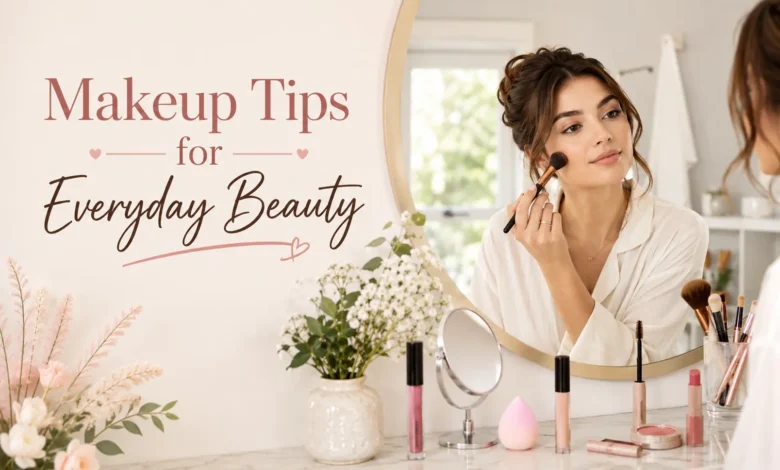
Everyday makeup has a very different job than a full glam look. It’s not meant to transform your face — it’s meant to enhance the version of yourself you already are, in about ten minutes, using a small number of products you actually reach for on repeat. Yet a lot of makeup advice online is built for special-occasion looks: full coverage foundation, contour, eight-step eye looks. None of that is realistic for a Tuesday morning.
This guide focuses specifically on the everyday routine — the one you’ll actually use most days, that takes minutes rather than an hour, and that looks like a well-rested, put-together version of you rather than a different person entirely.
This article is part of our complete guide to Beauty Tips and Routines — read it for the full picture of skincare, makeup, hair care, and self-care working together.
Why “Skin First” Makes Everyday Makeup Easier
The better your skin looks bare, the less makeup you need to look put-together — which is exactly why everyday makeup and skincare aren’t separate topics. A hydrated, well-cared-for base means concealer blends better, foundation (if you wear any) looks less cakey, and the whole routine takes less time because you’re not trying to correct dryness, flaking, or unevenness with makeup instead of skincare.
If your everyday makeup routine consistently looks patchy or heavy no matter what you do, the fix is often upstream — in your skincare routine — rather than in buying yet another concealer.
The 6-Step Everyday Makeup Routine
This is a complete routine that realistically takes under ten minutes once you’ve practiced it a few times.
1. Prime With Skincare
Apply your regular moisturizer and sunscreen and let it fully absorb — about a minute — before starting makeup. Applying makeup over unabsorbed product is one of the most common causes of pilling (little balls of product that roll off instead of blending in).
2. Light, Targeted Coverage
Skip full-face foundation for your everyday look unless your skin genuinely needs it. Instead:
- Use concealer only where you actually need coverage — under eyes, around the nose, on any blemishes.
- Blend with a damp makeup sponge for a natural, skin-like finish rather than a brush, which can look more visibly “applied.”
- If you do want light all-over coverage, a tinted moisturizer or a thin layer of BB cream evens tone without looking heavy.
3. Set Where You Need It
You don’t need to set your entire face with powder for an everyday look — that’s often what makes makeup look heavier than intended. A light dusting only in areas prone to oil (usually the T-zone) keeps shine controlled without flattening the rest of your skin’s natural texture.
4. Define Your Brows
Well-groomed brows do more to “finish” a face than almost any other single step. Use short, hair-like strokes rather than one solid line, following your natural brow shape rather than trying to dramatically reshape it for an everyday look. A tinted brow gel alone is often enough on days you want to keep things minimal.
5. A Little Color
Cream blush applied to the apples of your cheeks and blended upward with fingers gives a natural, flushed look that’s harder to overdo than powder blush. The same cream product often doubles as a lip tint, which is a genuine time-saver for a routine built around speed.
6. Finish With Mascara
Curl lashes if you use a lash curler, then apply mascara from root to tip with a slight wiggle at the base. One coat is usually enough for an everyday look — two or three coats starts to move you toward an “occasion” look rather than a natural one.
Everyday vs. Occasion Makeup: What’s Actually Different
| Element | Everyday Look | Occasion Look |
|---|---|---|
| Coverage | Targeted (concealer only) | Fuller (foundation + concealer) |
| Time | 5–10 minutes | 20–40+ minutes |
| Eyes | Mascara, maybe light liner | Eyeshadow, liner, false lashes optional |
| Lips | Tint or balm | Full lip color, possibly lined |
| Setting | Minimal, targeted powder | Full-face setting spray/powder |
| Goal | Enhance your natural face | Build a more dramatic, defined look |
Understanding this distinction helps you stop over-applying on ordinary days (which wastes time and product) and under-applying for occasions where a bit more staying power and definition genuinely helps.
Building an Everyday Makeup Bag: What You Actually Need
You don’t need twenty products for a good everyday routine. A genuinely complete everyday kit looks like:
- Concealer that matches your skin tone
- A cream blush/lip multi-stick
- Mascara
- A brow pencil or tinted brow gel
- Optional: a light pressed powder for oil control
That’s five products, most of which double up on function (the multi-stick alone replaces two separate products). Building outward from this small kit — rather than starting with a large one and figuring out what you use — saves money and keeps your routine simple enough to actually stick with.
Tools That Actually Make a Difference
A small, well-chosen set of tools does more for an everyday look than an elaborate brush collection:
- A damp makeup sponge — for blending concealer or light coverage into a natural, skin-like finish.
- A spoolie brush — for brushing brows into place before or after filling them in.
- A small, dense blending brush — useful for cream blush application if you prefer a brush to fingers.
- A lash curler — makes even one coat of mascara look more open and awake.
Clean your tools regularly, especially anything used around the eyes or on blemish-prone skin — a build-up of old product and oil on sponges and brushes is a common, overlooked cause of breakouts.
Everyday Makeup for Different Skin Concerns
Oily skin: Lean on oil-free, matte-finish formulas and keep powder handy for midday touch-ups, focused only on the T-zone rather than the whole face.
Dry skin: Cream and liquid formulas sit better than powder products, which can emphasize dry patches. A hydrating primer or simply well-absorbed moisturizer underneath makes the biggest visible difference.
Sensitive or acne-prone skin: Look for non-comedogenic, fragrance-free formulas, and always remove makeup fully before bed — leftover product overnight is one of the most common, avoidable causes of breakouts.
Mature skin: Cream and liquid formulas generally look more natural than powder, which can settle into fine lines. A slightly dewy finish tends to look more youthful than a fully matte one.
Everyday Makeup on Any Budget
| Budget Level | Concealer | Cheek/Lip | Mascara | Brows | Monthly Estimate |
|---|---|---|---|---|---|
| Starter | Drugstore stick concealer | Multi-use cream stick | Drugstore tubing or classic mascara | Basic pencil | Low |
| Mid-Range | Long-wear liquid concealer | Separate blush and lip products | Mid-range volumizing mascara | Tinted brow gel | Moderate |
| Premium | Skincare-hybrid concealer | High-pigment cream formulas | Premium lengthening/waterproof mascara | Brow pomade or fiber gel | Higher |
As with skincare, a well-chosen starter-tier kit used consistently and blended well will look better than a mismatched, overpriced kit applied without technique. Technique — blending, matching shade, applying thin layers — matters more than the price tag on any individual product.
Adjusting Everyday Makeup by Season
- Summer: Swap to oil-free, sweat-resistant formulas, and lean on tinted SPF or a lighter concealer since heavier products are more likely to slide in heat and humidity.
- Winter: Skin often runs drier, so cream and liquid formulas blend better than powder, which can look patchy over flaky skin. A hydrating lip balm under any lip color helps prevent chapping.
- Humid climates: Waterproof mascara and a light setting powder in the T-zone help everyday makeup hold up through the day without needing much touch-up.
- Dry climates: A hydrating primer or simply well-absorbed moisturizer before makeup prevents products from clinging to dry patches.
Also Read: Natural Beauty and Self-Care Tips: Simple Habits for a Healthier Glow
Makeup for Video Calls and Photos
Since so much of daily life now happens on camera — video calls, quick photos — it’s worth knowing how everyday makeup reads differently on screen versus in person. Slightly warmer-toned concealer and a touch more definition on brows and lashes than you’d wear for an in-person day tend to translate better on camera, where lighting can wash out natural definition. This doesn’t mean applying more product overall — just being a little more deliberate about the areas that read clearly on screen: brows, eyes, and lips.
Adapting the Routine to What You Actually Like
Everyday makeup isn’t one-size-fits-all, even within the same basic six-step structure. A few common adjustments people make once they know their own preferences:
- Prefer a more natural look overall? Skip the powder step entirely and use just a touch of concealer plus brow gel — two steps is a completely valid “everyday” routine.
- Want more definition without more time? A single coat of brown (rather than black) mascara and a soft, smudged eyeliner along the upper lash line adds definition without reading as “done up.”
- Dealing with under-eye circles specifically? A color-correcting concealer (peach or orange-based for deeper skin tones, light peach or pink-based for lighter tones) applied thinly under your regular concealer neutralizes discoloration more effectively than concealer alone.
- Oily by midday no matter what? Blotting papers are gentler on makeup than reapplying powder throughout the day, since they remove excess oil without adding more product on top of what’s already there.
The six-step routine in this guide is a starting framework, not a rulebook — once you understand what each step is doing, feel free to drop, combine, or emphasize steps based on what actually makes you feel most like yourself.
Also Read: Hair Care Routine 101: How to Build Healthy Hair Habits for Your Hair Type
Common Everyday Makeup Mistakes
- Applying foundation all over when concealer alone would do the job. This is the single biggest reason everyday makeup ends up looking heavier than intended.
- Skipping skincare prep. Makeup applied over dry or unabsorbed product doesn’t blend well and won’t last as long.
- Over-setting with powder. A light dusting only where needed keeps skin looking like skin rather than flattening its natural texture.
- Using the wrong shade of concealer. Too light creates a visible, ghostly contrast; matching your actual skin tone (not lightening under the eyes dramatically) looks more natural.
- Not blending brow product. A spoolie brush after filling in brows softens harsh lines into a natural shape.
- Skipping mascara on the lower lashes but doing 3+ coats up top. For an everyday look, one coat on top and a light coat on the bottom looks more balanced than a heavy top-lash-only application.
- Not removing makeup before bed. This affects both skin health and how well makeup applies the next day.
A Simple Weekly Makeup Routine Plan
| Day Type | Suggested Approach |
|---|---|
| Regular workday | Concealer, brows, mascara, cream lip/cheek — full 6-step routine |
| Low-key/at-home day | Skip everything but SPF and a lip balm |
| Special event | Layer a fuller-coverage base and defined eye look on top of the everyday foundation |
| Workout day | Skip makeup or use only a tinted SPF; heavy products and sweat don’t mix well |
Thinking of your routine this way — one flexible base that scales up or down — is far more sustainable than treating “full makeup” and “no makeup” as the only two options.
Frequently Asked Questions About Everyday Makeup
What’s the minimum makeup routine for looking put-together?
Concealer where needed, filled-in brows, and one coat of mascara covers most of what people notice as “put together,” and takes under five minutes once you’re used to it.
Should beginners start with foundation or concealer?
Concealer, used only where needed, is generally easier to work with and looks more natural for an everyday routine. Foundation is worth learning once you want fuller, all-over coverage.
How do I make my everyday makeup last longer without looking heavy?
Set only oil-prone areas with a light powder, use a long-wear (not necessarily full-coverage) concealer formula, and keep a setting spray on hand for a light refresh rather than reapplying full products midday.
Is it bad to wear makeup every day?
Not inherently, as long as you’re using non-comedogenic formulas suited to your skin and removing it fully every night. The bigger factor for skin health is consistent, gentle removal, not whether you wear makeup at all.
How can I keep my everyday routine under ten minutes?
Stick to the six-step routine outlined above, use multi-use products (like a cream cheek-and-lip stick), and resist the urge to add extra steps that belong to an “occasion” look rather than an everyday one.
What’s the biggest difference between everyday and going-out makeup?
Coverage level and eye definition. Everyday makeup uses targeted concealer and simple mascara, while going-out makeup typically adds fuller coverage, eyeshadow, and liner for more dramatic definition.
Also Read: Skincare Routine for Beginners: The Complete Step-by-Step Guide