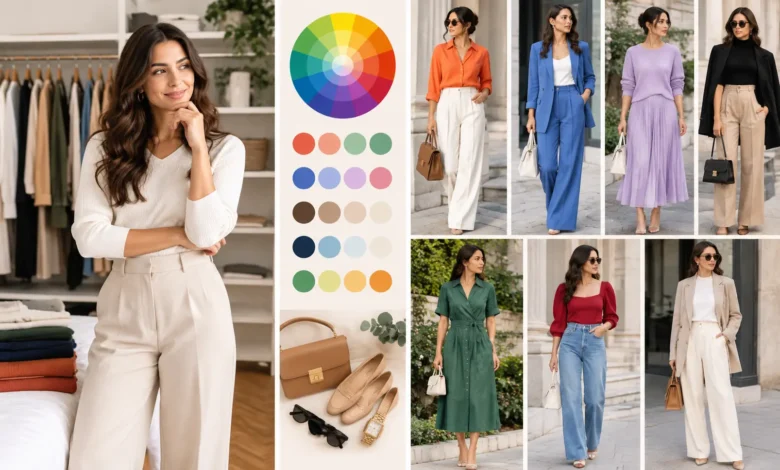
Have you ever stood in front of a full closet and still felt like you had “nothing to wear”? You’re not alone. Most wardrobe frustration isn’t about owning too few clothes — it’s about not knowing how to put the pieces you already own together. And more often than not, the missing ingredient is color combination.
Getting your outfit color combinations right can completely transform how you look and feel, even if you’re wearing basic pieces from your closet. A well-matched outfit doesn’t just look put-together — it makes you appear more confident, more intentional, and more stylish, without spending an extra rupee or dollar on new clothes.
In this guide, we’ll walk through everything you need to know about color combination outfits — from the basics of fashion color theory to seven gorgeous, tried-and-tested combinations you’ll want to recreate immediately. We’ll also cover occasion-based color combinations, how to dress for your skin tone, and answer the most common questions people search for when it comes to color matching outfit ideas.
By the end, you’ll have a practical, real-world framework for choosing colors that work — every single time.
Why Color Combinations Matter in Fashion
Before jumping into outfit ideas, it’s worth understanding why color matters so much in the first place.
Color is the first thing people notice about an outfit — before the cut, the fabric, or the brand. According to color psychology research, people form an impression of what someone is wearing within a matter of seconds, and color plays the biggest role in that snap judgment. This is the foundation of clothing color psychology: different colors trigger different emotional responses, both in the person wearing them and in the people looking at them.
For example:
- Red projects confidence, energy, and boldness.
- Blue feels calm, trustworthy, and professional.
- Black communicates authority and sophistication.
- Pastels feel soft, approachable, and gentle.
- Green is associated with balance, freshness, and nature.
When you understand this, dressing well stops being about luck or trends and starts being about strategy. This is exactly why why color combinations matter in fashion is one of the most searched questions among people trying to upgrade their personal style — the right pairing doesn’t just look good, it sends a message before you even say a word.
What Is Color Theory in Fashion?
If you’ve ever wondered what is color theory in fashion, here’s the simple version: color theory is the study of how colors interact with each other, and how those interactions create harmony, contrast, or clash.
Fashion designers, stylists, and even interior decorators use the same foundational tool: the color wheel. On this wheel, colors are arranged based on their relationships, and those relationships tell you which combinations will naturally look pleasing together.
Here are the main types of color wheel outfit combinations you should know:
1. Complementary Colors
These are colors sitting directly opposite each other on the color wheel — like blue and orange, or red and green. Complementary color outfit ideas create high contrast and a bold, eye-catching look. This is a great option when you want to stand out at a party or event.
2. Analogous Colors
These are colors sitting next to each other on the wheel — like blue, teal, and green. Analogous color combination clothing creates a soft, harmonious look because the colors share undertones. This is ideal for everyday wear when you want to look coordinated without trying too hard.
3. Neutral Colors
Black, white, beige, gray, and brown are considered neutral color combination outfits. These are the easiest combinations to pull off because neutrals rarely clash with anything, making them perfect for beginners still learning how to combine colors in an outfit.
4. Contrast Combinations
Contrast color outfit ideas pair a light shade with a dark one — like navy and white, or black and beige — to create definition and visual interest without being as bold as true complementary pairs.
Understanding these four categories answers one of the most common questions people have: what makes colors match in outfits. It usually comes down to one of these four relationships, whether you realize it or not.
How to Choose Colors for Your Outfit (The Practical Rules)
Theory is helpful, but most people want a simple, repeatable system. Here’s exactly how to choose colors for your outfit without overthinking it.
The 60-30-10 Rule
Borrowed from interior design, this rule works beautifully for outfit coordination tips:
- 60% of your outfit should be a dominant color (usually your top, dress, or largest piece).
- 30% should be a secondary color (bottoms, jacket, or layering piece).
- 10% should be an accent color (accessories, shoes, or bag).
This one rule alone solves most of the confusion around how to combine colors in outfits, because it gives every color a clear “job” instead of letting them compete for attention.
Stick to Three Colors Maximum
One of the most frequently asked questions is how many colors should be in one outfit. The general styling rule is: no more than three colors, not counting neutrals like black, white, or beige. This keeps your outfit looking intentional rather than chaotic.
Anchor With a Neutral
If you’re ever unsure, add a neutral piece. Neutrals act as a “bridge” between bolder colors and instantly make any pairing look more polished. This is why neutral color combination outfits are considered the safest and most versatile starting point, especially for color combination outfit ideas for beginners.
Use Texture to Add Depth
When colors are similar (like an all-neutral or monochrome outfit), mix textures — denim, knit, leather, cotton — to keep the look from feeling flat.
7 Gorgeous Color Combination Outfit Ideas You’ll Fall In Love With
Now for the part you’ve been waiting for. Below are seven of the most stylish color pairing for clothes combinations that consistently work, season after season, occasion after occasion. These aren’t fleeting trends — they’re combinations built on solid color theory, which is why they show up again and again as color combination outfits that always work.
Black and White — The Timeless Classic
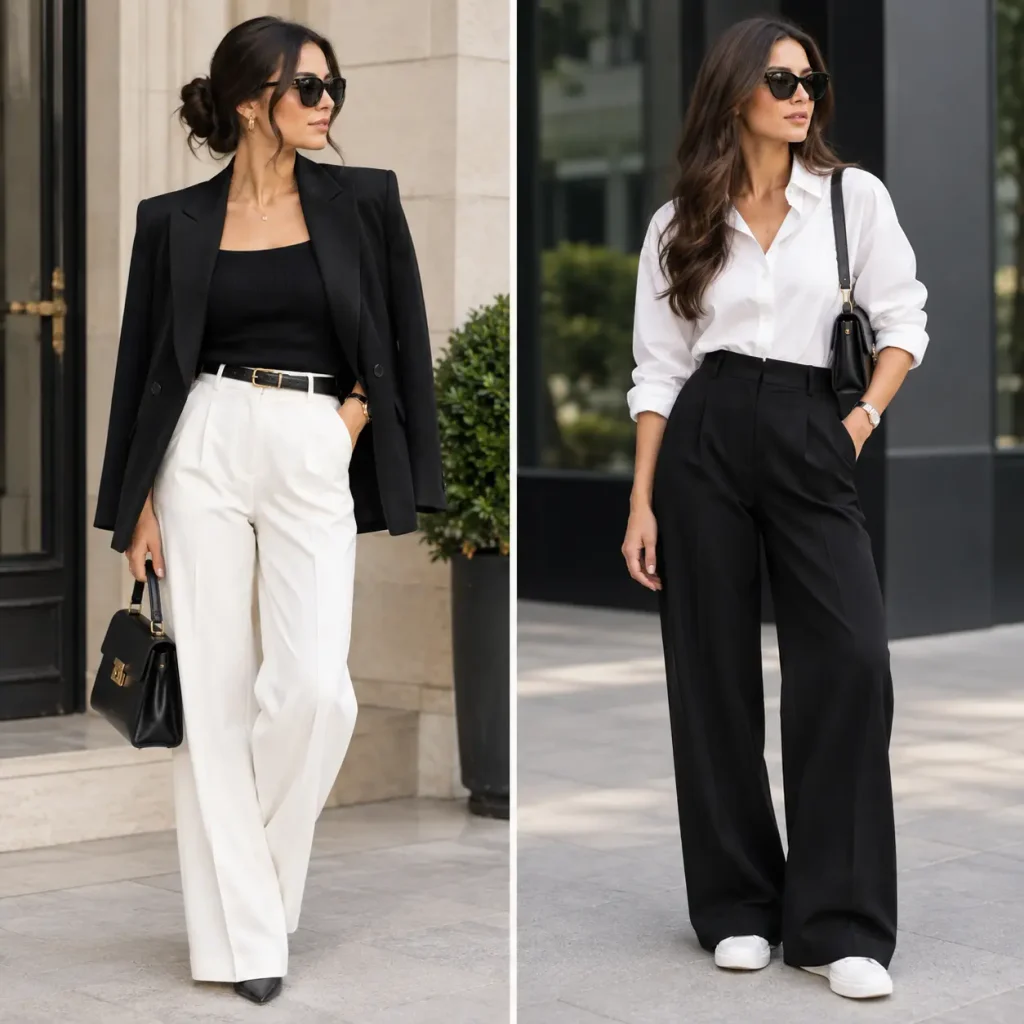
Nothing says effortless sophistication like a black and white outfit combination. This pairing is technically a neutral-on-neutral combo, which means it’s nearly impossible to get wrong. A crisp white shirt with tailored black trousers, or a black dress with white sneakers, instantly reads as chic.
Best for: work, dinners, first dates, or any occasion where you want to look sharp without overthinking it.
Brown and Beige — Warm and Elegant
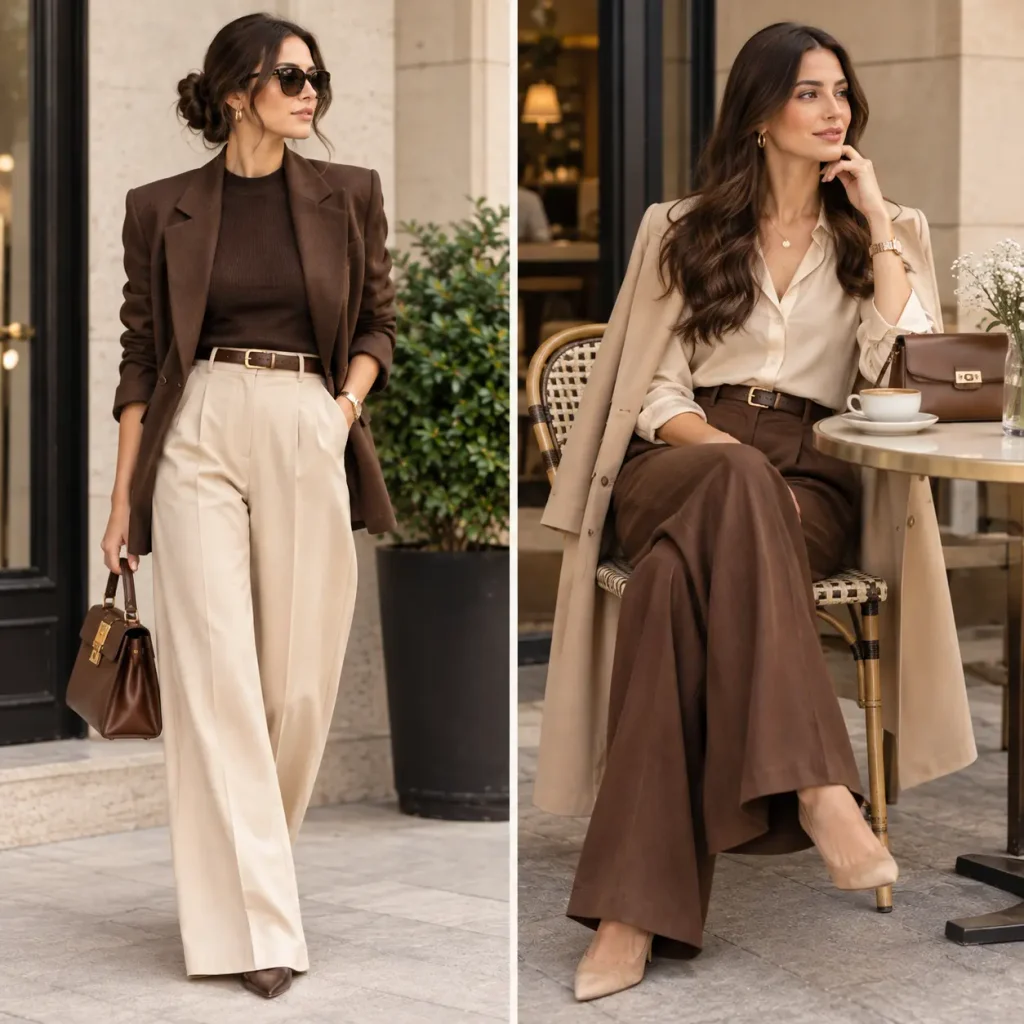
The brown and beige outfit combination has surged in popularity thanks to the “quiet luxury” aesthetic. These tonal, earthy shades create a soft, expensive-looking outfit without any bold colors involved. A brown color combination outfit built around camel, tan, and chocolate tones feels warm, grounded, and effortlessly elegant.
Best for: fall and winter outfits, casual workwear, or minimalist everyday style.
Blue and White — Fresh and Classic
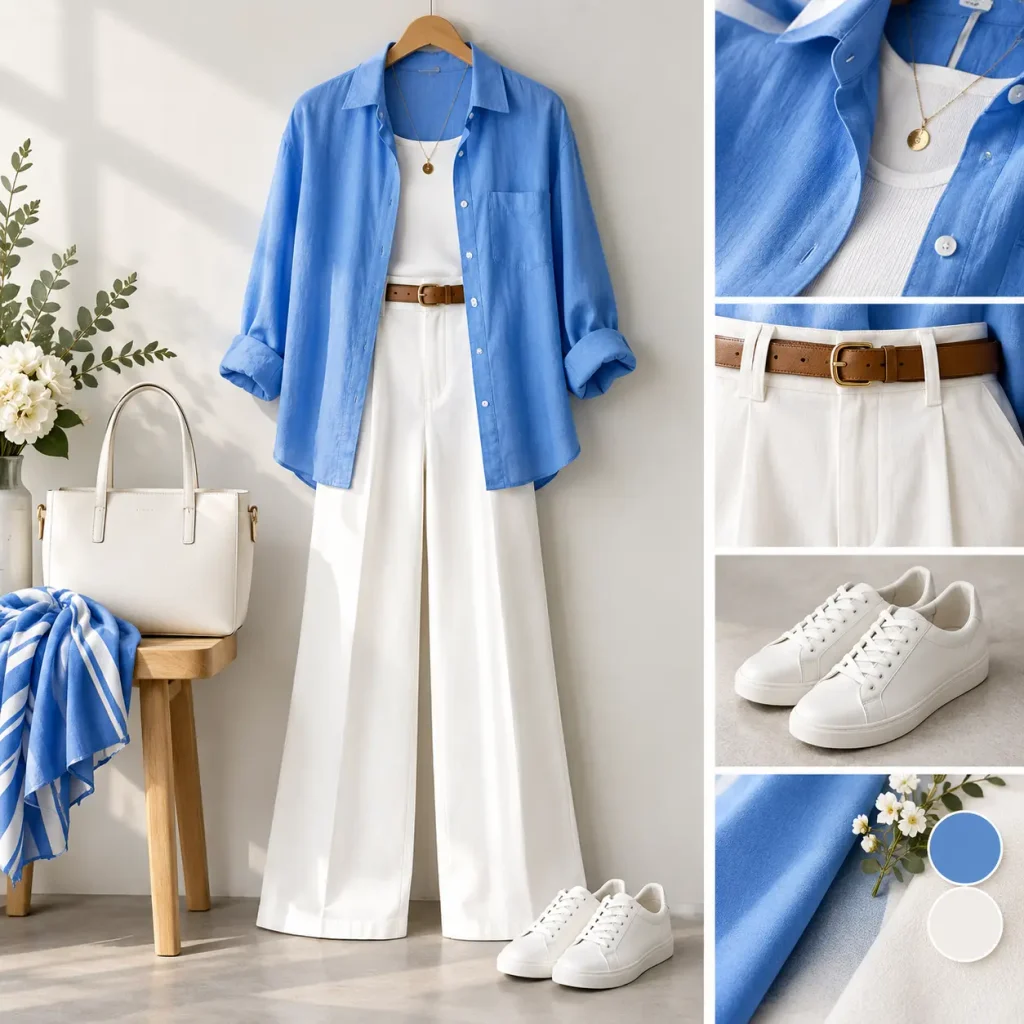
The blue and white color combination outfit is a summer favorite for good reason — it feels crisp, clean, and breezy. Think denim paired with a white top, or a navy-and-white striped outfit. This is also a great color combination for summer outfits because the pairing feels light rather than heavy.
Best for: vacations, brunches, and casual daytime outings.
Pastel Combinations — Soft and Romantic
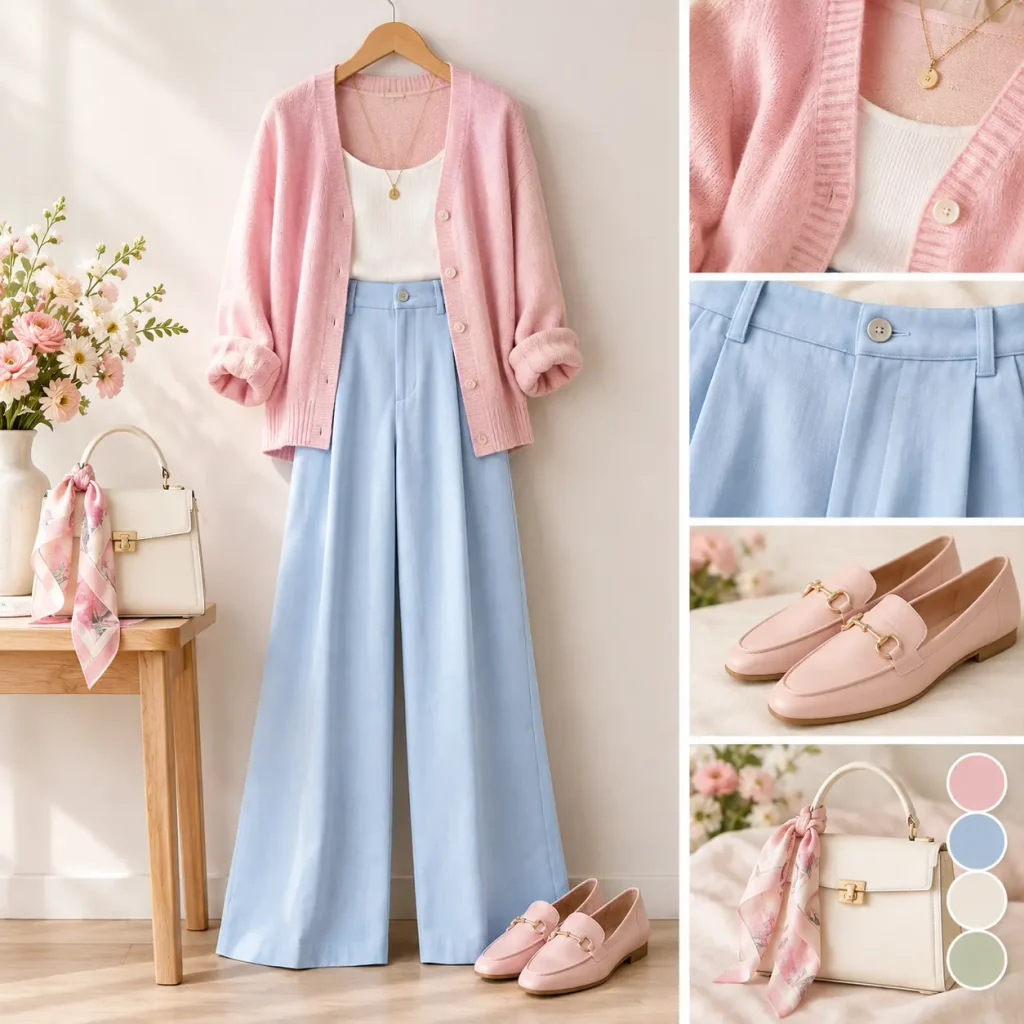
A pastel color combination outfit — think baby pink with lavender, or mint green with cream — creates a gentle, romantic look that feels fresh and youthful. Pastels work particularly well together because they share low saturation, making them naturally harmonious (an easy example of analogous color combination clothing in action).
Best for: spring outfits, daytime weddings, garden parties.
Monochrome — Sleek and Modern
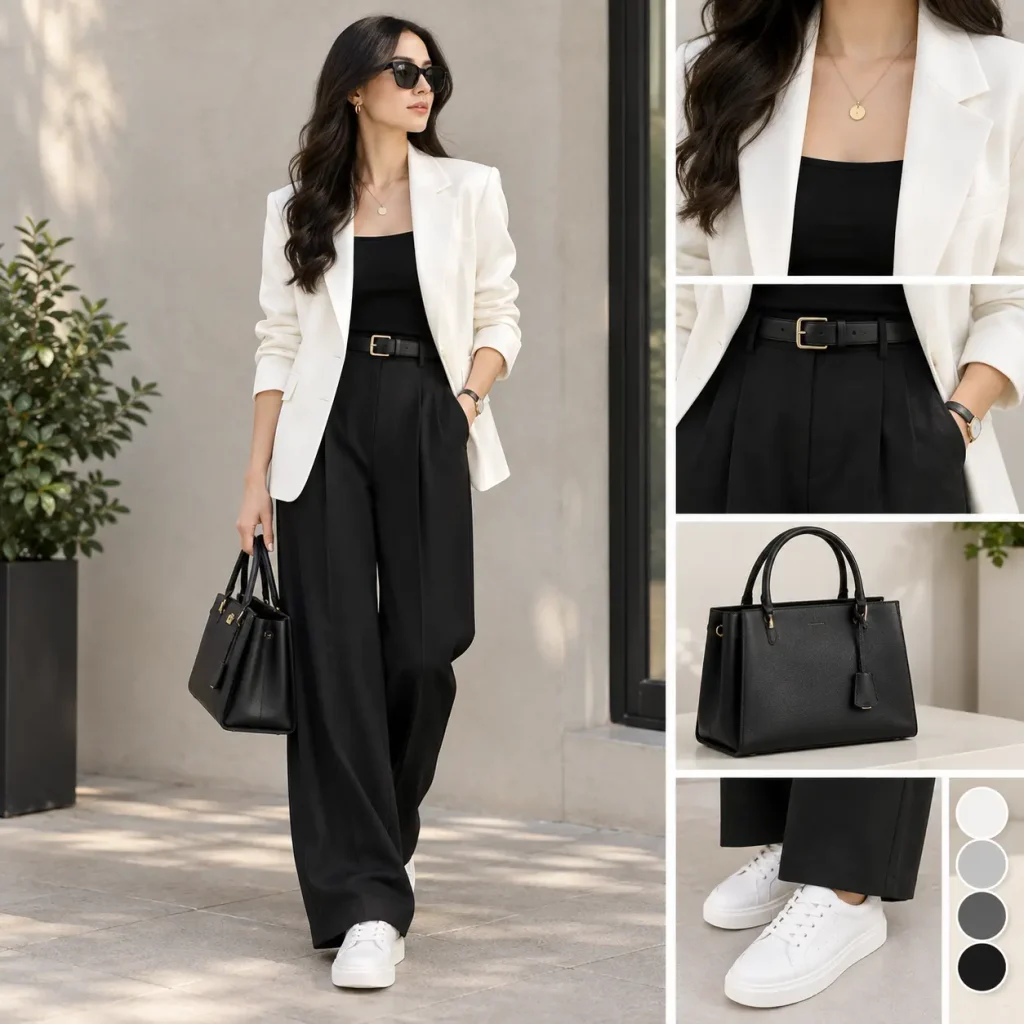
Monochrome outfit color ideas involve wearing different shades of the same color — like a light blue top with medium blue jeans and a dark blue jacket. This creates a streamlined, elongating effect and looks incredibly intentional. A navy blue color combination outfit styled in a full tonal look is a great example of monochrome dressing done right.
Best for: work meetings, photos, or anytime you want a “your outfit looks expensive” effect.
Red and Black — Bold and Powerful
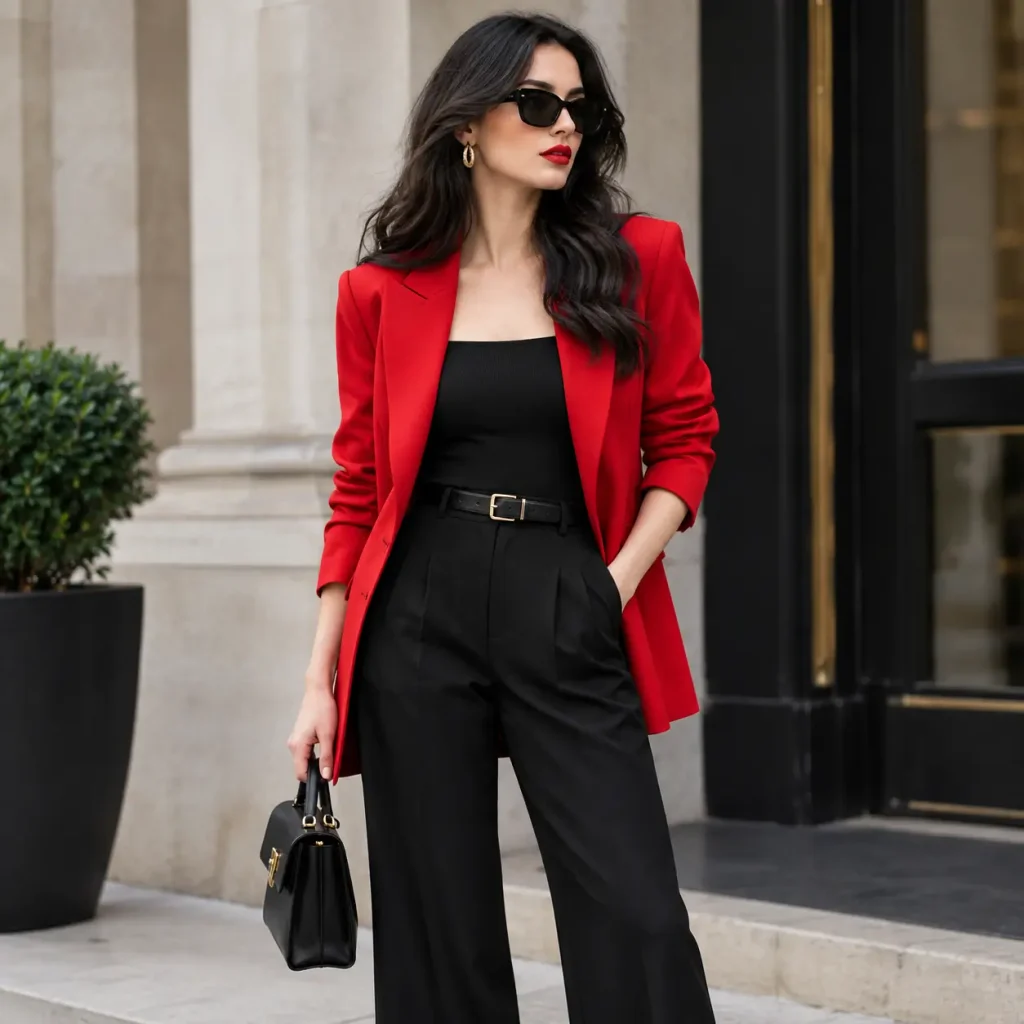
The red and black outfit combination is a classic complementary-adjacent pairing that radiates confidence. Red brings energy while black grounds the look, keeping it from feeling overwhelming. A red top with black trousers, or a black dress with red heels, is a foolproof way to make a statement.
Best for: parties, evening events, date nights.
Green and Yellow — Fresh and Playful
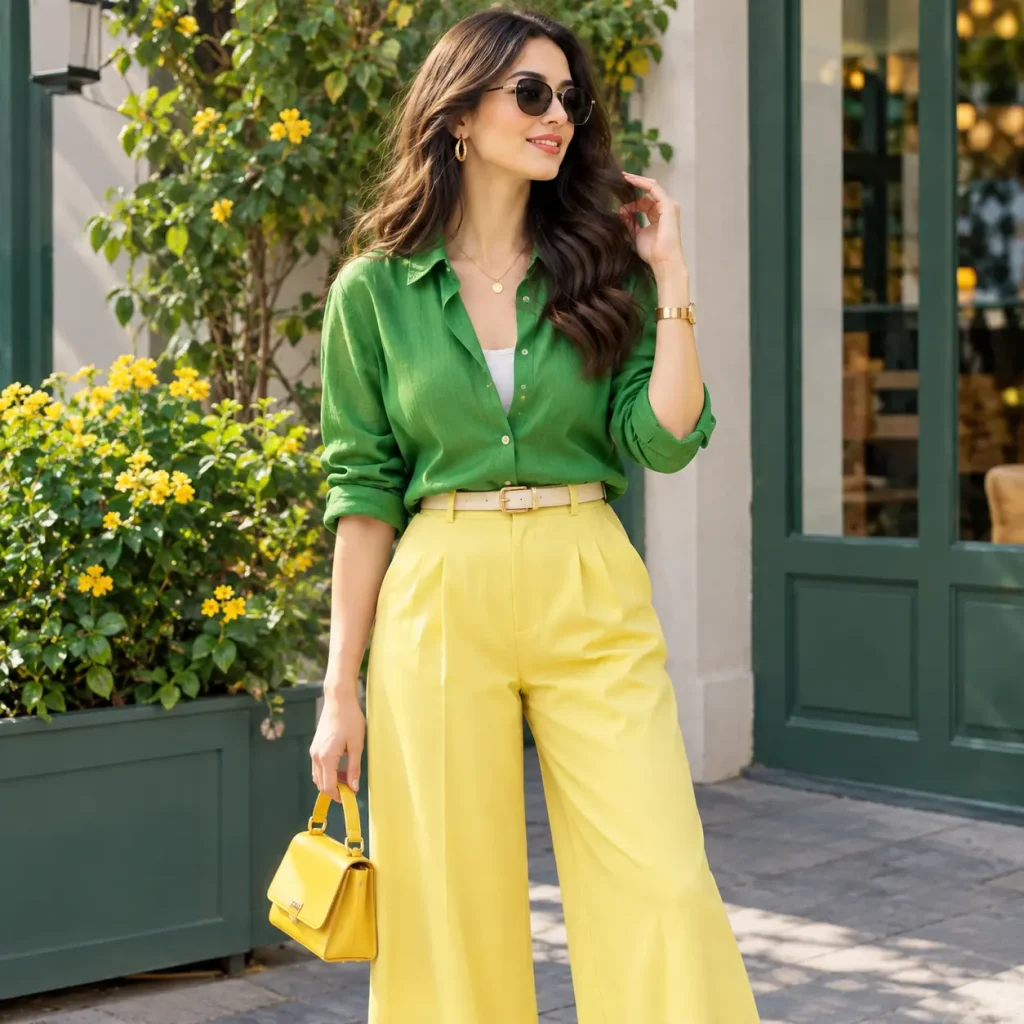
The green and yellow outfit combination is an underrated gem. Since green and yellow sit close together on the color wheel, this pairing feels vibrant yet cohesive — a great example of how analogous color combination clothing can be bold and balanced at the same time. An army green color combination outfit paired with a soft mustard accessory also works beautifully for a more toned-down version of this look.
Best for: casual outings, spring and summer days, outdoor events.
Bonus Combinations Worth Knowing
While the seven above are the stars of this guide, a few more combinations deserve a mention because they consistently rank among the most searched color matching outfit ideas:
- Brown and blue color combination outfit — a sophisticated, unexpected pairing that works beautifully for smart-casual settings.
- Black and gray color combination outfit — a modern, moody take on monochrome dressing.
- Maroon color combination outfit — pair maroon with beige or gray for a rich, autumn-ready look.
- Baby blue color combination outfit — soft and fresh, pairs beautifully with white, gray, or denim.
- Blue color combination outfit in general is one of the most versatile bases for building a wardrobe, since nearly every neutral pairs well with it.
Color Combination Outfits by Occasion
Choosing the right colors isn’t just about the pairing itself — it’s also about matching that pairing to the setting. Here’s a breakdown of color combination outfits for work, parties, casual wear, and weddings.
Color Combinations for Work
Workwear calls for combinations that feel polished but not distracting. Stick to neutral color combination outfits like navy and white, gray and black, or beige and brown. These color combination outfits for work communicate professionalism while still looking intentional.
Color Combinations for Parties
This is where you can experiment. Bold, complementary pairings like red and black, or deep jewel tones like emerald and gold, make excellent color combination outfits for parties. Don’t be afraid of contrast here — parties are the perfect setting to answer the popular question, can you mix bold colors in one outfit — and the answer is a confident yes, as long as you don’t exceed three colors total.
Color Combinations for Casual Wear
For everyday looks, color combination outfits for casual wear should prioritize comfort and ease. Blue and white, pastel-on-pastel, or simple monochrome denim looks are ideal. These require the least effort while still looking well put-together.
Color Combinations for Weddings
Wedding dressing depends heavily on the season and venue, but soft, elegant combinations tend to perform best. Pastels, blush tones, and muted neutrals are safe, flattering choices for most wedding color combination outfits, especially for daytime celebrations.
Color Combination for Summer Outfits
Lighter, brighter combinations work best in the heat. Blue and white, yellow and green, and pastel pairings all qualify as excellent color combination for summer outfits because they feel breathable and visually “cool,” even before considering the fabric.
Color Combination for Winter Outfits
Winter calls for richer, deeper tones. Think maroon and beige, navy and gray, or brown and black. These color combination for winter outfits feel warm and cozy while still looking sophisticated in heavier fabrics like wool and knitwear.
Best Color Combinations Based on Skin Tone
Not every color combination flatters every person the same way. Understanding your skin tone can help you fine-tune the best color combinations for outfits so they don’t just look good on a hanger — they look good on you.
Outfit Colors for Warm Skin Tone
If you have a warm undertone (your skin has golden, peachy, or yellow hues), you’ll likely find that earthy tones enhance your complexion. Outfit colors for warm skin tone include camel, olive green, mustard yellow, coral, and warm browns.
Outfit Colors for Cool Skin Tone
If you have a cool undertone (your skin has pink, red, or blue hues), jewel tones and true colors tend to be the most flattering. Outfit colors for cool skin tone include navy blue, emerald green, true red, and icy pastels.
Best Color Combinations for Fair Skin
For those with fair skin, softer contrasts often look best. Best color combinations for fair skin include pastel pairings, soft blues, and muted earth tones, which complement lighter complexions without overwhelming them.
Best Color Combinations for Dark Skin
Rich, saturated colors tend to look especially striking against deeper skin tones. Best color combinations for dark skin include combinations like mustard and brown, red and black, or bright white paired with bold jewel tones — colors that pop rather than fade into the skin.
If you’re not sure which undertone you have, a quick trick is to check the veins on your wrist in natural light: greenish veins usually indicate a warm undertone, while bluish veins suggest a cool undertone.
Also Read: Linen Pants: Best Fits, Colors & Outfit Ideas for Every Body Type
Why Understanding Color Theory Gives You a Style Advantage
There’s a reason professional stylists and fashion designers spend so much time studying color. The benefits of understanding color theory for outfits go beyond just “looking nice” — it saves you money, time, and decision fatigue.
Once you understand why some colors work well together, you stop buying random pieces that don’t match anything else in your closet. Instead, you start building a wardrobe where almost everything is interchangeable, because you’re shopping with a color strategy in mind rather than impulse.
This is also why why neutral colors are easy to combine is such a popular question — neutrals form the backbone of a functional wardrobe precisely because they play well with nearly every other color, giving you more outfit combinations from fewer pieces.
A Brief Look at the History of Color Pairing in Fashion
Color theory in fashion didn’t emerge overnight. The history of color pairing in fashion traces back to early color wheel theories developed for painting and design, later adapted by fashion designers throughout the 20th century as ready-to-wear fashion became more accessible. Designers began applying the same principles used in art — complementary contrast, analogous harmony, and neutral balance — directly to clothing collections. Understanding how designers use color theory in clothing even today reveals that most “iconic” fashion moments — a red-soled black heel, a monochrome tailored suit — are simply color theory applied with confidence.
How to Build a Color-Coordinated Wardrobe
Once you understand which combinations flatter you and which occasions call for which palette, the next step is applying that knowledge to your actual closet. Learning how to build a color coordinated wardrobe is one of the most valuable style skills you can develop, because it means you’ll never again stand in front of a full closet feeling like you have nothing to wear.
Start With a Neutral Base
Your wardrobe color palette should begin with neutral staples — black, white, beige, gray, and navy. These items form the “skeleton” of your wardrobe and can be mixed and matched with almost anything you add later. If roughly 60-70% of your closet is built from neutrals, you’ll always have a reliable starting point for any outfit.
Add Two or Three Signature Colors
Beyond neutrals, choose two or three colors that consistently flatter your skin tone and that you genuinely enjoy wearing — this could be olive green, maroon, or baby blue, for example. These become your “signature” shades, and every new item you buy should ideally pair with at least two other pieces you already own.
Use Accessories as Your Testing Ground
If you’re nervous about committing to a bold color combination, accessories are the lowest-risk way to experiment. A colorful scarf, a bag, or a pair of shoes lets you test out complementary color outfit ideas or unexpected pairings without overhauling your entire outfit.
Audit Your Closet Seasonally
Every few months, sort your clothes by color rather than by category (tops, bottoms, etc.). This visual audit makes it much easier to spot gaps — for instance, you might realize you own plenty of blue tops but nothing that pairs well with them besides jeans, signaling it’s time to add a complementary or neutral bottom.
Also Read: 13 French Chic Outfits to Instantly Elevate Your Style
Common Mistakes to Avoid When Combining Colors
Even with a solid grasp of fashion color theory, a few common missteps can throw off an otherwise great outfit. Here’s what to watch for:
- Overloading on colors. Wearing four or five different colors at once, especially bright ones, often reads as cluttered rather than curated. Stick to the two-to-three-color guideline.
- Ignoring undertones. Pairing a warm-toned color (like a golden mustard) with a cool-toned color (like an icy blue) can sometimes clash if the undertones fight each other, even if the colors seem compatible on paper.
- Matching everything too literally. A “matchy-matchy” outfit — where every piece is the exact same shade — can look dated. Slight variations in tone (navy with sky blue, for instance) usually look more sophisticated than identical shades.
- Forgetting about shoes and bags. Many people carefully plan their top and bottom colors but treat shoes and bags as an afterthought. These accessories are part of your color story too, and ignoring them can undo an otherwise well-planned combination.
- Not considering the setting. A combination that works beautifully for a party might feel out of place at the office. Always factor in occasion-based context, not just the colors themselves.
Seasonal Color Trends Worth Knowing
Fashion color trends shift each year, but a few patterns are worth watching if you want your color combination outfit choices to feel current. Heading into 2026, trendy color combinations for outfits are increasingly built around warm neutrals — think mocha, caramel, and soft olive — layered with occasional pops of unexpected color like burnt orange or deep berry. This reflects a broader shift toward the “quiet luxury” aesthetic, where outfits look elevated and expensive through tone and fit rather than logos or loud prints.
At the same time, pastel combinations continue to hold steady popularity, particularly for spring and summer, while monochrome dressing remains a favorite among people who want a polished look with minimal effort. The common thread across all of these trends is restraint: fewer competing colors, more intentional pairing, and a growing appreciation for how well-chosen neutral color combination outfits can look just as striking as bold ones.
Frequently Asked Questions About Color Combination Outfits
What colors go well together in outfits?
Generally, colors that are either directly opposite each other on the color wheel (complementary), next to each other (analogous), or neutral tones tend to go well together. Popular combinations include black and white, navy and beige, and blue and white.
Can you mix bold colors in one outfit?
Yes. The key is balance — pair one bold color with a neutral, or use the 60-30-10 rule so one color dominates while the other acts as an accent. Two equally bold, competing colors can look chaotic unless deliberately styled.
What color combinations are trending?
Trendy color combinations for outfits in 2026 lean toward warm, earthy palettes (brown, beige, olive) alongside a resurgence of soft pastels and monochrome dressing. Quiet luxury tones continue to dominate everyday fashion.
How many colors should be in one outfit?
As a general styling rule, stick to two to three colors (excluding neutrals) to keep an outfit looking cohesive rather than overwhelming.
What colors should not be worn together?
There’s no strict “never” in fashion, but certain combinations require extra care — like clashing warm and cool-toned brights of similar intensity (e.g., true red next to true orange), which can visually compete rather than complement. When in doubt, add a neutral buffer between two bold colors.
What are complementary colors in clothing?
Complementary colors are pairs that sit opposite each other on the color wheel, such as blue and orange, or red and green. Wearing them together creates a bold, high-contrast look.
What is a neutral color palette?
A neutral color palette consists of colors like black, white, beige, gray, and brown — tones that don’t appear on the traditional color wheel but pair easily with almost any other color, making them a wardrobe essential.
Final Thoughts
Mastering color combination outfit ideas isn’t about memorizing endless rules — it’s about understanding a few simple principles and then trusting your eye. Once you know the basics of the color wheel, the 60-30-10 rule, and how your own skin tone interacts with different shades, choosing an outfit becomes far less stressful and far more fun.
Start small. Pick one of the seven combinations above — black and white, brown and beige, blue and white, pastels, monochrome, red and black, or green and yellow — and build an outfit around it this week. Once you see how easy it is to look put-together with the right color matching outfit ideas, you’ll never go back to guessing.
Fashion doesn’t have to be complicated. Sometimes, it’s just about putting the right colors next to each other — and letting them do the rest of the work for you.
Also Read: 5 Boss Lady Outfits That Radiate Unstoppable Power