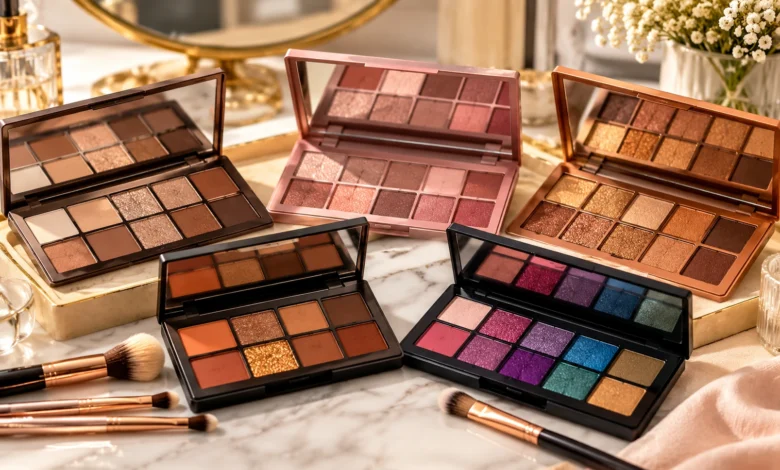
An eyeshadow palette is a single compact that holds several coordinated shades, so you can build everything from a quick daytime wash to a dramatic evening eye without buying shadows one by one. The hard part is choosing one that fits your skin, your skill level, and the looks you actually wear.
This guide explains what is inside a palette, how to choose one, and five palette styles that cover the most popular looks, each with an example worth browsing. You will also find a step-by-step application guide, fixes for common problems, and care tips that keep your eyes safe.
What Is an Eyeshadow Palette?
An eyeshadow palette is a set of eyeshadow shades in one case, usually in a mix of matte and shimmer finishes, chosen to work together. Most come with a mirror, and some include a small brush. Because the colors are planned as a group, you can blend them with confidence instead of guessing what matches.
What Is Usually Inside a Palette
Most palettes follow a simple logic. Each shade has a job, even if the packaging does not say so.
| Shade role | What it does | Typical finish |
|---|---|---|
| Base or transition | Softens edges and prepares the crease | Matte, close to skin tone |
| Lid shade | The main color on the moveable lid | Shimmer, satin, or matte |
| Crease shade | Adds depth and shape | Matte, mid-tone |
| Deepener | Defines the outer corner and lash line | Dark matte |
| Highlight | Brightens the inner corner and brow bone | Light shimmer |
| Accent | A pop of color or sparkle | Metallic, glitter, or bold hue |
If a palette has all of these roles, you can create a full look from it. If it leans heavily toward one role (all shimmers, for example), it will feel more limiting.
How to Choose the Right Eyeshadow Palette
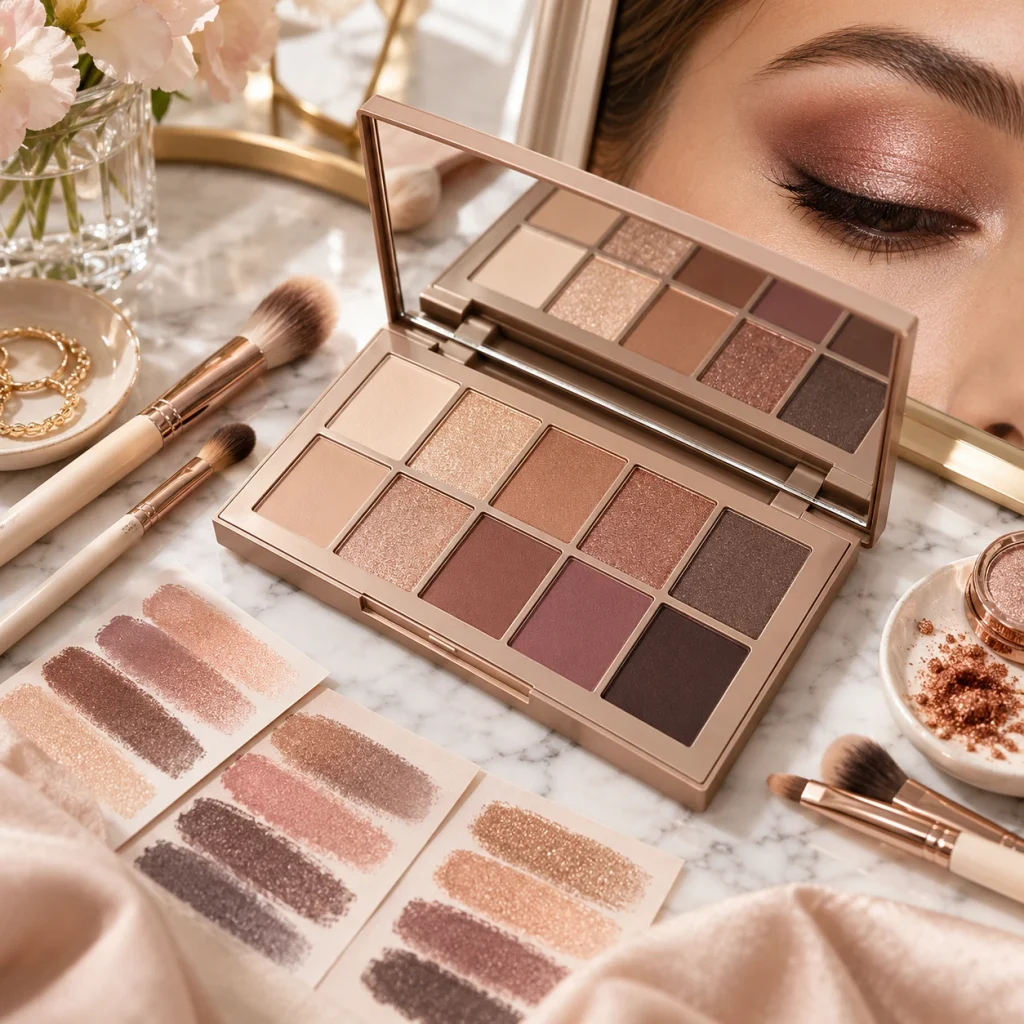
The best palette is the one you will reach for often. A few simple checks narrow the field fast.
1. Start With Undertone
Skin undertone (warm, cool, or neutral) affects how shades look on you. Warm tones often suit golds, coppers, and terracotta, cool tones often suit silvers, mauves, and blue-based shades, and neutral undertones can wear both. Undertone is a guide, not a rule, and plenty of people wear shades outside their usual range. A quick test: swatch the lid shade on your hand or eyelid in natural light.
2. Think About Eye Color
Colors opposite your eye color on the color wheel tend to make eyes stand out. Brown eyes often pop with blues, purples, and bronze. Blue eyes often look striking with copper and warm browns. Green eyes often pair well with plum and burgundy. These are starting points rather than requirements.
3. Check the Finishes
| Finish | Look | Good for |
|---|---|---|
| Matte | Flat, no sparkle | Crease, depth, blending, everyday wear |
| Satin | Soft sheen | Subtle glow on the lid |
| Shimmer | Light-reflecting | Lids, inner corners, evening looks |
| Metallic | Intense reflect, foil-like | Statement lids, photos |
| Glitter | Chunky sparkle | Accents and events |
A palette with a mix of matte and shimmer finishes gives you the most flexibility. If you are new to eyeshadow, matte shades are easier to blend, and one or two shimmers are enough to start.
4. Count the Shades You Will Actually Use
A 12-shade palette is plenty for most people. Larger palettes with 30 or more shades offer variety but can feel overwhelming. Smaller palettes with 4 to 10 shades are easy to travel with and simple to learn.
5. Look at Formula and Pigment
Good formulas blend easily, stay put, and do not turn patchy. Reviews that mention fallout (powder dropping onto the cheeks), creasing, or chalky texture are worth reading. Pigment varies a lot between brands and between shades in the same palette, so expect some differences.
6. Match It to Your Skill Level
Beginners usually do well with a neutral palette that has clear transition, crease, and lid shades. More experienced users may enjoy bold colors and unusual finishes. Choose something that matches the looks you will really wear.
7. Consider Ingredients and Sensitivities
If you have sensitive eyes or known allergies, check the ingredient list and consider patch testing on your forearm. Eye makeup is applied close to a sensitive area, so stopping use if you notice irritation is the safest approach.
5 Stunning Eyeshadow Palette Picks for Your Dream Look
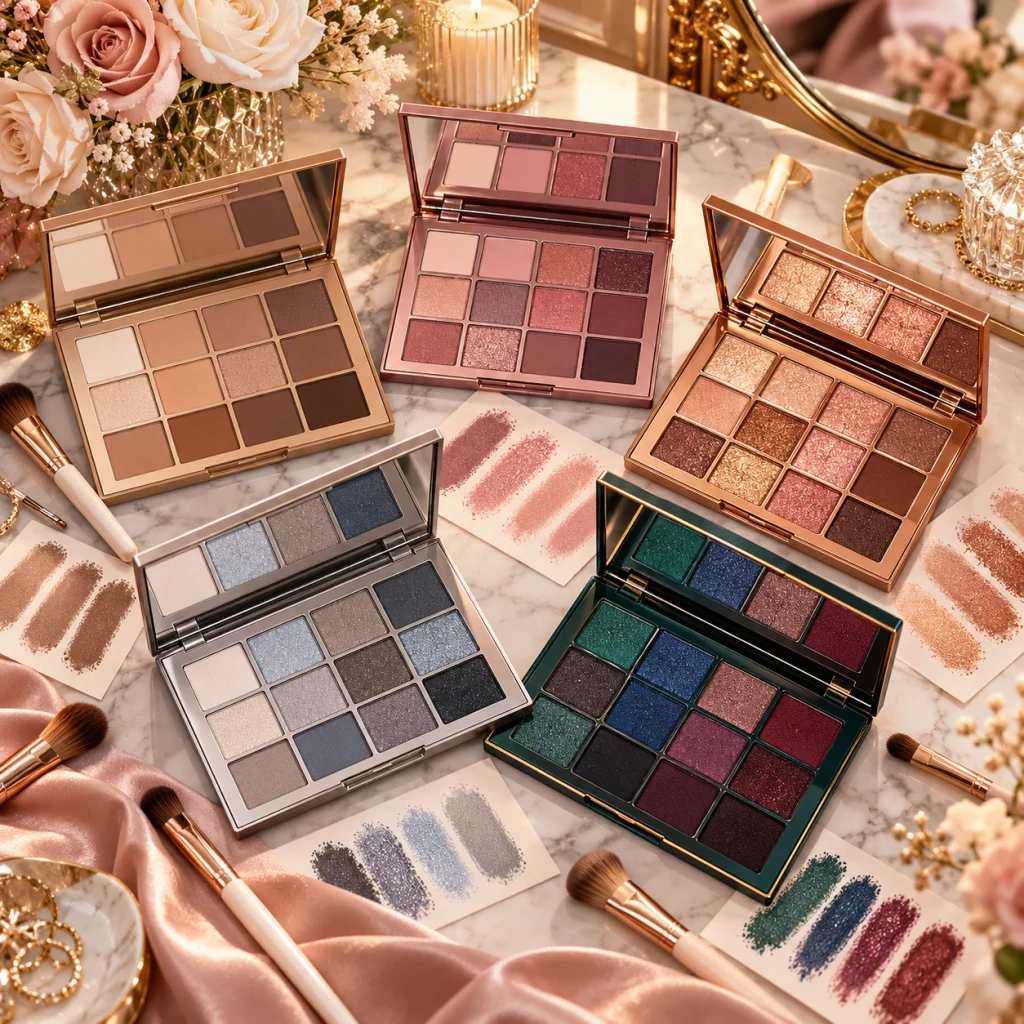
These five picks are five distinct looks, each paired with an example palette you can look at. We have not tested these products ourselves, and shade lineups and prices change, so check the current product page before buying.
1. The Everyday Neutral Palette
Look: soft browns, warm taupes, and gentle shimmer for a polished, natural eye.
Best for: work, school, errands, and anyone new to eyeshadow.
What to look for: a light transition shade, a mid-brown crease shade, a deep brown for definition, and one or two soft shimmers for the lid.
Example to browse: Maybelline The Nudes is a widely available drugstore palette with 12 matte and shimmer shades in neutral tones, which makes it a common starting point for beginners.
A neutral palette is the most useful first buy because almost every shade works together. You can wear a quick one-shade wash or build a more defined eye in a few minutes.
2. The Rosy Soft-Glam Palette
Look: dusty rose, mauve, and champagne for a romantic, flattering eye.
Best for: date nights, weddings, brunches, and photos.
What to look for: warm pinks, soft plum, and a mix of satin and shimmer finishes. Rosy shades often look flattering on a wide range of skin tones because they echo natural flush.
Example to browse: Urban Decay Naked 3 is well known for its rose-toned neutrals, and it is often mentioned in discussions of soft, romantic eye makeup.
This style works well with a simple eyeliner and a neutral lip, and it pairs nicely with floral or pastel outfits.
3. The Rose Gold Shimmer Palette
Look: warm metallics and sparkle with a glowing finish.
Best for: parties, evenings out, and anyone who likes a little shine without going full glitter.
What to look for: a mix of rose gold, copper, bronze, and matte brown anchors so the look does not feel flat. Smaller pan sizes are common in budget palettes, which can limit how long they last with frequent use.
Example to browse: the e.l.f. Perfect 10 palette is described as a 10-shade nude rose gold palette with matte and shimmer shades and a vegan, cruelty-free formula, at a budget-friendly price point.
Shimmer shades look best when pressed onto the lid with a finger or flat brush, which keeps the sparkle concentrated rather than scattered.
4. The Cool-Tone Palette
Look: icy blues, silvers, taupes, and cool neutrals for a crisp, modern eye.
Best for: creative looks, evening events, and anyone who finds warm browns too heavy.
What to look for: a balance of cool matte shades for definition and metallics for the lid. Cool palettes can look striking on all skin tones, but they may feel less natural on warm undertones, so pair them with a warm blush to keep your face balanced.
Example to browse: ColourPop Stone Cold Fox is a 30-pan palette described as cool-toned with matte and metallic finishes, which offers a lot of variety if you enjoy experimenting.
Because large palettes include many shades, it helps to pick three to five colors for each look instead of trying to use everything at once.
5. The Jewel-Tone Drama Palette
Look: deep emerald, sapphire, burgundy, and plum with moody neutrals for a bold, editorial eye.
Best for: evening events, photoshoots, and fall and winter looks.
What to look for: highly pigmented matte shades, a few rich metallics, and a few neutrals for blending. Dark, saturated colors need a patient hand and a clean blending brush to avoid muddy edges.
Brands to explore: several makeup brands offer jewel-tone and fall-inspired palettes, including Anastasia Beverly Hills, which is known for its bold, deeply pigmented shades. Check current collections for what is in stock.
A dramatic palette works best when the rest of the face stays simple. Keep skin fresh, brows neat, and lips soft.
The Five Picks Side by Side
| Palette style | Mood | Best occasion | Skill level | Pair with |
|---|---|---|---|---|
| Everyday neutral | Natural, polished | Work, school, daily | Beginner | Almost anything |
| Rosy soft glam | Romantic, flattering | Dates, weddings | Beginner to intermediate | Soft florals, pastels |
| Rose gold shimmer | Glowing, festive | Parties, evenings | Beginner to intermediate | Neutral or metallic outfits |
| Cool tone | Crisp, modern | Evenings, creative looks | Intermediate | Monochrome, black, silver |
| Jewel-tone drama | Bold, editorial | Events, fall and winter | Intermediate to advanced | Simple, tailored outfits |
How to Use an Eyeshadow Palette: A Simple Step-by-Step
This routine works with almost any palette. Adjust the shades and intensity to fit your look.
- Prep the lid. Apply a thin layer of eyeshadow primer or concealer and set it lightly with powder. This helps color stay put and look smoother.
- Add the transition shade. With a fluffy blending brush, sweep a matte shade close to your skin tone through the crease. This is the foundation for a smooth blend.
- Place the lid shade. Use a flat brush or your finger to press the main color onto the moveable lid, from lash line to crease.
- Build depth in the crease. Take a mid-tone matte shade and blend it softly into the crease, concentrating on the outer half.
- Define the outer corner. Use a small brush to apply the deepest shade to the outer corner in a soft V shape, then blend toward the center.
- Highlight. Dab a light shimmer on the inner corner and just under the brow arch.
- Blend the edges. Use a clean fluffy brush to soften any hard lines.
- Finish. Add eyeliner and mascara as you like, and remove any fallout with a clean brush or tape before you apply foundation, or clean up afterward with a cotton swab.
Tools That Make a Difference
- A fluffy blending brush for the crease
- A flat shader brush for packing color on the lid
- A small pencil brush for the lash line and outer corner
- A clean, dry brush for blending out edges
Good brushes often matter as much as the palette. Even an affordable palette can look polished with the right tools.
Matching a Palette to the Occasion
- Daytime and work: one or two neutral shades, a soft crease, and mascara are usually enough.
- Evening: add a shimmer lid, a deeper outer corner, and a defined liner.
- Photos: use shades with a little shimmer to catch light, and blend carefully so edges look soft in flash.
- Special events: pair a color that complements your outfit, and keep the rest of your makeup simple so the eyes stay the focus.
If you want to see how makeup and clothing can work together, our guide to ethereal outfits includes ideas for soft, dewy makeup that pairs with flowing looks.
Tips for Different Eye Shapes
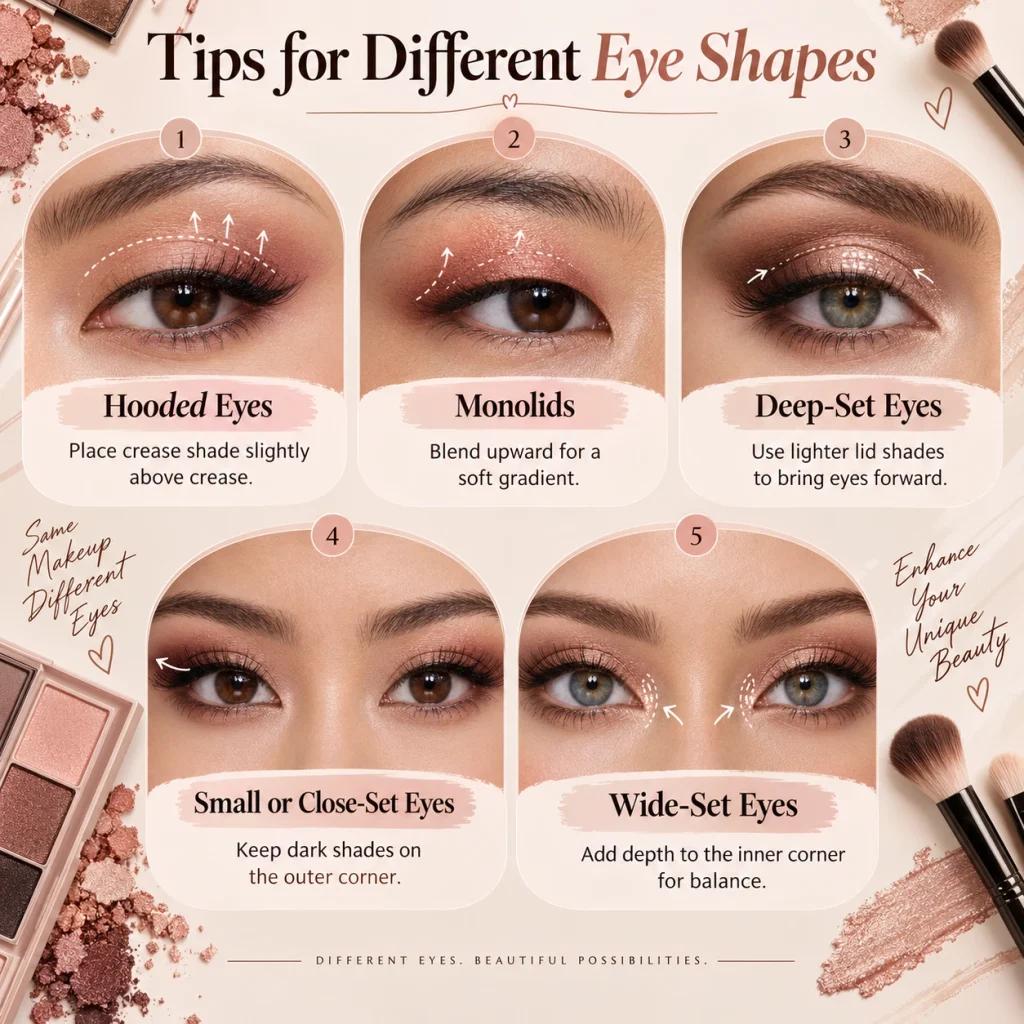
These are general guidelines, not strict rules, and personal preference always wins.
- Hooded eyes: place the crease shade slightly above the natural crease so it stays visible when your eyes are open, and use matte shades for definition.
- Monolids: gradient looks that fade from the lash line upward can add depth, and a lid shade with some shimmer can brighten the eye.
- Deep-set eyes: lighter shades on the lid can bring the eye forward, while dark shades in the crease can make the area look deeper.
- Small or close-set eyes: keep darker shades toward the outer corner and use a light shade at the inner corner to open the eye.
- Wide-set eyes: adding a bit of depth to the inner corner can help balance spacing.
Common Eyeshadow Palette Problems and Fixes
| Problem | Likely cause | What to try |
|---|---|---|
| Fallout under the eyes | Too much product on the brush | Tap off the brush and apply eyeshadow before foundation, or use tape to lift specks |
| Creasing | Oily lids or no primer | Use primer, set with a matte shade, and avoid thick layers |
| Patchy or chalky color | Dry brush or low-quality formula | Press shades on with a flat brush or a fingertip, and use primer |
| Muddy colors | Over-blending or mixing clashing shades | Blend in thin layers and keep darker shades to the outer corner |
| Fading during the day | No primer or oily skin | Start with primer and consider a setting spray |
| Look is too dark | Too much deepening shade | Blend with a transition shade to soften |
Eyeshadow Palette Care, Hygiene, and Safety
Because eyeshadow goes close to your eyes, hygiene matters.
- Clean your brushes regularly. Dirty brushes can transfer oil and bacteria to your eyelids.
- Do not share eye makeup. Sharing can spread germs.
- Avoid wetting the palette. Water or saliva can introduce bacteria. If you want to use a shadow wet, wet your clean brush, not the pan.
- Stop using it if you get irritation or an eye infection. Throw away anything that may have touched an infected eye and see a healthcare provider if symptoms continue.
- Store it somewhere cool and dry. Heat and humidity can affect texture.
- Watch for changes. If the powder smells different, changes texture, or looks discolored, replace it. Many brands suggest replacing powder eyeshadow after about two years, but check the packaging for guidance.
For safety guidance on cosmetics used near the eyes, the U.S. Food and Drug Administration is a reliable source.
Building a Small Makeup Collection Around Your Palette
You do not need a huge kit. A few basics work with any eyeshadow palette:
- An eyeshadow primer
- A neutral eyeliner
- Mascara
- A set of three or four brushes
- A setting spray, if you like long wear
For more beauty and style ideas, browse the beauty section on Style Blooming.
Frequently Asked Questions
What is an eyeshadow palette?
It is a set of coordinated eyeshadow shades in one case, usually including matte and shimmer finishes you can mix and blend into different looks.
Which eyeshadow palette is best for beginners?
A neutral palette with a clear transition shade, a mid-tone crease shade, a deeper brown, and one or two soft shimmers is usually the easiest start, since the colors blend together naturally.
How many shades do I need in a palette?
Twelve shades are plenty for most people. Smaller palettes are easier to travel with, and larger palettes offer variety but can feel overwhelming.
How do I know which colors suit my skin tone?
Start with undertone: warm tones often suit golds and coppers, cool tones often suit silvers and mauves, and neutral undertones can wear both. Swatching in natural light is the most reliable test.
What is the difference between matte and shimmer eyeshadow?
Matte shades have no sparkle and are best for blending and defining the crease. Shimmer shades reflect light and are best on the lid and inner corners.
How do I stop eyeshadow from creasing?
Use an eyeshadow primer, apply thin layers, set with a matte shade, and avoid heavy creams or oils on the lid before you start.
How long does an eyeshadow palette last?
Many brands suggest replacing powder eyeshadow after about two years, but check the packaging. Replace sooner if it smells off, changes texture, or you have had an eye infection.
Is it safe to share an eyeshadow palette?
It is best not to share eye makeup, since sharing can spread bacteria and increase the chance of irritation or infection.
Conclusion
The best eyeshadow palette is the one that fits your undertone, your skill level, and the looks you will actually wear. Start with an everyday neutral if you want one reliable palette, or choose a rosy, rose gold, cool-tone, or jewel-tone palette if you already know the style you love.
For your next step, swatch a few shades in natural light, pick one or two brushes you enjoy using, and practice a simple three-shade look. Once you are comfortable, you can explore bolder colors with confidence.