

There’s a reason white dresses for women remain one of the most searched, most shopped categories every single year — they’re timeless, versatile, and manage to feel both effortless and elevated at the same time. But “white dress” covers an enormous range of styles, from a flowy summer sundress to a fitted evening gown, which can make choosing the right one surprisingly overwhelming.
This guide walks through everything you need to know — the different silhouettes available, how to choose based on your body type and the occasion, fabric considerations specific to white clothing, and exactly how to style a white dress so it never feels boring or one-note.
Why White Dresses Are a Wardrobe Staple
White holds a unique place in fashion. It reads as fresh and clean, pairs effortlessly with virtually any accessory color, and has a way of looking polished even in the simplest silhouettes. A few reasons this category remains so popular:
- Universally photogenic. White tends to photograph beautifully in natural light, which is part of why it’s such a popular choice for vacations, events, and photo-heavy occasions.
- Endlessly versatile styling. A white dress can be dressed up with heels and gold jewelry or dressed down with sneakers and a denim jacket, adapting easily to nearly any setting.
- A natural summer staple. White reflects heat rather than absorbing it, making it a genuinely practical choice for warm-weather dressing, not just an aesthetic one.
- A blank canvas for accessories. Because white is a neutral, it pairs effortlessly with bold color, prints, and statement jewelry without ever clashing.
Understanding White Dress Silhouettes
Before diving into occasions and styling, it helps to understand the core silhouette categories, since fit is often the biggest factor in how flattering and comfortable a white dress feels.
White Maxi Dress
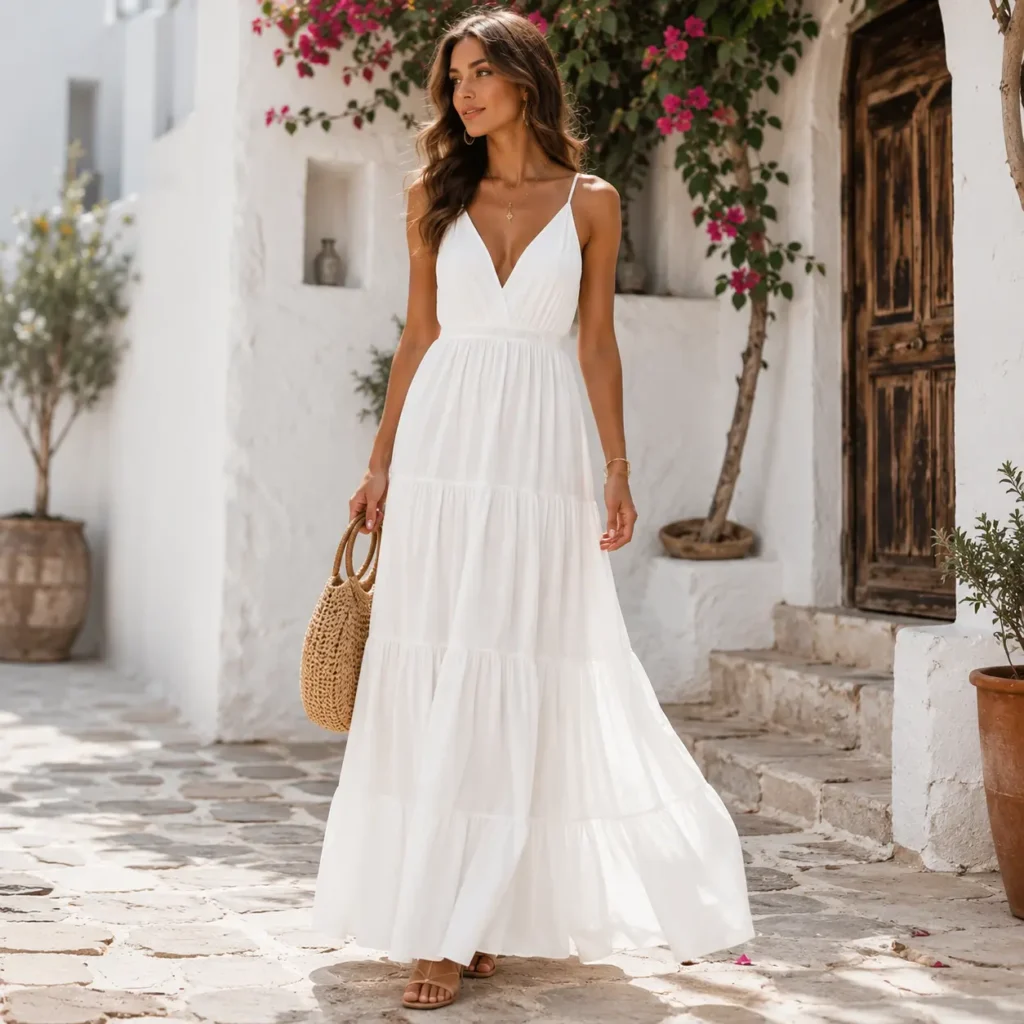
Floor-length or near-floor-length, the white maxi dress is one of the most popular silhouettes for its effortless, elegant drape. It works beautifully for vacations, outdoor events, and warm-weather occasions where a longer hemline feels appropriate.
White Midi Dress
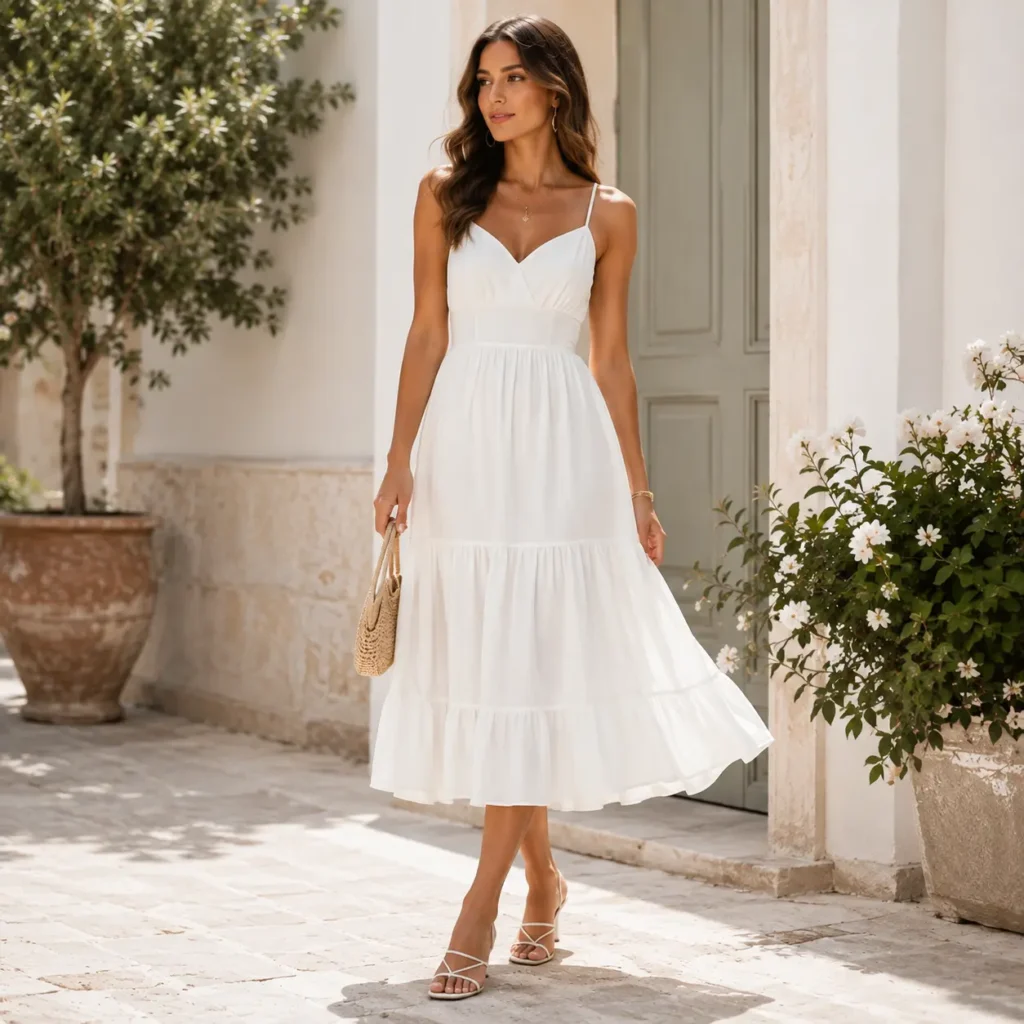
Falling between the knee and ankle, midi dresses offer a versatile middle ground — dressy enough for many events, but still practical for daytime wear. This length has become a favorite for its flattering proportion across a wide range of heights and body types.
White Mini Dress
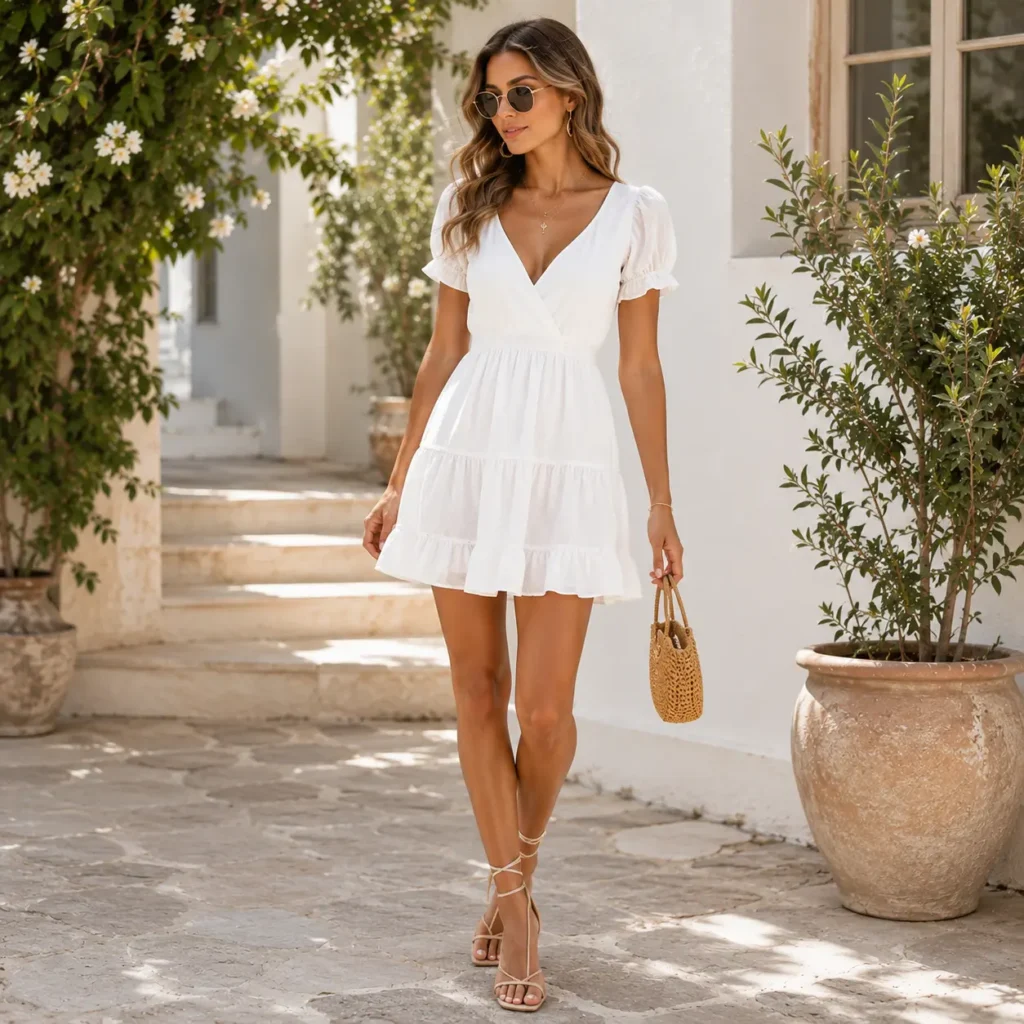
A shorter hemline that leans casual or evening-ready depending on the fabric and detailing. Mini dresses tend to work particularly well for warm-weather outings, casual events, or nights out where a bit more leg is part of the look.
White Sundress
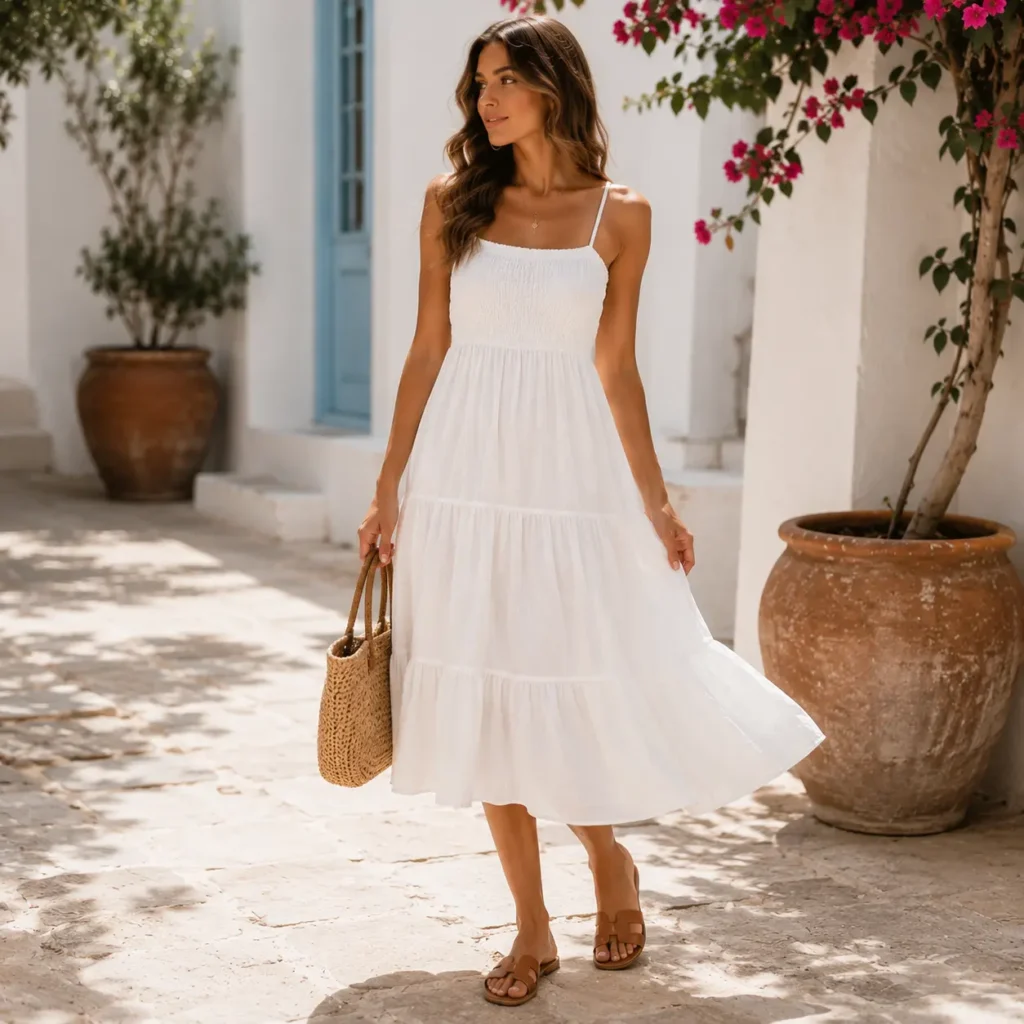
Typically lightweight, breathable, and casual by design, sundresses are a summer wardrobe essential, often featuring straps, a relaxed fit, and breathable natural fabrics like cotton or linen.
White Bodycon Dress
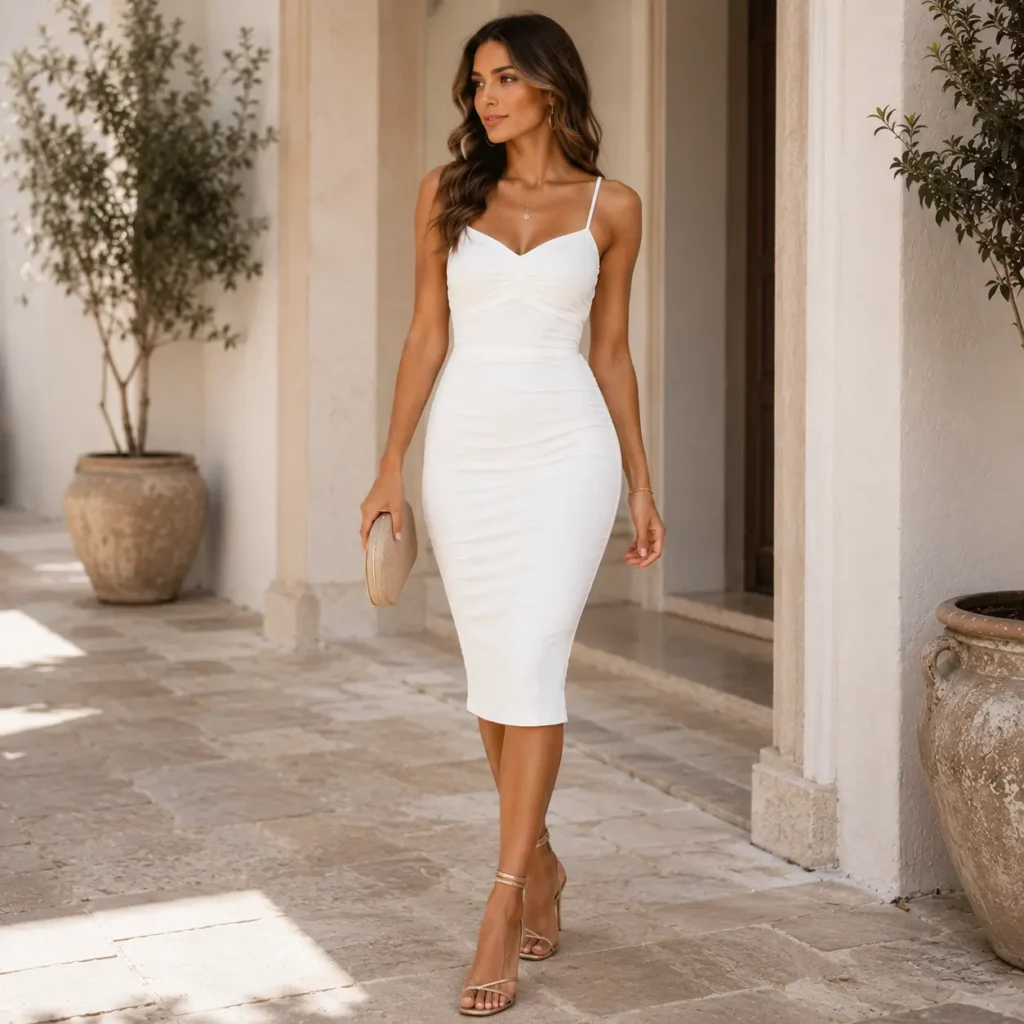
A fitted, figure-hugging silhouette designed to skim closely to the body. This style tends to suit evening occasions and settings where a more form-fitting, polished look is appropriate.
White Flowy or A-Line Dress
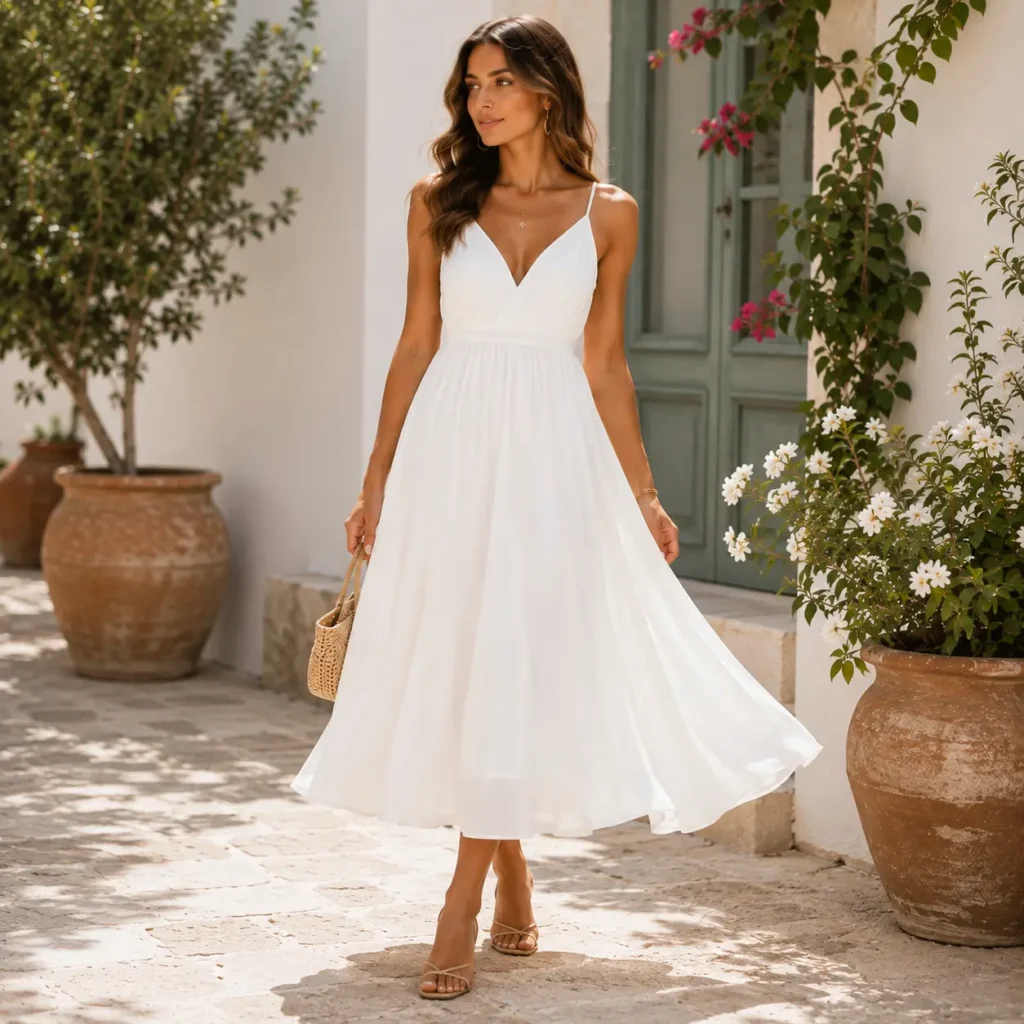
Featuring a fitted top and a fuller, flowing skirt, this silhouette is one of the most universally flattering options, since the flared skirt balances proportions across nearly every body type.
Choosing a White Dress for Your Body Type
- Pear-shaped bodies: A-line and fit-and-flare silhouettes work beautifully, balancing a fuller hip with a more fitted bodice.
- Hourglass shapes: Wrap dresses or fitted silhouettes with a defined waist highlight natural curves without adding unnecessary volume.
- Apple shapes: Empire waistlines (fitted just under the bust, flowing from there) tend to be especially flattering, skimming rather than clinging through the midsection.
- Rectangle shapes: A belted or wrap-style white dress helps create the illusion of a more defined waistline.
- Petite frames: Midi or mini lengths tend to be more flattering than a full maxi, which can sometimes overwhelm a shorter frame unless it’s specifically cut for petite proportions.
- Tall frames: Maxi dresses are particularly striking on taller frames, offering plenty of length to showcase the silhouette fully.
White Dresses by Occasion
White Dress for a Wedding Guest
This is one of the more nuanced categories, since wearing white to someone else’s wedding carries etiquette considerations. As a general rule, avoid anything that could be mistaken for bridal wear — solid, all-white gowns, especially in a formal silhouette, are best avoided. However, a white dress with a bold print, colorful trim, or a distinctly casual cut (like a simple sundress at a very relaxed, casual wedding) can sometimes be appropriate. When in doubt, it’s safest to choose a different color entirely, or check directly with the couple if you’re unsure.
White Dress for Graduation
A crisp white dress has become something of a graduation tradition at many schools, symbolizing a clean, celebratory milestone. A midi or knee-length white dress in a classic silhouette tends to photograph beautifully for graduation photos, particularly under a gown that may be removed for individual pictures.
White Dress for a Bridal Shower or Engagement Party
As the guest of honor or as a close friend celebrating the bride, a white dress can be a lovely, symbolic choice for these pre-wedding events, particularly for the bride herself. As a general guideline, non-bride guests should still check with the host or bride beforehand, since white is sometimes reserved specifically for the honoree at these events.
White Dress for a Baby Shower
Similar etiquette applies here as with bridal showers — if you’re the guest of honor, a soft white dress can feel celebratory and fitting, while guests may want to opt for a different color unless told otherwise by the host.
White Summer Wedding Guest Alternatives
If you love the white aesthetic but are attending a wedding, consider ivory-adjacent or off-white shades with a colorful print, or reserve your solid white pieces for other summer occasions like vacations, garden parties, or everyday warm-weather dressing instead.
White Dress for Everyday Summer Wear
Beyond special occasions, a simple white sundress or midi dress makes an easy, breathable everyday choice for warm-weather months, pairing effortlessly with sandals and minimal accessories for a low-effort, put-together look.
Seasonal White Dress Guide
White Dresses for Summer
Lightweight fabrics like cotton, linen, and breathable blends are ideal, paired with sandals and minimal accessories for maximum comfort in the heat.
White Dresses for Spring
Slightly heavier fabrics or a light cardigan layered on top help transition a white dress into cooler spring temperatures without sacrificing the fresh, seasonal feel.
White Dresses for Fall
A white dress can still work beautifully into early fall by adding a leather jacket, ankle boots, and warmer-toned accessories, transforming the overall feel from purely summery to more transitional.
White Dresses for Winter
Long-sleeve white dresses in heavier fabrics like knit or wool blends, paired with tights, boots, and a structured coat, allow the white dress aesthetic to extend into colder months as well.
Fabric Considerations for White Dresses
White fabric comes with a few unique considerations that don’t apply as much to darker colors:
- Sheerness: Because white fabric doesn’t hide as much as darker colors, it’s worth checking whether a dress is lined, especially for lighter or more lightweight fabrics.
- Staining visibility: White shows stains and marks more visibly than other colors, so it’s worth considering the occasion and activity level before choosing white for a particularly messy event.
- Fabric weight and structure: A slightly heavier weave or a lined dress tends to hold its shape and opacity better than a very thin, lightweight fabric.
- Cotton: Breathable and classic, though prone to wrinkling.
- Linen: Extremely breathable and popular for warm-weather white dresses, though it wrinkles more visibly than cotton.
- Eyelet and broderie anglaise: A textured, perforated fabric often used in white dresses for a romantic, feminine detail.
- Satin: Offers a smooth, slightly more formal finish, often used for evening-appropriate white dress styles.
White Lace and Eyelet Dress Details
Beyond solid, plain white fabric, texture and detailing play a big role in how a white dress reads overall:
- White lace dress: Adds a romantic, feminine quality, often used for both bridal-adjacent occasions and elevated evening wear. Lace overlays can range from delicate and subtle to dramatic and full-coverage, depending on the dress.
- Eyelet detailing: A perforated, embroidered fabric technique that adds texture and a slightly vintage-inspired charm, particularly popular for spring and summer sundresses.
- Ruffle details: Add movement and a softer, more playful quality to an otherwise simple white silhouette, often appearing along hemlines, sleeves, or necklines.
- Crochet white dresses: A boho-leaning texture choice, often featuring an open-knit design that works particularly well for beach or resort settings, sometimes layered over a slip or swimsuit.
These textural details can help a white dress feel more distinct and personal, rather than blending into the broader category of “plain white dress” styles.
Shopping for White Dresses: Price Tiers and What to Expect
- Budget-friendly options typically use simpler cotton or poly-blend fabrics with straightforward silhouettes, making them a great entry point for building out a white dress collection without a large investment.
- Mid-range options often introduce better fabric quality, more tailored construction, and a wider range of design details like lace, eyelet, or lined interiors for better opacity.
- Higher-end and designer options typically feature premium fabrics (silk, high-quality linen), refined tailoring, and more intricate detailing, often at a price point that reflects both material quality and craftsmanship.
Regardless of budget, prioritizing fabric quality and proper lining tends to offer the best long-term value, since these factors directly affect both comfort and how well the dress holds up with repeated wear.
White Dress Neckline and Sleeve Options
- V-neck: Elongates the neckline and tends to be universally flattering across most body types.
- Square neckline: Offers a structured, slightly vintage-inspired look that pairs particularly well with fitted bodices.
- Off-the-shoulder: Adds a romantic, feminine detail while showing a bit of extra skin, ideal for warm-weather occasions.
- Halter neckline: Works well for those wanting to highlight the shoulders and upper back, often paired with a more fitted silhouette.
- Puff or statement sleeves: Add volume and a trend-forward detail to an otherwise simple white dress.
- Sleeveless and strapless options: The most common choices for warm-weather and evening white dresses, offering maximum breathability and versatility for accessorizing.
How to Style a White Dress: Accessorizing Tips
Jewelry
Gold jewelry tends to add warmth against white fabric, while silver offers a cooler, more modern contrast. Both work well — the choice largely comes down to personal preference and the overall vibe of your outfit.
Shoes
- Tan or nude sandals create a seamless, elongating look, particularly for maxi and midi lengths.
- Metallic sandals (gold or silver) add a touch of polish for evening occasions.
- White sneakers offer a monochromatic, casual take on a white dress for daytime wear.
- Colorful heels can add a bold, unexpected pop of color against an all-white base.
Bags
A structured neutral bag (tan, black, or a woven straw style for summer) tends to be the most versatile pairing, though a bold colored bag can also work well as a statement accessory against a white base.
Outerwear and Layers
A denim jacket instantly casualizes a white dress for daytime wear, while a tailored blazer elevates it for more polished settings. In cooler months, a leather jacket or a structured coat helps transition a white dress across seasons.
Belts
Adding a belt to a looser or shift-style white dress introduces waist definition, which can significantly change the overall silhouette without altering the dress itself.
Also Read: The Complete Accessories Guide: How to Elevate Any Outfit in 2026
Best White Dress Colors to Pair With Accessories
Because white functions as a neutral, nearly any accessory color works, but a few combinations tend to stand out:
- Turquoise or coral accessories create a fresh, vacation-ready contrast, particularly popular for summer occasions.
- Black accessories offer a classic, high-contrast pairing that feels timeless and slightly more formal.
- Tan and brown tones create a soft, cohesive, monochromatic-adjacent look that feels elevated without being overly bold.
- Bright, saturated colors (red, cobalt blue, emerald) make for a striking statement against a white base, ideal for those wanting a bolder overall look.
Choosing a White Dress for Your Skin Tone
While personal preference always matters most, certain white shades tend to complement different skin tones particularly well:
- Pure, bright white: Tends to suit deeper skin tones especially well, creating striking contrast.
- Warm or ivory-leaning white: Often more flattering for fair or cool-toned skin, since it softens contrast compared to a stark, bright white.
- Off-white and cream: A versatile middle ground that tends to be flattering across most skin tones, offering the aesthetic of white without as much stark contrast.
If you’re unsure which shade suits you best, trying on a few different white tones in natural light — rather than relying solely on how a dress looks online — is the most reliable way to see how each option interacts with your specific skin tone.
Hair and Makeup Pairing for White Dress Occasions
A white dress tends to photograph and read best with a few complementary styling choices:
- A sun-kissed or bronzed makeup look pairs particularly well with white, especially for summer occasions, creating a warm, glowing contrast against the fabric.
- Soft, romantic hairstyles — loose waves, a low bun, or a half-up style — tend to complement the classic, feminine feel many white dresses carry.
- A bold lip color (red, coral, or berry) can add a striking pop against an all-white outfit for those wanting a more dramatic finish.
- Minimal, dewy makeup suits the fresh, effortless quality of casual white sundresses particularly well for daytime occasions.
Also Read: Makeup Tips for Everyday Beauty: A Beginner’s Guide to Natural, Effortless Looks
Quick White Dress Outfit Formulas
- White maxi dress + tan sandals + straw bag = effortless vacation styling
- White midi dress + denim jacket + white sneakers = easy, casual daytime look
- White mini dress + heeled sandals + gold jewelry = elevated evening outfit
- White sundress + espadrilles + wide-brim hat = classic summer day look
- Long-sleeve white dress + ankle boots + structured coat = polished cold-weather styling
Keeping a few of these combinations in mind makes it easy to build a complete outfit around any white dress in your collection without much extra thought.
Common Mistakes to Avoid When Choosing a White Dress
- Not checking for opacity. Always check under bright or direct light (or try the dress on with the undergarments you plan to wear) to ensure the fabric isn’t more sheer than expected.
- Ignoring wedding guest etiquette. Wearing solid white to someone else’s wedding remains a common faux pas, so double-check the appropriateness of your chosen dress for the specific event.
- Choosing fit over comfort. A dress that looks great on a hanger but feels restrictive isn’t worth the discomfort, especially for events involving significant standing, walking, or dancing.
- Overlooking fabric weight for the season. A heavy fabric can feel miserable in summer heat, while an overly lightweight fabric may not provide enough warmth or coverage for cooler months.
- Forgetting a slip or proper undergarments, particularly for lighter or more lightweight white fabrics where visible undergarment lines can be more noticeable than with darker colors.
Caring for White Dresses
- Pre-treat stains immediately. White fabric shows stains more visibly, so addressing spills or marks as soon as possible tends to prevent long-term staining.
- Wash separately from colored garments to avoid any risk of color transfer, especially with new or unwashed pieces.
- Use a gentle, color-safe detergent designed to help maintain brightness over repeated washes.
- Avoid high heat when drying, which can sometimes yellow white fabric over time, particularly for synthetic blends.
- Store away from direct sunlight for extended periods, since prolonged sun exposure can occasionally cause slight yellowing in stored white garments.
Building a White Dress Collection
Rather than owning just one white dress, building a small collection across a few key silhouettes offers far more versatility throughout the year:
- One white maxi dress for vacations and warm-weather events
- One white midi dress in a versatile silhouette for both casual and slightly dressier daytime occasions
- One white mini or sundress for casual summer wear
- One long-sleeve or heavier-fabric white dress for cooler-weather versatility
- A small selection of accessories (neutral and one bold color option) to vary the styling across each piece
With just a few thoughtfully chosen pieces, a white dress collection can realistically cover casual daytime wear, warm-weather vacations, and even certain special occasions throughout the year.
Frequently Asked Questions
Is it okay to wear a white dress to a wedding as a guest?
Generally, it’s best to avoid solid white dresses at someone else’s wedding to prevent any confusion with bridal attire. A white dress with a bold print or distinctly casual styling may be acceptable at very relaxed events, but checking with the couple or choosing a different color is the safer choice.
What is the most flattering white dress silhouette? “
This depends on body type, but A-line and fit-and-flare silhouettes tend to be among the most universally flattering, since the fitted top and flared skirt balance proportions across a wide range of body shapes.
How do I make sure a white dress isn’t see-through?
Check the fabric under bright or direct light, ideally while trying the dress on, and consider wearing appropriate nude undergarments or a slip if there’s any concern about opacity.
What shoes go best with a white dress?
Nude or tan sandals create a seamless, elongating look, metallic sandals add polish for evening wear, and white sneakers offer a casual, monochromatic daytime option.
Can white dresses be worn in the fall or winter?
Yes, especially long-sleeve styles in heavier fabrics like knit or wool blends, paired with boots, tights, and a structured coat to adapt the look for cooler weather.
How do I keep a white dress from yellowing over time?
Wash separately with a color-safe detergent, avoid high heat when drying, and store away from prolonged direct sunlight to help preserve the fabric’s original brightness.
What shade of white is most flattering for my skin tone?
Bright, pure white tends to suit deeper skin tones especially well, while warm or ivory-leaning white often flatters fair or cool-toned skin. Off-white and cream shades offer a versatile middle ground for most skin tones.
Are lace or eyelet white dresses more versatile than plain white?
Both have their place — plain white dresses tend to be more versatile for accessorizing and mixing with bold colors, while lace or eyelet details add a distinct, textured personality suited to more romantic or feminine styling.
Final Thoughts
White dresses for women remain a wardrobe staple precisely because they’re so adaptable — the right silhouette, fabric, and styling choices can take you from a casual summer day to a polished evening event, all within the same versatile color category. Focus on choosing a silhouette that flatters your body type, pay attention to fabric and occasion-specific considerations (especially opacity and wedding guest etiquette), and don’t be afraid to accessorize boldly, since white serves as one of the most forgiving, adaptable bases in your entire wardrobe.
With a thoughtfully chosen white dress (or a small, versatile collection of them), you’ll always have a reliable, elegant option ready for whatever the occasion calls for.
Also Read: 10 College Outfits for Girls: Comfy Yet Cute Everyday Looks