Wolf Cut for Men: The Complete 2026 Guide to Getting, Styling, and Maintaining This Hairstyle

If you’ve spent any time on a barbershop’s inspiration wall, on TikTok, or scrolling hairstyle boards in the last couple of years, you’ve almost certainly seen the wolf cut. It’s one of the most requested men’s haircuts right now, and for good reason — it manages to look effortless and intentional at the same time, works on nearly every hair type, and doesn’t demand a strict daily styling routine to look good.
This guide covers everything you need to know before you sit in the chair: what a wolf cut actually is, how it’s different from a mullet or a shag, which version suits your hair length and texture, how to talk to your barber about it, and how to style and maintain it once you’ve got it. Whether you’re looking into a short wolf cut for a low-maintenance refresh or a long wolf cut for maximum texture, you’ll find the specifics here.
What Is a Wolf Cut for Men?
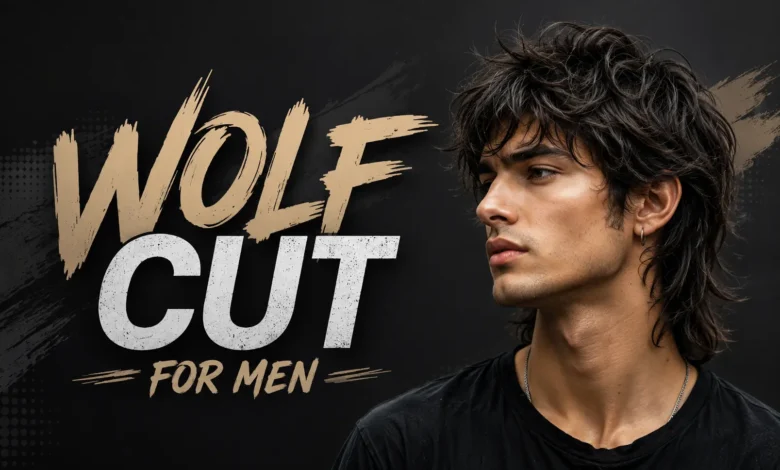
A wolf cut is a heavily layered men’s hairstyle that combines the choppy, voluminous texture of a 1970s shag with the length contrast of a mullet. The defining features are:
- A short, textured crown that’s layered to stand up and create height and volume.
- Choppy, disconnected layering through the mid-lengths, rather than the smooth, blended layers you’d see in a standard taper or fade.
- Longer, lightweight ends that taper toward the nape of the neck, echoing the mullet’s silhouette without the harsh, single-length drop.
Put together, the cut is built to look a little wild — hence the name, which is a nod to the rough, uneven texture of a wolf’s coat. That “undone” look is deliberate. Barbers achieve it through point-cutting, razor work, and heavy internal layering rather than a single clean line, which is why a wolf cut, done properly, needs real technical skill even though the finished look reads as low-effort.
Where the Wolf Cut Came From
The wolf cut isn’t actually new — it’s a hybrid of two hairstyles with deep roots. The shag haircut dates back to the 1970s, when it was popularized by rock musicians and defined by heavy, feathered layering throughout. The mullet followed in the 1980s, known for its stark short-top, long-back structure. Both styles faded from mainstream fashion through the 1990s and 2000s as cleaner, shorter cuts took over.
The wolf cut re-emerged in the early 2020s, driven largely by TikTok and the influence of K-pop styling, which favored soft, layered volume over sharp precision. Combining the shag’s texture with the mullet’s length contrast created something that felt both retro and current — and it stuck. By 2026, the wolf cut has moved from a viral trend into a mainstream barbershop request, with enough variation that it now covers everything from short, subtle versions to dramatic, long, heavily layered ones.
Wolf Cut vs. Mullet vs. Shag vs. Butterfly Cut: What’s the Difference?
Because these four styles share so much DNA, they get mixed up constantly — both by clients describing what they want and, sometimes, by barbers who aren’t familiar with the specific terminology. Here’s a side-by-side breakdown.
| Feature | Wolf Cut | Mullet | Shag | Butterfly Cut |
|---|---|---|---|---|
| Crown | Short, choppy, built for height | Short, minimal texture | Moderately layered | Very layered, rounded |
| Back length | Medium to long, tapered gradually | Long, with a sharp drop from the top | Even length, moderate layering | Long, flowing, feathered |
| Layering style | Heavy, disconnected, deliberately uneven | Minimal layering | Feathered and blended | Feathered and blended, rounder shape |
| Fringe | Often choppy or curtain-style | Rarely styled with a fringe | Frequently includes a fringe | Frequently includes a curtain fringe |
| Overall vibe | Edgy, textured, rebellious | Bold, retro, polarizing | Vintage, relaxed | Soft, romantic, flowing |
| Maintenance | Low to moderate | Low | Moderate | Moderate |
| Best for | Anyone wanting texture and volume without daily styling | Those wanting a bold retro statement | Fans of vintage, relaxed texture | Those wanting a softer, rounder silhouette |
The short version: a mullet is all about the sharp contrast between a short top and long back. A shag is more evenly layered and softer overall. A butterfly cut is the shag’s rounder, more flowing relative — often seen on longer hair. The wolf cut sits in the middle of all three, borrowing the mullet’s length structure and the shag’s heavy texture, then exaggerating the layering for a shaggier, more chaotic finish than either.
Why the Wolf Cut Works for So Many Men
A few practical reasons explain why this cut has stayed popular rather than fading out after one trend cycle:
- It’s genuinely versatile. It adapts to straight, wavy, curly, thick, and fine hair, and can be cut short or grown long.
- It’s forgiving day-to-day. Because the style is built around texture rather than precision, it doesn’t fall apart if you skip a styling step or two.
- It grows out reasonably well. Unlike a fade that needs frequent upkeep to avoid looking patchy, the wolf cut’s layered structure means growth simply adds more shag-like texture rather than ruining the shape immediately.
- It works across face shapes, since the crown height and fringe options can be adjusted to balance almost any facial structure.
Wolf Cut for Short Hair
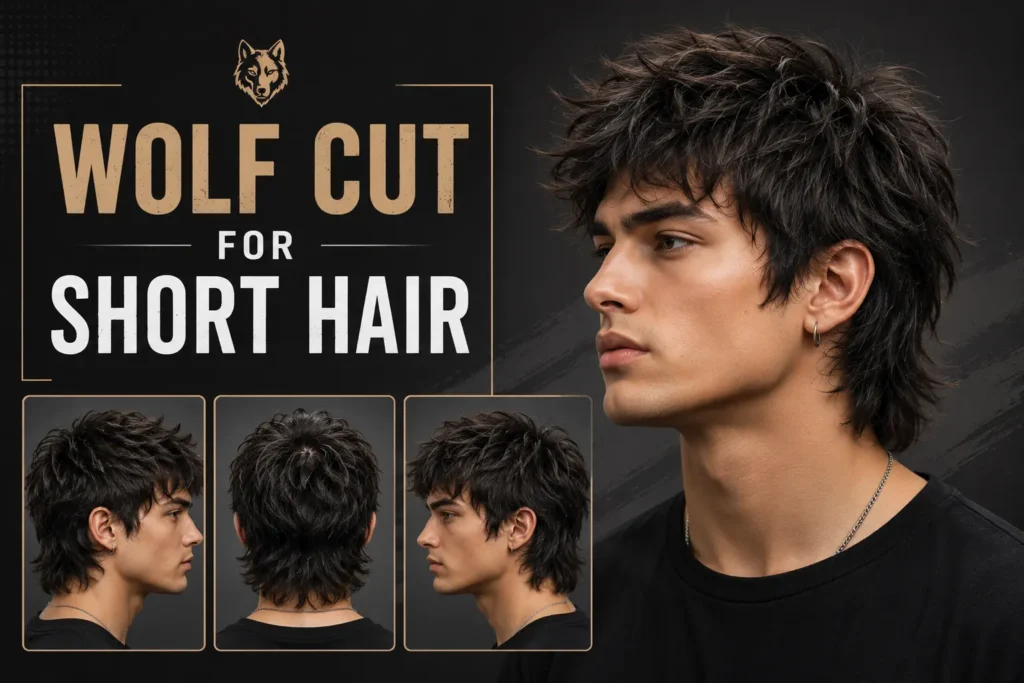
A wolf cut short hair version is the lowest-commitment way to try the style. It keeps the sides and back cropped close while concentrating the choppy layering and volume at the crown. This version is:
- More office- and workplace-friendly than longer variations.
- Lower maintenance in terms of both product use and trim frequency.
- A good entry point if you’re growing out a fade or buzz cut and want to test the wolf cut’s texture before committing to length.
Because there’s less length to work with, the layering has to be precise — a barber will typically use point-cutting through the crown and a light taper or fade at the sides to keep the short wolf cut from looking like a simple crop with extra volume on top.
Wolf Cut for Long Hair
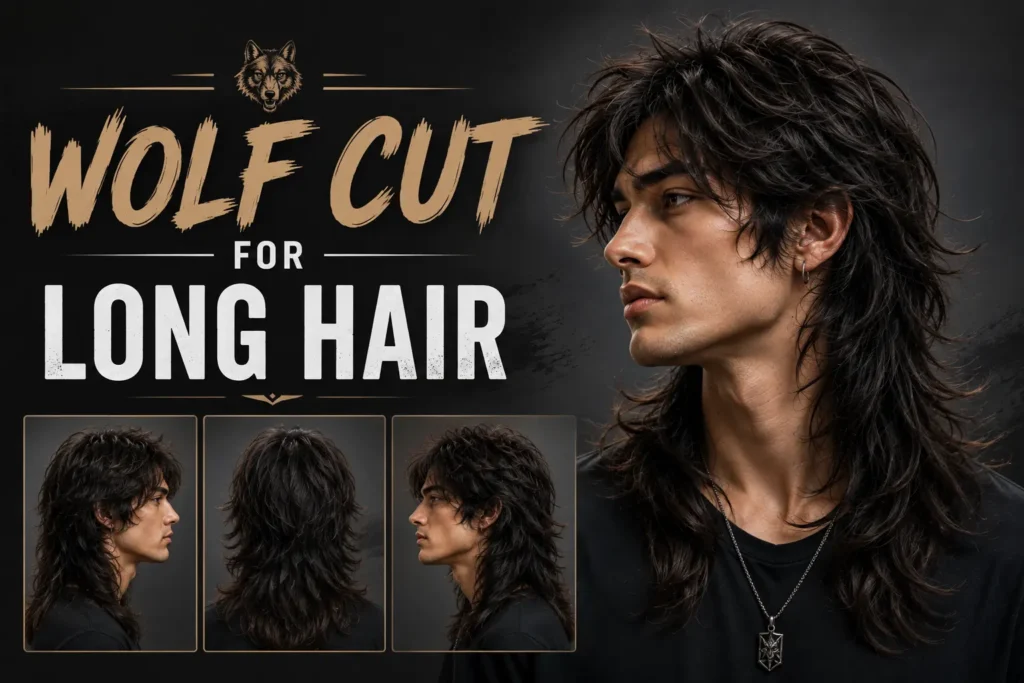
A long wolf cut is where the style shows off the most drama. With more length to work with, barbers can push the layering further, creating a fuller mane-like silhouette at the crown that tapers into long, feathered ends. This version is closer to the shag’s original spirit and tends to suit men who:
- Already have some length they don’t want to lose entirely.
- Want maximum texture and movement.
- Don’t mind a slightly longer trim cycle to maintain the layered shape.
A wolf cut long hair style typically needs the most product to control frizz and define separation, especially on wavy or curly textures, but it also offers the most styling flexibility — you can wear it loose and shaggy, tie the top back, or add a fringe for a completely different look on the same cut.
Wolf Cut Variations and Styles
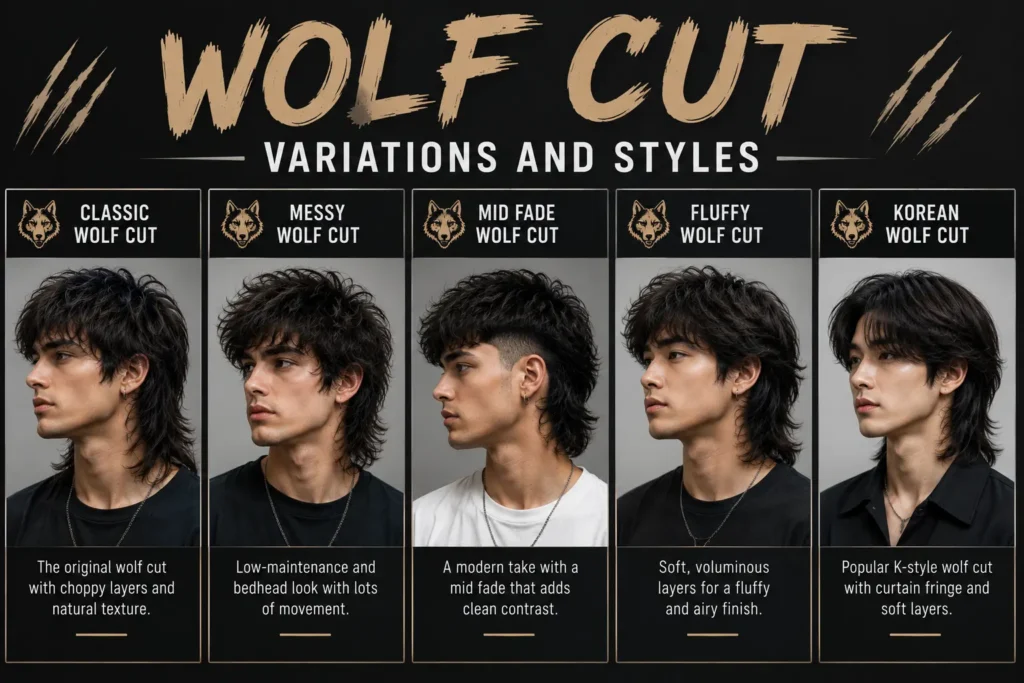
Beyond short and long, there are several named variations worth knowing before your barbershop visit, since each targets a slightly different look.
- Mid Fade Wolf Cut – Combines a tapered or faded side with the textured, longer top, giving sharper contrast and a slightly more polished finish than the classic version.
- Untapered Wolf Cut – Skips the fade entirely for an all-over shaggy look. This is the lowest-maintenance take on the cut and works well if you want minimal barbershop upkeep.
- Messy Wolf Cut – Loose, undone layers styled with a texturizing spray or matte cream for a deliberately carefree finish.
- Fluffy Wolf Cut – Builds airy volume from root to tip, often on wavy or curly hair, for a soft, cloud-like texture.
- Korean Wolf Cut – Softer, lighter layering, frequently paired with curtain bangs, for a cleaner and more youthful silhouette popularized through K-pop styling.
- Wolf Cut with Fringe or Bangs – A choppy or curtain fringe adds face-framing texture up front and pairs especially well with straight or wavy hair.
Wolf Cut by Hair Type
Straight Hair Wolf Cut
On straight hair, the wolf cut leans cleaner and more structured, since there’s no natural wave or curl to add volume on its own. Choppy layering does the heavy lifting here, and a blunt fringe or micro bangs give the top some visual structure while the back stays soft. Straight-hair versions typically need the least product — a light styling cream or pomade on dry hair is usually enough to define the layers.
Wavy Wolf Cut
Wavy hair is arguably the easiest texture to style into a wolf cut. The natural movement in the hair does much of the shaping work, and the layering catches the wave pattern to create volume and separation without much effort. A sea salt spray or light texturizing spray applied to damp hair, then scrunched and air-dried, is generally all that’s needed.
Curly Wolf Cut
On curly hair, the wolf cut highlights defined curls within the mullet-shag framework. Barbers typically cut curly hair slightly longer than straight hair to account for shrinkage as it dries, and the crown is layered carefully to control volume without flattening curl definition. A lightweight curl cream or gel on wet hair, followed by air-drying or diffusing, keeps the curls intact while letting the cut’s shape come through.
Thick Hair Wolf Cut
Thick hair benefits significantly from the wolf cut’s heavy layering, since removing bulk is often exactly what thick hair needs to avoid looking helmet-like. Point-cutting or razor work through the mid-lengths thins things out while keeping the shape intact. Thick hair also tends to hold the fluffy wolf cut variation especially well, since there’s enough natural density to build real volume at the crown without added product.
Fine Hair Wolf Cut
Fine hair needs the opposite treatment — layering here should create the illusion of density rather than remove more of it. A shorter crown with shorter internal layers builds height, and a matte finishing product adds grip and texture without weighing hair down or making it look thin. Fine-haired men often get the best results from the untapered wolf cut, since it retains more length and avoids over-thinning an already lighter head of hair.
How to Ask Your Barber for a Wolf Cut
Because the wolf cut covers so much ground — from short and tapered to long and dramatically layered — walking in and simply saying “wolf cut” can get you a very different result than what you had in mind. To communicate clearly:
- Bring a reference photo. This is the single most useful thing you can do, since it removes ambiguity about crown height, length, and fringe style.
- Specify crown height and volume. Let your barber know how much lift and texture you want on top.
- Decide on back and side length. Tell them whether you want a dramatic mullet-style drop or a subtler, more gradual taper.
- Choose fringe or no fringe, and if you want one, whether it should be blunt or choppy.
- Choose fade or no fade. A mid fade adds contrast; an untapered blend gives a softer, more uniform look.
- Mention your hair type. Thick, fine, curly, straight, or wavy hair all require different layering techniques to get the same overall silhouette.
Step-by-Step Styling Routine
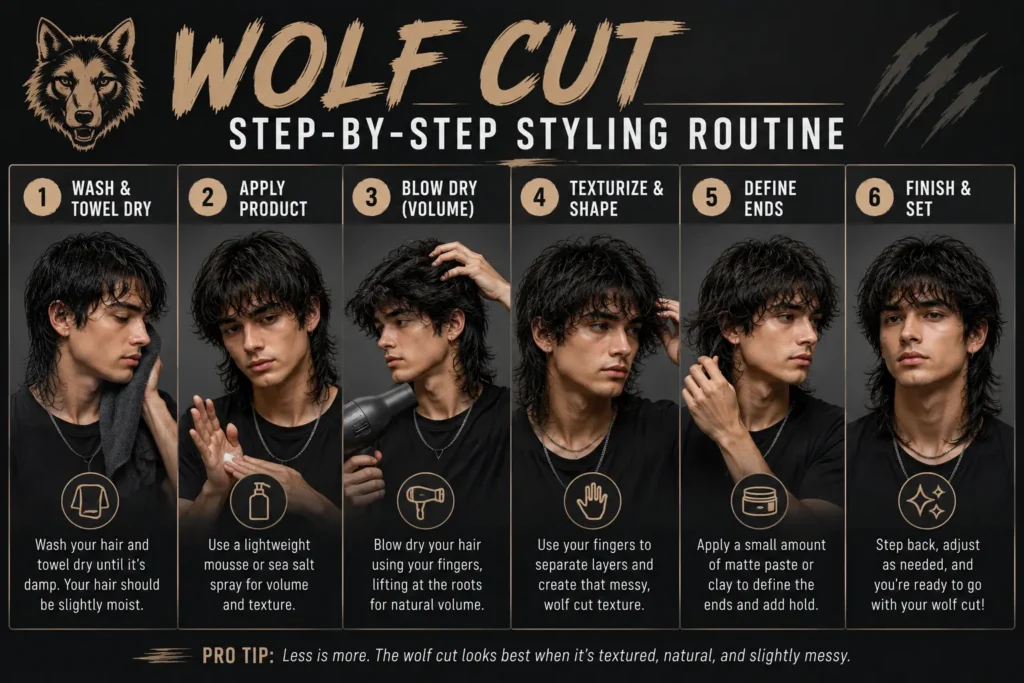
For Short Wolf Cuts
- Apply a small amount of texturizing spray or light pomade to damp hair.
- Rough-dry with your fingers, lifting at the roots to build height at the crown.
- Use a matte clay or paste to define individual pieces at the top, working it in with your fingertips rather than a comb.
- Leave the sides and back mostly untouched to preserve the contrast with the textured crown.
For Long Wolf Cuts
- Start with damp, towel-dried hair and apply a lightweight styling product suited to your texture — texturizing spray for volume, curl cream for curls, or a light serum for straight hair.
- Rough-dry with your fingers or a diffuser, lifting at the roots rather than smoothing hair flat.
- Twist or scrunch sections as you dry to emphasize the choppy layering through the mid-lengths and ends.
- Finish with a small amount of matte product worked through the top and ends only — avoid glossy pomades, which flatten the deliberately undone texture.
- Muss it up with your fingers rather than combing it into place. The wolf cut is meant to look slightly imperfect.
Products That Work Best for a Wolf Cut
- Texturizing spray – adds grip and volume without weighing hair down; useful for both short and long versions.
- Matte clay or paste – defines individual pieces at the crown for the choppy, layered look.
- Sea salt spray – enhances natural wave and adds beachy texture, especially useful for wavy and long wolf cuts.
- Curl cream or lightweight gel – keeps curl definition intact on curly wolf cuts without adding crunch.
- Light serum – tames flyaways on straight hair without flattening the layered texture.
Avoid heavy, shiny pomades or gels across the board — they work against the cut’s textured, matte finish and can make the layering look greasy rather than deliberately undone.
Maintenance Schedule
| Hair Concern | Recommended Frequency |
|---|---|
| Trim to maintain shape | Every 6–8 weeks |
| Deep condition (curly/wavy hair) | Once a week |
| Wash | 2–3 times a week |
| Trim fringe or bangs only | Every 3–4 weeks, if worn short |
Washing too frequently can strip the natural oils that help texture-dependent styles like the wolf cut hold their shape, so most barbers recommend spacing out full washes and using dry shampoo in between if needed.
Also Read: Hair Care Routine 101: How to Build Healthy Hair Habits for Your Hair Type
How Much Does a Wolf Cut Cost?
Pricing varies significantly by location, barbershop tier, and whether you’re getting a first-time cut (which typically takes longer due to the heavy layering) versus a maintenance trim. As a general guide:
- Standard barbershop: a wolf cut is usually priced similarly to any other layered haircut, sometimes with a small premium for the extra time heavy layering takes.
- Specialty or high-end salon: expect to pay more, particularly for a first cut, since precise layering on longer hair takes additional time and skill.
- Maintenance trims are generally quicker and cheaper than the initial cut, since the barber is refreshing an existing shape rather than building it from scratch.
It’s worth asking specifically whether a shop charges extra for heavily layered cuts before booking, since not all pricing structures account for the added time.
Also Read: Shaggy Pixie Cut: Best Styles, Face Shape Guide & Styling Tips
Common Wolf Cut Mistakes to Avoid
- Going to a barber unfamiliar with heavy layering. The wolf cut depends on technical layering skill — a barber who mostly does standard fades may end up flattening the intended shape.
- Over-styling with heavy, glossy products. This works against the deliberately textured, undone finish that defines the cut.
- Skipping regular trims. Without upkeep, the layers grow out unevenly and the cut loses its shape faster than a simpler style would.
- Choosing too much length on the first cut. If you’re new to the style, starting shorter is easier to manage — it’s simpler to grow a wolf cut longer over time than to correct one that’s too dramatic for your comfort.
- Ignoring face shape. A crown that’s too flat or too tall relative to your face shape can throw off the overall balance, so it’s worth discussing face shape with your barber before the first cut.
Wolf Cut and Face Shape
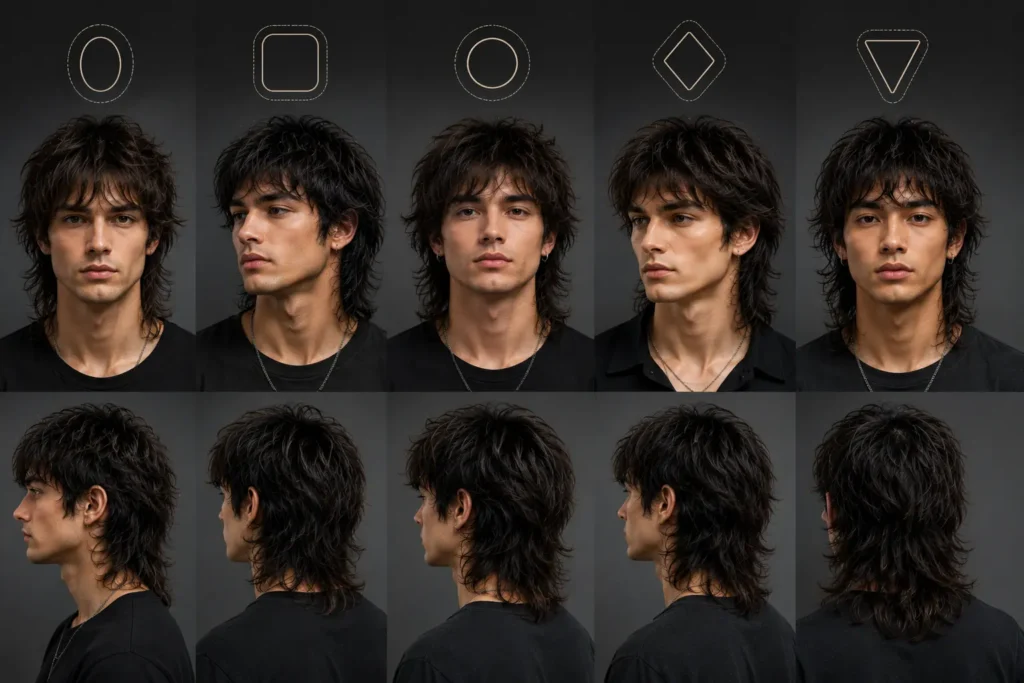
- Round faces generally look best with added height at the crown and layers that avoid extra width around the cheeks.
- Square faces are softened by choppy, textured layers around the jawline that break up sharp angles.
- Oval faces can wear nearly any variation of the cut, from short and tapered to long and heavily layered.
- Long faces tend to look most balanced with a fuller crown kept closer to the head, paired with a fringe to visually shorten the face.
Pros and Cons of the Wolf Cut
Pros:
- Works across nearly all hair types and textures.
- Adapts to both short and long hair, so you don’t have to grow out or cut off much to try it.
- Low daily styling effort once you understand the basic routine.
- Grows out more gracefully than precision cuts like fades.
Cons:
- Requires a skilled barber familiar with heavy layering techniques.
- Regular trims (every 6–8 weeks) are needed to maintain the shape.
- Can look unintentionally messy rather than deliberately textured if styled with the wrong products.
- Long versions require more product and drying time than shorter, simpler cuts.
Frequently Asked Questions
Is a wolf cut the same as a mullet?
No. A mullet is defined by a sharp contrast between a short top and a long back. A wolf cut blends that basic silhouette with heavier, shag-style layering throughout, which softens the transition and creates a shaggier overall look rather than a sharply split one.
Does the wolf cut work for all hair types?
Yes. The layering technique is adjusted for straight, wavy, curly, thick, and fine hair. The core structure — short, textured crown and longer, tapered ends — stays consistent, but the amount of texturizing and the length of the layers change depending on your hair type.
How often do I need to trim a wolf cut?
Most barbers recommend a trim every 6–8 weeks to keep the layers defined, though the untapered version can often stretch a little longer between visits.
Is a wolf cut hard to maintain at home?
Not particularly. Because it’s designed to look textured and slightly undone, it’s more forgiving day-to-day than sleek, precision-based cuts. A texturizing product and some finger-styling is usually all it takes.
Can I get a wolf cut with a fade?
Yes — the mid fade wolf cut is one of the most requested variations, pairing a tapered or faded side with a longer, layered top for added contrast.
What’s the difference between a short and long wolf cut?
A short wolf cut keeps the sides and back cropped close while concentrating the layering and volume at the crown, making it lower-maintenance and more workplace-friendly. A long wolf cut allows for more dramatic layering and a fuller, shaggier silhouette, but generally needs more product and a slightly longer styling routine.
Is the wolf cut suitable for men with thinning hair?
Fine or thinning hair can still work with a wolf cut, though barbers typically adjust the approach — shorter internal layers and a matte finishing product are used to build the appearance of density rather than removing more volume through heavy layering.
Final Thoughts
The wolf cut has earned its staying power because it isn’t tied to one specific hair type, length, or face shape — it’s a flexible framework that a skilled barber can adapt to whatever you’re working with. Whether you’re after a low-maintenance short wolf cut or a dramatic, long, heavily layered version, the key steps are the same: find a barber comfortable with heavy layering, be specific about the crown height, length, and fringe you want, and stick to a matte, texture-focused styling routine once you’re out of the chair.
Also Read: Butterfly Haircut: The Complete Guide to Getting It Right (Every Hair Type & Length)