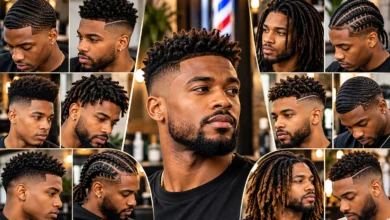
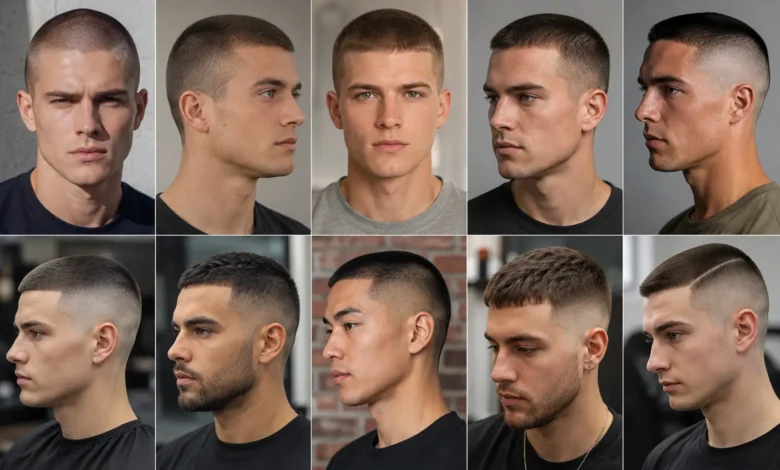
The buzz cut has quietly become the most practical power move in men’s grooming. One trip to the barber, five minutes under the clippers, and you’re out the door — no blow dryer, no product routine, no bad hair days. But “buzz cut” isn’t one haircut. It’s a whole family of styles that range from a bare, all-over shave to fades, tapers, and textured finishes that look nothing alike once they’re actually on a head.
Picking the wrong version for your face shape or hair type is the difference between a buzz cut that looks deliberate and one that looks like you were just trying to get it over with. This guide breaks down 10 buzz cut styles worth knowing in 2026, how short each one actually is, which face shapes they flatter, and a pro tip after every single cut so you know exactly what to ask your barber for.
What Makes a Buzz Cut a Buzz Cut
Every style on this list starts the same way: electric clippers run over the head to leave hair short and close to the scalp, either uniformly or with some variation between the top and sides. What separates one buzz cut from another comes down to three things: how short the hair is left, how much contrast there is between the top and the sides, and whether the transition between lengths is a hard edge or a smooth blend.
Once you think about buzz cuts in those three terms, every style below is really just a different combination of the same three decisions.
1. Induction Cut
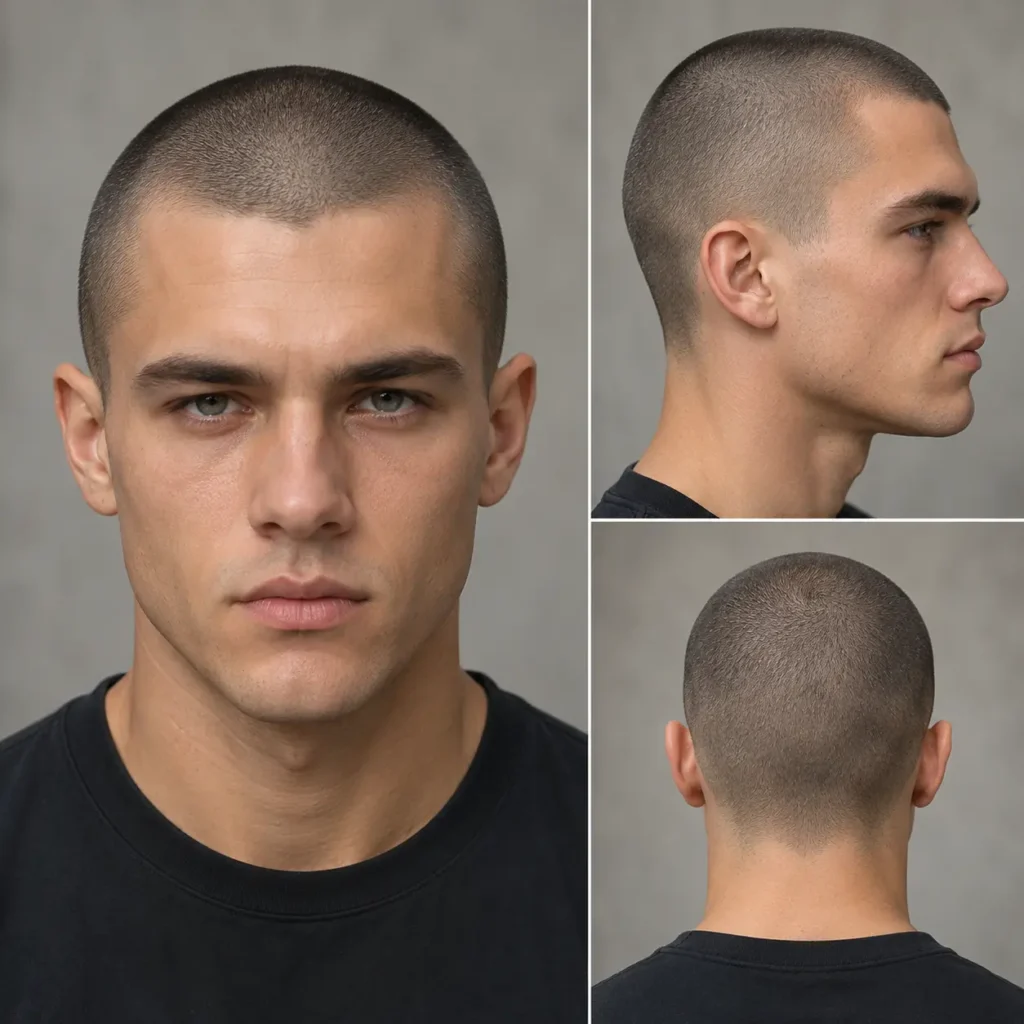
This is the buzz cut at its most stripped-down — the same cut new military recruits get on day one, which is exactly why it’s nicknamed the “induction” or “boot camp” cut. Hair is taken down to the shortest length possible, with no taper, no fade, and no length variation anywhere on the head. It’s about as close to shaved as you can get without a razor.
It’s the lowest-maintenance haircut that exists, and it’s also the most exposing — every dent, scar, or unevenness in your head shape shows through, so it rewards confidence more than any style choice on this list.
Pro tip: Run your fingers over your scalp before committing. If you’re self-conscious about head shape or scalp visibility, start one length longer and go shorter at your next appointment — you can’t undo an ultra-short cut in the same visit.
2. Burr Cut
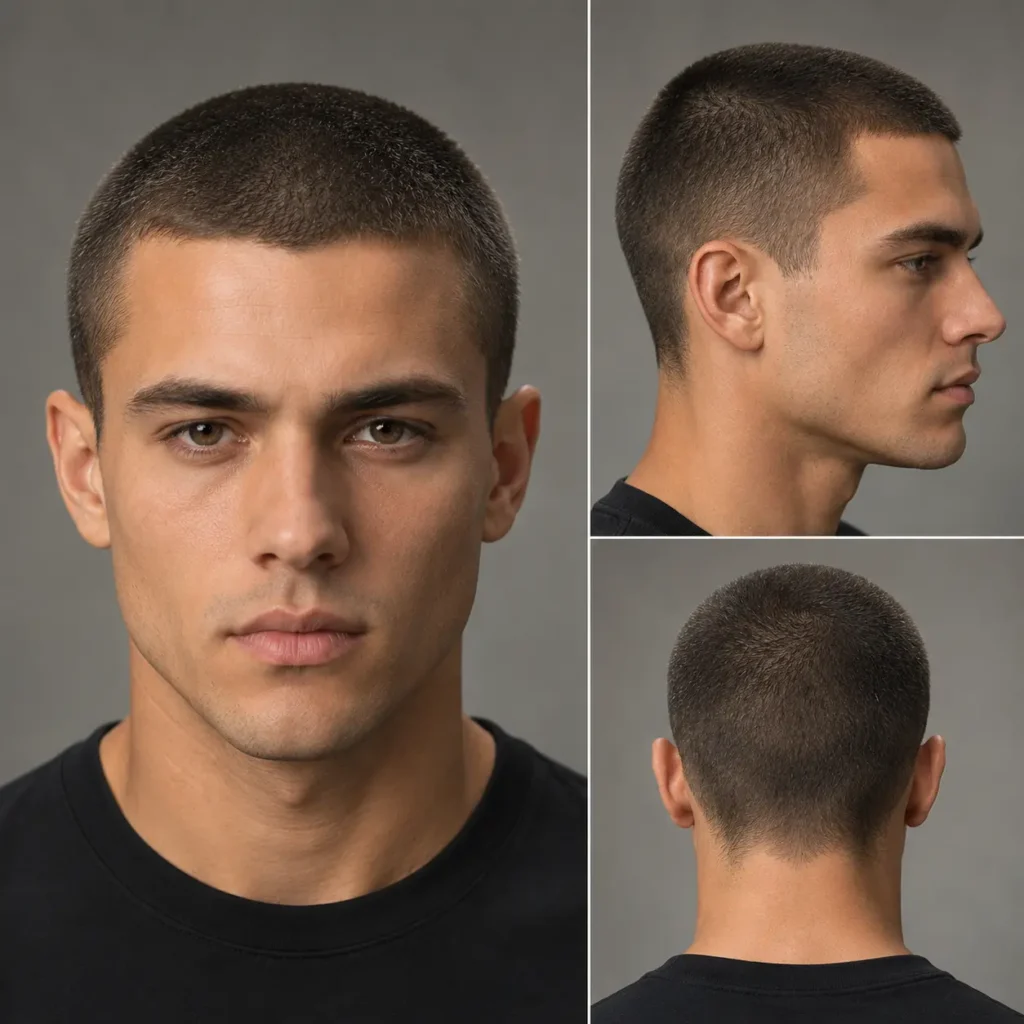
One length longer than the induction cut, and it changes everything. There’s just enough hair left for its natural texture and slight waviness to peek through, so the cut looks less severe and a little more “styled” than a full shave-level buzz.
It’s the most common entry point for guys transitioning from longer hair into buzz territory, since it’s short enough to feel like a real change but not so short that it feels irreversible.
Pro tip: Ask your barber to leave the crown very slightly longer than the ears and neckline — it creates subtle shape without looking like a fade, and it grows out more evenly than an all-one-length cut.
3. Crew Cut
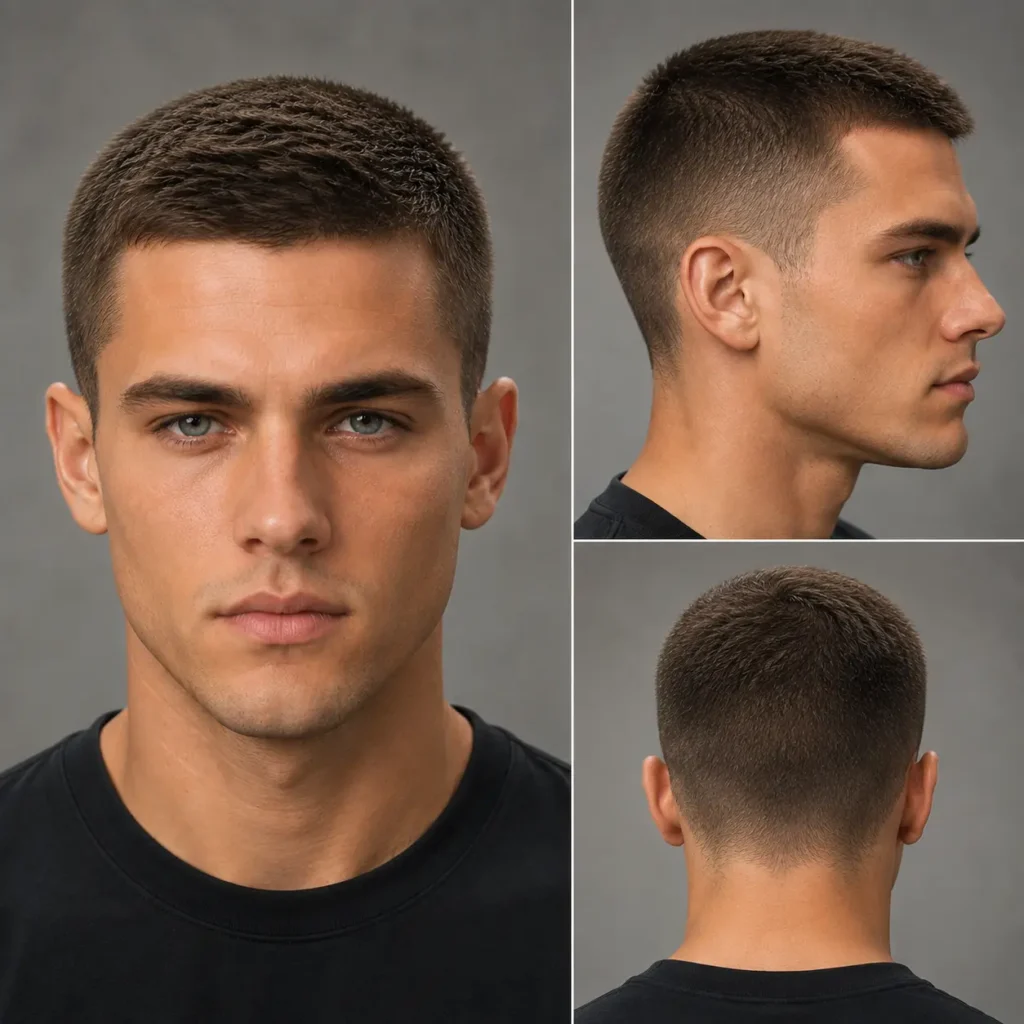
The crew cut is where “buzz cut” starts to look like an actual hairstyle rather than a maintenance decision. The sides are cut shorter and taper down toward the neck, while the top holds noticeably more length, which adds shape and a slight sense of volume without sacrificing the wash-and-go simplicity that makes buzz cuts appealing in the first place.
It’s one of the few cuts on this list that reads as equally appropriate in a courtroom, a classroom, or a gym.
Pro tip: If your hair sits flat, ask your barber to leave a bit more length on top and work in a small amount of matte texture paste with your fingers — it gives the crew cut a bit of lift without looking styled.
4. Butch Cut
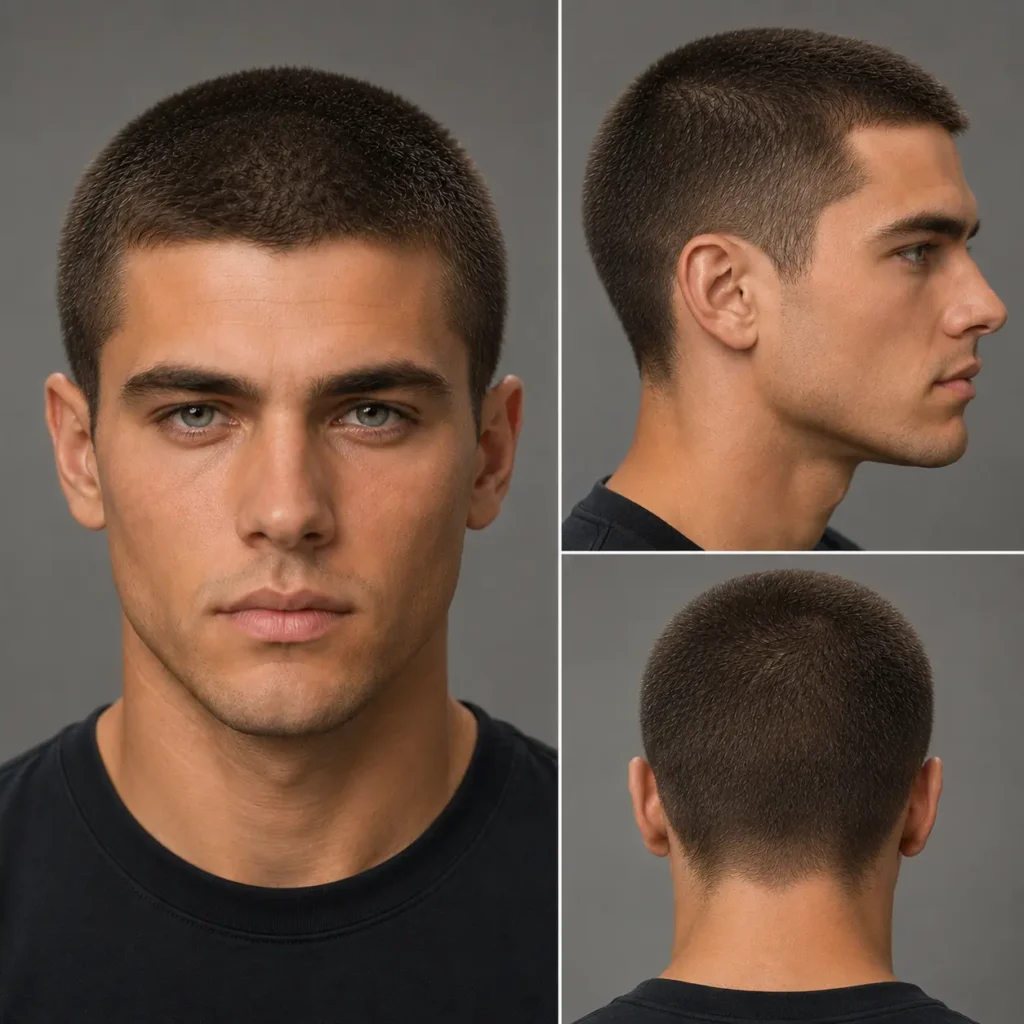
Think of the butch cut as the induction cut’s more forgiving cousin — same uniform, no-taper approach, but with enough length left on to show real volume and hair texture, especially on thicker hair. It splits the difference between “buzzed” and “short haircut.”
Because it leaves more length than the induction or burr cut, it also does a better job of softening a rounder face, since the added height on top balances out width at the cheeks and jaw.
Pro tip: Have your barber comb the hair up before cutting rather than straight down — it shows exactly how much natural lift you’ll get day to day, so you’re not guessing at your maintenance routine.
5. High and Tight
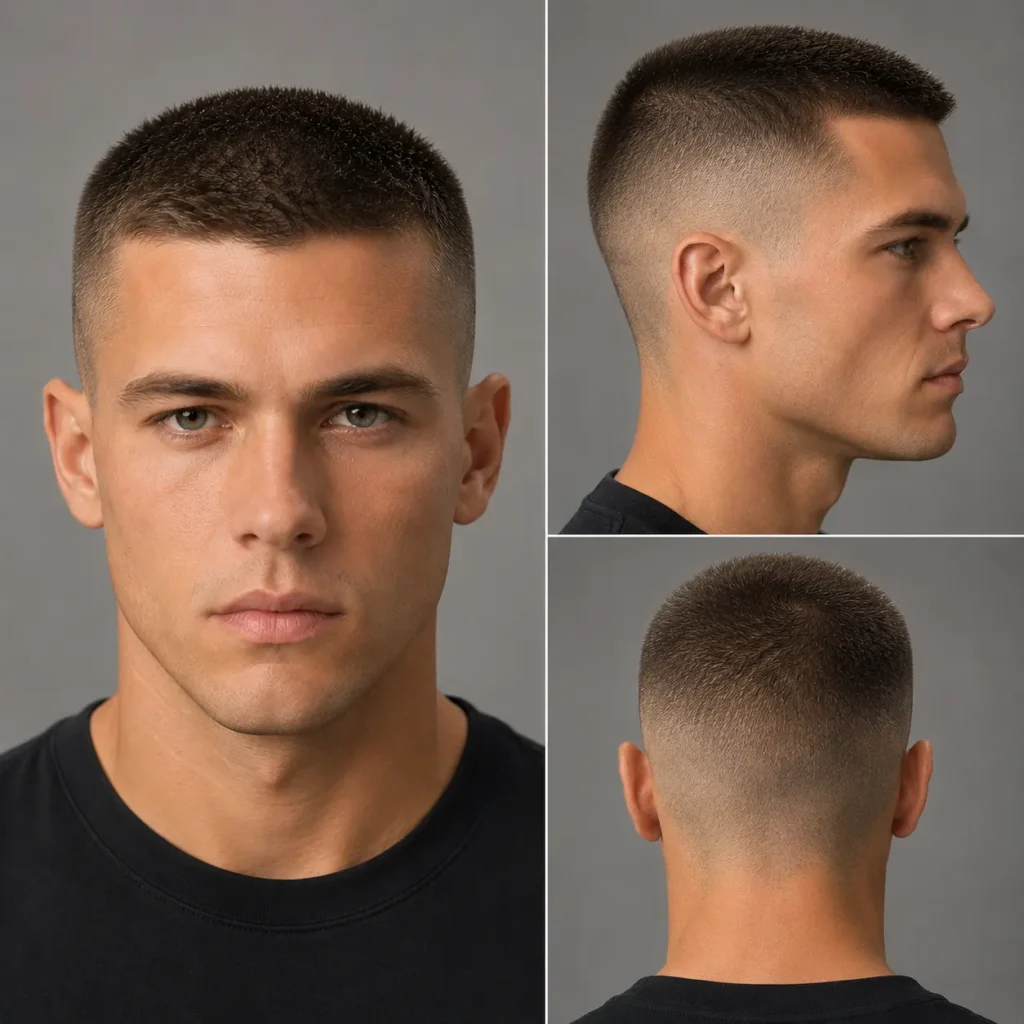
This is the most dramatic contrast cut on the list. The sides are taken down close to the skin while the top keeps noticeably more length, creating a sharp visual break rather than a smooth gradient. It’s rooted in military grooming standards but has been picked up widely by athletes and anyone who wants a buzz cut with an edge.
Because the contrast is so stark, it demands more upkeep than most cuts here — the closely cut sides grow out visibly faster than the longer top.
Pro tip: Book a touch-up every 7–10 days if you want the contrast to stay sharp. Letting the sides grow out even a little softens the whole look and starts to blur the style’s main selling point.
6. Skin Fade Buzz Cut
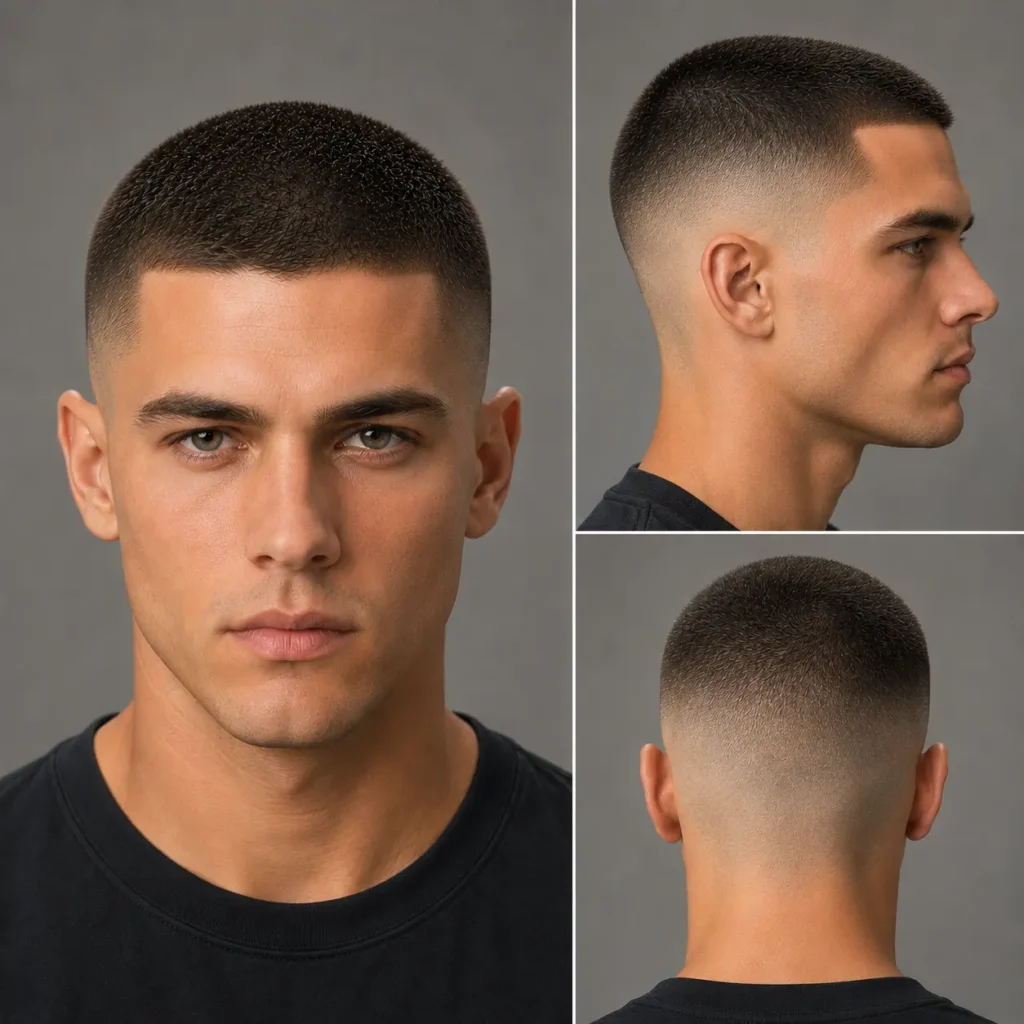
The skin fade takes the buzz cut and adds a smooth gradient instead of a hard line — the hairline is taken down to bare skin and gradually blends up to fuller length on top. Done well, there’s no visible seam where one length ends and the next begins, which is why it’s become one of the most requested barbershop cuts of the last several years.
You can ask for it low (the fade starts just above the ear), mid (starts around temple height), or high (starts well above the temple) depending on how much contrast you want.
Pro tip: Face shape should decide fade height, not trend photos. Rounder faces look sharper with a low fade that keeps visual weight down; longer faces balance out with a high fade that adds width up top. Bring a reference photo, but say your face shape out loud too — a good barber will adjust from there.
7. Textured Buzz
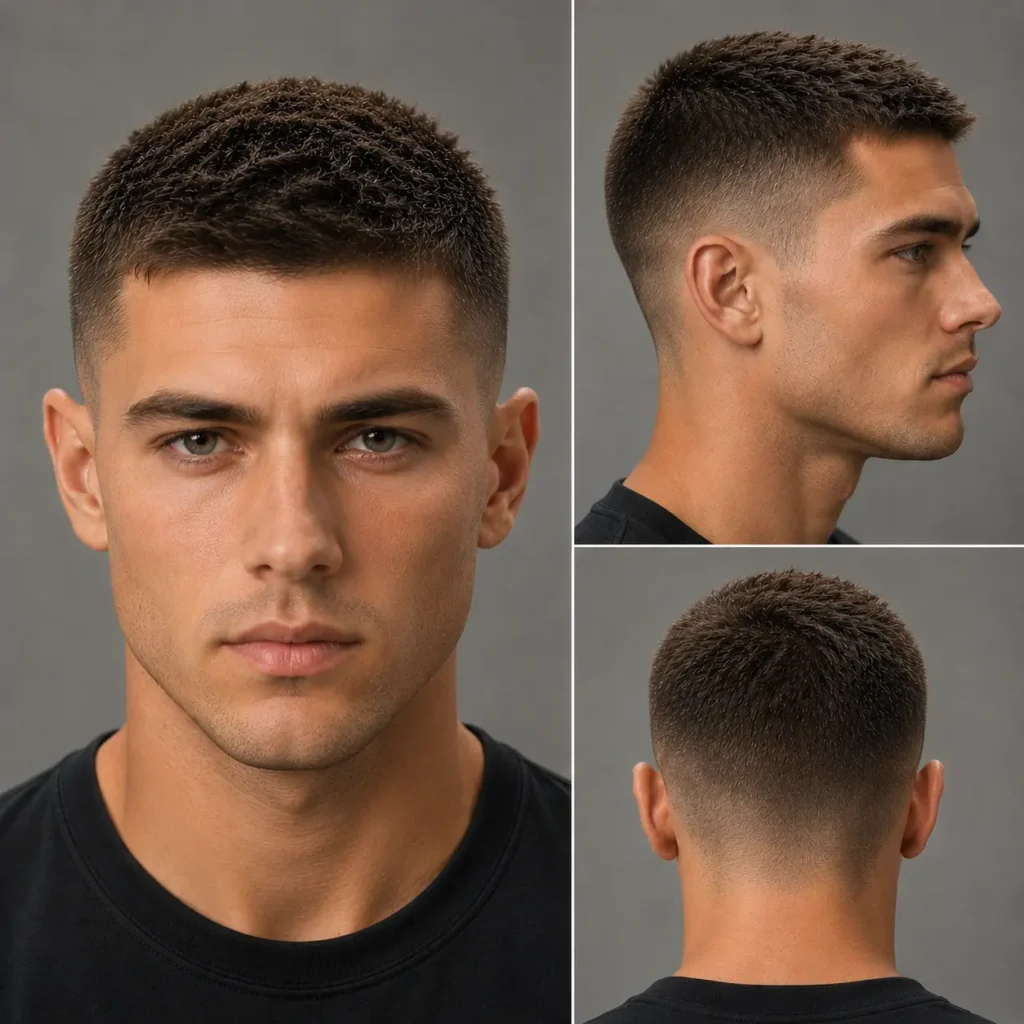
Instead of leaving hair flat and uniform, the textured buzz works with the hair’s natural movement — barbers use texturizing scissors or a looser clipper technique to create a slightly matte, piece-y finish rather than a smooth one. It’s the buzz cut equivalent of “effortless.”
This style is particularly well-suited to naturally curly, wavy, or coarse hair, since those textures don’t sit flat under a standard buzz anyway — this cut works with that instead of fighting it.
Pro tip: Apply a pea-sized amount of matte clay or sea salt spray to towel-dried hair, then scrunch lightly with your fingers instead of combing. Combing flattens the texture that makes this cut worth getting in the first place.
8. Caesar Buzz Cut
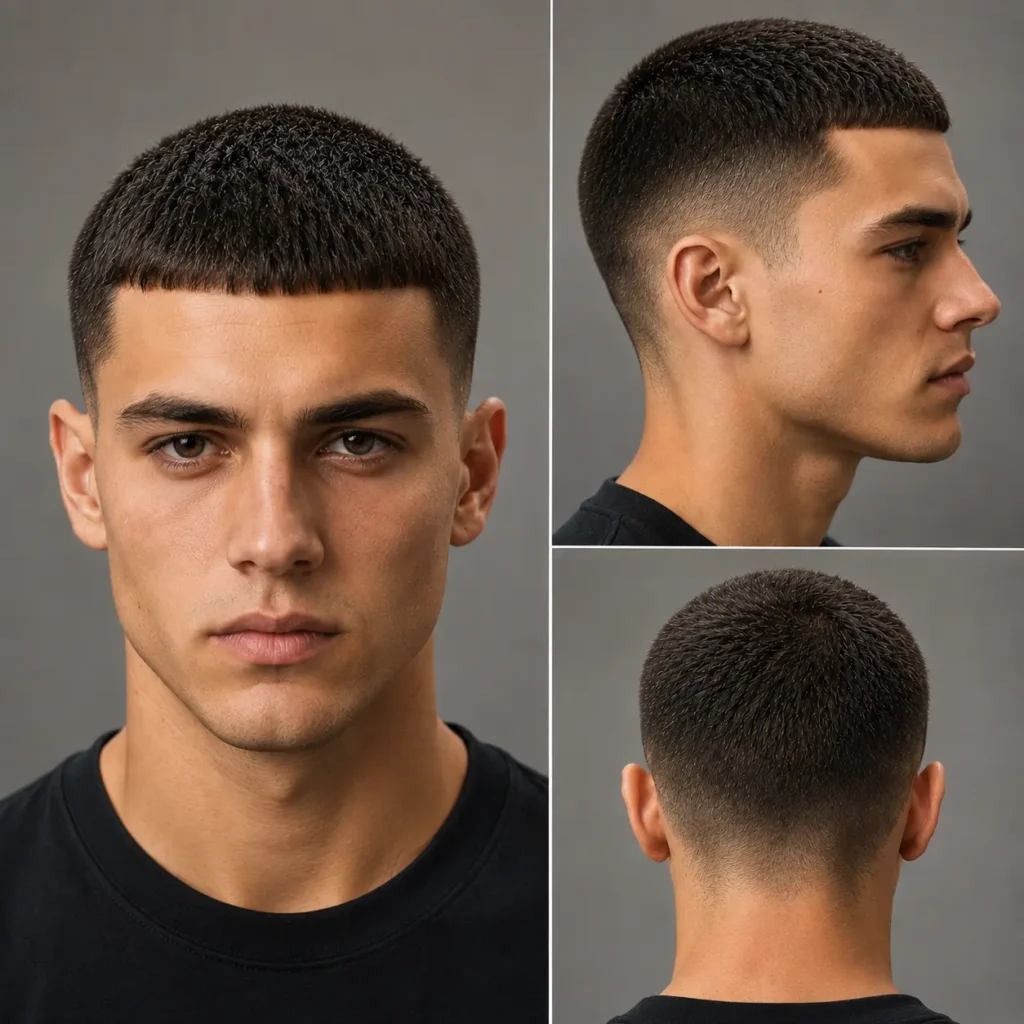
Named for its resemblance to portraits of Julius Caesar, this cut keeps a short horizontal fringe brushed forward while the rest of the head stays at a uniform buzz length. That forward fringe is the whole point — it visually fills in the hairline, which makes it one of the better options for guys dealing with early thinning or a receding hairline.
Pro tip: Ask specifically for a “Caesar fringe” rather than just a buzz cut — some barbers will buzz straight through without leaving the forward piece unless you name it directly. It’s a small detail with a big visual payoff.
9. Mohawk Buzz Cut
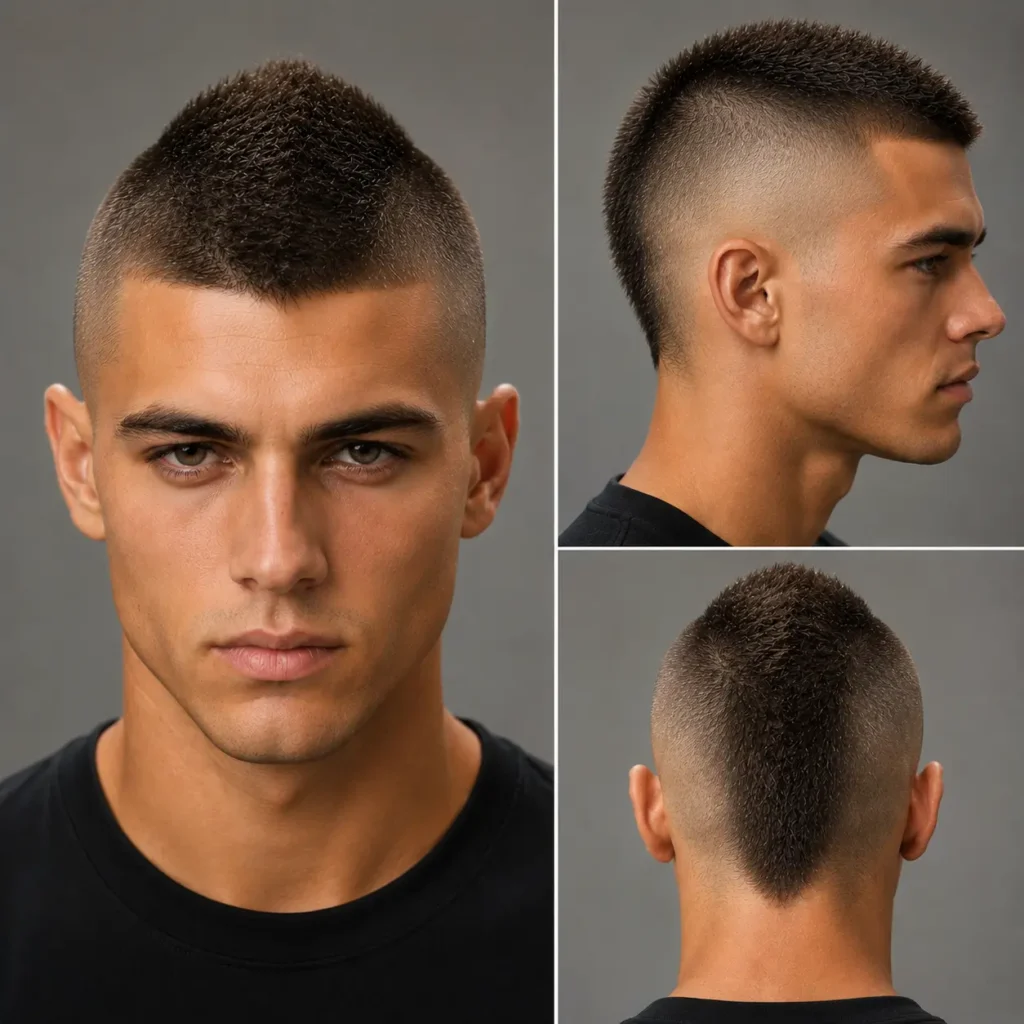
A toned-down, everyday-wearable take on the classic mohawk. The sides are buzzed down close to the skin while a narrow strip of noticeably longer hair runs from the forehead back to the crown. It reads as bold without tipping into costume territory, which is why it’s picked up traction with athletes and anyone who wants their haircut to say something.
Pro tip: Keep the center strip narrower than you think you want it — a wide strip starts to look like an undercut with extra steps, while a genuinely narrow strip (about an inch to an inch and a half) is what gives this cut its actual mohawk silhouette.
10. Buzz Cut with Beard
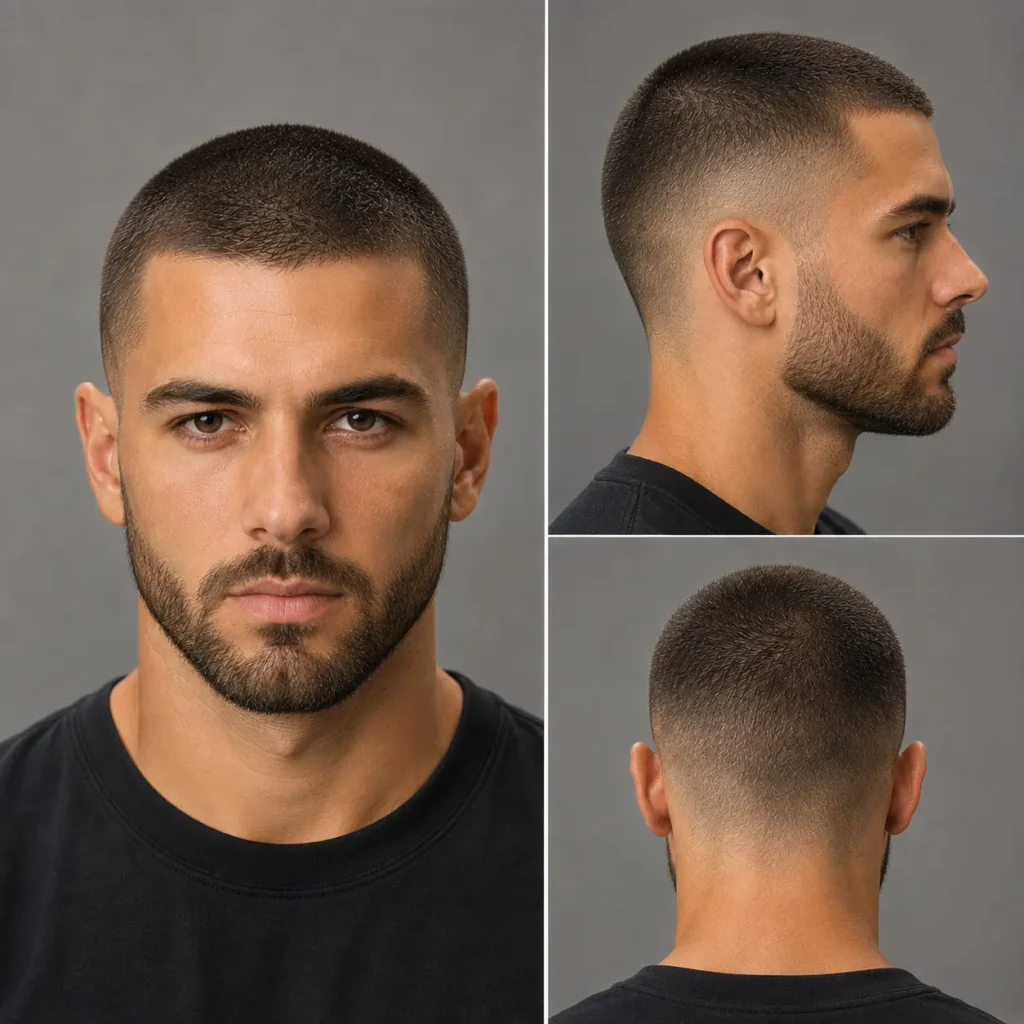
This isn’t a separate haircut so much as a pairing — but it’s requested often enough that it deserves its own entry. A short buzz on top and a fuller, well-shaped beard balance each other out: the clean, minimal hair keeps the beard from reading as unkempt, and the beard adds definition and warmth that a bare buzz cut alone doesn’t have.
It’s one of the lowest-effort combinations in men’s grooming for how finished it looks, provided both halves stay equally maintained.
Pro tip: Line up your beard neckline and buzz cut hairline on the same visit. Getting them done separately, days apart, is the single most common reason this combination starts to look mismatched instead of intentional.
Matching a Buzz Cut to Your Face Shape
| Face Shape | Best Buzz Cuts | Why It Works |
|---|---|---|
| Round | Induction cut, burr cut, high and tight | Short, high-contrast styles add sharp lines that counter the softness of a round jaw |
| Square | Crew cut, butch cut, textured buzz | Balanced proportions mean most styles work; texture softens strong jaw angles |
| Oval | Skin fade, high and tight, mohawk buzz | Most versatile face shape — can handle bold contrast and added height without issue |
| Long/Oblong | Butch cut, textured buzz, Caesar cut | Added width and texture on top keep the face from looking stretched vertically |
| Heart | Caesar cut, crew cut, low skin fade | Forward fringe and lower fade height balance a wider forehead against a narrower chin |
How to Keep a Buzz Cut Looking Sharp
A buzz cut is low-effort, not no-effort. A few habits keep it from looking neglected between barber visits:
- Trim on a schedule, not by eye. Induction and burr cuts need a touch-up every 1–2 weeks; crew, butch, and textured cuts can stretch to 2–3 weeks; fades and high-contrast styles need attention every 7–10 days to keep the line sharp.
- Invest in a real clipper set if you’re maintaining at home. A quality guard set gives you far more control than a basic kit, especially for uniform styles you can safely do yourself.
- Protect your scalp. With this much hair off, sunscreen (SPF 30+) matters on exposed skin, and a light daily moisturizer prevents dryness and flaking.
- Don’t skip the neckline and edges. Even a low-maintenance buzz looks unfinished if the hairline and neck aren’t cleaned up — this is often the difference between “buzzed” and “groomed.”
Also Read: Wolf Cut for Men: The Complete 2026 Guide to Getting, Styling, and Maintaining This Hairstyle
Mistakes to Avoid With a Buzz Cut
- Going too short on the first try. If you’ve never buzzed your hair before, start a length or two longer than you think you want rather than going straight to the shortest option — you can always go shorter at the next appointment.
- Ignoring hair growth pattern. Cowlicks and swirl patterns (especially at the crown) behave differently under a buzz cut than under longer hair. Point it out to your barber before they start.
- Skipping the face-shape conversation. The single biggest reason a buzz cut looks “off” isn’t the cut itself — it’s a mismatch between fade height or top length and the face it’s on.
- Letting fades grow out unevenly. A fade left too long doesn’t turn into a longer haircut gracefully — it turns into an awkward, patchy in-between. Stick to the touch-up schedule or switch to a non-fade style if you can’t.
Frequently Asked Questions
How often do I need to get a buzz cut trimmed?
Most buzz cuts need a refresh every 1–3 weeks depending on the style. Uniform, no-fade cuts like the induction or butch cut can stretch closer to 2–3 weeks, while fades and high-contrast styles like the high and tight need attention closer to every week to keep their edges sharp.
Can I do a buzz cut at home?
Yes, for uniform styles like the induction, burr, or butch cut — a single length setting and a steady hand get the job done. Fades, tapers, and precision styles like the Caesar or mohawk buzz are much harder to self-execute cleanly and are worth leaving to a barber, at least for the first cut.
Does a buzz cut work with curly or coarse hair?
It works well — the textured buzz cut in particular is built for it. Curly and coarse hair naturally hold shape and volume under a buzz in a way straight hair doesn’t, so styles like the burr cut or textured buzz tend to look fuller and more dimensional on curly hair.
Will a buzz cut make my hair grow back thicker?
No — this is a persistent myth. Buzzing your hair cuts the shaft, not the follicle, so it has no effect on hair density, thickness, or growth rate. Hair may feel coarser as it grows back simply because the blunt-cut ends haven’t tapered yet.
What’s the best buzz cut for a receding hairline?
The Caesar cut is generally the strongest option, since the forward-brushed fringe visually fills in the hairline. A skin fade kept high can also work well, since it draws attention to the gradient rather than the hairline itself.
Final Word
The best buzz cut isn’t the shortest one or the trendiest one — it’s the one that matches your face shape, your hair texture, and how much upkeep you’re actually willing to do between barber visits. Start with a length you’re comfortable with, be specific with your barber about fade height or fringe placement, and don’t be afraid to go slightly longer on the first try. You can always go shorter next time.
Also Read: 10 Fresh Boys Haircuts Ideas: Trendy Age-Appropriate Looks