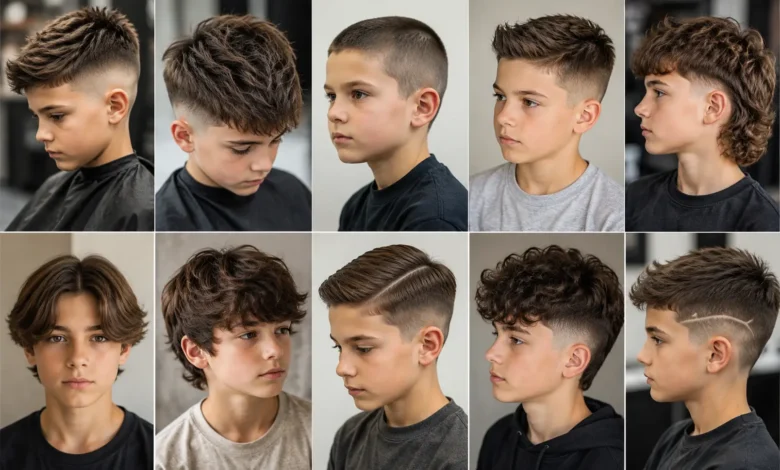
Picking a haircut for a boy — whether he’s a toddler, a school-age kid, or a teenager — can feel surprisingly tricky. You want something that looks current, works with his actual hair type, and won’t turn every morning into a styling battle. This guide walks through ten of the most reliable, genuinely popular boys’ haircuts ideas right now, explaining what each one looks like, who it suits, and how much daily effort it actually takes.
What to Consider Before Choosing a Haircut
A few practical factors matter more than trend alone when picking the right cut:
- Hair type and texture. Straight, wavy, curly, and coily hair all hold certain cuts differently, so what looks great on one hair type may need adjusting for another.
- Age and school rules. Younger kids and some schools have dress code expectations, so it’s worth checking before committing to a bold or unconventional style.
- Maintenance tolerance. Some cuts need daily product and styling, while others are genuinely wash-and-go — be honest about how much effort mornings will actually allow.
- Growth cycle. Shorter, cleaner cuts need trims more often, while longer, layered styles can stretch further between barber visits.
1. Fade Haircuts (Low, Mid, and High)
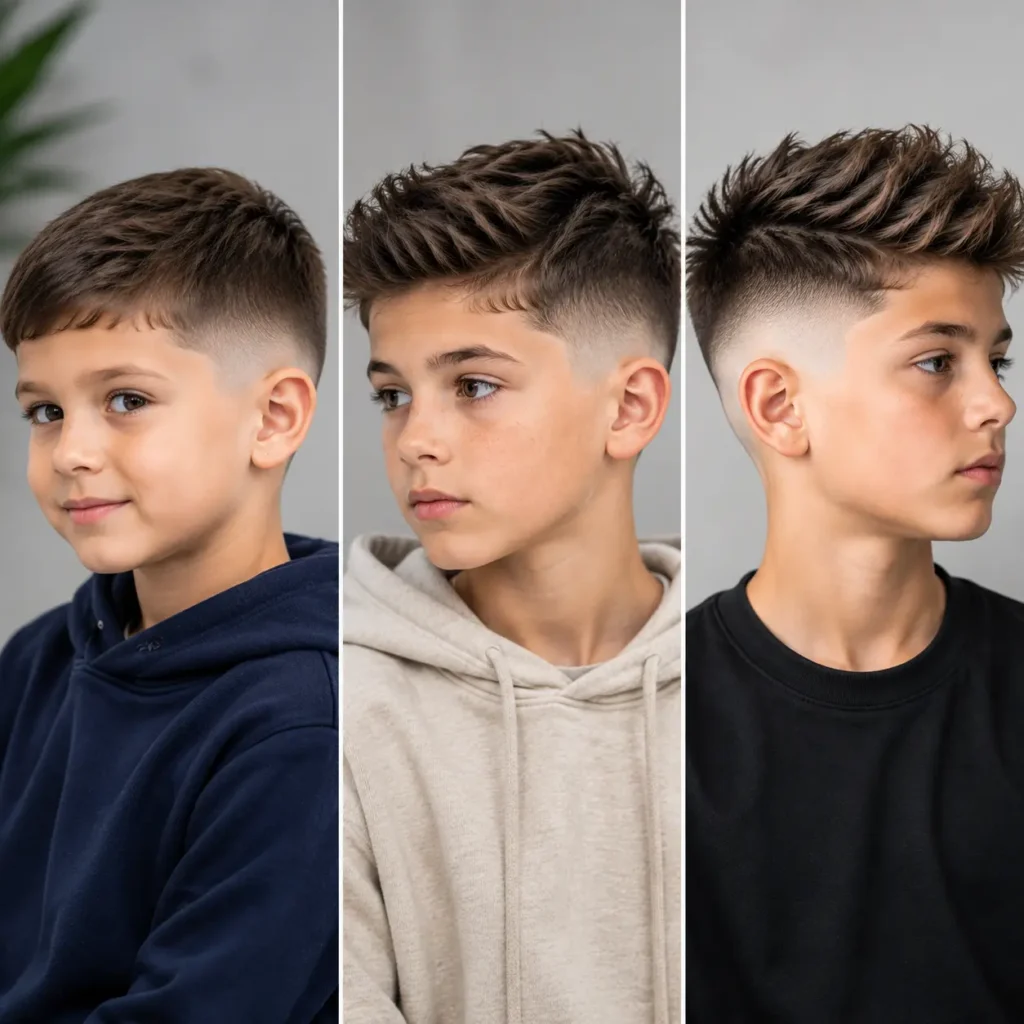
The fade is arguably the most requested haircut style for boys right now, and it comes in several variations depending on where the fading starts.
- Low fade: The fade begins just above the ears, keeping more length on the sides overall. This is a subtler, more conservative version.
- Mid fade: The fading starts around the temple area, offering a balanced contrast between short sides and whatever length is left on top.
- High fade: The fade begins much higher, closer to the crown, creating the boldest, most dramatic contrast with the top.
Fades work well on almost any hair type and pair easily with nearly every style on this list — a textured crop, a quiff, a curtain fringe, or even a mullet can all be finished with a fade on the sides. The trade-off is that fades need more frequent trims (typically every 2-3 weeks) to keep the sharp line looking clean as hair grows out.
2. Textured Crop
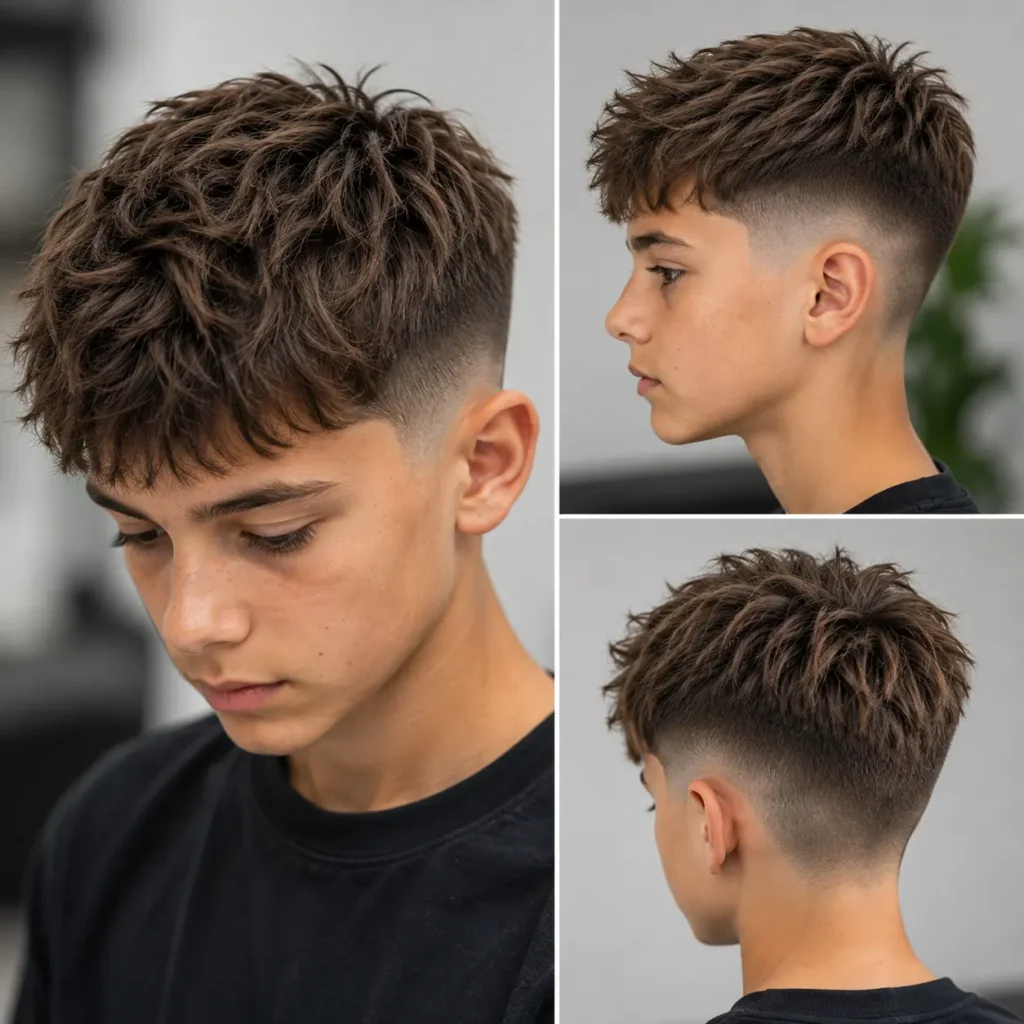
The textured crop keeps the sides short (often faded) while the top is cut into choppy, textured layers that sit slightly longer, usually somewhere between one and three inches.
- Best for: Straight to wavy hair, since the texture reads clearly without needing much product.
- Styling effort: Low to moderate — a small amount of matte paste worked through with fingers is usually enough.
- Why it’s popular: It has a relaxed, slightly messy finish that still looks intentional, making it a favorite for school-age boys and teens who don’t want a high-maintenance routine.
3. Buzz Cut
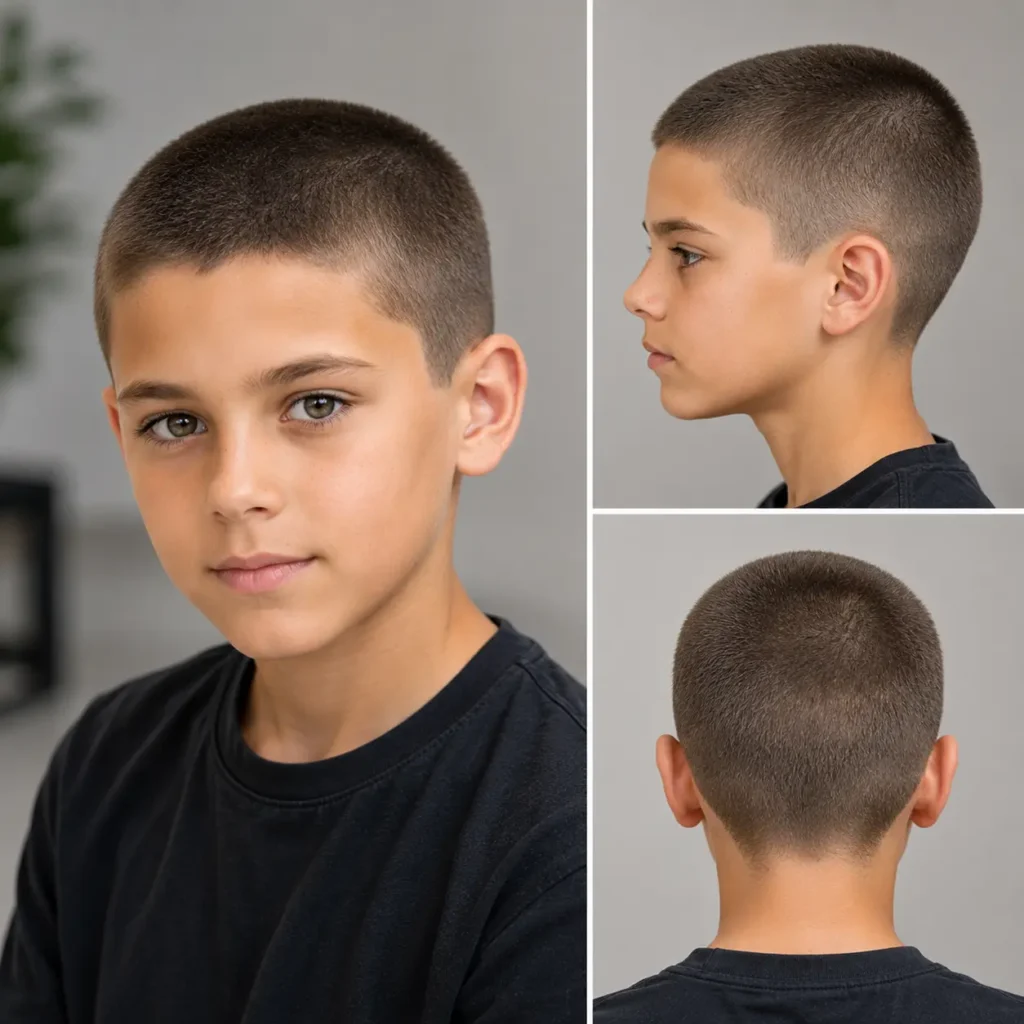
The simplest, most low-maintenance option on this list. Hair is clipped to a uniform, short length all over, usually somewhere between a #1 and #3 guard.
- Best for: Any hair type, any age — this is often the go-to first haircut for toddlers and remains popular through the teen years for boys who want zero daily styling.
- Styling effort: None. This is the definition of wash-and-go.
- Why it’s popular: It’s practical for sports, hot weather, and busy families, and it grows out evenly without looking messy in between trims.
4. Crew Cut
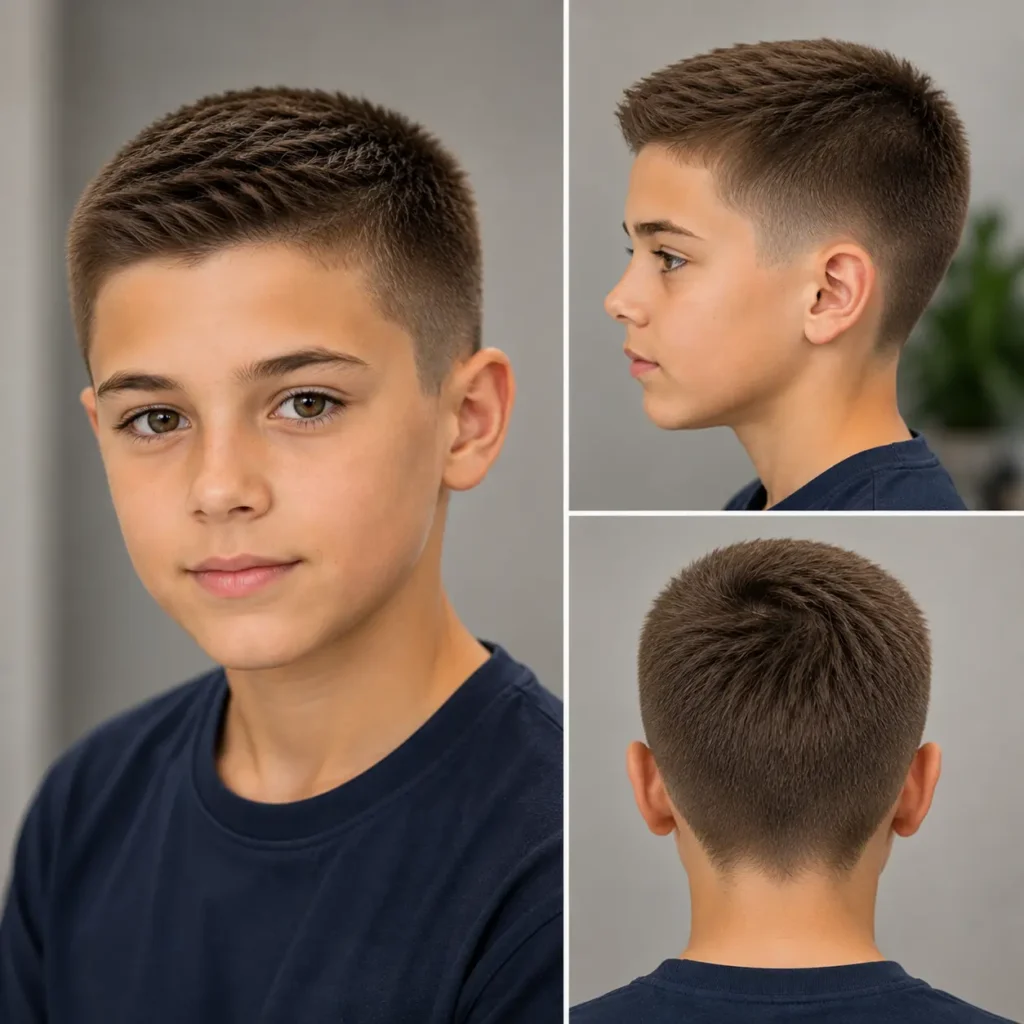
A step up in length from the buzz cut, the crew cut keeps the sides short while leaving slightly more length on top — usually just enough to add a bit of texture or a light comb-through.
- Best for: Straight, wavy, and thick hair types.
- Styling effort: Minimal — a quick finger-comb or a small amount of product is optional, not required.
- Why it’s popular: It’s a classic that works for nearly every occasion, from school photos to sports practice, and it’s easy for barbers to replicate consistently.
5. Mullet (Modern Version)
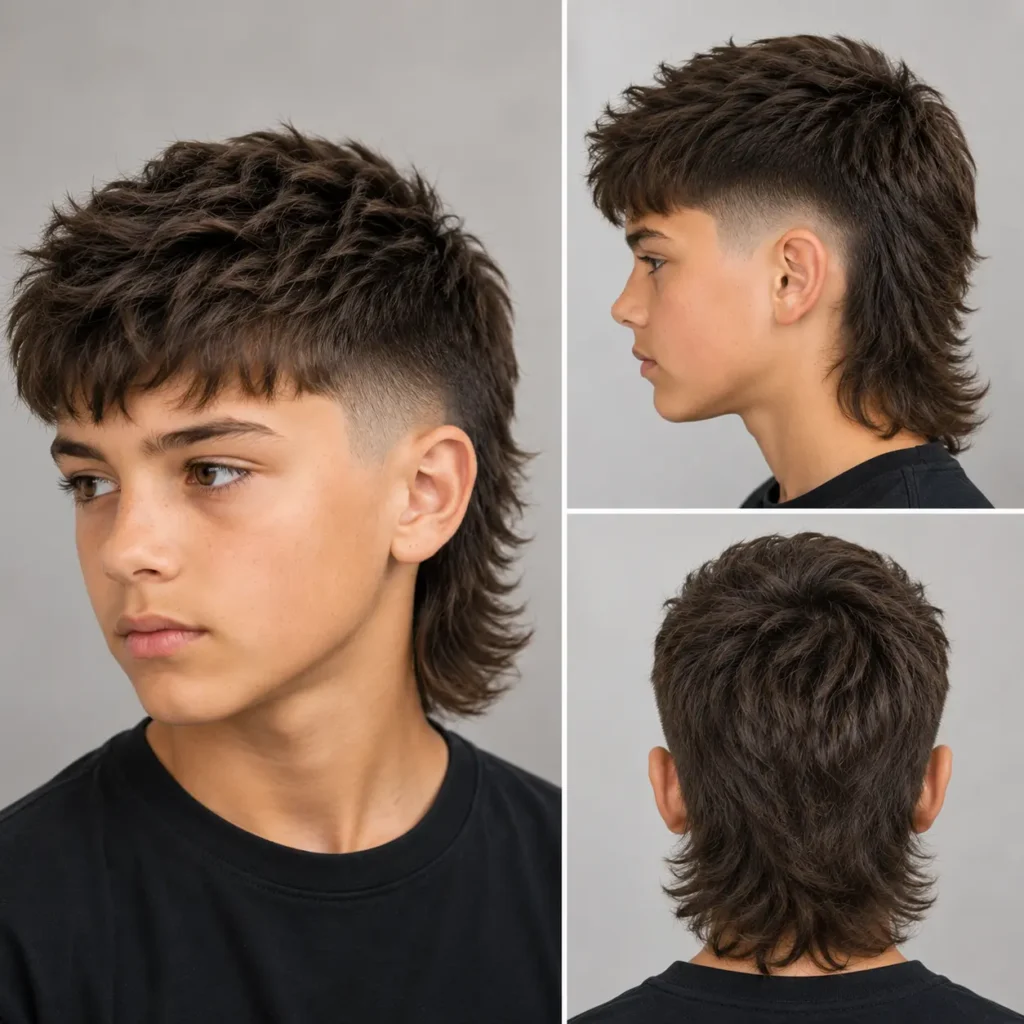
The mullet has made a genuine comeback, though today’s version looks noticeably more refined than the style’s earlier iterations. Sides are kept short (often faded), the top has movement and texture, and length is deliberately left longer at the back.
- Best for: Boys with straight or wavy hair who want a bold, distinctive look.
- Styling effort: Low to moderate — the cut relies on the barber’s shaping more than daily styling effort.
- Why it’s popular: It stands out without requiring much upkeep, and the shorter, cleaner sides keep it from looking outdated compared to older mullet styles.
6. Curtain Fringe
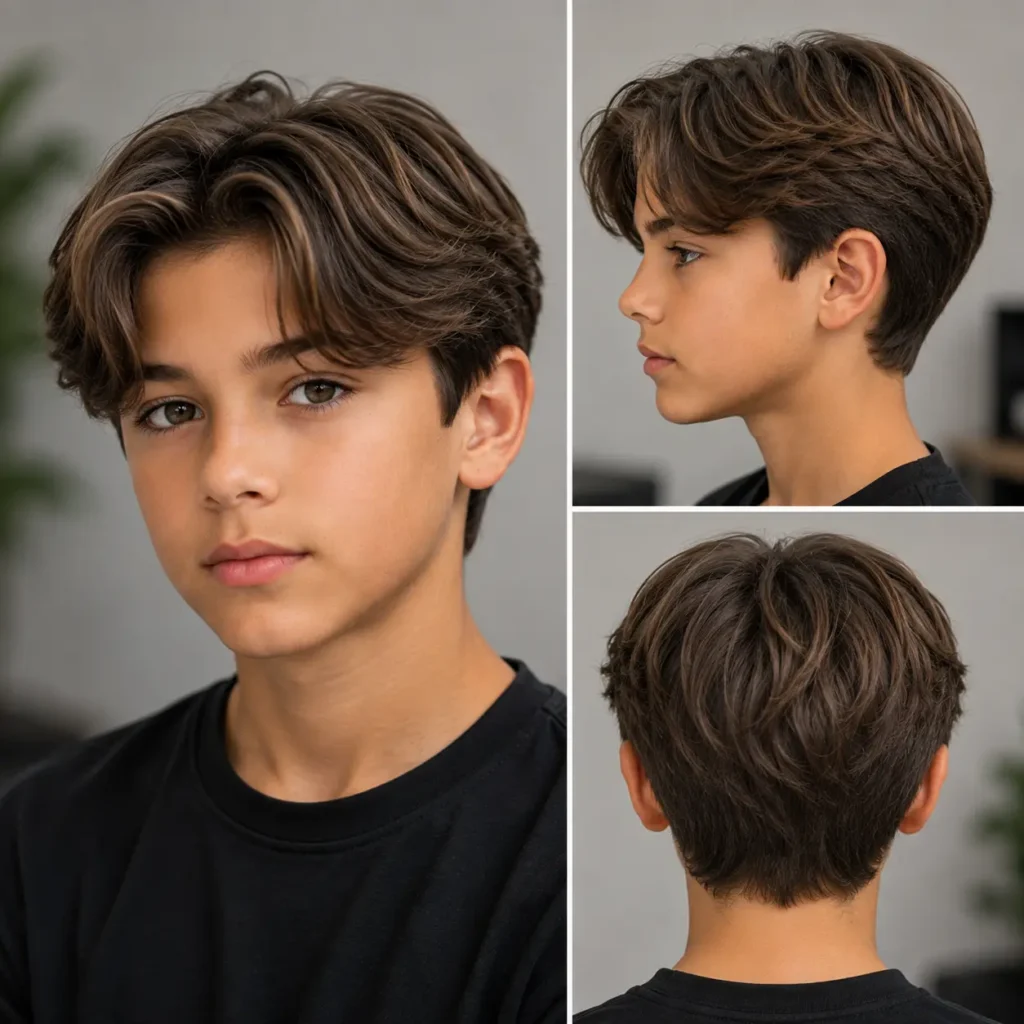
The curtain haircut features a center or slightly off-center part, with the front sections falling naturally to frame each side of the face. The rest is usually kept at a medium length with soft layering.
- Best for: Straight and wavy hair, especially hair with a bit of natural movement.
- Styling effort: Low — this style tends to fall into place with just a comb or fingers, especially once the hair has grown enough to hold the part naturally.
- Why it’s popular: It’s a soft, face-framing option that works well for a wide range of face shapes, and it’s especially popular with preteens and younger teens.
7. Quiff
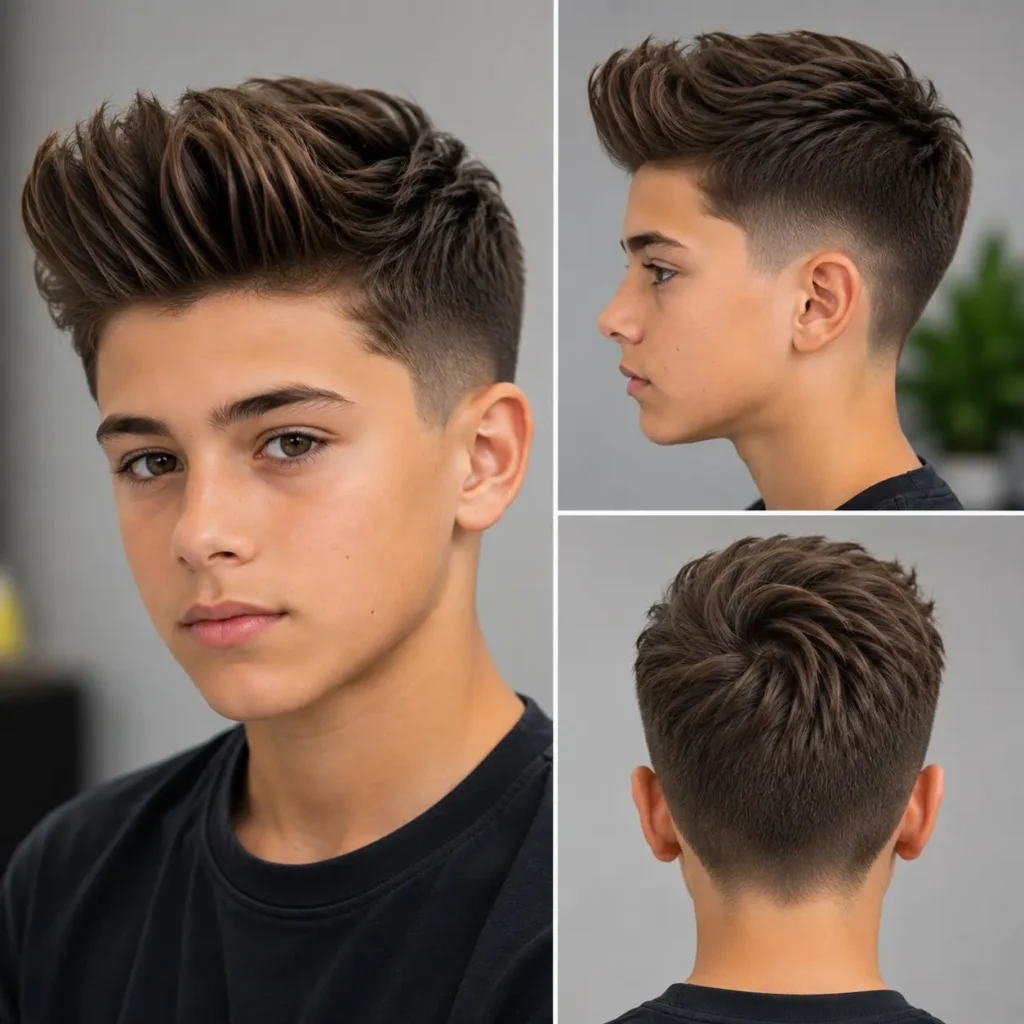
The quiff leaves extra length at the front and top, which is then brushed upward and slightly back to create volume and height. Sides are typically faded or tapered to keep the focus on the top.
- Best for: Straight to wavy hair with decent natural volume.
- Styling effort: Moderate — usually requires a small amount of matte or medium-hold product to hold the lifted shape through the day.
- Why it’s popular: It offers a polished, slightly dressed-up look that still feels current, making it a good option for boys who like a bit more styling involved in their routine.
8. Spiky Crop
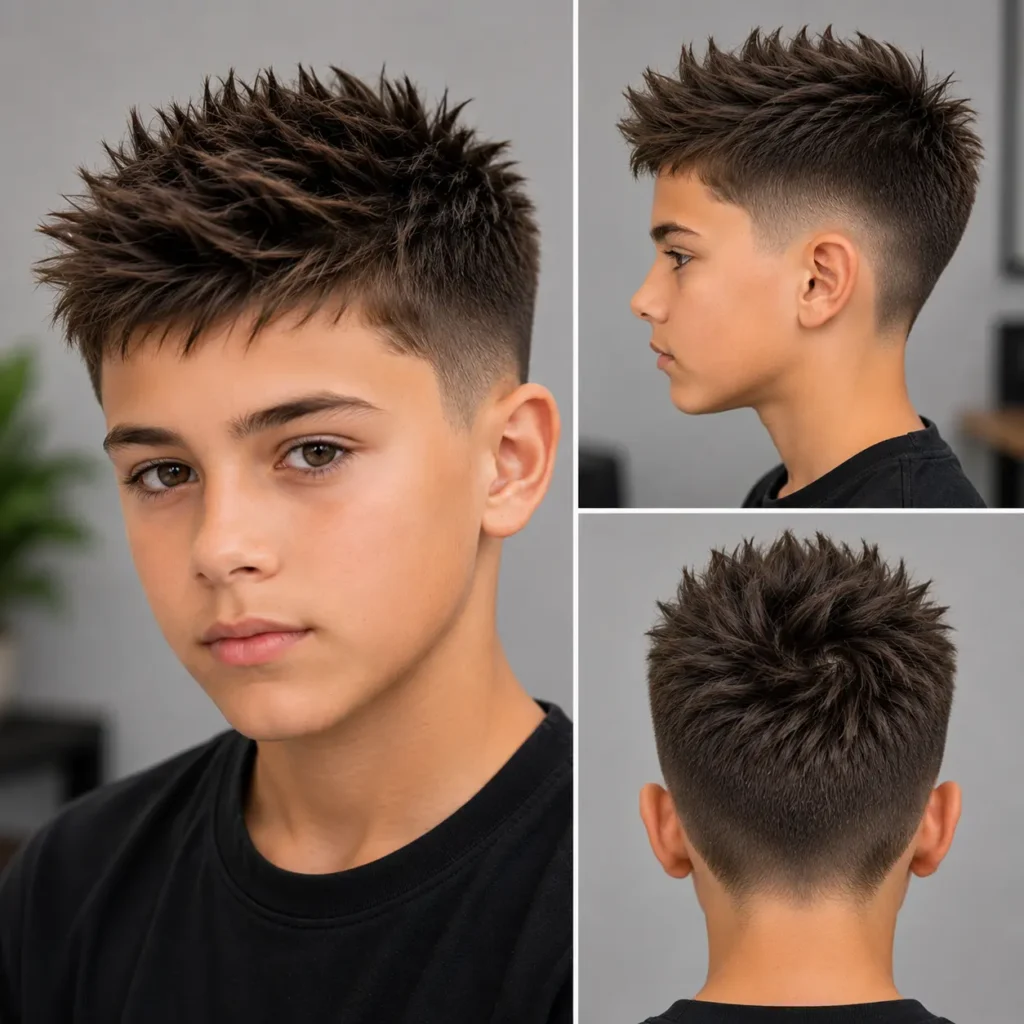
A playful, textured style where the sides are trimmed short and the top is styled into soft, defined spikes using a small amount of lightweight product.
- Best for: Straight or slightly wavy hair.
- Styling effort: Low to moderate — a few minutes with a bit of gel or wax is usually all it takes.
- Why it’s popular: It has an energetic, fun look that younger boys in particular tend to enjoy, without requiring the precision of sharper, more structured styles.
9. Undercut (Disconnected)
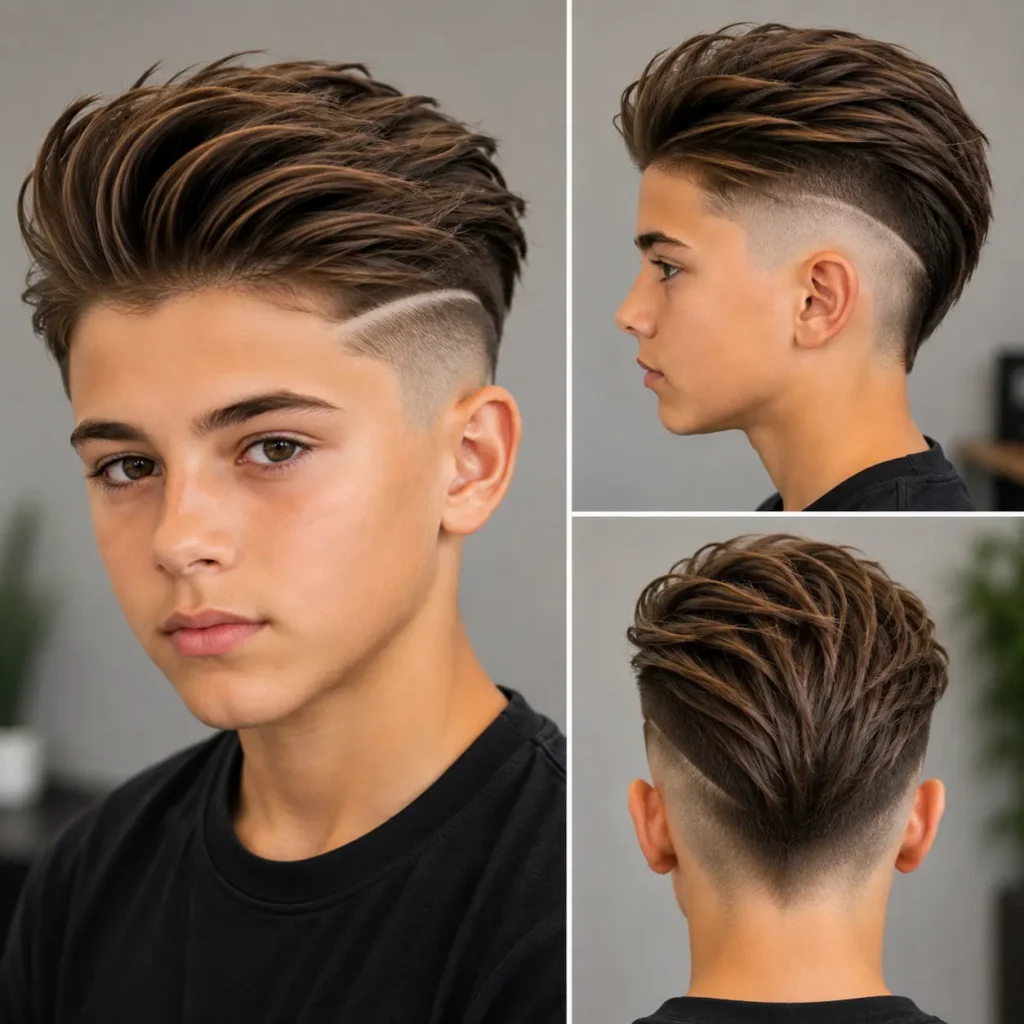
The undercut features a hard, visible contrast between very short (often shaved) sides and noticeably longer hair on top, with little to no gradual blending between the two lengths.
- Best for: Straight and thick hair, since the contrast reads most clearly against a smooth, uniform top.
- Styling effort: Moderate — the top section usually needs some product to hold its shape, whether worn brushed back, to the side, or textured.
- Why it’s popular: It’s a bold, modern option for older boys and teens who want a sharper, more dramatic look than a standard fade offers.
10. Wolf Cut
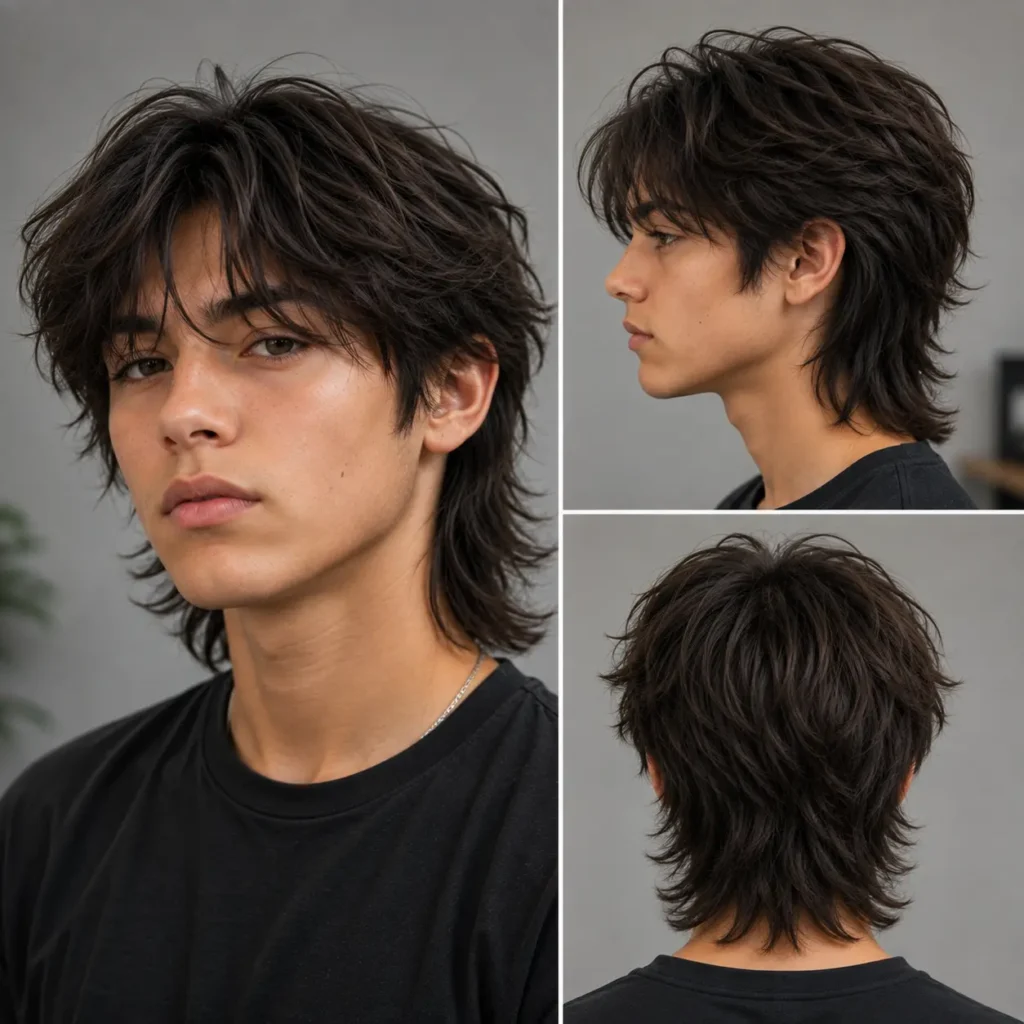
A hybrid style that blends the shagginess of a layered cut with the longer-in-back shape of a mullet, resulting in a textured, tousled look with movement throughout.
- Best for: Thick or naturally wavy hair, where the layers have enough body to stand out on their own.
- Styling effort: Low — this cut is designed to look intentionally undone, so it holds up well even with minimal daily effort.
- Why it’s popular: It’s one of the more relaxed, low-maintenance ways to wear longer hair with texture, appealing especially to teens who want a distinctive style without a strict styling routine.
Also Read: Wolf Cut for Men: The Complete 2026 Guide to Getting, Styling, and Maintaining This Hairstyle
Choosing a Haircut by Age
- Toddlers (1-4 years): Simpler cuts like a buzz cut or a basic crew cut tend to work best, since younger kids often can’t sit still long enough for detailed styling, and these cuts are the most forgiving as hair grows out.
- School-age (5-10 years): This is where textured crops, curtain fringes, and crew cuts become popular, offering a bit more personality while still being manageable for a parent to maintain at home between barber visits.
- Preteens (11-13 years): Boys in this age range often start requesting more specific, trend-driven cuts like fades, quiffs, or spiky crops as personal style starts to matter more to them.
- Teens (14+ years): Bolder options like the mullet, undercut, and wolf cut tend to appear more often in this age group, alongside continued popularity of fades and textured crops.
Choosing a Haircut by Hair Type
- Straight hair: Holds sharp, defined lines exceptionally well, making it a great match for fades, undercuts, and quiffs where clean contrast is part of the appeal.
- Wavy hair: Naturally suits textured crops, curtain fringes, and wolf cuts, since the existing movement in the hair enhances the tousled, layered look these styles go for.
- Thick hair: Handles longer, higher-volume styles like the quiff and mullet particularly well, since there’s enough density to hold shape and height.
- Fine or thin hair: Tends to look fuller in shorter cuts like the crew cut, buzz cut, or textured crop, since excess length can sometimes make fine hair look flatter and sparser.
- Curly or coily hair: Works beautifully with textured crops and curl-friendly variations of the quiff, though it’s worth seeking out a barber specifically experienced in cutting curly hair to get the shape right.
Choosing a Haircut by Face Shape
- Round faces: Styles with height on top, like the quiff or spiky crop, help add length and balance to rounder features.
- Square faces: Softer, textured styles like the textured crop or curtain fringe help soften more angular jawlines.
- Oval faces: This is generally the most flexible face shape, working well with nearly every style on this list, from a sharp undercut to a relaxed wolf cut.
- Long faces: Styles with more width at the sides, like a crew cut or a fade with some fullness left on top, help create better overall proportion.
Seasonal Considerations for Boys’ Haircuts
- Summer: Shorter cuts like the buzz cut or crew cut are especially popular during warmer months, since they’re cooler, more comfortable, and lower maintenance during a season full of outdoor activity and swimming.
- Fall and winter: Slightly longer styles like the textured crop, quiff, or wolf cut become more common, since there’s less concern about excessive heat and more opportunity to experiment with texture and styling.
- Sports seasons: Boys involved in swimming, wrestling, or other contact sports often lean toward shorter, lower-maintenance cuts during active seasons, sometimes switching to a longer style during off-season months.
- Back-to-school: This is typically when many parents schedule a fresh cut, making it a natural time to reconsider the current style and try something new if the previous cut has grown out or lost its shape.
- Bring a reference photo. Haircut names and descriptions can mean different things to different barbers, so a photo removes most of the guesswork.
- Be specific about the sides. Mention whether you want a fade (and how high), a taper, or just an even trim with clippers.
- Describe the top length clearly. Let the barber know if you want enough length to style, or a shorter, essentially no-effort finish.
- Mention your morning routine. If styling time is limited, say so directly — a good barber can recommend a cut that still looks sharp with minimal daily effort.
- Ask about trim frequency. Some cuts (like fades) need trims every 2-3 weeks to stay sharp, while others (like a wolf cut or crew cut) can stretch to 6-8 weeks.
Simple At-Home Styling Tips
- Start with a small amount of product. Too much gel, wax, or cream can weigh hair down or look greasy, especially on younger boys — a pea-sized amount is usually plenty.
- Use lighter products for younger kids. A light cream or spray tends to feel more comfortable than a heavy gel, both during application and throughout the day.
- Keep a comb or brush handy for quick touch-ups, especially for curtain fringes and side-swept styles that can fall out of place during the school day.
- Trim stray hairs around the ears and neckline between full haircuts to help the style stay looking fresh, even before the next scheduled trim.
- Match the cut to the school week. If mornings are consistently rushed, lean toward the lowest-maintenance options on this list (buzz cut, crew cut, or wolf cut) rather than styles that need daily product and shaping.
Styling Products Explained
Understanding the difference between common styling products can help you (or an older boy shopping for himself) pick the right one for a specific cut:
- Matte paste or clay: Provides a strong hold with no shine, ideal for textured crops, spiky styles, and wolf cuts where a natural, non-glossy finish is the goal.
- Pomade: Offers a smoother, often shinier finish, well suited to slicked-back styles or a more polished quiff.
- Light styling cream: A gentler option good for younger boys or lower-maintenance cuts like the curtain fringe, adding just a bit of control without heavy hold.
- Gel: Provides strong hold and is often used for spiky styles, though it can look stiff or unnatural if overapplied, especially on younger kids.
- Sea salt spray: Adds texture and a slightly tousled finish, particularly useful for wavy or curly hair styled into a textured crop or wolf cut.
Budgeting for Boys’ Haircuts
Haircut costs and frequency vary significantly depending on the style chosen and where you live:
- Low-maintenance cuts like the buzz cut and crew cut are generally the most budget-friendly overall, since they can go 6-8 weeks between trims without losing their shape.
- Fades and undercuts tend to cost more over time, not necessarily per visit, but because they require more frequent trims (every 2-3 weeks) to maintain their sharp lines.
- Family or kids-specific barbershops often offer lower pricing than general adult salons, and many also specialize in working comfortably with younger, more fidgety clients.
- At-home clipper kits can help extend time between professional cuts for simpler styles like the buzz cut or crew cut, though more detailed styles like fades are usually best left to a professional for a clean, even result.
- Choosing a style that doesn’t match hair type. A cut that looks great in a photo may behave completely differently on curly or very fine hair, so it’s worth discussing this with the barber before committing.
- Underestimating maintenance needs. Fades and undercuts look sharp but need frequent trims — if you can’t commit to that schedule, a lower-maintenance cut will hold up better between appointments.
- Skipping the reference photo. Verbal descriptions alone often lead to a different result than expected, since terminology varies between barbers.
- Ignoring school or activity requirements. Some schools and sports teams have specific guidelines around hair length or styling, so it’s worth checking before choosing a bolder cut.
- Overusing styling product on young kids. Heavy product can feel uncomfortable and look unnatural on younger children — simpler is usually better for this age group.
Growing Out or Switching Between Styles
Kids’ hair preferences change often, and the good news is that most of these cuts transition into each other fairly easily as hair grows:
- A buzz cut naturally grows into a crew cut, making it easy to let length build up gradually before deciding on a next style.
- A crew cut can transition into a textured crop or quiff once there’s enough length on top to add texture or lift.
- A fade can be adjusted at each trim to gradually raise or lower where the fading starts, allowing you to ease into a bolder or subtler look over several visits.
- Growing out a fade or undercut into a mullet or wolf cut is a common progression, since both of the longer styles rely on some length already being present at the back and top.
Talking with the barber about your longer-term plan, not just the immediate cut, can help make these transitions smoother and avoid awkward in-between stages.
What is the most low-maintenance boys’ haircut?
The buzz cut is the lowest-maintenance option by far, requiring no daily styling at all. The crew cut and wolf cut are also good low-effort choices that still offer a bit more styling flexibility.
How often does a fade haircut need to be trimmed?
Fades typically need a trim every 2-3 weeks to maintain their sharp, defined line, since the contrast between short and longer sections becomes less crisp as hair grows out.
Is a mullet a good haircut for school-age boys?
It can be, depending on school dress code policies and personal preference. The modern mullet is more refined than older versions, with shorter, cleaner sides, making it a reasonably practical option for many school settings.
What haircut works best for curly hair?
Textured crops and curl-friendly variations of the quiff tend to work particularly well for curly hair, though it’s worth finding a barber with specific experience cutting curly textures for the best result.
How much should I expect to pay for a boys’ haircut?
Pricing varies by location and style, but low-maintenance cuts like a buzz cut or crew cut are generally the most cost-effective over time, since they need fewer trims per year compared to fades or undercuts.
Can a haircut help thin or fine hair look fuller?
Yes. Shorter cuts like the crew cut, buzz cut, or textured crop tend to make fine hair look fuller, since removing excess length reduces the weight that can make thin hair lie flat.
What’s the difference between a fade and an undercut?
A fade gradually blends from very short at the bottom to longer at the top, with a smooth transition. An undercut features a sharper, more visible contrast, with little to no gradual blending between the short sides and the longer top.
What haircut is best for a boy who won’t sit still for styling?
A buzz cut or crew cut is ideal, since both require little to no daily maintenance and look neat with minimal effort, making them practical for active or impatient kids.
Final Thoughts
The right boys’ haircut comes down to matching the style to actual hair type, age, and how much daily effort is realistic for your routine. Whether it’s the simplicity of a buzz cut, the sharp contrast of a fade, or the relaxed texture of a wolf cut, each of these ten styles offers a genuinely current, wearable option. Bring a clear reference photo to the barber, be upfront about maintenance expectations, and you’ll walk out with a cut that actually works for daily life, not just for a single great photo.
Also Read: Hair Care Routine 101: How to Build Healthy Hair Habits for Your Hair Type