Short hair has had plenty of defining moments over the decades, but few cuts have managed to feel both nostalgic and completely current the way the bixie haircut does right now. Part bob, part pixie, and entirely its own thing, the bixie has become one of the most requested short hairstyles in salons, and it’s easy to see why once you understand what makes it so uniquely flattering.
If you’ve been scrolling through short hair inspiration wondering what is a bixie haircut, or trying to decide whether it will actually work for your hair type and face shape, this guide has everything you need. Below, we break down exactly what a bixie is, why it’s trending, and 6 bixie haircuts you’ll fall in love with instantly — along with practical advice on styling, growing it out, and choosing the right variation for you.
What Is a Bixie Haircut?
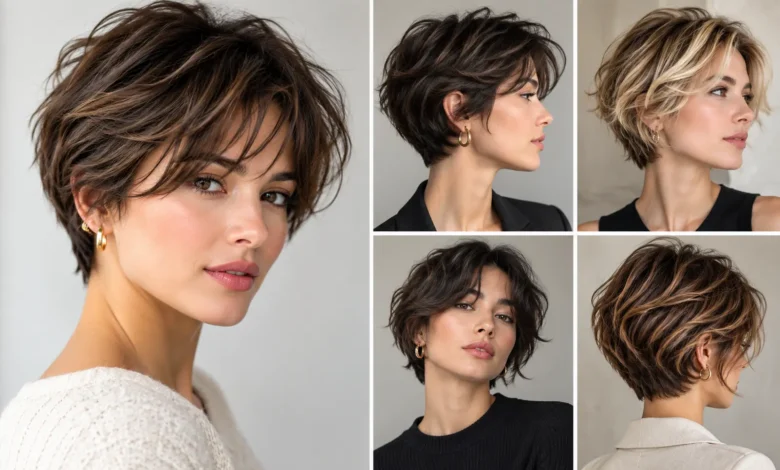
A bixie haircut is a hybrid hairstyle that combines the structure of a bob with the cropped, textured layering of a pixie cut. The name itself is a blend of the two words, and the result sits somewhere in between — shorter and more layered than a traditional bob, but slightly longer and softer than a classic pixie.
What makes a bixie haircut unique is its layering pattern. Rather than the blunt, even perimeter of a bob or the very short, closely cropped sides of a pixie, a bixie uses shorter layers around the crown and sides that blend into slightly longer pieces toward the front and top, creating movement and texture without losing the compact, cropped feel that makes the style so low-maintenance.
What Does Bixie Mean in Hair, and Where Did the Name Come From?
The term “bixie” is a portmanteau — a combination of “bob” and “pixie” — used to describe this specific pixie-bob hybrid cut. The name reflects exactly how the style is built: it borrows the layered, textured versatility of a pixie cut and merges it with the slightly longer, more rounded silhouette of a bob, resulting in a haircut that reads as both structured and effortlessly undone.
Bixie vs. Pixie vs. Bob, Explained
Understanding the bixie haircut is much easier once you see how it compares to its two parent styles.
A classic pixie cut is very short throughout, with closely cropped sides and back and slightly longer, textured pieces on top. It offers maximum ease of styling but requires more frequent trims to maintain its shape as it grows out.
A bob haircut typically falls between the chin and shoulders, often cut with a blunt, even perimeter and minimal layering, creating a sleek, structured silhouette that can look either polished or slightly heavy depending on hair thickness.
A bixie, sitting between the two, offers more length and softness than a pixie while remaining considerably shorter and more textured than a bob. This is exactly why so many people search for bixie haircut vs pixie cut comparisons — the bixie tends to suit a wider range of face shapes and personal styles because it isn’t as extreme as either parent cut.
Origin and History of the Bixie Haircut Trend
The pixie-bob hybrid shape that would eventually be nicknamed the bixie has roots in the layered, textured short hairstyles that were popular during the 1990s, when celebrities frequently wore cropped, tousled cuts that blended bob-length sides with shorter, piecey layers on top. The style faded from mainstream popularity for a stretch before resurfacing in the early 2020s, when several celebrities began experimenting with the cut again, helping reintroduce it to a new generation.
The trend gained significant renewed momentum heading into 2026, when a wave of red carpet appearances brought the bixie back into the spotlight in a major way. Multiple appearances across award shows and fashion week events showed the cut’s range, from sleek and side-parted to soft waves and curls, reintroducing it as one of the year’s defining hair trends. Several prominent actresses and musicians were seen wearing the style in distinctly different ways, each putting their own spin on the same underlying shape — proof that the bixie’s biggest strength has always been just how adaptable it is.
How the Bixie Cut Became Popular Again
Part of what drove the bixie’s renewed popularity is exactly what makes it appealing to everyday wearers too: its versatility. Different public figures showed strikingly different interpretations of the same base shape — one polished and glossy, one soft and romantic, another edgier and slicked back — all built on the same foundational cut. That range demonstrated that a single haircut could be styled dramatically differently depending on the occasion, which made it an easy trend for salons and everyday clients to embrace rather than a look tied to one specific styling formula.
Why Bixie Haircuts Are Trending
Several factors have converged to make the bixie one of the most in-demand short hairstyles right now. Its adaptability is a major draw — the same base cut can be styled sleek and polished, tousled and textured, or even curled, meaning one haircut can genuinely serve multiple different looks depending on the day. Nostalgia also plays a role, as the cut’s roots in 1990s hairstyling tap into a broader wave of retro-inspired beauty trends currently popular across social media.
Beyond aesthetics, practicality matters too. Many people are drawn to short hairstyle trends generally because they require less daily maintenance than longer hair, and the bixie in particular strikes a good balance between low upkeep and enough length to still offer styling flexibility.
Benefits of a Bixie Haircut
It suits a wide range of face shapes. Because the length and layering can be customized, a bixie can be tailored to flatter round, oval, square, and heart-shaped faces alike, unlike some short cuts that only work well on specific face shapes.
It’s genuinely low maintenance. Compared to longer hairstyles, a bixie typically requires less daily styling time, and its layered structure means it looks intentional even when air-dried.
It works across hair types. With the right layering and texture, a bixie can be adapted for thick, fine, straight, wavy, or curly hair, making it one of the more universally wearable short haircuts available.
It photographs and transitions well. As celebrities styling the cut for everything from red carpets to casual appearances have shown, the bixie holds up whether it’s sleek and polished or deliberately undone.
Also Read: 10 Old Money Hairstyles for Women and Why They’re Popular
6 Bixie Haircuts You’ll Fall in Love With Instantly
The Classic Textured Bixie

The classic textured bixie haircut is the most universally flattering version of the cut, using soft, piecey layers throughout to create movement without heavy structure. This is the ideal starting point for anyone trying a bixie for the first time, since the layering is versatile enough to be styled sleek or tousled depending on the day, and it works well across most hair types and face shapes.
Shaggy Bixie
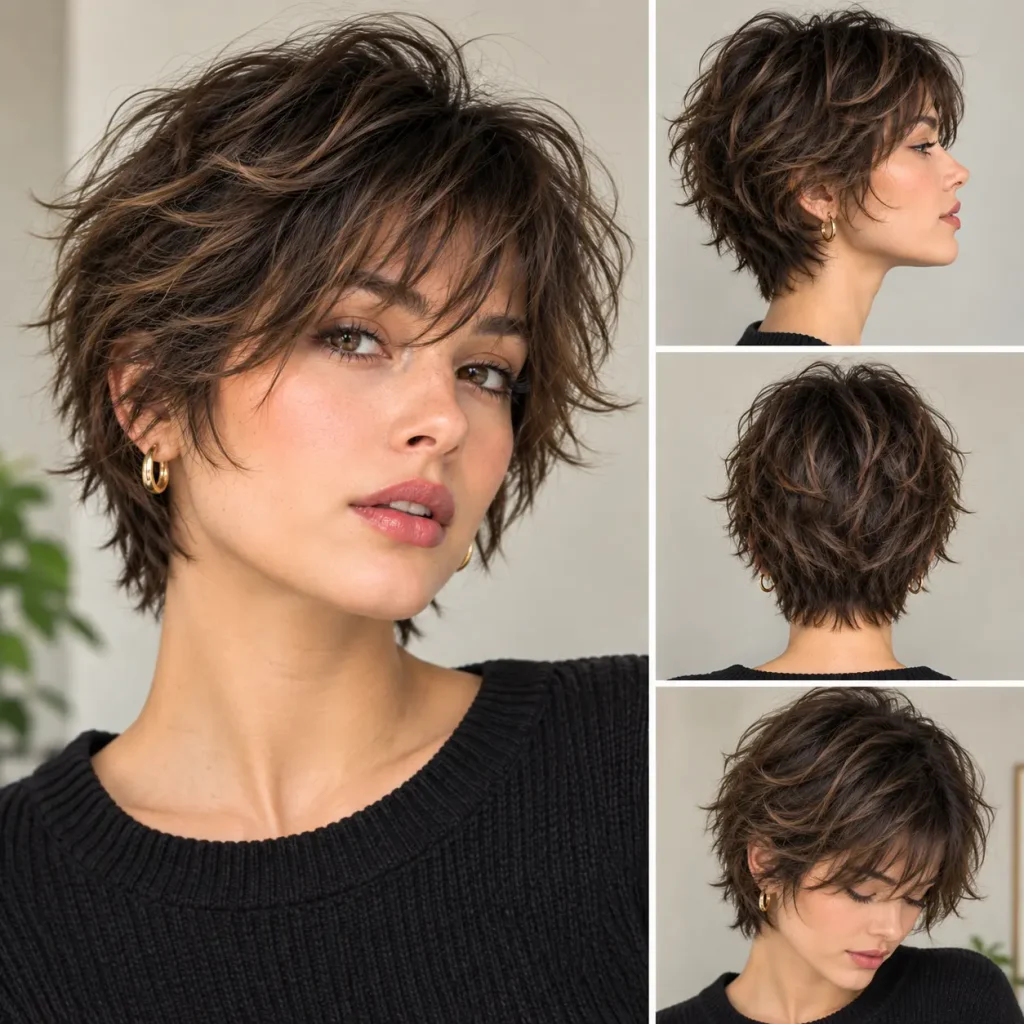
The shaggy bixie haircut leans further into texture, using choppier, more disconnected layers to create a deliberately undone, lived-in look. This variation pairs especially well with naturally wavy or curly hair, since the shaggier layers enhance natural texture rather than fighting against it, and it requires minimal styling effort to look finished.
Long Bixie
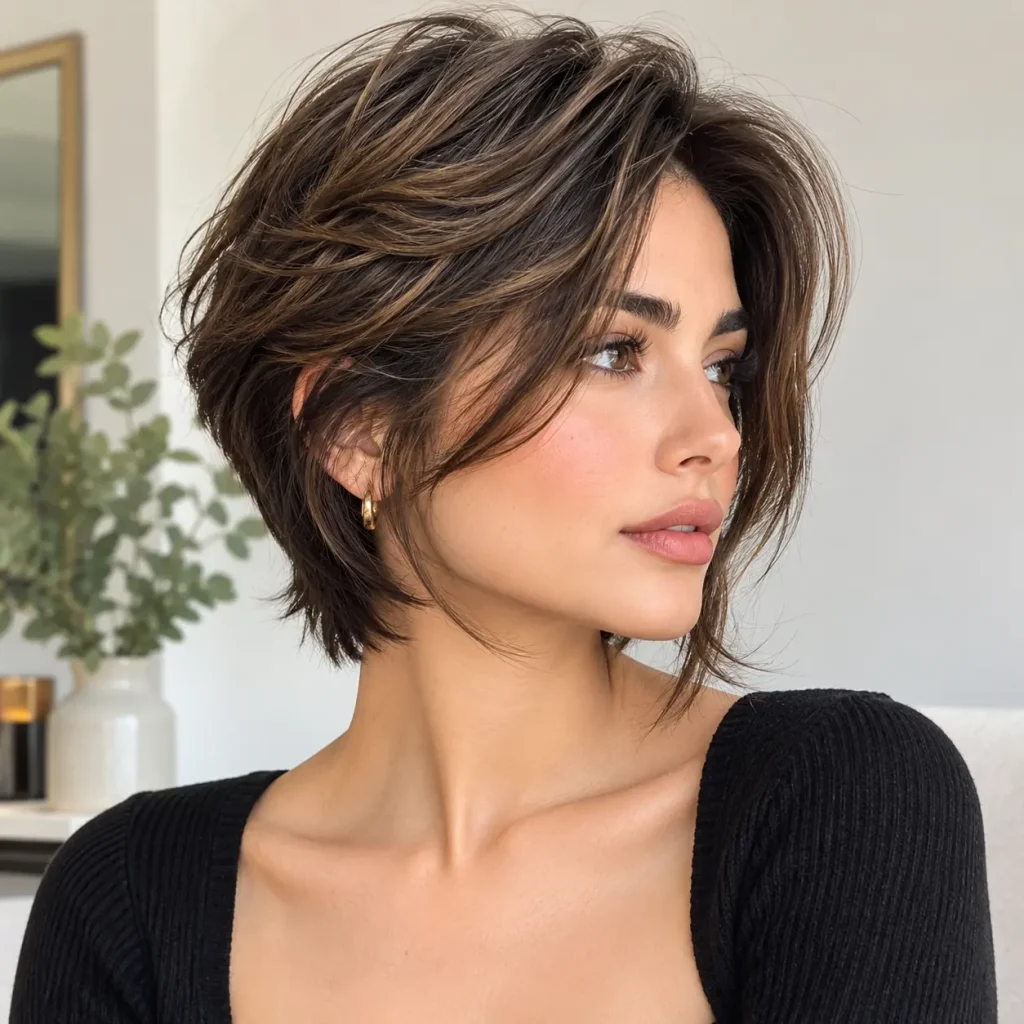
For anyone hesitant to go too short, the long bixie haircut keeps slightly more length throughout, sitting closer to a longer bob while still incorporating the layered, textured quality that defines the bixie shape. This variation offers a gentler transition for people moving from longer hair to a shorter cut, since it retains enough length to feel familiar while still delivering the bixie’s signature movement.
Short Bixie
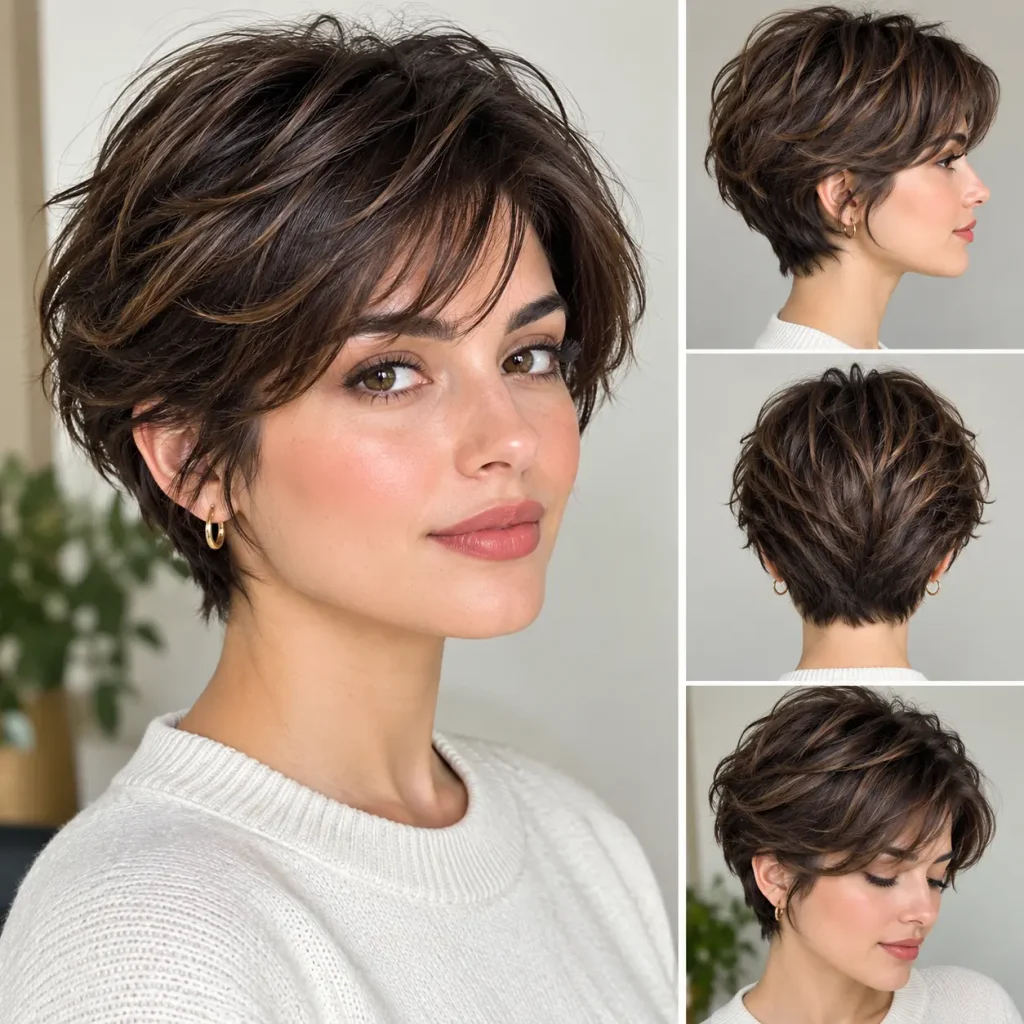
On the opposite end, the short bixie haircut pushes closer to pixie-length, with shorter sides and back paired with slightly longer, textured pieces on top. This version is ideal for anyone who wants maximum ease of styling and doesn’t mind slightly more frequent trims to maintain the shape, and it tends to work particularly well for fine or thin hair, where extra length can sometimes make hair look flatter.
Bixie with Bangs or Fringe
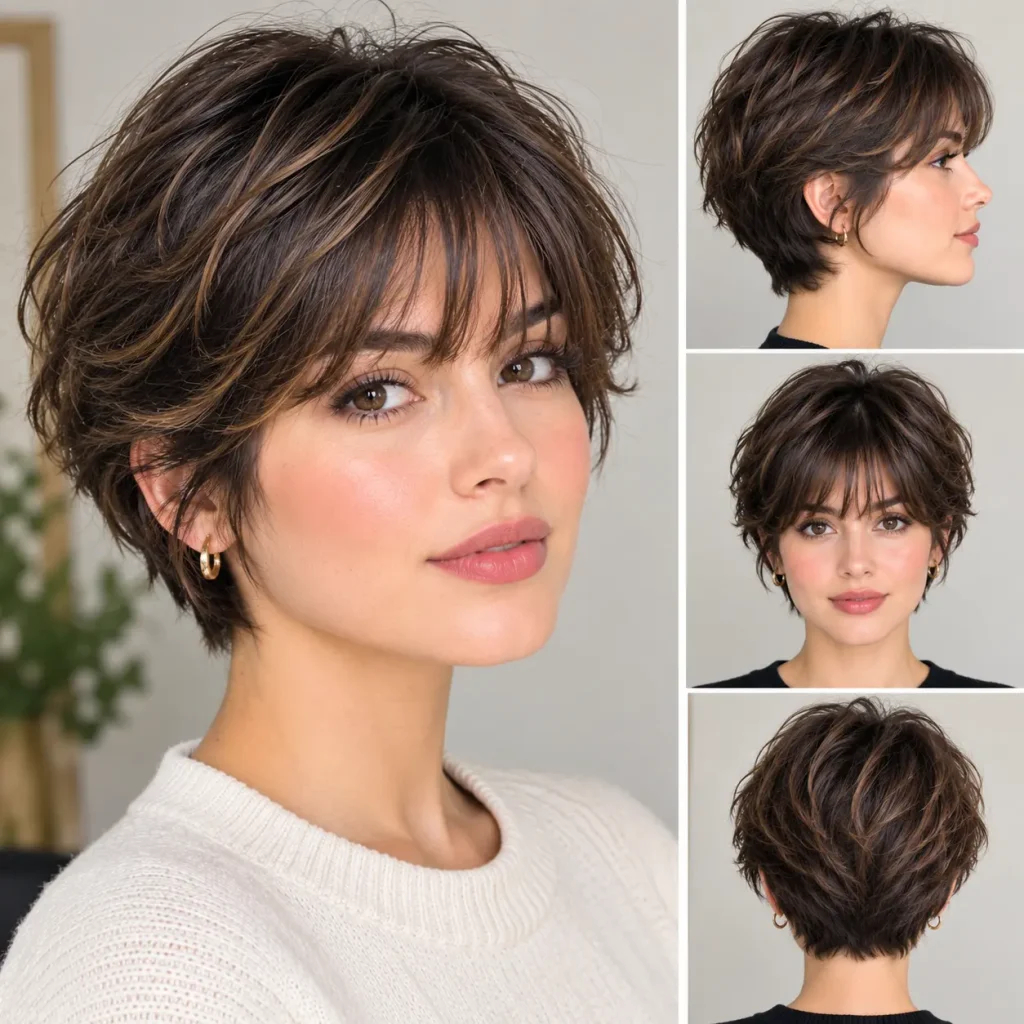
Adding bangs or a soft fringe to a bixie haircut creates a distinctly different framing effect around the face, often softening angular features or drawing attention to the eyes. Whether cut as a full, blunt fringe or softer, textured curtain bangs, this variation is one of the more customizable bixie haircut ideas, since the bang style itself can be adjusted to suit different face shapes without changing the underlying cut.
Sleek Polished Bixie
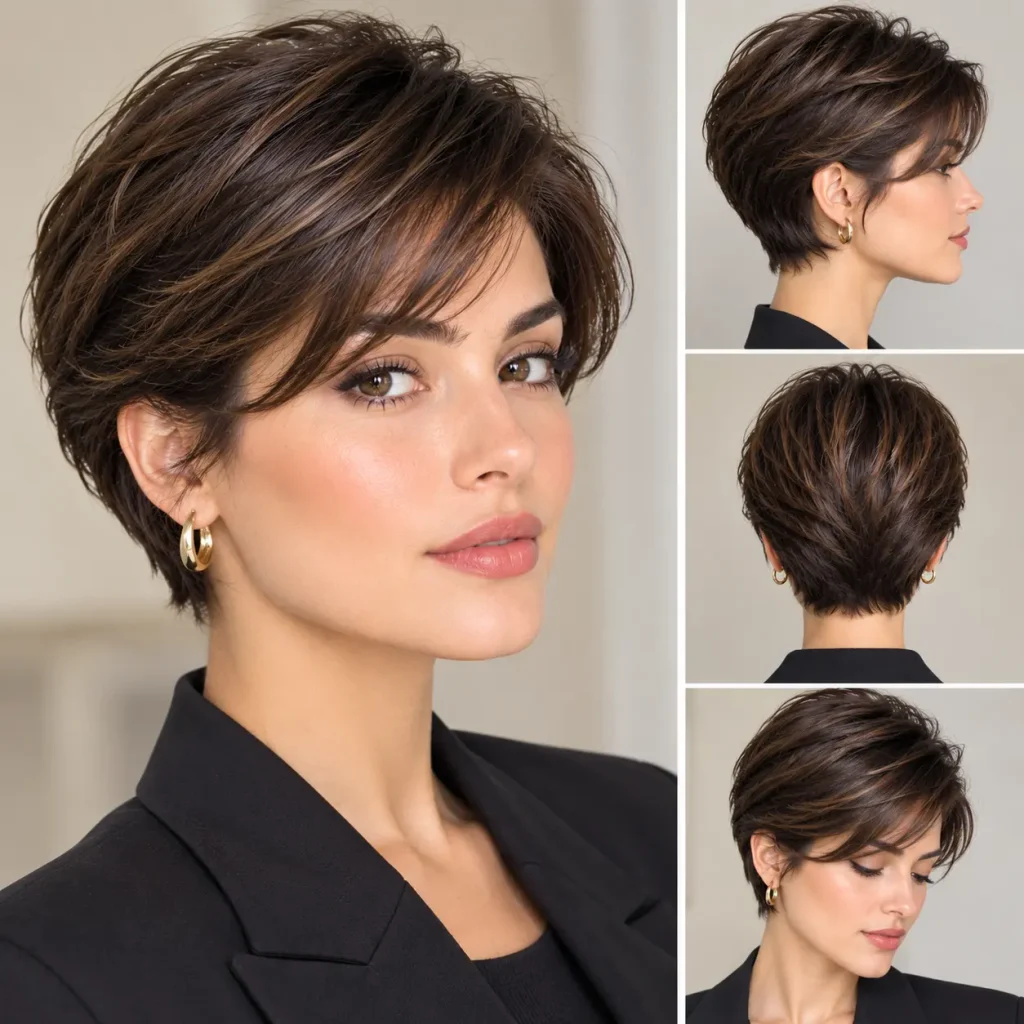
The sleek polished bixie takes the same foundational shape and smooths it into a glossy, refined finish, often with a defined side part and clean, controlled lines rather than loose texture. This version proves the bixie can look just as elegant and red-carpet-ready as it does casual and undone, making it a strong choice for professional settings or more formal occasions.
Also Read: 11 Precision Cutting Hair Styles That Feel Runway-Ready
Choosing a Bixie Haircut for Your Hair Type
Thick hair handles a bixie particularly well, since the layering helps remove bulk while still maintaining enough density for the cut to hold its shape. A bixie haircut for thick hair often benefits from slightly more aggressive layering to prevent the style from looking too heavy.
Fine hair tends to look fuller with a bixie than it would with longer styles, since shorter layers create the illusion of more volume and density. A bixie haircut for fine hair generally works best with minimal thinning, since removing too much weight can make already-fine strands look sparse.
Curly hair pairs beautifully with a shaggy or textured bixie variation, since curls naturally enhance the choppier layering. A bixie haircut for curly hair typically requires a stylist experienced in cutting curls dry or accounting for shrinkage, since curls will sit shorter once fully dry than they appear when wet.
Straight hair shows off the clean lines of a sleek, polished bixie particularly well, since there’s no natural texture to disrupt the shape. A bixie haircut for straight hair can also be styled with a slight wave or curl for more textured versions of the cut.
Wavy hair works well with almost any bixie variation, since natural waves add effortless texture to the layering without requiring much additional styling.
Choosing a Bixie Haircut for Your Face Shape
Round faces are often best suited to a bixie with more height and volume at the crown, along with slightly longer front pieces, which helps create the illusion of length rather than adding width.
Oval faces are considered the most versatile for bixie haircuts, since nearly every variation — from shaggy to sleek — tends to suit this balanced face shape well.
Square faces often look best with a softer, more textured bixie that includes some length around the jawline, helping to soften strong angles rather than emphasizing them.
Heart-shaped faces are typically flattered by a bixie with a side-swept fringe or slightly longer front layers, which helps balance a narrower chin against a wider forehead.
Finding the best bixie haircut for face shape ultimately comes down to adjusting the length and placement of the front layers, since the core cropped structure of the bixie remains largely the same across variations.
Is a Bixie Haircut Good for Older Women?
Yes, a bixie haircut can be an excellent choice for women of any age, including those looking specifically for a bixie haircut for women over 40, over 50, or well beyond. The style’s soft layering tends to frame the face flatteringly at any age, and its low-maintenance nature makes it a practical, easy-to-manage option for anyone who prefers spending less time on daily styling. Many women find that a shorter bixie haircut for women over 60 offers a fresh, modern update without requiring a dramatic change in daily routine, since the cut styles quickly and holds its shape well between salon visits.
Also Read: 6 Low-Maintenance Hairstyles for Women Over 60 with Fine Hair
How to Ask Your Stylist for a Bixie Cut
When booking a bixie haircut, it helps to be specific about which variation you’re after, since the term “bixie” can be interpreted differently depending on the stylist. Bringing reference photos that show the exact length, layering, and texture you want — whether that’s a shaggier, more textured bixie or a sleek, polished version — makes it much easier for your stylist to understand your goal.
It’s also worth mentioning your hair type and any styling habits upfront, since a bixie haircut for curly hair or fine hair may need to be cut slightly differently than one intended for thick or straight hair to achieve the same finished look.
How to Style a Bixie Haircut
One of the biggest appeals of the bixie is how little effort it takes to style well. For a tousled, textured finish, applying a lightweight texturizing spray or paste to damp hair and air-drying or diffusing is often enough to bring out the cut’s natural movement. For a sleeker, more polished look, a light blow-dry with a round brush followed by a smoothing serum creates a clean, controlled finish.
Curling wands or flat irons can also be used to add soft waves or extra texture for a dressier occasion, and yes, you absolutely can curl a bixie haircut — the shorter layers typically hold curls well and release into soft waves rather than tight ringlets, giving the style extra versatility for special events.
How to Maintain a Bixie Haircut
Because a bixie relies on its layered shape for definition, regular trims are important to keep it looking intentional rather than growing out unevenly. Most bixie haircuts benefit from a trim every four to six weeks, particularly shorter variations, since even a small amount of growth can noticeably change how the layers sit.
Using a lightweight leave-in conditioner or hydrating cream can also help maintain the texture and shine of shorter hair, which tends to show dryness more visibly than longer styles simply because there’s less length to distribute natural oils.
How to Grow Out a Bixie Haircut
If you eventually want to transition away from a bixie without an awkward in-between phase, working closely with your stylist on strategic trims during the growing-out process makes a significant difference. Rather than avoiding the salon entirely, scheduling shape-maintaining trims every six to eight weeks helps the layers grow out more evenly, gradually blending the shorter pieces into a longer style rather than leaving noticeable steps in length.
Growing out a bixie into a longer bob or lob typically takes several months to a year, depending on how much length you started with and how quickly your hair grows, so patience and consistent trims are the most reliable path to a smooth transition.
Frequently Asked Questions
Is a bixie haircut good for thin hair?
Yes, a bixie haircut is often an excellent choice for thin hair, since shorter layers create the appearance of more volume and density compared to longer styles, where thin hair can look flat or stringy.
How often do you need to trim a bixie haircut?
Most bixie haircuts need a trim every four to six weeks to maintain their shape, since the layered structure that defines the cut becomes less defined as hair grows out.
Can you curl a bixie haircut?
Yes, a bixie haircut can absolutely be curled. The shorter layers typically hold curls well, releasing into soft waves that add extra texture and versatility for special occasions or dressier styling.
Is a bixie haircut good for round faces?
Yes, a bixie haircut can work very well for round faces when styled with added height at the crown and slightly longer front layers, which helps elongate the face rather than emphasizing its width.
How long does it take to grow out a bixie cut?
Growing out a bixie into a longer style typically takes several months to a year, depending on your hair’s natural growth rate and how much length you started with, and is best managed with regular shape-maintaining trims along the way.
Final Thoughts
The bixie haircut has earned its spot as one of the most versatile and genuinely wearable short hairstyles in recent memory, offering the best of both a bob’s polish and a pixie’s effortless texture. Whether you’re drawn to a shaggy, undone version or a sleek, red-carpet-ready finish, the six bixie haircuts covered here show just how adaptable this cut can be across hair types, face shapes, and personal style. With minimal daily styling and the flexibility to change up your look from sleek to tousled in minutes, it’s easy to see why the bixie has become a haircut people fall for instantly — and stick with for the long run.
Also Read: Modern Short Hairstyles for Women: 10 Stylish Haircuts