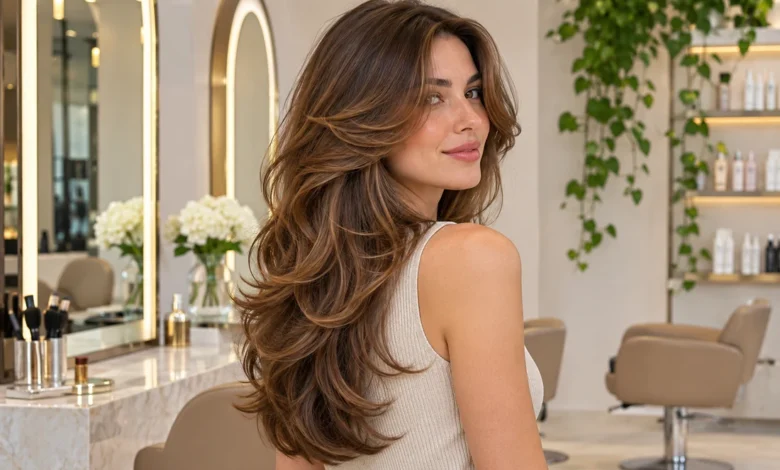
Long layered haircuts are one of the few cuts that work on almost every hair type, length, and age. Layers remove weight, add movement, and give long hair a shape instead of letting it hang in one flat line.
But “layers” is a broad word. A soft, barely-there layer and a choppy wolf cut are very different haircuts, and asking your stylist for the wrong one is how people leave the salon disappointed.
In this guide you’ll find 12 long layered hairstyles, how to pick the right one for your face shape and hair texture, exactly what to say at your appointment, and how to style and maintain the cut at home.
What Are Long Layered Haircuts?
Long layered haircuts are cuts where hair is trimmed to different lengths throughout, while the overall length stays long (usually past the shoulders). Shorter pieces sit on top or around the face, and longer pieces fall underneath. This creates shape, movement, and often the look of more volume.
Three things change how a layered cut looks:
- Placement: layers can start at the crown, the cheekbones, the chin, or only at the ends.
- Length difference: a small difference gives soft layers, a big difference gives dramatic or choppy layers.
- Cutting technique: blunt cutting, point cutting, and razor cutting give very different edges.
Keep these three in mind as you scan the looks below. They are the words your stylist will think in.
Quick Salon Vocabulary for Long Layers
A little terminology makes your consultation much easier. Here are the terms you’ll hear most.
| Term | What it means |
|---|---|
| Soft layers | Gentle, short length differences that blend smoothly |
| Face-framing layers | Pieces around the face, usually starting at the chin or cheekbone |
| Invisible layers | Layers cut underneath so the outline stays full and blunt |
| Choppy layers | Visible, textured layers with uneven ends |
| Feathered layers | Thin, wispy layers that flick outward or inward |
| Point cutting | Snipping into the ends vertically for a softer edge |
| Density | How many hairs you have per square inch |
| Texture | The thickness of each individual strand (fine, medium, coarse) |
Density and texture are not the same thing. You can have fine strands with high density, or coarse strands with low density. Your stylist will cut differently for each.
12 Long Layered Haircut Ideas
Each look below includes who it suits, how it’s cut, and how much upkeep to expect.
1. Classic Long Layers
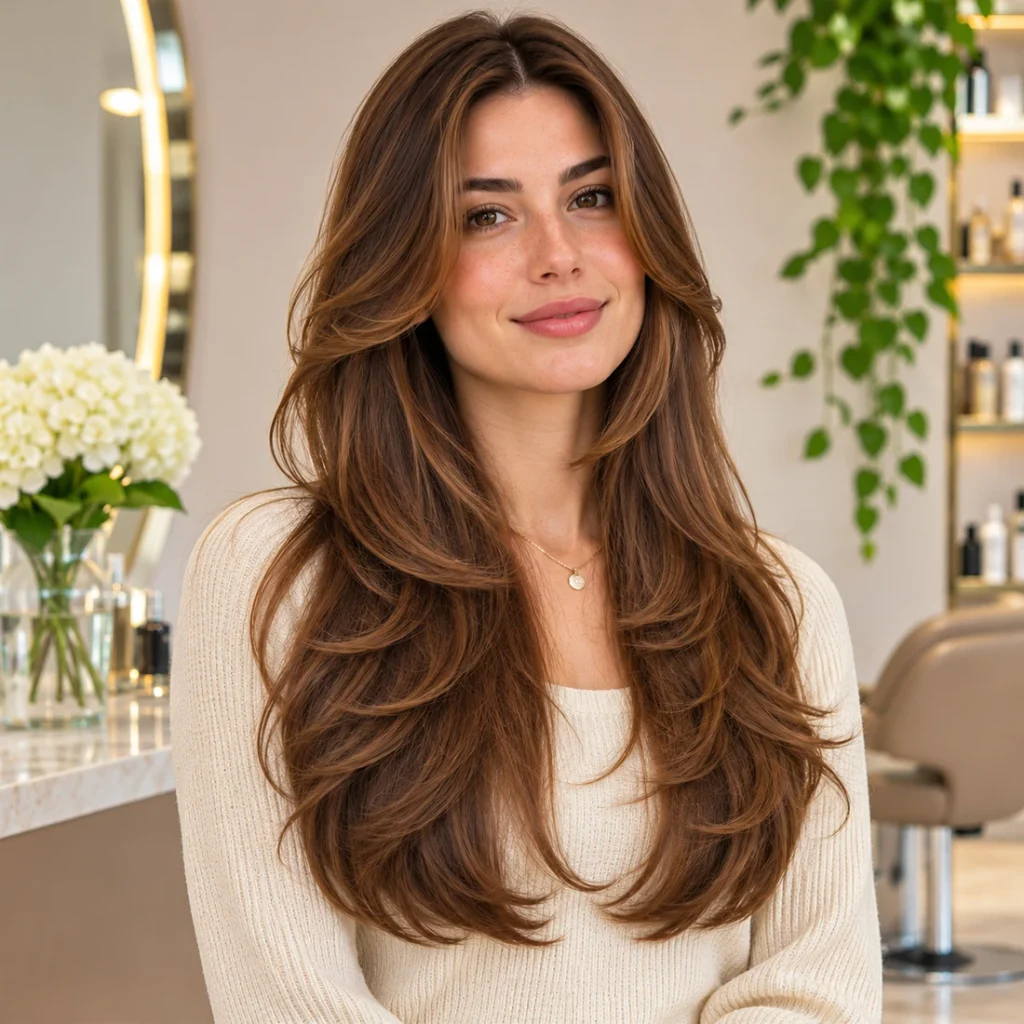
This is the everyday version. Layers begin around the collarbone or chest and blend into the length, so the cut looks polished without being dramatic.
Best for: nearly everyone, especially if you want a safe first step into layering. Works on: straight, wavy, and loosely curly hair. Upkeep: a trim every 8 to 12 weeks keeps the shape.
Ask for: “long layers that start around my collarbone, blended so there are no harsh lines.”
2. Long Layers with Face-Framing
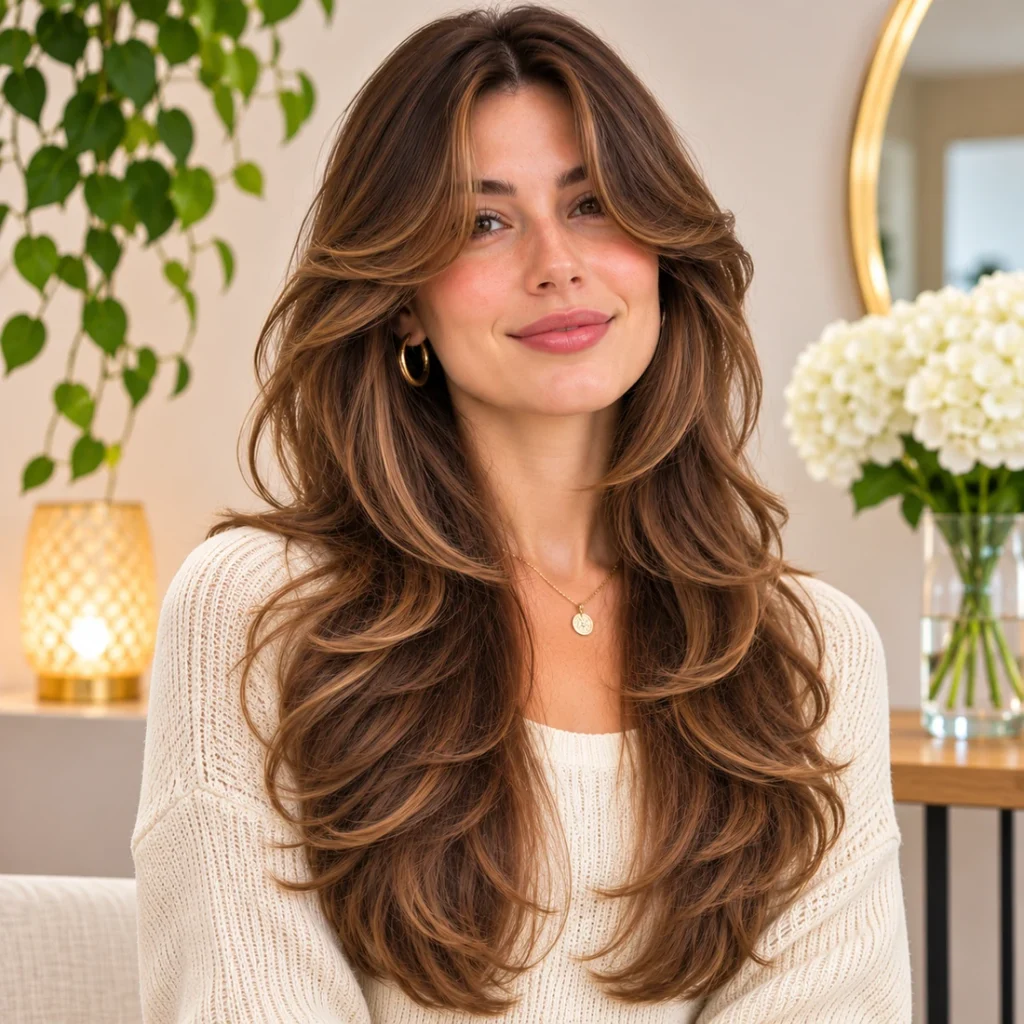
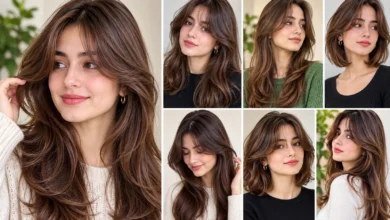
A long layered cut with face framing adds short pieces around your face while keeping the back long. It’s the easiest way to soften a jawline, highlight cheekbones, or move hair out of your eyes without cutting bangs.
Best for: oval, square, and heart-shaped faces. Also useful for round faces when the framing starts below the chin, which creates a lengthening line. Upkeep: these pieces grow into awkward lengths quickly, so plan a refresh every 6 to 8 weeks.
If you’re not sure how to describe it, say: “face-framing layers starting at my chin.” That placement is flattering on most faces.
3. Long Layers with Curtain Bangs
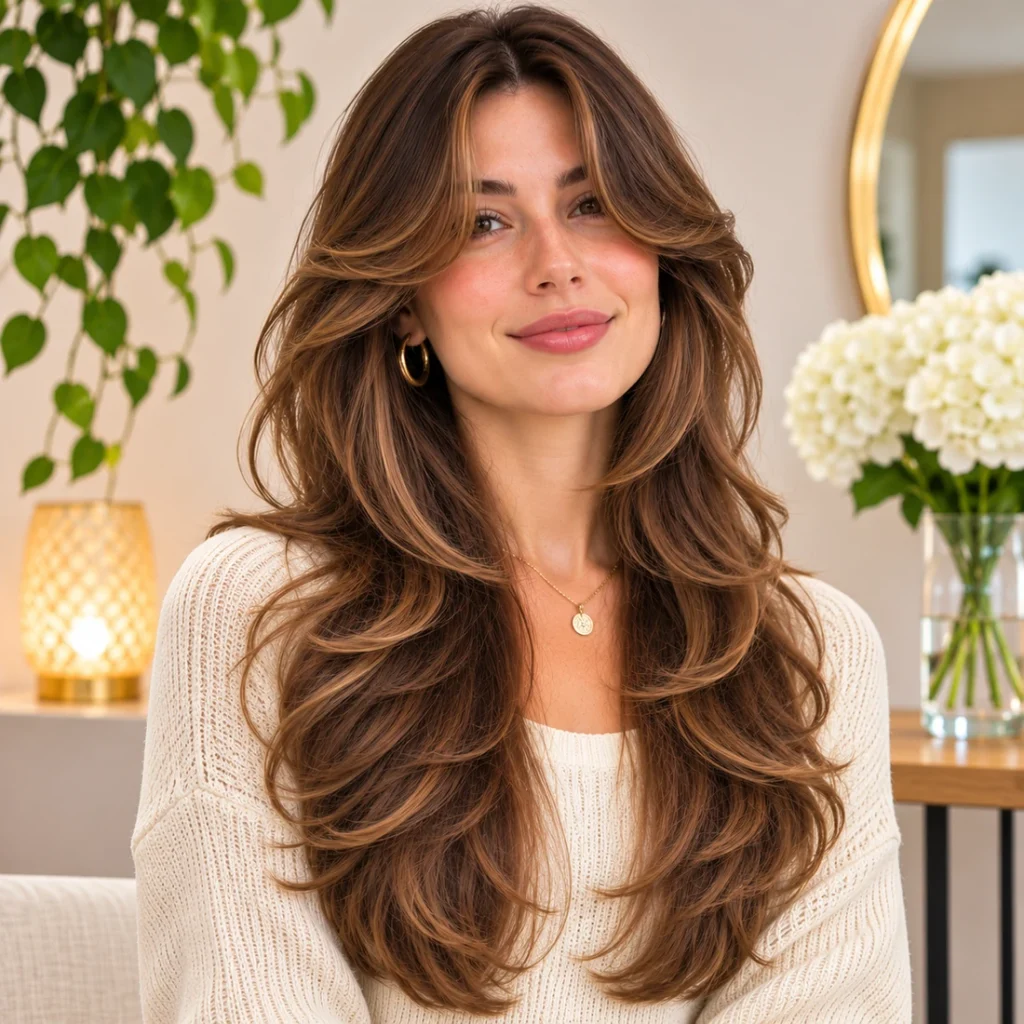
Curtain bangs part in the middle and sweep to each side. Paired with long layers, they blend into the face-framing so the whole cut looks like one shape instead of a haircut plus bangs.
Best for: oval, heart, and long faces. They can also soften a high forehead. Heads up: curtain bangs need a bit of daily styling, and cowlicks at the hairline can make them behave unpredictably.
They are a good low-commitment way to try a fringe, because they grow out into face-framing layers within a few months.
4. The Butterfly Haircut
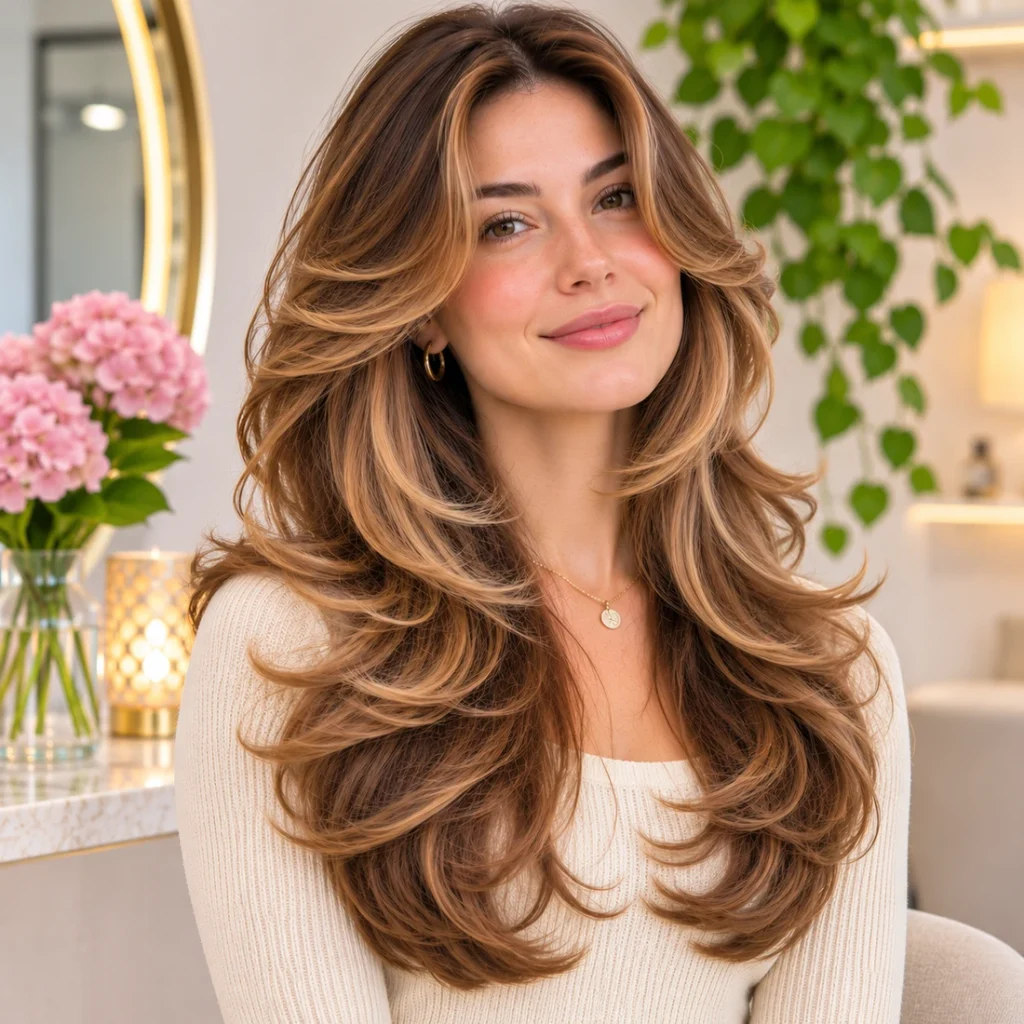
The butterfly haircut stacks short, face-hugging layers on top of longer layers underneath. The result is a lot of volume and bounce, with the “wings” flaring away from the face.
Best for: medium to thick hair, wavy or straight. It is designed for movement, so blow-drying is part of the look. Not ideal for: very fine hair that can’t hold volume, unless your stylist keeps the shorter layers minimal. Upkeep: moderate to high. The shape relies on blowouts.
5. Feathered Layers
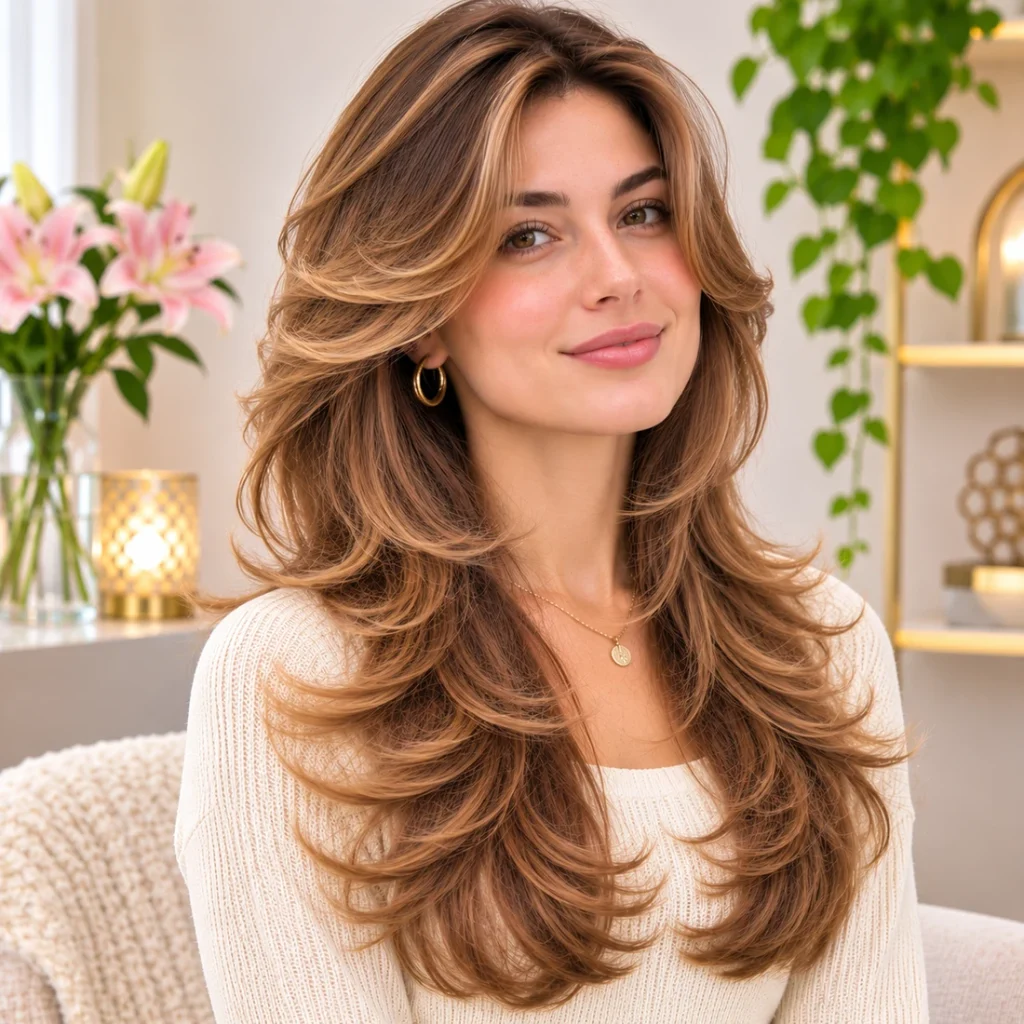
Feathered layers are light, wispy layers with thin ends that flick outward or curl inward, a style associated with 1970s hair. Today’s version is softer and less dated, often done with a round brush.
Best for: straight to slightly wavy hair with medium thickness. Upkeep: low for the cut, but you’ll need a round brush or large-barrel iron to get the flick.
6. The Long Shag
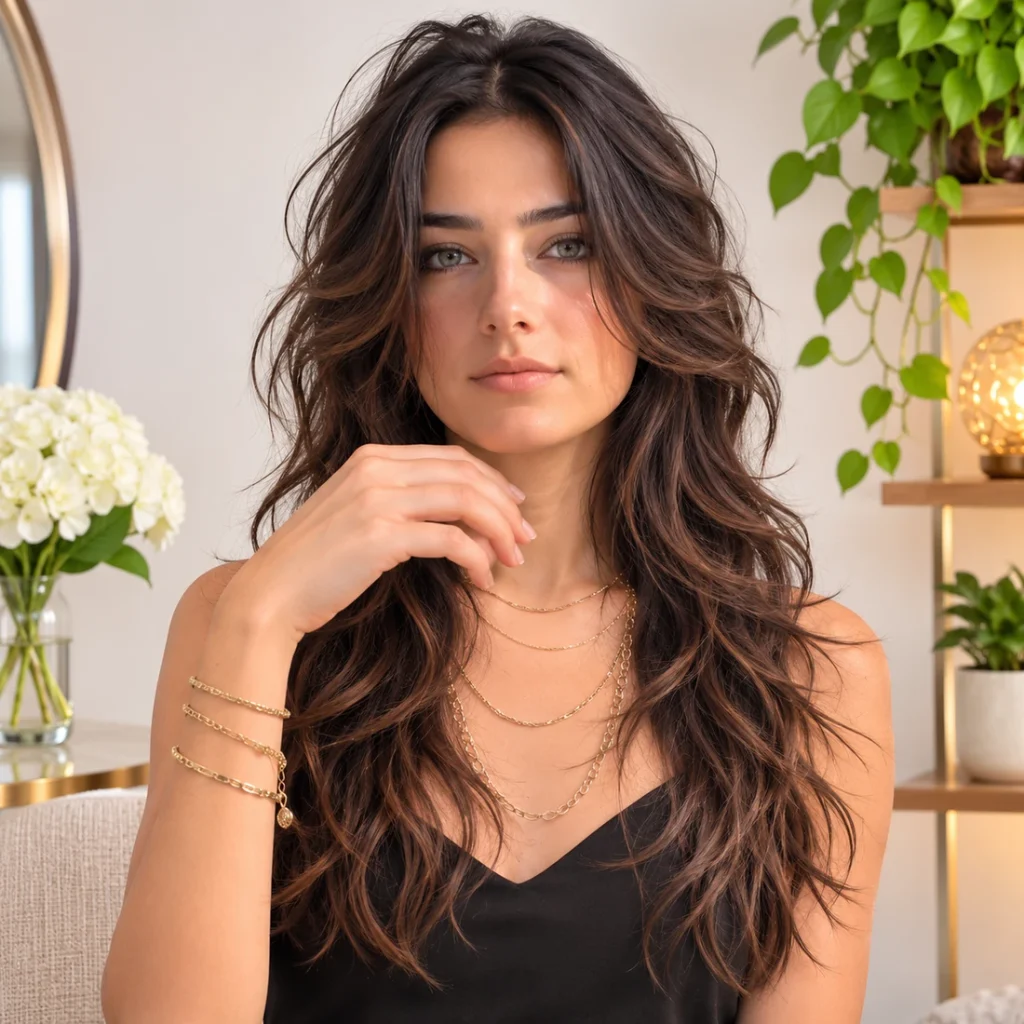
The shag is built on strong, visible layers all over the head, with texture and shorter pieces at the crown. A long shag keeps the length but adds that rock-and-roll volume.
Best for: wavy and curly hair, which naturally shows off the texture. Also works on straight hair with some salt spray. Upkeep: low styling, but regular trims keep the layers from looking messy.
If you’d like to see how shaggy texture looks in a shorter cut, take a look at this shaggy pixie cut guide for comparison.
7. Long Wolf Cut
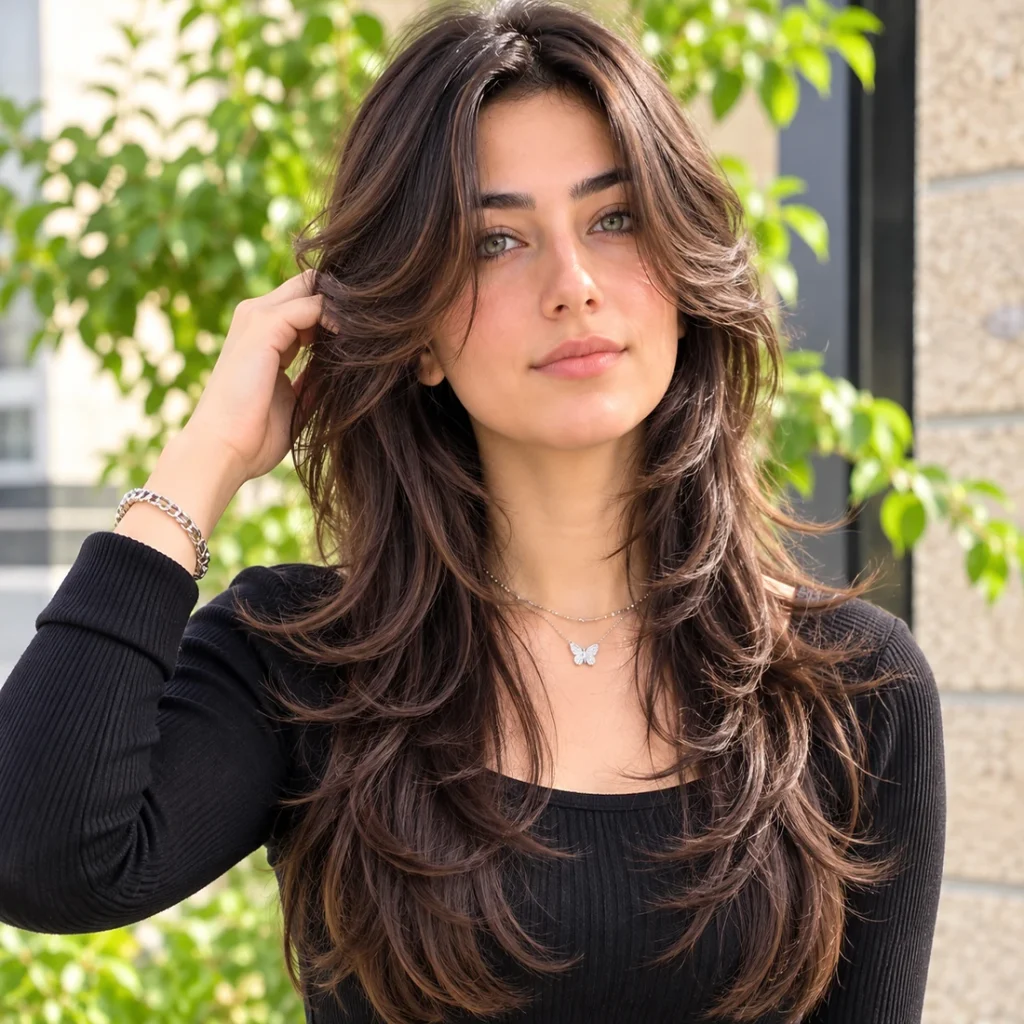
The wolf cut combines shag layers with a mullet-style structure: shorter, choppy layers on top and longer, thinner lengths at the back. The long version is less extreme than the short one.
Best for: thick or wavy hair, and anyone who wants a bold, textured look. Not ideal for: very fine, flat hair, because the thin back lengths can look sparse. Upkeep: a trim every 8 to 10 weeks to maintain the shape.
8. Blowout Layers
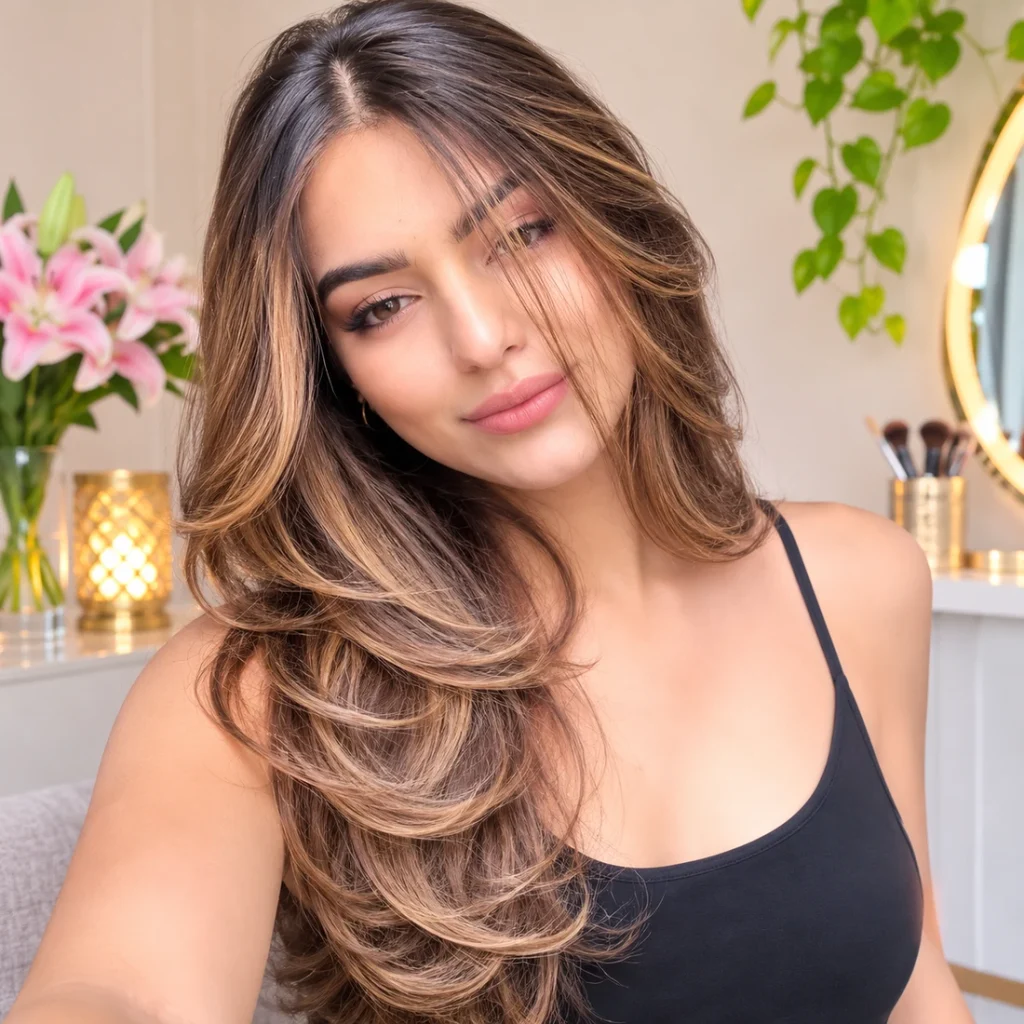
These are soft, rounded layers cut specifically to look good with a bouncy, voluminous blowout. The layers curve inward at the ends and frame the shoulders.
Best for: straight to wavy hair that you’re willing to blow-dry. A good choice for special occasions or a polished everyday look. Upkeep: the cut is simple, but styling takes 15 to 25 minutes.
9. U-Shaped Layered Cut
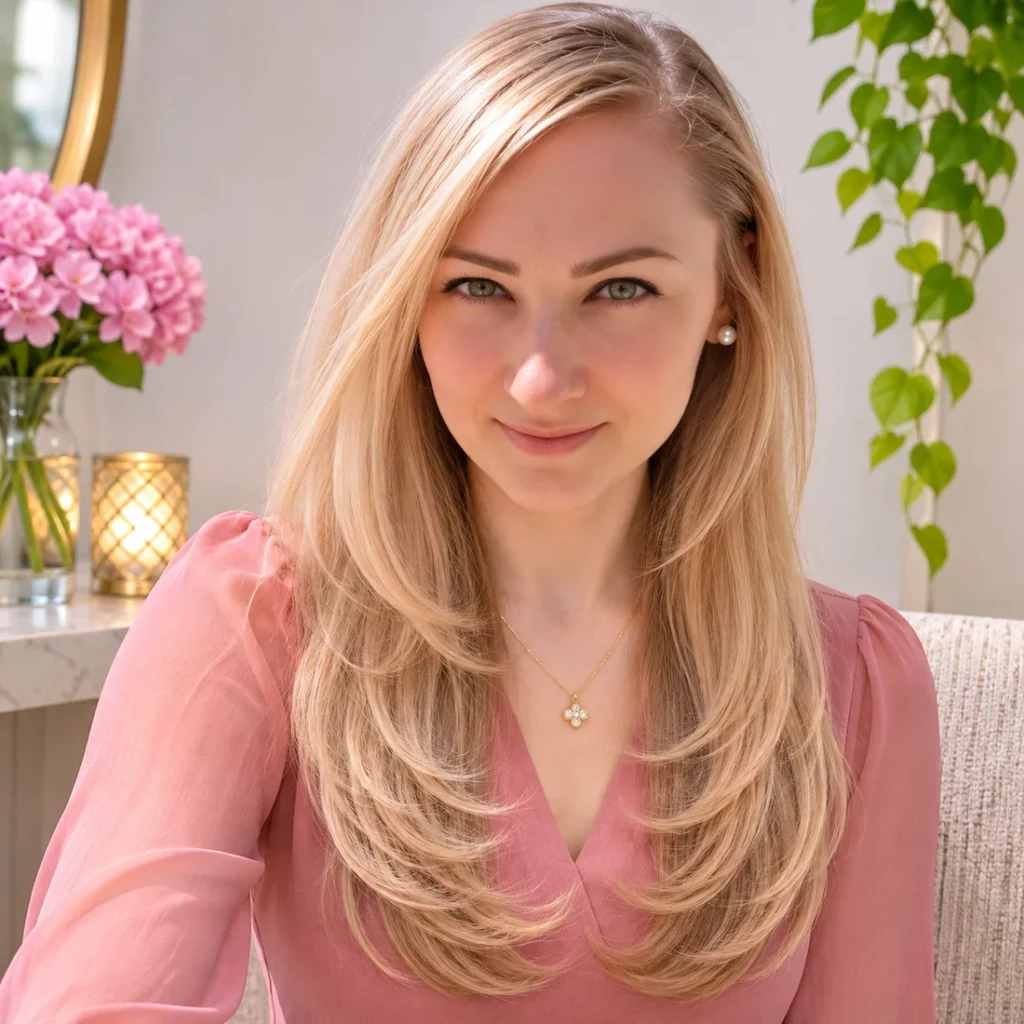
In a U-shaped haircut, the back is cut in a soft curve, with the longest point in the center and shorter lengths towards the sides. It looks rounded and neat from behind.
Best for: fine to medium hair that looks thinner at the ends. The curved line keeps the bottom looking fuller. Upkeep: low. The shape grows out gracefully.
10. V-Shaped Layered Cut

The V-shape tapers toward a point in the middle of the back. Layers radiate from that point, which makes hair look long, dramatic, and sleek from behind.
Best for: thick, heavy hair that needs weight removed, or anyone who wants long, straight hair with visible length. Not ideal for: thin hair. The tapered point can make the ends look wispy.
Between the two, a quick rule: U-shape for fullness, V-shape for drama.
11. Invisible Layers
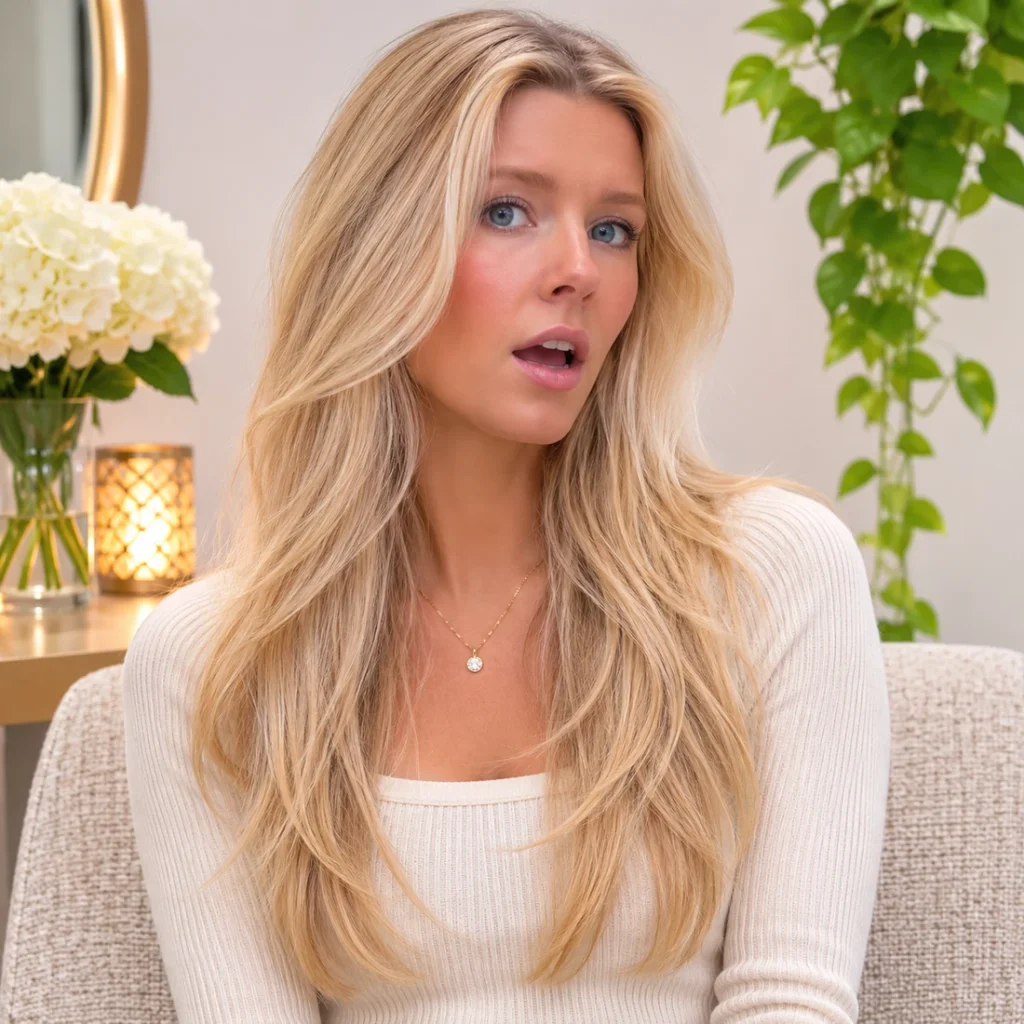
Invisible layers (sometimes called hidden or internal layers) are cut under the top layer of hair so the outline stays full and blunt. You get movement and less bulk without the choppy look.
Best for: thick hair that feels heavy, or anyone worried layers will make hair look stringy. Particularly good for straight hair, where the layers might otherwise show too much. Upkeep: low. This is one of the easiest long layered haircut styles to live with.
12. Long Layers for Curly Hair

Curly hair needs layers cut with the curl pattern in mind. Done well, layers prevent the “triangle” shape where hair gets wide at the bottom and flat on top.
Best for: wavy, curly, and coily hair that needs shape. Key tip: ask for a stylist who cuts curly hair dry, or on curls in their natural state, because curls spring up when they dry and wet cutting can be hard to judge.
Soft layers around the face and a rounded overall shape tend to flatter most curl patterns.
How to Choose Layers for Your Face Shape
Face shape is a guideline, not a rule. Use it as a starting point and adjust for how you like to wear your hair.
| Face shape | Layers that tend to flatter |
|---|---|
| Oval | Almost anything; face-framing or curtain bangs both work |
| Round | Long face-framing starting below the chin; avoid heavy volume at the cheeks |
| Square | Soft, wispy layers that round off the jawline |
| Heart | Chin-length face framing; curtain bangs; fuller ends |
| Long/Oblong | Layers with width at the sides; curtain bangs to shorten the forehead |
Layers for a Round or Fuller Face
If you have a round or fuller face, long layers can look lovely when the shorter pieces begin at or just below the chin. This creates vertical lines that lengthen the face.
Avoid very short layers that end right at the widest part of your cheeks, because they can add width there. Curtain bangs that sweep away from the center also work well, since they open up the face rather than covering it.
Layers with a Double Chin or Fuller Jawline
Choose longer face-framing layers that fall below the chin and skim the neck. Aim for a bit of volume at the crown to balance proportions.
Skip layers that end exactly at the chin line. Your stylist can tell you where the best starting point is for your face.
Long Layers for Your Hair Type
Do Long Layers Suit Thin Hair?
Yes, but keep them subtle. Soft or invisible layers can add shape without making ends look thin. Heavy, choppy layers remove too much density from already fine hair.
For thin hair, aim for fewer layers, longer length differences, and a blunt perimeter. A U-shaped back also helps.
Are Long Layers Good for Thick Hair?
Yes, they’re often the best fit. Thick hair can look heavy and triangular without layers. Layers remove weight and let the hair move.
If your hair is thick and you want it to lie flat, ask for invisible or internal layers. For maximum volume and bounce, a butterfly cut or long shag will do it.
Can You Get Long Layers with Curly Hair?
Yes. Curly hair benefits a lot from layers, as long as they’re cut for the curl pattern. Ask for a curl-specialist stylist and a dry cut if possible.
Straight Hair
Straight hair shows every line, so the cut has to be precise. Blended layers and face-framing look best. Invisible layers, feathered layers, and long blowout layers all suit straight hair.
Wavy Hair
Wavy hair gets the best of both worlds. It holds shape from layers and brings natural texture to cuts like the shag or wolf cut.
Medium-Long Layered Haircuts
If you want less length but still want layers, a medium-long cut (around the collarbone) is more manageable and easier to style. Layers here start near the chin and tend to look fuller. The same cuts above can all be adapted to a collarbone length.
For something shorter and just as stylish, see the bixie haircut ideas on our site.
Long Layers vs. Face Framing vs. a Shag: What’s the Difference?
| Long layers | Face framing | Shag | |
|---|---|---|---|
| Where it applies | All over | Around the face only | All over, strongly |
| Look | Soft and blended | Subtle highlight at the face | Textured, messy, voluminous |
| Best for | Everyday | Adding shape without much change | Bold, textured style |
The short answer: long layers shape your whole haircut, face framing only changes the pieces around your face, and a shag is a more dramatic layered cut with visible texture and shorter pieces on top. Many people combine long layers with face framing.
How to Ask for Long Layers at the Salon
A clear consultation prevents most haircut regrets. Try this approach:
- Bring two or three photos of cuts you like, and one of what you don’t like.
- Say your goals: more volume, less weight, easier styling, or just a refresh.
- Describe your layer placement: “starting at my chin” or “starting at my collarbone.”
- Mention your daily routine: do you blow-dry or air-dry? Do you wear your hair up often?
- Be clear about length: “I want to keep as much length as possible” or “I’m okay losing an inch or two.”
- Ask how the cut will look as it grows out.
Here’s a sample script: “I’d like long, soft layers that start around my chin. I want to keep the length at my mid-back. I air-dry most days, so I need layers that look good without blow-drying.”
How to Style Long Layered Hair
Add Volume
- Blow-dry upside down for a minute or two at the roots.
- Use a root-lifting spray or light mousse on damp hair.
- Finish with a light-hold hairspray, not a heavy one.
Create a Natural Blowout Look
Blow-dry with a round brush, rolling each section under at the ends. Layers should bend slightly inward or outward depending on the look you want. Let the hair cool before touching it so the shape sets.
Curl Long Layers
Curl alternate sections in alternate directions for a lived-in look. Leave the last inch of hair out of the iron for a more modern result. Use heat protectant and lower heat settings, especially on fine hair.
Style Layers with Curtain Bangs
Blow-dry the bangs first while the hair is slightly damp, using a medium round brush. Direct them away from the center. Then style the remaining layers to flow into them.
Style Layers Naturally (Air-Dry)
Apply a leave-in conditioner or curl cream to damp hair, scrunch gently, and avoid touching it until it dries. Layers cut well will fall into place on their own.
Make Layers Look Less Choppy
If your layers look too choppy, a stylist can blend them with a smoothing technique or use thinning shears sparingly. At home, a lightweight oil or serum on the ends helps blend uneven pieces.
Style Layers for Thin Hair
Use a volumizing shampoo, avoid heavy oils at the roots, and blow-dry roots up and away from the scalp. A light texturizing spray adds grip and fullness.
Can You Cut Long Layers at Home?
You can, but it’s easier to make a mistake than to fix one. If you decide to try, here’s the safest method:
- Use sharp haircutting scissors, not kitchen scissors.
- Brush hair smooth and part it down the middle.
- Bring all your hair forward over your shoulders and brush it into a ponytail at the front, near your forehead.
- Hold the ponytail firmly and slide the tie close to the ends.
- Cut a small amount off straight across (about half an inch). Remember you can always cut more but can’t add it back.
- Release your hair and check the shape. Even it out only if needed.
This “unicorn ponytail” method adds subtle layers. It works best on straight, thick hair. If you have curly, fine, or heavily damaged hair, or want a face-framing or shag cut, we recommend a professional stylist.
How to Maintain Long Layered Hair
Layers are low-maintenance in styling but need regular trims to keep their shape.
How Often Should You Trim?
A trim every 8 to 12 weeks suits most long layered haircuts. Shorter or more dramatic layers (shag, butterfly, wolf cut) may need a refresh every 6 to 8 weeks. Hair grows around half an inch per month on average, so a trim every two to three months removes damage while keeping your length.
Split Ends and Damage
Long hair has been around longer, so the ends are the oldest and most fragile part. Regular trims, heat protectant, and gentle brushing from the ends upward help prevent split ends from traveling up the hair shaft.
Are Long Layers Hard to Maintain?
Not really. Most are easier than blunt cuts because layers hide growth and unevenness. The main upkeep is the trim schedule and a little styling. If you want the lowest effort possible, take a look at these low-maintenance hairstyles for women for more ideas.
How to Grow Out Layers
If you’re growing out an older layered cut:
- Trim only the shortest layers every few months to even them out.
- Use leave-in conditioner to protect the ends.
- Choose styles like half-up or low ponytails while the layers blend together.
- Be patient. Growing out layers takes six to twelve months depending on how short they are.
Do Long Layers Make Hair Look Thicker?
They can, but it depends on the cut. Soft layers and U-shaped layers add movement and can make hair look fuller. Layers that are too short or too many can make fine hair look thinner by removing density from the ends. The key is moderation: fewer, longer layers for fine hair, more dramatic layers for thick hair.
Long Layered Haircut Mistakes to Avoid
- Too many layers on fine hair. This leaves the ends sparse.
- Layers that start in the wrong place. Ask where they will begin.
- Skipping a consultation. Bring photos and ask questions.
- Ignoring your daily routine. A cut that needs a blowout won’t work if you never blow-dry.
- Overusing heat. Damaged ends make layers look messy.
- Waiting too long between trims. Layers lose their shape over time.
Are Long Layered Haircuts Still in Style?
Yes. Layers continue to be a popular choice in 2026, especially soft, face-framing versions and textured cuts like the shag and wolf cut. Trends shift between blunt and layered, but layers remain a lasting option because they suit so many hair types. If you’re choosing a cut now, softer and more natural-looking layers are a safe, flattering pick.
Long Layered Haircuts for Girls
For little girls, simple long layers with a few face-framing pieces keep hair manageable and easy to brush. Avoid very short layers on fine or tangle-prone hair. Talk to the stylist about layers that grow out evenly, so you don’t need frequent trims.
Frequently Asked Questions
What are long layered haircuts?
Long layered haircuts are cuts where hair is trimmed at different lengths while the overall length stays long. They add movement, shape, and sometimes volume to long hair.
What face shape is best for long layers?
Oval faces suit almost any layered style, but long layers work for every face shape when the placement is adjusted. Round faces benefit from layers starting below the chin, while square faces look good with soft, wispy layers.
How often should you cut long layers?
Most people need a trim every 8 to 12 weeks. Bold layered styles like a shag or wolf cut may need one every 6 to 8 weeks.
Do long layers suit thin hair?
Yes, with subtle, soft, or invisible layers. Avoid heavy, choppy layering that removes too much density from the ends.
What’s the difference between long layers and a shag?
Long layers are smooth and blended, while a shag has visible, textured layers with shorter pieces on top. A shag is the more dramatic option.
How do you ask for long layers at a salon?
Bring reference photos, say where you want the layers to start, mention your styling routine, and ask how much length will be removed.
Can you get long layers with curly hair?
Yes. Ask a stylist experienced with curls to cut layers that follow your curl pattern, ideally on dry or natural curls.
Final Thoughts
Long layered haircuts are flexible. You can keep them soft and subtle, or go bold with a shag, wolf cut, or butterfly. What matters is choosing the layer placement and technique that fits your hair texture, density, and daily routine.
Your next step: pick two or three looks from this list, save photos, and bring them to your stylist along with your goals. A good consultation is the best way to get a cut you love.