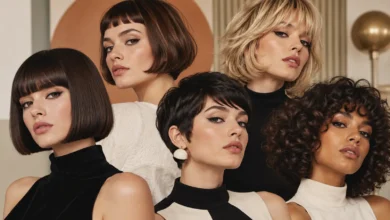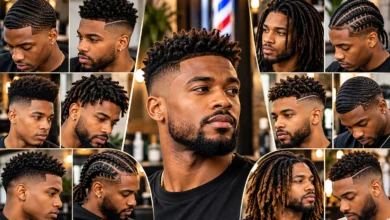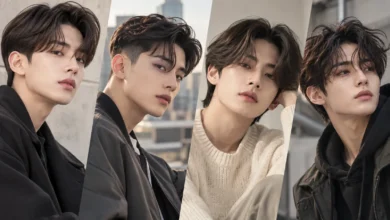
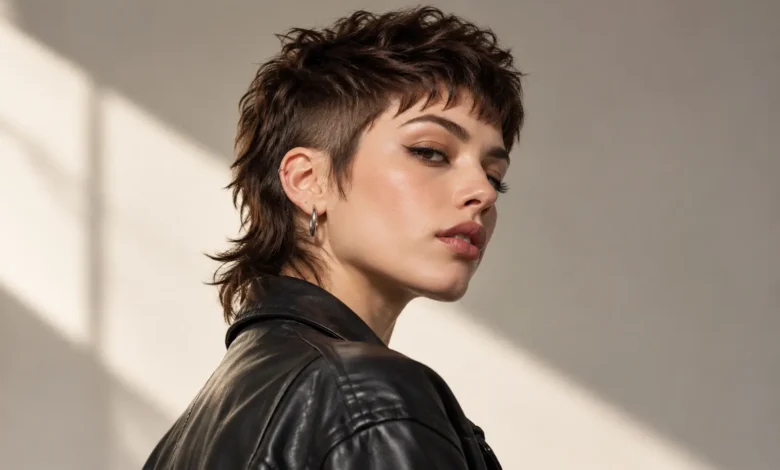
Few haircuts carry as much built-in attitude as the mullet. Short on the sides and top, left longer at the back, it’s a cut that refuses to pick a lane — equal parts tidy and untamed. And the short mullet haircut, a tighter, more wearable take on the original, has become one of the defining edgy haircuts of the past few years precisely because it keeps that rebellious energy without demanding the commitment of a full, dramatic mullet.
This guide covers what is a short mullet haircut, why it keeps trending, and five distinct short mullet styles you can bring to your next stylist appointment — along with the styling, maintenance, and face-shape details that actually determine whether a mullet works for you.
What Is a Short Mullet Haircut?
A short mullet haircut takes the classic mullet structure — short sides and top, longer length left at the back and nape — and tightens the proportions across the board. Instead of the dramatic, shoulder-grazing back section associated with the 80s original, a short mullet keeps the back section cropped closer, often just past the collar or nape, while still maintaining the signature contrast between short front/sides and longer back.
The result is a cut that reads as edgy and distinctive without the extreme length or high-maintenance styling the classic mullet required. It’s a style that works particularly well for anyone who wants the attitude of a mullet without fully committing to its most dramatic version.
What Is the Difference Between a Mullet and a Wolf Cut?
This is one of the most common points of confusion, and for good reason — the two styles share DNA. A mullet is defined by a clear, often sharp contrast between short front/sides and a distinctly longer back section. A wolf cut, by contrast, blends heavily layered, shaggy texture throughout the entire head, creating a messier, more gradual transition rather than the mullet’s defined short-to-long contrast. In short: a mullet is about contrast, while a wolf cut is about texture. Many modern short mullet styles actually borrow wolf-cut texture techniques to soften the classic mullet’s harder lines — more on that below.
What Makes a Mullet Rebellious?
The mullet’s rebellious reputation isn’t just about how it looks — it’s about what it represents. Because it breaks the conventional “neat and uniform” haircut rule (why would you cut it short in front and leave it long in back?), the mullet has always signaled a willingness to disregard mainstream expectations. That built-in defiance is part of why it keeps resurfacing in music, subculture, and fashion scenes associated with individuality and nonconformity.
Why Short Mullets Are Trending Again
Understanding why short mullets are trending again helps explain the style’s current popularity beyond simple nostalgia:
- A broader embrace of bold, individualistic haircuts. As fashion more generally has leaned into personal expression over conformity, edgy haircut trends like the short mullet have found a receptive audience looking to stand out.
- A more wearable version of a divisive classic. The full-length mullet remains polarizing, but the short mullet offers the same rebellious signature in a more everyday-wearable, office-appropriate length.
- Celebrity and music scene visibility. Mullets have resurfaced repeatedly across music and entertainment circles in recent years, helping normalize the cut for a wider audience than it traditionally reached.
- Social media’s appetite for distinctive, photogenic cuts. A short mullet’s clear structural contrast makes it instantly recognizable in photos and videos, which has helped the style spread quickly online.
Benefits of a Short Mullet Haircut
Beyond the style factor, a few practical advantages explain the short mullet’s staying power:
- Lower maintenance than a full mullet. With less length to manage at the back, a short mullet requires less daily styling effort than its more dramatic predecessor.
- Versatile styling options. A short mullet can be styled sleek and polished or textured and messy, offering more day-to-day flexibility than more rigid short haircuts.
- Works across a range of hair types. From straight to curly, most textures can carry a short mullet with the right cutting technique, unlike some haircuts that only work well with specific hair types.
- A built-in statement without extreme upkeep. The cut does a lot of visual work on its own, meaning less reliance on elaborate styling to look intentional.
Also Read: 6 Low-Maintenance Hairstyles for Women Over 60 with Fine Hair
A Brief History of the Mullet Haircut
The history of the mullet haircut stretches back further than most people assume. Short-front, long-back hairstyles appear in various forms throughout ancient history, including depictions in ancient Greek pottery and among some warrior cultures, where the style offered practical benefits — hair out of the eyes in front, with length retained at the back for warmth or protection.
The modern mullet as it’s commonly understood, however, is largely a product of the late 1970s and 1980s, when the style became closely associated with rock and punk music scenes. Its deliberately contrary structure — short enough to look purposeful in front, long enough to look rebellious in back — made it a natural fit for subcultures pushing back against mainstream style norms at the time.
The Evolution of the Mullet Trend Over Decades
The evolution of the mullet trend over decades reflects broader shifts in how the cut has been perceived:
- 1970s–80s: The mullet’s breakout era, closely tied to rock, punk, and new wave music scenes, known for dramatic length contrast and often bold, teased styling.
- 1990s–2000s: The style fell out of mainstream favor, becoming something of a cultural punchline associated with outdated or unfashionable style choices.
- 2010s: A slow re-emergence began, particularly within alternative and music subcultures, as a wave of 80s and 90s nostalgia influenced broader fashion trends.
- 2020s–present: The short mullet in particular has found mainstream acceptance, reinterpreted with modern texture, face-framing layers, and more wearable proportions — a clear example of how the mullet became popular again without requiring the full dramatic length of earlier eras.
Cultural Significance of the Mullet in Fashion
The cultural significance of the mullet in fashion lies largely in its association with nonconformity and self-expression. Few haircuts carry as loaded a cultural history — from subcultural rebellion to mainstream punchline and back to trend-forward statement piece — which is part of why choosing a short mullet today still reads as a deliberate, slightly defiant style choice rather than a neutral one.
5 Short Mullet Looks That Feel Boldly Rebellious
The Textured Shag Mullet
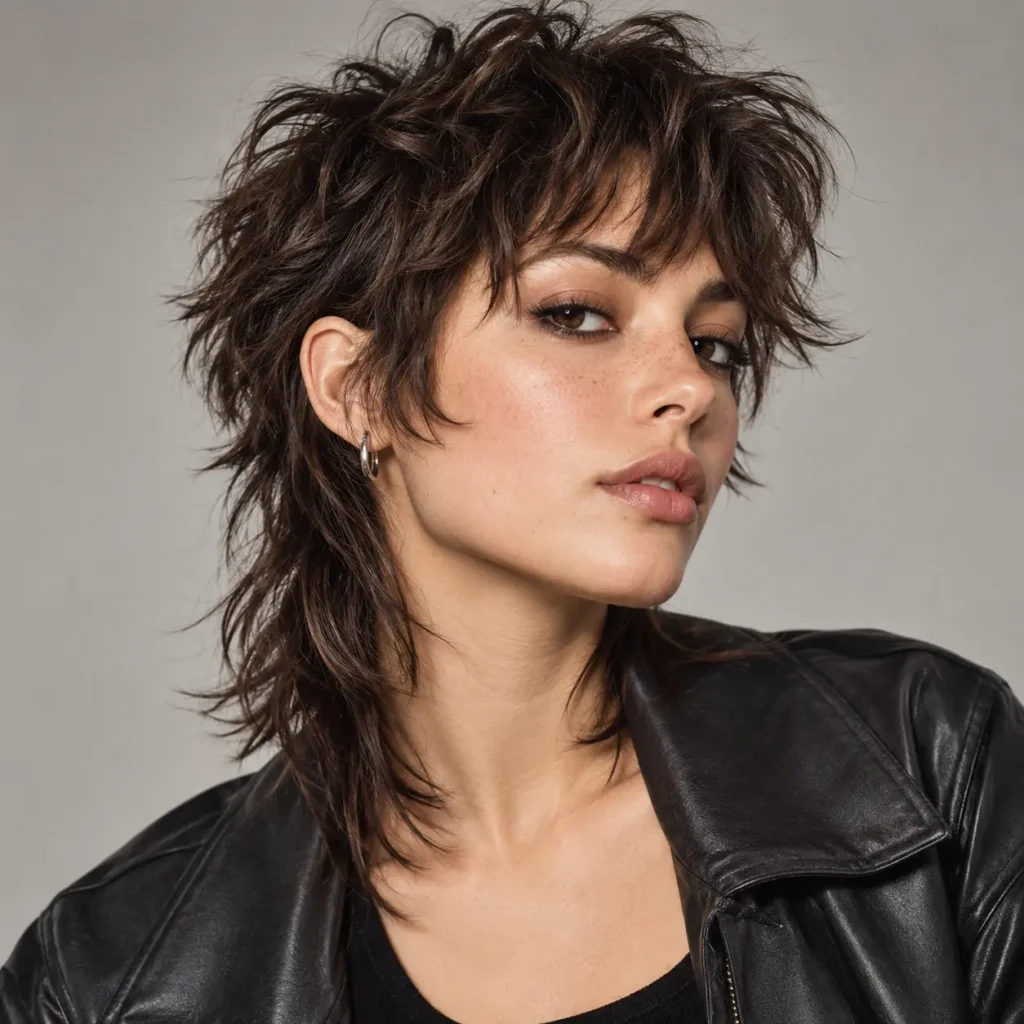
This look softens the classic mullet’s sharp contrast by adding heavy texture and choppy layers throughout, blurring the line between a traditional mullet and a wolf cut. The front and sides stay relatively short with plenty of movement, while the back is layered rather than blunt-cut, creating a shaggier, more lived-in version of the style. This is one of the most requested short textured mullet looks right now because it feels edgy without looking overly severe.
Who it suits: Wavy to curly hair, medium-to-thick density, anyone wanting a rebellious cut with a softer, more approachable finish.
Styling tip: Apply a matte texturizing paste to damp hair and scrunch gently to encourage natural movement rather than smoothing it down.
The Punk-Inspired Spiked Mullet
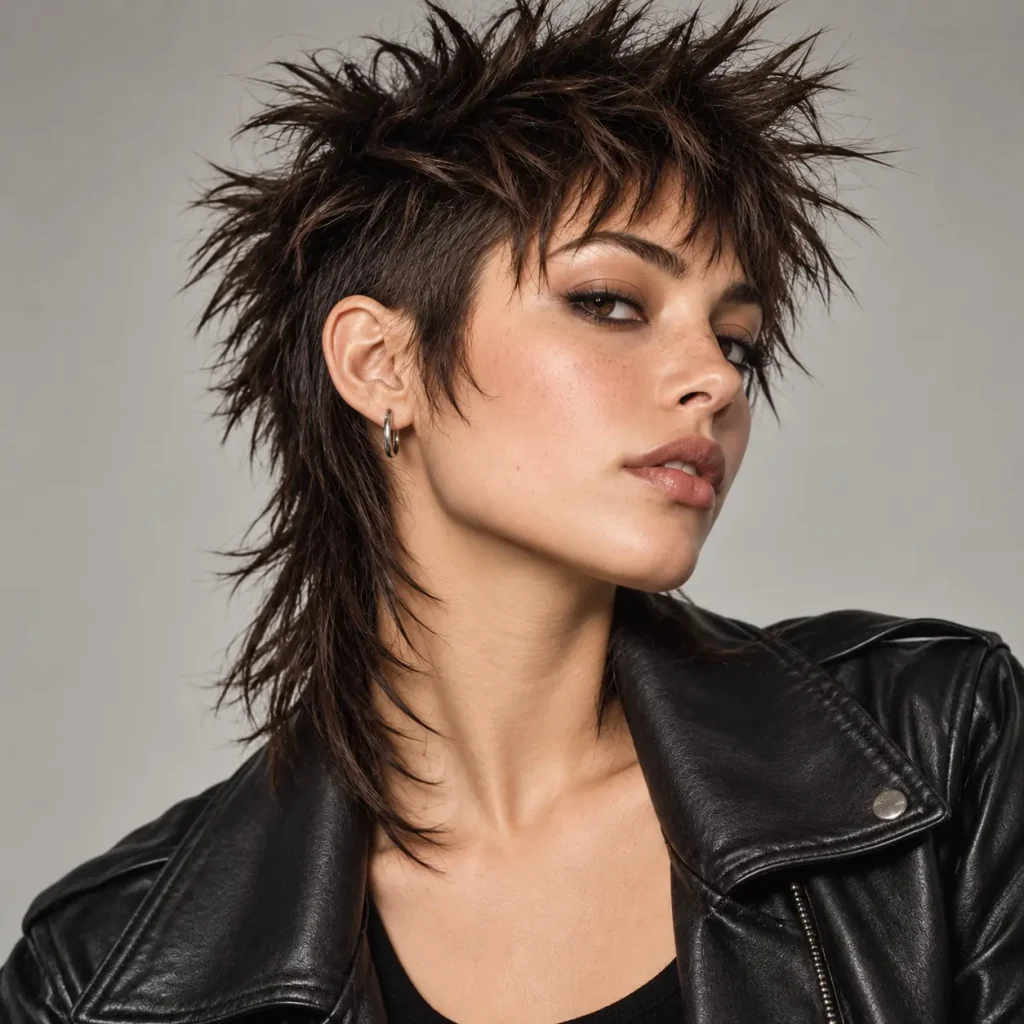
For maximum edge, the short punk mullet haircut combines short, spiked or textured top and sides with a cropped but clearly defined longer back section. Often paired with a slightly undercut or shaved detail at the nape, this look leans hardest into the mullet’s rebellious roots, drawing direct inspiration from the punk and rock scenes that first popularized the style.
Who it suits: Straight to slightly wavy hair, anyone wanting the most unapologetically bold version of the trend.
Styling tip: A strong-hold styling gel or wax applied to the top section and pushed upward creates the spiked texture, while the back can be left more natural for contrast.
The Curly Short Mullet
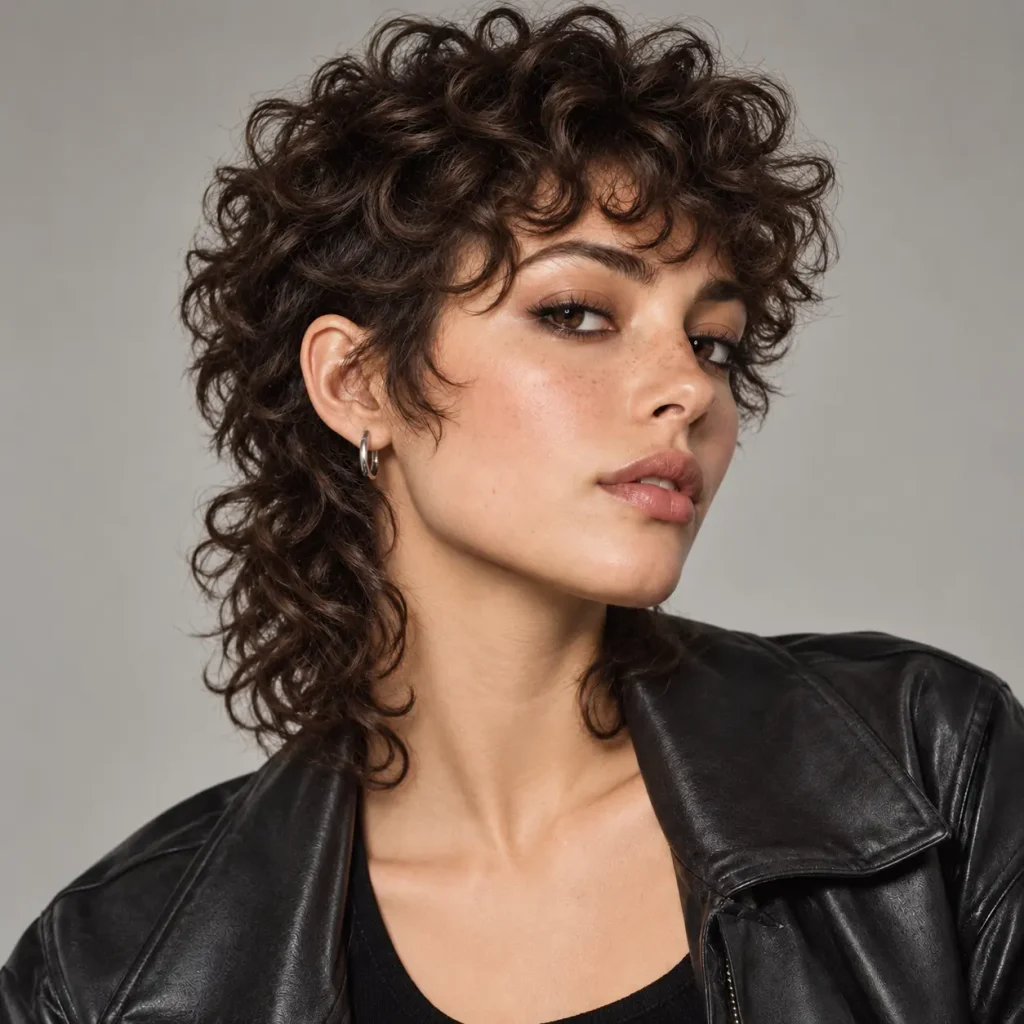
Curls add natural volume and texture that work exceptionally well with the mullet’s built-in contrast. A short curly mullet keeps the sides tapered close to the head while letting curls form naturally on top and at the back, creating dimension without requiring heavy styling. This is one of the most flattering short mullet for curly hair options because it works with the hair’s natural pattern rather than fighting it.
Who it suits: Type 2–4 curl patterns, anyone who wants a low-effort style that still reads as bold and distinctive.
Styling tip: Use a curl-defining cream on damp hair and avoid brushing once dry, which can disrupt curl clumps and create unwanted frizz.
The Sleek Modern Mullet
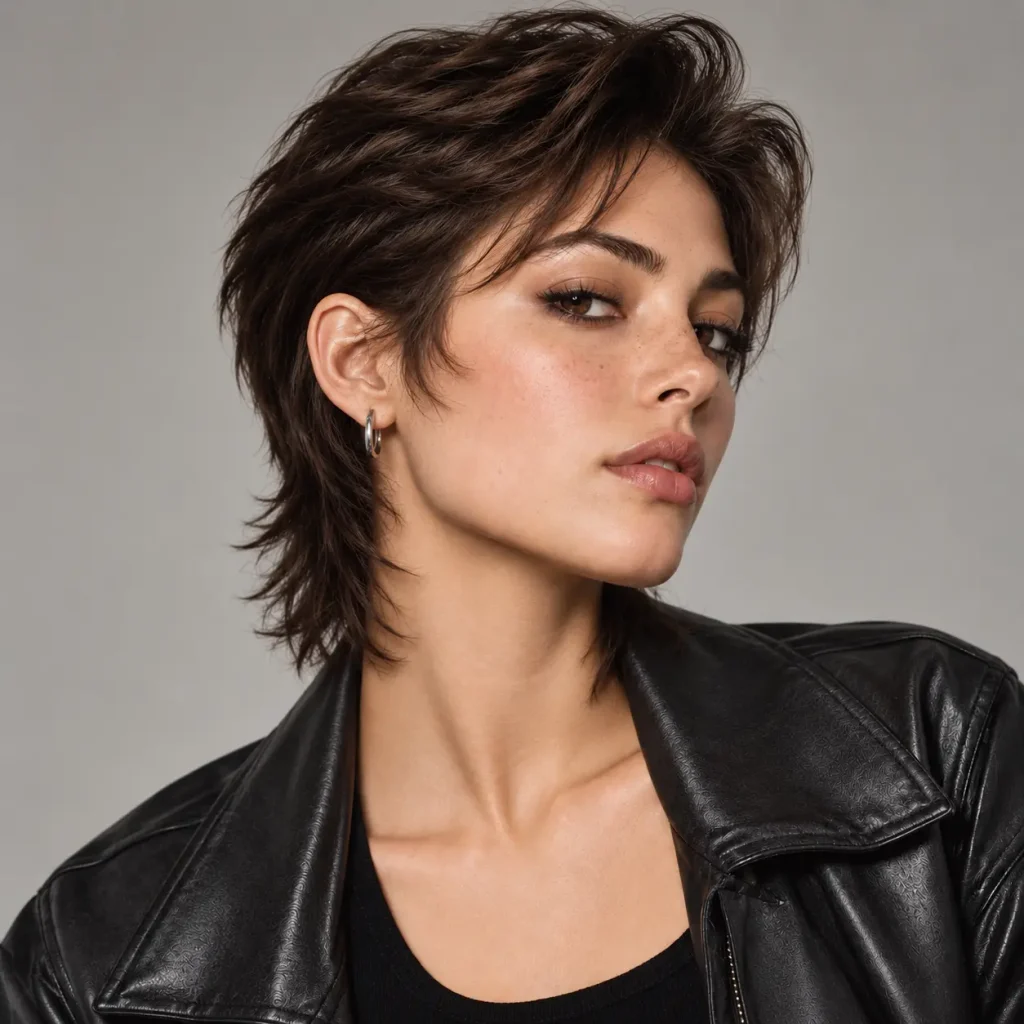
For a more polished, modern take, the sleek short mullet keeps clean, tapered sides and a smooth, slightly longer top that’s styled flat or combed back rather than left textured. The back section stays relatively short and precisely cut rather than shaggy. This version proves that a short mullet haircut can read as intentional and refined rather than purely rebellious, making it a strong option for anyone who wants the cut’s edge without sacrificing a more put-together look.
Who it suits: Straight or fine hair, anyone wanting a modern short mullet haircut that fits a slightly more professional or polished setting.
Styling tip: A lightweight pomade combed through damp hair creates the sleek finish without heavy shine or stiffness.
The Wolf-Cut Hybrid Mullet
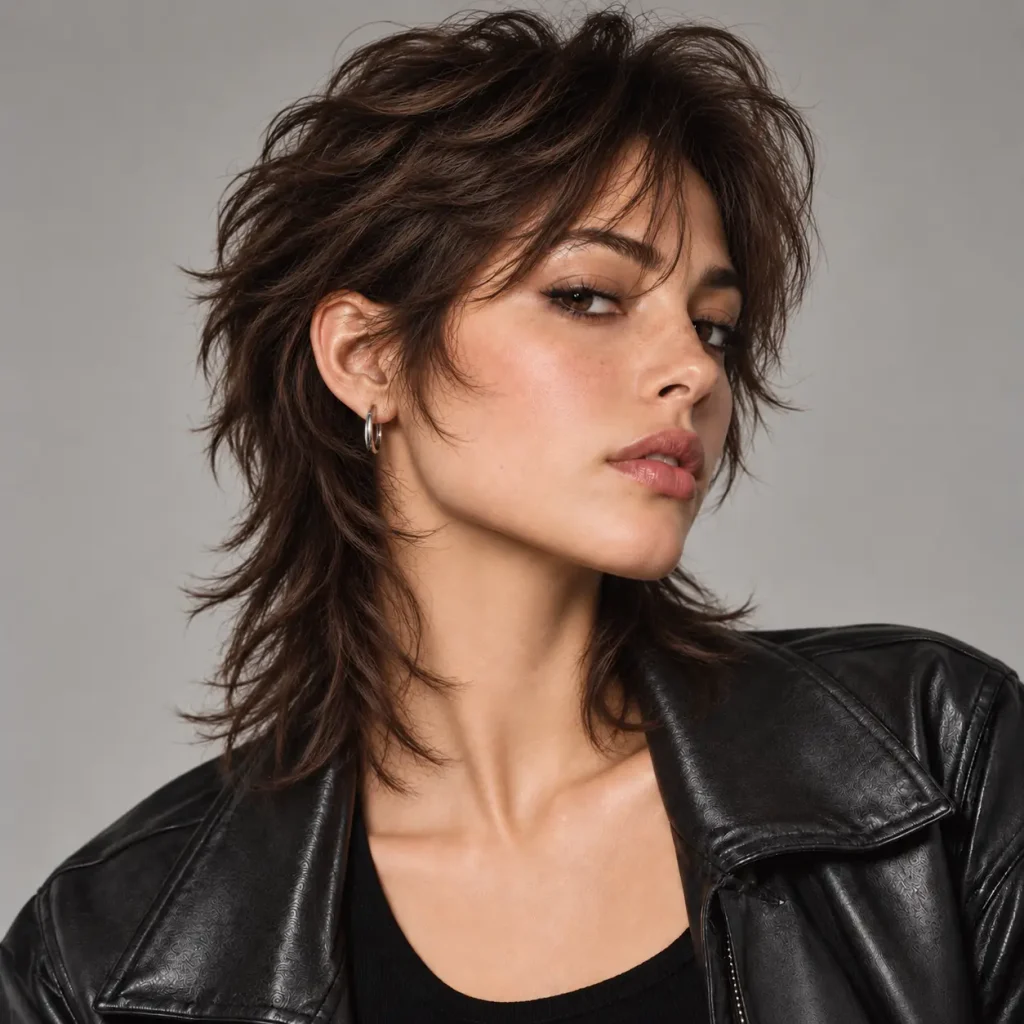
Blurring the line between mullet and wolf cut even further than the textured shag option, this look applies heavy layering and face-framing pieces throughout the entire cut, softening the traditional mullet’s hard structural break. The result keeps the mullet’s signature longer-back silhouette while adding the choppy, voluminous texture associated with the wolf cut trend. This hybrid approach has become one of the most popular short mullet haircut trends 2026 has seen, precisely because it offers the best of both styles at once.
Who it suits: Medium-to-thick hair, straight to wavy textures, anyone who wants a trend-forward cut that leans into movement and volume.
Styling tip: Blow-dry with a round brush to add volume at the roots, then finish with a light texturizing spray to enhance the layered, piecey effect.
Comparison Table: Matching the Look to Hair Type and Maintenance
| Look | Best Hair Type | Maintenance Level | Styling Time |
|---|---|---|---|
| Textured Shag Mullet | Wavy/Curly, medium-thick | Medium | 5–7 min |
| Punk-Inspired Spiked Mullet | Straight/Wavy | Medium-High | 7–10 min |
| Curly Short Mullet | Curly (2A–4C) | Low | 3–5 min |
| Sleek Modern Mullet | Straight/Fine | Low-Medium | 3–5 min |
| Wolf-Cut Hybrid Mullet | Straight/Wavy, medium-thick | Medium | 7–8 min |
Also Read: 6 Bixie Haircuts You’ll Fall in Love With Instantly
Short Mullet vs. Wolf Cut: Which Should You Choose?
Since the two styles are so frequently compared, it’s worth a direct breakdown. A short mullet vs. wolf cut decision generally comes down to how much contrast you want:
- Choose a mullet if you want a clearly defined short-to-long structure — distinct short sides and top with an obviously longer back section.
- Choose a wolf cut if you want heavy, blended layering throughout with less emphasis on a sharp length contrast and more on overall shagginess and volume.
- Choose a hybrid (like look #5 above) if you want elements of both — the mullet’s longer-back silhouette with the wolf cut’s softer, more textured blending.
Neither is objectively “more rebellious” than the other; the choice comes down to how much structural contrast you personally want to carry.
Modern Mullet vs. 80s Mullet: What’s Actually Different
A modern mullet vs. 80s mullet comparison reveals just how much the style has evolved:
- Length contrast: The 80s version often featured dramatic length differences (very short front, very long back), while modern short mullets keep the back section considerably shorter and closer to the nape.
- Texture: 80s mullets frequently relied on teasing, perms, or heavy volume styling; modern versions lean into natural texture and looser, more effortless styling.
- Versatility: The modern short mullet is designed to transition more easily between casual and semi-formal settings, whereas the 80s mullet was almost exclusively a casual, subculture-associated style.
- Face-framing detail: Many modern short mullets incorporate layered, face-framing pieces at the front — a detail largely absent from the blunter, more uniform 80s cut.
How to Style a Short Mullet
Styling approach depends heavily on which of the five looks above you’ve chosen, but a few general principles apply across the board:
- Work with damp, not fully dry, hair when applying most styling products, since this helps product distribute evenly without weighing hair down.
- Separate top and back styling. Because a mullet is defined by contrast, it often helps to style the top and back sections slightly differently — more texture or height on top, a cleaner finish at the back, for example.
- Use a lighter hand with product on curly or wavy textures. Over-applying product can weigh down natural texture that’s already doing much of the styling work for you.
- Don’t over-smooth the back section. Part of what makes a short mullet read as intentional rather than accidental is a bit of visible texture or movement at the back, rather than a perfectly flat finish.
Products for Styling a Short Mullet
- Matte texturizing paste — ideal for the textured shag and wolf-cut hybrid looks, adding grip and definition without shine.
- Strong-hold styling gel or wax — best for the punk-inspired spiked look, where height and hold matter most.
- Curl-defining cream — essential for the curly short mullet, helping maintain natural curl pattern without added frizz.
- Lightweight pomade — suited to the sleek modern mullet, offering a smooth, low-shine finish without stiffness.
- Texturizing spray — useful across nearly all five looks as a finishing step to add piecey definition and reduce overly polished shine.
How to Ask Your Stylist for a Short Mullet
Communication matters enormously with a cut this specific. A few tips for the appointment:
- Bring a reference photo for the exact look you want — the five styles above vary significantly in texture and contrast, so a visual reference avoids miscommunication.
- Specify the back length clearly. “Short mullet” can mean different things to different stylists; clarifying whether you want the back just past the collar or slightly longer helps avoid surprises.
- Mention your hair type and how much daily styling you’re willing to do. This helps your stylist recommend the right look among the five above — for example, steering a curly-haired client who wants low maintenance toward the curly short mullet rather than the punk-inspired spiked version.
- Ask about the transition zone. The blend between the shorter top/sides and longer back is one of the trickiest parts of a mullet to execute well — ask your stylist how they plan to handle that transition for a clean, intentional result rather than an abrupt, awkward line.
Short Mullet Haircut Maintenance
A short mullet haircut’s maintenance needs fall somewhere between a classic short haircut and a longer style:
- Trim every 4–6 weeks to keep the contrast between sections clean, since the shorter top and sides will grow out and soften the mullet’s defining structure faster than the back.
- Check in on the back length periodically. Depending on how long you want to eventually grow the back section, you may need occasional back-specific trims to keep the shape intentional rather than scraggly.
- Deep condition regularly, especially for curly or textured versions, since healthy, well-moisturized hair holds texture and shape more reliably than dry or damaged strands.
Growing Out a Short Mullet
If you decide to grow your short mullet into a longer version, a few tips make the transition smoother:
- Keep the sides and top maintained while the back grows. Regular trims on the shorter sections prevent the overall cut from looking unintentionally messy while the back lengthens.
- Ask for a “growing out” trim rather than a full cut. Many stylists offer a lighter service specifically to shape the top and sides without cutting off length you’re trying to retain at the back.
- Expect an awkward middle phase. Most mullet transitions go through a stage where the contrast feels less defined; patience and consistent maintenance on the shorter sections help minimize how noticeable this phase is.
- Set a realistic timeline. Growing a short mullet into a more dramatic length typically takes several months depending on hair growth rate, so plan accordingly if you’re aiming for a specific look by a certain date.
Also Read: 13 Short Hairstyles for Black Women That Radiate Confidence
What Face Shape Suits a Short Mullet?
Because the mullet’s defining feature is contrast rather than overall shape, it tends to be more adaptable across face shapes than many haircuts — but a few small adjustments help optimize the fit.
Short Mullet for Round Face
Adding height and volume at the crown (as in the wolf-cut hybrid or spiked punk looks) helps elongate a round face, while keeping the sides relatively tight avoids adding unwanted width.
Short Mullet for Square Face
Softer, more textured versions — like the textured shag or curly short mullet — help balance a square jaw’s strong angles with movement and softness rather than adding more sharp lines.
Short Mullet for Oval Face
Oval faces can comfortably carry nearly any of the five looks above, since the balanced proportions of an oval face don’t require much compensation from the haircut itself.
Best Short Mullet for Face Shape, Generally
Across most face shapes, a short mullet with some textured volume on top (rather than a completely flat, uniform top section) tends to be the most universally flattering, since it adds visual interest without overwhelming any particular facial feature.
Mistakes to Avoid With a Short Mullet
- Going in without a clear reference photo. Given how much the five looks above vary, vague direction to a stylist often results in a cut that doesn’t match what you actually wanted.
- Over-styling the back section. Too much product or too much smoothing on the back can flatten the natural texture that helps a mullet read as intentional rather than accidental.
- Ignoring regrowth on the shorter sections. Letting the top and sides grow out too long softens the mullet’s defining contrast, eventually making the cut look more like an uneven, undefined style than a deliberate mullet.
- Choosing the wrong variation for your hair type. A punk-inspired spiked mullet on very fine, straight hair may require more daily effort than expected, just as a sleek modern mullet on very curly hair may fight against the hair’s natural texture.
- Skipping consistent trims. A short mullet relies on maintained proportions between sections; skipping regular trims causes the overall shape to lose definition faster than most other short haircuts.
Frequently Asked Questions
What is a short mullet haircut?
A short mullet haircut keeps the classic mullet’s short front and sides with a longer back section, but tightens the overall proportions — particularly the back length — compared to the more dramatic traditional mullet.
What is the difference between a mullet and a wolf cut?
A mullet is defined by a clear contrast between short front/sides and a longer back section, while a wolf cut uses heavy layering and texture throughout the whole head for a shaggier, more blended look with less sharp contrast.
Is the short mullet still trending in 2026?
Yes. The short mullet remains one of the more popular edgy haircut trends, particularly in hybrid forms that blend mullet structure with wolf-cut texture, reflecting the broader ongoing popularity of bold, individualistic haircuts.
What face shape suits a short mullet?
Most face shapes can carry a short mullet well, though round faces benefit from added height and volume on top, square faces often look best with softer, textured versions, and oval faces can comfortably wear nearly any variation.
Is a short mullet easy to maintain?
Generally yes, especially compared to a full-length mullet — most versions require trims every 4 to 6 weeks and moderate daily styling, though maintenance varies by specific look (the curly short mullet, for example, requires less daily styling than the punk-inspired spiked version).
Can a short mullet work for curly hair?
Yes, and it’s one of the most flattering hair types for the style — natural curl pattern adds volume and texture that pairs especially well with the mullet’s built-in contrast, often requiring less product and styling effort than straight hair versions.
How often should you trim a short mullet?
Most short mullets need a trim every 4 to 6 weeks to maintain clean contrast between the shorter sections and the longer back, since the top and sides tend to grow out and soften the cut’s defining shape faster than the back section does.
What hair type suits a short mullet?
Nearly every hair type can carry a short mullet with the right cutting technique — straight hair suits sleek or spiked versions well, while wavy and curly textures naturally complement the shaggier, more textured variations.
Final Thoughts
The short mullet haircut earns its rebellious reputation honestly — it’s a cut built on contrast, confidence, and a willingness to break from conventional, uniform styling. Whether you lean into the punk-inspired spiked version, soften things with a curly or textured shag take, or go for the more polished sleek modern mullet, the five looks in this guide prove that the short mullet isn’t a single style so much as a flexible framework for self-expression. Bring a clear reference photo, communicate your hair type and maintenance preferences to your stylist, and you’ll walk out with a cut that carries exactly as much edge as you want it to.