Fashion Trends 2026: The Complete Guide to What’s In, What’s Out, and How to Actually Wear Them

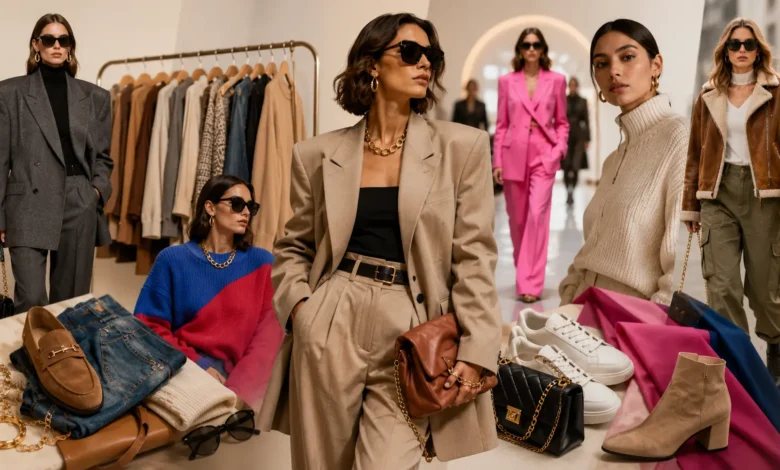
Every January, the same thing happens: trend forecasts flood your feed, half of them contradict each other, and by March you’ve bought three things you’ll never wear again. This guide isn’t another scroll-and-forget trend list. It’s a framework — built around what’s genuinely shaping 2026’s runways and street style — that shows you how to filter, buy, and style trends so they actually extend your wardrobe instead of cluttering it. We’ll cover the principles that separate a “trend chaser” closet from a “trend-aware” one, the styles defining this year (from ’80s-coded power dressing to the quiet rise of premium basics), real budget tiers for trying a trend without overspending, and the mistakes that make even expensive trend pieces look try-hard instead of intentional.
What Is a “Fashion Trend” — and Why Does It Actually Matter?
A fashion trend is a shift in color, silhouette, fabric, or styling that gains enough momentum across runways, retailers, and social platforms to influence what’s available to buy and what feels current to wear. Trends exist on two speeds: macro trends (season-spanning shifts like a return to tailoring) that are worth investing in, and micro trends (a single viral item with a 6–8 week shelf life) that are only worth a low-cost, low-commitment try. Here’s what most “trend of the week” content skips: chasing every micro trend is the single biggest driver of wardrobe clutter and overspending. The real skill isn’t knowing what’s trending — it’s knowing which trends are worth your money and which ones you should enjoy on your feed and walk straight past in the store. That distinction is the difference between a wardrobe that feels current and one that feels chaotic.
The 6 Core Principles of Trend-Smart Dressing
These principles apply no matter which trend you’re considering — denim, color, accessories, anything.
1. Cost-Per-Wear Over Price Tag A $120 jacket worn 40 times costs $3 per wear. A $25 top worn twice costs $12.50 per wear. Before buying any trend piece, ask how many times you’ll realistically wear it this season — if the honest answer is under 5, skip it regardless of price.
2. Silhouette First, Print Second Silhouette trends (oversized blazers, wide-leg trousers, cropped jackets) last for seasons. Print and pattern trends (a specific floral, a specific plaid) last for weeks. When budget is tight, invest in the silhouette and let cheaper accessories carry the print.
3. The 80/20 Trend Ratio Your wardrobe should be roughly 80% timeless base pieces (well-fitted denim, a blazer, neutral knits) and 20% trend pieces. This ratio means a trend can fail or fade without taking your whole closet down with it.
4. Fit Beats Fashion A trend piece in the wrong size looks dated the day you buy it; a well-fitted basic looks current for years. If you only have budget for tailoring or for a new trend item, choose tailoring.
5. One Trend, Three Ways Before buying a trend item, picture three different outfits you’d build around it using pieces you already own. If you can’t picture three, it’s a one-outfit purchase — and one-outfit purchases are where wardrobes go to die.
6. Know the Trend’s Lifecycle Ask whether something is a macro trend (multiple seasons, multiple price points, multiple retailers) or a micro trend (one viral moment, one specific item). Spend real money only on macro trends; treat micro trends as a $20–30 experiment, not an investment.
The core rule that ties all six together: buy the trend that fits your existing wardrobe, not the wardrobe that would fit the trend.
Aslo Read: > How to Build a Capsule Wardrobe
The 8 Fashion Trend Categories Shaping 2026
| Trend Category | Investment Level | Best For | Key Elements | 2026 Status | Difficulty |
| ’80s-Coded Power Dressing | Medium–High | Work, Evening | Oversized blazers, sharp shoulders, gold jewelry | YES — 2026 breakout ★ | Intermediate |
| Quiet Luxury Basics | High | Everyday, Work | Premium fabrics, minimal branding, tailored fit | Steady, evolving | Beginner-friendly |
| Texture-Rich Layering | Medium | Fall/Winter, Casual | Bouclé, suede, chunky knit, leather trim | Growing fast | Intermediate |
| Preppy Revival 2.0 | Low–Medium | Daytime, Smart-Casual | Polos, quarter-zips, collared shirts, loafers | Carrying over, dialed up | Beginner-friendly |
| Punchy Color Basics | Low | Everyday | Cherry red, bubblegum pink, cobalt in simple cuts | Growing fast | Beginner-friendly |
| Utility & Cargo | Low–Medium | Casual, Streetwear | Cargo pants, structured pockets, function-first cuts | Rising (+8% in collections) | Beginner-friendly |
| Romantic / Poet-Core | Medium | Evening, Weekend | Soft blouses, lace trim, flowing sleeves | Yes — emerging | Intermediate |
| Deinfluencing / Capsule Minimalism | Low | Everyday | Repeat outfits, fewer pieces, higher quality | Yes — cultural shift | Beginner-friendly |
What’s Trending in 2026: ’80s Glam Takes the Lead
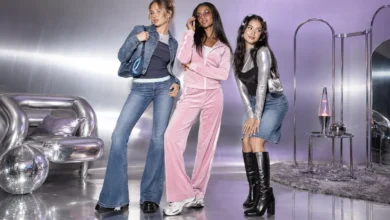
After several seasons dominated by quiet, muted minimalism, 2026 swings the pendulum hard toward presence: think sharply padded shoulders, oversized tailoring, and gold jewelry worn unapologetically. Forecasters are calling it a shift toward dressing with intention and visibility rather than blending in — power dressing as a mood, not just a silhouette. A few other callouts worth tracking this year: texture is replacing color as the main way designers and stylists are adding visual interest — bouclé blazers over denim, suede shoes with knitwear, leather trim on soft tailoring. Premium basics (elevated tees, quality denim, well-cut shirting) are seeing real growth as shoppers buy fewer, better pieces instead of chasing volume. And quarter-zip and polo knits have moved from preppy-niche into genuine mainstream staple territory, showing up across both luxury runways and everyday retailers.
Also Read:> “Capsule Wardrobe Essentials for 2026“
Fashion Trends by Category: The Complete Breakdown
Color Trends: Punchy, Not Pastel
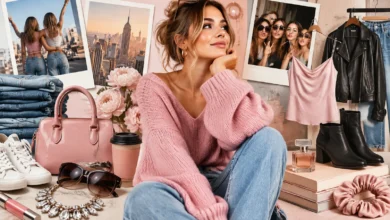
2026 color is confident, not quiet. Cherry red, bubblegum pink, and cobalt blue are showing up in simple, everyday cuts — the point isn’t a head-to-toe color moment, it’s one bold piece doing the work.
The One-Punch Rule: wear exactly one punchy-colored item per outfit and keep everything else neutral. Two bold colors in one look reads as costume; one bold color against neutrals reads as styled.
- Start with a top, not a bottom — easier to swap in and out of existing outfits
- Cherry red and cobalt both pair cleanly with camel, black, white, and denim
- If you’re nervous about color, start with a bag or shoes before committing to a full garment
- Avoid washing out the punch — pair bold color with matte, not shiny, neutrals
- One punchy piece extends across 10+ outfit combinations if the rest of your closet is neutral-based
Also Read: > “How to Wear Color Without Overdoing It”
Print & Pattern Trends: Texture Is the New Print
Designers are leaning on texture mixing — bouclé, suede, leather trim, chunky knits — as the main way to add visual richness, instead of bold prints. When pattern does appear, it’s softer: subtle plaid, tonal stripes, small-scale florals.
The 70/30 Texture Rule: combine one textured piece (suede, bouclé, leather trim) with two smooth-textured pieces. Three heavy textures in one outfit looks bulky; one against smooth basics looks intentional.
- A suede loafer with a smooth knit and tailored trouser is the easiest entry point
- Leather-trimmed jackets work over soft, lightweight fabrics — not over other leather
- Save bold pattern for accessories (scarves, bags) if you’re not ready to wear it head-to-toe
- Chunky knits pair best with sleeker, more structured bottoms to avoid head-to-toe bulk
Also Read: “Texture Mixing 101” → fabric and texture styling guide
Silhouette Trends: Structure Is Back
After years of oversized-but-soft, 2026 brings back sharper shoulders, defined waists, and structured tailoring — without fully abandoning relaxed trousers and wide legs.
The Structure Swap: if your current wardrobe leans soft and oversized, swap in one structured piece (a blazer, a defined-waist coat) before buying anything else. One structured piece resets an entire soft-silhouette wardrobe.
- An oversized blazer with sharp shoulders works over almost anything you already own
- Pair structured tailoring with one relaxed piece (wide trouser or soft tee) to avoid looking stiff
- Gold jewelry — chain necklaces, stacked rings, statement earrings — is the easiest way to lean into the power-dressing mood without buying new clothing
- Shoulder structure matters more than fit elsewhere — a blazer with the right shoulder line can be tailored everywhere else cheaply
Also Read: “How to Style an Oversized Blazer 5 Ways“
Denim & Casualwear Trends: Premium and Purposeful
Denim is having a quality moment rather than a style-reinvention one. Premium denim, raw finishes, and considered fits are outperforming fast-fashion basics, alongside a resurgence of cargo and utility-inspired pants.
The Three-Wash Rule: before buying a new denim trend, check that it works in at least three different washes/colors you’d realistically buy — if it only looks right in one specific wash, it’s a micro trend, not a wardrobe investment.
- Cargo pants pair best with a fitted or cropped top to balance the volume
- One well-fitted, premium pair of jeans outperforms three fast-fashion pairs in cost-per-wear
- Utility details (pockets, drawstrings, structured waistbands) work in tailored fabrics too, not just denim
- Distressed and raw-hem finishes are trending as a finishing detail, not a whole-garment statement
Also Read: > “Denim Capsule: How Many Jeans You Actually Need“
Footwear Trends: Function Meets Statement
Loafers, sleek flats, and structured low boots are leading footwear this year, with statement footwear reserved for evening rather than everyday rotation.
The Cost-Per-Wear Shoe Test: any shoe under $150 should be wearable with at least 5 existing outfits before you buy it; above $150, that number should be 10+.
- Suede loafers are the single most versatile 2026 footwear trend — daytime and evening
- Keep one statement shoe (metallic, sculptural heel) for occasion wear only
- Sneakers are shifting toward sleeker, lower-profile silhouettes rather than chunky styles
- Match shoe formality to your most common outfit type, not your most aspirational one
Also Read: > “Shoe Capsule for Every Budget”
Accessory Trends: Gold, Layered, Intentional
Gold jewelry — stacked rings, chain necklaces, layered beaded necklaces — is one of the most accessible ways to participate in 2026’s bigger trends without buying new clothing at all.
The Rule of Three: wear a maximum of three statement accessories at once (e.g., necklace, earrings, one ring stack). Beyond three, accessories start competing with each other instead of complementing the outfit.
- Layer 2–3 necklaces of different lengths rather than one statement piece
- Mixed metals are acceptable in 2026 — gold and silver together read as intentional, not mismatched
- Beaded necklaces pair well with simple tops (button-ups, plain knits) to let the texture show
- A bag in a punchy color is the lowest-commitment way to try the color trend
Also Read: > “Accessorizing on a Budget”
Trying a Trend on a Budget: Real Ideas by Price Tier
Under $50: The Low-Commitment Test
- Swap in one punchy-colored top instead of your usual neutral
- Add a layered beaded or gold-tone necklace set
- Try a thrifted blazer with structured shoulders before buying new
- Re-style an item you own with a new texture pairing (suede shoe + existing knit)
- Buy one trend-color accessory (bag, scarf, or belt) instead of a full garment
$50–$150: The Smart Middle Ground
- A well-cut quarter-zip or polo knit — wearable across multiple “preppy” and “quiet luxury” looks
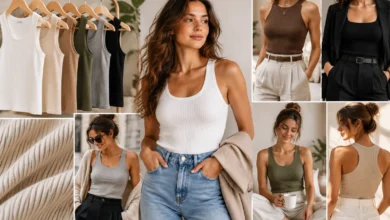
- A premium basic tee or shirt in a quality fabric — outperforms three fast-fashion versions
- A pair of cargo or utility pants in a neutral tone for maximum outfit flexibility
- A textured (suede or bouclé-finish) accessory piece — bag, shoe, or jacket trim
$150–$400: The Investment Trend Piece
- An oversized blazer with structured shoulders — the single highest cost-per-wear 2026 investment
- Premium denim in a flattering, versatile wash
- A leather-trimmed coat or jacket that bridges multiple seasons
- A quality gold-tone jewelry set designed to be worn daily, not saved for occasions
PRO TIP — The Order of Operations: Fit and tailoring → one structural trend piece (blazer, coat) → accessories (jewelry, bag) → color or print. Buy in that order, and a tight budget still produces a wardrobe that looks intentional rather than thrown together.
“Budget Capsule Wardrobe Under $300” → budget wardrobe guide
The Psychology Behind Why Trends Work (and Why Overconsumption Happens)
Trend cycles aren’t random — they’re driven by documented behavioral patterns. Novelty triggers a small dopamine response, which is why a new item feels exciting in the store and far less exciting two weeks later; this is the same mechanism behind impulse-buy regret. Social comparison also plays a measurable role: seeing trends repeated across many accounts in a short window creates a sense of urgency (“everyone has this”) that has little to do with whether the item actually suits your existing wardrobe or lifestyle. This is also why the “deinfluencing” and outfit-repeating movement has grown — it’s a direct, fairly conscious pushback against that novelty-driven cycle, with more people publicly normalizing wearing the same pieces repeatedly instead of buying something new for every occasion. Understanding this mechanism is the easiest way to trend-shop without overspending: the 24-hour rule (waiting a day before buying any trend item) works specifically because it lets the novelty spike pass before you commit money.
More 2026 Trends Worth Knowing
- Quarter-zip and polo knits: moved from a niche preppy staple into a genuine top-trend item, embraced at both luxury and mass retail levels.
- Layered gold jewelry: chains, stacked rings, and beaded necklaces worn in multiples rather than single statement pieces.
- Cargo and utility pants: functional details crossing over from streetwear into mainstream everyday fashion.
- Premium basics: quality tees, shirting, and denim seeing real growth as shoppers consolidate spending into fewer, better items.
- Adaptive and size-inclusive design: expanding size ranges and accessible features (adjustable hems, easier closures) becoming a standard expectation rather than a niche offering.
Your Trend-Shopping Process: Step-by-Step
| # | Step | What To Do |
| 01 | Audit Your Closet | List what you already own by category (tops, bottoms, outerwear, shoes). You can’t apply the 80/20 rule without knowing your current ratio. |
| 02 | Set Your Trend Budget | Decide your total trend spend for the season and split it: 50% one investment piece, 30% mid-tier items, 20% low-commitment tests. |
| 03 | Pick Your 2–3 Trends | From this year’s categories, choose 2–3 that fit your existing wardrobe colors and lifestyle — not every trend that looks good on social media. |
| 04 | Apply the Three-Outfit Test | For each potential purchase, picture 3 outfits using items you already own. No three outfits, no purchase. |
| 05 | Buy in Cost-Per-Wear Order | Structural pieces first, accessories second, color/print last — this order protects your budget from being spent before you reach the highest-impact item. |
| 06 | Style With the 80/20 Ratio | Build outfits with 80% existing base pieces and 20% new trend pieces, never the reverse. |
| 07 | Photograph and Review | Take a photo in each new outfit combination — what looks good on a hanger doesn’t always translate, and photos catch fit issues mirrors miss. |
| 08 | Rotate Seasonally | Store off-season trend pieces separately and reassess each season — a trend piece earns a second season only if you wore it 10+ times in the first. |
Visual / Infographic Description Table (Production Asset — Not for Reader Display)
| Step | Step Name | Visual Description for Designer |
| 01 | Audit Closet | Icon: open closet/wardrobe outline with hanger icons. Visual: simple closet silhouette with category labels (Tops/Bottoms/Outerwear/Shoes) as floating tags. Callout: “Know what you own first.” |
| 02 | Set Budget | Icon: pie chart, 3 segments (50/30/20). Visual: budget wheel with labeled segments in brand colors. Side badge: “Investment → Mid-tier → Test” |
| 03 | Pick Trends | Icon: 3 trend swatches/mood chips. Visual: small swatch cards (color, texture, silhouette) with a checkmark on 2-3. Label: “Choose 2-3, not all.” |
| 04 | Three-Outfit Test | Icon: single garment with 3 arrows branching to mini outfit thumbnails. Visual: one jacket icon branching into 3 small outfit combos. Callout: “No 3 outfits, no buy.” |
| 05 | Buy in Order | Icon: numbered shopping list 1-2-3. Visual: vertical priority list — Structure → Accessories → Color, each with a small icon. Badge: “Highest impact first.” |
| 06 | 80/20 Styling | Icon: pie chart 80/20 split. Visual: outfit silhouette shaded 80% one tone (base) and 20% accent tone (trend piece). Label: “Base wardrobe + trend accent.” |
| 07 | Photograph & Review | Icon: camera/phone frame around outfit. Visual: full-length figure silhouette inside a phone-camera frame. Callout: “Mirrors lie, photos don’t.” |
| 08 | Rotate Seasonally | Icon: storage box + calendar/season icons. Visual: labeled storage bin with small season icons (sun/leaf/snowflake/flower) cycling around it. Final step glow effect in brand accent color. |
The 7 Most Common Fashion Trend Mistakes
Buying the trend, not the silhouette. A specific viral floral print fades in weeks; the oversized blazer silhouette underneath it lasts seasons. Buy the structure, let cheap accessories carry the print.
Skipping the fit check. A trend piece in the wrong size reads as dated immediately, no matter how current the style is. Always try before buying, and budget for one tailoring adjustment per major piece.
Buying head-to-toe trend looks. Wearing every element of a single trend at once (full color, full print, full silhouette) reads as costume, not style. Mix one trend element with your existing base wardrobe.
Ignoring cost-per-wear. A cheap item worn twice costs more per wear than an expensive item worn forty times. Calculate realistic wear count before any trend purchase, not after.
Confusing micro trends with macro trends. A single viral item is not the same as a season-spanning shift in silhouette or fabric. Spend real money only on trends showing up across multiple retailers and price points.
Over-accessorizing a trend look. Stacking every gold jewelry trend at once — necklaces, rings, earrings, bag hardware — overwhelms rather than elevates. Cap statement accessories at three per outfit.
Buying without the three-outfit test. If you can’t picture three different outfits with a new piece using items you already own, it’s a one-outfit purchase that will sit unworn after its trend moment passes.
“Building a Trend-Proof Capsule Wardrobe”
Conclusion
Trend-smart dressing comes down to a handful of repeatable principles: cost-per-wear over price tag, silhouette before print, the 80/20 ratio between base and trend pieces, fit before fashion, the three-outfit test, and knowing whether you’re looking at a macro trend or a micro one. 2026’s biggest shift — bold, ’80s-coded power dressing layered with rich texture and punchy color — is exciting, but the goal isn’t to wear all of it at once. It’s to filter what fits your existing wardrobe and lifestyle, invest in the pieces that earn their cost-per-wear, and let the rest stay exactly where it belongs: on your inspiration feed. Start with one trend, one piece, and the three-outfit test. The wardrobe builds itself from there.
Frequently Asked Questions About Fashion Trends
’80s-coded power dressing is the breakout trend of 2026 — oversized blazers, sharply structured shoulders, and bold gold jewelry, reflecting a broader shift away from the muted minimalism of recent seasons toward dressing with visibility and intention. It’s showing up across both luxury runways and mainstream retailers, which is what separates it from a shorter-lived micro trend.
Use the 80/20 rule: keep 80% of your wardrobe in timeless base pieces and limit trend purchases to 20%. Apply the three-outfit test before buying anything new, and spend real money only on macro trends (silhouette and fabric shifts spanning multiple seasons) rather than single viral micro trends.
A macro trend is a season-spanning shift — like a return to structured tailoring — that shows up across multiple retailers, price points, and seasons, making it worth investing in. A micro trend is a single viral item with a short shelf life, usually 6–8 weeks, that’s better treated as a low-cost experiment than a wardrobe investment.
Punchy, confident colors are leading 2026 — particularly cherry red, bubblegum pink, and cobalt blue — typically worn as one bold piece against an otherwise neutral outfit rather than as a full color-block look. This marks a clear shift away from the muted, beige-heavy palettes of recent seasons.
Start with low-commitment items: one accessory in the trend color or texture, a thrifted version of the silhouette, or restyling something you already own with a new pairing. The lowest-risk entry points are usually jewelry, bags, and shoes rather than full garments.
Yes, but it’s evolving — premium basics and quality fabrics remain strong as shoppers consolidate spending into fewer, better pieces, but quiet luxury is now sharing space with bolder, more visible trends like ’80s-coded power dressing rather than dominating the conversation the way it did in recent seasons.
Deinfluencing is a cultural pushback against constant trend-driven buying, with people publicly normalizing wearing the same outfits repeatedly and discouraging unnecessary purchases. It has grown significantly as a reaction to the rapid, dopamine-driven cycle of microtrend culture on social media.
Apply the three-outfit test: before buying, picture three different outfits you could build using the new piece alongside clothing you already own. If you can’t picture three, the item is likely a one-outfit purchase that won’t earn its cost-per-wear.